Why Early Morning Gym Sessions Transform Your Day
An early morning gym routine offers powerful benefits, including a boosted metabolism, improved mood, better sleep quality, sharper focus, and more consistent weight management.
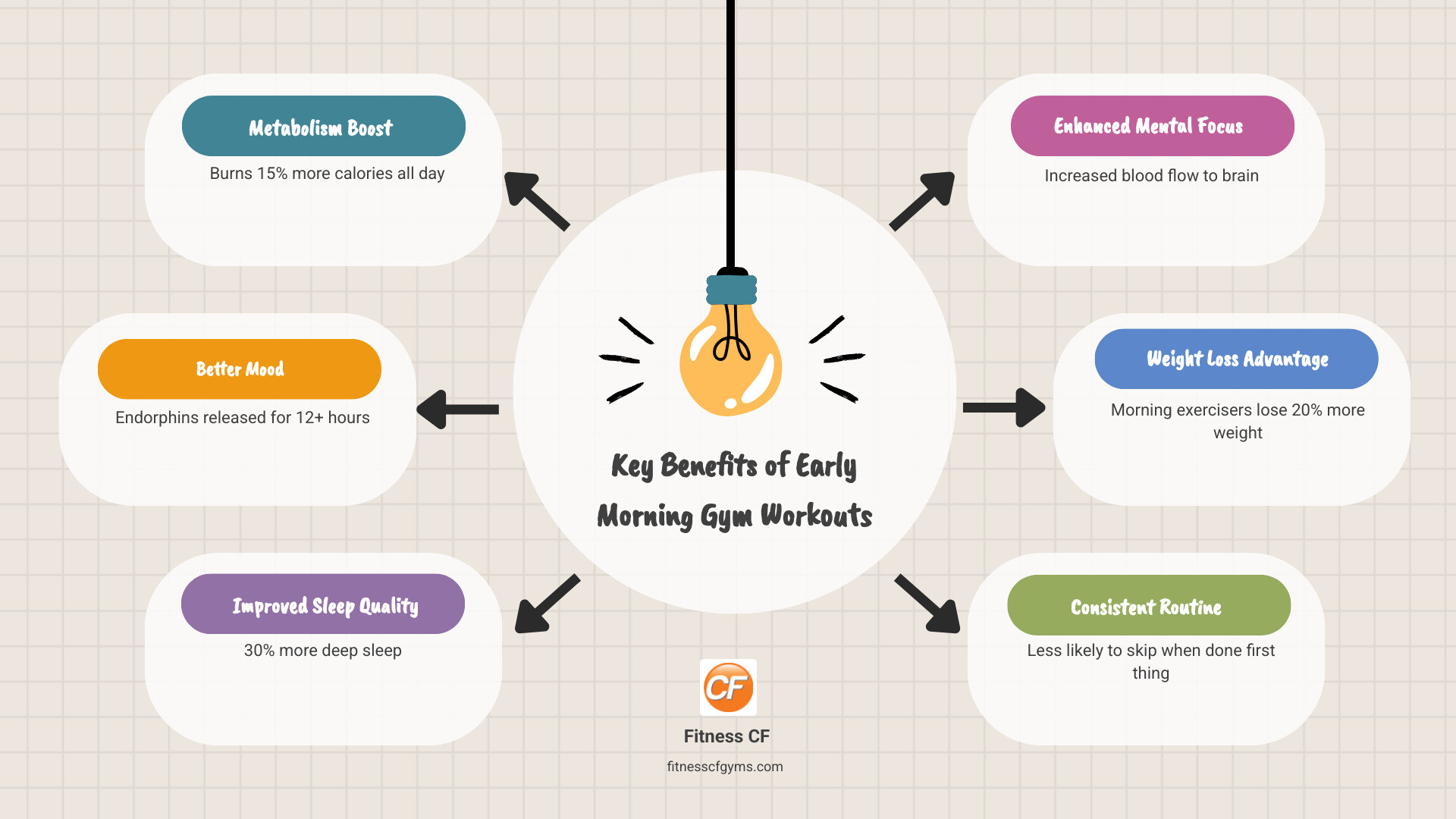
Key Benefits of Early Morning Workouts:
- Metabolism boost: Burn more calories throughout the day.
- Better mood: Release endorphins that last all day.
- Improved sleep: Regulate your circadian rhythm for deeper rest.
- Improved focus: Increase blood flow to the brain for mental clarity.
- Weight loss support: Studies show morning exercisers lose more weight.
- Consistent routine: Less likely to skip when done first thing.
While the idea of a morning workout is appealing, the reality of an early alarm can be tough. However, the science is compelling. Research shows that people who exercise before noon lose more weight than those who work out after 3 p.m. Morning exercise also improves sleep quality, with studies finding that 7 a.m. workouts lead to more time in deep sleep.
Morning exercise creates a positive chain reaction for your entire day, from hormonal advantages to a metabolism boost that burns calories for hours. But waking up early is challenging. Your muscles are stiffer, and motivation can be low. The good news is that these obstacles are manageable with the right strategies. The key to success lies in preparation, gradual adjustment, and finding what works for you.
The Science of Sunrise Sweat Sessions
When you roll out of bed for an early morning gym session, you’re working with your body’s natural rhythms to open up a day of benefits. Morning workouts release a cocktail of feel-good chemicals, including endorphins that give you a natural high. Plus, cortisol, often called the “stress hormone,” is actually your friend in the morning.
Your cortisol levels naturally peak around 8 a.m., priming your body for action. Timing your early morning gym session with this surge improves performance and alertness. The metabolism boost is another major benefit. Morning exercise ignites your metabolic engine, leading to an “afterburn effect” that burns calories all day. Research supports this, with one study on morning exercise and weight loss showing that people who exercised before noon lost significantly more weight.
Morning workouts also dramatically improve sleep by helping you fall asleep faster and spend more time in deep sleep. They can regulate your appetite by decreasing ghrelin (the hunger hormone) and boosting hormones that signal fullness. For women, morning exercise may offer better cardiovascular benefits compared to afternoon workouts (morning exercise and blood pressure in women).

Boost Your Mood and Focus
The mental benefits of an early morning gym session are game-changing. Exercise floods your brain with oxygen-rich blood, sharpening your thinking. A 2019 study found that morning exercise improves attention, visual learning, and decision-making.
The stress-busting power is also backed by science. The American Psychological Association highlights how exercise rewires your brain to handle stress better. Instead of an afternoon crash, you’ll maintain steady energy as your cardiovascular system becomes more efficient.
Impact on Weight, Blood Sugar, and Heart Health
Morning workouts improve long-term health markers. Your body becomes more efficient at using fat for fuel, and this improved fat oxidation continues all day. This often leads to healthier food choices naturally.
Blood sugar control is another win. A 2015 study found morning exercise lowers the risk of hypoglycemia, which helps maintain steady energy levels for everyone. Your heart health also benefits, as morning exercise can be particularly effective for blood pressure management. These benefits create a positive cycle: better sleep leads to better workouts, which leads to better food choices and more energy for the next morning.
Overcoming the Challenges of an Early Morning Gym Routine
Let’s be honest – the idea of an early morning gym session can be daunting. Challenges like sleep inertia (that groggy feeling), stiffer muscles, and a time crunch are real. For natural night owls, waking up early feels like fighting your internal clock.
The encouraging news is these obstacles are manageable. The secret is working with your body, not against it. As sleep expert Dr. Anita Shelgikar points out, if you’re short on sleep, prioritizing rest is the smarter choice. Consistency matters more than perfect timing. You can learn more about creating lasting habits in our guide on How to Build a Routine That Lasts Beyond January.

Building a Sustainable Early Morning Gym Habit
Create a lasting early morning gym routine by gently training your body to accept a new rhythm.
- Start gradually: Shift your alarm 15 minutes earlier every few days to let your body adapt.
- Prioritize sleep: Aim for 7-8 hours of quality sleep with a calming bedtime ritual.
- Be consistent: Wake up at the same time every day, even on weekends, to regulate your internal clock.
- Use light: As soon as you wake up, open the curtains or use smart bulbs to signal to your brain that it’s time to be alert.
- Find a buddy: Accountability from a friend or group class makes it harder to skip. Learn about The Benefits of Having Workout Buddies.
- Set realistic goals: Start with two morning workouts a week and celebrate your progress.
Preparing for Success the Night Before
A successful morning starts the night before. Eliminate friction to make your morning easier.
- Prep your food and gym bag: Have your pre-workout snack, meals, and workout clothes ready to go.
- Plan your workout: Decide what you’ll do ahead of time to avoid decision fatigue.
- Create a relaxing bedtime routine: Wind down without screens to improve sleep quality.
- Make it enjoyable: Set your coffee maker on a timer or have an energizing beverage ready to give yourself something to look forward to.
Fueling Your Dawn Workout: Pre- & Post-Exercise Nutrition
What you eat is your secret weapon for a successful early morning gym routine. Proper nutrition provides sustained energy, stabilizes blood sugar, and aids muscle repair. Hydration is also crucial after a long night’s fast. The American Heart Association offers great insights on using food as fuel before, during and after workouts.

What to Eat Before Your Early Morning Gym Session
The question of whether to eat before an early morning gym session is common. While fasted cardio may increase fat oxidation, high-intensity workouts often suffer without fuel, leading to dizziness or weakness.
For most, a light, digestible meal 30-60 minutes before is best. Combine carbohydrates for energy and protein to prime your muscles. Good options include:
- A banana with peanut butter
- A small bowl of oatmeal with berries
- Greek yogurt with apple slices
- Whole-wheat toast with avocado
Listen to your body and experiment to see what works for you.
Post-Workout Recovery and Nutrition
After your workout, your body enters recovery mode. Your muscles are like sponges, ready to absorb nutrients for repair and growth. Aim to eat within an hour after your workout to replenish glycogen stores and provide protein for muscle synthesis.
Great post-workout meals include:
- A protein smoothie with fruit
- Scrambled eggs with toast
- Greek yogurt with berries and granola
- A turkey sandwich on whole-wheat bread
Don’t forget to rehydrate with water throughout the morning to aid recovery and maintain your energy levels.
Designing Your Ideal Morning Workout
Creating the perfect early morning gym routine means working with your body’s needs. Your body temperature is lower in the morning, making muscles feel stiffer. This means a proper warm-up is non-negotiable to prevent injury.
Consistency matters more than the specific time you work out. Listen to your body; some days will be high-energy, while others may require a gentler approach. If you’re new to exercise, our Complete Guide to Creating a Workout Plan for Beginners can help you start.
Best Types of Exercise for the Morning
The best morning workout is one you’ll do consistently.
- Cardio: Activities like brisk walking, jogging, or cycling are fantastic for boosting cardiovascular health and endurance. Morning cardio provides sustained energy and helps fight afternoon fatigue.
- Strength training: Building lean muscle boosts your metabolism, helping you burn more calories all day. The Mayo Clinic highlights many weight training benefits, including improved bone density and functional strength.
- Flexibility and mobility: Yoga or stretching can be a wonderfully meditative start to your day, improving range of motion and reducing muscle tension.
| Feature | Morning Cardio | Morning Strength Training |
|---|---|---|
| Pros | Boosts heart health, energy, endurance; Burns calories. | Builds muscle, boosts metabolism, reduces injury risk. |
| Cons | Can feel sluggish without a proper warm-up. | Muscles may feel stiffer, requiring a thorough warm-up. |
| Best For | Cardiovascular health, sustained energy, fat loss. | Muscle building, strength gains, metabolic health. |
| Considerations | Maintain hydration, light pre-workout snack. | Focus on dynamic warm-up, proper form, adequate protein. |
The Importance of a Proper Warm-Up
A proper warm-up is the most critical part of an early morning gym session. It gradually increases blood flow, raises your core body temperature, and prepares your joints for movement.
Focus on dynamic stretching—movements like arm circles, leg swings, and gentle jumping jacks. The American Heart Association emphasizes that a good warm-up significantly reduces injury risk. Dedicate 5-10 minutes to this crucial step; it’s an investment in a safer, more effective workout.
Frequently Asked Questions about Morning Workouts
Let’s tackle some of the most common questions about early morning gym routines.
What is the “30-30-30” morning rule?
The 30-30-30 rule is a popular morning routine: consume 30 grams of protein within 30 minutes of waking, followed by 30 minutes of low-intensity, steady-state cardio. The theory is that early protein intake supports muscle and boosts metabolism, while the subsequent cardio taps into fat stores for fuel. While this structured method can be effective, it’s not a magic formula. The best routine is one you can stick with consistently.
Is it better to work out on an empty stomach in the morning?
Working out on an empty stomach, or “fasted cardio,” is a debated topic. It can increase fat oxidation, but it isn’t for everyone. High-intensity performance can suffer without fuel, and some people feel dizzy or weak. The best advice is to listen to your body. Try both fasted and fueled workouts to see what feels best. For many, a small, easily digestible snack (like half a banana) 30-60 minutes beforehand provides the perfect energy balance.
What are the main disadvantages of an early morning gym workout?
Acknowledging the challenges of an early workout is key to overcoming them. The main disadvantages include:
- Sleep Inertia: That initial grogginess can make getting out of bed difficult.
- Stiffer Muscles: Your body temperature is lower in the morning, increasing injury risk if you don’t warm up properly.
- Time Constraints: Rushing to fit in a workout before other obligations can be stressful and less effective.
- Night Owl Tendencies: For those whose internal clocks are set later, adjusting to an early schedule can be a significant challenge.
The bottom line: If an early morning gym routine consistently compromises your sleep, it may do more harm than good. Prioritize quality sleep and find an exercise time that works sustainably with your body’s natural rhythm.
Conclusion: Seize the Day with a Morning Workout
Starting your day with an early morning gym session sets a positive tone for everything that follows. We’ve seen how sunrise workouts can boost your metabolism, lift your mood, improve focus, and lead to better sleep and consistent weight management.
Yes, early alarms are tough, and muscles can feel stiff. But these challenges are solvable. Gradual adjustment, night-before preparation, smart nutrition, and thorough warm-ups are your keys to success.
Consistency is what open ups these benefits. The best workout time is the one you can stick with. But the science supporting morning exercise—from hormone optimization to appetite regulation—is powerful. Think of your morning workout as a daily victory. Before the day gets busy, you’ve already done something meaningful for your health.
For many, especially parents, finding time for fitness is a major hurdle. That’s why amenities like on-site childcare can make morning workouts achievable.
Your journey to better health starts with a single step. Be patient, start small, and remember that every morning is a new opportunity to invest in your well-being. The simple act of moving your body first thing is a gift you give yourself every day.