Why Work-Related Body Aches Are So Common
How to relieve body aches from work is something millions of people search for every day. And it’s no surprise – whether you’re hunched over a computer screen or lifting heavy boxes, your body takes a beating during the workday.
Quick Relief Methods:
- Heat therapy – Apply warm towels or heating pads to sore muscles
- Cold therapy – Use ice packs to reduce inflammation and swelling
- Self-massage – Roll out tight spots with foam rollers or lacrosse balls
- Gentle stretching – Do simple neck rolls and shoulder shrugs throughout the day
- Stay hydrated – Drink plenty of water to keep muscles and joints supple
The truth is, your body wasn’t designed to stay in the same position for 8+ hours. Prolonged sitting causes muscles to tighten and circulation to slow down. Repetitive motions create strain in your joints. And poor posture puts extra stress on your spine and neck.
But here’s the good news: movement is medicine. Small changes to your daily routine can make a huge difference in how you feel at the end of the day.
Research shows that regular exercise has consistently been the most important thing you can do to manage chronic pain. Even light activity helps keep blood circulating and speeds up your body’s ability to drain waste and chemicals linked with muscle aches.
I’m Pleasant Lewis, and I’ve spent over 40 years in the fitness industry helping people overcome physical challenges and build stronger, healthier bodies. Throughout my experience, I’ve seen how to relieve body aches from work through targeted fitness strategies and lifestyle changes. Let me share the most effective methods that have helped thousands of people just like you.
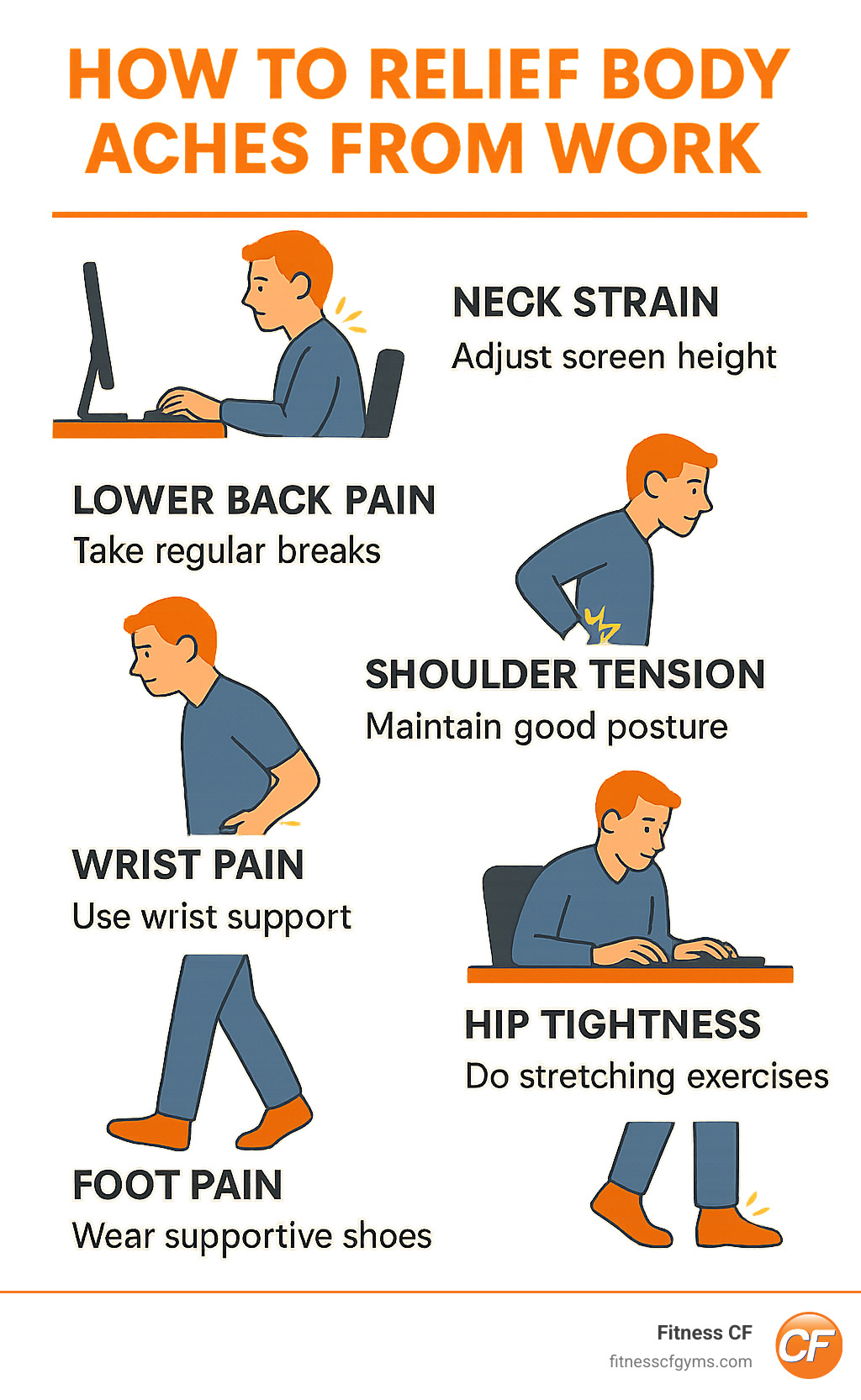
Understanding Why Your Body Aches After Work
Your body is trying to tell you something important when those familiar aches creep in after work. Myalgia – the medical term for muscle pain – affects millions of workers every day. It’s your body’s way of saying “hey, something’s not quite right here.”
Think about it: when you spend hours in the same position, your muscles get cranky. And honestly, who can blame them?
Prolonged sitting is one of the biggest culprits behind work-related aches. Research shows that sitting too much creates a domino effect of problems throughout your body. When you’re parked at a desk for hours, certain muscles – especially your hip flexors and hamstrings – actually start to shorten and tighten up.
Meanwhile, other muscles like your glutes basically go to sleep on the job. This creates muscle imbalances that pull your body out of alignment, leading to that nagging lower back pain and hip stiffness you feel at day’s end.
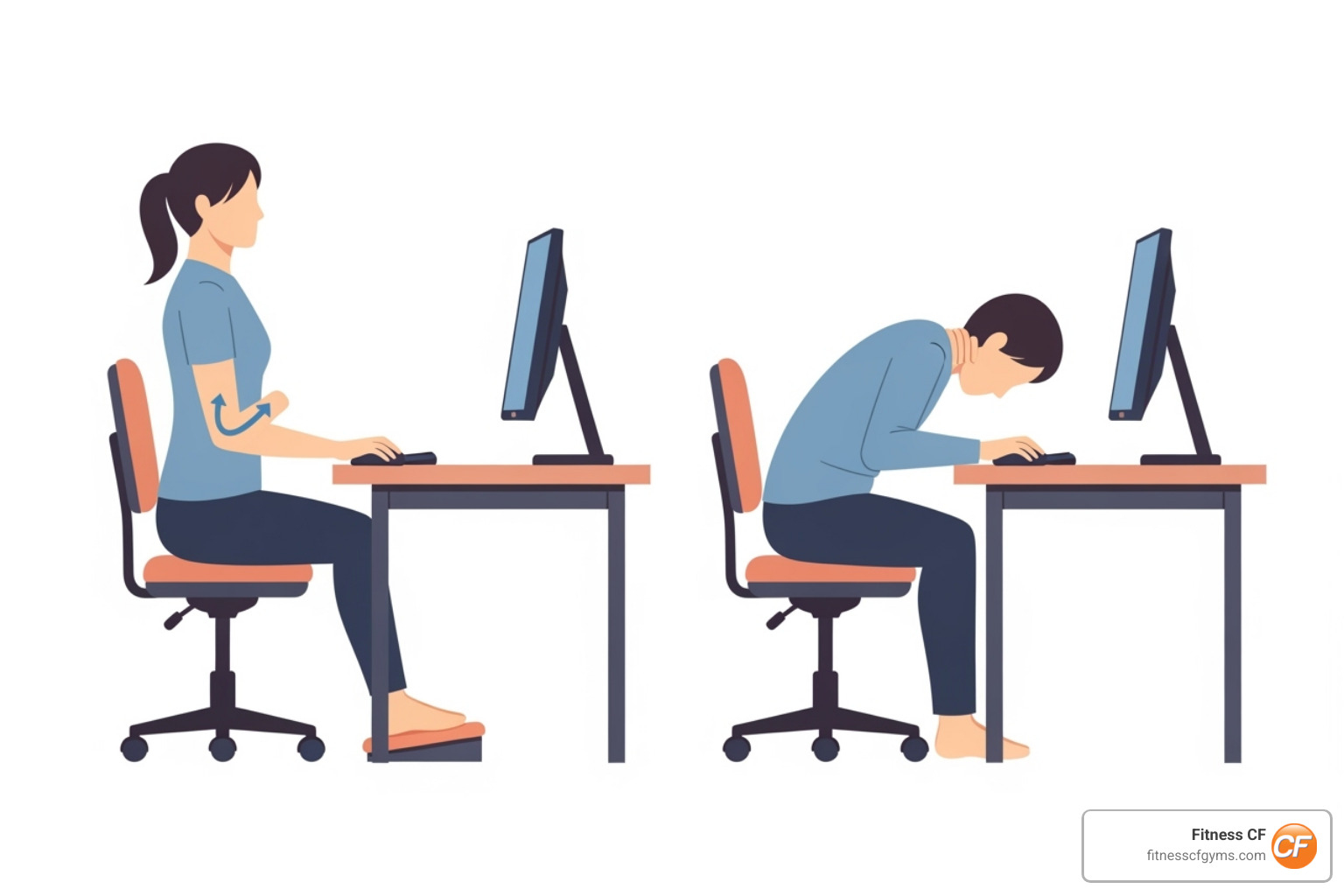
But desk jobs aren’t the only problem. If your work involves repetitive strain – whether that’s lifting, reaching, or doing the same motion over and over – your muscles can become overworked and inflamed. This repetitive stress limits blood flow to your muscles, preventing them from getting the nutrients they need while allowing waste products like lactic acid to build up.
Here’s where it gets interesting: your body’s stress response can actually make physical pain worse. When you’re stressed (and let’s face it, work can be stressful), your muscles naturally tense up. This creates a cycle where stress causes muscle tension, which causes more discomfort, which creates more stress.
Chronic stress also triggers your immune system to release chemicals that promote inflammation throughout your body. This is why you might feel achy all over after a particularly challenging day at work, even if you weren’t doing anything physically demanding.
Poor ergonomics adds another layer to the problem. When your workstation isn’t set up properly, you’re forced into awkward positions that your body simply wasn’t designed to maintain. A monitor that’s too low makes you crane your neck forward. A chair that doesn’t support your lower back puts extra pressure on your spine. Over time, these small issues add up to big discomfort.
The good news? Understanding why how to relieve body aches from work starts with recognizing these patterns. Once you know what’s causing your discomfort, you can take targeted action to address it – and that’s exactly what we’ll explore next.
Immediate Relief: At-Home Therapies for Aching Muscles
When you drag yourself through the door after a tough day, your aching muscles are practically screaming for relief. The good news? You don’t need to book an expensive spa appointment to feel better. Some of the most effective treatments are sitting right in your own home, waiting to help you unwind and recover.
The key to how to relieve body aches from work lies in understanding what your muscles need most: reduced inflammation, improved blood flow, and tension release. These simple at-home therapies target exactly those needs, giving you the power to take control of your comfort.

Soothe with Heat and Cold
Think of heat and cold therapy as your muscle’s best friends – each with their own special talent for making you feel human again.
Heat therapy works like a gentle hug for your muscles. When you apply warmth, your blood vessels open up, sending fresh, oxygen-rich blood to those tight, achy spots. A warm shower after work isn’t just relaxing – it’s actually therapeutic. Heat wraps are another fantastic option, especially for stubborn lower back pain that just won’t quit.
For a full-body reset, try soaking in a warm bath. Add some Epsom salts to the mix, and you’ve got a powerful combination that helps your muscles release tension while the magnesium works its magic from the outside in.
Cold therapy is your go-to when inflammation is the main culprit. Ice packs work wonders for reducing swelling and numbing sharp pain. The trick is timing – apply cold for about 20 minutes, then give your skin a break. If you’re feeling adventurous (and brave), ice baths can be incredibly effective for muscle recovery, though a simple ice pack will do the job for most of us.
Alternating therapy between heat and cold can give you the best of both worlds – the circulation boost from heat and the anti-inflammatory power of cold.
Master Self-Massage Techniques
Here’s where you become your own personal massage therapist. Self-massage isn’t just about feeling good (though it definitely does) – it’s about actively helping your muscles heal and recover.
Foam rolling is like giving your back and legs a deep tissue massage without the hefty price tag. The pressure helps break up knots and gets your blood flowing again. Focus on your major muscle groups – your quads, hamstrings, and that tight spot between your shoulder blades that seems to hold all your work stress.
Lacrosse balls are the secret weapon for those stubborn trigger points that foam rollers can’t quite reach. These little rubber spheres are perfect for working out knots in your shoulders, feet, and forearms. You can learn How to Do 5 Types of Lacrosse Ball Massage to target specific problem areas with precision.
Don’t forget about hand massage for your forearms and wrists – especially important if you spend your days typing. Simple circular motions can release the tension that builds up from repetitive movements.
The Benefits of Massage go beyond just pain relief. Regular self-massage helps improve your circulation, reduces stress, and can even help you sleep better. For more comprehensive recovery strategies, check out these Good Things for Muscle Recovery that you can easily incorporate into your routine.
Topical pain relievers with menthol or capsaicin can provide that extra layer of relief when you need it most. Just remember – these are temporary fixes that work best when combined with the movement and recovery strategies we’ll explore next.
The Proactive Approach: How to Relieve Body Aches from Work with Fitness
While immediate remedies provide quick comfort, the real game-changer for how to relieve body aches from work is taking a proactive fitness approach. Think of it as building armor for your body – when you’re stronger and more flexible, those daily work stresses just bounce right off.

Regular exercise has consistently been shown to be the most important thing you can do to manage chronic pain. It’s not just about getting sweaty at the gym – even light movement keeps your blood flowing and helps your body clear out those waste products that make muscles ache.
This is where active recovery comes in. Instead of collapsing on the couch after work (though we’ve all been there!), gentle movement actually helps your body heal faster. The beauty of functional fitness is that it trains your body for real-life movements – like reaching for that top shelf or lifting a heavy box without throwing out your back.
Building core strength is especially crucial since your core supports everything else you do. Low-impact exercises are perfect for this approach because they strengthen your body without adding extra stress to already tired muscles.
How to relieve body aches from work with Stretching and Mobility
Here’s something interesting: research shows that even fidgeting at your desk can be protective for your health. So imagine what intentional stretching can do! Dynamic stretching before you start moving gets your joints ready for action, while static stretching afterward helps your muscles relax and lengthen.
The magic happens when you make stretching a regular habit throughout your workday. Neck rolls are perfect when you feel that familiar tension creeping up your shoulders – just gentle, slow circles to release the tightness. Shoulder shrugs might look silly, but they’re incredibly effective at melting away upper back stress.
Pelvic tilts are a desk worker’s best friend. While sitting, gently rock your pelvis forward and back, which helps counteract that hunched position we all fall into. It’s like giving your lower back a mini massage throughout the day.
Don’t forget your arms and hands! Simple wrist circles and finger stretches can prevent that achy feeling that comes from hours of typing. Your forearms will thank you, especially if you make it a habit to stretch them every hour or so.
Understanding the difference between stretching before and after activity is key to getting the most benefit. Check out Stretching 101: What to Do Before and After Your Workout for a complete guide.
Mobility training takes stretching to the next level by improving how well your joints move through their full range of motion. This is why mobility training should be part of your workout plan – it keeps you moving smoothly and pain-free.
Build Resilience with Strength Training
Now, before you start picturing yourself grunting under heavy barbells, let me explain what strength training really means for how to relieve body aches from work. It’s about building a support system for your body – strengthening those supporting muscles that keep you upright and comfortable all day long.
Your core muscles are like a natural weight belt for your spine. When they’re strong, your back doesn’t have to work as hard to keep you upright. We have excellent core strength exercises that don’t require any fancy equipment – just you and a little floor space.
Back strengthening exercises are crucial too, especially if you spend your days hunched over a computer. Strong back muscles help pull your shoulders back and keep your spine in proper alignment. It’s like having good posture on autopilot.
Don’t overlook your legs either! Strong legs support your entire body, whether you’re standing all day or need the power to get up from your desk without groaning. The top 8 big benefits of leg strengthening show just how important this is for overall comfort.
Bodyweight exercises are perfect for beginners – push-ups, squats, and planks can all be done at home without any equipment. These exercises focus on injury prevention by making your body more resilient to daily stresses.
There are 7 compelling reasons to strength train, and reducing work-related aches is definitely one of them. The stronger you are, the less likely you are to feel beaten up at the end of the day.
How to relieve body aches from work using Cardiovascular Exercise
Here’s where the magic really happens for how to relieve body aches from work: improved circulation. When your heart is pumping efficiently, it delivers fresh oxygen and nutrients to tired muscles while carrying away waste products that cause soreness.
Reduced muscle stiffness is one of the first things you’ll notice when you add cardio to your routine. That tight, achy feeling starts to melt away because your muscles are getting the blood flow they need to stay supple.
A brisk walk after work might seem too simple to be effective, but it’s actually one of the best things you can do. It gets your blood moving, helps your body process the day’s stress, and gives your mind a chance to unwind. Plus, it’s free and you can do it anywhere!
Swimming is fantastic if you have access to a pool. The water supports your body weight while giving you a full-body workout, making it perfect for people who are already dealing with aches and pains. It’s like getting a gentle massage while exercising.
Cycling is another excellent low-impact option that builds leg strength while improving cardiovascular health. Whether it’s a stationary bike or a ride around the neighborhood, cycling can be both enjoyable and therapeutic.
The beauty of cardio training is that it builds increased endurance. When your cardiovascular system is strong, everyday tasks at work feel easier, which means you’re less likely to end the day feeling wiped out and sore.
Even light activity makes a difference. The key is consistency – regular movement keeps your body happy and resilient, ready to tackle whatever your workday throws at you.
Lifestyle Habits for Long-Term Pain Management
The real secret to how to relieve body aches from work isn’t just about quick fixes or weekend workouts. It’s about creating daily habits that support your body’s natural healing and recovery processes. Think of these lifestyle changes as building blocks for a pain-free life.

Hydration might sound boring, but it’s absolutely crucial for muscle health. When you’re dehydrated, your muscles can cramp and your joints feel stiff – creating that achy feeling we’re trying to avoid. Water helps transport nutrients to your muscles and flush out waste products that cause soreness.
A simple rule of thumb is to drink half your body weight in ounces of water each day. So if you weigh 160 pounds, aim for about 80 ounces. Don’t worry – foods like watermelon, cucumbers, and soups count toward your hydration goals too.
Anti-inflammatory foods are like medicine for your aching muscles. What you put on your plate directly affects how much inflammation your body produces. Omega-3 rich foods like salmon, walnuts, and flaxseeds are natural inflammation fighters. Colorful fruits and vegetables packed with antioxidants help your body repair itself faster.
On the flip side, processed foods, excessive sugar, and trans fats can actually increase inflammation and make your aches worse. You don’t need to eat perfectly, but making better choices most of the time makes a real difference. The Role of Nutrition in Fitness: What to Eat Before and After a Workout offers great insights into fueling your body for recovery.
Quality sleep is when the magic happens. While you’re dreaming, your body is busy repairing muscle tissue, reducing inflammation, and restoring energy. Research on sleep and immune function shows that good sleep strengthens your body’s defense system and helps manage pain.
Aim for 7-9 hours of uninterrupted sleep each night. Create a bedtime routine that signals to your body it’s time to wind down – maybe a warm bath, some light stretching, or reading a book.
Stress reduction is often the missing piece of the pain puzzle. When you’re stressed, your muscles tense up and stay that way. Chronic stress keeps your body in constant “fight or flight” mode, which amplifies pain signals and slows healing.
Mindfulness and meditation don’t require you to sit cross-legged for hours. Even five minutes of deep breathing can help reset your nervous system. Try simple techniques like counting your breaths or doing a quick body scan to notice where you’re holding tension.
Regular breaks throughout your workday are essential. Every 90 minutes, give yourself permission to step away from your desk. Take a short walk, do some gentle stretches, or just close your eyes and breathe deeply. These mini-breaks prevent tension from building up in the first place.
Light activity serves double duty – it reduces stress while keeping your muscles loose and your blood flowing. A gentle evening walk or some relaxing yoga poses can wash away the day’s stress and prepare your body for restorative sleep.
These habits work best when they’re consistent. You don’t need to overhaul your entire life overnight. Pick one or two areas to focus on first, then gradually build from there. Your body will thank you for the investment.
When to Seek Professional Help for Your Aches
While how to relieve body aches from work can often be managed with the strategies we’ve covered, there are times when your body is telling you something more serious might be going on. Think of it as your body’s way of raising a red flag – and it’s important to listen.
Pain that disrupts your sleep is one of the clearest signals that it’s time to see a healthcare provider. If you’re tossing and turning because of muscle aches, or waking up multiple times during the night due to discomfort, your body isn’t getting the restorative rest it needs to heal properly.
Numbness or tingling in your arms, hands, legs, or feet should never be ignored. This could indicate nerve compression or other serious issues that require immediate medical attention. What starts as occasional tingling can progress to weakness or permanent nerve damage if left untreated.
If your pain has been hanging around for more than a week despite consistent home treatment, it’s time to bring in the professionals. Chronic pain often has underlying causes that need to be addressed by someone with medical training. Your doctor can help uncover conditions like anemia, diabetes, or autoimmune disorders that might be contributing to your discomfort.
Severe pain from a specific incident – whether it’s a fall at work, lifting something too heavy, or any other injury – deserves professional evaluation. What might seem like a minor incident could have caused damage that’s not immediately obvious.
According to research on when to see a healthcare provider about myalgia, you should also seek help if your aches come with fever, rashes, or severe swelling.
Physical therapy can be incredibly valuable for addressing movement patterns and muscle imbalances that contribute to work-related pain. A physical therapist can teach you specific exercises and techniques custom to your particular situation.
Professional massage therapy offers benefits that go beyond what you can achieve with self-massage techniques. Licensed massage therapists can identify problem areas and use specialized techniques to release deep muscle tension.
Seeking help early often prevents minor issues from becoming major problems. Your healthcare provider is your partner in maintaining a healthy, pain-free body that can handle whatever your workday throws at it.
Conclusion
Learning how to relieve body aches from work is truly about embracing a holistic approach that addresses both immediate discomfort and long-term wellness. Throughout this guide, we’ve explored everything from quick heat and cold therapies to building lasting strength through targeted fitness routines.
The beauty of this journey lies in its simplicity. You don’t need expensive equipment or complicated programs to start feeling better. A warm shower after work, a few gentle stretches at your desk, or a brisk evening walk can make a remarkable difference in how your body feels and recovers.
Consistency is your greatest ally. Small, daily actions – staying hydrated, incorporating anti-inflammatory foods into your meals, prioritizing quality sleep, and managing stress through mindfulness – create the foundation for a body that’s resilient and ready to handle whatever your workday throws at it.
Remember to listen to your body. Some days you might need gentle stretching and rest. Other days, you might feel energized enough for strength training or cardiovascular exercise. Both approaches are valuable, and honoring what your body needs in the moment is part of building a sustainable, healthy lifestyle.
The benefits of strength training extend far beyond just looking fit – they help you build the core stability and muscle support that prevents those nagging aches from developing in the first place. Similarly, regular cardio keeps your circulation strong, helping your muscles recover faster and stay supple throughout long work days.
At Fitness CF, we understand that true wellness comes from having the right tools and support system. Whether you’re just starting your fitness journey or looking to improve your current routine, we believe everyone deserves access to resources that help them feel their best.
Take control of your well-being today. Your future self – the one who moves through workdays with less pain and more energy – will thank you for the investment you make now. Explore our HydroMassage amenities for ultimate muscle relaxation and recovery.