
When Body Aches Strike: Understanding Your Pain Relief Options
Over the counter meds for body aches fall into two main categories that work differently:
- Acetaminophen (Tylenol) – blocks pain signals in your brain and reduces fever, but doesn’t fight inflammation.
- NSAIDs – reduce pain, fever, AND inflammation throughout your body.
- Ibuprofen (Advil, Motrin) – works 4-6 hours, take with food.
- Naproxen (Aleve) – works 8-12 hours, take with food.
- Aspirin – similar to ibuprofen but not safe for children under 18.
Whether you have post-workout soreness, a tension headache, or general achiness, the right medication depends on the cause. Muscle aches with swelling call for NSAIDs, while general pain without inflammation responds well to acetaminophen.
With over 40 years in the fitness industry, I’ve seen how crucial it is for active people to manage body aches safely. Understanding your options for over the counter meds for body aches is key to staying on track with your fitness goals without letting discomfort derail you.
The Two Main Players: Acetaminophen vs. NSAIDs
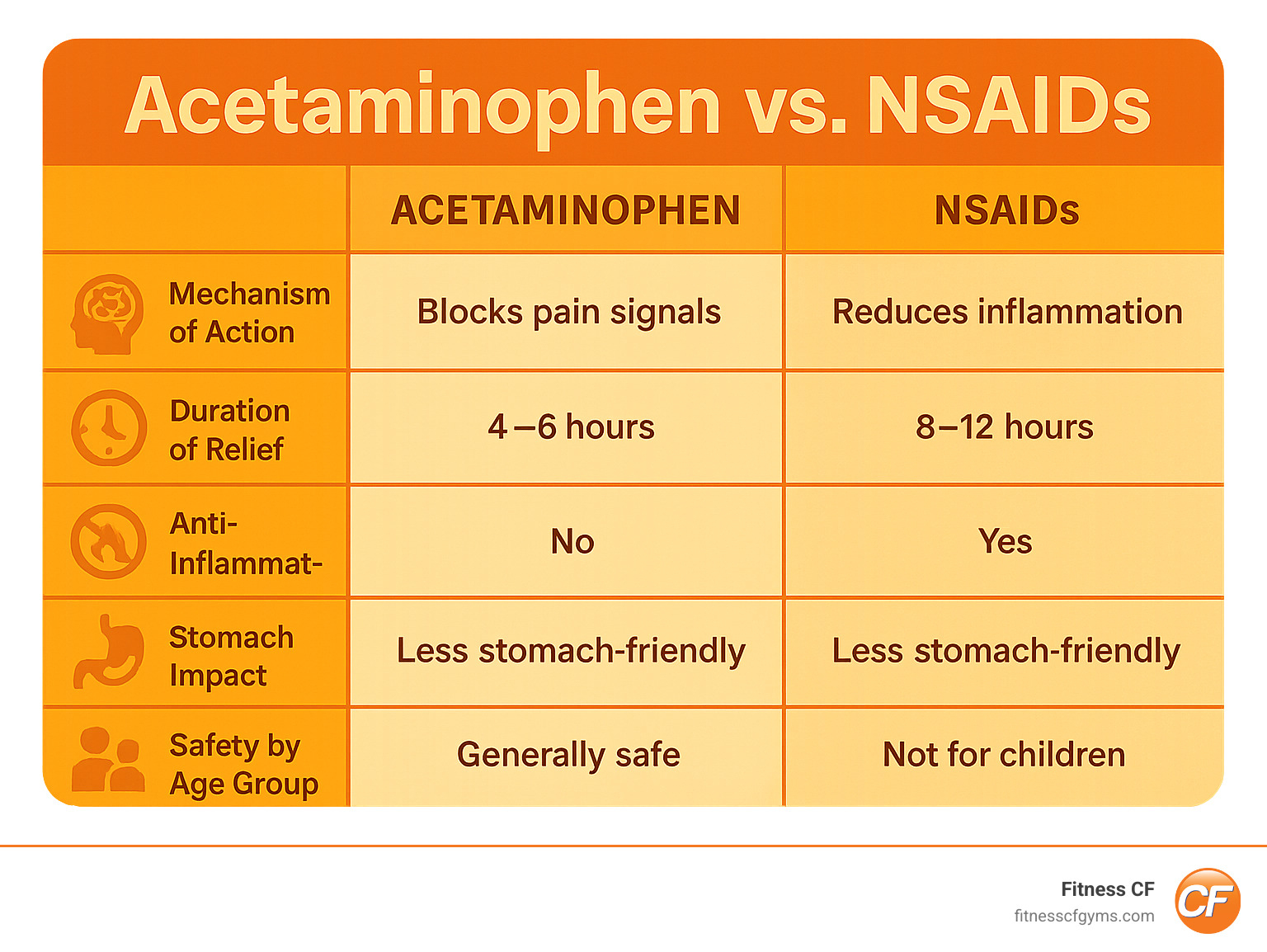
When choosing over the counter meds for body aches, you’re picking between two main types: acetaminophen and NSAIDs. Each works differently to relieve pain. Acetaminophen works in the brain to block pain signals, while NSAIDs reduce pain, fever, and inflammation throughout the body.
The key difference is inflammation. Acetaminophen targets pain and fever, while NSAIDs also fight inflammation. This distinction helps you choose the right medication for your symptoms.
Understanding Acetaminophen
Acetaminophen (like Tylenol) works in the central nervous system by blocking pain signals and reducing fever. A key feature is that it’s not an anti-inflammatory, which makes it much easier on your stomach than other pain relievers.
This makes it ideal for general aches without swelling, headaches, and fever. It’s a good choice for those with sensitive stomachs or who cannot take NSAIDs for other health reasons.
Acetaminophen is also the safest option for people who are pregnant or breastfeeding, as well as children younger than 12 years old. If you’re expecting or nursing, acetaminophen is a safe option for pregnant people when you need pain relief.
Understanding NSAIDs (Nonsteroidal Anti-Inflammatory Drugs)
NSAIDs like ibuprofen, naproxen, and aspirin are multitaskers. They reduce inflammation by blocking prostaglandins throughout your body, in addition to relieving pain. Prostaglandins trigger pain, fever, and swelling as an alarm system when you’re injured. NSAIDs work by turning down this alarm, making them effective for injury-related pain with swelling.
Ibuprofen (like Advil or Motrin) is great for post-workout muscle soreness, sprains, and menstrual cramps. It works for 4-6 hours and should always be taken with food to protect your stomach.
Naproxen (like Aleve) provides 8-12 hours of relief, making it perfect for persistent muscle aches or chronic conditions like arthritis where you don’t want to take medication every few hours.
Because NSAIDs work throughout your body, they can be harder on your stomach than acetaminophen. But for inflammation from a tough workout or minor injury, they’re often the most effective choice.
| Feature | Acetaminophen | NSAIDs |
|---|---|---|
| Mechanism | Blocks pain signals in the brain | Blocks prostaglandins throughout the body |
| Primary Use | Pain relief and fever reduction | Pain, fever, and inflammation reduction |
| Stomach Impact | Easier on the stomach | Must be taken with food |
Understanding these differences helps you choose the right over the counter meds for body aches to get back to feeling your best.
Your Guide to Choosing the Right OTC Med for Body Aches
Choosing from the many over the counter meds for body aches can be overwhelming. However, matching your symptoms to the right medication makes the choice much clearer.
To choose wisely, identify the cause of your discomfort. Is it general achiness or specific, swollen areas? Do you need a quick fix for a headache or long-lasting relief for muscle soreness from a workout?
When to Choose Acetaminophen
Acetaminophen is best for general aches and pains without visible swelling.
- Headaches: It provides effective relief without the potential stomach upset of other options.
- Fever: When you have a fever from a cold or flu, acetaminophen lowers your temperature without stressing your digestive system.
- Minor Soreness: For minor muscle soreness without inflammation, acetaminophen provides relief. It’s also a great choice if you have stomach sensitivity.
- Children: Acetaminophen is generally the safe first choice for children’s pain and fever when dosed correctly by weight.
When to Choose Ibuprofen
Choose ibuprofen when your body aches involve inflammation, such as swelling, heat, or redness.
- Post-workout Soreness: After a tough workout, muscles have microscopic inflammation. Ibuprofen addresses both the pain and inflammation, helping you recover more comfortably.
- Sprains and Strains: These injuries involve tissue damage and swelling, which respond well to ibuprofen.
- Menstrual Cramps: Ibuprofen is effective for cramps due to its ability to reduce inflammation.
Ibuprofen provides relief for 4-6 hours. Always take it with food or milk to protect your stomach.
When to Choose Naproxen
Naproxen provides long-lasting relief of 8-12 hours, making it ideal for sustained comfort without frequent doses.
- Persistent Muscle Aches: Aches that linger for days or chronic conditions like arthritis respond well to naproxen’s extended action.
- Ongoing Inflammatory Conditions: Tendonitis or bursitis benefit from naproxen’s sustained anti-inflammatory effects.
The longer duration means fewer daily doses. Like ibuprofen, always take naproxen with food to minimize stomach irritation.
Safe Usage of Over the Counter Meds for Body Aches
Over the counter meds for body aches are powerful medications that require careful use. Even though they are available without a prescription, using them safely is as crucial to your wellness as proper workout form or hydration.

Potential Side Effects and Risks
All medications, including over the counter meds for body aches, have potential side effects. Understanding these risks is key to making informed health decisions.
- Acetaminophen: While easier on the stomach, its main risk is liver damage at high doses. Adults should not exceed 4,000 mg per day (2,000 mg for those with liver disease). An overdose can happen easily, as it’s in many cold and flu products, and can lead to severe liver damage.
- NSAIDs: Ibuprofen and naproxen can cause stomach-related issues like heartburn or ulcers, so always take them with food. More seriously, the FDA has strengthened its warning about cardiovascular risks. These drugs can increase the risk of heart attack or stroke, particularly for those with existing heart conditions. You can read more here: FDA strengthens warning on NSAID heart attack and stroke risk. Long-term use can also affect kidney function.
Special Considerations for Safe Use of over the counter meds for body aches
- Children: Always dose based on your child’s weight, not age, and use the provided measuring device. Children under 18 should never take aspirin due to the risk of Reye’s syndrome, a rare but serious condition. For details, visit: Information on Reye’s Syndrome.
- Older Adults: Those with pre-existing conditions like kidney disease, heart failure, or high blood pressure should be extra careful with NSAIDs. Always check with a healthcare provider before starting a new pain medication.
How to Avoid Accidental Overdose
Accidental overdose often happens when taking multiple products with the same active ingredient.
- Check every label of all medications you take.
- Don’t mix with alcohol. Alcohol increases the risk of liver damage with acetaminophen and stomach bleeding with NSAIDs.
- In case of suspected overdose, call Poison Control immediately. Quick action is critical.
Using medications correctly is just as important as using proper form during exercise for preventing harm and staying healthy.
Beyond the Pill: Lifestyle Habits for Managing Body Aches
Over the counter meds for body aches are useful, but they are only one piece of the wellness puzzle. Medication can be a quick fix, while healthy habits build a strong foundation to prevent aches. Proactive pain management through lifestyle choices and recovery techniques can reduce the need for medication.

The Role of Strength Training and Cardio
Regular exercise is a powerful tool against body aches. A consistent workout routine with both strength and cardio is key. Our bodies adapt, and activities that once caused soreness become more manageable as fitness improves.
- Strength Training: Consistent strength training builds resilient muscles that act as shock absorbers, protecting joints and bones from daily stress. Conditioned, strong muscles are less likely to strain during daily activities.
- Cardio: Exercises like brisk walking or cycling improve circulation, delivering oxygen to muscles and removing waste products that cause soreness.
- Warm-ups and Cool-downs: A proper warm-up increases blood flow and flexibility, reducing injury risk. A cool-down helps muscles transition to rest and prevents next-day stiffness.
Natural Ways to Soothe Sore Muscles
Even with our best efforts, muscles can get sore. Fortunately, there are many natural ways to soothe them without medication.
- Heat Therapy: A warm bath or heating pad increases blood flow to stiff areas and helps muscles relax. It’s great for chronic aches and tension.
- Cold Therapy: An ice pack helps reduce inflammation and numbs pain for new injuries or swollen areas.
- Hydration: Muscles are mostly water and function best when hydrated. Drinking enough water helps prevent cramps and soreness.
- Gentle Stretching: Regular, simple stretches maintain flexibility and range of motion, preventing tightness that leads to pain.
- Foam Rolling: This self-massage technique helps release muscle knots, improve blood flow, and reduce soreness.
These natural approaches work with over the counter meds for body aches to create a comprehensive strategy for feeling your best.
Frequently Asked Questions about OTC Meds for Body Aches
Here are answers to common questions about managing over the counter meds for body aches.
How long is it safe to take over the counter meds for body aches?
Over the counter meds for body aches are designed for short-term relief, not long-term use.
- NSAIDs (ibuprofen, naproxen): Use for no more than three days for fever and 10 days for pain, unless directed by a doctor. Prolonged use can lead to serious issues like stomach ulcers or kidney problems.
- Acetaminophen: Respect the maximum daily limit (4,000 mg for most adults). If you need it most days, it’s time to talk to your doctor.
If pain lasts more than 10 days or is severe, it needs professional attention. Chronic pain may signal an underlying condition requiring diagnosis.
Can I take two different types of pain relievers at the same time?
Yes, you can, but it’s crucial to do so safely. Alternating acetaminophen with an NSAID like ibuprofen can be effective for stubborn pain, but be sure not to exceed the daily dose for either.
However, never combine two different NSAIDs, like ibuprofen and naproxen. This significantly increases the risk of side effects like gastrointestinal problems without adding benefit.
Always consult a pharmacist or doctor before starting a combination approach.
When should I see a doctor for my body aches?
Over the counter meds for body aches are for minor issues. It’s crucial to recognize red flags that signal you need to see a doctor.
Seek medical attention if you experience:
- Severe or debilitating pain.
- Pain that persists for more than 10 days.
- A fever that lasts more than three days.
- Unexplained body aches without a clear cause.
- Pain that worsens despite taking medication.
- Signs of a serious reaction, such as severe stomach pain, black stools, blurred vision, difficulty breathing, or an allergic reaction (rash, swelling).
Conclusion: A Holistic Approach to Feeling Your Best
When body aches strike, you can now make smarter choices about over the counter meds for body aches. Acetaminophen works best for general pain and fever, while NSAIDs like ibuprofen and naproxen tackle both pain and inflammation.
The most effective approach, however, goes beyond the medicine cabinet. Safe and informed use of medications paired with a commitment to healthy living is a powerful combination for feeling your best. Building strength through resistance training creates a resilient body with better-supported joints, while cardio boosts circulation to help muscles recover faster.
By combining smart medication choices with an active lifestyle, you may need less medication over time. Proper warm-ups, cool-downs, hydration, and natural recovery methods like heat and cold therapy help the body heal itself.
At Fitness CF, we see this holistic approach in action. Prioritizing your fitness journey can make nagging aches and pains fade. For recovery after a great workout, consider supportive amenities that help soothe muscles—we encourage you to explore recovery options like HydroMassage to care for your hardworking muscles.
Feeling your best means building a strong, resilient body. By combining informed choices about over the counter meds for body aches with dedication to your fitness goals, you create a lifestyle that minimizes pain and helps you thrive.