Why a Build Muscle Lose Fat Workout Plan Changes Everything
A build muscle lose fat workout plan is the key to changing your body composition by simultaneously reducing body fat and increasing lean muscle mass—a process called body recomposition. Here’s what you need to know:
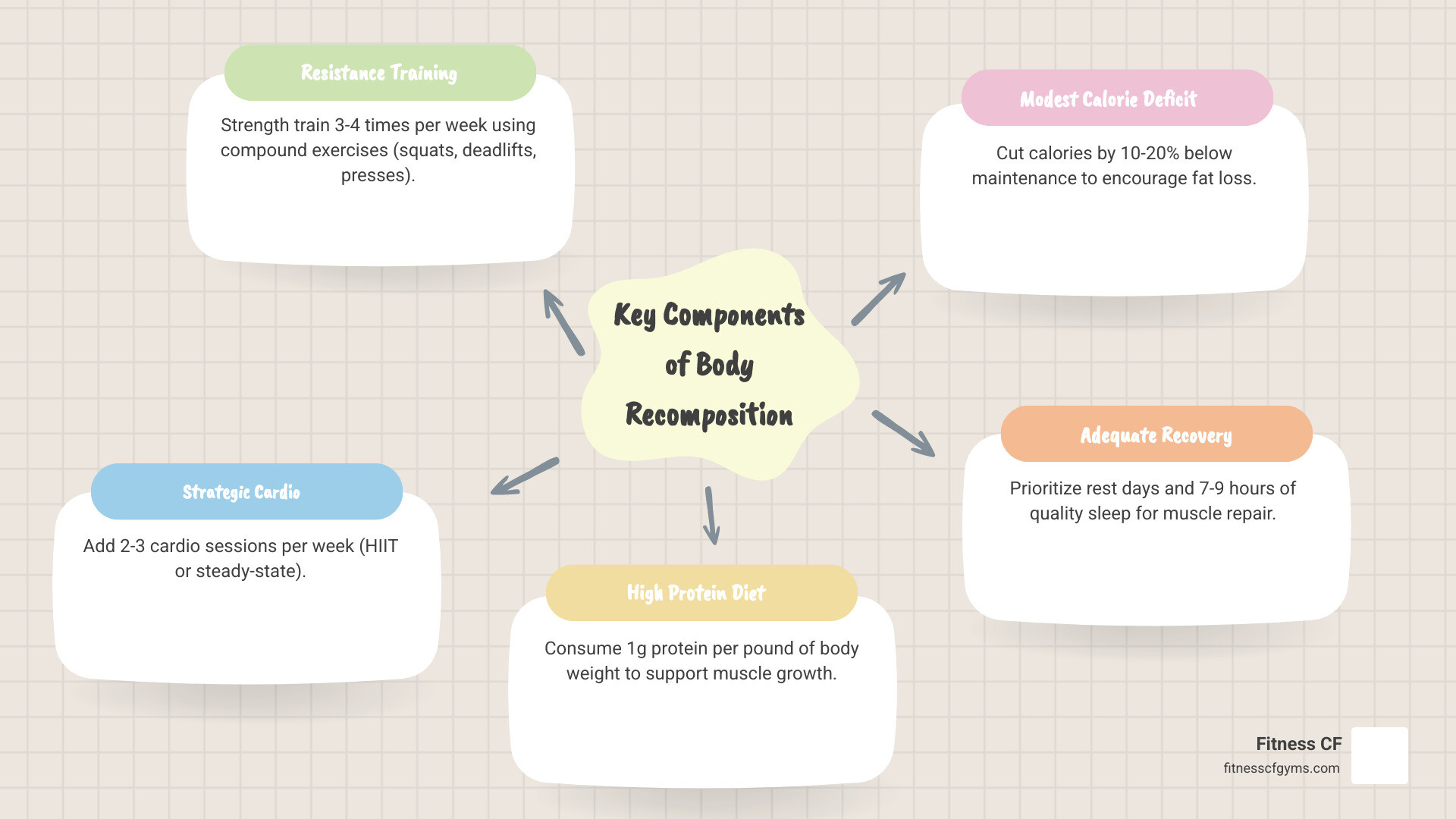
Quick Answer: The Essential Components
- Resistance Training – Strength train 3-4 times per week using compound exercises (squats, deadlifts, presses).
- Strategic Cardio – Add 2-3 cardio sessions per week (HIIT or steady-state).
- High Protein Diet – Consume 1g of protein per pound of body weight.
- Modest Calorie Deficit – Cut calories by 10-20% below maintenance.
- Adequate Recovery – Schedule rest days and prioritize 7-9 hours of sleep.
For years, fitness advice suggested you had to choose: either “bulk” to build muscle (and gain fat) or “cut” to lose fat (and lose muscle). The truth is, research shows that gaining muscle is possible even in a calorie deficit, especially for beginners. You don’t have to pick one goal.
The key is understanding that body recomposition requires a strategic approach. It’s not about dramatic overnight changes but about consistency with training and nutrition.
This process works because muscle and fat are different tissues. When you lift weights, eat enough protein, and maintain a modest calorie deficit, your body gets the signal to build muscle while burning stored fat for energy. The magic happens when these two processes occur at the same time.
I’m Pleasant Lewis, owner of Fitness CF. With over 40 years in the fitness industry, I’ve helped countless people achieve their goals with sustainable, science-based strategies that deliver measurable results.
Understanding Body Recomposition: The Science of Sculpting

Body recomposition is the process of simultaneously losing body fat while gaining muscle mass. Instead of focusing on the scale, you’re reshaping your body’s ratio of fat to lean tissue. This differs from traditional “bulking” and “cutting” cycles and offers a more sustainable path for most people.
Can you really lose fat and gain muscle at the same time? Absolutely. Research shows you can gain muscle mass even in a calorie deficit. Your body is smarter than the old “eat more to grow, eat less to shrink” adage.
Beginners and detrained individuals (those returning after a break) often see the most dramatic results because their muscles are highly responsive to new training. The secret lies in creating an energy balance where your body taps into stored fat for fuel while building new muscle. For a deeper dive, check out our guide on how to lose fat and gain muscle.
The Two Pillars: Calorie Deficit and Muscle Stimulus
Every successful build muscle lose fat workout plan rests on two foundations: a modest calorie deficit and consistent resistance training.
To lose fat, you must consume fewer calories than you burn. However, cutting calories too drastically is counterproductive, as it can cause muscle loss. Aim for a modest deficit of 10-20% below your maintenance calories. This sweet spot encourages your body to burn fat while preserving muscle.
The second pillar is resistance training. Lifting weights signals your muscles to grow stronger. Without this stimulus, your body has no reason to maintain or build muscle during a calorie deficit. A great bonus is that muscle burns more calories than fat, even at rest. Building more muscle increases your resting metabolism, turning your body into a more efficient calorie-burning machine.
The Critical Role of Nutrition
Exercise builds the foundation, but nutrition determines your success. You can’t out-train a bad diet, especially when trying to build muscle and lose fat simultaneously. Your food provides the raw materials for muscle repair, fuels your workouts, and powers your recovery. The synergy between what you eat and how you train is undeniable. Understanding the importance of combining exercise and nutrition is key to open uping your full potential.
The Importance of Protein for Muscle Sparing and Growth
If one macronutrient is the star of a build muscle lose fat workout plan, it’s protein. It’s essential for building and repairing muscle tissue.
When you’re in a calorie deficit, your body looks for energy. Without enough protein, it may break down muscle for fuel. Protein acts as a protective shield, ensuring the weight you lose comes from fat, not muscle.
Research on high-protein diets for body recomposition shows that individuals who ate more protein while training gained more muscle and lost more fat. For body recomposition, aim for about 1 gram of protein per pound of your ideal body weight (or 2.2g per kg). This supports muscle growth and helps you feel fuller, which is a huge advantage when managing calories.
For more detailed guidance, explore our article on the truth about protein: how much do you really need?
Crafting Your Build Muscle Lose Fat Workout Plan
Now that we understand the science, let’s get practical. An effective build muscle lose fat workout plan combines strength training with strategic cardio, all built on a foundation of consistency. Think of your plan as a blueprint that removes guesswork, allowing you to focus your energy on execution. For a comprehensive guide, explore our resource on how to create a workout routine.
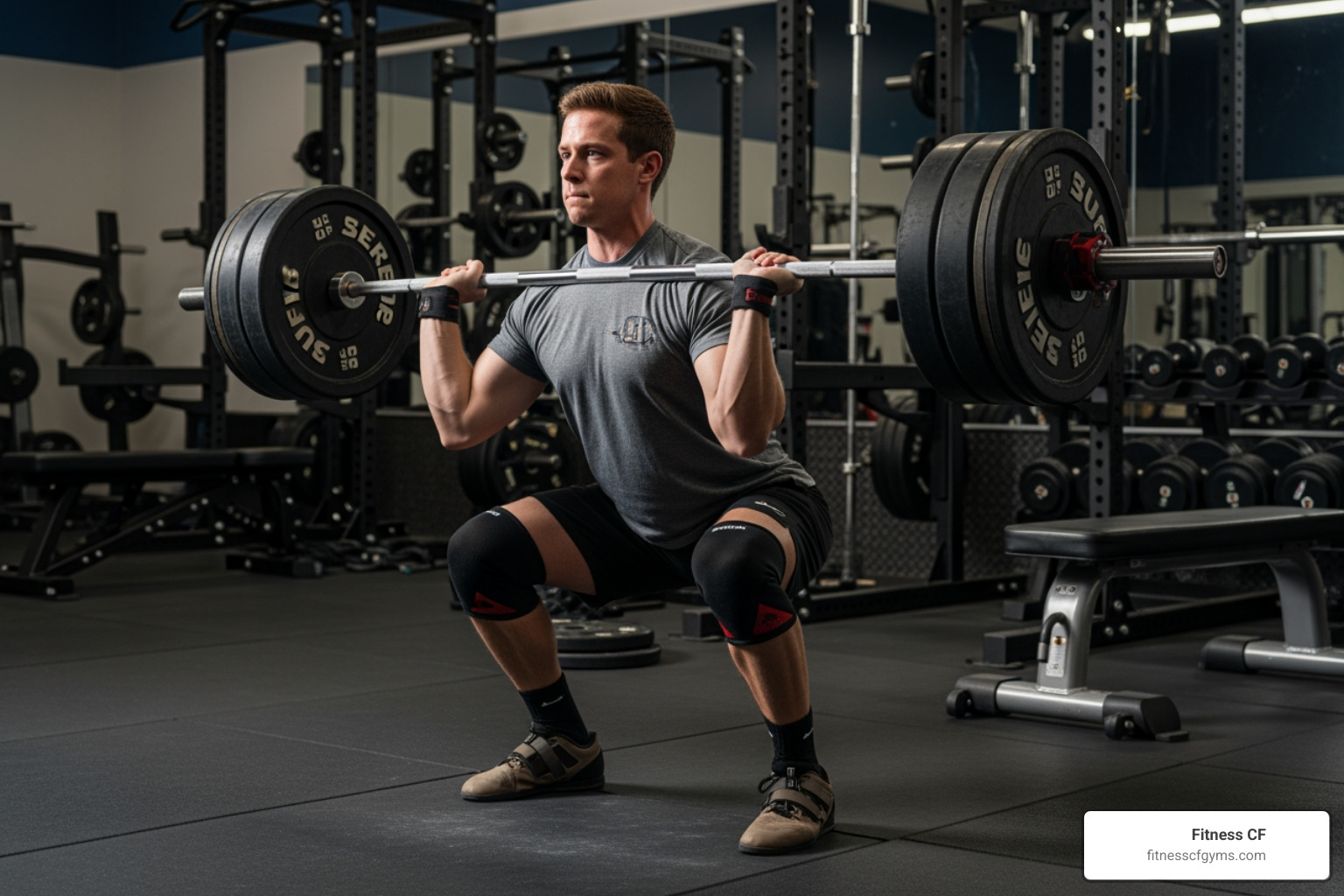
The Best Exercises: Combining Strength and Cardio
The magic of body recomposition happens when you combine strength training and cardio. Combining cardio and strength training is the key to losing fat without sacrificing muscle.
Strength training is the foundation. It signals your body to build and maintain lean muscle, which boosts your metabolism. Cardio plays an equally important role by directly burning calories and strengthening your heart. Don’t underestimate the importance of cardio training for overall health. The Physical Activity Guidelines for Americans recommend at least 150 minutes of moderate-intensity cardio per week.
For efficiency, focus on compound movements that work multiple muscle groups at once. The best compound exercises include squats, deadlifts, bench press, overhead press, rows, and pull-ups or lat pulldowns.
For cardio, you have options. High-Intensity Interval Training (HIIT) involves short, intense bursts of effort, while Low-Intensity Steady State (LISS) includes activities like brisk walking or light jogging. Both are effective.
Key Training Principles for Your Build Muscle Lose Fat Workout Plan
Applying specific training principles will drive continuous improvement.
Progressive overload is the cornerstone of muscle growth. You must continually challenge your muscles by gradually increasing the demand. You can do this by lifting more weight, doing more reps, adding sets, or reducing rest time.
Training intensity techniques like supersets (performing two exercises back-to-back) increase workout density and calorie burn. Your heart rate stays liftd, skyrocketing your energy expenditure.
High-Intensity Interval Training (HIIT) is a powerful tool for body recomposition. It’s incredibly effective for burning fat while preserving muscle, and it boosts your metabolism for hours after your workout—the “afterburn effect.” Learn more about the benefits of HIIT for weight loss.
Finally, understanding the difference between strength-focused (heavy weight, 3-6 reps) and hypertrophy-focused training (moderate weight, 8-15 reps) allows you to fine-tune your approach. For body recomposition, incorporating both styles is ideal to target different muscle fibers and prevent plateaus.
Sample Weekly Build Muscle Lose Fat Workout Plan
Let’s put these principles into a practical weekly schedule. Adjust exercises based on your preferences and available equipment. For more help structuring your week, check out our article on how to build a balanced weekly workout plan.
This sample build muscle lose fat workout plan balances all necessary components for success:
| Day | Focus | Exercises (Examples) | Sets & Reps (General Guideline) | Notes |
|---|---|---|---|---|
| Monday | Upper Body Strength | Barbell Bench Press, Bent-Over Barbell Rows, Overhead Dumbbell Press, Pull-ups (or Lat Pulldowns), Dumbbell Bicep Curls, Triceps Pushdowns | 3-4 sets of 5-8 reps | Focus on heavy, controlled movements. Aim for progressive overload by increasing weight or reps over time. |
| Tuesday | Lower Body Strength | Barbell Squats, Romanian Deadlifts, Leg Press, Walking Lunges, Calf Raises | 3-4 sets of 6-10 reps | Prioritize compound movements. Maintain good form. |
| Wednesday | Rest / Active Recovery | Light walk, stretching, foam rolling, yoga. | 30-45 minutes | Essential for muscle repair and preventing burnout. |
| Thursday | Full Body Hypertrophy | Dumbbell Chest Press (Superset with Push-ups), Seated Cable Rows, Dumbbell Lateral Raises (Superset with Face Pulls), Leg Extensions, Hamstring Curls, Plank variations. | 3 sets of 10-15 reps (or to near failure for supersets) | Incorporate supersets for increased intensity and calorie burn. Focus on muscle contraction and mind-muscle connection. |
| Friday | HIIT Cardio | Treadmill sprints (30 sec sprint, 60 sec walk/jog x 10-15 rounds), Cycling intervals (30 sec max effort, 90 sec easy x 8-12 rounds), Battle Ropes, Burpees, Mountain Climbers. | 20-30 minutes total (including warm-up/cool-down) | Maximizes calorie expenditure and boosts metabolism. Adjust work-to-rest ratios to your fitness level. |
| Saturday | Rest | Full rest. | Allow your body to fully recover and rebuild. | |
| Sunday | LISS Cardio / Core & Flexibility | Brisk walk, light jog, elliptical, or rower at a steady, moderate pace. Follow with a dedicated core workout (crunches, Russian twists, leg raises) and full-body stretching. | 45-60 minutes LISS; 15-20 minutes core; 10-15 minutes flexibility. | Total at least 150 minutes of cardio per week, as recommended by the Federal Physical Activity Guidelines for Americans. |
This structure provides four days of resistance training, two-plus days of cardio, and adequate recovery. It’s comprehensive, balanced, and sustainable—exactly what you need for successful body recomposition.
Maximizing Results and Avoiding Common Pitfalls
To maximize results from your build muscle lose fat workout plan, what you do outside the gym is just as important as what you do inside. The real magic of change happens during recovery.
Sleep is especially critical. Aiming for anything less than 7-9 hours nightly can sabotage your progress. During deep sleep, your body releases growth hormone, which is crucial for muscle repair and fat metabolism. Poor sleep also disrupts hunger hormones, increasing cravings for high-calorie foods.
Learning to listen to your body is key. Soreness is normal, but sharp pain isn’t. Being tired after a workout is expected, but chronic exhaustion can signal overtraining. Pay attention to the signals your body sends.

The Crucial Role of Rest and Recovery
Your muscles don’t grow while you’re lifting; they grow while you rest. Strength training creates tiny micro-tears in muscle fibers, and during recovery, your body repairs them, making the muscle stronger and larger. This is why rest is non-negotiable.
Overtraining is counterproductive, leading to fatigue, decreased performance, and increased injury risk. This is why our sample plan includes two full rest days and one active recovery day. Active recovery—light activities like walking, yoga, or foam rolling—can speed up the process by increasing blood flow to sore muscles without adding stress.
Scheduling rest isn’t lazy; it’s strategic. For a deeper understanding, check out our article on why recovery is just as important as exercise. For practical strategies, explore our guide on workout recovery.
Common Mistakes to Avoid
Avoid these common traps that can slow your progress with a build muscle lose fat workout plan.
- Setting unrealistic expectations: Sustainable body recomposition takes months, not weeks. Celebrate small wins along the way, like an extra rep or your clothes fitting better.
- Obsessing over the scale: The scale doesn’t tell the whole story. Muscle is denser than fat, so your weight might not change much even as you get leaner and stronger. Track progress with photos, measurements, and how you feel.
- Neglecting nutrition: You cannot out-train a poor diet. Hitting your protein goals and maintaining a modest calorie deficit are non-negotiable. For more insights, read about common mistakes when losing weight.
- Skipping warm-ups and cool-downs: A 5-10 minute warm-up prepares your body for work and prevents injury. A cool-down helps your body recover and can reduce soreness.
- Inconsistency: Consistency is more important than perfection. Missing one workout won’t derail you, but consistently skipping them will. Get back on track the next day.
- Believing in spot reduction: You can’t target fat loss from specific body parts. Fat loss happens systemically. A comprehensive plan will reduce overall body fat over time. Learn more about the myth of spot reduction.
Your Path to a Stronger, Leaner You
You’ve reached the end of our guide, and hopefully, you’re ready to transform your body. A build muscle lose fat workout plan is a proven, science-backed approach that works when you commit to the fundamentals.
To recap: consistent strength training signals muscle growth, strategic cardio accelerates fat loss, and smart nutrition (especially adequate protein in a modest calorie deficit) provides the fuel for change. These three pillars work in harmony to help you shed fat while building lean muscle.
Body recomposition is a marathon, not a sprint. The changes happen gradually, but this approach builds sustainable habits for life. The long-term benefits go far beyond aesthetics, including a healthier metabolism, more energy, better bone density, and a reduced risk of chronic disease. You’re investing in a healthier, more vibrant future.
At Fitness CF, we believe in empowering you with the knowledge and tools for a sustainable healthy lifestyle. With four decades of experience, we’ve seen countless people transform their lives through consistent effort and the right guidance. We’re here to support you every step of the way.
If you’re ready to take the next step with personalized guidance, I encourage you to explore our personal training options. Get expert guidance on your fitness journey with personal training and let’s sculpt a stronger, leaner you, together! Your future self will thank you for starting today.