Why an Active Recovery Bike Workout Belongs in Every Training Plan
An active recovery bike workout is a short, low-intensity cycling session — typically 30 to 60 minutes at 50–65% of your FTP or 30–60% of your max heart rate — designed to speed up muscle repair, reduce soreness, and prepare your body for the next hard effort.
Quick answer: Here’s what you need to know at a glance:
| Element | Recommendation |
|---|---|
| Intensity | 50–65% FTP or 30–60% max heart rate |
| Duration | 30–60 minutes |
| Cadence | 85–95 RPM |
| Frequency | 1–3 times per week |
| Best timing | Day after a hard session or race |
| Goal | Blood flow, nutrient delivery, soreness reduction |
A healthy lifestyle isn’t built on “all-out” days alone. The real progress happens when you balance training stress with recovery, quality sleep, smart nutrition, and consistent movement.
That’s why recovery matters for overall fitness—not just for cyclists. Whether you’re focused on strength training, cardio, or a mix of both, your body doesn’t get stronger during the workout. It adapts afterward, rebuilding muscle tissue, replenishing energy stores, and strengthening connective tissue.
Skip that recovery window and you stay stuck in a catabolic state — where your body breaks tissue down instead of building it back up.
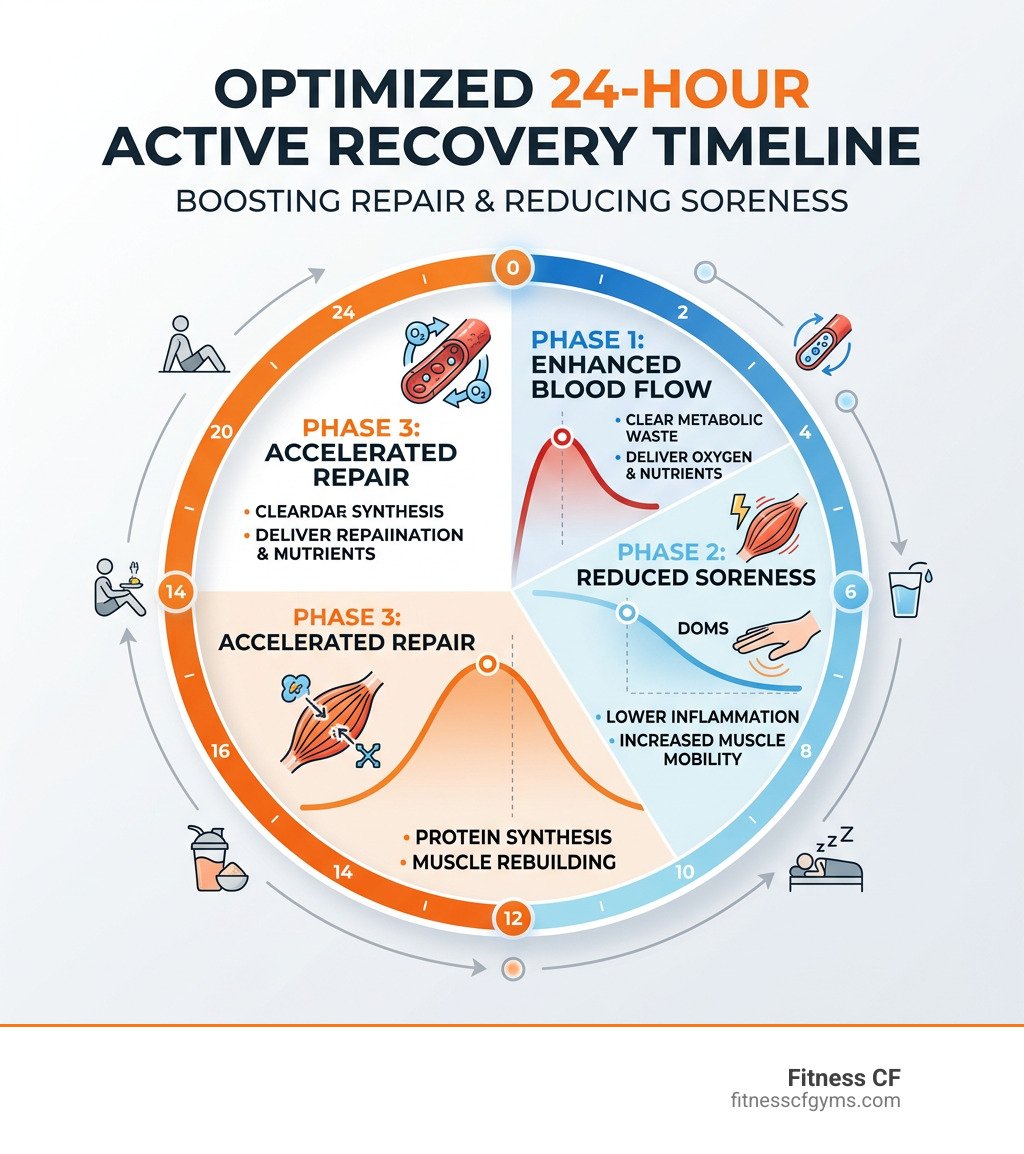
That’s exactly where the bike becomes one of the most useful recovery tools. Low-intensity spinning keeps blood moving, delivers oxygen and nutrients to sore muscles, and supports lymphatic flow — all without adding more fatigue to the pile. Studies show active recovery can reduce muscle soreness by up to 30% compared to doing nothing at all.
Active recovery also supports training consistency, which is one of the biggest predictors of long-term results. When you feel better between workouts, you’re more likely to keep showing up for the sessions that matter—like progressive strength training (for lean muscle, bone density, and metabolic health) and regular cardio (for heart health, endurance, and stress management).
Active recovery bike workout terms to know:
The Science Behind an Active Recovery Bike Workout
To understand why we suggest getting back on the saddle when your legs feel like lead, we have to look at the “muscle pump” mechanics. When you perform an active recovery bike workout, your muscles contract gently. These contractions act like a secondary heart, pushing blood through your veins and back toward your heart.
This increased circulation is the “secret sauce” of recovery. It delivers fresh oxygen and essential nutrients to the microscopic tears in your muscle fibers caused by heavy lifting or high-intensity intervals. Think of it as a delivery service for the building blocks your body needs to move from a catabolic (breaking down) state to an anabolic (building up) state.
Furthermore, scientific research on recovery interventions suggests that active movement is significantly more effective at clearing metabolic byproducts than sitting on the couch. While the old myth that “lactic acid causes soreness for days” has been debunked—lactate actually clears within about an hour of exercise—active movement helps manage inflammation and promotes lymphatic drainage. This process helps move waste products out of the soft tissues, reducing that heavy, stiff feeling often associated with workout recovery.
Active vs. Passive Recovery: Which is Better?
At Fitness CF, we often get asked: “Can’t I just take the day off?” The answer depends on your “energy bank account.” Imagine every hard workout is a withdrawal. If you keep withdrawing without depositing, you hit an “overdraft”—also known as overtraining.
Passive recovery is complete rest. It is essential after extreme efforts like a marathon or when you show signs of systemic exhaustion. However, active vs. passive performance research shows that athletes who engage in light activity often return to their peak power output faster than those who remain sedentary.
| Feature | Active Recovery (The “Deposit”) | Passive Recovery (The “Reset”) |
|---|---|---|
| Activity Level | Very low intensity (Zone 1) | Complete rest / Sleep |
| Primary Benefit | Increased blood flow & nutrient delivery | Maximum muscle protein synthesis |
| Mental Impact | Maintains routine and momentum | Total mental “unplug” |
| When to Use | Day after hard training or intervals | After races or during illness |
While muscle protein synthesis happens during both, the gentle movement of an active recovery bike workout keeps the body in a state of “homeostasis” or balance, preventing the stiffness that makes the next day’s workout feel like an uphill battle.
How to Structure Your Active Recovery Bike Workout
The biggest mistake cyclists and fitness enthusiasts make is riding too hard on their recovery days. If you finish your recovery ride feeling tired, you did it wrong. We want you to finish feeling better than when you started.
To keep it truly restorative, you should aim for a “Zone 1” effort. This typically equates to 50–65% of your Functional Threshold Power (FTP) or roughly 30–60% of your maximum heart rate. If you don’t use a power meter or heart rate monitor, use the talk-test for intensity. You should be able to recite the entire “Pledge of Allegiance” or hold a full conversation about your weekend plans without gasping for air.
Because cycling is a non-weight-bearing activity, it offers incredible low-impact workout benefits, making it the perfect tool for recovery without stressing your joints.
Ideal Cadence and Duration for an Active Recovery Bike Workout
When you’re on the bike, your goal is “suppleness.” We recommend a cadence of 85–95 RPM. Why so fast? A higher cadence with low resistance shifts the load from your muscles to your cardiovascular system. It “flushes” the legs without requiring forceful muscle contractions that could cause further damage.
- Duration: Keep it between 30 and 60 minutes. Anything less might not get the blood flowing sufficiently; anything more starts to become a “base endurance” ride that adds training stress.
- Gearing: Stay in the small chainring. You should feel almost zero “bite” or resistance against your pedals.
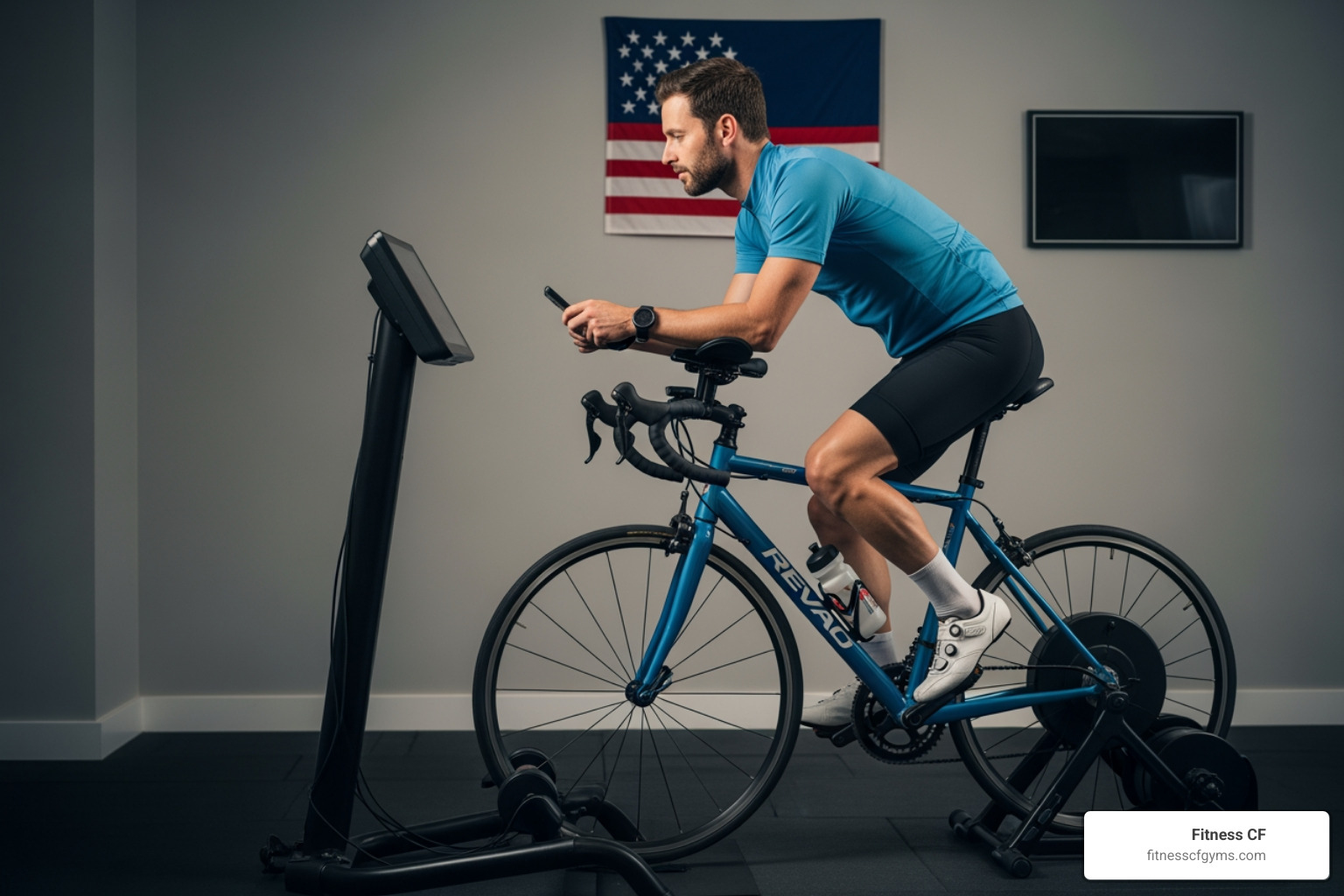
- Environment: Indoor options like a spin bike are often superior for recovery. Using “ERG mode” on a smart trainer allows you to set a specific wattage so you can’t accidentally push too hard when a favorite song comes on. If you’re looking for spin bike workout tips, the goal here is the opposite of a high-intensity class.
Integrating Recovery Rides into a Healthy Lifestyle
Recovery isn’t just about the time spent on the bike; it’s about how that movement fits into your overall health habits. An active recovery bike workout is a simple way to stay active on lower-energy days while still supporting your bigger goals—building strength, improving cardiovascular fitness, and maintaining a sustainable routine.
These rides pair especially well with strength training. If you had a heavy lower-body session (squats, deadlifts, lunges), a 20–40 minute easy spin the next day can reduce stiffness and help you feel more mobile. That matters because strength training delivers major long-term benefits: stronger muscles and bones, better joint support, improved insulin sensitivity, and a higher resting metabolic rate.
Cardio benefits, too. Even gentle cycling supports heart health by encouraging circulation and improving your ability to recover between harder sessions. Over time, a well-rounded plan that includes both cardio and strength training can support blood pressure, cholesterol management, mood, sleep quality, and daily energy.
Beyond the physical, low-stress movement can help regulate stress and keep you consistent. Think of it as “active relaxation”—a way to move your body without draining your willpower or adding strain.
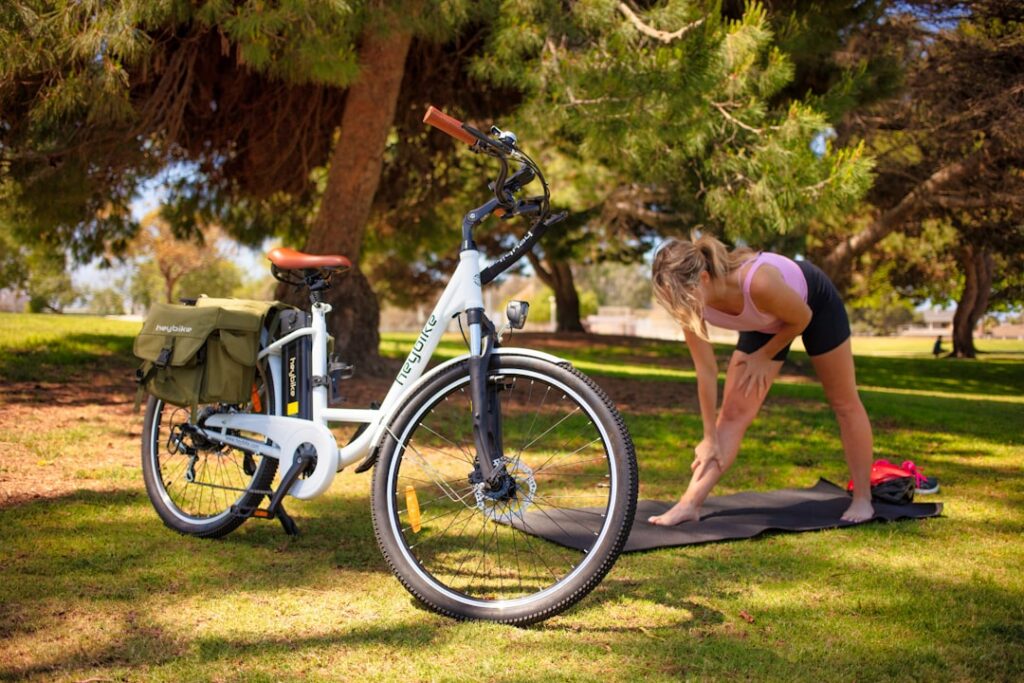
We also recommend pairing your ride with stretches for beginners. Taking 10 minutes after your spin to focus on your hip flexors, glutes, and lower back can enhance the benefits of active recovery for athletes by maintaining flexibility and range of motion.
Avoiding Common Mistakes in Your Active Recovery Bike Workout
The “ego” is the enemy of recovery. It’s tempting to chase numbers, turn it into an unplanned tempo session, or “make it count,” but doing so turns a recovery ride into a “junk miles” workout—too hard to recover, too easy to build real fitness.
Watch out for these overtraining symptoms:
- Elevated resting heart rate.
- Persistent muscle soreness that doesn’t improve with movement.
- Irritability or lack of motivation.
Proper fueling is also vital. Even though the ride is easy, your body is still in “repair mode.” Aim for a post-ride snack with a 3–5:1 carbohydrate-to-protein ratio. This provides the energy to replenish glycogen and the amino acids to fix muscle tissue. Check out the best recovery practices after a tough workout for more on nutrient timing.
Finally, never underestimate sleep. While an active recovery bike workout helps, the heavy lifting of hormonal repair happens while you snooze. Most hard-training athletes need 8–10 hours of sleep to fully adapt to their training loads.
Sample Protocols for Your Next Recovery Session
Ready to try it? Here are three ways to structure your next session at the gym or at home.
1. The 60-Minute “Leg Flush” This is the gold standard for the day after a big race or a long weekend ride.
- 0-15 min: Very easy warm-up, gradually bringing cadence to 90 RPM.
- 15-45 min: Steady spin in Zone 1. Keep resistance low enough that you could breathe through your nose the entire time.
- 45-60 min: Gentle cool-down. The importance of warm-up and cool-down cannot be overstated for maintaining heart health and circulation.
2. The Technique & Recovery Hybrid If you find steady spinning boring, use the time to improve your pedaling efficiency.
- Warm-up: 10 minutes easy.
- One-Leg Drills: 5 sets of (30 seconds right leg only / 30 seconds both / 30 seconds left leg only / 30 seconds both). This helps identify “dead spots” in your stroke.
- Cadence Pyramids: 1 min at 90 RPM, 1 min at 100 RPM, 1 min at 110 RPM (keep resistance near zero). Then back down.
- Cool-down: 10 minutes easy.
3. The Post-HIIT Spin If you’ve just finished one of our high-energy spin classes, don’t just jump in the car.
- 10-15 min: High-cadence spinning (90–110 RPM) at extremely low resistance. This prevents blood pooling in the legs and helps you transition back to a resting state more comfortably.
Frequently Asked Questions about Recovery Cycling
How often should I do a recovery ride?
For most people, 1–3 times per week is ideal. Usually, these are scheduled the day after your hardest training sessions. However, the most important rule is to listen to your body. If you feel truly exhausted, a complete rest day (passive recovery) might be more beneficial than an active recovery bike workout.
Can I use a stationary bike for active recovery?
Absolutely. In fact, we often recommend it! Using a spin bike at Fitness CF provides a controlled environment where you don’t have to worry about traffic, hills, or stoplights. This makes it much easier to maintain a steady, low-intensity heart rate without the “spikes” in effort that happen when you hit a surprise hill outdoors.
Does active recovery help with DOMS?
Yes! Research on delayed onset muscle soreness (DOMS) indicates that light exercise can decrease perceived soreness by up to 30%. By stimulating blood flow and “massaging” the muscles through movement, you accelerate the repair process and reduce the chemical buildup that causes that post-workout ache.
Conclusion
At the end of the day, overall fitness isn’t just about how hard you can push; it’s about how well you can recover and how consistently you can train. By integrating an active recovery bike workout into your routine, you aren’t “taking a day off”—you’re taking a day to get better.
That single habit supports a healthier lifestyle in several ways: it keeps you moving without overloading your body, helps you feel ready for your next strength training session, and improves your ability to handle cardio work with less soreness and fatigue.
The big picture is balance. Build strength to support muscles, joints, and metabolism. Do cardio to strengthen your heart and lungs and improve stamina. Add recovery sessions to stay consistent and resilient.
Consistency is the ultimate lever for long-term health. When you recover well, you can train well—and that’s how results actually stick.