Why 45-Minute Yoga for Strength and Flexibility Changes Everything
45 minute yoga for strength and flexibility combines the best of both worlds: building functional muscle tone while increasing your range of motion. Here’s what makes it so effective:
- Time-efficient: A complete full-body workout in under an hour
- Dual benefits: Simultaneously builds strength and improves flexibility
- Accessible: Can be modified for any fitness level, from complete beginners to advanced practitioners
- Holistic approach: Integrates breathwork and mindfulness with physical movement
- Proven results: Regular practice helps with lower back pain, stress reduction, and cardiovascular health
Research shows a 45-minute yoga routine can include nearly 50 poses. By holding each for about five breaths (30 seconds), you get a comprehensive workout that increases muscle tone, improves flexibility, and boosts physical and mental wellbeing.
If you’re a busy Central Florida resident trying to balance family life with fitness goals, this time frame is your sweet spot. It’s long enough to deliver real results but short enough to fit into your schedule before work, during lunch, or after the kids are in bed.
Why strength and flexibility matter together:
For optimal health, you need both. Strength training alone can cause tight muscles and injury, while flexibility without strength leaves joints unstable. Yoga bridges this gap, creating balanced, functional fitness for everyday activities—from picking up groceries to playing with your children.
Styles like Vinyasa flow and Power yoga are particularly effective for this dual approach. They keep you moving continuously, building cardiovascular endurance while challenging your muscles through bodyweight resistance. The flowing sequences connect breath with movement, creating what practitioners call “meditation in motion.”
I’m Pleasant Lewis, and with 40 years in fitness, I’ve seen how 45 minute yoga for strength and flexibility transforms lives. It complements traditional training for complete wellness. This guide will show you how to build a practice for lasting results.
The Dual Power of Yoga: Why 45 Minutes is Your Sweet Spot
We understand that finding time for fitness can be a challenge. That’s why a 45 minute yoga for strength and flexibility routine is a game-changer. It’s a total body workout that delivers a multitude of benefits for a healthier, more balanced lifestyle.
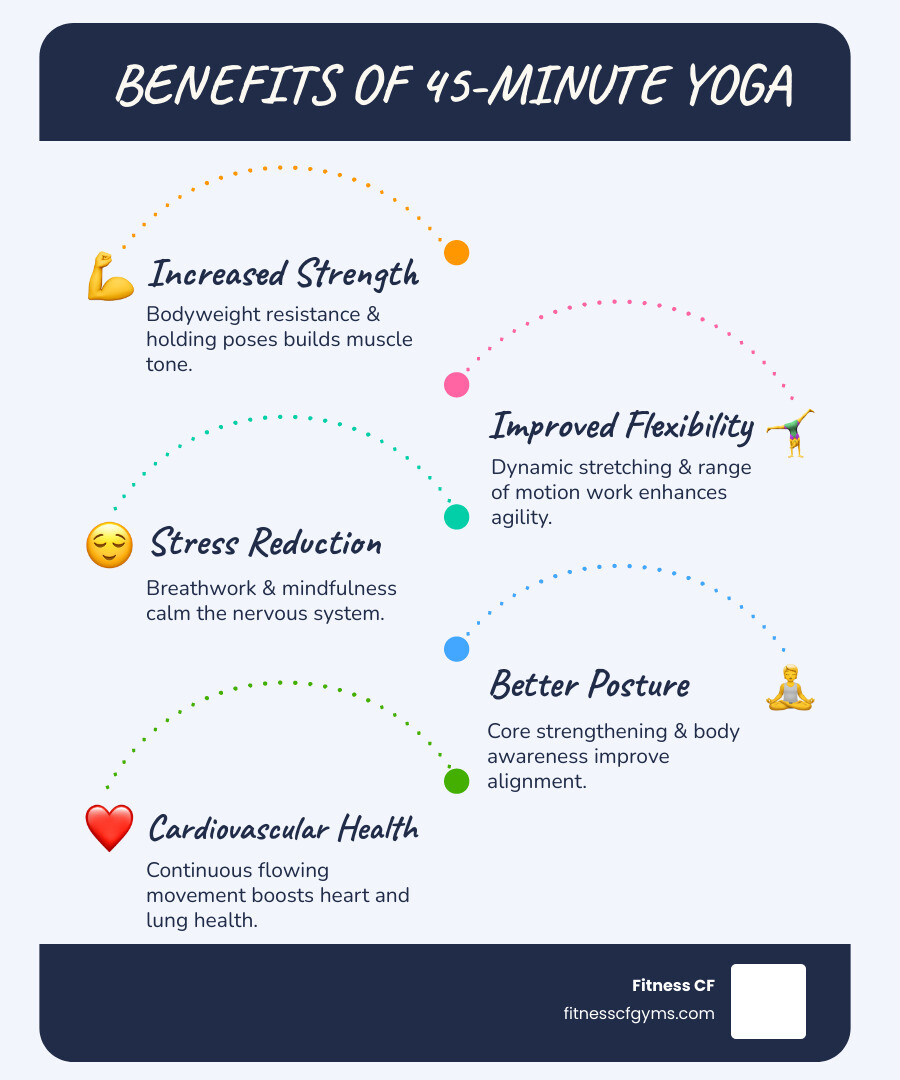
This focused practice increases muscle tone, making you feel stronger daily. It also improves flexibility and range of motion, which is crucial for preventing injuries and maintaining agility. These are practical benefits that make everyday movements easier.
Beyond the physical, the mental and emotional advantages are profound. Regular yoga practice significantly reduces stress and promotes mental clarity by combining physical exertion with focused breathing. Evidence shows it helps with high blood pressure, heart disease, aches and pains (including lower back pain), depression, and stress, making it a holistic approach to wellbeing.
Furthermore, a dynamic 45-minute flow can offer cardiovascular benefits, elevating your heart rate and improving circulation. This makes it an excellent complement to traditional strength training and cardio workouts, helping to create a well-rounded fitness regimen. Whether you’re lifting weights at Fitness CF or enjoying a brisk walk around Lake Eola, incorporating yoga will improve your performance and aid in recovery.
A 45-minute session is efficient. It’s long enough to engage major muscle groups and provide a mental reset, yet short enough for busy schedules. It builds a foundation for long-term physical and mental wellbeing.
The Anatomy of Your 45-Minute Yoga for Strength and Flexibility Practice
To master 45 minute yoga for strength and flexibility, understand its effective structure. We’ll focus on Vinyasa flow, or “meditation in motion,” linking breath to movement. This creates a dynamic sequence that builds heat, strengthens muscles, and deepens flexibility.
A typical 45-minute practice structure looks something like this:
- Warm-up (5-10 minutes): Gentle movements to prepare the body and mind.
- Sun Salutations (5-10 minutes): A foundational sequence that builds heat and fluidity.
- Peak Poses (20-25 minutes): The core of our practice, focusing on strength and flexibility builders.
- Cool-down (5-10 minutes): Gentle stretches to release tension and calm the body.
- Savasana (5-10 minutes): Final relaxation to integrate the practice.
This structure ensures a comprehensive workout that targets all aspects of strength and flexibility, while also nurturing our mental wellbeing.
Essential Props for Your Practice
While yoga can be practiced anywhere, a few simple props can significantly improve your 45 minute yoga for strength and flexibility session.
- Yoga Mat: Provides cushioning and grip for stability and comfort.
- Yoga Blocks: Versatile tools that bring the ground closer, aiding in balance and deepening stretches.
- Yoga Strap: Helps extend your reach in flexibility poses without straining.
- Water Bottle: Staying hydrated is key as we build heat.
- Comfortable Clothing: Allows for a full range of motion.
These tools aren’t just for beginners; advanced practitioners use them to refine alignment and explore new depths in their poses.
The Role of Breathwork (Pranayama)
Breath is the cornerstone of yoga. In our 45 minute yoga for strength and flexibility practice, breathwork (pranayama) is about consciously directing our life force. Connecting breath to movement transforms a series of exercises into a moving meditation.
We’ll often use techniques like Ujjayi breath (victorious breath), which helps us:
- Improve Focus: The sound of your breath anchors your mind.
- Build Internal Heat: This breath generates warmth, aiding muscle elasticity.
- Deepen Stretches: A full exhale helps you relax deeper into poses.
- Calm the Nervous System: Rhythmic breathing promotes relaxation and reduces stress.
- Cultivate Mindfulness: It keeps you present in each moment.
This conscious breathing technique allows us to move with grace and power, making our practice more effective.
The Importance of Mindfulness on the Mat
Yoga is as much a mental practice as it is a physical one. Mindfulness in our 45 minute yoga for strength and flexibility session means bringing our full attention to the present moment without judgment.
- Body Awareness: Pay attention to how your body feels in each pose to prevent injury.
- Setting an Intention: Set an intention (sankalpa) to give your practice a deeper purpose.
- Non-Judgment: Approach your practice with kindness, letting go of expectations.
- Mental Resilience: Calmly navigating challenges builds mental fortitude.
- Being Present: Immerse yourself in the experience without distraction.
- Emotional Regulation: Breath and movement help you process emotions for greater balance.
By integrating mindfulness, our practice becomes a powerful tool for self-findy and holistic wellbeing.
Your Step-by-Step 45-Minute Yoga Flow
This flow is designed to maximize both strength and flexibility within our 45 minute yoga for strength and flexibility session. Aim to hold each pose for approximately five deep breaths (about 30 seconds) unless specified. Most importantly, listen to your body and modify as needed. This is your practice!
Part 1: Warm-Up and Awakening (Minutes 0-10)
We start gentle, preparing our body and mind for the work ahead.
- Child’s Pose (Balasana) – 2 minutes: Kneel on your mat, lay your torso over your thighs, and extend arms forward or relax them beside your body. Focus on deep breaths to center yourself and release tension. Source: POPSUGAR Photography / Louisa Larson Child’s Pose With Relaxed Arms
- Cat-Cow Poses (Marjaryasana-Bitilasana) – 2 minutes: On hands and knees, inhale to drop your belly and arch your back (Cow). Exhale to round your spine (Cat). Flow between these poses with your breath to warm up the spine. Source: POPSUGAR Photography / Louisa Larson Cow and Cat
- Downward-Facing Dog (Adho Mukha Svanasana) – 3 minutes: From hands and knees, tuck your toes and lift your hips up and back into an inverted V-shape. Press into your palms and let your head hang. Pedal your feet to stretch your hamstrings. This pose lengthens the spine and strengthens arms and legs. Source: POPSUGAR Photography / Louisa Larson Downward Facing Dog
- Sun Salutation A Flow (Surya Namaskar A) – 3 minutes: Flow through this sequence 2-3 times to build heat.
- Mountain Pose (Tadasana): Stand tall at the top of your mat. Source: POPSUGAR Photography / Louisa Larson Mountain Pose
- Standing Forward Bend (Uttanasana): Inhale arms up, exhale and fold forward from your hips. Source: POPSUGAR Photography / Louisa Larson Sun Salutation A: Standing Forward Bend
- Halfway Lift (Ardha Uttanasana): Inhale, lift halfway with a flat back.
- Plank to Chaturanga (Dandasana): Exhale, step back to Plank, then lower to Chaturanga (low plank). Source: POPSUGAR Photography / Louisa Larson Sun Salutation A: Chaturanga
- Upward-Facing Dog (Urdhva Mukha Svanasana): Inhale, roll over your toes, straighten arms, and lift your chest. Source: POPSUGAR Photography / Louisa Larson Sun Salutation A: Upward Facing Dog
- Downward-Facing Dog (Adho Mukha Svanasana): Exhale, press back to Downward-Facing Dog. Source: POPSUGAR Photography / Louisa Larson Sun Salutation A: Down Dog
Part 2: Building Strength and Heat in your 45-minute yoga for strength and flexibility (Minutes 11-30)
Now we dive into poses that challenge our muscles and build functional strength.
- Three-Legged Dog to Knee-Up Plank – 2 minutes per side (4 minutes total): From Down Dog, lift your right leg high. Exhale and shift forward, bringing your right knee to your chest into a Knee-Up Plank. Hold for five breaths, engaging your core. Inhale back to Three-Legged Dog. Repeat on the left side. Source: Louisa Larson Photography Three-Legged Dog & Source: Louisa Larson Photography Knee-Up Plank
- Warrior I (Virabhadrasana I) – 1.5 minutes per side (3 minutes total): From Down Dog, step your right foot forward. Spin your left heel down. Inhale, lift your torso and arms overhead, squaring your hips forward. Repeat on the left side. Source: Louisa Larson Photography Warrior 1
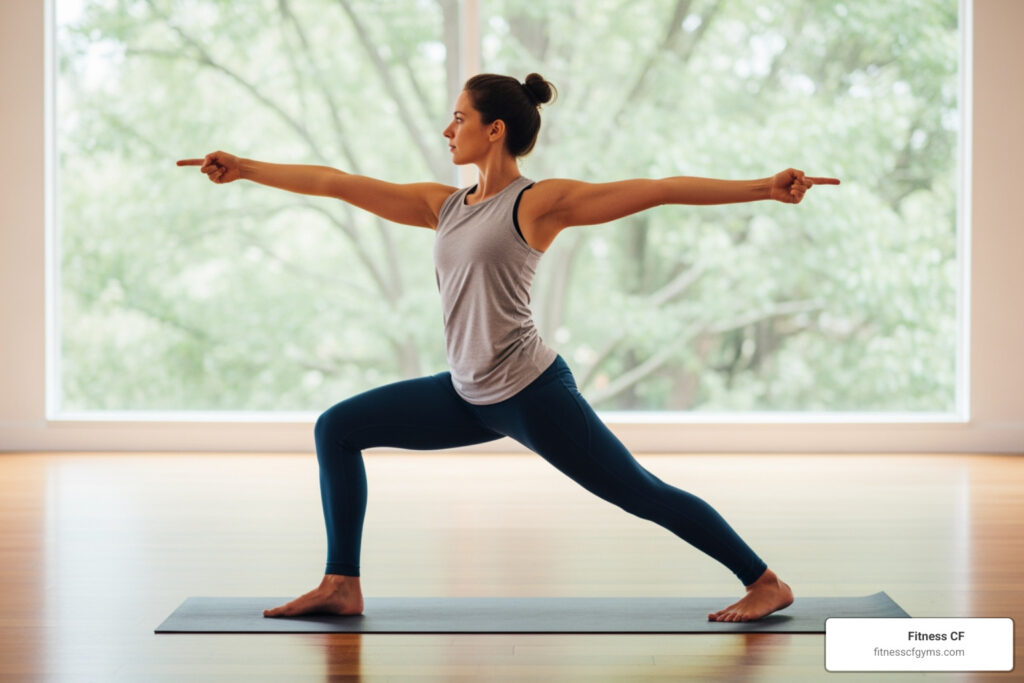
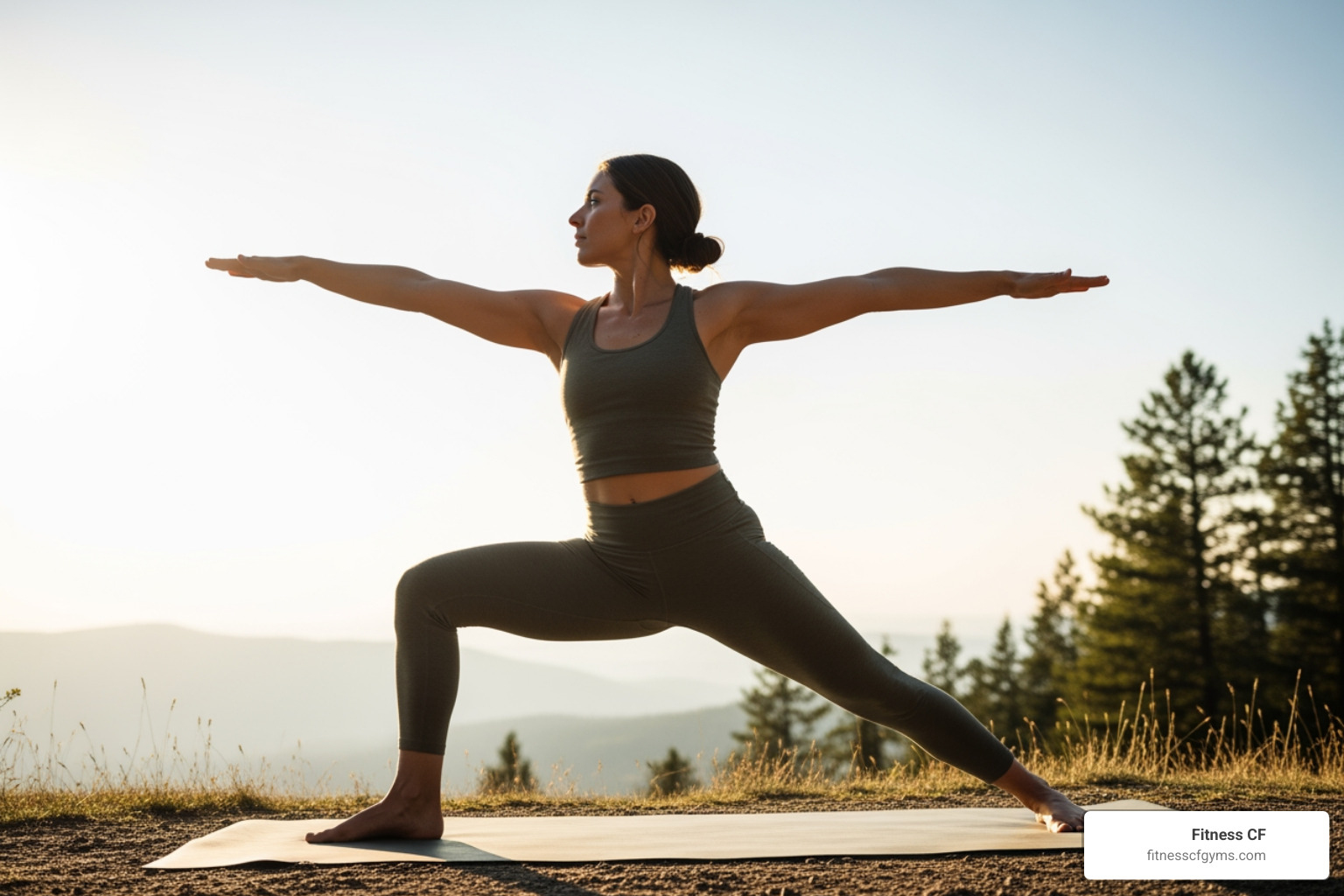
- Warrior II (Virabhadrasana II) – 1.5 minutes per side (3 minutes total): From Warrior I, open your hips and torso to the side, extending arms to a T. Gaze over your front fingertips. This pose builds leg strength and hip flexibility. Repeat on the left side. Source: Louisa Larson Photography Warrior 2
- Reverse Warrior (Viparita Virabhadrasana) – 1 minute per side (2 minutes total): From Warrior II, arch back, reaching your front arm overhead while your back hand rests on your back leg. This stretches your side body. Repeat on the left side. Source: Louisa Larson Photography Reverse Warrior
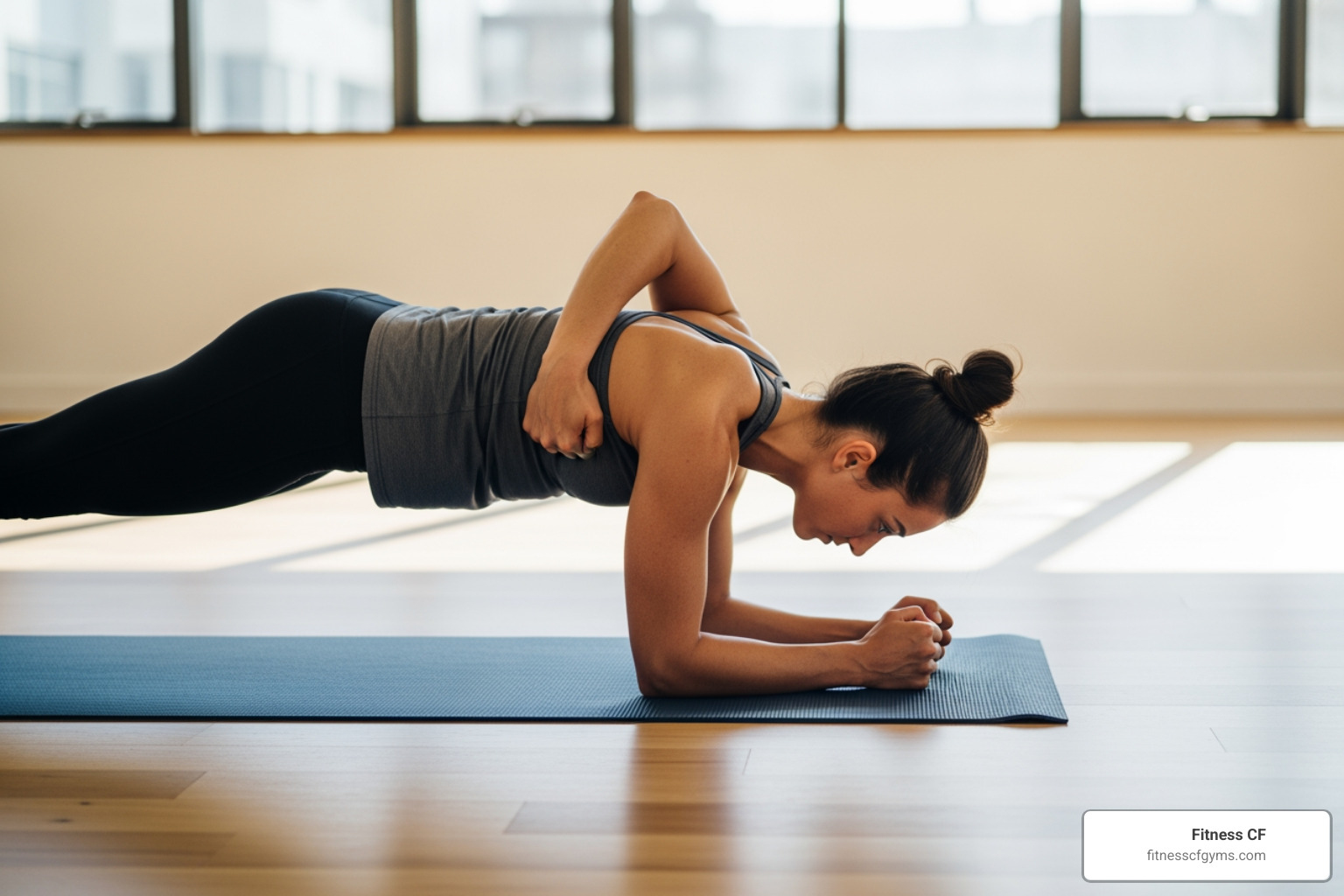
- Plank Pose (Phalakasana) – 1 minute: Shift forward from Down Dog, stacking shoulders over wrists in one straight line. Engage your core. This is a powerful full-body strengthener. Source: POPSUGAR Photography / Louisa Larson Plank
- Chaturanga Dandasana (Four-Limbed Staff Pose) – 1 minute: From Plank, lower halfway, keeping elbows by your ribs. This strengthens arms and core.
- Side Plank (Vasisthasana) – 1 minute per side (2 minutes total): From Plank, shift weight to your right hand and stack or stagger your feet. Lift your left arm high, engaging your obliques. Excellent for core and arm strength. Repeat on the left side. Source: POPSUGAR Photography / Louisa Larson Side Plank
- Boat Pose (Paripurna Navasana) – 2 minutes: Sit on your mat, lean back slightly, and lift your feet, keeping shins parallel to the floor. Extend arms forward. For more challenge, straighten legs. A fantastic core strengthener. Source: POPSUGAR Photography / Louisa Larson Boat
- Twisting Lizard (Utthan Pristhasana Variation) – 1.5 minutes per side (3 minutes total): From Down Dog, step your right foot into a low lunge and drop your left knee. Raise your right arm and twist, gazing behind you. A deep hip opener and spinal twist. Repeat on the left side. Source: POPSUGAR Photography / Louisa Larson Twisting Lizard
Part 3: Deepening Flexibility and Cooling Down in your 45-minute yoga for strength and flexibility (Minutes 31-45)
Now we transition to deeper stretches, releasing tension, and preparing for relaxation.
- Pigeon Pose (Eka Pada Rajakapotasana) – 2.5 minutes per side (5 minutes total): From Down Dog, bring your right knee toward your right wrist, extending your left leg straight back. Stay upright or fold forward over your front leg for an intense hip opener. Repeat on the left side. Source: POPSUGAR Photography / Louisa Larson Pigeon
- Seated Forward Bend (Paschimottanasana) – 2 minutes: Sit with legs extended. Inhale to lengthen your spine, then exhale and fold forward from your hips, reaching for your feet or shins. This stretches the hamstrings and spine. Source: POPSUGAR Photography / Louisa Larson Seated Straddle (can be adapted)
- Happy Baby Pose (Ananda Balasana) – 2 minutes: Lie on your back and draw your knees toward your armpits. Grab the outside of your feet, soles facing the ceiling. Gently pull down to open the hips and inner groins. Source: POPSUGAR Photography / Louisa Larson Happy Baby
- Lying Spinal Twist (Supta Matsyendrasana) – 2 minutes per side (4 minutes total): Lie on your back, hug knees to your chest. Extend arms to a T and drop both knees to the right, keeping your left shoulder grounded. Gaze left. This releases the spine and lower back. Repeat on the other side. Source: POPSUGAR Photography / Louisa Larson Lying Spinal Twist
- Savasana (Corpse Pose) – 5 minutes: Lie flat on your back, arms by your sides with palms up. Let your feet fall open. Close your eyes and allow your body to completely relax and integrate the practice. Source: Louisa Larson Photography Savasana
Modifying Your Practice for All Levels
45 minute yoga for strength and flexibility is adaptable for all fitness levels. It’s about meeting yourself where you are.
- Using blocks for support: Place blocks under your hands in poses like Standing Forward Bend to bring the floor closer and maintain a long spine.
- Bending knees in forward folds: If hamstrings are tight, bend your knees to protect your lower back.
- Dropping a knee in lunges: In lunges, drop the back knee to the mat for more stability.
- Using a strap for binds: A strap can help you access deeper stretches in poses like Seated Forward Bend without straining.
- Advanced options like arm balances: For more challenge, incorporate poses like Crow, but always warm up properly.
- Listening to your body’s signals: This is the most important modification. Discomfort is okay, but sharp pain is a signal to stop. Explore your edge, but never push into pain.
The goal isn’t to look a certain way in a pose, but to feel a certain way. Our bodies are unique, and our practice should reflect that.
Practice Smart: Safety, Risks, and Consistency
As with any physical activity, practicing 45 minute yoga for strength and flexibility requires awareness and respect for our body’s limits to ensure a safe, sustainable practice.
Focus on joint protection and proper alignment by stacking joints (like knees over ankles in Warrior II) and engaging muscles for support. Avoid overstretching; build flexibility gradually rather than forcing positions.
If you have pre-existing conditions, chronic pain, or are pregnant, consult a healthcare professional before starting any new exercise routine, including yoga. Certain poses may need to be modified or avoided.
Listening to Your Body: Risks and Contraindications
While yoga is generally safe, common injuries can occur from improper alignment or pushing too hard, such as strains in the hamstrings, lower back, or wrists.
- When to stop an exercise: We cannot emphasize this enough: Stop the exercise immediately if you feel any pain or become unwell. This isn’t about pushing through; it’s about safeguarding your body.
- Consulting a professional: If you’re unsure about suitability due to a health problem, injury, or symptoms, or if you’re feeling unwell, have had a recent health event, or are pregnant/recently given birth, please seek advice from a healthcare professional.
- If concerned: If you are concerned about any symptoms, or they do not go away, get help from 111 online or call 111 for advice. Your health and safety are our top priority.
Building a Lasting Habit: Tips for Consistency
The true benefits of 45 minute yoga for strength and flexibility unfold over time with consistent practice. Setting yourself up for success is key.
- Scheduling your practice: Treat your yoga time like an important appointment. Block it out in your calendar to ensure consistency.
- Creating a dedicated space: A small, dedicated corner for your mat and props makes it easier to start.
- Tracking progress: Notice small victories, like holding a pose longer or stretching further. Acknowledging improvements is motivating.
- Setting realistic goals: Aim for progress, not perfection. Start with a goal like practicing three times a week.
- Finding a community: Connecting with others can boost motivation. At Fitness CF, our group fitness classes offer a supportive environment where you can practice with others and find inspiration.
- The journey is the reward: Accept that some days will be challenging. Every time you step on your mat is an investment in yourself.
Healthy Living: The Benefits of Strength, Cardio, and Flexibility
At Fitness CF, we champion a balanced approach to fitness, and 45 minute yoga for strength and flexibility integrates perfectly. Healthy living involves combining various exercises to create a robust and resilient body.
- Importance of Strength Training: Building muscle through strength training is crucial for boosting bone density and increasing metabolism, which helps with weight management. Yoga complements traditional strength training by targeting stabilizer muscles and improving muscular endurance through bodyweight resistance.
- Cardio for Heart Health and Endurance: Cardiovascular exercise, like running or cycling, is essential for a strong heart and lungs. A dynamic Vinyasa flow can lift the heart rate, providing cardiovascular benefits and improving stamina for other activities.
- Flexibility for Injury Prevention and Mobility: Flexibility is paramount for injury prevention and lifelong mobility. Tight muscles can lead to pain and dysfunction. Yoga systematically lengthens muscles and increases joint range of motion, supporting your ability to perform other exercises safely.
Yoga is a holistic approach to wellness. It supports physical health by building strength and flexibility and impacts mental health through mindfulness and breathwork. This practice encourages lifelong healthy habits, helping you feel your best inside and out.
Frequently Asked Questions about 45-Minute Yoga
We often hear great questions about integrating 45 minute yoga for strength and flexibility into a busy lifestyle. Here are some of the most common ones:
How often should I do this 45-minute yoga routine?
Aim for 2-4 times per week, allowing for recovery and rest days. Listen to your body. For a balanced plan, combine yoga with other exercises like cardio and weightlifting. For instance, you could do yoga three times a week, strength train at Fitness CF twice a week, and add a cardio session. This variety leads to comprehensive fitness.
Can a beginner do this 45-minute yoga for strength and flexibility?
Yes! This routine includes modifications for beginners. Use props like blocks and straps for support and prioritize proper form over depth. It’s better to do a pose correctly with less depth than to force a position and risk injury. Progress at your own pace—everyone starts somewhere. Our instructors at Fitness CF are always ready to offer guidance.
Will I lose weight with this 45-minute yoga practice?
While not primarily a weight-loss tool, this practice contributes to weight management by:
- Building muscle: More muscle increases your metabolism, burning more calories at rest.
- Burning calories: A dynamic Vinyasa flow can be a vigorous, calorie-burning workout.
- Reducing stress: Lower stress can help curb stress-related eating and improve sleep.
For best results, combine yoga with a balanced diet and other physical activities like cardio and strength training as part of a healthy lifestyle.
Conclusion: Integrate Yoga into Your Complete Fitness Lifestyle
We’ve explored how a dedicated 45 minute yoga for strength and flexibility practice can be a powerful addition to your healthy living journey. It’s a time-efficient, holistic approach that builds functional strength, dramatically improves flexibility, and cultivates invaluable mindfulness.
This practice is more than just physical exercise; it’s a profound complement to any fitness routine. It improves your cardio performance by enhancing stamina and breath control, and it supports muscle recovery from weight training by promoting circulation and releasing tension. By integrating yoga, you’re not just working out; you’re nurturing your entire being.
We encourage you to start your journey today. At Fitness CF, we believe in a holistic approach to wellness, and our diverse offerings are designed to support every aspect of your fitness goals. If you’re in Central Florida, why not explore our group fitness classes to find your flow and connect with a supportive community? Visit us at Fitness CF group fitness classes and experience the transformative power of yoga for yourself.