
Why a Dietitian Guide to Weight Loss Is the Smartest Place to Start
A dietitian guide to weight loss gives you a clear, science-backed path to losing weight safely and keeping it off for good. Here’s what the core approach looks like:
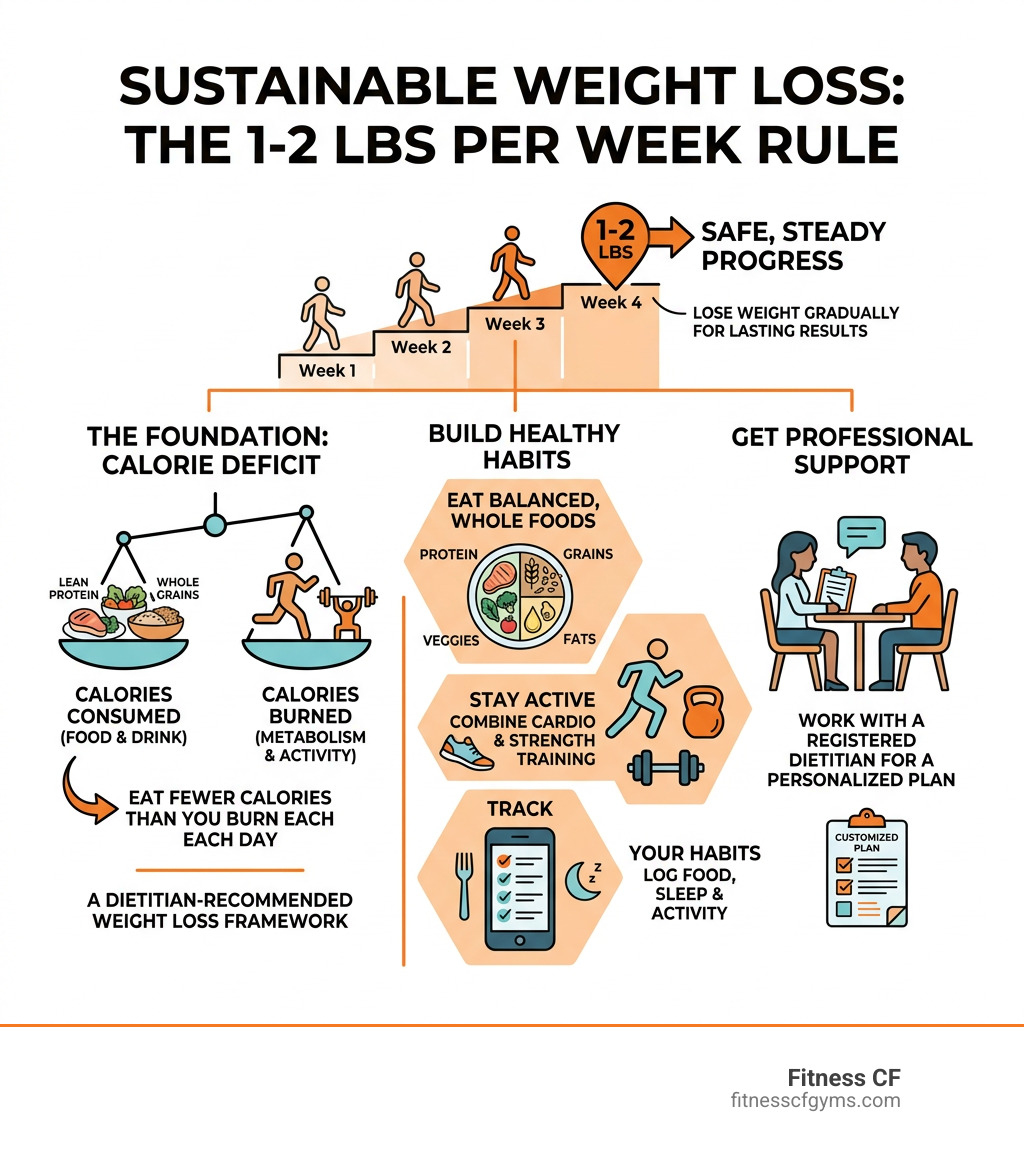
The Dietitian-Recommended Weight Loss Framework:
- Create a calorie deficit – Eat fewer calories than you burn each day
- Lose weight gradually – Aim for 1-2 pounds per week for lasting results
- Eat balanced, whole foods – Lean proteins, vegetables, whole grains, and healthy fats
- Stay active – Combine cardio and strength training most days of the week
- Track your habits – Log food, sleep, and activity to spot patterns
- Get professional support – Work with a registered dietitian for a personalized plan
More than 650 million adults worldwide are living with obesity – and most of them have tried at least one quick-fix diet that didn’t stick. The truth is, sustainable weight loss isn’t about willpower or the latest trend. It’s about building the right habits, one small step at a time.
Weight loss happens when you consistently eat fewer calories than your body burns. That’s the foundation. But how you get there – what you eat, when you eat, how you move, and how you sleep – makes all the difference between a plan that lasts and one that falls apart by week two.
I’m Pleasant Lewis, owner and operator of Fitness CF, with over 40 years of experience in the fitness industry helping people build healthier lives through smart movement and sustainable habits. My work aligns closely with the principles in any solid dietitian guide to weight loss – because great nutrition and consistent fitness go hand in hand. In this guide, I’ll walk you through everything you need to know to lose weight safely, build strength, and feel your best long-term.
Easy dietitian guide to weight loss word list:
Core Principles of a Dietitian Guide to Weight Loss
When we talk about weight management, we aren’t just looking for a smaller number on the scale. We are looking for a healthier version of you. According to clinical experts, the fundamental principle of weight loss is simple: you must achieve a calorie deficit. This means the energy you consume through food and drink must be less than the energy your body uses for daily functions and physical activity.
However, “eating less” isn’t a complete strategy. A professional dietitian guide to weight loss emphasizes that quality matters just as much as quantity. We want to fuel your body with nutrients that keep you full, preserve your muscle mass, and give you the energy to enjoy life in Central Florida, whether you’re strolling through Lake Eola or hiking near Mount Dora.
One of the most effective ways to approach this is through Medical Nutrition Therapy (MNT). MNT is an evidence-based treatment led by a Registered Dietitian (RD). Unlike a “coach” you might find on social media, an RD has specific clinical training to create a plan tailored to your medical history, metabolism, and lifestyle. They help you navigate triggers for overeating and set realistic, achievable goals.
Successful weight loss is a marathon, not a sprint. Research shows that people who lose weight at a steady pace of 1 to 2 pounds per week are much more likely to keep it off long-term compared to those who drop weight rapidly. Rapid loss often results in muscle wasting and a slowed metabolism, which is exactly what we want to avoid.

Safe Weight Loss Targets
We often see people get discouraged because they haven’t lost 50 pounds in a month. But did you know that even a modest weight loss of 5% can change your life? For a 200-pound person, losing just 10 pounds can significantly improve blood pressure, cholesterol levels, and blood sugar. This small shift dramatically lowers your risk for chronic diseases like type 2 diabetes and heart disease.
For most adults, a safe and effective low-calorie diet involves consuming between 1,000 and 1,500 calories per day, usually aiming for a 500 to 750 calorie daily deficit. This range provides enough energy to stay active while encouraging the body to use stored fat for fuel. Before you dive into a new regimen, we always recommend consulting with a healthcare professional to ensure the plan is safe for your specific needs.
Building a Balanced Plate: Nutrition Tips for Success
If you want a dietitian guide to weight loss that actually works, you have to master the art of the plate. It isn’t about deprivation; it’s about balance. A great rule of thumb is to fill half your plate with non-starchy vegetables, one-quarter with lean protein, and one-quarter with complex carbohydrates or whole grains.
Portion control is a huge part of the puzzle. Most of us have “portion distortion” because restaurant servings have grown so large over the last few decades. To get back on track, try using smaller plates or visual analogies. For example, a 3-ounce serving of meat (about 20-25 grams of protein) is roughly the size of a deck of cards.
Reading food labels is another essential skill. When you’re at the grocery store in St. Cloud or Orlando, look for these dietitian-approved benchmarks:
- Total Fat: Aim for 3g or less per serving.
- Sugar: Look for 5g or less per serving (though you can go up to 12g for unsweetened dairy like yogurt).
- Fiber: Choose starches and grains with at least 3g of dietary fiber to help you feel fuller longer.
Daily Serving Recommendations for Weight Loss
| Food Group | Recommended Daily Servings | Portion Size Example |
|---|---|---|
| Protein (Lean Meat, Beans, Tofu) | 2 – 3 servings | 3 oz (size of a deck of cards) |
| Vegetables | 3 or more servings | 1 cup raw or 1/2 cup cooked |
| Fruits | 2 – 4 servings | 1 medium piece or 1/2 cup |
| Grains / Starches (Whole Grain) | 4 – 8 servings | 1 slice bread or 1/2 cup cooked rice |
| Dairy (Low-fat) | 2 – 3 servings | 1 cup milk or 6 oz yogurt |
| Healthy Fats (Oils, Nuts) | 22 – 44 grams | 1 tbsp olive oil or 1/4 avocado |
Meal Planning with a Dietitian Guide to Weight Loss
Planning is the “secret sauce” of weight loss. When you have a plan, you’re less likely to make impulsive choices when you’re tired or hungry. We recommend choosing “more often” foods—like skinless chicken breast, lentils, black beans, and leafy greens—and limiting “less often” items like fried foods, sugary sodas, and heavy sauces.
When it comes to cooking, your method matters. Instead of frying, try:
- Baking or Roasting: Great for bringing out the natural sweetness in veggies.
- Grilling: Perfect for lean proteins.
- Steaming: Keeps nutrients intact.
If you’re eating out in Central Florida, don’t be afraid to ask for modifications. Request your salad dressing or sauces on the side, and consider asking for a “to-go” box at the start of the meal to pack away half the portion immediately. For more ideas on how to eat well without the stress, check out our picky eaters complete diet guide.
Sustainable Habits and Lifestyle Integration
Losing weight is about more than just what’s on your fork. It’s about how you live your life. Three pillars often overlooked in a dietitian guide to weight loss are hydration, sleep, and stress management.
First, let’s talk about water. You should aim for at least 8 cups (64 ounces) of calorie-free liquids every day. Water helps your body run efficiently, supports waste removal, and can even help you distinguish between true hunger and thirst. Drinking a glass of water before a meal is a simple trick that can result in eating less.
Second, sleep is non-negotiable. Research shows that people who get less than 7 hours of sleep per night are more likely to have a higher BMI. Lack of sleep messes with your hunger hormones (ghrelin and leptin), making you crave high-sugar, high-fat foods the next day. Aim for 7 to 9 hours of quality shut-eye to keep your metabolism humming.
Finally, managing stress is vital. High stress levels trigger cortisol, a hormone that encourages your body to store fat, especially around the midsection. Instead of turning to “comfort foods,” try using non-food rewards to celebrate your progress. Treat yourself to a new workout outfit, a massage, or a weekend trip to one of Florida’s beautiful springs.
Long-term Success and Your Dietitian Guide to Weight Loss
Consistency beats intensity every time. To turn your weight loss into a permanent lifestyle, focus on these sustainable habits:
- Eat Breakfast Every Day: Skipping meals often leads to overeating later in the day. A high-protein breakfast can set a positive tone for your blood sugar levels.
- Track Your Intake: Whether it’s a paper journal or an app, tracking your food, activity, and even your mood helps you identify patterns and triggers.
- Mindful Eating: It takes about 20 minutes for your stomach to tell your brain it’s full. Slow down, turn off the TV, and actually taste your food.
- Clear the Path: Don’t keep “problem foods” in the house. If it’s not there, you can’t eat it during a late-night craving.
For more small changes that lead to big results, take a look at these 5 easy habits to help you lose weight.
The Essential Role of Physical Activity: Strength and Cardio
While nutrition is the primary driver of weight loss, physical activity is the key to maintaining that loss and improving your overall quality of life. We believe in a balanced approach that includes both cardiovascular exercise and resistance training.
Cardio (aerobic exercise) is fantastic for burning calories and improving heart health. The American Heart Association recommends at least 150 minutes of moderate-intensity cardio each week. This could be a brisk walk, a spin class, or dancing. Cardio gets your heart pumping and helps create that necessary calorie deficit.
However, strength training is the “secret weapon” for long-term weight management. When you lose weight through diet alone, you often lose muscle along with fat. Muscle is metabolically active tissue—meaning it burns more calories than fat, even when you’re just sitting on the couch. By lifting weights or doing bodyweight exercises at least twice a week, you preserve your lean tissue and keep your metabolic rate high.
Benefits of Resistance Training
Beyond just burning calories, resistance training offers a host of “under the hood” benefits:
- Bone Density: Lifting weights strengthens your bones, reducing the risk of osteoporosis as you age.
- Insulin Sensitivity: Muscle helps your body process glucose more efficiently, which is vital for preventing type 2 diabetes.
- Functional Fitness: Being stronger makes everyday tasks—like carrying groceries or playing with your kids—much easier.
- Body Composition: Strength training helps you look “toned” and firm rather than just “smaller.”
If you’re wondering which to prioritize, our guide on strength training vs cardio breaks down exactly how to balance them for your goals.
Cardiovascular Health and Weight Loss
Regular cardio isn’t just about the calorie burn during the workout. It also:
- Reduces Stress: Exercise is a natural mood lifter and stress reducer.
- Improves Sleep: You’ll find it much easier to hit that 7-9 hour sleep goal if you’ve been active during the day.
- Boosts Endurance: As your heart gets stronger, you’ll have more energy for all your favorite Central Florida activities.
For those just starting out, we have a 30 day weight loss workout plan to help you build momentum safely.
Comparing Popular Diet Strategies and Long-Term Viability
With so many “fad diets” out there, it’s hard to know what’s real. A dietitian guide to weight loss usually favors balanced, flexible plans over restrictive ones. Here is how some of the most popular strategies stack up:
- The Mediterranean Diet: Often cited by dietitians as the gold standard. It emphasizes fruits, vegetables, whole grains, beans, and healthy fats like olive oil. It is highly sustainable and has the strongest evidence for heart health.
- High-Protein Diets: Increasing protein (aiming for about 30% of your calories) can help reduce hunger and protect muscle mass. However, it’s important to choose lean sources and watch your kidney health if you have pre-existing conditions.
- Intermittent Fasting (IF): This focuses on when you eat rather than what you eat. While it works for some by naturally reducing calorie intake, it isn’t “magic.” The best results still come from eating high-quality foods during your eating window.
- Low-Carb and Keto: These can lead to rapid initial weight loss, but they are often difficult to maintain. A lean muscle diet often provides a more balanced approach to carbohydrates.
- Meal Replacements: Shakes and bars can be helpful for busy professionals in Orlando or Clermont who need a controlled-calorie option on the go. Research shows they can lead to significant weight loss when used as part of a structured plan.
For a deeper dive into these options, you can read more about what you should know about popular diets from official nutrition resources.
Frequently Asked Questions about Weight Loss
How much weight is safe to lose per week?
Most health organizations and dietitians recommend a goal of 1 to 2 pounds per week. Losing weight at this gradual pace helps ensure that you are losing fat rather than muscle and water weight. It also gives your skin and metabolism time to adjust, making it much more likely that you will keep the weight off for years to come.
Is intermittent fasting better than traditional dieting?
Not necessarily. While some studies show that intermittent fasting can be effective for weight loss and improving insulin sensitivity, it doesn’t outperform traditional calorie-restricted diets in the long run. The “best” diet is simply the one you can stick to. If IF helps you manage your hunger and stay within your calorie goals, it can be a great tool, but it’s not a requirement for success.
Why is sleep important for losing weight?
Sleep is a critical regulator of your metabolism. When you are sleep-deprived, your body produces more ghrelin (the “hunger hormone”) and less leptin (the “fullness hormone”). This hormonal imbalance leads to increased cravings and a decreased ability to resist high-calorie foods. Additionally, being tired makes you less likely to have the energy for physical activity.
Conclusion
Losing weight and keeping it off isn’t about finding a “secret” pill or a 3-day detox. It’s about the boring, beautiful basics: eating whole foods, moving your body, sleeping well, and being patient with yourself. By following this dietitian guide to weight loss, you’re choosing a path rooted in science and sustainability.
At Fitness CF, we are dedicated to supporting your journey toward holistic health. Whether you’re looking for a personal trainer to help you build muscle or just a supportive community to keep you motivated, we’re here for you at our locations across Central Florida.
The goal isn’t perfection; it’s progress. Start today by making one small change—maybe it’s drinking more water or adding a 15-minute walk to your lunch break. Those small wins add up to a lifetime of wellness. We can’t wait to see you reach your potential!