Why Aerobics for Over 60s Is One of the Best Things You Can Do for Your Health
Aerobics for over 60s is one of the most effective ways older adults can protect their heart, boost energy, and stay independent longer. Whether you’re brand new to exercise or getting back into it after a long break, there are safe, enjoyable options for every fitness level.
Here are the best aerobic activities for adults over 60:
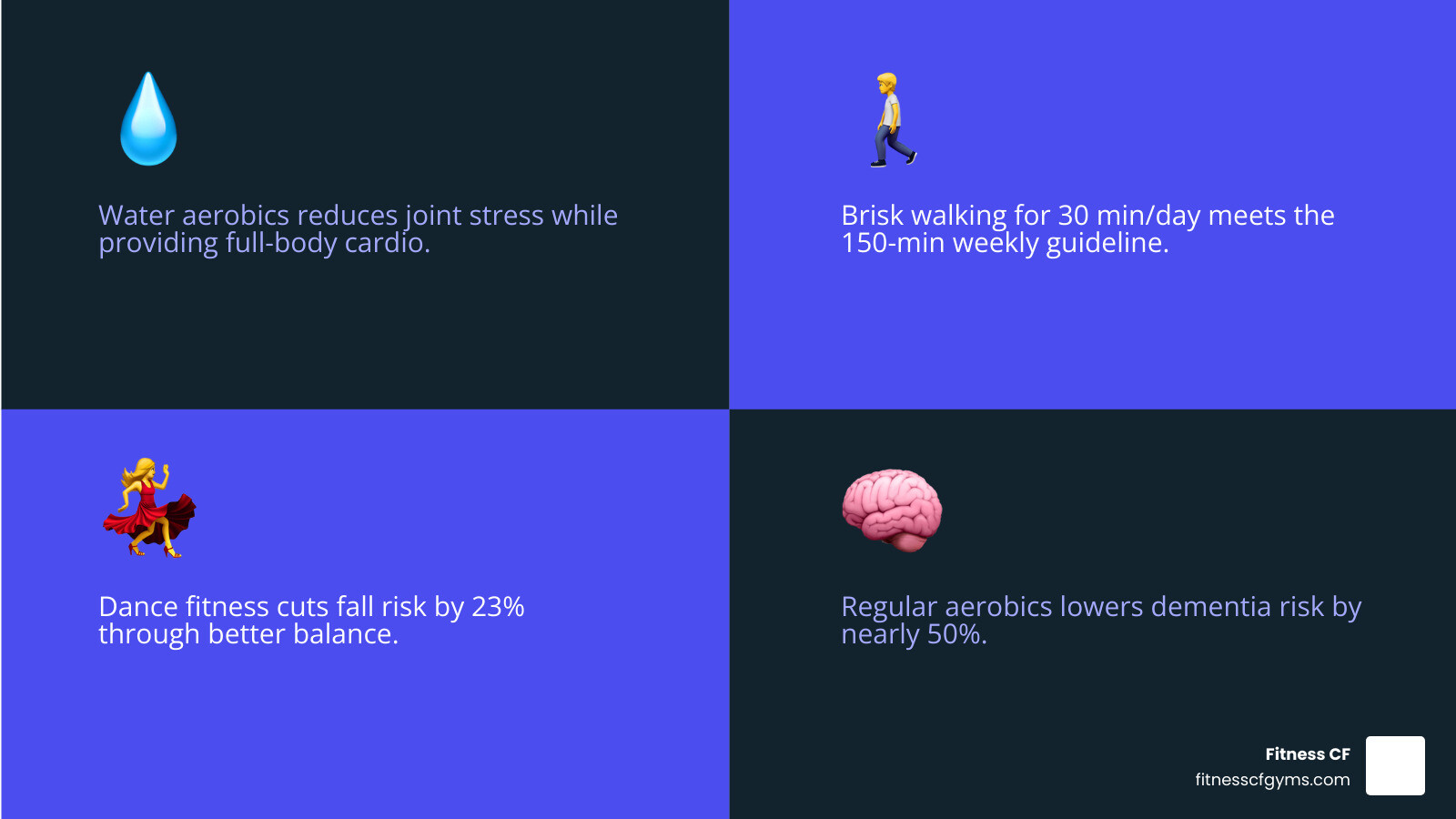
- Water aerobics – gentle on joints, great cardiovascular workout
- Brisk walking – free, accessible, and highly effective
- Dance fitness (Zumba Gold) – fun, social, and improves coordination
- Chair aerobics – ideal for limited mobility or beginners
- Cycling – low-impact and easy to adjust intensity
- Tai Chi – improves balance, flexibility, and aerobic capacity
The goal? Aim for at least 150 minutes of moderate activity per week – that’s just 30 minutes a day, five days a week.
The benefits go far beyond fitness. Regular aerobic exercise can reduce your risk of falling by 23%, lower your chances of developing dementia by nearly 50%, and help manage conditions like heart disease, type 2 diabetes, and depression. And it’s never too late to start – even light daily movement makes a real difference.
I’m Pleasant Lewis, owner and operator of Fitness CF and Results Fitness, with over 40 years of experience in the fitness industry helping adults of all ages – including seniors – find safe, sustainable ways to stay active. My experience running group fitness programs has shown me just how transformative the right aerobics for over 60s routine can be for energy, confidence, and quality of life.
Aerobics for over 60s terminology:
The Science-Backed Benefits of Aerobics for Over 60s

When we talk about aerobics for over 60s, we aren’t just talking about burning calories. We are talking about medicine. Science has shown time and again that cardiovascular activity is the closest thing we have to a “fountain of youth.” For those of us in Central Florida, staying active means we can keep enjoying the sunshine, the theme parks, and our local trails for decades to come.
Disease Prevention and Heart Health
Our biology changes as we get older, and our risk for chronic conditions increases. However, regular aerobic activity is a powerful shield. It helps lower high blood pressure, reduces “bad” LDL cholesterol, and manages blood sugar levels. According to research, staying active can significantly reduce the risk of heart disease, stroke, type 2 diabetes, and even certain types of cancer. It isn’t just about living longer; it’s about living better. You can learn more about these long-term advantages in our guide on Fitness After 50: The Benefits of Staying Active.
Cognitive Health and Brain Power
One of the most remarkable discoveries in recent health science is the link between the heart and the head. A healthy body often leads to a healthy mind. Research on exercise and brain health suggests that seniors who exercise regularly have improved cognitive function, including better memory, problem-solving, and decision-making skills.
Fall Reduction and Bone Integrity
Falls are a major concern for older Americans. Statistics show that one in four adults over 65 falls every year, making it the leading cause of injury in this age group. The good news? Regular exercise—especially routines that combine aerobics with balance—reduces the likelihood of falling by 23%. By strengthening the muscles that support our joints and improving our coordination, we create a “built-in” safety net for our bodies.
The “Feel-Good” Factor: Endorphin Release
Have you ever noticed that you feel more energetic after a walk, even if you were tired before you started? It seems counterintuitive, but being active actually gives you more energy. Exercise triggers the release of endorphins, our body’s natural feel-good chemicals. These endorphins counteract pain, reduce stress hormones, and promote better sleep.
Mental Health and Memory
Maintaining our mental sharpness is just as important as keeping our muscles strong. Aerobics for over 60s plays a dual role here.
- Alzheimer’s Prevention: The Alzheimer’s Research & Prevention Foundation notes that regular physical activity can reduce the risk of developing Alzheimer’s or dementia by nearly 50%. This is because aerobic exercise increases blood flow to the brain and encourages the growth of new brain cells.
- Stress and Mood: Retirement and aging can bring their own set of stressors. Aerobics is a natural antidepressant. It helps clear the mind and provides a sense of accomplishment.
- Social Engagement: One of the biggest hurdles for seniors is social isolation. Group aerobics classes, whether in a pool or a studio, provide a vital social “hook.” Laughing with friends while moving to music makes the workout feel less like a chore and more like a social event.
Maintaining Independence
For many of us, the ultimate goal of fitness is independence. We want to be able to carry our own groceries, play with our grandkids, and take care of our homes without needing constant assistance.
As highlighted by Harvard Medical School, regular exercise promotes an older adult’s ability to perform “activities of daily living” (ADLs), such as walking, bathing, cooking, and dressing. By maintaining our mobility and strength through aerobics for over 60s, we ensure that we remain self-reliant for as long as possible.
Meeting the Guidelines: How Much Activity Do You Need?
Understanding the “math” of fitness can be confusing, but the official Physical Activity Guidelines for Americans provide a clear roadmap for adults aged 65 and over.
The 150-Minute Rule
The baseline for health is 150 minutes of moderate-intensity aerobic activity per week. You can break this down however works for you. A popular schedule is 30 minutes a day, five days a week. If 30 minutes feels like too much at once, don’t worry—sessions as short as 10 minutes still count toward your total!
The 75-Minute Alternative
If you prefer more intense workouts, you can aim for 75 minutes of vigorous-intensity activity per week. This provides similar health benefits to 150 minutes of moderate activity but in half the time.
The 80-20 Split
For those in the 60- to 80-year-old age group, many experts recommend an 80-20 split. This means 80% of your workout time should be focused on aerobic activity (cardio), and 20% should be dedicated to resistance or strength training. This balance ensures you’re protecting your heart while also maintaining the muscle mass needed to prevent falls. For more on how to navigate these years, check out our guide on Aging Gracefully: Fitness Tips for Seniors.
Defining Moderate Intensity
How do you know if you’re working hard enough? Use the Talk Test.
- Moderate Intensity: Your heart rate is up, you’re breathing faster, and you feel warmer. You should be able to talk in full sentences (about 4–5 words between breaths), but you shouldn’t have enough breath to sing.
- Examples: Brisk walking, water aerobics, doubles tennis, or pushing a lawn mower.
Defining Vigorous Intensity
Vigorous activity pushes you a bit further.
- Vigorous Intensity: You’re breathing hard and fast. You won’t be able to say more than a few words without pausing for breath.
- Examples: Jogging, fast cycling, energetic dancing, or a traditional aerobics class.
Safe and Effective Aerobics for Over 60s
When choosing an aerobics for over 60s routine, the “best” exercise is the one you actually enjoy and can do safely. We generally recommend low-impact options that protect the joints while still getting the heart pumping. A great starting point is our Low Impact Workout for Seniors resource.
Low-Impact Options: Water aerobics for over 60s
Water aerobics is often called the “perfect” senior workout. Why?
- Buoyancy: The water supports up to 90% of your body weight, which takes the stress off your knees, hips, and back.
- Resistance: Water is much denser than air. Every movement you make—like arm curls or leg lifts—is met with gentle resistance, which helps tone muscle without the need for heavy weights.
- Aqua Jogging and Flutter Kicking: These are great ways to get your heart rate up in a safe environment.
Dance and Rhythm
Who says exercise has to be boring? Dance-based aerobics like Zumba Gold are specifically designed for the older active adult. These classes focus on coordination, balance, and cardiovascular health through modified, lower-intensity moves. It’s a fantastic way to improve your rhythm and stay sharp. Check out our Low Impact Zumba Seniors Guide for more details.
Accessible Movement
- Chair Aerobics: If standing for long periods is difficult, chair aerobics allows you to perform rhythmic movements, stretches, and even cardio while seated. It’s a great way to build the confidence needed to eventually move to standing exercises.
- Walking: Never underestimate the power of a brisk walk. It’s accessible, requires no special equipment other than good shoes, and can be done anywhere—from a local park in Orlando to the perimeter of your neighborhood in St. Cloud.
- Cycling: Whether on a stationary bike or a traditional one, cycling is easy on the joints and builds significant leg strength.
- Tai Chi: Often called “meditation in motion,” Tai Chi involves slow, graceful movements that improve balance and flexibility while providing a surprisingly effective aerobic workout.
Starting Your Routine: A Beginner’s Guide to aerobics for over 60s
Starting a new routine can feel daunting, but the key is to start small and be consistent.
Step 1: Physician Consultation
Before you lace up your sneakers, talk to your doctor—especially if you have chronic conditions like arthritis, heart disease, or diabetes. They can help you understand your limits and may even recommend specific exercises that are best for your health profile.
Step 2: The Warm-Up
Never skip the warm-up! Spend 5–10 minutes doing light movements to get the blood flowing to your muscles. This could be slow walking or gentle arm circles. Warming up reduces the risk of injury and prepares your heart for the work ahead.
Step 3: The Cool-Down and Stretch
After your aerobic session, take time to let your heart rate come down gradually. Follow this with stretching while your muscles are still warm. This improves flexibility and helps prevent post-workout stiffness. For more beginner-friendly ideas, see our Low-Impact Workouts for Beginners.
Progressing Your aerobics for over 60s Routine
You don’t have to hit 150 minutes in your first week.
- The 10-Minute Rule: Start with just 10 minutes of activity once or twice a day.
- Incremental Increases: After two weeks, try increasing your sessions to 15 or 20 minutes.
- Consistency over Intensity: It is better to walk for 15 minutes every day than to do one 60-minute session and be too sore to move for the rest of the week.
- Listen to Your Body: Some muscle soreness is normal when starting out, but sharp pain is a signal to stop and rest.
Common Mistakes to Avoid
- Overexertion: Don’t try to keep up with the 20-somethings. Move at your own pace.
- Ignoring Pain: “No pain, no gain” is a dangerous motto for seniors. If it hurts, stop.
- Dehydration: Our sense of thirst can diminish as we age. Drink water before, during, and after your workout.
- Improper Footwear: Invest in a good pair of supportive athletic shoes to protect your feet and ankles.
Combining Cardio with Strength and Balance
While aerobics for over 60s is the star of the show for heart health, it shouldn’t be the only thing you do. To truly “fall-proof” your body, you need to add strength and balance work. Programs like SilverSneakers are excellent for this; you can read more in our An Active Seniors Guide to the SilverSneakers Program.
Strength Training Essentials
Muscle mass naturally declines as we age (a process called sarcopenia), but strength training can reverse this.
- Frequency: Aim for at least two days a week.
- Tools: Use resistance bands, light dumbbells, or even your own body weight.
- Focus: Work all major muscle groups—legs, hips, back, abdomen, chest, shoulders, and arms.
- The “Rest” Rule: To get the most benefit, perform exercises to the point where you need a short rest before repeating them.
Flexibility and Balance
Flexibility and balance are the “glue” that holds your fitness routine together.
- Yoga and Pilates: These are fantastic for building core strength and improving your range of motion. Many poses can even be adapted for use with a chair or wheelchair.
- Heel-to-Toe Walking: Practice walking in a straight line, placing the heel of one foot directly in front of the toes of the other. This is a simple but effective balance builder.
- Daily Stretching: Simple stretches like shoulder rolls or reaching for your toes help keep your joints mobile.
Frequently Asked Questions about Senior Aerobics
Is it safe to start aerobics if I haven’t exercised in years?
Yes! It is never too late to start. The key is to begin with very light activity—like a slow 5-minute walk—and gradually build up. Many people who were inactive for decades find that they feel significantly stronger and more energetic within just a few weeks of starting a gentle routine.
What are the best low-impact aerobics for bad knees?
Water aerobics is the gold standard for those with joint pain because the water supports your weight. Cycling and elliptical trainers are also great options because they provide a fluid motion that doesn’t “jar” the knee joints like running does.
How do I know if I am working out too hard?
Use the talk test. If you cannot say more than a word or two without gasping for air, you are likely overexerting yourself. Also, keep an eye out for dizziness, chest pain, or extreme shortness of breath. If you experience these, stop immediately and consult a professional.
Conclusion
Embracing aerobics for over 60s is about more than just fitness; it’s about choosing a lifestyle of longevity, vitality, and joy. Whether you’re enjoying the buoyancy of a water aerobics class or taking a brisk morning walk through Mount Dora or Clermont, every move you make is an investment in your future self.
At Fitness CF, we are dedicated to helping our Central Florida community age with strength and grace. From our diverse amenities to our supportive group environments, we provide everything you need to stay active and independent. Ready to take the next step? Start your journey with Senior Fitness classes and see how good staying active can feel!