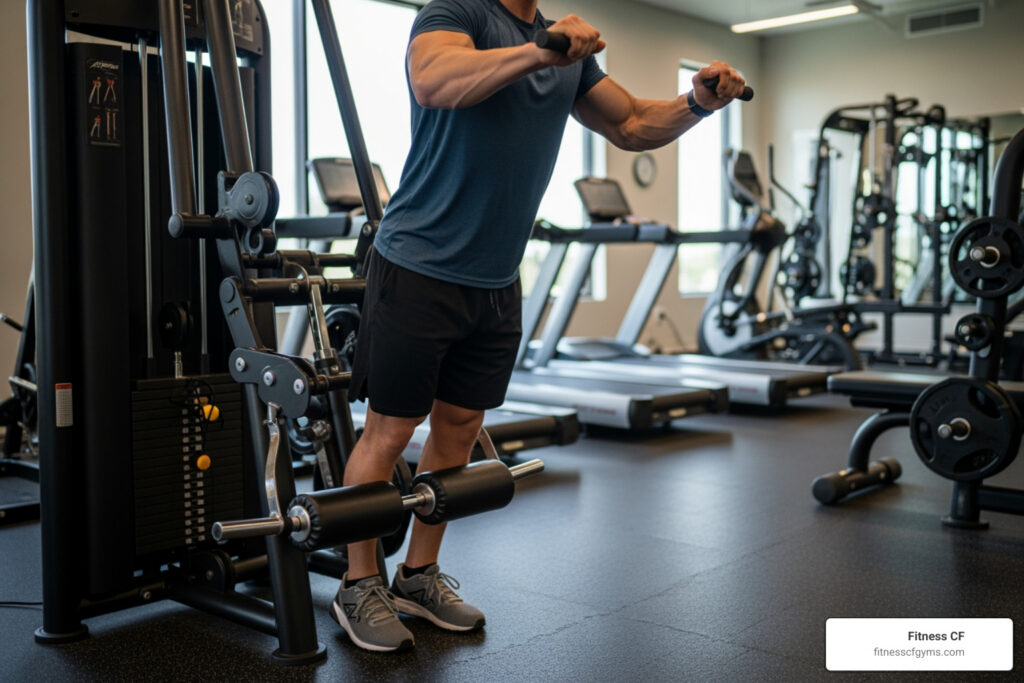
Why Strong Triceps Matter for Your Fitness Goals
An arm extension machine is a specialized piece of gym equipment designed to isolate and strengthen your triceps—the muscles on the back of your upper arms. Here’s what you need to know:
Quick Overview:
- Primary Target: Triceps brachii (back of upper arm)
- How It Works: Uses a lever system and weight stack for controlled resistance
- Main Benefit: Safe, stable isolation of triceps without requiring stabilizer muscles
- Best For: Building strength, toning arms, and improving pushing power
- Typical Setup: Adjustable padded seat with handles and weight selector pin
- Recommended Starting Point: 12-15 reps per set with light to moderate weight
The arm extension machine has become a staple in strength training because it removes the guesswork from triceps work. Unlike free weights, the machine guides your movement along a fixed path, which means you can focus entirely on contracting your triceps without worrying about balance or form breakdown.
Your triceps make up about two-thirds of your upper arm mass. That means if you want defined, strong arms, you can’t skip triceps training. These muscles are also essential for everyday activities—pushing open doors, lifting groceries, or even getting up from the floor.
The beauty of the arm extension machine is that it provides what exercise scientists call an “isolation movement.” The machine restricts your range of motion and adds stability, ensuring your triceps do all the work. This controlled environment makes it easier to build strength safely, especially when you’re learning proper form or returning from an injury.
Understanding the Arm Extension Machine
An arm extension machine, often referred to as a triceps extension machine, is a specialized piece of strength training equipment designed to target the triceps brachii muscle group. At its core, it’s a lever-based system connected to a weight stack, providing consistent resistance throughout the movement.
What it is and How it Works
Imagine sitting down, resting your upper arms on a comfortable pad, gripping handles, and then pushing those handles downwards to straighten your arms. That’s the essence of an arm extension machine. It works by isolating the triceps, allowing us to perform an extension movement at the elbow joint against a controlled load.
The machine typically operates with a weight stack, where you select your desired resistance using a pin. This weight is then connected via cables and pulleys to a lever arm. When you push down on the handles, you engage the lever, lifting the selected weight. This mechanical advantage ensures a smooth, guided path of motion, making it an excellent option for focusing purely on muscle contraction without needing to stabilize other parts of your body. This makes it an “isolation exercise,” meaning it primarily targets a single muscle group, in this case, our beloved triceps!
Primary Muscles Targeted
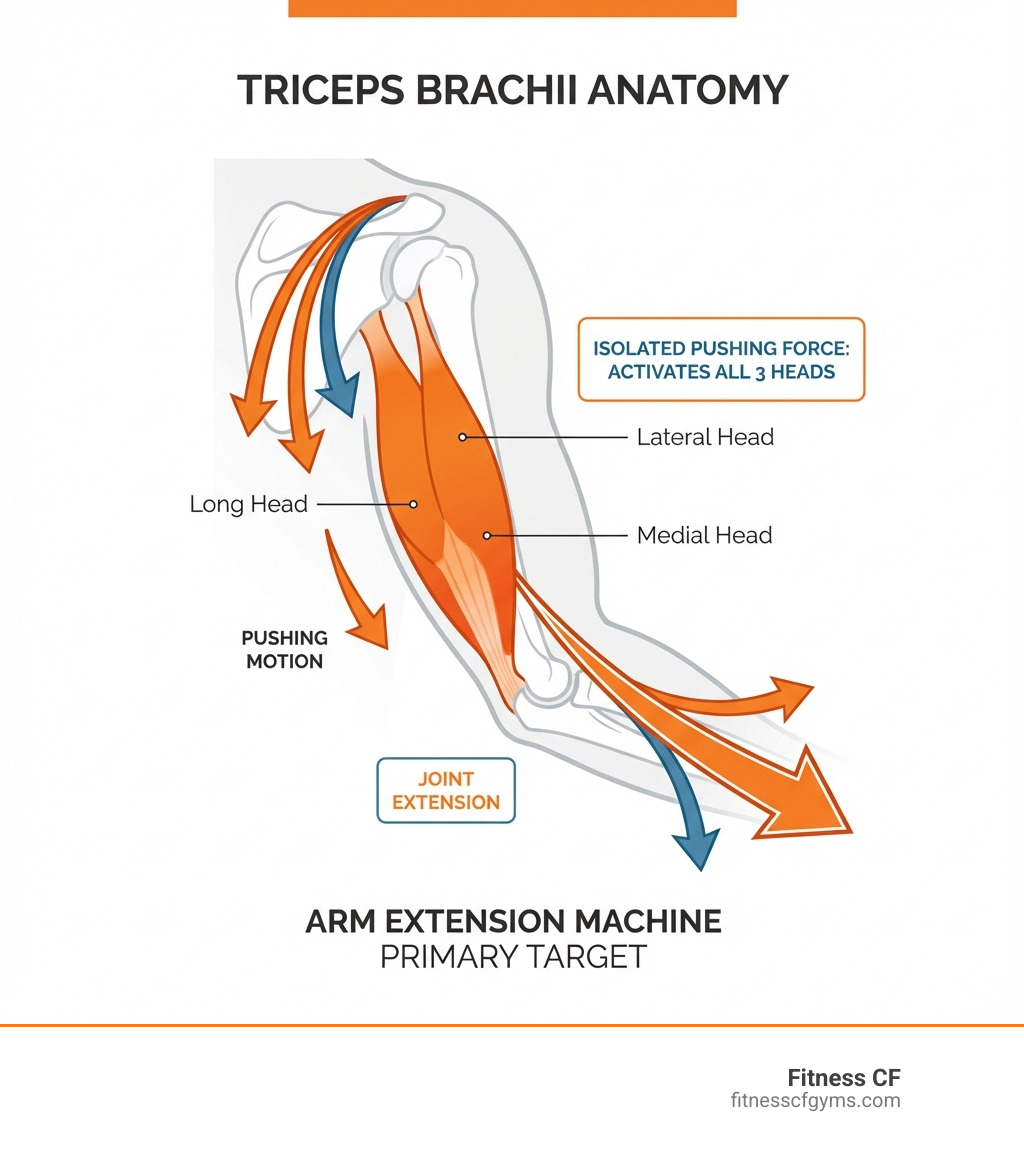
The star of the show when using an arm extension machine is unequivocally the triceps brachii. This magnificent muscle, located on the back of your upper arm, actually has three distinct heads:
- Long Head: This head originates from the scapula (shoulder blade) and crosses both the shoulder and elbow joints, contributing to both shoulder extension and elbow extension.
- Lateral Head: Originating from the humerus (upper arm bone), the lateral head is primarily responsible for the powerful extension of the elbow.
- Medial Head: Also originating from the humerus, the medial head is active in all forms of elbow extension, especially when the resistance is lighter.
By performing an arm extension, we are actively engaging all three heads of the triceps, leading to comprehensive development. While the most common arm extension machine is a seated lever machine, you might also encounter cable pushdown stations which offer a similar, albeit slightly different, feel and range of motion for targeting the triceps.
The Benefits of Using an Arm Extension Machine
We’re all looking for ways to make our workouts more effective, safer, and ultimately, more rewarding. The arm extension machine checks all these boxes, offering a unique set of advantages for triceps development and overall arm strength.
- Muscle Isolation for Maximum Growth: The primary benefit of this machine is its ability to isolate the triceps. As the Fitbod research highlights, “Machines restrict range of motion and add stability, ensuring isolation of the triceps.” This means less help from other muscle groups, forcing your triceps to work harder. This focused effort is ideal for hypertrophy (muscle growth) and achieving that toned, sculpted look we often desire.
- Increased Triceps Strength: Consistent use of the arm extension machine will lead to noticeable gains in triceps strength. Stronger triceps translate to improved performance in various pushing movements, whether it’s pushing a heavy door, performing a bench press, or even getting up from the floor with ease.
- Improved Pushing Power: Our triceps are crucial for any pushing motion. By strengthening them, we improve our functional pushing power, making everyday tasks easier and boosting performance in other strength training exercises.
- Injury Prevention through Controlled Movement: The guided path of an arm extension machine reduces the risk of improper form, which is a common cause of injury with free weights. As the Technogym source notes, it provides “safe and effective training.” This controlled environment allows us to build strength without putting undue stress on joints or surrounding muscles, making it a fantastic tool for those new to strength training or recovering from minor injuries.
- Improved Stability: While free weights challenge our stabilizing muscles, the machine provides inherent stability. This allows us to focus entirely on the target muscle, ensuring that our triceps are doing the work. The Mayo Clinic also mentions that even cable systems for triceps extensions can “engage core muscles and improve stability,” showcasing the general benefit of controlled resistance exercises.
- Suitable for All Fitness Levels: From beginners learning the ropes to advanced lifters looking to fatigue their triceps without risking injury from heavy free weights, the arm extension machine is incredibly versatile. Its ease of use and adjustable resistance make it accessible and effective for everyone.
Key Features of a Typical Arm Extension Machine
While designs may vary slightly between manufacturers, most arm extension machines share core features that contribute to their effectiveness and user-friendliness. Understanding these will help you steer your gym floor with confidence.
- Adjustable Seat: A fundamental feature, the seat height is crucial for proper biomechanics. As ExRx.net advises, we should “Adjust seat height so the back of upper arms rest on padding” and ensure “elbows are approximately in line with the lever’s fulcrum.” This allows for a full range of motion without straining our shoulders or compromising elbow flexion.
- Padded Arm Rests: These comfortable pads are where we rest our upper arms, ensuring they remain stationary during the exercise. This stability is key to isolating the triceps.
- Handle Grips: The handles are what we push down on. They are typically designed for a comfortable, neutral grip, allowing us to focus on the extension.
- Weight Stack with Pin: This is where the resistance comes from. We select our desired weight by inserting a pin into the corresponding hole in the stack. This makes adjusting resistance quick and easy, allowing for efficient progressive overload.
- General Dimensions and Typical Weight Range: These machines are substantial pieces of equipment, reflecting their robust construction and stability. For example, the Technogym Selection 900 Arm Extension boasts dimensions of approximately 40 inches long, 57 inches wide, and 58 inches high, weighing around 437 lbs. Its standard weight stack is 140 lbs, with a plus option of 200 lbs. Another example, the Cybex Eagle NX Arm Extension, measures about 57 inches long, 48 inches wide, and 65 inches high, with a machine weight of 715 lbs and a weight stack of 205 lbs. These figures highlight the significant and stable footprint these machines have in a gym setting.
Mastering Your Form: A Step-by-Step Guide
Proper form is the cornerstone of effective and safe strength training. When using an arm extension machine, focusing on technique ensures we maximize triceps activation and minimize the risk of injury. Let’s walk through how to execute this exercise perfectly.
How to Set Up the Arm Extension Machine
Setting up the machine correctly is the first step to a successful triceps workout. It ensures that our body is in the optimal position to engage the target muscles.
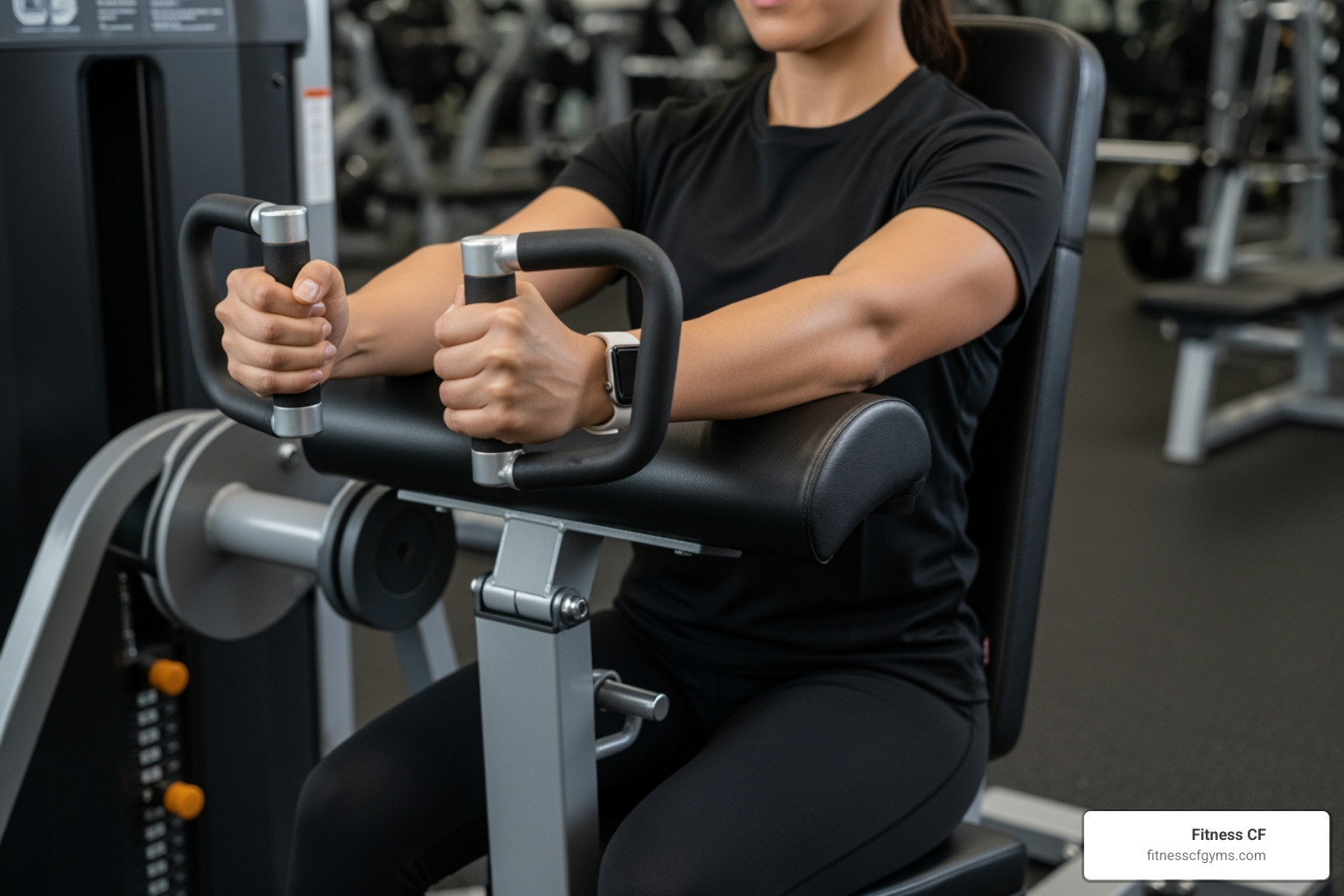
- Seat Height Adjustment: This is paramount. We need to adjust the seat so that when we sit down and rest our upper arms on the pads, our elbows are roughly in line with the machine’s pivot point (the fulcrum of the lever). As ExRx.net advises, “Adjust seat height so the back of upper arms rest on padding.” This alignment allows for a full and natural range of motion.
- Elbow Alignment: Once seated, ensure our upper arms are firmly against the padded rests, and our elbows are tucked comfortably close to our sides. The Mayo Clinic emphasizes, “Make sure your elbows are positioned comfortably close to your sides.” This prevents our elbows from flaring out, which can shift tension away from the triceps and onto our shoulders.
- Selecting an Appropriate Weight: Before we even touch the handles, we need to choose our weight. How to use the selector pin is simple: locate the pin, insert it into the hole corresponding to the desired weight plate in the stack. We always recommend starting light, especially if it’s our first time using the machine or if we’re trying a new exercise. This allows us to perfect our form before increasing the load. Progressive overload, gradually increasing the weight over time, is key for continuous muscle growth, but it must be done safely.
Executing the Perfect Rep
With the machine properly set up, we’re ready to perform the exercise. Quality over quantity is always the goal.
- Seated Posture: Sit upright with our back straight and firmly against the backrest (if available). Engage our core slightly to maintain stability. As Fitbod suggests, “Sit upright… with the back of your arms on the arm pads.”
- Gripping the Handles: Flex our elbows and grasp the handles with a neutral grip (palms facing each other) or an overhand grip, depending on the machine. Our wrists should be neutral, not bent.
- The Push (Concentric Phase): Exhale as we slowly and smoothly push the handles downwards until our arms are fully extended. The movement should come entirely from our triceps, not our shoulders or momentum. The Mayo Clinic advises, “Slowly push down the bar until your arms are fully extended.” Keep our upper arms stationary on the pads throughout this phase.
- The Controlled Return (Eccentric Phase): Inhale as we slowly and deliberately allow the handles to return to the starting position. This eccentric (lowering) phase is just as important as the concentric (pushing) phase for muscle growth. Control the weight; don’t let it snap back. We should feel a stretch in our triceps at the top of the movement, just before our forearms contact our upper arms, as ExRx.net notes.
- Full Range of Motion: Aim for a complete extension at the bottom and a good stretch at the top without letting the weights crash.
- Breathing Pattern: Remember to exhale on the exertion (pushing down) and inhale on the return (allowing the weight to come up). This helps stabilize our core and provides oxygen to our working muscles.
For a visual guide, we highly recommend checking out this helpful resource: Video: Triceps extension with weight machine.
Common Mistakes to Avoid
Even with a machine, it’s easy to fall into bad habits. Being aware of these common mistakes will help us get the most out of our triceps workout and stay injury-free.
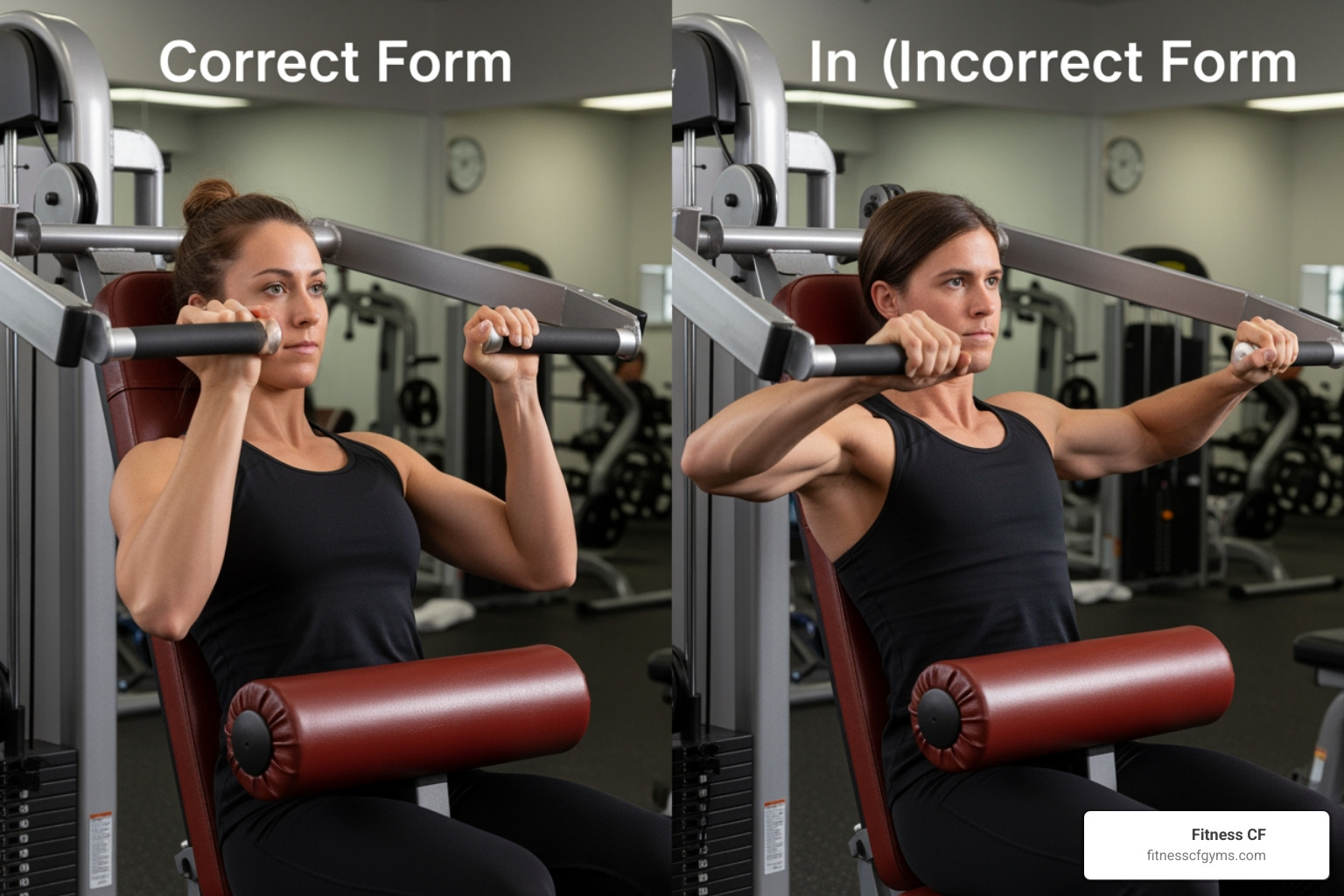
- Using Momentum: This is perhaps the most common mistake. We might see people jerking the weight down or leaning back excessively to help with the push. This takes the stress off the triceps and involves other muscle groups, defeating the purpose of an isolation exercise. Always perform the movement in a “smooth and slow” manner, as recommended by the Mayo Clinic.
- Lifting Too Heavy: Our ego can be our worst enemy. If the weight is too heavy, we’ll compromise our form, use momentum, or perform partial reps. It’s better to use a lighter weight with perfect form and feel the triceps truly working.
- Partial Reps: Only extending our arms partway or not allowing a full stretch at the top limits the effectiveness of the exercise. We miss out on the full benefits of muscle contraction and elongation. Always strive for a full range of motion.
- Rushing the Movement: Speed kills gains! Rushing through reps diminishes muscle tension and control. Focus on a controlled, deliberate tempo for both the pushing and returning phases. “Move your arms smoothly and slowly during the exercise,” advises the Mayo Clinic.
- Poor Posture: Rounding our back, shrugging our shoulders, or letting our head crane forward can lead to discomfort and potential injury. Keep our back straight, core engaged, and shoulders relaxed. The Mayo Clinic reminds us to “Keep your head, spine, and lower body stable but relaxed during the exercise.”
- Flared Elbows: Letting our elbows flare out to the sides during the push reduces triceps activation and puts unnecessary strain on our shoulder joints. Keep our elbows “tucked close to your sides” (Mayo Clinic) and aligned with our upper arms on the pads.
Building Triceps Strength Beyond the Machine
While the arm extension machine is a fantastic tool for isolating and strengthening our triceps, a truly well-rounded fitness routine accepts variety. Relying solely on machines can, as Fitbod points out, “hinder your ability to develop smaller stabilizing muscles.” We want strong, defined arms, but also functional strength that supports our daily lives and other athletic endeavors. Incorporating alternative exercises helps us hit our triceps from new angles, engage those crucial stabilizer muscles, and foster overall fitness.
Effective Bodyweight Alternatives
Bodyweight exercises are incredibly accessible and effective for building triceps strength, requiring no equipment beyond our own body!
- Triceps Dips (Bench Dips): This classic exercise is excellent for hitting all three heads of the triceps.
- How to do it: Position our hands shoulder-width apart on the edge of a sturdy bench or step. Extend our legs out in front of us. Lower our body by bending our elbows until our upper arms are parallel to the floor, keeping our back close to the bench. Push back up to the starting position.
- Close-Grip Push-Ups: A variation of the traditional push-up that places more emphasis on the triceps.
- How to do it: Get into a standard push-up position, but place our hands closer together, directly under our shoulders or even slightly narrower. Lower our chest towards the floor, keeping our elbows tucked in close to our body. Push back up. For an easier version, perform on our knees.
- Diamond Push-Ups: This is an even more challenging push-up variation that targets the triceps.
- How to do it: Start in a push-up position, but bring our hands together directly under our chest, forming a diamond shape with our thumbs and index fingers. Lower our chest towards our hands, keeping our elbows tucked. Push back up.
Bodyweight training not only builds muscle but also improves body control, core strength, and overall functional fitness.
Essential Free Weight Alternatives
Free weights offer another dimension to triceps training, demanding more stability and allowing for a greater range of motion compared to machines.
- Dumbbell Overhead Extensions (French Press): This exercise primarily targets the long head of the triceps.
- How to do it: Sit or stand, holding one or two dumbbells with both hands, arms extended overhead. Keeping our elbows close to our head, slowly lower the dumbbell behind our head by bending our elbows. Extend our arms back to the starting position.
- Skull Crushers (Lying Triceps Extensions): A highly effective exercise for targeting all three triceps heads.
- How to do it: Lie on a flat bench, holding a barbell or two dumbbells with an overhand grip, arms extended straight up over our chest. Keeping our upper arms stationary, slowly lower the weight towards our forehead by bending our elbows. Extend our arms back to the starting position.
- Dumbbell Kickbacks: Excellent for isolating the triceps and focusing on the contraction.
- How to do it: Hinge at our hips, keeping our back straight and core engaged. Hold a dumbbell in one hand, with our upper arm parallel to the floor and elbow bent at 90 degrees. Extend our forearm straight back, squeezing our triceps at the top. Slowly return to the starting position.
For more detailed instructions and visual demonstrations of various triceps exercises, we encourage you to explore the ACE Fitness Exercise Library: Tricep Extension. Free weight exercises challenge our balance and engage more stabilizer muscles, contributing to greater overall strength and coordination.
Frequently Asked Questions
We often get questions about how to best integrate triceps training into a fitness routine. Here are some common queries answered to help you on your journey to stronger arms.
How many reps and sets should I do for muscle growth?
The number of repetitions (reps) and sets we perform depends on our specific fitness goals.
- For Muscle Growth (Hypertrophy): If our goal is to build muscle size, we typically aim for 3-4 sets of 8-12 repetitions. This rep range challenges the muscle effectively, leading to microscopic tears that, when repaired, result in muscle growth.
- For Muscle Endurance: If we’re focusing on muscular endurance, we might perform 2-3 sets of 12-15+ repetitions. The Mayo Clinic notes that “For most people, one set of 12 to 15 repetitions is adequate” for general strengthening and toning, which is a great starting point.
- For Strength: For pure strength gains, lower reps (e.g., 4-6) with heavier weights are common, though the arm extension machine is often favored for hypertrophy and endurance due to its isolation nature.
Regardless of the goal, it’s crucial to listen to our body. We should choose a weight that allows us to complete the target reps with good form, feeling a challenge by the last few repetitions. Rest periods of 60-90 seconds between sets are generally recommended for hypertrophy.
Is the arm extension machine good for beginners?
Absolutely! The arm extension machine is an excellent starting point for beginners for several reasons:
- Safety Features: Its guided motion significantly reduces the risk of injury, as we don’t have to worry about balancing free weights.
- Guided Motion: The machine dictates the correct path of movement, making it easier to learn and execute proper form. This builds confidence and helps new exercisers understand what muscle they should be feeling.
- Low Starting Weight: Most machines allow for very light starting weights, which is perfect for building a foundation of strength before progressing.
- Learning Proper Form: It provides a controlled environment to practice the mechanics of elbow extension, preparing us for more complex free weight exercises later on. It’s a fantastic stepping stone to building a strong and healthy fitness routine.
How often can I train my triceps?
Muscle recovery is just as important as the workout itself. Overtraining can lead to plateaus, fatigue, and even injury. For most individuals, training our triceps 1-3 times per week is a good general recommendation.
- If we’re performing a full-body workout 2-3 times a week, our triceps will likely be hit during pushing movements, so direct triceps work might be limited to 1-2 exercises per session.
- If we follow a split routine (e.g., push day, arm day), we might dedicate a specific day to arms, allowing for more direct triceps volume.
- Ensure there are at least 48 hours of rest between intense triceps workouts to allow for muscle repair and growth. Consistency and proper recovery are key to seeing results and maintaining a healthy, active lifestyle.
Conclusion: A Key to Your Overall Fitness Journey
The arm extension machine is more than just a piece of gym equipment; it’s a powerful tool in our arsenal for developing strong, defined, and functional triceps. We’ve explored how this machine works by effectively isolating the triceps brachii, allowing for focused muscle growth and increased strength. Its benefits, from muscle isolation and improved pushing power to injury prevention through controlled movement, make it an invaluable asset for individuals at all fitness levels.
Mastering our form, from proper setup to executing the perfect rep and avoiding common mistakes, ensures we get the most out of every workout. And while the machine offers incredible advantages, we also recognize the importance of variety. Incorporating bodyweight and free weight alternatives helps us build comprehensive arm strength, engage stabilizer muscles, and contribute to our overall fitness.
Building strong triceps through consistent and smart training, including the effective use of the arm extension machine, is a vital component of a well-rounded fitness routine. Strong arms contribute to our ability to perform daily tasks with ease, improve our performance in other exercises, and boost our confidence. Combining strength training with regular cardio and proper nutrition creates a holistic approach to healthy living that yields lasting results.