Why Your Muscles Ache and How a Bath Can Help
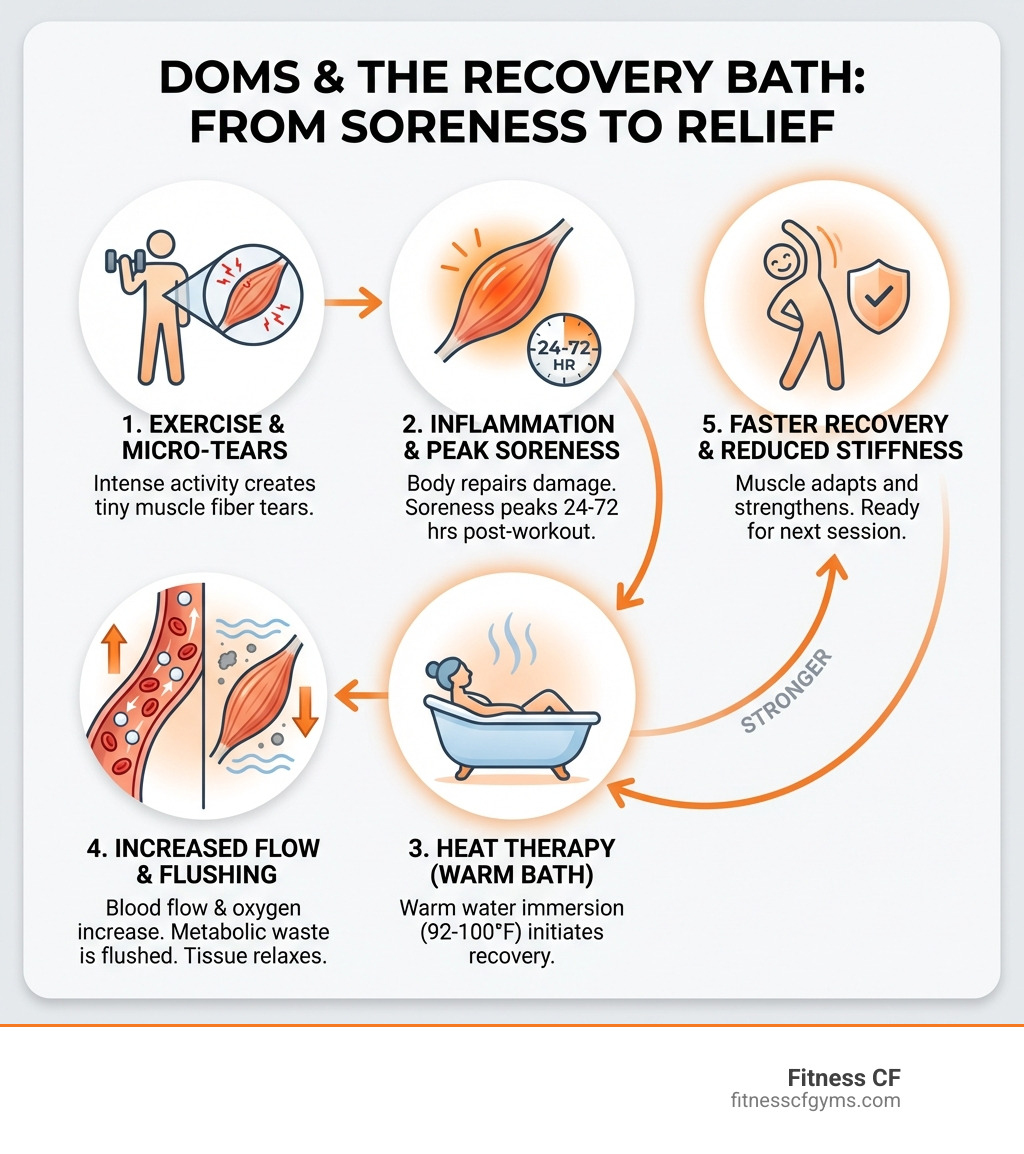
A bath to relieve sore muscles is a simple and effective recovery tool. After a tough workout, it’s common to feel stiffness, known as Delayed Onset Muscle Soreness (DOMS). This is a sign your muscles are adapting and getting stronger.
Quick Guide to Muscle Relief Baths:
- Temperature: Keep water between 92-100°F (33-38°C), never exceeding 104°F
- Duration: Soak for 15-20 minutes
- Additives: Add 1.25-2 cups of Epsom salt for improved relief
- Timing: Best taken 1-2 hours after your workout or before bed
- Benefits: Increases blood flow, reduces stiffness, promotes relaxation
When you exercise, you create microscopic tears in your muscle fibers. This triggers inflammation as your body repairs the damage, making you stronger. While this is a natural part of fitness, it can be uncomfortable for 24-72 hours. That’s where the healing power of warm water comes in. Heat therapy increases blood circulation, delivers oxygen and nutrients to tired muscles, and helps flush out metabolic waste. The warmth also relaxes tight connective tissue and reduces pain signals, helping your body recover faster.
I’m Pleasant Lewis, and after over 40 years in the fitness industry helping Central Florida residents balance demanding schedules with their health goals, I’ve seen how proper recovery—including a strategic bath to relieve sore muscles—can transform your fitness journey. Recovery isn’t just about feeling better; it’s about building consistency and avoiding the burnout that keeps so many people from reaching their goals.
Bath to relieve sore muscles terminology:
The Science of Soaking: How Heat Heals Aching Muscles
There’s a reason a warm soak feels so good after a tough workout—it’s not just in your head. The science behind a bath to relieve sore muscles is rooted in your body’s physiological response to heat. When you’re immersed in warm water, your blood vessels expand in a process called vasodilation. This boosts circulation, delivering essential oxygen and nutrients to your fatigued muscles while helping to flush away metabolic waste products that cause soreness.
The heat also relaxes tense muscles, eases stiffness, and improves the elasticity of connective tissues. This can reduce muscle spasms and make light stretching more effective. Unlike a localized heat pack, a full-body hot bath penetrates more deeply, providing comprehensive relief.
Beyond the physical benefits, warm baths are known to reduce stress hormones and promote balanced serotonin levels, improving your mood and overall well-being. This mental relaxation helps physical recovery by reducing tension. Research even suggests that warm bath therapy can have positive effects on people dealing with depression, highlighting the mind-body connection in healing.
So, a warm bath is a scientifically supported method for your body’s healing process, complementing other essential practices like the importance of warm up and cool down exercises that prepare your body for activity and aid its return to a rested state.
How to Create the Perfect Bath to Relieve Sore Muscles
Crafting the ideal bath to relieve sore muscles is about creating a sanctuary for recovery. Here’s how to do it:

- Time it Right: Schedule your bath when you can unwind, ideally an hour or two before bed to aid both muscle relief and sleep.
- Cleanse First: A quick shower beforehand cleanses your skin, allowing bath additives to work more effectively.
- Draw a Warm Bath: Fill your tub to a comfortable level, keeping the water temperature in the ideal range.
- Add Your Improvements: This is where the magic happens! Incorporate Epsom salts, essential oils, or other beneficial additives.
- Soak and Relax: Immerse yourself for 15-20 minutes. Close your eyes, breathe deeply, and let go of any tension.
- Gentle Massage: While soaking, gently massage any particularly sore or tight areas to improve relief.
- Rinse and Hydrate: After your soak, a quick, lukewarm rinse can remove any residue. Always drink a glass of water to rehydrate and apply lotion to lock in moisture.
Creating a calming environment with soft lighting or quiet music can improve the experience. For more recovery tips, check out our guide on good things for muscle recovery.
The Ideal Temperature and Duration for a Bath to Relieve Sore Muscles
Getting the temperature right is crucial for an effective bath to relieve sore muscles. The ideal temperature is between 92°F to 100°F (33°C to 38°C). It’s important to never exceed 104°F (40°C), as overly hot water can cause dizziness, dehydration, and may even worsen soreness. Keep a glass of water nearby to sip.
As for how long to soak, a hot bath for muscle recovery needn’t last more than 15 to 20 minutes. This is enough time for your body to experience the full benefits of the heat—increased circulation, muscle relaxation, and reduced stiffness—without risking overheating. Taking a bath about an hour or two before bed can also significantly improve sleep quality, as the body’s subsequent cool-down period signals that it’s time to rest. For more insights, you can explore resources like this article on how warm baths can help you sleep better.
Boost Your Soak: Best Additives for Muscle Relief
While warm water alone is beneficial, certain additives can significantly improve your bath to relieve sore muscles. Let’s explore some of our favorites:
Epsom Salts: A popular choice, Epsom salt is magnesium sulfate. Add about 1.25 to 2 cups (approximately 300 grams) to your bath. Many users report that it helps reduce inflammation and soothe sore muscles. While there is some scientific debate about how much magnesium is absorbed through the skin, the combination of warm water and the ritual of adding salts creates a powerful relaxation experience.
Essential Oils: Aromatherapy can transform your bath into a sensory healing experience. Always mix a few drops with a carrier like Epsom salt or honey before adding them to your bathwater to ensure proper dispersion and avoid skin irritation.
Here are some top recommendations for muscle relief:
- Lavender Oil: Calming and relaxing.
- Eucalyptus Oil: Eases stress and tension.
- Sweet Marjoram Oil: Soothes body aches.
- Chamomile Oil: Offers soothing and anti-inflammatory benefits.
- Bergamot Oil: Helps relax sore muscles and has uplifting properties.
These natural additions can help you achieve deeper muscle relaxation. For more strategies, explore our guide on how to relieve deep muscle pain.
Customizing Your Bath to Relieve Sore Muscles
One of the great advantages of a bath to relieve sore muscles is its versatility. You can easily customize your soak to target specific aches or address various types of soreness.
Targeting Specific Aches:
- Back and Shoulders: Ensure full immersion and gently stretch your neck and shoulders while in the water.
- Legs and Glutes: After a long run or leg day, make sure your lower body is fully submerged.
- Strained Muscles: For localized soreness, add specific essential oils like lavender or chamomile. A warm bath combined with gentle neck rotations can provide significant relief for a strained neck muscle.
Beyond Exercise-Induced Soreness:
A hot bath isn’t just for post-workout recovery. It can also help with:
- Stress and Tension: Adding calming scents like rose oil can help release the physical manifestations of stress. Our guide on how to relieve body aches from work offers more tips.
- Chronic Conditions: For those with conditions like fibromyalgia or arthritis, warm baths can improve blood flow and reduce stiffness. The water’s buoyancy also makes light stretches easier.
- Medication Side Effects: Some medications can cause muscle aches. A warm bath may help alleviate this discomfort, but always consult your doctor first.
Listen to your body and adjust your bath customization accordingly to promote comfort and healing.
Hot vs. Cold Therapy: Which Bath is Right for Your Recovery?
When it comes to muscle recovery, the debate between hot and cold baths is ongoing, as each offers distinct benefits. While a warm bath to relieve sore muscles is great for relaxation, understanding the differences can help you choose the best approach for your specific needs.
Here’s a quick comparison:
| Feature | Hot Baths (Thermotherapy) | Cold Baths (Cryotherapy) – Pain Signal Reduction: Soothes nerve endings. – Pain Numbing: Cold temperatures decrease nerve conduction velocity. |
| Best For | – Post-workout recovery (muscle stiffness, soreness)
– Chronic muscle pain or tension
– Stress relief
– Improving flexibility
– Conditions like fibromyalgia or arthritis – Acute injuries (sprains, strains)
– Immediately after intense workouts
– Reducing swelling and inflammation |
| Sensation | Soothing and relaxing. | Initially shocking, then numbing. |
When to Choose Which:
- For general muscle soreness and stiffness, especially a day or two after your workout, a warm bath to relieve sore muscles is usually the most comfortable and effective choice.
- For immediate reduction of inflammation or pain after an intense workout or acute injury, a cold bath might be more appropriate.
- Contrast Therapy, alternating between hot and cold water, is an advanced technique some athletes use to maximize blood flow and reduce inflammation. If you’re curious about cold therapy, we have more information on what do ice baths do and why are ice baths good for muscle recovery.
Listen to your body. For most people, a hot bath offers a wealth of benefits for muscle recovery and overall well-being.
Beyond the Bath: Complementary Recovery Strategies
While a bath to relieve sore muscles is a great tool, it’s most effective as part of a complete recovery plan. At Fitness CF, we know recovery is as important as the workout itself. Here are some complementary practices that work with your muscle relief baths:
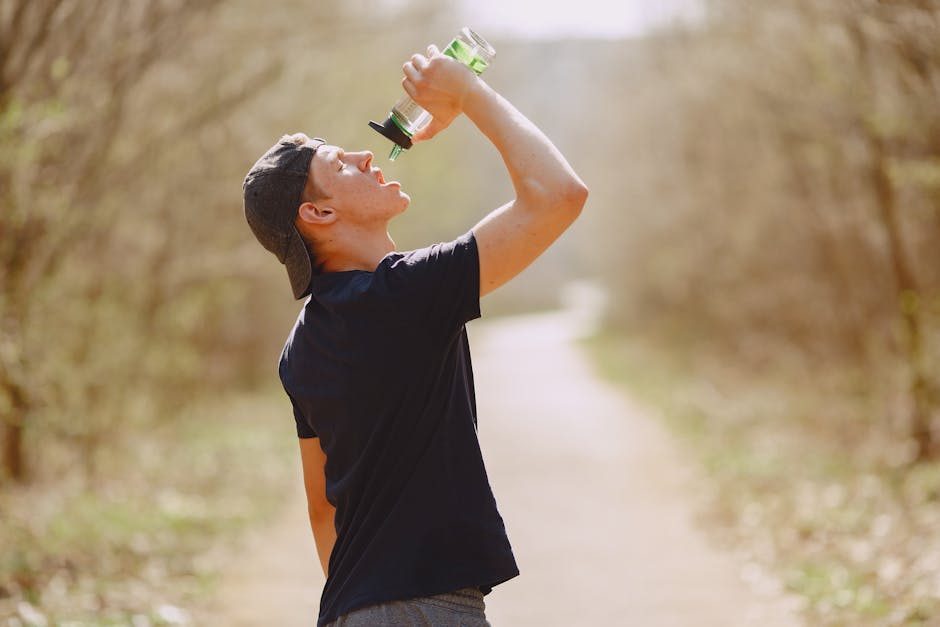
- Hydration: Dehydration can worsen muscle soreness. Drink plenty of water throughout the day, especially around your workouts and after your bath.
- Proper Nutrition: Fuel your body with nutrient-dense foods. Protein is crucial for muscle repair, and carbohydrates replenish energy. Anti-inflammatory foods can also aid recovery. See our guide on what to eat after a workout.
- Active Recovery: Gentle movement like walking or swimming increases blood flow to muscles, helping to flush out waste products without causing more strain. Learn more about active recovery for athletes.
- Foam Rolling and Stretching: These techniques can break up muscle knots and improve flexibility. Incorporate them into your cool-down or on rest days.
- Quality Sleep: Your body repairs itself during sleep. Aim for 7-9 hours per night. A warm bath before bed can even improve sleep quality. Remember the 7 key benefits of rest days for optimal repair.
- Listen to Your Body: Pay attention to how you feel. Some soreness is normal, but sharp or persistent pain may require more rest or professional advice.
Combining these strategies with your recovery bath will support your fitness goals and keep you feeling your best.
Frequently Asked Questions about Muscle Recovery Baths
We often get questions from our Fitness CF members about how to best use a bath to relieve sore muscles. Here are some common ones and our expert advice:
Can a hot bath make muscle soreness worse?
Yes, if the water is too hot. Temperatures above 104°F (40°C) can increase inflammation and cause dehydration, making soreness worse. Stick to a warm, comfortable temperature between 92°F and 100°F (33°C to 38°C) for 15-20 minutes, and remember to drink water.
How often should I take a recovery bath?
The ideal frequency depends on your activity level. A good rule of thumb is 1-3 times per week, especially after intense workouts or when you feel the onset of DOMS. Listen to your body—if you’re particularly sore, a bath can help. To avoid dry skin, consider balancing baths with showers. For more on managing soreness, see our guide on working out with sore muscles.
Are there any risks with muscle recovery baths?
For most healthy people, taking a warm bath to relieve sore muscles is safe. However, you should be cautious if you have certain health conditions like heart disease, high blood pressure, or are pregnant—consult your doctor first. Also, avoid hot baths if you have open wounds or skin infections. Be mindful of slippery surfaces and keep bath products away from children and pets. The Cleveland Clinic provides excellent information on bath safety that we encourage you to review.
Conclusion: Make Recovery an Essential Part of Your Fitness Routine
We’ve explored the profound benefits of a bath to relieve sore muscles, from its scientific ability to boost circulation and relax tight tissues to its role in mental relaxation and improved sleep. It’s clear that a warm soak isn’t just a luxury; it’s a powerful and accessible tool in your fitness arsenal.
At Fitness CF, we believe that true fitness isn’t just about how hard you work out, but also how diligently you recover. Recovery is a fundamental pillar of any successful fitness journey, allowing your body to adapt, rebuild, and come back stronger for your next session. It prevents burnout, reduces injury risk, and ensures you can consistently pursue your goals, whether that’s mastering a new strength training routine, improving your cardio endurance, or simply enjoying an active, healthy lifestyle in Central Florida.
By incorporating a strategic bath into your post-workout routine, you’re not just easing discomfort; you’re actively investing in your body’s long-term health and performance. Listen to your body, customize your recovery, and remember that every step you take towards self-care is a step towards a healthier, happier you.
And when you’re ready to take your recovery even further, or simply want to explore more ways to support your active lifestyle, we invite you to experience the diverse amenities at Fitness CF. From invigorating fitness classes to advanced recovery options like HydroMassage, we’re here to support your entire fitness journey.