Why Beginner Indoor Cycling is Your Perfect Starting Point
Beginner indoor cycling is one of the most accessible and effective ways to jumpstart your fitness journey. If you’ve ever felt intimidated by high-impact workouts or complicated equipment, indoor cycling might be exactly what you’re looking for.
Quick Start Guide for Indoor Cycling Beginners:
- Choose your bike: Use a stationary bike, a spin bike in a class, or your own bike on a trainer.
- Start small: Begin with 2-3 sessions per week, 20-30 minutes each.
- Adjust properly: Set your seat at hip height when standing next to the bike.
- Use resistance: Don’t just pedal fast—add enough resistance to feel challenged.
- Stay cool and hydrated: Keep a fan nearby and water within reach.
It’s a low-impact exercise that welcomes all fitness levels, from complete beginners to seasoned athletes. You control the pace and resistance, building confidence with every pedal stroke. The beauty of indoor cycling is that it delivers serious results without stressing your joints. Research shows it can improve cardiovascular fitness, help manage weight, lower blood pressure and cholesterol, and even boost your mood. Whether you’re riding solo at home or joining a group class, you’ll get a full-body workout that fits your schedule—no weather excuses allowed.
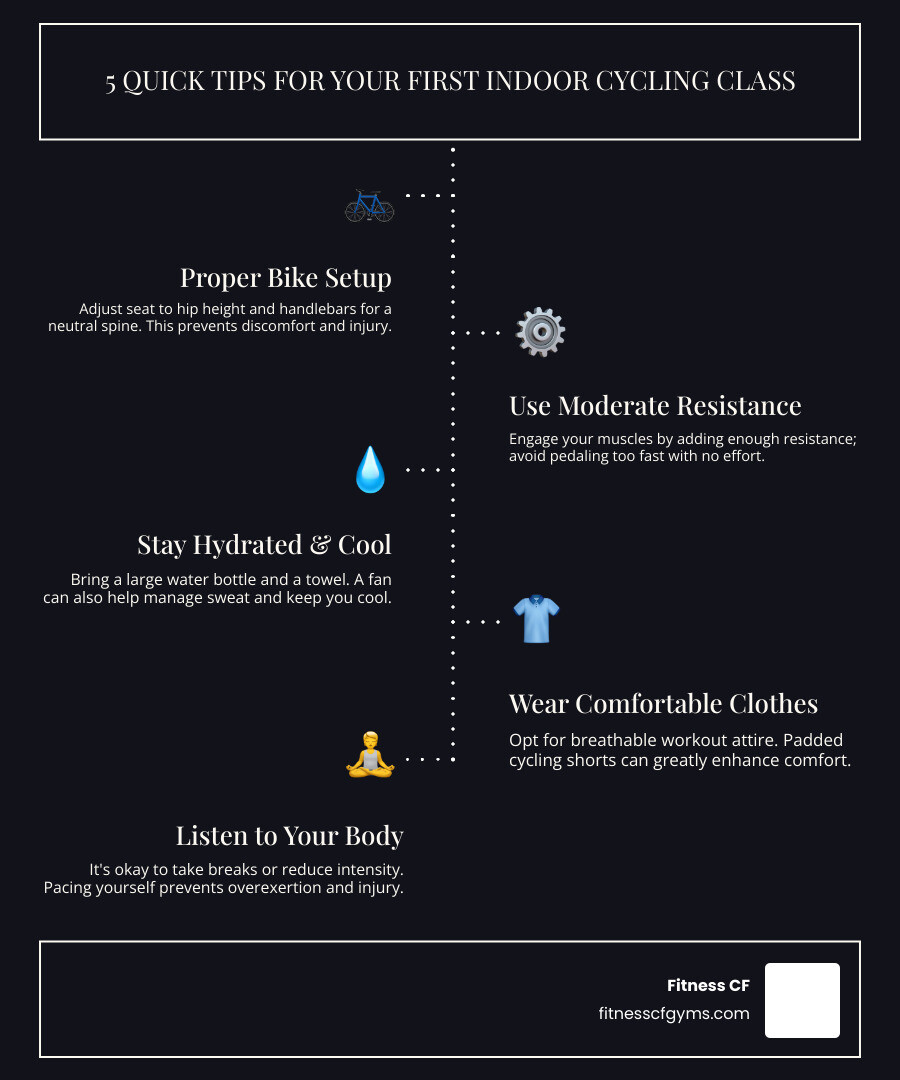
Quick look at Beginner indoor cycling:
Your Guide to Beginner Indoor Cycling: Gearing Up and Getting Started
Starting your beginner indoor cycling journey is exciting! It’s all about creating a comfortable and motivating environment. This means setting up your bike correctly, having the right gear, and understanding how to avoid common pitfalls. A stable, comfortable setup is key to building consistency and reaching your fitness goals.
Setting Up Your Spin Bike for Success
A properly fitted bike is the foundation of a great indoor cycling experience. A good fit prevents aches and allows you to focus on your workout, while a poor fit can lead to discomfort or injury.
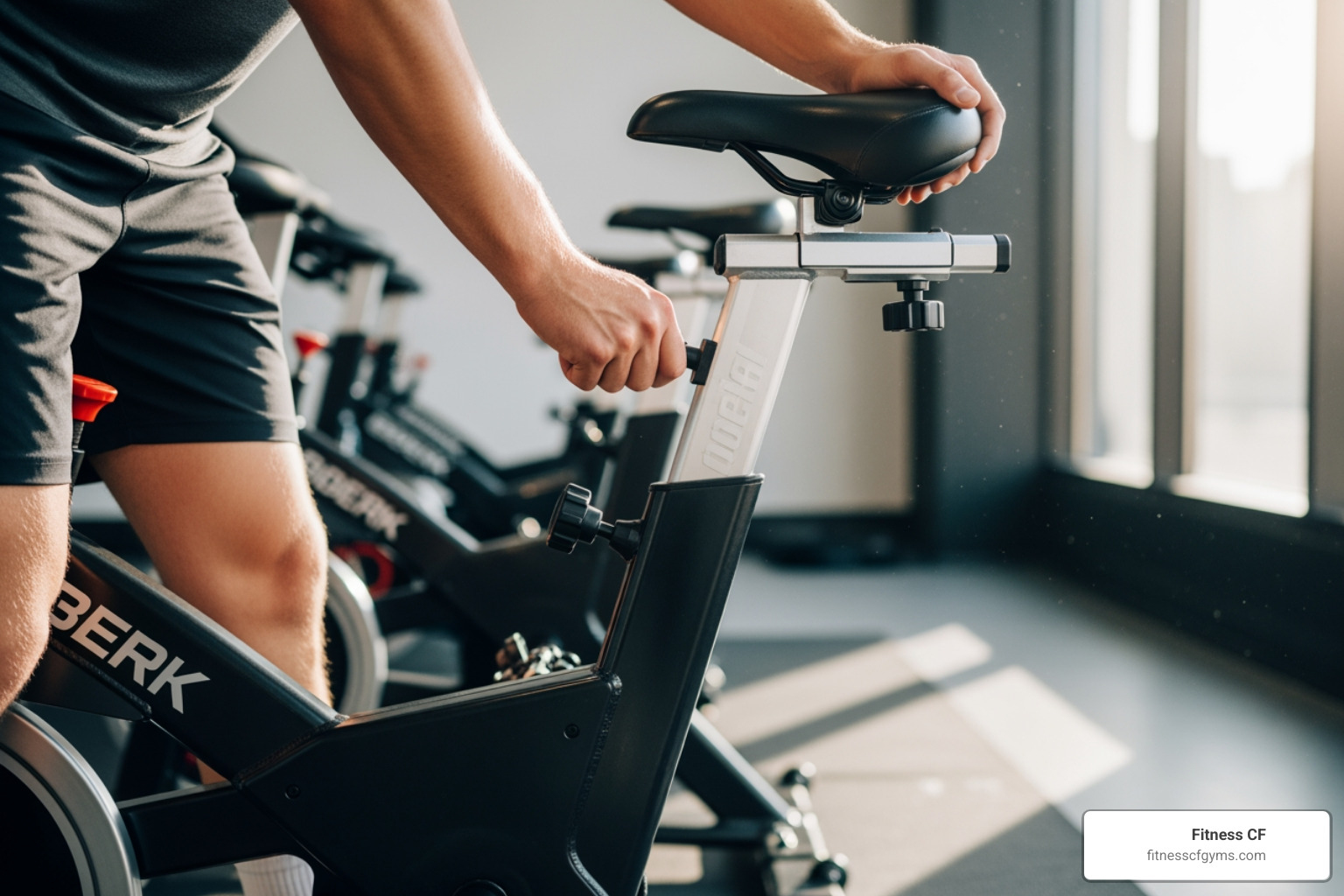
Here’s a quick guide to setting up your spin bike:
-
Seat Height: Stand next to the bike and adjust the seat to your hip height. When you’re on the bike with your foot at the bottom of the pedal stroke, your knee should have a slight bend (about 25-35 degrees). If your hips rock side-to-side, the seat is too high.
-
Fore/Aft Seat Position: With your pedals parallel to the floor (3 and 9 o’clock), a straight line from the front of your lead knee should fall directly over the ball of your foot. This ensures proper power transfer and reduces knee stress.
-
Handlebar Height: For beginners, start with handlebars at or slightly higher than your saddle. This more upright position promotes a neutral spine and reduces strain on your neck and lower back. You should be able to rest your hands comfortably without overreaching.
-
Proper Posture: Maintain a neutral spine by keeping your back straight and chest lifted. Sit toward the back of the saddle to engage your core and prevent unnecessary pressure.
-
Padded Cycling Shorts: Spin bike seats can be firm. Padded cycling shorts make a huge difference in comfort by reducing friction. It’s generally better to use shorts than gel seat covers, which can cause shifting and more discomfort.
For more detailed information on setting up your bike, check out our guide on More info about the Spin Bike.
Essential Accessories for a Better Ride
A few simple accessories can dramatically improve your beginner indoor cycling experience.
Here’s our list of must-haves:
- Fan for Cooling: Indoor cycling generates a lot of heat. A strong fan is crucial to prevent overheating and help you perform your best. Consider a powerful floor fan like this one or even two fans angled up toward your face. You might also look into smart fans for automated control.
- Water Bottle for Hydration: You will sweat a lot. Keep at least one large water bottle within reach and sip frequently.
- Towel for Sweat: A towel is essential for wiping your face and handlebars to stay comfortable and protect your equipment.
- Floor Mat: A mat under your bike protects your floor from sweat, reduces noise, and adds stability. A basic exercise mat or a dedicated trainer mat works well.
- Comfortable Workout Clothes: Wear breathable, moisture-wicking apparel. Padded cycling shorts are highly recommended!
Common Beginner Mistakes to Avoid
Knowing what to avoid can save you from frustration and injury. Here are common mistakes and how to steer clear of them:
- Skimping on Airflow: This is the biggest mistake. Without a good fan, you’ll overheat quickly, and your workout will feel miserable.
- Using a Poor Bike Fit: An improperly adjusted bike can cause pain. Take the time to set up your bike correctly. If you’re in a class, don’t hesitate to ask the instructor for help before you start.
- Ignoring Hydration: Dehydration leads to fatigue and headaches. Drink water before, during, and after your ride.
- Pedaling Too Fast with No Resistance: Spinning with no resistance is ineffective and can strain your joints. Aim for a cadence of 60-90 RPM and always add enough resistance to feel a connection to the pedals.
- Overtraining: Enthusiasm is great, but too much too soon can lead to burnout. Start with 2-3 sessions a week and listen to your body.
- A Cluttered Workout Space: Keep your workout area clean and inviting. Prepare your gear in advance to remove any barriers to getting started.
Understanding these common missteps will help you build a rewarding beginner indoor cycling routine. For more tips, check out our guide on What to Expect From Your First Spinning Class.
Your First Ride: What to Expect and How to Succeed
A typical indoor cycling session is a structured workout, often guided by an instructor and set to motivating music. The key is to always listen to your body.
Understanding Your Effort: Key Cycling Terms for a Beginner Indoor Cycling Workout
To get the most from your ride, it helps to understand some basic terms. These are tools to help you gauge your effort and follow along effectively.
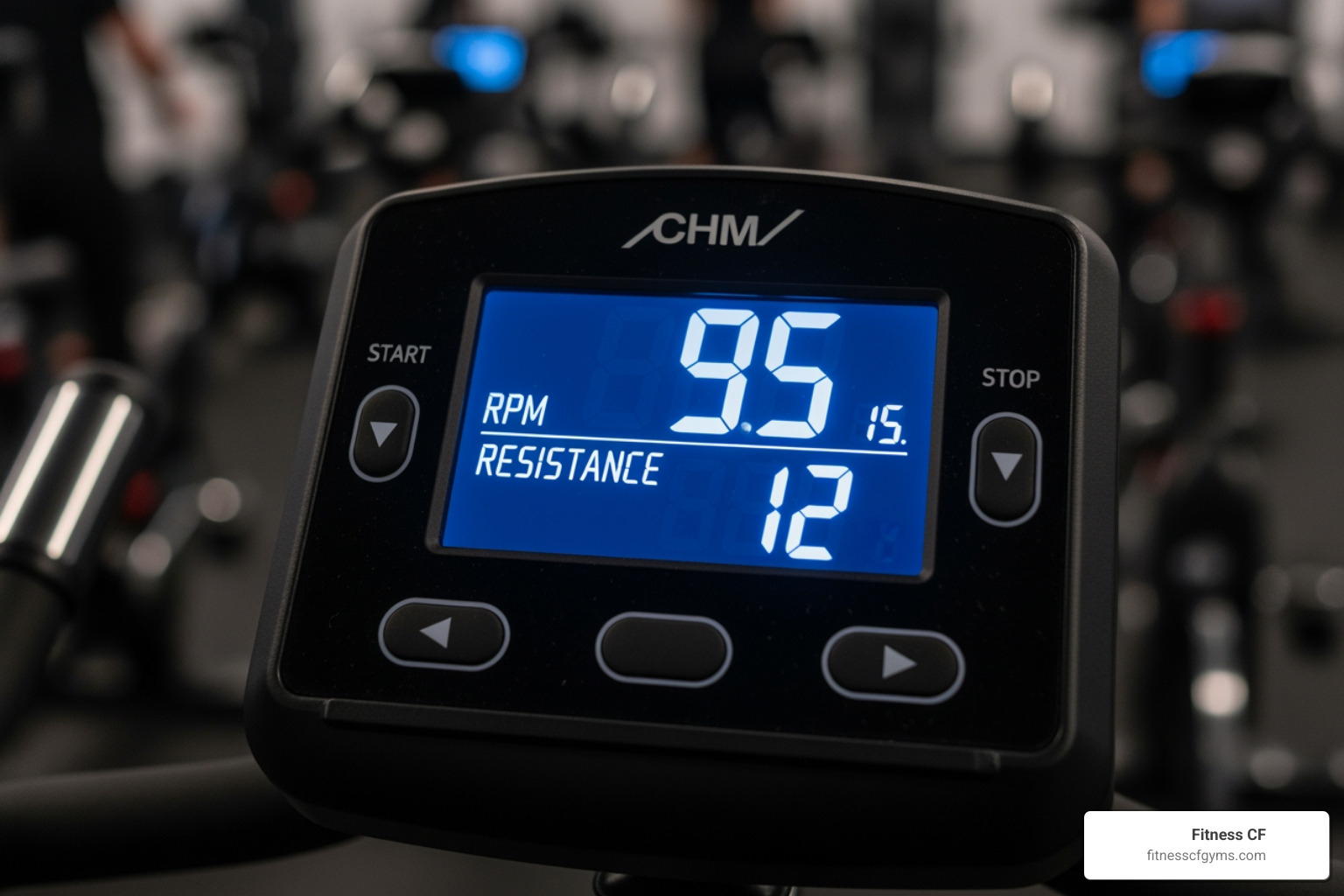
Here are the key terms you’ll encounter:
- RPE (Rate of Perceived Exertion): Your personal scale of how hard you’re working, from 1 (very easy) to 10 (maximal effort). An instructor might cue an RPE of 6 or 7. This allows you to personalize the workout to your fitness level.
- RPM (Revolutions Per Minute): This is your pedaling speed, often displayed on the bike’s console. An ideal RPM for most of your ride is between 60-90. Sprints might push you to 110 RPM, while heavy climbs shouldn’t drop below 50 RPM.
- Resistance: This knob on your bike makes pedaling harder or easier, simulating hills. Resistance is crucial for building strength and cardiovascular capacity. Never pedal without it!
- FTP (Functional Threshold Power): This is the highest power output you can sustain for about an hour. While more advanced, it’s a great metric for tracking progress. Some apps offer a simple fitness test (e.g., a 20-minute test) to establish a baseline FTP, which helps scale future workouts to your fitness level.
Understanding these terms will empower you to get the most out of every ride. For a deeper dive, explore our guide to A great Spin Bike Workout.
Pacing Yourself: Frequency and Duration for Beginners
When starting beginner indoor cycling, consistency beats intensity. Start slow and build up gradually to avoid burnout.
Here are our recommendations for beginners:
- Frequency: Aim for two to three indoor cycling workouts per week. This allows your body adequate time to recover and adapt. High-intensity interval training should be limited to twice a week for optimal gains.
- Duration: Start with 20-30 minute sessions, including a warm-up and cool-down. As you get fitter, you can gradually increase this to 30-45 minutes of focused cycling.
- Progressive Overload: To keep improving, gradually increase the challenge. Add a few minutes to your ride, increase resistance, or add an extra session per week.
- Rest and Recovery: Rest is as crucial as the workout itself. Your muscles need time to repair and grow stronger. Prioritize sleep, hydration, and dedicated rest days. The National Institutes of Health emphasizes the importance of recovery. Listen to your body—if you’re overly fatigued, take an extra rest day.
By pacing yourself, you’ll build a strong foundation for your fitness journey. For more on recovery, explore The importance of rest and recovery.
Why Ride Indoors? The Surprising Benefits of Stationary Cycling
Why choose indoor cycling? It offers a powerful and convenient alternative to outdoor riding, with unique advantages for your fitness journey.
The Health Benefits of Beginner Indoor Cycling
Indoor cycling is a wellness powerhouse, delivering a wealth of health benefits as a low-impact, high-reward activity.
Here’s how beginner indoor cycling can transform your health:
- Improved Cardiovascular Health: Indoor cycling significantly boosts heart and lung health. Studies confirm it improves aerobic capacity, leading to a stronger heart and better stamina for daily activities.
- Lower Blood Pressure and Cholesterol: Regular stationary cycling contributes directly to better heart health by helping lower blood pressure and unhealthy cholesterol levels (LDL), while potentially increasing good cholesterol (HDL).
- Weight Management: Indoor cycling is an excellent calorie burner. A 45-minute session can burn between 350 to 600 calories, depending on your intensity. Consistent workouts can lead to significant weight management and reduced body fat.
- Increased Lean Muscle Mass: Cycling is a powerful lower-body workout that builds muscle in your quadriceps, hamstrings, glutes, and calves. Building lean muscle mass also boosts your metabolism. The American College of Sports Medicine notes that indoor cycling improves muscular endurance.
Indoor cycling is also incredibly time-efficient and can be done regardless of weather, in a safe, controlled environment.
For more compelling reasons to get on a spin bike, read our article on More reasons to take Spin Classes.
Who Can Benefit and Who Should Be Cautious?
One of the best things about beginner indoor cycling is its adaptability. It’s a fantastic activity for a wide range of people, but it’s always important to know when to be cautious.
Who Can Benefit?
- Those Needing Joint-Friendly Exercise: As a low-impact exercise, it’s great for people with knee, hip, or ankle issues. The Arthritis Foundation highlights stationary biking for improving function and reducing pain in people with knee osteoarthritis.
- Anyone Seeking Stress Reduction: Physical activity is a powerful mood booster. The focus required during a ride can be meditative, providing a mental break and helping to combat stress.
- All Fitness Levels: From complete beginners to seasoned athletes, indoor cycling is adaptable. You control the resistance and pace to match your needs.
- Busy Individuals: Indoor cycling offers ultimate convenience. You can fit a high-quality workout into a short window of time, whenever it suits you.
Who Should Be Cautious?
While generally safe, always listen to your body and consult a healthcare professional if you have pre-existing health conditions like heart disease, uncontrolled diabetes, severe arthritis, or if you are pregnant. Proper bike setup is especially critical for anyone with low back pain. When in doubt, seek medical advice before starting a new exercise program.
For more insights into the broader benefits of cycling, check out More about Cycling.
Frequently Asked Questions about Indoor Cycling
As you start your beginner indoor cycling adventure, you’re bound to have questions. Here are answers to some of the most common inquiries.
How many calories do you burn in a 30-minute spin class?
The number of calories you burn depends on your intensity, weight, and fitness level. The harder you work, the more you’ll burn.
A focused 30-minute beginner indoor cycling class with proper resistance can help you burn approximately 250 to 400 calories. A more intense 45-minute session can burn between 350 to 600 calories. However, it’s best to focus on your effort and consistency rather than the exact number on the calorie counter.
Does indoor cycling build leg muscle?
Absolutely! Beginner indoor cycling is a fantastic way to build lower-body strength. Pedaling against resistance engages your quadriceps, hamstrings, glutes, and calves. Maintaining proper posture also strengthens your core.
Resistance is key for building muscle. To maximize development, use progressive overload (gradually increasing resistance) and consider complementing your cycling with a well-rounded strength training program for a balanced fitness routine.
Is it okay to do indoor cycling every day?
While you might be enthusiastic, daily indoor cycling isn’t recommended for most beginners. Your body needs rest to repair and build muscle.
- Prioritize Rest Days: Skipping rest can lead to overtraining, fatigue, and injury.
- Listen to Your Body: If you feel overly sore or tired, your body is telling you it needs a break.
- Mix in Other Activities: For optimal fitness, incorporate other activities like strength training, yoga, or stretching on your non-cycling days. This prevents overuse injuries and promotes well-rounded physical development.
For beginners, two to three sessions a week is a great starting point. As you get fitter, you can increase the frequency, but always prioritize adequate recovery.
Your Journey to a Healthier You Starts Here
We hope this guide has demystified beginner indoor cycling and inspired you to get started! It’s one of the most accessible, efficient, and rewarding ways to improve your health and fitness.
You’ve learned how to set up your bike, what gear you need, and how to pace yourself. Most importantly, you’ve seen the incredible health benefits that await: improved cardiovascular health, stronger muscles, and effective weight management, all within a low-impact, joint-friendly workout.
Fitness is a lifestyle. It’s about building sustainable habits, showing up for yourself, and celebrating every step of your progress. Whether you’re looking for an energizing start to your day, a stress-relieving escape, or a path to a healthier you, indoor cycling offers a powerful solution.
Don’t let anything hold you back from experiencing the transformative power of indoor cycling. Take the next step towards your fitness goals today. We can’t wait to see you pedal your way to a healthier, happier you!