Why Understanding Hip and Groin Pain is Essential for Active Living
How to relieve hip groin pain effectively involves five key approaches:
- Gentle stretching – Focus on butterfly and hip flexor stretches to release tight muscles.
- Targeted strengthening – Build support through leg raises and core exercises.
- Rest and recovery – Use ice for acute pain, heat for stiffness, and allow for healing time.
- Lifestyle modifications – Prioritize proper warm-ups and avoid high-impact activities.
- Professional guidance – Seek medical help for severe or persistent pain.
Hip and groin pain is common, with research showing that about 1 in 10 sports medicine clinic visits involve groin discomfort. The hip and groin are interconnected; pain in one area often radiates to the other due to shared muscles, nerves, and tendons.
This pain can make simple activities like climbing stairs or getting out of bed challenging. For active Central Florida residents, it can derail a healthy lifestyle.
The good news is that conservative treatments like targeted exercises and stretches are effective in most cases. This guide offers proven methods to find relief and return to the activities you love.
With over 40 years in the fitness industry, I’ve seen that learning how to relieve hip groin pain through proper movement and strengthening is often the key to long-term success.
Understanding the Root Causes and Symptoms of Hip and Groin Pain
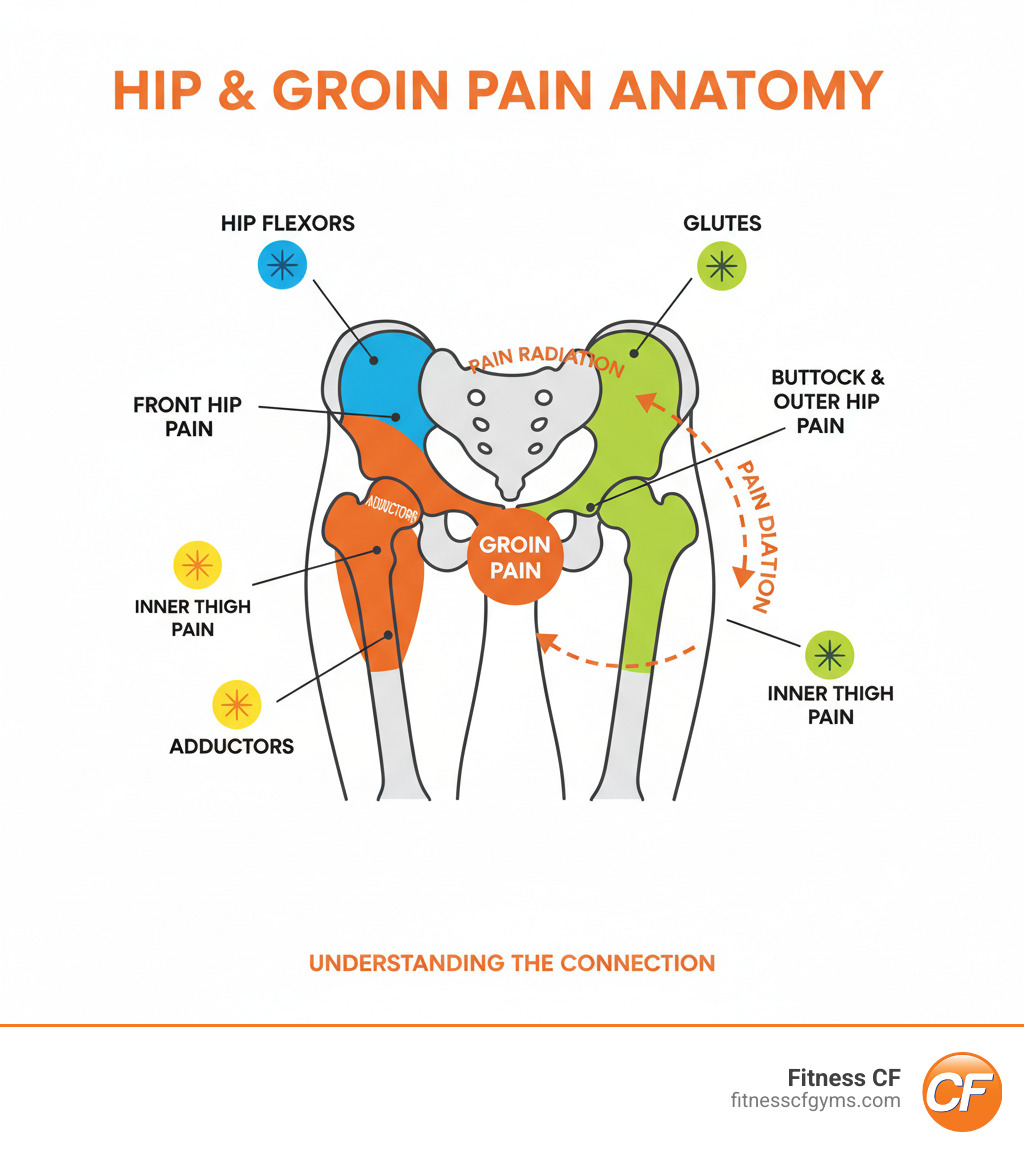
Your hip and groin are closely connected, sharing muscles, nerves, and tendons. Pain in one area often affects the other. In fact, about half of groin pain actually starts in the hip. This is called referred pain, where discomfort in one area is felt in another.
Groin pain refers to any discomfort where your abdomen meets your upper thigh. It can be gradual or sudden, and feel sharp or like a dull ache.
Common Causes of Hip and Groin Pain
Understanding the cause is the first step in learning how to relieve hip groin pain. Here are the most common culprits:
Muscle strains are a primary cause, especially for active people. A groin strain, or “pulled groin,” is an injury to the adductor muscles on your inner thigh. It’s often caused by sudden movements, poor warm-ups, or overuse.
Your hip flexors, the muscles at the front of your hip, can also cause pain when they become tight from too much sitting or a sudden increase in activity.
Several hip conditions can send pain to your groin. Osteoarthritis wears down hip joint cartilage, causing bone-on-bone friction, pain, and stiffness. Bursitis (inflamed bursae) and tendonitis (inflamed tendons) in the hip can also cause radiating groin pain.
Hip impingement (extra bone growth) and labral tears (damage to cartilage around the hip socket) can cause pain, clicking, or catching sensations.
Inguinal hernias occur when tissue pushes through a weak spot in the lower abdominal muscles, creating a bulge that’s more painful with activity. You can find more details in this overview of inguinal hernias.
Sometimes, groin pain can stem from other issues like stress fractures or problems in the spine, as shown in this look at musculoskeletal disorders. This is why persistent pain requires professional attention.
Common Symptoms Associated with Hip and Groin Pain
Your symptoms offer clues about the underlying cause:
- Sharp, sudden pain often signals an acute strain, while a dull, persistent ache is more common with arthritis or chronic overuse.
- Stiffness is common after periods of rest or first thing in the morning.
- Reduced range of motion can make it difficult to bring your knee to your chest or rotate your hip.
- Clicking or popping sounds can indicate mechanical issues like a labral tear.
- Pain that travels from the hip down the leg or from the groin into the abdomen is also a frequent symptom.
Understanding these causes and symptoms is the foundation for effective treatment, which we’ll explore next.
How to Relieve Hip Groin Pain with Stretches and Exercises
When you’re in discomfort, movement might seem counterintuitive, but movement truly is medicine. The right combination of gentle stretching and targeted strengthening can work wonders for hip and groin pain relief.
These exercises aim to restore balance to the hip and groin area by improving joint motion, relaxing tight tissues, and boosting blood flow to promote healing. The most important rule is to listen to your body. Perform each exercise within a pain-free range of motion and stop if you feel sharp pain.
Stretching releases tension and restores flexibility, while strengthening builds support for the hip joint. As research on The importance of stretching routines shows, combining them is a cornerstone of injury prevention and recovery.
Gentle Stretches for Immediate Relief
These stretches are your first line of defense against discomfort. Hold each stretch for about 30 seconds and repeat three times, always prioritizing comfort.
The Butterfly Stretch is a simple, effective way to learn how to relieve hip groin pain. It targets your groin and inner thigh muscles.
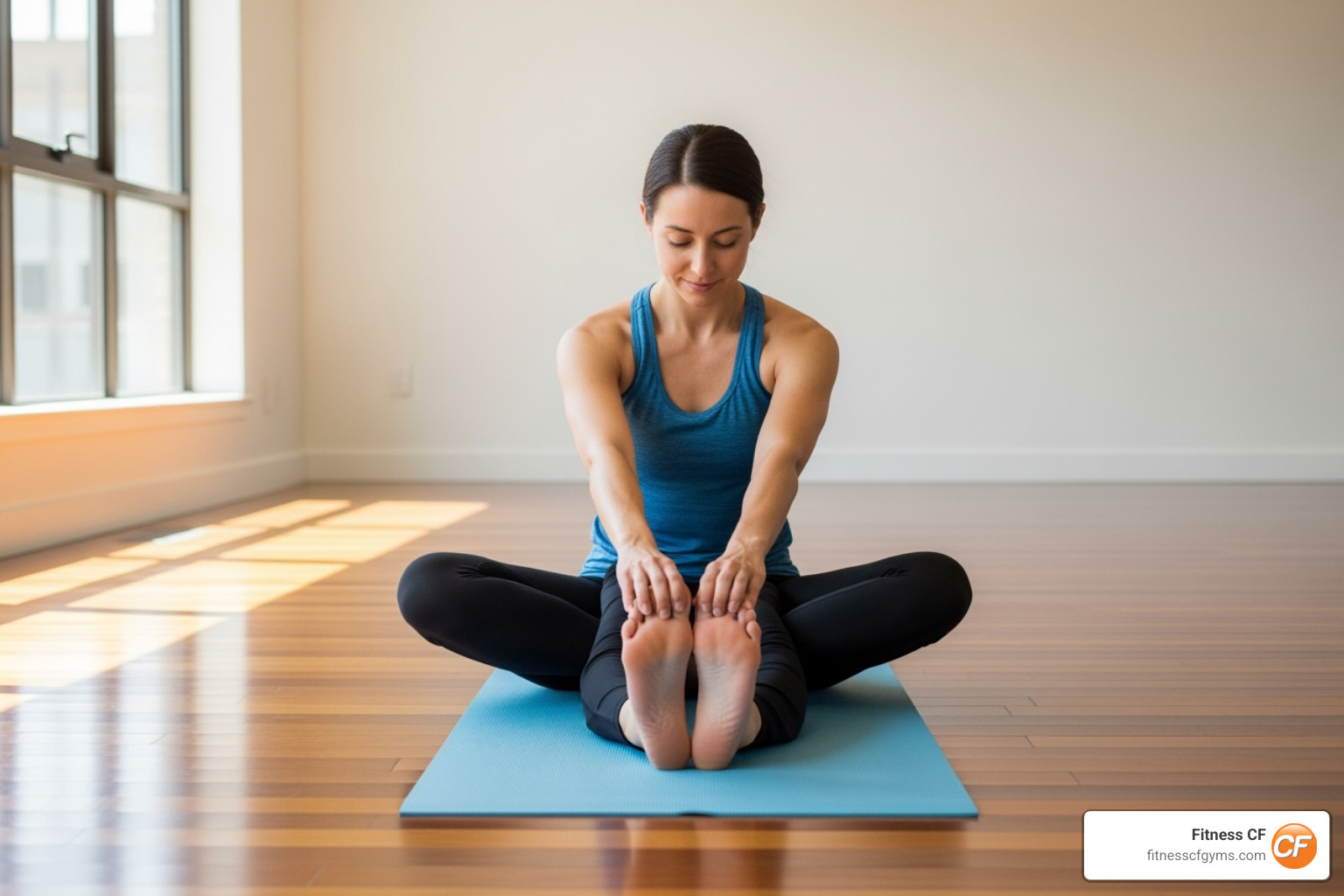
Sit on the floor with the soles of your feet together, letting your knees fall outward. Hold your feet, sit tall, and lean forward from your hips until you feel a gentle stretch in your inner thighs. Perform this stretch 2-3 times daily for best results.
The Hip Flexor Stretch addresses tight hip flexors, a common contributor to pain from prolonged sitting or repetitive activities.

Kneel on one knee with the other foot planted in front of you. Keeping your torso upright, gently shift your weight forward to feel a stretch in the front of the kneeling hip. Perform this once daily on each side.
The Hamstring Stretch on Wall helps because tight hamstrings can pull on the pelvis and contribute to hip discomfort. This version offers excellent control.
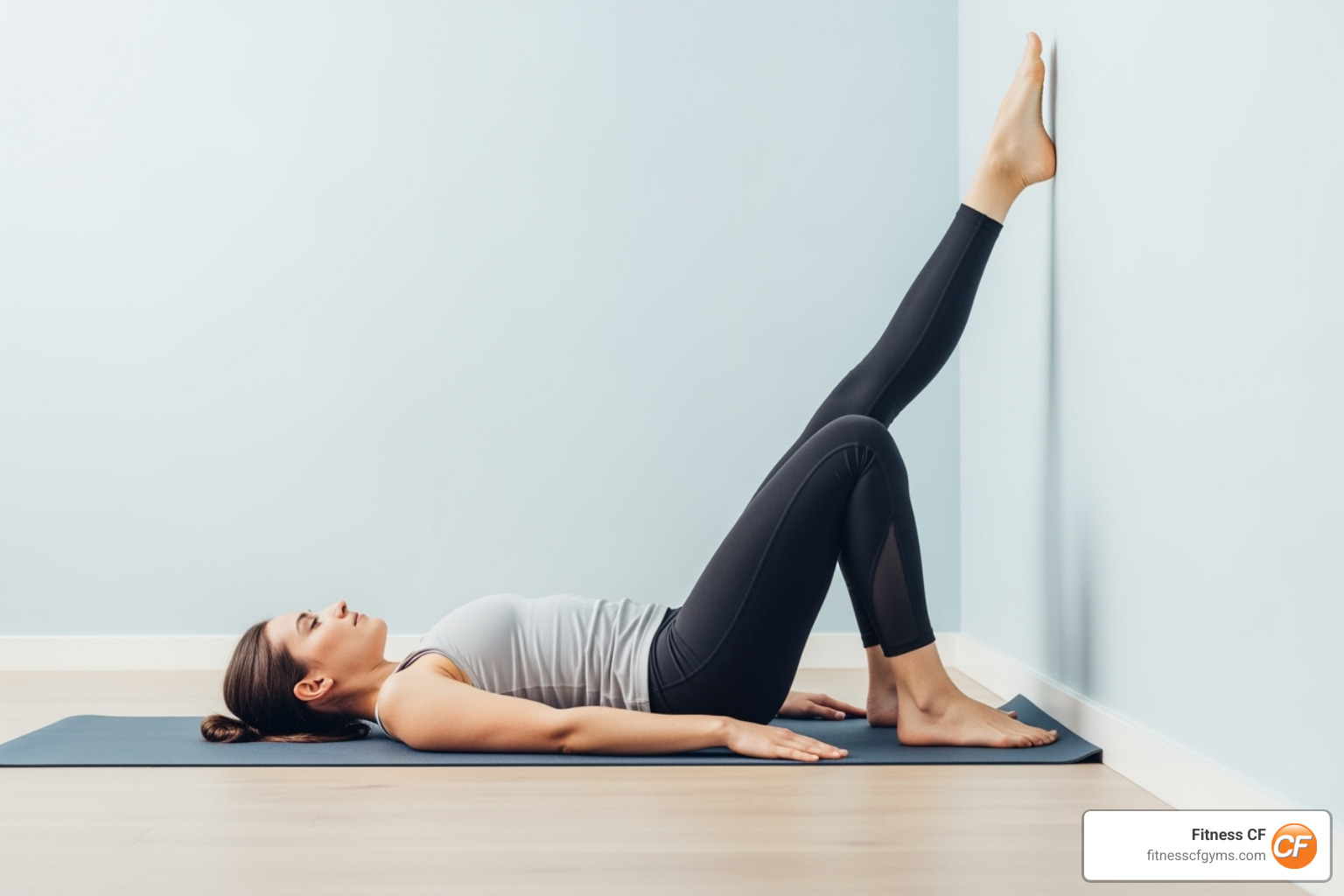
Lie on your back near a wall, extending one leg straight up against it while the other rests on the floor. Adjust your distance from the wall to control the stretch intensity. Hold this position once daily on each side.
Strengthening Exercises for Long-Term Support
Once pain subsides, building strength is crucial for preventing future episodes. These exercises create a stable foundation around your hip and core.
The Straight Leg Raise builds quadriceps strength and hip flexor endurance, which are vital for hip stability.

Lie on your back with one leg bent (foot flat) and the other straight. Engage your core and slowly lift the straight leg 6-12 inches. Hold briefly, then lower with control. Focus on smooth movements. Aim for 2 sets of 15 repetitions on each leg.
The Crab Walk with Resistance Band targets the hip abductors on the outside of your hips, which are crucial for pelvic stability.

Place a resistance band around your ankles or just above your knees. Stand with feet hip-width apart, knees slightly bent, and hinge at the hips. Take small, controlled steps sideways, maintaining tension in the band. Perform 2-3 sets of 10-15 steps in each direction.
The Plank is essential because a strong core provides a stable foundation that prevents hip muscles from being overloaded.
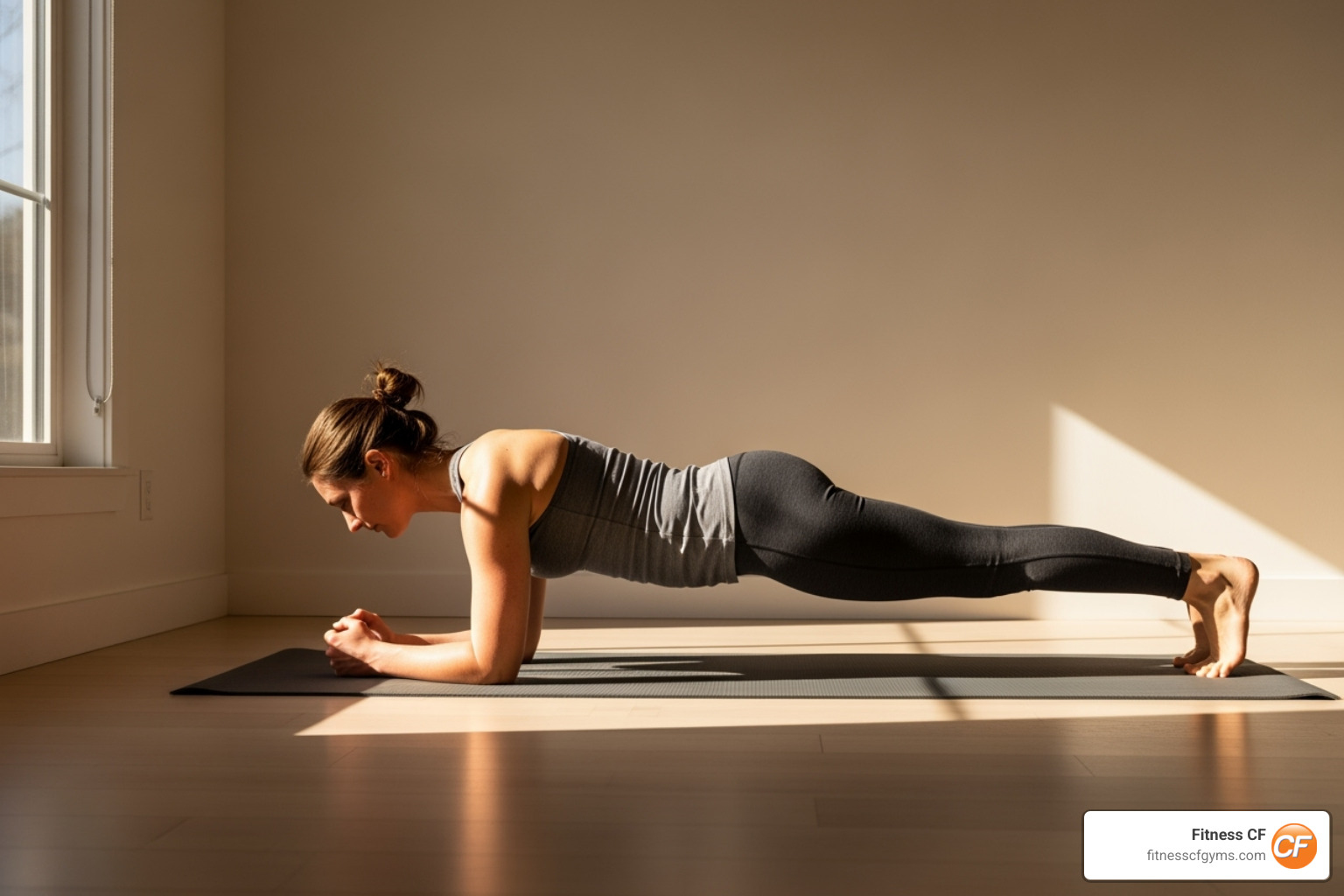
Lower onto your forearms from a push-up position. Keep your body in a straight line from head to heels, engaging your core and avoiding sagging hips. Start with 30-second holds and work up to 60 seconds, repeating 3 times.
Regular strength training improves bone density, boosts metabolism, and improves quality of life. Combined with flexibility work, as shown in this guide to Better Flexibility: 8 Fantastic Exercises to Increase Range of Motion, it creates a powerful foundation for long-term joint health.
Consistency is more important than intensity. Perform these exercises regularly with good form, giving your body the time it needs to heal.
Lifestyle Modifications and Prevention Strategies
A proactive approach to daily habits and fitness is the most effective way to prevent hip and groin pain. Healthy habits protect your joints and improve your overall quality of life. When it comes to how to relieve hip groin pain, prevention is the best medicine.
Best Practices for Preventing Hip and Groin Pain
Proper warm-ups and cool-downs are essential for joint health. As detailed in The Importance of Warm-up and Cool-down Exercises, dynamic stretching before activity prepares your muscles for movement and helps prevent injury.
Gradual workout progression is key. Increase workout intensity and duration slowly to allow your tissues to adapt and avoid overtraining, a common cause of pain.
Core strength is vital for hip health. A strong core stabilizes your pelvis, creating a solid foundation for movement and reducing strain on the hips. There is a clear link between a weak core and groin injuries.
Maintaining a healthy weight reduces the mechanical stress on your hip joints. Even modest weight loss can significantly decrease joint forces during daily activities.
Low-impact cardio activities like swimming and cycling offer excellent cardiovascular benefits without jarring your joints. You can even modify high-intensity interval training to get all The Benefits of HIIT without the harsh impact.
At-Home Remedies and Self-Care for Sore Muscles
When discomfort arises, these self-care strategies can speed up recovery.
For acute injuries (the first 24-48 hours), use the R.I.C.E. method: Rest to allow healing, Ice for 15-20 minutes at a time to reduce swelling, Compression with a bandage for support, and Elevation to decrease swelling.
After the acute phase, heat therapy like warm compresses can relax tight muscles, increase blood flow, and ease stiffness.
Foam rolling and myofascial release can address muscle tension. Rolling the muscles around your hips, glutes, and inner thighs can improve flexibility and reduce pain. For more ideas, see these tips on how to relieve sore muscles.
Active recovery, which involves light movement and gentle stretching, keeps blood flowing and prevents stiffness during healing. You can learn more about this approach in this guide to Active Recovery for Athletes.
Consistency with these strategies is key to long-term hip and groin health.
When to Seek Professional Help for Your Pain
Despite home care, some hip and groin pain persists. Recognizing when to seek professional help is crucial for proper healing and preventing long-term complications. As this guide on How to Prevent and Recover from Common Workout Injuries explains, knowing your limits is part of a smart fitness strategy.
Self-treatment has its limits. What seems like a simple strain could be a more complex issue, and delaying professional care can lead to chronic problems.
When to See a Doctor for Your Hip and Groin Pain
See a healthcare provider for any persistent groin pain. The following symptoms warrant immediate medical attention:
- Severe, sudden pain after an injury, or if you cannot bear weight on the leg.
- Visible deformity or a new lump in the hip or groin area.
- Fever or chills accompanying the pain, which may signal an infection.
- Numbness, tingling, or weakness in the leg or foot.
- Pain that is severe enough to disrupt your sleep regularly.
- Pain that doesn’t improve after several weeks of consistent home treatment.
How Physical Therapy Aids Recovery and Management
Physical therapy offers a comprehensive, expert-guided approach to how to relieve hip groin pain. A physical therapist can accurately diagnose the cause of your pain, distinguishing between muscle, joint, or movement issues for more effective treatment.
Key benefits of physical therapy include:
- Personalized exercise prescription: A PT provides a program custom to your specific condition and goals, progressing as you get stronger.
- Manual therapy techniques: Hands-on treatments like targeted massage and joint mobilization can provide immediate relief and improve mobility.
- Movement pattern correction: A PT can identify and fix faulty mechanics in daily activities that contribute to pain, preventing future injury.
- Education: You’ll learn about your condition and gain strategies to prevent recurrence. You can use resources like this to Find a physical therapist in your area.
Understanding Groin Strains and How to Relieve Hip Groin Pain
Groin strains are a common cause of pain, affecting the adductor muscles. They are classified by severity:
- Grade 1: Mild overstretching with some pain, but strength and movement are mostly normal.
- Grade 2: Partial tearing with significant pain, swelling, bruising, and loss of strength. Walking is difficult.
- Grade 3: Complete rupture with severe pain, swelling, and loss of muscle function. Walking is nearly impossible without assistance.
It’s important to differentiate strains from other conditions like hernias or hip joint problems, as treatments differ. This is where professional diagnosis is invaluable.
Untreated hip and groin pain can lead to a cascade of issues. A chronic pain cycle can develop, and the body often compensates by altering biomechanics, which puts stress on other joints like the knees and lower back. This can lead to muscle weakness and reduced activity, creating a cycle of deconditioning and increasing the risk of future injuries.
Frequently Asked Questions about Hip and Groin Pain
Here are answers to common questions about hip and groin discomfort to help guide your recovery.
How long does it take for hip and groin pain to go away?
Recovery time varies depending on the cause and severity of the injury. There is no one-size-fits-all timeline.
- Minor strains often resolve in 2-4 weeks with proper rest and care.
- Moderate strains can take 1-3 months of dedicated rehabilitation.
- Severe muscle tears may take 3-6 months or longer and sometimes require surgery.
- Chronic conditions like arthritis are managed rather than cured. With proper care, you can manage flare-ups and maintain an active lifestyle.
Consistency with your rehabilitation plan is key; rushing the process often leads to setbacks and extends recovery time.
Is walking good for hip and groin pain?
Gentle walking is often beneficial, but it depends on your specific injury. Walking promotes blood flow, which aids healing and prevents stiffness. Gentle movement is a key part of recovery.
However, listen to your body’s signals. Stop if walking causes sharp pain or makes your symptoms worse, and consult a healthcare professional. Start with short walks on flat, even surfaces with supportive shoes. Gradually increase your distance as comfort allows. Use walking aids like crutches if they are recommended by a professional.
What should I avoid if I have groin pain?
The golden rule is to avoid anything that causes sharp pain. Listen to your body’s signals.
- Sudden directional changes: Avoid sports that require quick pivots, like soccer or tennis, as they can re-injure the area.
- Deep squatting and lunging: These can compress the hip joint or overstretch irritated muscles.
- High-impact activities: Avoid activities like running and jumping. Opt for low-impact cardio like swimming or cycling instead.
- Pushing through significant pain: While mild discomfort during rehab is normal, stop if you feel sharp or worsening pain.
- Prolonged sitting or standing: Take short movement breaks every 30-45 minutes to prevent muscles from tightening up.
Avoiding these activities is a temporary investment in your long-term health, allowing you to return to the activities you love pain-free.
Conclusion
Relieving hip and groin pain is achievable. This guide has outlined the essential steps to understand, treat, and prevent this common condition. Effective relief for how to relieve hip groin pain requires a comprehensive approach that addresses both symptoms and root causes.
Treating the interconnected hip and groin area together is key. Gentle stretches like the butterfly stretch and hip flexor stretch offer immediate relief, while strengthening exercises like straight leg raises and planks build long-term support. Core strength is a powerful recovery tool, as it stabilizes the pelvis and reduces strain on your hip and groin.
Lifestyle changes are your insurance policy against future pain. Proper warm-ups, gradual progression in your fitness routine, and maintaining a healthy weight through regular cardio and strength training are crucial for joint health.
Healing takes time and consistency. Listen to your body and be patient with the process. Don’t hesitate to seek professional help for severe pain, numbness, or sleep-disrupting symptoms. A doctor or physical therapist can provide a personalized plan for a safe return to activity.
We believe that staying active is one of life’s greatest joys. By combining targeted exercises, healthy lifestyle habits, and professional guidance when needed, you can take control of your hip and groin health. Your path to a pain-free, active life is within reach. You can complement your exercise routine and support your wellness journey by exploring recovery options like HydroMassage.