Why Recovery After Leg Day Matters More Than You Think
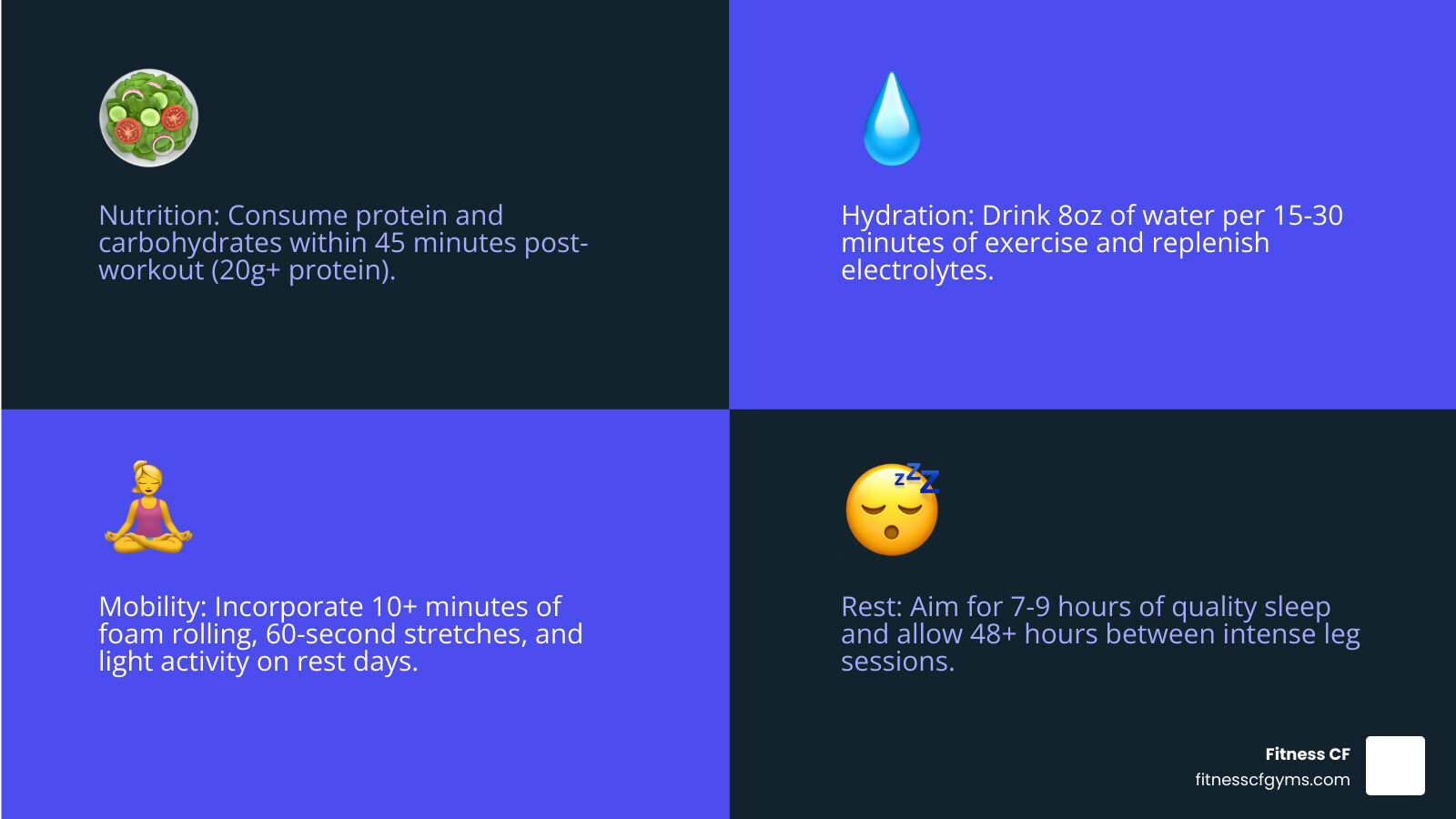
The best way to recover after leg day involves four essential pillars working together: proper nutrition with protein and carbohydrates within 45 minutes, adequate hydration (8 ounces per 15-30 minutes of exercise), active recovery methods like foam rolling and stretching, and 7-9 hours of quality sleep each night.
Quick Recovery Checklist:
- Immediate (0-1 hour): Cool down for 5-10 minutes, stretch each muscle group for 60 seconds, drink water
- Within 45 minutes: Eat 20g+ protein plus carbohydrates
- First 24 hours: Foam roll for 10 minutes, stay hydrated, lift legs if possible
- Next 48 hours: Light activity like walking, avoid training same muscles, prioritize sleep
- Ongoing: Allow 48+ hours between intense leg workouts
If you’ve ever struggled to walk down stairs the day after squats, you understand the reality of leg day. That burning sensation and stiffness isn’t just discomfort—it’s your muscles experiencing Delayed Onset Muscle Soreness (DOMS), which typically peaks 24-48 hours after your workout.
Here’s what’s actually happening: when you push your legs hard, you create microscopic tears in your muscle fibers. This might sound bad, but it’s exactly how muscles grow stronger. Fluid rushes to these areas to flush out damaged cells and build new, stronger muscle tissue.
The problem? Without proper recovery, you’re leaving gains on the table.
Recovery isn’t optional—it’s when the actual muscle building happens. While strength training breaks down muscle tissue, recovery rebuilds it stronger. Skip this step, and you’ll face longer soreness, decreased performance, and higher injury risk.
The good news is that recovery doesn’t require expensive equipment or complicated protocols. Simple strategies like proper nutrition, smart hydration, foam rolling, and quality sleep can dramatically reduce soreness and accelerate your progress.
I’m Pleasant Lewis, owner of Fitness CF, and after 40 years in the fitness industry, I’ve helped thousands of Central Florida residents find that the best way to recover after leg day is simpler than most people think—it just requires consistency and the right approach.
Best way to recover after leg day terms to remember:
Immediate Actions: What to Do in the First Hour Post-Workout
The moment you finish that last squat or lunge, your recovery process begins. This initial hour is crucial for setting the stage for faster repair and reducing the severity of Delayed Onset Muscle Soreness (DOMS). Think of it as your body’s “golden hour” for recovery. Our immediate steps focus on gradually bringing your body back to a resting state, flushing out metabolic waste, and preparing your muscles for repair. These actions are foundational to the best way to recover after leg day.
The Cooldown (5-10 Minutes)
After pushing your limits, it’s tempting to just collapse, but a proper cooldown is a non-negotiable step in effective recovery. A 5-10 minute low-intensity aerobic activity, such as a brisk walk or light cycling, allows your heart rate to gradually return to normal. This isn’t just about comfort; it’s about physiology. An active cooldown helps prevent blood from pooling in your lower extremities, which can cause lightheadedness or dizziness. More importantly, it helps circulate cellular waste products that accumulate during intense exercise, preventing them from settling in your muscles and contributing to soreness. This gentle movement acts like a pump, aiding your body in flushing out these waste products, which is a key part of our post-workout recovery plan for healthy muscle growth.
Post-Workout Stretching
Once your heart rate has normalized, dedicate another 5-10 minutes to static stretching. Stretching post-workout, especially after a grueling leg day, decreases built-up muscle tension and helps improve your overall flexibility and range of motion. We recommend holding each stretch for at least 60 seconds, which can be accumulated in sets of 10-30 seconds. Focus on the major muscle groups you’ve just worked. Regularly incorporating stretching into your cool-down can lead to fewer complaints of muscle soreness and a reduced risk of injury, contributing significantly to the best way to recover after leg day.
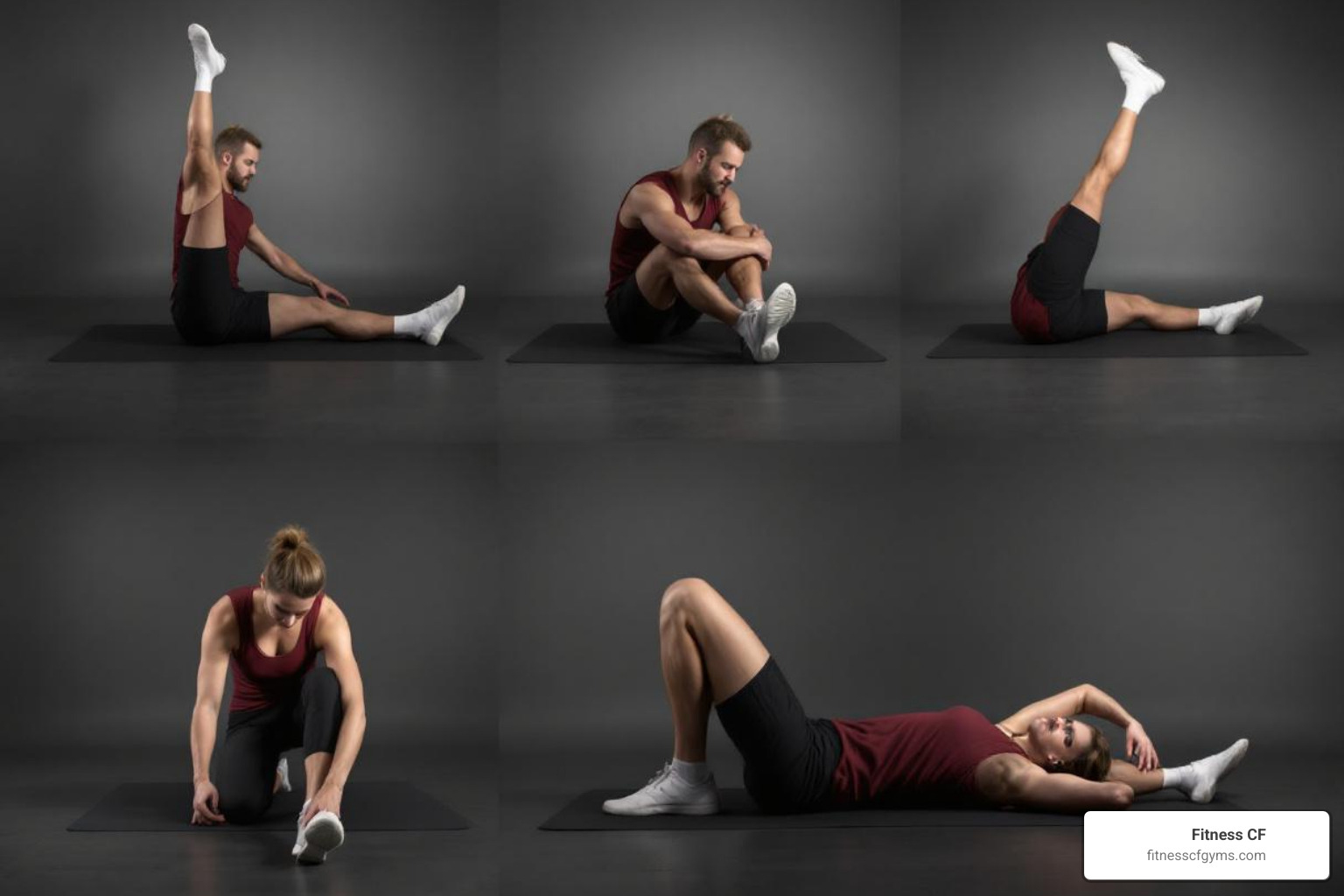
Here are three essential post-leg day stretches we swear by:
- Quad Stretch: Stand tall, grab your ankle, and gently pull your heel towards your glute. Keep your knees together and feel the stretch in the front of your thigh.
- Hamstring Stretch: Sit on the floor with one leg extended and the other bent, foot tucked into your inner thigh. Lean forward from your hips, reaching for your toes on the extended leg.
- Calf Stretch: Face a wall, place your hands on it. Step one foot back, keeping your heel on the ground and your leg straight. Lean forward until you feel a stretch in your calf.
For more techniques to soothe those aching muscles, check out our guide on easing sore muscles. Consistent stretching is a powerful tool for enhancing your workout recovery.
The Nutritional Blueprint for Muscle Repair
What you put into your body after a workout is just as important as the workout itself. Our muscles are like hungry sponges after leg day, eager to soak up nutrients for repair and replenishment. This is why the post-workout nutrition window is so critical. While the idea of a strict 45-60 minute “anabolic window” has been debated, it’s generally a good practice to refuel relatively soon after intense exercise. This ensures your body has the building blocks it needs for muscle protein synthesis and glycogen replenishment, which are vital for growth and preparing for your next session. Understanding this blueprint is a core component of the best way to recover after leg day. For more on how nutrition supports your fitness goals, explore our insights on how to lose fat and gain muscle.
Refuel with Carbohydrates and Protein
Your post-leg day meal or snack should be a dynamic duo of carbohydrates and protein. Carbohydrates are your body’s primary fuel source, and after a strenuous workout, your glycogen stores (stored carbs in your muscles and liver) are depleted. Replenishing these stores is crucial for energy and preventing fatigue. Protein, on the other hand, provides the amino acids necessary to repair those microscopic muscle tears we discussed earlier. Without adequate protein, your muscles can’t rebuild and grow stronger. We recommend aiming for at least 20 grams of protein right after a tough workout, ideally consumed within 45 minutes. However, research also suggests that spreading your protein intake throughout the day (around 1.4 grams per kilogram of bodyweight daily) is highly effective for optimal muscle repair and growth.

Here are some healthy and delicious examples to fuel your recovery:
- Quinoa with steamed vegetables and chicken breast: A complete meal providing complex carbs and lean protein.
- Peanut butter toast with an apple: A quick snack with carbs, protein, and healthy fats.
- Eggs or fish: Excellent sources of high-quality protein.
- Protein shake or bar: Convenient options when you’re on the go.
- Chocolate milk: A surprisingly effective recovery drink, offering a great mix of protein and sugar to kick-start muscle regrowth.
These choices are just a few examples of good things for muscle recovery.
Hydration and Electrolyte Balance
Sweat is good for you, but it comes at a cost: water and electrolytes. Dehydration can lead to muscle cramping, fatigue, headaches, and poor physical performance, making it a major enemy of muscle recovery. That’s why keeping yourself hydrated is one of the keys to a strong recovery and a critical part of the best way to recover after leg day.
A good rule of thumb is to gulp down 8 ounces of water for every 15 to 30 minutes of exercise. To get a more accurate idea of how much fluid you need, we suggest weighing yourself before and after your workout. For every pound of body weight lost during exercise, you should aim to drink 8 ounces of water. This helps ensure you restore your body weight to its pre-workout level.
Sweating also depletes your body’s supply of electrolytes such as sodium chloride, potassium, magnesium, and calcium. These minerals are essential for muscle function and preventing cramps. Replenishing them is vital.
Here are some excellent sources of electrolytes:
- Bananas and oranges: Packed with potassium and other essential minerals.
- Coconut water: A natural source of electrolytes.
- Low-sugar sports drinks: Can be beneficial for very intense or prolonged workouts, but often water is sufficient.
- Chocolate milk: As mentioned, it’s a great recovery drink that also helps with electrolytes.
We recommend avoiding overly sugary, caffeinated, and alcoholic drinks, as these can actually cause dehydration and hinder your recovery efforts.
The Best Way to Recover After Leg Day: Active Methods and Quality Rest
While immediate post-workout actions and proper nutrition lay the groundwork, the ongoing recovery process involves a blend of active methods and crucial rest. It’s not just about what you do right after a workout, but what you do in the hours and days that follow. Incorporating active recovery and prioritizing sleep are cornerstones of the best way to recover after leg day and ensuring your muscles are ready for their next challenge. For a deeper dive into the importance of taking breaks, explore our article on the benefits of rest days.
Foam Rolling and Myofascial Release
Think of foam rolling as giving yourself a deep tissue massage. This technique, known as self-myofascial release, applies pressure to trigger points in your muscles, helping to break up knots and scar tissue. The benefits are numerous: it increases blood flow to the area, reduces muscle tightness, and can significantly speed up healing and recovery. Preliminary studies show that foam rollers can improve recovery by having an anti-pain effect, helping you get back into the gym faster while also serving as a great tool for injury prevention.
When foam rolling your legs, gently roll the affected body part over the foam roller, about one inch per second for about 30 to 60 seconds total. If you find a particularly tight or tender spot, isolate it for 10 to 15 seconds, allowing the pressure to release the tension. Be sure to target your quads, hamstrings, glutes, and calves—all the major players in your leg day workout.
For more detailed strategies on relieving sore muscles, including foam rolling techniques, check out our comprehensive guide.
The Role of Active Recovery
It might sound counterintuitive, but sometimes the best way to recover after leg day isn’t complete rest, but active rest. This involves engaging in light, low-intensity exercise on your rest days. Activities like walking, leisurely cycling, or yoga help keep blood circulating, which is crucial for speeding up your body’s ability to drain waste products and chemicals linked with muscle aches. This can also help prevent lactic acid buildup and remove toxins, boosting overall circulation.
Instead of sitting still, a 30-60 minute walk the day after a very hard effort can be far more beneficial for your legs. Active recovery stimulates the recovery process without imposing undue stress on your muscles. It’s a gentle way to facilitate repair and reduce soreness, proving that movement can be medicine. We believe that recovery is as important as exercise in your fitness journey.
Prioritizing Sleep for Muscle Growth
If you’re serious about muscle growth and recovery, then sleep isn’t a luxury; it’s a necessity. So much repairing and rebuilding happens when you’re snoozing, and your body isn’t moving. During deep sleep, your body releases growth hormones, which are essential for muscle repair and tissue growth. A good night’s rest literally helps your muscles recover, adapt, and grow stronger.
Most people need between seven and nine hours of sleep each night to be at their best, and after a tough leg day, aiming for at least 8 hours is highly recommended. Sleep deprivation, on the other hand, can hinder performance, impair judgment, and slow down your recovery process significantly. It’s during these precious hours that your body truly works its magic, making quality sleep an indispensable part of the best way to recover after leg day. Don’t underestimate its power; learn more about how to get proper muscle recovery through adequate rest.
Troubleshooting and Advanced Recovery Tools
Sometimes, even with the best way to recover after leg day strategies in place, things can feel off. It’s important to know the difference between normal muscle soreness and a potential injury, and to understand how other tools and techniques can aid your recovery.
Soreness vs. Injury: How to Tell the Difference
After a challenging leg day, some soreness is expected. It’s a sign your muscles are adapting and getting stronger. However, it’s crucial to differentiate between normal DOMS and a more serious injury. Ignoring the signals your body sends can lead to prolonged pain or more severe issues.
Here’s a quick guide to help you tell the difference:
| Symptom | Normal Muscle Soreness (DOMS) | Potential Injury T