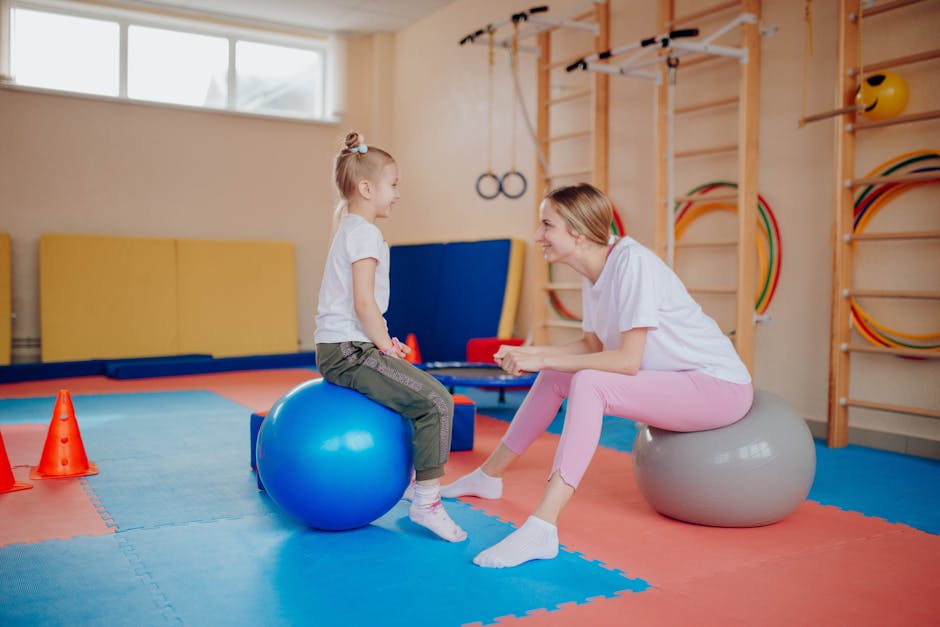
Why Child Care Fitness Is the Key to Staying Consistent as a Busy Parent
Child care fitness — finding ways to exercise while your kids are looked after — is one of the biggest challenges for parents. If you’re looking for a quick answer, here are the most important things to know:
- Childcare-friendly workout time helps parents stay consistent with training
- Strength training and cardio can both be effective in short sessions
- A weekly routine (even 2–4 days) supports energy, mood, and long-term health
- Consistency matters more than perfection, especially with a busy family schedule
- Simple, repeatable workouts reduce decision fatigue and make exercise easier to maintain
It’s a simple idea, but it solves a real problem. Young children are wonderful — and they also make it very hard to carve out time for your own health.
Regular exercise isn’t a luxury. It reduces stress, improves sleep, boosts energy, and supports long-term physical and mental wellness. But without a workable plan, many parents simply can’t make it happen consistently.
That’s where a child care fitness routine can change everything: when you know you have protected time to move your body, you can focus on your workout and build momentum. Over time, that momentum supports healthier choices outside your workouts too—better sleep, more daily movement, and improved nutrition habits.
I’m Pleasant Lewis, with over 40 years of experience in the fitness industry helping families make child care fitness a seamless part of their healthy lifestyle. Below, I’ll walk you through the healthy-living fundamentals that make workouts effective, time-efficient, and sustainable.
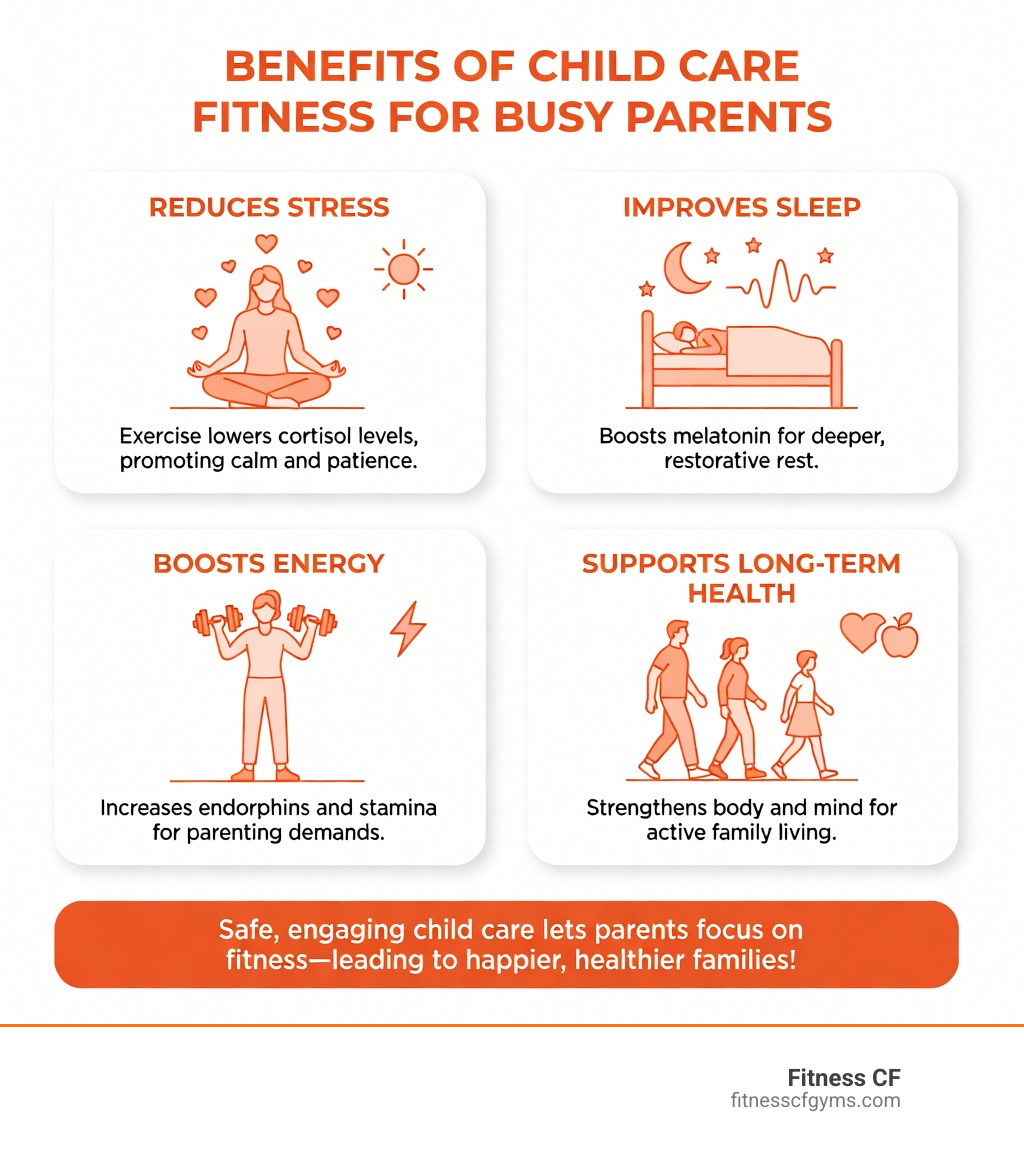
Child care fitness word list:
The Vital Role of Child Care Fitness in Parental Wellness

When we talk about child care fitness, we’re really talking about protecting time for a healthy lifestyle—so parents can consistently exercise, recover, and manage stress.
The benefits of exercise are extensive, covering physical, mental, and emotional health. For parents specifically, regular physical activity supports heart health, helps maintain a healthy weight, improves insulin sensitivity, and reduces the risk of chronic disease. It also improves sleep quality and provides a practical way to regulate mood during high-demand seasons of life.
Perhaps most importantly, movement is a reliable way to boost your energy levels over time. The right mix of strength training, cardio, and daily activity helps you feel more capable—whether that means carrying kids, moving strollers, doing yard work, or simply having the patience to navigate busy evenings.
How Child Care Fitness Supports Parental Mental Health
The mental health benefits of consistent exercise are profound. Training can lower stress hormones, improve self-efficacy (the feeling that you can handle hard things), and create a positive feedback loop: you move more, you sleep better, and you feel more emotionally steady.
Using protected workout time also allows you to choose the kind of movement your body needs most that day—sometimes that’s higher-intensity intervals, and other days it’s a gentle walk, mobility work, or a light full-body lift. The best routine is the one you can repeat.
Modeling Healthy Habits through Child Care Fitness
Children learn what “normal” looks like. When they see you practice healthy habits—moving regularly, lifting weights safely, going for walks, prioritizing sleep, and eating balanced meals—they’re more likely to adopt those behaviors long-term.
And healthy living isn’t limited to the workout itself. A sustainable routine includes:
- Strength training to support joints, posture, bone density, and daily function
- Cardio to build heart and lung capacity and improve endurance
- Mobility to reduce stiffness and improve movement quality
- Recovery (sleep, hydration, and rest days) to make training effective
Maximizing Results with Strength Training and Cardio
To get the most out of your limited “me” time, it’s important to understand how different types of exercise impact your body. A well-rounded routine should include both strength training and cardiovascular work.
Strength Training is essential for building lean muscle mass and increasing bone density. As we age, maintaining muscle is key to keeping our metabolism high and protecting our joints. It’s not just about “bulking up”—it’s about functional movement that makes carrying groceries (or toddlers) easier.
Cardiovascular Endurance is the engine that keeps us going. Whether it’s through interval training or steady-state cardio like swimming or jogging, heart health is paramount. Cardio is excellent for calorie burning and improving the efficiency of your lungs and heart.
| Benefit | Strength Training | Cardiovascular Exercise |
|---|---|---|
| Metabolism | Increases resting metabolic rate | High calorie burn during activity |
| Bone Health | Improves bone density | Minimal impact on bone density |
| Heart Health | Strengthens heart muscle | Lowers resting heart rate & BP |
| Mental Health | Boosts confidence & discipline | Immediate endorphin release |
| Functional Life | Easier to lift/carry objects | More stamina for daily play |
By combining these two, you create a metabolic fire that burns long after you leave the gym. At our Orlando FL Amenities Childcare locations, we encourage parents to mix their routines to avoid plateaus and keep things exciting.
Essential Elements of a High-Quality At-Home Fitness Routine
A successful child care fitness plan doesn’t require complicated programming—it requires a repeatable structure that makes your workouts effective in limited time.
- Clear Weekly Targets: Aim for 2–4 strength sessions per week and 2–3 cardio sessions (these can overlap). Even 20–40 minutes at a time can make a meaningful difference.
- Simple Exercise Selection: Prioritize compound movements that train multiple muscle groups at once—squats, hinges (deadlift patterns), pushes, pulls, and loaded carries.
- Progressive Overload: To keep improving, gradually increase difficulty over time (more reps, more weight, better form, or shorter rest). This is the engine behind strength and muscle gains.
- Balance and Mobility: Add a few minutes of mobility for hips, shoulders, and upper back, plus core stability work. This supports posture and reduces injury risk.
- Time Boundaries: Set a start and end time for your workouts. A focused, time-capped session is often more sustainable than a longer workout you can’t consistently fit in.
If your schedule is unpredictable, keep a “minimum effective dose” workout ready: a 15–20 minute circuit you can repeat anytime (for example: squat pattern + push-up pattern + row pattern + brisk walking).
Overcoming Common Fitness Roadblocks: Fatigue, Plateaus, and Consistency
It’s completely normal—especially for parents—to face roadblocks like low energy, stalled progress, or inconsistent weeks. The solution is usually not “more intensity,” but smarter structure.
Fatigue and Low Energy: When you’re tired, aim for a lighter session rather than skipping entirely. A short walk, gentle cardio, or a reduced-volume lift can improve circulation and mood without draining you further. Recovery habits matter too: sleep, hydration, and adequate protein make workouts feel easier.
Plateaus: If progress stalls, adjust one variable at a time:
- Increase weight slightly (even 2–5 lbs)
- Add 1–2 reps per set
- Add one set to a key movement
- Shorten rest periods a bit
- Rotate exercise variations every 4–8 weeks
Injury Prevention and Joint Comfort: Strength training should build you up, not beat you up. Prioritize technique, use full ranges of motion you control, and include warm-ups that raise body temperature and prepare joints (5–8 minutes is often enough). If something hurts sharply, modify the movement.
Consistency Over Perfection: The biggest driver of results is doing something—reliably. A realistic plan you can repeat for months will outperform an “ideal” plan you only follow for a week.
Frequently Asked Questions about Healthy Workouts for Busy Parents
What’s the best workout split if I only have a few days per week?
For 2–3 days per week, full-body strength training is usually the most time-efficient option. Focus on a squat/lunge pattern, a hinge pattern, a push, a pull, and core work each session. Add short cardio (10–20 minutes) after lifting or on alternate days.
What are the benefits of strength training?
Strength training builds muscle and improves functional strength for everyday life (lifting kids, carrying groceries, moving furniture). It also supports bone density, joint stability, posture, and metabolic health. Over time, it can improve body composition by helping you maintain or increase lean mass.
What are the benefits of cardio?
Cardio strengthens your heart and lungs, improves endurance, and helps manage stress. It can also support sleep quality and daily energy, especially when done at a sustainable intensity (like brisk walking, cycling, swimming, or intervals tailored to your fitness level).
Do I need high-intensity workouts to see results?
Not necessarily. Many parents do better with a mix of moderate cardio, strength training, and daily movement (steps). High-intensity sessions can be effective, but they’re optional—and recovery needs increase as intensity increases.
How do I make fitness part of a healthy lifestyle long-term?
Keep the basics consistent: move daily, strength train multiple times per week, do some cardio, eat mostly nutrient-dense foods, prioritize protein and fiber, and protect sleep. Small habits repeated over time create the biggest change.
Conclusion
Healthy living is a journey that shouldn’t stop just because you’ve started a family. In fact, that’s when it becomes more important than ever. A sustainable child care fitness routine helps you protect time for strength training, cardio, and recovery—the building blocks of long-term health.
Strength training supports functional ability, posture, and metabolism. Cardio supports heart health, stamina, and stress management. Together, they form a balanced approach that helps you feel better day to day—and stay resilient for the long run.
Whether your workouts are short or long, the goal is the same: keep showing up, keep it simple, and build a routine you can maintain. Consistency is the advantage that compounds.