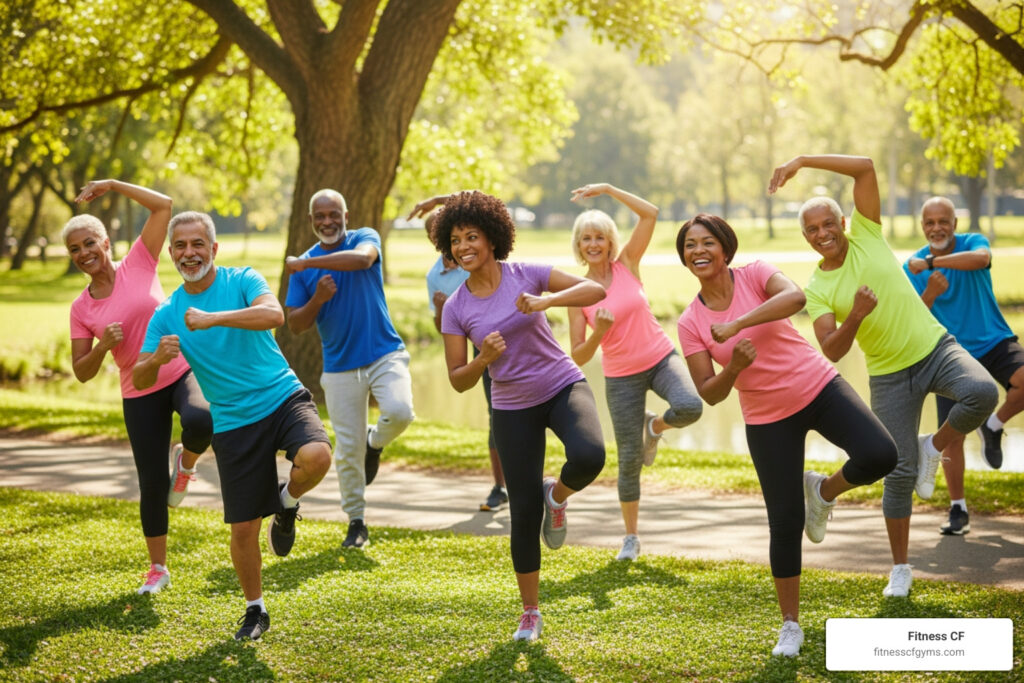
What is HIIT and Why is it a Game-Changer for Seniors?
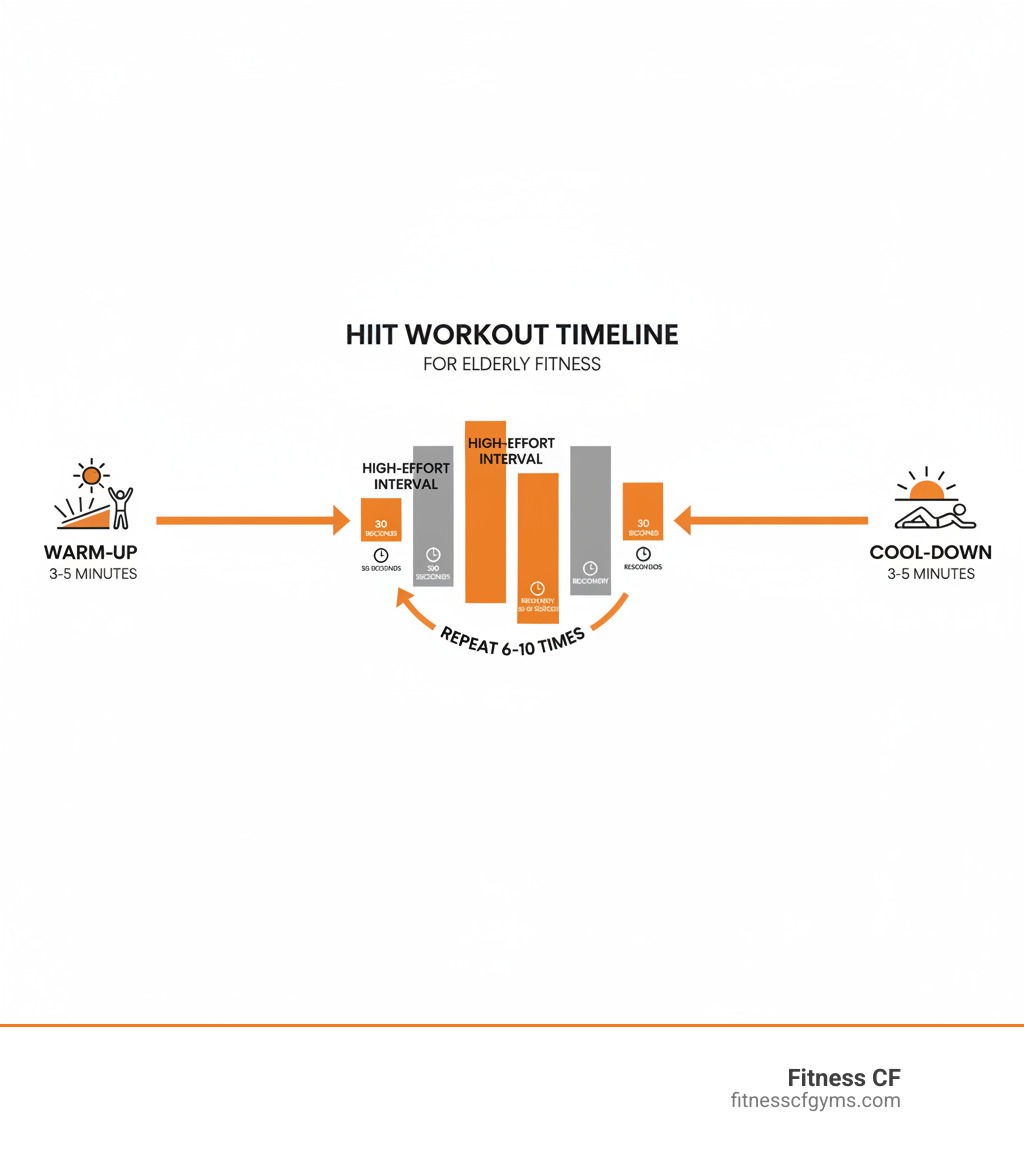
A hiit workout for elderly individuals is a time-efficient exercise method that alternates short bursts of intense effort with periods of active recovery. Here’s what makes it effective:
Key Components of Senior HIIT:
- Work intervals: 20-60 seconds of liftd effort
- Recovery periods: 20-90 seconds of low-intensity movement
- Total duration: 10-30 minutes per session
- Frequency: 2-3 times per week
- Modifications: Seated options, chair support, low-impact movements
- No equipment required: Bodyweight exercises work perfectly
While High-Intensity Interval Training might sound intimidating, intensity is relative to your current fitness level. “High intensity” simply means pushing yourself a bit harder than your comfortable pace before recovering for the next round.
Why does this matter for seniors? Research from the Mayo Clinic shows that people ages 65 to 80 who incorporated HIIT into their routines improved their energy-producing mitochondria, effectively slowing down aging at a cellular level. Studies also reveal that older adults who do HIIT see their aerobic capacity decline at a much slower rate than those doing only steady-state exercise.
This challenges the old myth that we must “slow down” as we age. Strategic bursts of effort can help you maintain strength, balance, and energy for the activities you love.
The Anti-Aging Powerhouse: Unpacking HIIT’s Health Benefits
A hiit workout for elderly individuals isn’t just good exercise—it’s a tune-up for your body at the cellular level, delivering measurable changes that can help you live with more energy, strength, and independence.
Cellular Rejuvenation and Energy: As we age, the mitochondria (the powerhouses in our cells) slow down. Research from the Mayo Clinic found that seniors who did HIIT improved their mitochondrial function, with older participants seeing the most dramatic improvement. This can help turn back the clock at a cellular level, giving you more energy for daily life.
Heart and Lung Health: HIIT improves your VO2 max—how efficiently your body uses oxygen. A higher VO2 max means your heart pumps blood more effectively, and you won’t feel as winded during brisk walks or climbing stairs. Studies have also shown that HIIT does more to protect participants with heart disease from future cardiac problems than traditional moderate-intensity workouts.
Muscle and Bone Strength: HIIT helps combat sarcopenia, the natural age-related loss of muscle mass. By building and preserving muscle, it makes it easier to lift groceries, get up from a chair, and maintain balance. Many HIIT exercises are also weight-bearing, which helps maintain and even increase bone density, reducing the risk of osteoporosis and fractures. For more ways to stay active, check out our guide on Aging Gracefully: Fitness Tips for Seniors.
Weight Management: HIIT boosts your metabolism, helping your body burn calories more efficiently even after your workout ends. Studies have found it particularly effective for reducing belly fat compared to longer, steady-state cardio sessions.
Balance and Coordination: Many HIIT workouts naturally improve balance and coordination, which is crucial for fall prevention—a leading cause of injury and loss of independence in older adults.
Functional Strength: HIIT is unique in its ability to preserve fast-twitch muscle fibers. These are the fibers responsible for quick, powerful movements, like catching yourself if you stumble or getting up from a chair without using your hands. Maintaining these fibers is key to the functional strength you need to stay independent. To learn more about why fitness is so crucial as we age, read More on the importance of senior fitness.
Metabolic and Hormonal Health: HIIT also dramatically improves insulin sensitivity, which is vital for managing or preventing type 2 diabetes and sustaining energy levels. Some studies have even shown it can positively influence hormone levels related to energy and vitality. For a deeper dive into the science, explore this Scientific research on HIIT’s cellular benefits.
How to Start a Safe and Effective HIIT Workout for Elderly Individuals
Starting a hiit workout for elderly individuals is safe and life-changing when approached thoughtfully. Here’s how to begin your journey the right way.
1. Get Medical Clearance: The first and most important step is to consult your doctor, especially if you have conditions like heart disease, diabetes, high blood pressure, or joint concerns. This ensures your workout plan is appropriate for your health.
2. Start Slow and Progress Gradually: Intensity is relative. Your goal is to challenge yourself, not compete with others. A great tool for gauging intensity is the “talk test.” During work intervals, you should only be able to manage a few words. If you can hold a full conversation, you’re at a moderate pace.
3. Listen to Your Body: HIIT should be challenging, but it should never cause pain. If a movement hurts, stop immediately. Learning to distinguish between the discomfort of hard work and actual pain is a key part of exercising safely.
4. Focus on Proper Form: Correct form prevents injuries and maximizes benefits. If you’re unsure, consider working with a certified personal trainer for a few sessions to learn the fundamentals and proper modifications. For more guidance, see our Fitness Tips for Older Adults.
5. Follow a Schedule: Aim for two to three HIIT sessions per week on non-consecutive days. This allows your body adequate time to rest and recover, which is when your muscles rebuild stronger. Sessions should last 10-30 minutes, including a warm-up and cool-down.
6. Never Skip Warm-ups and Cool-downs: A 3-5 minute warm-up prepares your muscles and joints for activity. A cool-down with gentle stretching helps your body transition back to a resting state and improves flexibility.
Key Safety Precautions and Modifications
Safety is everything. The great news is that HIIT is incredibly adaptable.
- Choose Low-Impact Movements: Opt for exercises that don’t involve jumping or jarring impacts on your joints. Low-impact does not mean low-intensity.
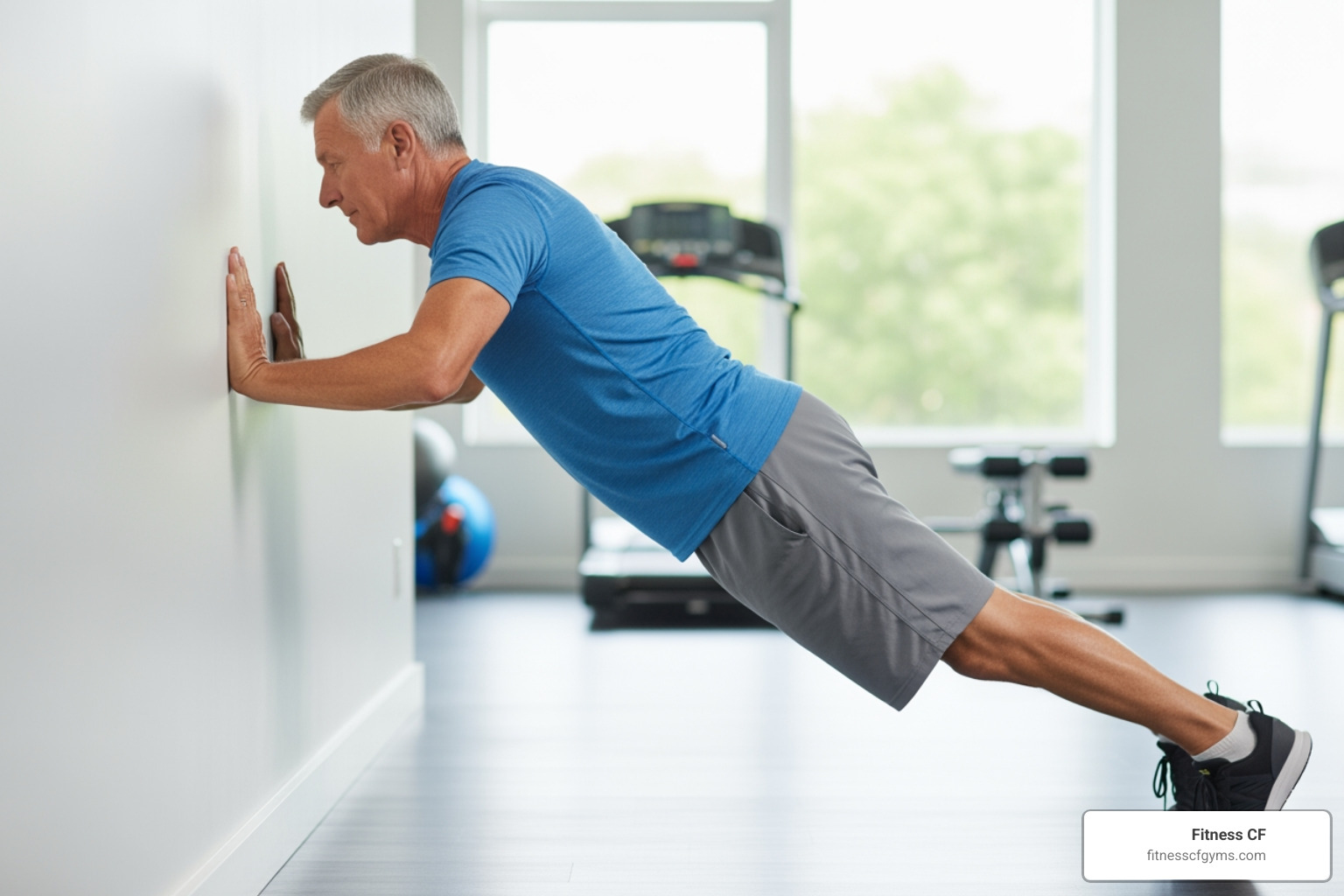
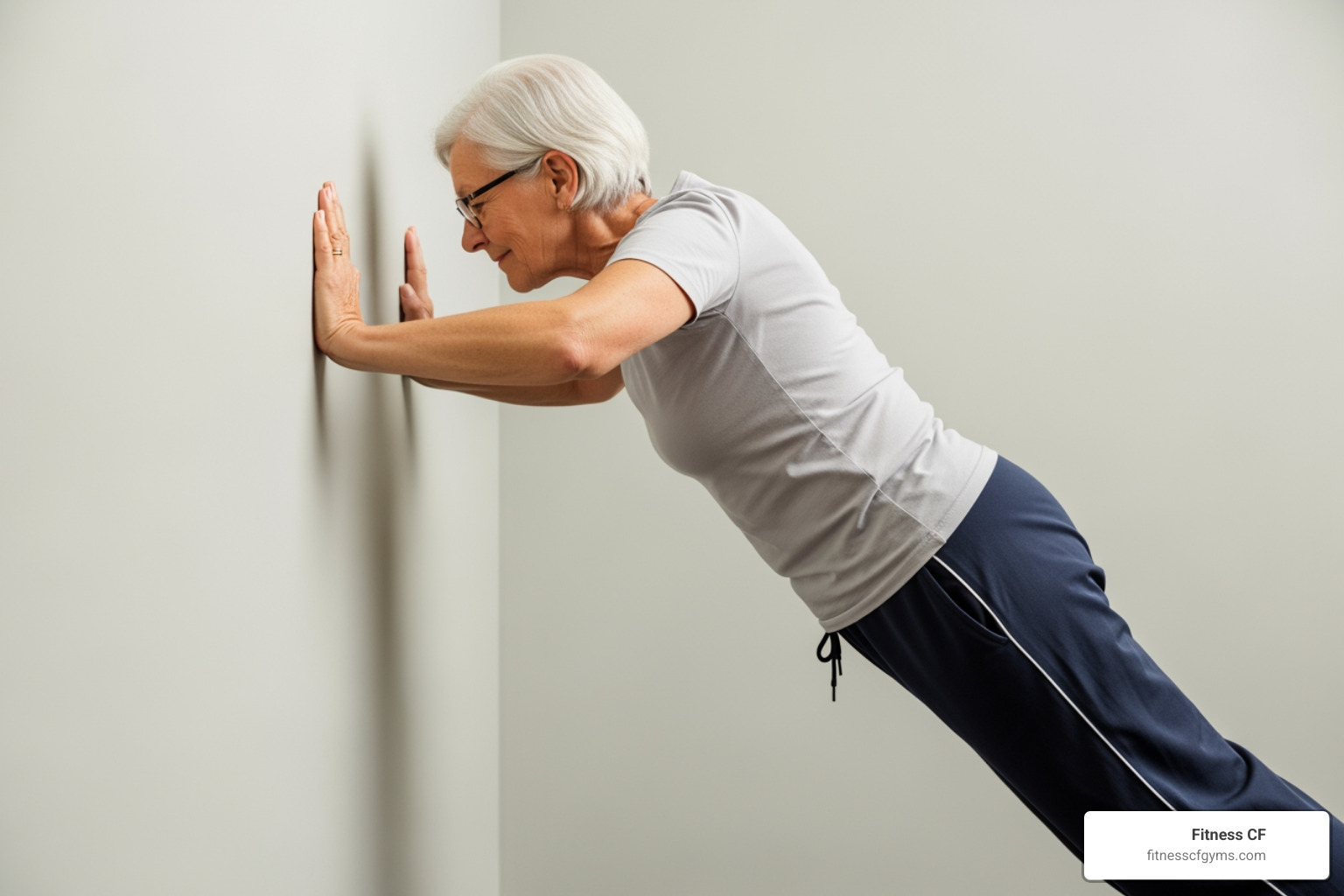
- Use a Chair for Support: A chair can be used for stability during squats or for performing exercises while seated. Wall push-ups are another great modification that reduces strain.
- Avoid Pain: Challenge should feel difficult, not painful. If an exercise causes sharp discomfort, modify it or choose a different one.
- Know the Signs of Overexertion: Stop immediately if you feel dizzy, have chest pain, experience extreme shortness of breath, or feel nauseous. Seek medical attention if symptoms don’t resolve with rest.
- Stay Hydrated and Wear Proper Shoes: Drink water before, during, and after your workout. Supportive athletic shoes provide the stability and cushioning your joints need.
- Honor Rest Days: Recovery is a crucial part of your training. It prevents overuse injuries and allows your body to get stronger. For workout ideas, Harvard Health has an easy HIIT home workout for older adults.
Your First Low-Impact HIIT Routines
Ready to get started? A hiit workout for elderly fitness follows a simple structure: alternating periods of effort with periods of recovery. Using a timer on your phone or a simple kitchen timer can help you stay on track. Consistency matters more than perfection. You don’t need any fancy equipment; your body weight provides all the resistance you need. For more ideas on accessible fitness, explore An Active Senior’s Guide to the SilverSneakers Program.
Beginner-Friendly HIIT Workout for Elderly Fitness
Here is a simple 15-minute routine you can try at home. Focus on proper form over speed.
Your 3-Minute Warm-Up:
Start by marching gently in place while swinging your arms. Add in some forward and backward arm circles to warm up your shoulders. Finish with gentle torso twists, keeping your hips stable.
The Main Circuit (Two Complete Rounds):
Perform each exercise for 40 seconds, then rest for 20 seconds before moving to the next. After completing all four exercises, rest for one minute, then repeat the circuit.
- Chair Squats: Stand before a sturdy chair, feet shoulder-width apart. Lower your hips as if to sit, lightly tapping the chair, then stand back up. Keep your chest lifted.
- Wall Push-ups: Stand facing a wall, an arm’s length away. Place your hands on the wall at shoulder width. Bend your elbows to lean in, then push back to the start. Step further from the wall to increase the challenge.
- Seated Marching with Punches: Sit tall in a chair. March your feet up and down while punching forward with alternating arms. Focus on one movement at a time if coordination is tricky at first.
- Side Leg Raises: Stand beside a chair, holding it for balance. Slowly lift one leg out to the side, then lower it with control. Do one leg for the first round and the other leg for the second.
Your 3-Minute Cool-Down:
Never skip your cool-down. Gently stretch your body by reaching your arms overhead, doing side bends, and stretching your hamstrings while seated or standing. Take several deep breaths to help your heart rate return to normal.
How to Progress Your HIIT Workout
As you get stronger, you can gently increase the challenge to keep making progress. Introduce changes gradually, one at a time.
- Increase work time: Extend your work intervals from 40 to 45 or 50 seconds.
- Decrease rest time: Shorten your rest periods from 20 to 15 seconds.
- Add more rounds: If two circuits feel manageable, try a third.
- Increase intensity: Move a bit faster or increase your range of motion (e.g., squat deeper) while maintaining good form.
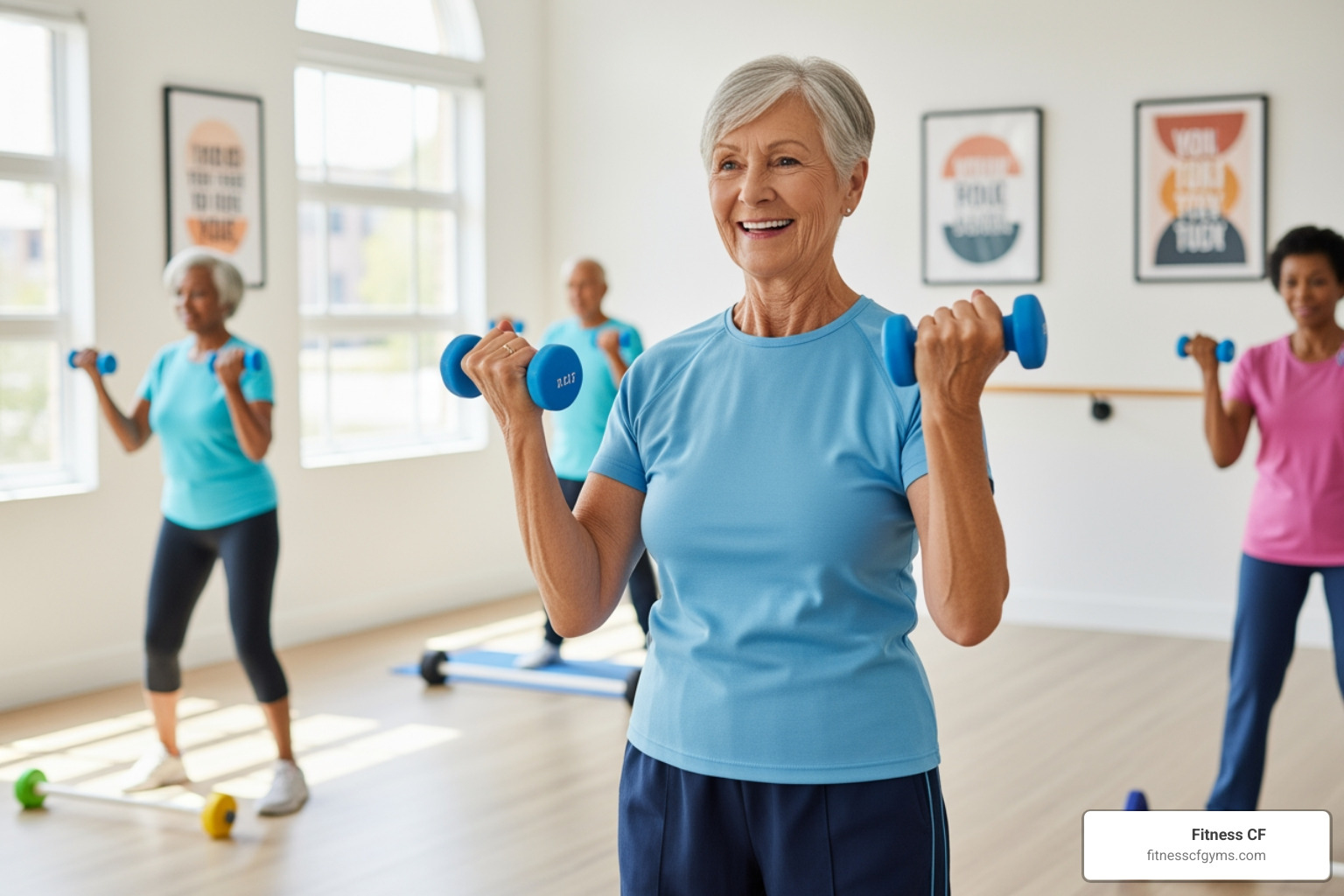
- Introduce light weights: With your doctor’s approval, add 1- to 3-pound hand weights to exercises like seated marching.
- Try new exercises: Keep things interesting with modified lunges or by using a stationary bike for your intervals.
HIIT vs. Traditional Cardio: What’s Best for Seniors?
Traditional steady-state cardio, like a 30-minute walk, is a great form of exercise. However, when compared to a hiit workout for elderly individuals, some key differences emerge.
HIIT is more time-efficient, delivering significant benefits in as little as 15-20 minutes, compared to the 40+ minutes often required for steady-state cardio. HIIT also triggers a greater “afterburn effect,” meaning your metabolism stays liftd for hours after your workout, which is beneficial for weight management.
While both approaches improve heart health, HIIT challenges your heart to adapt to varying intensities, which some research suggests may provide superior protection against future cardiac events. Perhaps the biggest distinction for seniors is muscle preservation. Traditional cardio does little to build muscle, whereas HIIT often incorporates strength movements that help combat age-related muscle loss (sarcopenia).
Here’s a quick comparison:
| Feature | HIIT | Steady-State Cardio |
|---|---|---|
| Time Commitment | 15-25 minutes | 30-60 minutes |
| Intensity | Alternating high and low | Consistent moderate pace |
| Calorie Burn | High during + significant afterburn | Moderate during, minimal after |
| Muscle Building | Helps preserve and build muscle | Minimal muscle benefit |
So, which is better? The best exercise is the one you will do consistently. Many people find a combination of both approaches works best—perhaps two HIIT sessions and a few leisurely walks each week. You can even blend the two by turning a regular walk into a HIIT session: simply alternate between a brisk pace for 60 seconds and your normal pace for recovery. The key is finding what feels sustainable and enjoyable for you.
The Anti-Aging Powerhouse: Unpacking HIIT’s Health Benefits
A hiit workout for elderly individuals can deliver wide-ranging benefits in less time. Short, focused intervals drive meaningful changes in your heart, muscles, metabolism, and even your cells.
Mitochondria—the energy centers in your cells—tend to slow with age. Research from the Mayo Clinic shows that older adults who add HIIT can improve mitochondrial function, which supports greater daily energy. HIIT also raises VO2 max, helping your heart and lungs use oxygen more efficiently so walks, stairs, and chores feel easier. For more ways to maintain vitality as you age, see Aging Gracefully: Fitness Tips for Seniors.
Strength and mobility benefit, too. HIIT helps counter sarcopenia (age-related muscle loss) and many intervals are weight-bearing, which supports bone density and reduces osteoporosis risk. It also boosts metabolism and can be especially effective for trimming abdominal fat. Balance and coordination improve as you practice controlled, purposeful movements—key for fall prevention.
Why Choose a HIIT Workout for Elderly Health?
Beyond physical strength, many people notice sharper mental focus thanks to improved circulation. HIIT can also support healthy hormone balance and improve insulin sensitivity, an important factor for managing or preventing type 2 diabetes and maintaining steady energy. For a deeper look at the science, explore Scientific research on HIIT’s cellular benefits.
Building Strength and Endurance
HIIT helps preserve fast-twitch muscle fibers—the ones that power quick, protective movements like catching yourself if you stumble or rising from a chair with confidence. This functional strength supports independence in daily life and makes favorite activities more enjoyable. To learn more about why maintaining fitness matters as you age, read More on the importance of senior fitness.
How to Start a Safe and Effective HIIT Workout for Elderly Individuals
A hiit workout for elderly adults is achievable and safe when you personalize intensity and progress gradually. Start with medical clearance if you have heart disease, diabetes, high blood pressure, arthritis, or joint concerns. Use the talk test: during work intervals, you should only be able to say a few words; during recovery, conversation feels easier. Focus on form, listen to your body, and stop any movement that causes pain. For additional guidance, see Fitness Tips for Older Adults.
Aim for 2-3 HIIT sessions per week on non-consecutive days. Sessions can be 10-30 minutes including warm-up and cool-down. Warm-ups prepare joints and muscles; cool-downs help your heart rate return to baseline and support flexibility.
Key Safety Precautions and Modifications
- Choose low-impact moves (no jumping) to reduce joint stress.
- Use a chair or wall for support; seated or wall variations are excellent.
- Avoid pain; stop if you feel sharp discomfort.
- Watch for overexertion: dizziness, chest pain, extreme breathlessness, nausea.
- Hydrate, wear supportive shoes, and honor rest days for recovery.
- For simple routines you can try at home, see An easy HIIT home workout for older adults.
Your First Low-Impact HIIT Routines
A hiit workout for elderly fitness plan alternates short, focused work periods with easier recovery. Set a timer and move with control; consistency matters more than perfection. No equipment is required, and bodyweight moves work well. For more accessible ideas, explore An Active Senior’s Guide to the SilverSneakers Program.
Beginner-Friendly HIIT Workout for Elderly Fitness
- Warm-up (3 minutes): March in place, do gentle arm circles, and easy torso twists.
- Circuit (2 rounds): 40 seconds work, 20 seconds rest for each:
- Chair Squats
- Wall Push-ups
- Seated Marching with Punches
- Side Leg Raises (hold a chair for balance; switch sides in round 2)
- Cool-down (3 minutes): Gentle stretches for arms, sides, and hamstrings, plus deep breathing.
How to Progress Your HIIT Workout
- Increase work time (e.g., from 40 to 45–50 seconds) or reduce rest.
- Add a third round if form remains solid.
- Move a bit faster or increase range of motion while staying pain-free.
- Introduce light hand weights (1–3 lb) with medical approval.
- Try new low-impact moves (e.g., step-ups to a low platform or a stationary bike for intervals).
HIIT vs. Traditional Cardio: What’s Best for Seniors?
Both steady-state cardio and a hiit workout for elderly individuals support heart health. HIIT is typically more time-efficient and can better preserve muscle when strength-focused intervals are included, while steady-state cardio builds endurance at a comfortable, continuous pace. Many people benefit from a mix of both.
| Feature | HIIT | Steady-State Cardio |
|---|---|---|
| Time Commitment | 15-25 minutes | 30-60 minutes |
| Intensity | Alternating high and low | Consistent moderate pace |
| Calorie Burn | High during + notable afterburn | Moderate during, minimal after |
| Muscle Building | Preserves/builds with resistance moves | Minimal muscle benefit |
You can also turn a regular walk into intervals by alternating a brisk minute with an easier recovery minute. The best choice is the option you can do consistently and enjoy.