Why Your Arm Strength Journey Matters
An arm workout for beginners at home is a practical way to build upper body strength, improve daily function, and boost confidence—all without stepping into a gym. Here’s what you need to get started:
Quick Start Guide:
- Frequency: 2-3 times per week with rest days between
- Equipment: Start with bodyweight, then add light dumbbells (5-10 lbs)
- Duration: 20-30 minutes per session
- Key Exercises: Push-ups, tricep dips, bicep curls, shoulder presses
- Sets & Reps: 2-3 sets of 10-12 repetitions each
- Results Timeline: Feel stronger in 2-3 weeks, see visible changes in 4-8 weeks
The reality is sobering: only 22.9% of U.S. adults meet recommended physical activity guidelines. But here’s the good news—building arm strength at home is simpler than most people think. You don’t need expensive equipment or hours of time. You just need the right exercises, proper form, and consistency.
Strong arms aren’t just for show; they make daily life easier. From carrying groceries to lifting your kids, functional strength is key. It also supports injury prevention, boosts athletic performance, and contributes to healthy aging. Research even shows grip strength is a vital biomarker for overall health.
This guide will walk you through everything you need to know about starting an arm workout for beginners at home. We’ll cover proper form, effective exercises, how to progress safely, and common mistakes to avoid. You’ll have a clear path forward whether you’re using bodyweight or light dumbbells.
I’m Pleasant Lewis, and with over 40 years of experience in fitness, I’ve seen countless beginners transform their strength by mastering foundational movements. The key is starting where you are and building progressively.
Simple guide to arm workout for beginners at home terms:
Why Strong Arms Matter: More Than Just Aesthetics
An arm workout for beginners at home isn’t just about aesthetics. The true value of arm strength lies in its impact on our overall health, functional capabilities, and quality of life. Strong arms are foundational to a healthier, more active existence.
Your arm muscles are constantly at work, from carrying groceries to lifting a suitcase. This is functional strength—the ability to perform everyday tasks with ease. Without it, simple actions become challenging. As we age, maintaining muscle mass is crucial for independent living, and studies highlight grip strength as an indispensable biomarker for older adults, proving its importance beyond just lifting weights.
Strong arms also significantly improve athletic performance in activities like tennis, swimming, or playing in the park. Your arm and shoulder strength directly influences your power, control, and endurance. Stronger arms generate more force, improve movement control, and reduce fatigue, making physical activities more enjoyable.
Furthermore, arm workouts play a vital role in injury prevention. Strengthening the muscles around your shoulder, elbow, and wrist joints creates a protective shield, reducing the risk of common strains. As physical therapist Alex Corbett notes, “injuries are usually pretty rare with these [arm exercises] compared to bigger compound movements.” This makes building arm strength a relatively safe and highly rewarding endeavor.
Finally, the benefits extend to our overall well-being. Building arm muscle contributes to a higher metabolism, helps prevent muscle imbalances, and can profoundly boost confidence. There’s a certain empowerment that comes from feeling capable and strong.
Your Beginner’s Blueprint to Arm Training
Starting an arm workout for beginners at home can feel overwhelming, but we’re here to simplify it. Understanding basic arm anatomy, training frequency, and common pitfalls will set you up for success.
Understanding Arm Anatomy
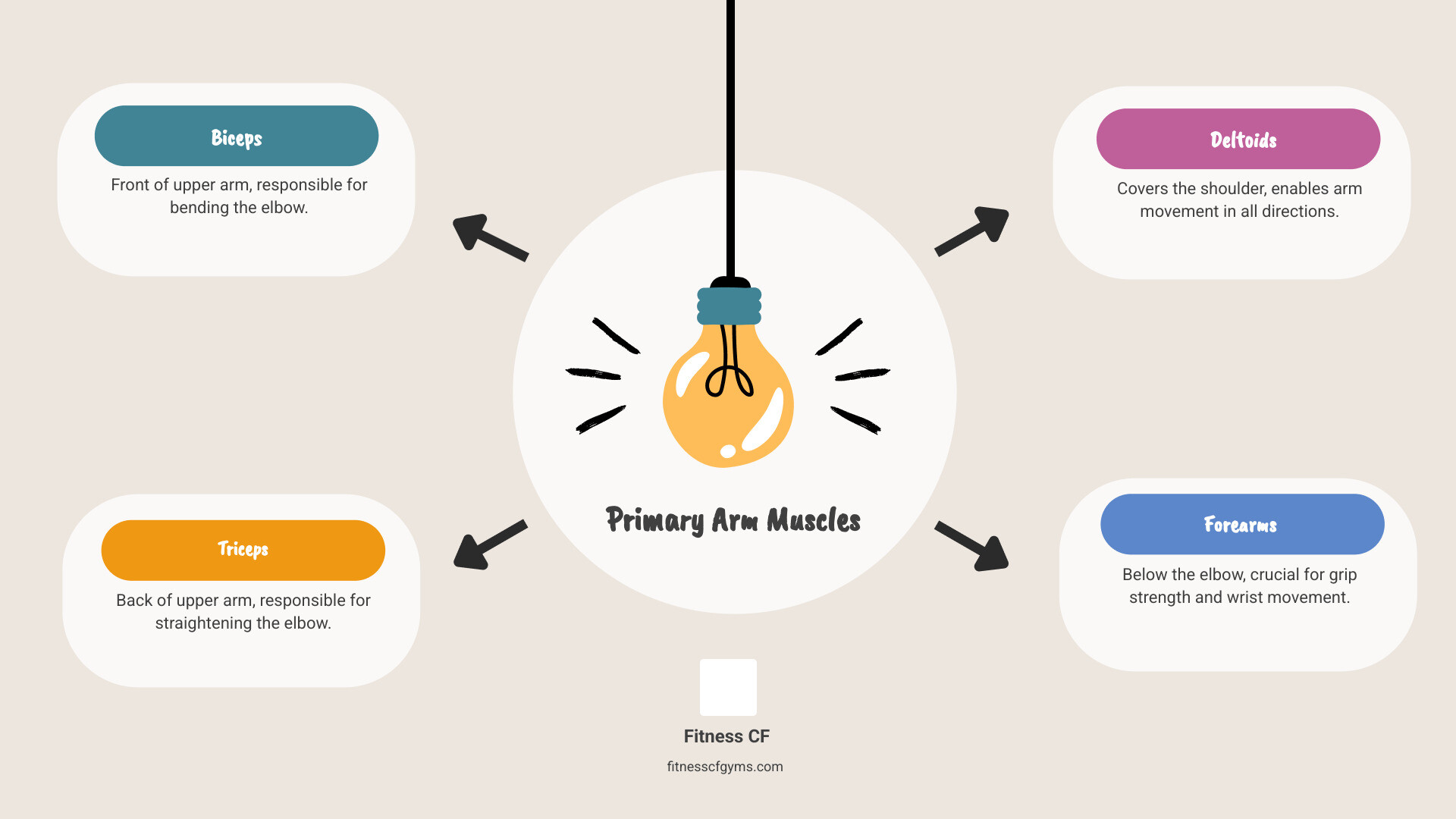
While many people focus on biceps, a comprehensive arm workout for beginners at home should target the primary muscle groups:
- Biceps Brachii: On the front of your upper arm, these muscles bend your elbow and rotate your forearm. Think of curling a weight toward your shoulder.
- Triceps Brachii: On the back of your upper arm, the triceps straighten your elbow and make up most of your arm’s mass. Pushing movements rely on them. The structure and function of the arm involves a complex interplay of these and other muscles.
- Deltoids: Your shoulder muscles, crucial for lifting your arm in any direction. They are essential for any effective upper body routine.
- Forearms: These muscles are essential for grip strength and wrist movement. Strengthening them helps improve dexterity and prevent common wrist injuries.
A well-rounded workout will hit all these key players for balanced strength.
Workout Frequency, Sets, and Reps for Beginners
Consistency is the secret ingredient. For beginners, the goal is to train smart and allow for adequate recovery.
- Frequency: For an arm workout for beginners at home, aim for 1-2 sessions per week. This allows your body to adapt and gives muscles time to repair and grow, which is a vital part of the process.
- Rest and Recovery: Muscle soreness typically lasts 24 to 48 hours. If it persists, avoid training that muscle group until it subsides. Listening to your body is key to preventing overtraining. For tips on easing discomfort, check out our guide on how to ease bicep soreness.
- Sets and Repetitions: A great starting goal is two or three sets of 10 to 12 repetitions per exercise. This range builds muscle endurance and initial strength. Choose a weight (or bodyweight variation) where the last few reps are challenging but your form remains solid. As we learn more about what exercise reps mean, we can adjust.
Common Mistakes to Avoid
Being aware of common traps will help you maximize your efforts and stay safe:
- Using Momentum (Swinging): Instead of letting the muscle do the work, many people swing their body to lift the weight. This reduces muscle activation and increases injury risk. Focus on slow, controlled movements.
- Incorrect Posture: Rounding your back or shrugging your shoulders can strain your back and neck. Strive for a neutral spine and an engaged core.
- Starting Too Heavy: It’s tempting, but starting with too much weight before your body can acclimate leads to pain and poor form. As Roxie Jones, NASM-CPT, advises, “I always recommend mastering bodyweight exercises before moving on to actual weights.” Start light and perfect your form.
- Skipping the Warm-up: A proper warm-up increases blood flow and prepares your joints, significantly reducing injury risk.
The Ultimate Arm Workout for Beginners at Home
This section provides a comprehensive arm workout for beginners at home, with both bodyweight and dumbbell exercises. Proper form is paramount, so use a mirror or record yourself to check your technique.
The Importance of a Warm-up
A warm-up is non-negotiable. It prepares your muscles and joints, increases blood flow, and reduces injury risk. Aim for 5-10 minutes of light cardio and dynamic stretches.
- Light Cardio: Jumping jacks, marching in place, or a light jog.
- Dynamic Stretches:
- Arm Circles: Stand tall, extend arms to the sides. Make small circles forward, gradually increasing the size. Reverse direction.
- Torso Twists: Stand with feet shoulder-width apart, gently twist your torso from side to side.
- Shoulder Rolls: Roll your shoulders forward and backward to loosen the joint.
Part 1: No-Equipment Bodyweight Exercises
Bodyweight exercises are a fantastic starting point for an arm workout for beginners at home. They build foundational strength and help you master movement patterns. As Roxie Jones, NASM-CPT, emphasizes, “I always recommend mastering bodyweight exercises before moving on to actual weights.”
- Tricep Dips (using a sturdy chair or bench)

- How to do it: Sit on the edge of a sturdy chair, hands shoulder-width apart next to your hips. Slide your hips off, extending your legs (bent knees make it easier, straight legs harder). Keep your back close to the chair as you bend your elbows to lower your body to about a 90-degree angle. Push back up with your triceps.
- Focus: Keep your elbows pointing straight back. Engage your core.
- Why we love it: This exercise is excellent for targeting your triceps and can be modified for any fitness level.
-
Push-Up Variations
- Wall Push-Ups: Stand facing a wall, arm’s length away. Place hands on the wall, slightly wider than shoulder-width. Lean in, bending your elbows, then push back. This is the easiest modification.
- Knee Push-Ups: From a plank, drop your knees, keeping a straight line from head to knees. Lower your chest by bending your elbows, then push back up.
- Standard Push-Ups: In a high plank, lower your chest toward the floor, keeping your core tight. Push back up.
- Focus: Keep your body in a straight line and engage your core. This compound exercise engages your chest, shoulders, and triceps.
-
Plank Shoulder Taps
- How to do it: In a high plank, keep your hips still as you tap your right hand to your left shoulder. Return and repeat on the other side.
- Focus: Minimize hip movement by engaging your core. This builds shoulder stability.
-
Inchworms
- How to do it: Stand tall, then hinge at your hips to place your hands on the floor. Walk your hands forward to a high plank. Slowly walk your feet toward your hands to return to standing.
- Focus: Controlled movement. This full-body exercise also engages arm and shoulder stability.
Part 2: Dumbbell Arm Workout for Beginners at Home
Once you’re ready for an extra challenge, dumbbells are perfect for an arm workout for beginners at home.
Choosing the Right Weight
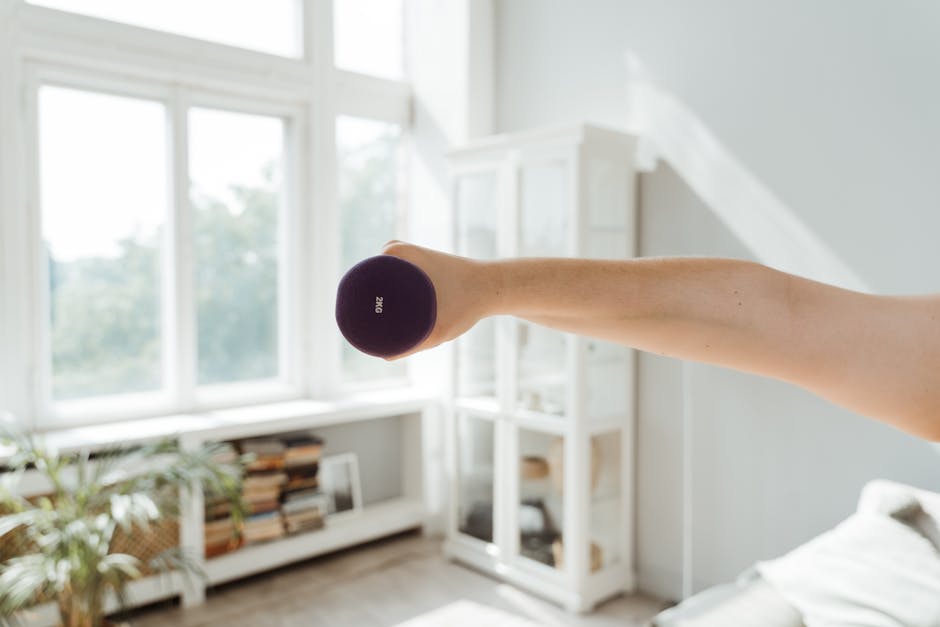
Start with light dumbbells, typically 5-9 lbs (2-4 kg). Choose a weight that allows you to complete 10-12 reps with good form, where the last few reps feel challenging. It’s better to start lighter and increase gradually. Our resource on 8 arm exercises for strength and definition can help.
-
Bicep Curls
- How to do it: Stand holding a dumbbell in each hand, palms facing forward. Keep elbows tucked in as you curl the weights toward your shoulders. Slowly lower them back down.
- Focus: Keep your upper arms stationary; only your forearms should move. Avoid swinging.
-
Hammer Curls
- How to do it: Same as a bicep curl, but hold the dumbbells with palms facing each other (neutral grip). Curl up, keeping palms neutral, then slowly lower.
- Focus: This targets forearm muscles, contributing to overall arm thickness and strength.
-
Overhead Tricep Extensions
- How to do it: Stand or sit, holding one dumbbell with both hands overhead. Keeping elbows close to your head, slowly lower the dumbbell behind you. Extend your arms to lift it back up.
- Focus: Keep your upper arms still and elbows from flaring out.
-
Bent-Over Tricep Kickbacks
- How to do it: Hinge forward at your hips with a straight back. Hold a dumbbell in each hand with elbows bent at 90 degrees and tucked in. Extend your forearms straight back, squeezing your triceps. Slowly return.
- Focus: Keep your upper arms perfectly still.
-
Standing Shoulder Press (Overhead Press)
- How to do it: Hold a dumbbell in each hand at shoulder height, palms forward. Press the dumbbells overhead until your arms are fully extended. Slowly lower them back down.
- Focus: Maintain a stable core. This works your shoulders, triceps, and some chest muscles.
-
Lateral Raises
- How to do it: Stand holding a dumbbell in each hand at your sides. With a slight bend in your elbows, raise your arms out to the sides until parallel with the floor. Slowly lower them.
- Focus: Control the movement and avoid using momentum. This targets the middle head of your deltoids.
Building Your Routine and Making Progress
Starting an arm workout for beginners at home is the first step. To see results, you need to fit these workouts into a broader routine and continue to challenge yourself.
Creating a Balanced Schedule
A truly effective fitness journey involves a balanced approach. Integrate your arm workouts into a comprehensive plan that includes:
- Cardio: Activities like brisk walking, jogging, or cycling are crucial for cardiovascular health and endurance.
- Leg Day: Don’t skip leg day! Strong legs are the foundation of a strong body and contribute significantly to your overall metabolism.
- Core Work: A strong core provides stability for all movements and helps prevent back pain.
Aim to do your arm workout for beginners at home 2-3 times a week, with rest days in between for muscle recovery.
Progressive Overload Explained
Our bodies adapt quickly. To keep getting stronger, we must apply progressive overload—gradually increasing the demands on our muscles. This means gently nudging your body to do a little more over time.
Here’s how to progress your arm workout for beginners at home:
- Increase Weight: Once you can comfortably complete 12 reps with good form, try the next heavier dumbbell.
- Increase Repetitions: If you don’t have heavier weights, aim to do more reps per set (e.g., go from 10 to 12).
- Increase Sets: Add another set to your routine (e.g., from 2 sets to 3).
- Decrease Rest Time: Reduce the rest period between sets to increase intensity.
- Improve Form: Focusing on a slower, more controlled movement can make an exercise more challenging.
- Add New Exercises: Introduce new exercises to challenge your muscles in different ways. Our guide on how to build arm muscle: 10 workouts you have to try offers more ideas.
Consistency is more important than intensity when starting out. Build a sustainable habit, listen to your body, and take an extra rest day if soreness lasts beyond 48 hours.
Modifications for a Safe and Effective Arm Workout for Beginners at Home
Your safety is the top priority. Nearly every exercise can be modified to suit your needs.
-
Working with Limited Mobility or Past Injuries:
- Consult a Professional: If you have chronic health issues or past injuries, consult a healthcare provider before starting a new exercise regimen.
- Lighter Weight Options: Use very light weights or just your bodyweight if you have joint sensitivity. Focus on pain-free movement.
- Resistance Bands: These are a fantastic, space-saving option for home training. They offer variable resistance and are great for mimicking strength equipment. Learn more about how to use exercise bands for arms.
- Focus on Range of Motion: Perform exercises within a comfortable, pain-free range. This may improve as you get stronger.
-
When to Consult a Professional: If you struggle with form, experience persistent pain, or need help selecting movements, consider working with a certified personal trainer for personalized guidance.
Frequently Asked Questions about At-Home Arm Workouts
We hear a lot of questions from beginners starting on their arm workout for beginners at home journey. Let’s tackle some of the most common ones to clarify any doubts you might have.
How long should a beginner arm workout be?
For an effective arm workout for beginners at home, you don’t need to spend hours sweating. A focused session of 20-30 minutes is typically enough. This allows you time to warm up, complete a few sets of targeted exercises, and cool down for recovery. Quality and consistency matter far more than the duration of your workout. It’s better to consistently do a shorter, effective workout than to sporadically attempt longer, unsustainable ones.
Can I build arm muscle without weights?
Absolutely! While resistance training with external weights like dumbbells is highly efficient for muscular hypertrophy (muscle growth), you can certainly build arm muscle using just your bodyweight. Exercises like push-up variations, tricep dips, and plank exercises, as we outlined earlier, are excellent for this. They engage your chest, shoulders, and triceps effectively. Additionally, resistance bands are a fantastic home option. They provide extra tension, mimicking the feel of free weights, and are incredibly versatile and easy to store. So yes, you can definitely strengthen and define your arms without traditional weights!
How soon will I see results from arm workouts?
This is a popular question, and the answer, like with most fitness goals, varies a bit from person to person. However, you can expect to feel stronger relatively quickly!
- Feeling Stronger: Many beginners report feeling stronger and more capable in their daily tasks within just a few weeks of consistent training.
- Visible Changes: For more noticeable visual changes and muscle definition, expect to see results in about 4-8 weeks.
- Significant Toning: To achieve significant toning and more pronounced muscle development, it generally takes 2-3 months of consistent training, coupled with a healthy, balanced diet. Consistency is truly key here. Your muscles need regular challenge and proper nutrition to grow and adapt.
Conclusion
Starting on an arm workout for beginners at home is one of the most empowering steps you can take for your health and fitness. We’ve seen that strong arms are far more than just an aesthetic goal; they are fundamental to functional strength, injury prevention, improved athletic performance, and overall well-being. By understanding the key arm muscles, adopting proper form, and consistently applying the principles of progressive overload, you’re building a foundation for lasting strength.
The power of consistency cannot be overstated. Small, regular efforts add up to significant results over time. Accept the journey, listen to your body, and celebrate every small victory along the way. Your fitness journey starts now, and we’re here to support you every step of the way. At Fitness CF, we believe in empowering everyone to live a healthier, more active life.