
Why Post-Run Recovery is the Secret to Running Success
The best recovery after running isn’t just about taking it easy—it’s where the real magic happens. Your muscles don’t get stronger during your run. They get stronger after, when you give your body what it needs to rebuild.
Quick Answer: The best recovery after running includes:
- Rehydrate immediately – Replace fluids and electrolytes within 30 minutes
- Refuel strategically – Consume carbs and protein in a 3:1 or 4:1 ratio within 30-60 minutes
- Stretch and roll – Use static stretching and foam rolling to reduce muscle tension
- Rest and sleep – Aim for 7-9 hours to allow muscle repair and hormone regulation
- Move gently – Engage in light active recovery like walking or swimming on rest days
Here’s something most runners don’t realize: the majority of your running benefits come from the recovery period, not the run itself. When you push yourself during a run, you’re actually creating tiny tears in your muscle fibers. It’s during recovery that your body repairs these tears, making you stronger, faster, and more resilient.
Think of recovery as the other half of your training plan. Skip it, and you’re basically doing half the work while doubling your injury risk. Research shows that around 50% of running injuries are recurring—often because runners don’t give their bodies adequate time to heal and adapt.
Recovery isn’t one-size-fits-all. It starts the moment you finish your run and continues for days afterward. It involves what you eat, how you move, how you sleep, and how you listen to your body’s signals. Whether you’re training for your first 5K or your tenth marathon, understanding recovery will transform your running experience.
I’m Pleasant Lewis, owner of Fitness CF, and in my 40+ years in the fitness industry, I’ve seen how proper recovery practices separate runners who thrive from those who struggle. The best recovery after running combines immediate actions with long-term habits that support your body’s natural healing processes.
Basic best recovery after running glossary:
The First 60 Minutes: Immediate Post-Run Actions
The finish line isn’t the end; it’s the beginning of your recovery. What we do in those crucial first 60 minutes after a run sets the stage for how quickly and effectively our bodies bounce back. Think of it as hitting the “reset” button.
First, resist the urge to collapse onto the couch immediately. An active cool-down is our first line of defense. This means gradually slowing our pace to a walk for 5-10 minutes. This gentle movement helps our heart rate return to normal, prevents blood from pooling in our legs, and aids in the removal of metabolic byproducts. While active cool-downs might not drastically improve performance or prevent injury, they certainly make us feel better and help our bodies transition smoothly. For more on the importance of winding down, check out our guide on cool down importance of post workout recovery in summer.
Next, and perhaps most critically, comes rehydration and replenishment. We lose a significant amount of fluid and electrolytes through sweat, and if we lose more than two percent of our body weight from sweating, it could potentially hinder our performance and recovery.
Changing out of sweaty gear also plays a small but important role. Warm, dry clothes help maintain our body temperature and promote better circulation, moving blood and nutrients through our bodies more efficiently to aid recovery.
Why Hydration is Your First Priority
Water is life, and after a run, it’s our recovery elixir. Replenishing lost fluids is paramount because dehydration can severely impede our body’s ability to repair and recover. Our bodies use water for countless functions, including regulating temperature and maintaining muscle performance.
But it’s not just about water. When we sweat, we lose vital electrolytes, primarily sodium and chloride. These minerals are crucial for nerve function, muscle contraction, and maintaining fluid balance. Replenishing them helps prevent muscle cramps, fatigue, and headaches. For longer runs or runs in hot conditions common in Central Florida, incorporating an electrolyte drink or tabs can be more effective than plain water. Learn more about staying properly hydrated with tips on how to stay hydrated.
Our goal is to drink 16-20 ounces of fluid for every pound lost during our run. Weighing ourselves before and after a run can give us a good indication of our fluid loss. For more comprehensive workout recovery tips, explore more info about our workout recovery tips.
The 30-Minute Refueling Window
Immediately after a run, our muscles are like sponges, primed to absorb nutrients. This “30-minute refueling window” is a golden opportunity to kick-start our recovery process. During this time, our muscles are most permeable to energy uptake, making it the optimal moment for carbohydrate and protein intake.
Our primary goal here is glycogen replenishment. Carbohydrates are our body’s main fuel source, stored as glycogen in our muscles and liver. A hard run significantly depletes these stores, and rapid resynthesis of muscle glycogen is crucial for our next workout. Combining carbohydrates with proteins helps our body replenish glycogen and repair tissue more effectively. For a deeper dive into post-workout nutrition, check out what to eat after a workout.
Fueling Your Recovery: The Ultimate Post-Run Nutrition Plan

Nutrition isn’t just about what we eat before a run; it’s equally vital for recovery. The right post-run meal isn’t just about satisfying hunger; it’s about providing the building blocks for long-term muscle repair, reducing inflammation, and preparing our bodies for future efforts. We need to remember that muscle repair can take place for as long as 72 hours after hard training.
For those of us balancing recovery needs with weight management goals, strategic nutrition is key. This means matching our fuel intake to our training volume: more carbs on harder training days, and fewer carbs with a greater focus on lean protein and healthy fats on recovery days. Prioritizing low-GI (glycemic index) foods can also help us feel fuller for longer. To learn more about how to incorporate healthy eating into your lifestyle, visit eat healthy.
The Perfect Macronutrient Mix
When it comes to post-run nutrition, it’s a dynamic duo: carbohydrates and protein. Both are critical for full recovery.
Carbohydrates are essential for replenishing our depleted glycogen stores. The recommended amount of carbs to consume within 30 minutes after training is 0.5-0.7 grams per pound of body weight for glycogen resynthesis.
Protein provides the amino acids needed for muscle growth and repair. Aim for 0.14-0.23 grams of protein per pound of body weight post-run. Ingestion of approximately 20g of protein is often cited as the magic number to kick-start the recovery process, with slightly more for bigger athletes and less for those with smaller body frames. Early studies even suggest a carb to protein ratio of about 3 to 1 or 4 to 1 is likely to optimize glycogen stores and recovery.
This ideal carbohydrate-to-protein ratio ensures we’re not only refilling our energy tanks but also repairing the microscopic damage to our muscle fibers. For ideas on powerful post-workout shakes that hit this ratio, explore our recommendations for a best post workout shake.
Best Foods and Drinks for Post-Run Recovery
Choosing the right foods can make a world of difference in our recovery journey. Here’s a list of top recovery foods and drinks we swear by:
- Chocolate Milk: This classic is a researched post-workout recovery option, often boasting a natural 4:1 carb to protein ratio. It’s a convenient and tasty way to get both macronutrients.
- Greek Yogurt with Berries and Honey: Greek yogurt is packed with protein (around 15g per 2/3 cup, much more than traditional yogurt), while berries provide antioxidants and honey offers simple sugars for quick energy.
- Eggs and Toast: Each egg provides around 6-7 grams of high-quality protein, and whole-grain toast offers complex carbohydrates.
- Avocado Toast with Poached Eggs: This adds healthy fats, and the eggs provide protein and a touch of sodium to replenish electrolytes.
- Salmon with Sweet Potatoes and Asparagus: Salmon is rich in healthy, inflammation-fighting omega-3 fatty acids, while sweet potatoes offer complex carbs and asparagus provides vitamins.
- Tuna and Whole Grain Crackers: Portable and protein-rich, tuna is a great option for on-the-go recovery.
- Cottage Cheese with Pineapple: One cup of cottage cheese provides 28 grams of protein, and its sodium content helps replenish lost electrolytes. Pineapple adds a sweet, carb boost.
- English Muffin or Bagel with Nut Butter and Banana: A solid source of carbs and healthy fats. For those wondering, are bananas good for workout recovery? Absolutely! They’re packed with potassium, which is crucial for muscle function and electrolyte balance.
- Protein Oatmeal with Blueberries and Peanut Butter: A warm, comforting option providing complex carbs, fiber, protein, and antioxidants.
- DIY Protein Shakes: Customizable with your choice of protein powder, fruits, and even greens for an extra nutrient boost.
The Best Recovery After Running: Physical Techniques for Muscle Repair
Beyond nutrition, physical techniques play a vital role in addressing muscle fatigue, soreness, and stiffness. We’re talking about combating Delayed Onset Muscle Soreness (DOMS), improving blood flow, reducing inflammation, and promoting myofascial release. These strategies directly contribute to alleviating discomfort and enhancing our body’s natural healing processes. To learn how to soothe those aching muscles, check out our guide on alleviate sore muscles after workout.
Stretching: Dynamic vs. Static

Stretching is often misunderstood, but when done correctly, it’s a powerful recovery tool. We differentiate between two main types:
- Dynamic Stretching: This involves movement and is best suited before a run as part of our warm-up. Examples include walking lunges, arm circles, and hip CARS (controlled articular rotations). Dynamic stretching prepares our muscles and joints for activity, improves flexibility, and promotes blood flow.
- Static Stretching: This involves holding a stretch in a fixed position for a period, typically 20-30 seconds. Static stretching is most beneficial after a run, during our cool-down, or on recovery days. It supports flexibility, keeps our muscles pliable, and can vastly reduce post-run fatigue. We should focus on key running muscles like hamstrings, quads, calves, and hip flexors. If you’re experiencing hip flexor pain, our article on how to relieve sore hip flexor offers great tips.
Static stretching before a race or long run can actually hinder our body from reacting quickly and negatively affect performance, so save it for post-run bliss!
Foam Rolling and Self-Massage
Foam rolling and self-massage techniques are fantastic for targeting muscle tightness and improving circulation. They are an essential part of the best recovery after running.
- Foam Rolling: This technique helps break up tightness, reduce stiffness, and boost circulation to the myofascial tissues surrounding our muscles and bones. Studies have shown significant improvements: foam rolling on the side of the thigh led to a 74-percent increase in blood flow improvement immediately and a 53-percent improvement after 30 minutes compared to not foam rolling. It can also help lower muscle soreness and increase pain tolerance. We can use foam rollers on our quads, glutes, calves, and even for chest/shoulder stretches.
- Self-Massage Tools: Handheld massage balls are excellent for targeting smaller, harder-to-reach areas like our feet, hips, neck, and shoulders. For deeper relief, massage guns (like the Hypervolt 2) offer percussion therapy. These devices have multiple intensity levels, allowing us to tailor the pressure to specific muscle groups. For instance, we might use lighter pressure on sore quads and increase it for hamstrings. While generally beneficial, it’s important to understand the potential benefits and risks of massage guns, ensuring we use them safely and effectively.
- Compression Garments or Boots: These can also aid in recovery by improving blood flow and reducing swelling. Compression boots, for example, use dynamic air compression to massage the legs, which can be particularly beneficial after intense workouts like marathons.
For more ways to ease muscle discomfort, explore relieve sore muscles.
Cold Therapy: The Role of Ice Baths
The thought of an ice bath might send shivers down our spine (pun intended!), but cold therapy, also known as cold water immersion, has undeniable benefits for recovery.
- Benefits: Cold water significantly decreased runners’ perceptions of muscle soreness and exercise effort level right after the workout—and lowered levels of lactate (a byproduct of exercise) after 24 and 48 hours. It helps reduce inflammation and can soothe sore muscles by constricting blood vessels, which then helps flush out metabolic waste. Professional athletes and marathon runners often use cold therapy to speed up recovery.
- When and How to Use: We can consider using ice baths or cold plunges after particularly tough or long runs. Start with a 5-minute plunge and aim for no longer than 10-15 minutes. The most significant benefits are often found within the first few minutes. It’s wise to have warm clothes ready for immediately afterward! For an in-depth look at this chilly recovery method, read why are ice baths good for muscle recovery and what do ice baths do.
Beyond the Run: Building a Resilient Runner’s Body
The best recovery after running isn’t just about what we do immediately after a workout; it’s about building long-term habits that foster a resilient body. Consistency in our recovery routine, just like in our training, is paramount. This holistic approach helps prevent overtraining, reduce injury risk, and ensures we’re constantly improving. And it all starts even before the run with a proper warm-up. For a comprehensive guide on preparing our bodies for optimal performance and recovery, check out the importance of warm up and cool down exercises a comprehensive guide.
The Critical Role of Sleep in the best recovery after running
If there’s one recovery tool we absolutely cannot neglect, it’s sleep. Sleep is when our bodies perform their most critical repair and regeneration work. During deep sleep cycles, our bodies excrete hormones that aid muscle growth and repair cellular and tissue damage. It’s the ultimate natural recovery method.
Sleep deprivation has been found to decrease endurance performance, especially for longer exercises that are more than 30 minutes. Athletes who only get four hours of sleep may run slower, less far, and experience decreased cognitive functions. We should aim for 7-9 hours of quality sleep per night, with some experts recommending a minimum of eight hours for optimal muscle recovery. Think of it as free performance improvement! For more tips on how to maximize muscle recovery, read our article on good things for muscle recovery.
Active Recovery and Cross-Training
Sometimes, the best recovery after running isn’t about doing nothing; it’s about doing something different. Active recovery involves low-impact activities that increase blood flow without adding significant stress to our running muscles. Think of it as a gentle flush for our systems.
- Benefits of Active Recovery: It boosts circulation, helps reduce stiffness, and allows our running-specific muscles a break while still maintaining fitness. Activities like light walking, easy cycling, swimming, or yoga are excellent choices.
- Cross-Training: Incorporating cross-training into our routine not only aids recovery but also builds a more well-rounded, resilient runner. Strength training, for instance, is incredibly beneficial for runners. It addresses muscle imbalances, strengthens supporting structures, and ultimately reduces injury risk. At Fitness CF, we offer diverse fitness classes and personal training to help runners incorporate effective strength and cross-training into their schedules. For a deeper dive into how active recovery can benefit you, visit active recovery for athletes.
Building a consistent recovery routine means scheduling these activities just as we would our runs. It’s a commitment to our long-term running health.
Listening to Your Body and Preventing Injury
Perhaps the most crucial skill for any runner is learning to listen to their body. There’s a fine line between healthy muscle soreness and the warning signs of an impending injury. Pushing through pain can have serious consequences.
- Signs of Overtraining: Persistent fatigue, decreased performance, liftd resting heart rate, irritability, and recurrent minor aches or pains are all red flags.
- Pain vs. Soreness: Muscle soreness is generally diffuse and improves with movement. Pain, especially sharp, localized, or persistent pain that worsens with activity, should never be ignored.
- Injury Recurrence: Around 50% of running injuries are recurring. This statistic highlights the importance of addressing issues promptly and allowing adequate recovery time. If we suspect an injury, such as a muscle strain, seek professional assessment. Early evaluation can identify the underlying cause and prevent further damage. For guidance on how to assess and seek help for injuries, refer to what to do for a muscle strain. Learning how to work out safely while recovering from injuries is a critical part of a sustainable running journey.
Advanced Recovery: Post-Marathon and Event-Specific Plans
Completing a marathon or a significant running event is an incredible achievement, but the recovery process afterward is just as monumental. This isn’t just about physical recuperation; it also involves psychological recovery. The intense focus and adrenaline of race day can leave us feeling a bit flat afterward, sometimes leading to “post-race blues.” Understanding this holistic recovery is key to bouncing back stronger.
Your Post-Marathon Recovery Blueprint
Post-marathon recovery isn’t a one-day affair; it’s a phased process that can last weeks. The goal is to allow our bodies to fully repair, rebuild, and adapt without rushing back into intense training.
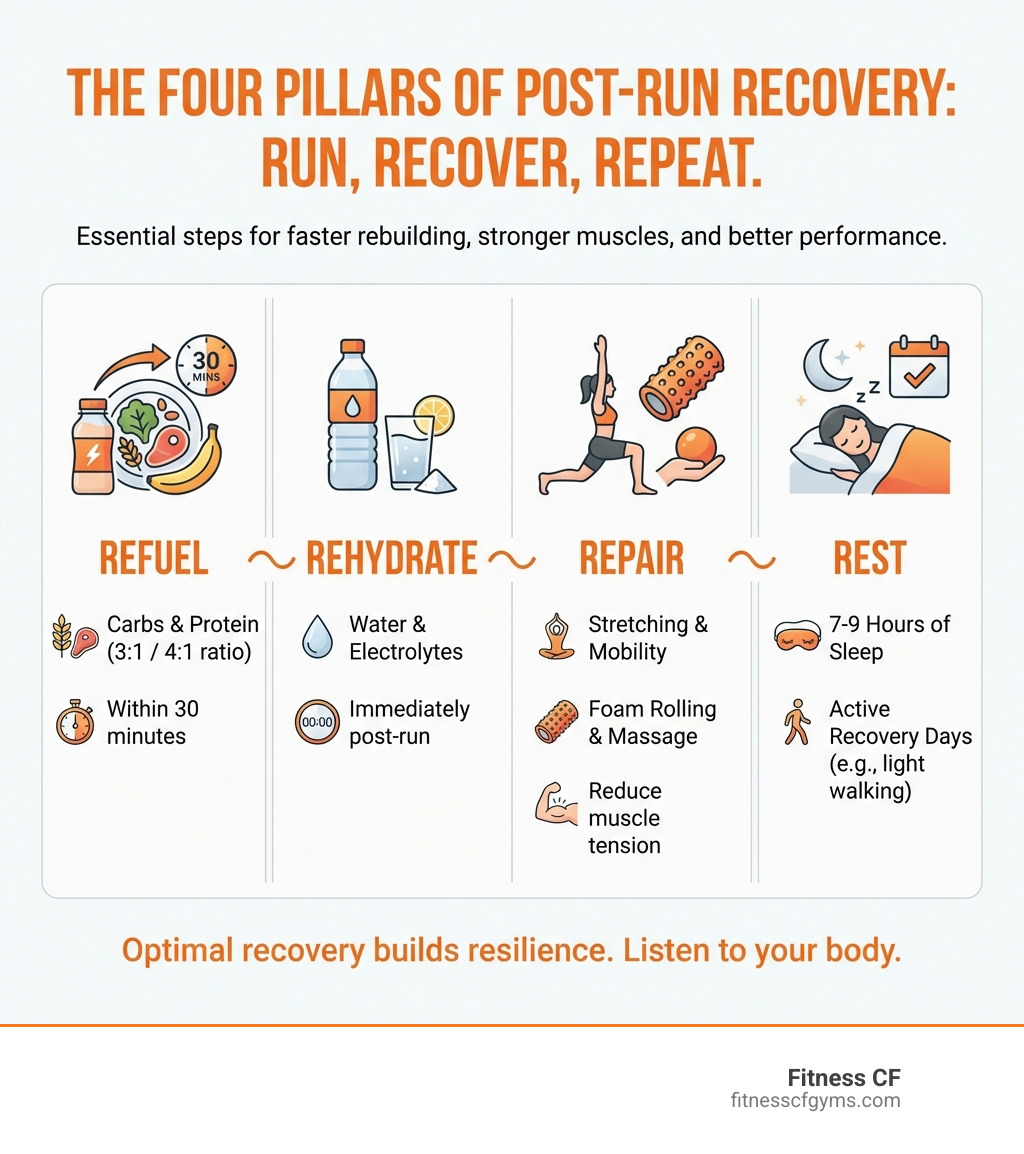
We can simplify post-marathon recovery into the ‘Four Rs’:
- Refuel: Replenish glycogen stores and provide protein for muscle repair.
- Rehydrate: Replace fluids and electrolytes lost during the race.
- Repair: Focus on active recovery, stretching, and other physical therapies to aid muscle healing.
- Rest: Prioritize sleep and mental downtime.
Phased Recovery Approach:
- 0-24 Hours Afterwards: Our immediate focus. Refuel with a high-carb drink containing protein within 30 minutes. Continue snacking frequently on carbs and protein (aim for 25-30g protein) for the next 23 hours. Light foam rolling and compression clothing can help blood flow. Most importantly, celebrate our accomplishment and prioritize sleep!
- 24-72 Hours Afterwards: Engage in light active recovery like walking to expedite the repair process. Continue with compression. Avoid deep tissue massage unless advised by a professional, as the inflammatory response is part of natural healing. Unless we have an acute injury, it’s best to avoid ibuprofen, as it can mask this natural process.
- 3-7 Days Afterwards: This is when central system fatigue can set in. We might feel a deep exhaustion that simply won’t go away. Do not fight this fatigue. Stick to light active recovery and let our bodies return to hormonal balance. Mentally, this is a good time to reflect on the race, process any emotions, and reframe rest as a crucial part of our training plan.
- 7-21 Days Afterwards: Our muscular and hormonal systems are returning to baseline. Slowly reintroduce intensity into workouts. The mantra here is to do too little rather than too much to avoid injury. Cross-training with added intensity (like swimming or cycling) is a great low-risk approach. By the end of this period, we can ease back into running and start developing new goals.
Generally, we should wait at least one to two weeks before resuming intense training after a significant event like a marathon. Our bodies need that time to fully recover. For a deeper understanding of marathon preparation and recovery, refer to The Marathon Method.
Tailoring the best recovery after running for Different Workouts
Not all runs are created equal, and neither are their recovery needs. The best recovery after running should be custom to the type, intensity, and duration of our workout.
- Long Distance Runs (e.g., Marathon Training): These runs heavily deplete glycogen stores and cause significant muscle breakdown. Our recovery should emphasize rapid and sustained carbohydrate replenishment, adequate protein intake, and aggressive rehydration. Physical therapies like foam rolling and cold therapy are also highly beneficial.
- Sprints and High-Intensity Interval Training (HIIT): While shorter, these workouts are incredibly taxing on our fast-twitch muscle fibers, leading to more muscle damage and lactic acid buildup. Protein intake for muscle repair becomes even more critical, and active recovery can help flush out metabolic waste.
- Trail Running vs. Road Running: Trail running often involves more varied terrain, inclines, and technical footwork, which can lead to different muscle groups being fatigued (e.g., stabilizing muscles around ankles and hips) and a higher risk of twists or falls. Recovery for trail runners might focus more on stability exercises, targeted self-massage for specific muscle groups, and addressing potential impact-related soreness. Road running, with its repetitive impact, might benefit more from compression and foam rolling for consistent muscle groups like quads and calves.
Adjusting our nutrition and physical recovery techniques based on these factors ensures we’re giving our bodies exactly what they need to recover efficiently.
Conclusion
The journey of a runner is not just about the miles we log, but about the intelligent, consistent effort we put into our recovery. The best recovery after running is a comprehensive strategy built on the pillars of Refuel, Rehydrate, Repair, and Rest. It’s an active, essential part of our training that allows our bodies to adapt, strengthen, and perform at their best.
By prioritizing immediate post-run actions like proper cool-downs, rehydration, and timely refueling, we kick-start the healing process. Through strategic nutrition, incorporating the right balance of carbohydrates and protein, we provide the building blocks our muscles need. And with physical techniques like stretching, foam rolling, and even cold therapy, we actively reduce soreness and improve circulation.
Beyond the immediate, we foster a resilient runner’s body by recognizing the critical role of sleep, engaging in active recovery and cross-training, and, most importantly, listening to our body’s signals to prevent injury. For those tackling significant events like marathons, a phased and holistic recovery plan ensures both physical and psychological well-being.
Consistency in these recovery practices is not just a recommendation; it’s the key to long-term running success, sustained performance, and a joyful, injury-free journey. At Fitness CF, we believe a holistic approach to fitness, including proper recovery, is essential for achieving your goals. We’re here to support you with diverse amenities, expert guidance, and a community that understands the importance of every step—and every recovery stride.
Ready to take your recovery as seriously as your runs? Explore our comprehensive fitness offerings and find the resources you need to run, recover, and repeat with bliss.