Why So Many Women Struggle to Stick with Fitness Plans
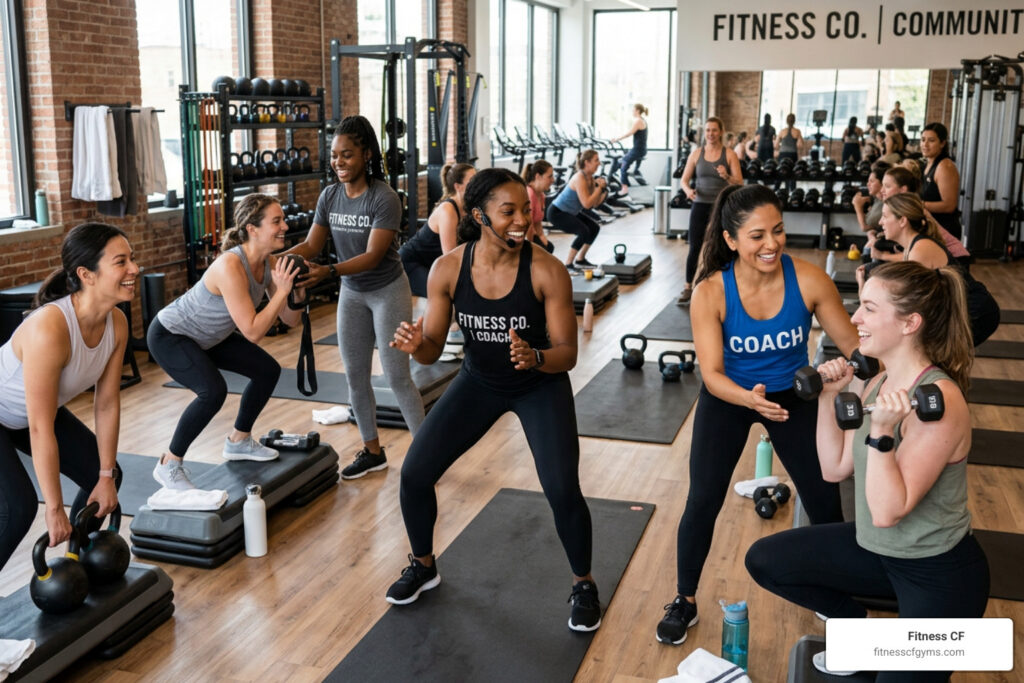
Female fitness coaches are certified personal trainers who specialize in guiding women through workouts, nutrition habits, and lifestyle changes tailored to the female body.
Here are some of the most common ways they help:
- Hormonal awareness – adjusting training around cycle phases, perimenopause, and postpartum recovery
- Strength building – using evidence-based plans to prevent muscle loss and support long-term health
- Confidence coaching – creating a safe, judgment-free space to build real, lasting results
- Flexible programming – designing sessions that fit around busy family schedules
- Injury prevention – correcting form and modifying movements for safe progression
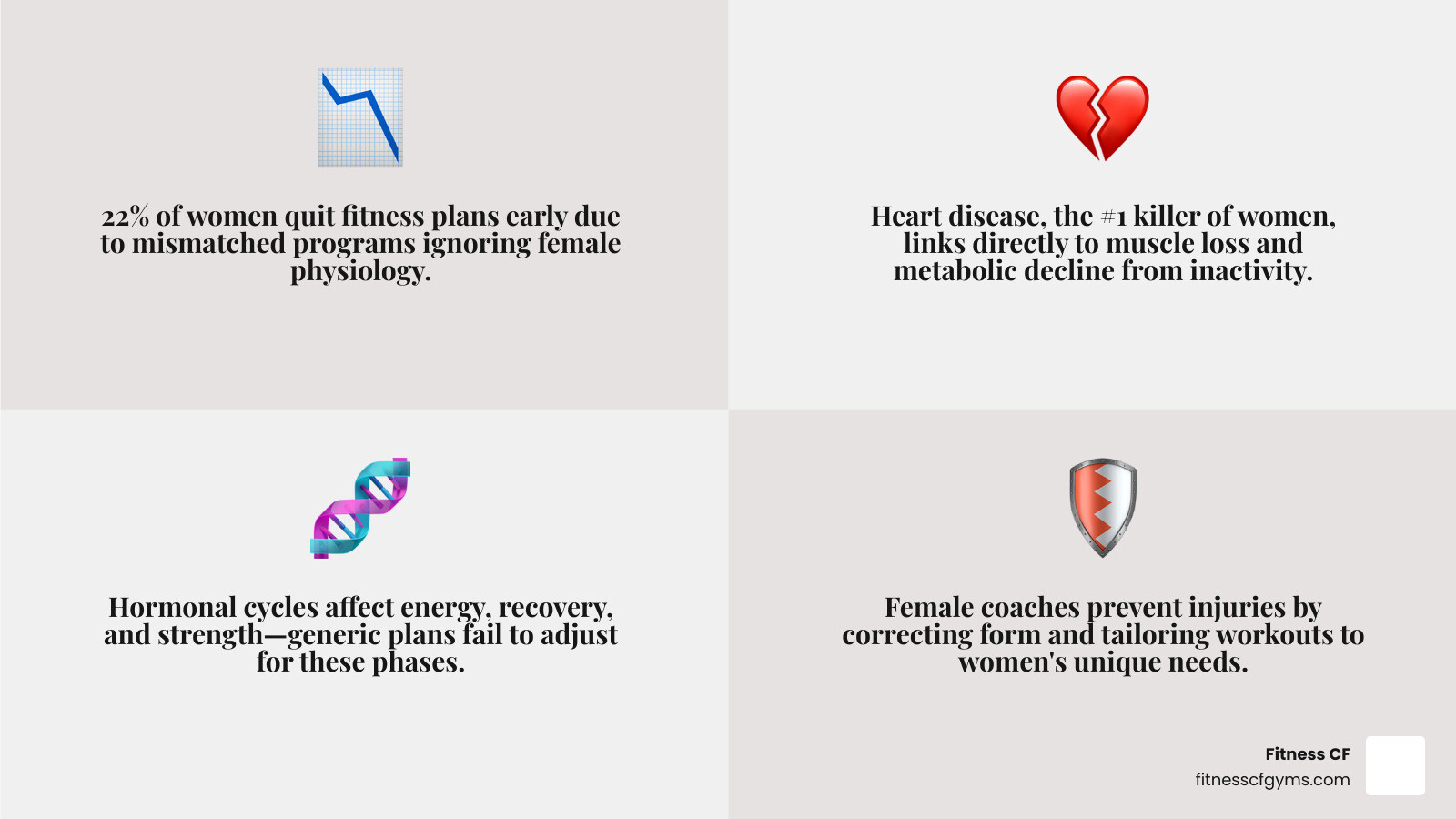
Did you know that 22% of women who start a fitness plan quit before finishing it? That is not a motivation problem. It is a program problem. Most routines are simply not built around how women’s bodies actually work — their energy levels, hormones, recovery needs, and daily demands.
Research from Frontiers in Psychology found that gender stereotypes and social pressure in fitness environments often make women feel judged or less capable. That kind of friction quietly kills consistency. And the stakes are real: heart disease, cancer, and stroke — the top three causes of death for women — are closely tied to the metabolic decline that comes from losing muscle over time.
The right coach changes all of that.
I’m Pleasant Lewis, owner and operator of Fitness CF with over 40 years of experience in the fitness industry, and I’ve seen how working with knowledgeable female fitness coaches transforms not just bodies, but confidence and long-term health. Let’s look at who the best coaches are and what to look for when choosing one.
Female fitness coaches terms explained:
Why Specialized Female Fitness Coaches Make the Difference
When we look at the landscape of health and wellness, it is easy to assume that a squat is just a squat, regardless of who is performing it. However, the physiological and psychological context of that movement changes significantly for women. Specialized female fitness coaches understand that a woman’s body is a dynamic system influenced by shifting hormones, life stages, and unique skeletal structures.

Hormonal Health and Life Stages
Generic fitness programs often follow a linear progression model—push harder every week. But for many women, energy levels fluctuate throughout the month. Expert coaches know how to “cycle sync” workouts, emphasizing high-intensity training when estrogen is higher and shifting toward recovery or mobility work during the luteal phase.
This specialized knowledge extends into major life transitions. Whether it is navigating the complexities of prenatal exercise or managing the metabolic shifts of perimenopause, a coach who understands these stages can prevent the frustration of “doing everything right” but seeing no results. For those in the postnatal phase, empowering your workout with a women’s only personal trainer ensures that core rebuilding happens safely, respecting the healing process of the pelvic floor and abdominal wall.
Combatting Metabolic Decline
The statistics are sobering: heart disease, cancer, and stroke are the leading causes of death for women, and these are often exacerbated by the loss of lean muscle mass as we age. By the time we hit 40, muscle loss can lead to a metabolic slowdown that makes weight management feel impossible.
Specialized coaching prioritizes strength training not just for aesthetics, but as a survival tool. Building muscle improves insulin sensitivity and bone density, directly addressing the root causes of metabolic decline. There are at least 6 reasons to hire a personal trainer, but for women, the primary reason is often the expert guidance required to stay strong and functional for decades to come.
Confidence and Injury Prevention
Many women report feeling “gym-timidated”—a sense of being watched or judged in a traditional weight room. Female fitness coaches excel at building a bridge of confidence. They provide a safe space where a woman can learn to take up space, lift heavy objects, and realize her own capability. Beyond the mental boost, this leads to better injury prevention. Because women often have a wider Q-angle (the angle at which the femur meets the tibia), they are at higher risk for certain knee injuries. A coach who understands female biomechanics will focus on glute medius activation and proper landing mechanics to keep your joints safe.
Finding Your Inspiration: The Impact of Female Fitness Leaders
Inspiration is only a scroll away. However, there is a massive difference between following a “fitfluencer” for their highlight reel and following a leader who provides actionable, science-based guidance. The most impactful female fitness coaches today are those who foster a sense of community and shared goals.
Diverse Training Focuses
The beauty of modern fitness is that there is no “one size fits all” approach. Women are excelling in every discipline, from the mindful flow of yoga to the raw power of competitive lifting. Following role models in these spaces helps debunk the idea that women should only do cardio.
| Training Focus | Key Benefits for Women | Best For |
|---|---|---|
| Strength Training | Increases metabolism, bone density, and functional independence. | Fat loss, longevity, and “toning.” |
| Yoga & Pilates | Improves core stability, pelvic floor health, and stress management. | Postnatal recovery and flexibility. |
| Powerlifting | Builds massive confidence and objective strength milestones. | Breaking through mental barriers. |
| HIIT | Efficiently improves cardiovascular health in short durations. | Busy schedules and heart health. |
Whether you are looking for a full body workout for women or a specific female muscle fat loss workout guide, seeing other women succeed in these areas provides a roadmap for your own transformation.
Real-Life Transformations
Transformation is rarely about a “before and after” photo; it is about the shift in what a woman believes she can do. When we see coaches like Athena Perez, who advocates for athletes in larger bodies, or specialists who focus on the “athletic woman over 40,” it shifts the narrative. It proves that fitness is not a destination for the elite, but a tool for everyone. These leaders emphasize that “strength” might mean holding a plank for the first time, or it might mean deadlifting twice your body weight. Both are equally valid victories.
Essential Qualifications for a Fitness Coach
With so many people claiming to be experts on social media, how do you separate the professionals from the pretenders? Choosing a coach is an investment in your health, and you should vet them with the same rigor you would use for a doctor or a financial advisor.
Certifications and Education
A professional coach should hold a nationally recognized certification. Look for credentials from organizations like:
- NASM (National Academy of Sports Medicine)
- ISSA (International Sports Sciences Association)
- ACE (American Council on Exercise)
In addition to these base certifications, the best female fitness coaches often pursue specialized workshops in areas like pre/postnatal fitness, corrective exercise, or nutrition for hormonal health. Ongoing education is a sign that your coach is staying current with evidence-based practices.
Key Qualities to Look For
Beyond the paper credentials, there are several key qualities to look for when hiring a personal trainer.
- Empathy and Listening: Does the coach ask about your sleep, stress levels, and relationship with food? A coach who only focuses on the hour you spend in the gym is missing 23 hours of your life that impact your results.
- Form Correction: A great coach is obsessive about form. They shouldn’t just tell you what to do; they should explain why and how to feel the movement in the right muscles.
- Communication: You should feel comfortable asking questions. If a coach can’t explain their programming logic in simple terms, they might be guessing.
- Client Testimonials: Look for reviews from women who share your goals or challenges. If you are a busy mom, look for a coach who has successfully helped other moms.
Before signing a contract, we recommend having a list of questions to ask before hiring a personal trainer. This ensures that your personalities mesh and that their coaching style aligns with your learning style. For a deeper dive, check out our guide on how to pick a personal trainer.
Debunking Myths: Strength Training and the Female Body
One of the biggest hurdles female fitness coaches face is the persistence of fitness myths that have been recycled for decades. These myths don’t just mislead women; they actively prevent them from achieving their health goals.
The “Bulking” Myth
The most common fear we hear is: “I don’t want to lift heavy weights because I don’t want to get bulky.” Let’s set the record straight: Women do not have the testosterone levels required to accidentally “bulk up” like a bodybuilder. Building visible muscle takes years of dedicated, heavy lifting and a very specific, high-calorie diet.
What people often call “toning” is actually just building muscle and losing the fat that covers it. When you lift heavy, you aren’t getting bigger; you are getting denser, tighter, and more metabolically active. In fact, strength training is the “fast track” to the results most women want, including strong, toned arms.
Bone Density and Longevity
Strength training is not just about how you look in a swimsuit; it is about how you feel at age 80. Women are at a significantly higher risk for osteoporosis than men. Lifting weights puts “good” stress on the bones, signaling the body to increase bone density. This is one of the 13 incredible benefits of a personal trainer—they ensure you are lifting enough weight to trigger these biological changes without risking injury.
Metabolic Rate and Fat Loss
Cardio is great for heart health, but muscle is the engine of your metabolism. A pound of muscle burns more calories at rest than a pound of fat. By working with a coach to build lean muscle, you are essentially turning your body into a more efficient fat-burning machine, even while you sleep. This functional strength also translates to real life—carrying groceries, picking up children, and maintaining independence as you age.
Frequently Asked Questions about Female Fitness Coaches
How much do female fitness coaches cost?
The cost of coaching can vary widely based on location, experience, and the format of the training. In the Central Florida area, you can expect a range of pricing tiers:
- In-Person Coaching: Typically ranges from $50 to $100+ per session, depending on whether you buy a single session or a package.
- Small Group Training: A more budget-friendly option that still provides professional oversight.
- Online Coaching: Often structured as a monthly subscription, providing programs and check-ins for a flat fee.
Many coaches offer personal training packages that provide better value for long-term commitments. We always recommend looking for coaches who offer free consultations. This allows you to “test drive” the relationship and ensure the value matches the price.
Can I find specialized coaching for postnatal recovery or injuries?
Absolutely. In fact, this is where female fitness coaches shine. Postnatal recovery requires a specific focus on the transverse abdominis and pelvic floor—areas that generic “ab workouts” can actually damage if done too soon.
Similarly, if you are dealing with chronic injuries or mobility issues, a coach with a background in corrective exercise can modify movements to keep you active while you heal. Always look for coaches who ask for medical clearance and who are willing to work alongside your physical therapist.
How often should I train with female fitness coaches for best results?
Consistency beats intensity every time. For most women, training 2 to 3 times per week with a coach is the “sweet spot” for seeing progress without burning out. This frequency allows for enough stimulus to build muscle while leaving room for recovery and other activities like yoga or walking.
If you are wondering, “is fitness personal training right for you?,” consider your current habits. If you struggle to get to the gym on your own, the accountability of a scheduled session twice a week can be the difference between failure and success. Over time, these sessions help form the habits that lead to long-term sustainability.
Conclusion
Choosing to work with a coach is one of the most powerful steps you can take toward a healthy lifestyle. It removes the guesswork, provides the safety of expert supervision, and offers the motivation needed to push past your perceived limits. Whether you are in Orlando, Clermont, or St. Cloud, the goal remains the same: to build a body that is strong, resilient, and capable of enjoying everything life has to offer.
If you are ready to stop guessing and start seeing real results, we invite you to explore our complete guide to gym personal trainers. Still not sure? Ask yourself, “how do I know if personal training is right for me?” and consider the impact that expert guidance could have on your future health.
Your journey doesn’t have to be a solo climb. Start your journey at our women’s gym and find the support, community, and expert coaching you deserve. Let’s get to work.