Why Full Body Workouts Are Your Path to a Stronger, Healthier You
Full body workout women routines are one of the most efficient ways to build strength, boost metabolism, and create lasting fitness results. Here’s what you need to know:
Quick Answer: What Makes a Great Full Body Workout for Women?
- Frequency: 2-4 sessions per week with at least 48 hours between workouts
- Duration: 45-60 minutes per session
- Key Components: Compound movements (squats, deadlifts, rows) + accessory work (bicep curls, glute bridges) + core activation (planks, dead bugs)
- Benefits: Balanced muscle development, increased calorie burn, improved bone density, time efficiency
- Rep Ranges: 8-12 reps for muscle building, 6-8 for strength, 12-15 for endurance
- Results Timeline: Initial strength gains in 2-4 weeks, visible changes in 6-8 weeks
If you’re juggling a busy life, full body workouts are the solution. By engaging all major muscle groups in a single session, you maximize calorie burn and build functional strength with just a few workouts per week. This approach is backed by science, which shows that building muscle increases your metabolic rate and improves bone density—crucial for women as we age.
Beyond the physical benefits, many women report feeling stronger not just physically, but mentally and emotionally too. As one fitness expert noted, full body training helps women become “more connected to their bodies, moving more fluidly in life.”
I’m Pleasant Lewis, and with over 40 years in the fitness industry, I’ve seen countless women at Fitness CF transform their lives through consistent full body workout women programs that prioritize functional strength and sustainable progress.
Why Full-Body Workouts are a Game-Changer for Women
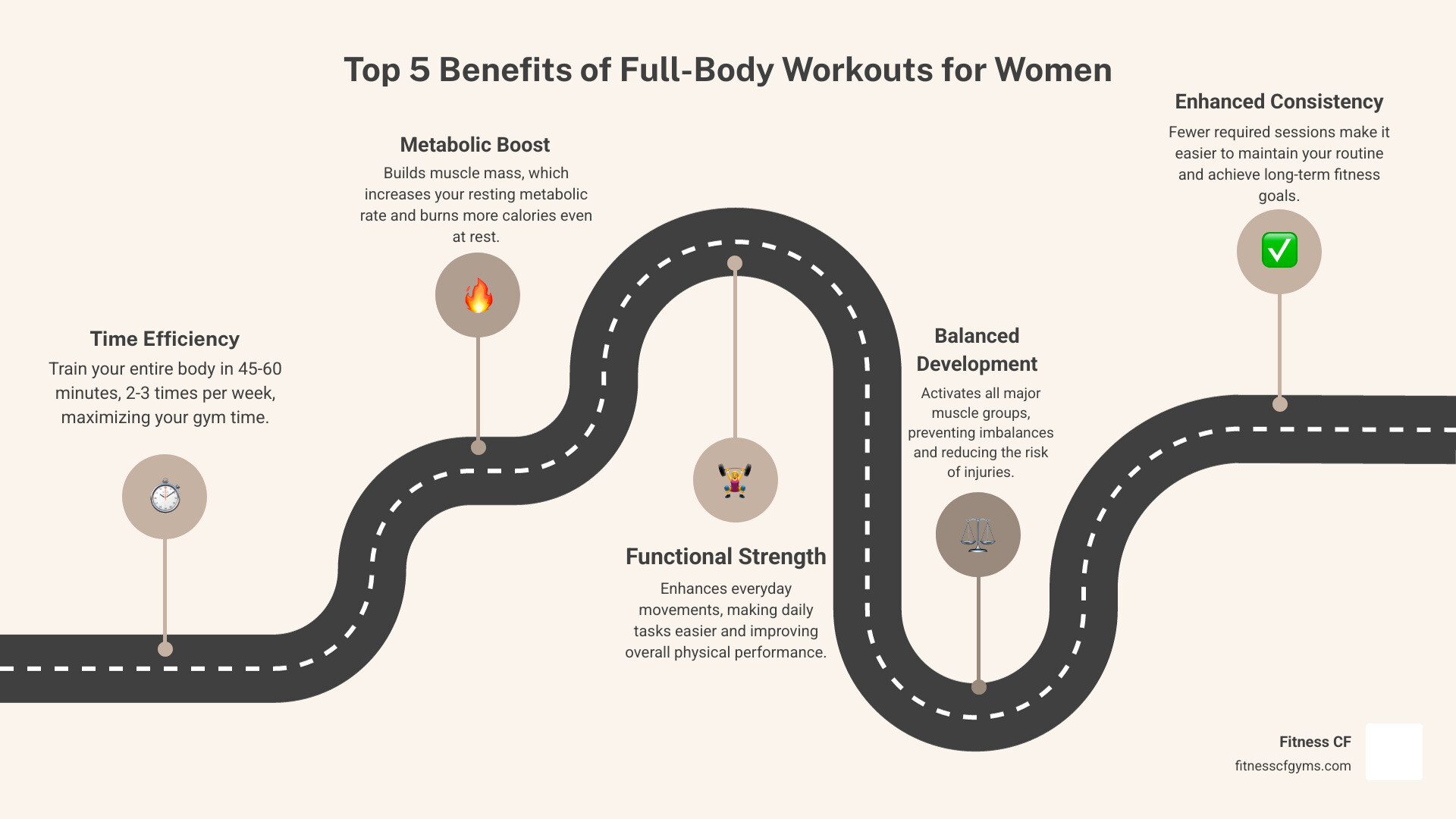
If you’re searching for a smarter way to train, full body workout women routines offer a science-backed approach that can transform how you look, feel, and move.
The magic starts with balanced muscle development. By training your entire body in each session—legs, core, back, chest, and arms—you prevent muscle imbalances that can lead to poor posture and injuries. You’re building a body that’s symmetrical, functional, and strong from every angle.
Working multiple large muscle groups at once creates an increased calorie burn that split routines can’t match. This metabolic boost doesn’t just happen during your workout; it continues for hours afterward, making it an effective way to improve body composition.
For women especially, the improved bone density from load-bearing exercises like squats and deadlifts is crucial. Resistance training strengthens your skeleton, offering powerful protection against osteoporosis and fractures as we age.
Perhaps the most rewarding aspect is building functional fitness for daily life. Lifting groceries, picking up a toddler, or carrying luggage all use multiple muscle groups. Training your body as a whole in the gym means moving with more ease and confidence outside of it. This is strength that truly serves you.
Finally, the mental health benefits are profound. Mastering a challenging lift or pushing through a tough set builds confidence that ripples into every area of your life. Many women find their training to be a form of moving meditation—a time to release stress and reconnect with their bodies.
| Feature | Full-Body Workouts | Split Routines |
|---|---|---|
| Efficiency | High – train all major muscle groups in one session | Lower per session, requires more total weekly sessions |
| Frequency | 2-4 times per week for optimal results | Typically 4-6 times per week |
| Recovery | More rest days for each muscle group between sessions | Each muscle trained once weekly, but less overall rest |
| Flexibility | Easier to stay consistent; missing one session less detrimental | Missing a specific day means missing that muscle group for the week |
The Efficiency Advantage and Building a Stronger Metabolism
For those with a busy lifestyle, full-body workouts are game-changers. You can complete a comprehensive, results-driven workout in 45-60 minutes, 2-4 times per week. This efficiency makes consistency achievable. Missing one session doesn’t derail your progress like missing “leg day” in a split routine, where you’d wait a full week to train those muscles again.
This approach also transforms your metabolism. The more lean muscle you build, the higher your resting metabolic rate becomes, meaning you burn more calories even at rest. This is the key to sustainable fat loss and lasting body composition changes. You’re not just losing weight; you’re reshaping your body by reducing fat while building lean, toned muscle. Research on the science behind training frequency.) confirms that training major muscle groups 2-3 times per week is optimal for building strength and muscle.
Building Your Perfect Workout: The Core Components
An effective full body workout women routine is built on fundamental movement patterns that mirror how we move in daily life. We push, pull, squat, and stabilize our core constantly. By incorporating these patterns into our workouts, we build functional strength, reduce injury risk, and develop a balanced physique.
Compound Movements: The Foundation of Strength
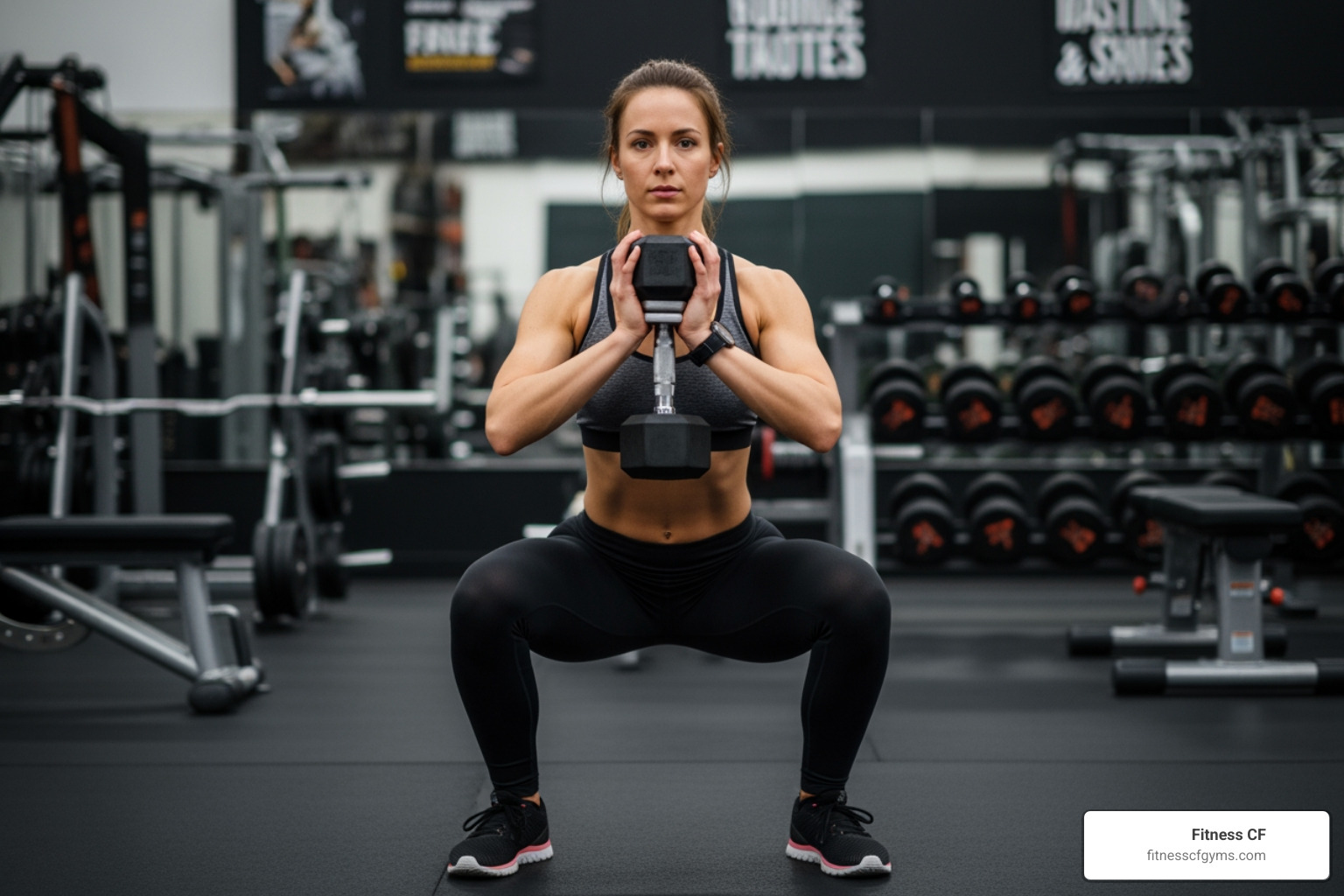
Compound movements are multi-joint exercises that engage several muscle groups at once, making them incredibly efficient for building strength and burning calories. They are the backbone of any solid training program.
- Squats: The ultimate lower-body exercise, working the quads, glutes, hamstrings, and core.
- Deadlifts: A powerful full-body movement that builds incredible strength in your back, glutes, and hamstrings.
- Push-ups: A classic that works the chest, shoulders, triceps, and core. It can be modified for any fitness level.
- Overhead Press: Builds strong shoulders and triceps for lifting things overhead with confidence.
- Rows: Essential for a strong back and good posture, balancing out all the pushing movements we do.
Accessory and Isolation Work
While compounds build our foundation, accessory and isolation work helps us target specific muscles for balanced development and a more defined look. These exercises complement our heavy lifting.
- Glute Bridges: Perfect for isolating and strengthening the glutes, which are vital for lower body power and protecting the low back. [Understanding the gluteal muscles](https://www.physio-pedia.com/Gluteal_Muscles#:~:text=The%20gluteal%20muscles%20(buttock%20muscles,and%20tensor%20fasciae%20latae%20muscles.) shows they are key for hip extension and stability.
- Bicep Curls & Tricep Extensions: Build strong, functional arms for everyday tasks.
- Lateral Raises: Target the shoulders to create a broader, stronger look.
- Calf Raises: Ensure your lower legs aren’t neglected.
The Importance of Core Activation
Your core is the powerhouse connecting your upper and lower body. Strong core activation is vital for protecting the spine, enhancing stability, and transferring power in every movement. A strong core makes every other exercise safer and more effective.
- Planks: An isometric exercise that engages the entire core.
- Dead Bugs: Teaches the core to stabilize the spine while your limbs are in motion.
- Russian Twists: Target the obliques for rotational strength.
Your Ultimate Full Body Workout Women Plan
An effective full body workout women routine follows a simple blueprint: a 5-10 minute dynamic warm-up (high knees, arm circles) to prepare your muscles, the main workout, and a 5-10 minute cool-down of static stretching to aid recovery.
During the workout, you’ll perform exercises in sets and reps. A “rep” is one complete movement, and a “set” is a group of reps. Aim for 2-4 sets per exercise. Your rep ranges depend on your goals: 8-12 for muscle building, 6-8 for pure strength, and 12-15 for endurance. Rest periods of 45-90 seconds for large movements and 30-60 seconds for smaller ones are crucial for recovery between sets.
Essential equipment is minimal: a few sets of dumbbells, resistance bands, and a mat are enough to build serious strength.
Beginner Full Body Workout for Women
Focus on mastering proper form with bodyweight or light dumbbells. Perform 2-3 sets of 10-12 reps for each exercise, resting 60-90 seconds between sets.
- Goblet Squats
- Dumbbell Rows
- Glute Bridges
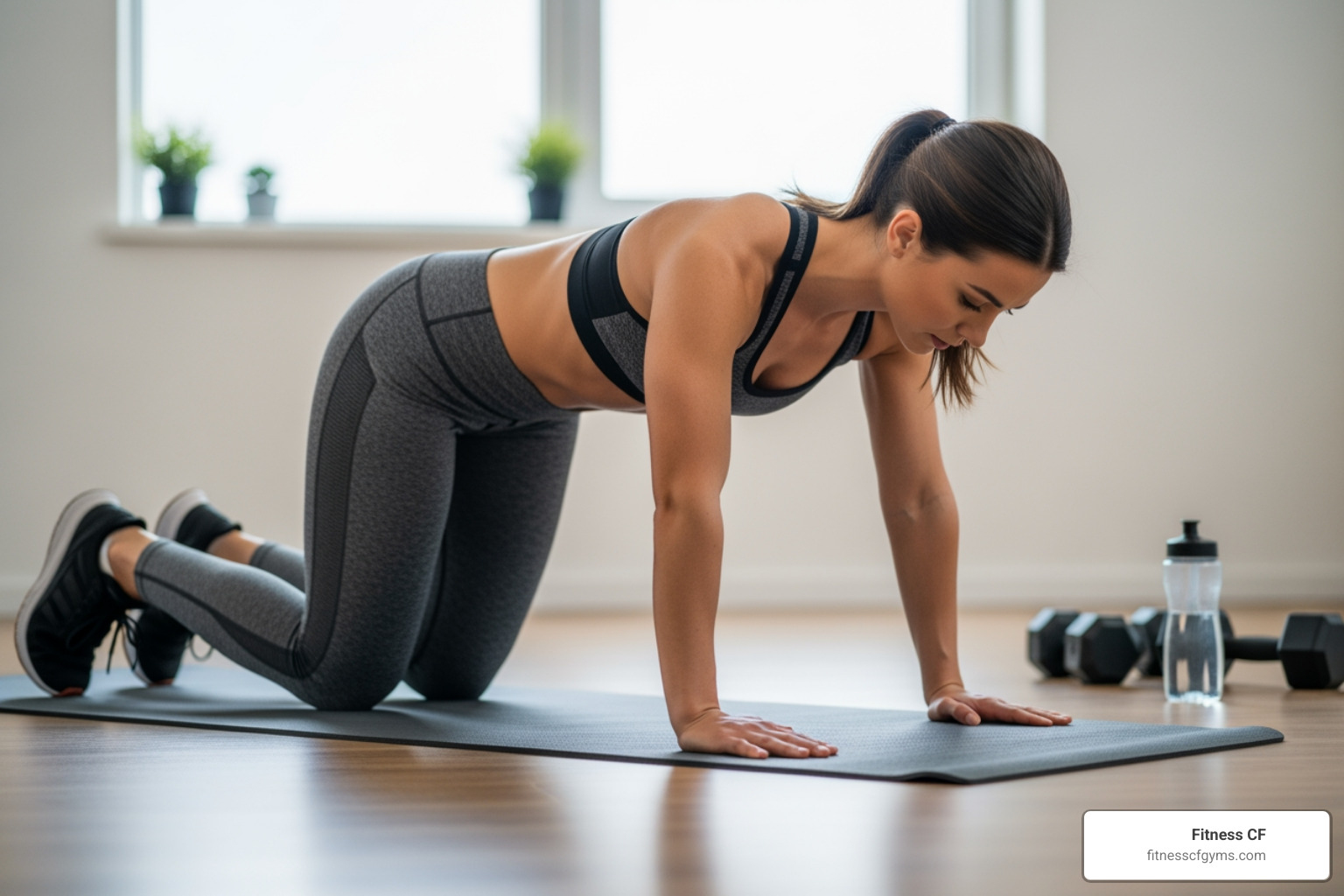
- Modified Push-ups (on knees)
- Plank (hold for 20-30 seconds)
Intermediate Full Body Workout for Women
Increase the intensity with heavier weights and more complex movements. Perform 3 sets of 8-10 reps, resting 60-90 seconds between sets.
- Romanian Deadlifts (RDLs)
- Dumbbell Bench Press
- Lat Pulldowns or Assisted Pull-ups
- Walking Lunges
- Hanging Knee Raises
Advanced Full Body Workout for Women
This routine uses complex movements and challenging loads to build maximum strength and power. Perform 3-4 sets of 6-8 reps, resting 90-120 seconds between sets.
- Barbell Back Squats
- Pull-ups (assisted or unassisted)
- Dumbbell Thrusters
- Single-Leg Romanian Deadlifts
- Renegade Rows
Tailoring Your Training and Ensuring Progress
Your fitness journey is unique. The secret to long-term success with a full body workout women plan is listening to your body, setting clear goals, and remembering that consistency over intensity always wins. The key is showing up regularly and avoiding plateaus by progressing thoughtfully.
Customizing for Your Goals: Fat Loss, Toning, and Strength
Your goals should guide your training structure.
- For Fat Loss: Strength training builds your metabolic engine, but fat loss requires a calorie deficit. Pair your workouts with mindful nutrition.
- For “Toning”: This means building muscle definition while reducing body fat. You can’t “tone” a muscle; you build it. Use challenging weights in the 8-12 rep range to achieve that sculpted, athletic look.
- For Strength Building: Shift your focus to lower reps (6-8) with heavier weights and longer rest periods (90-120 seconds) to allow your nervous system and muscles to recover for maximum force production.
How to Progress Over Time
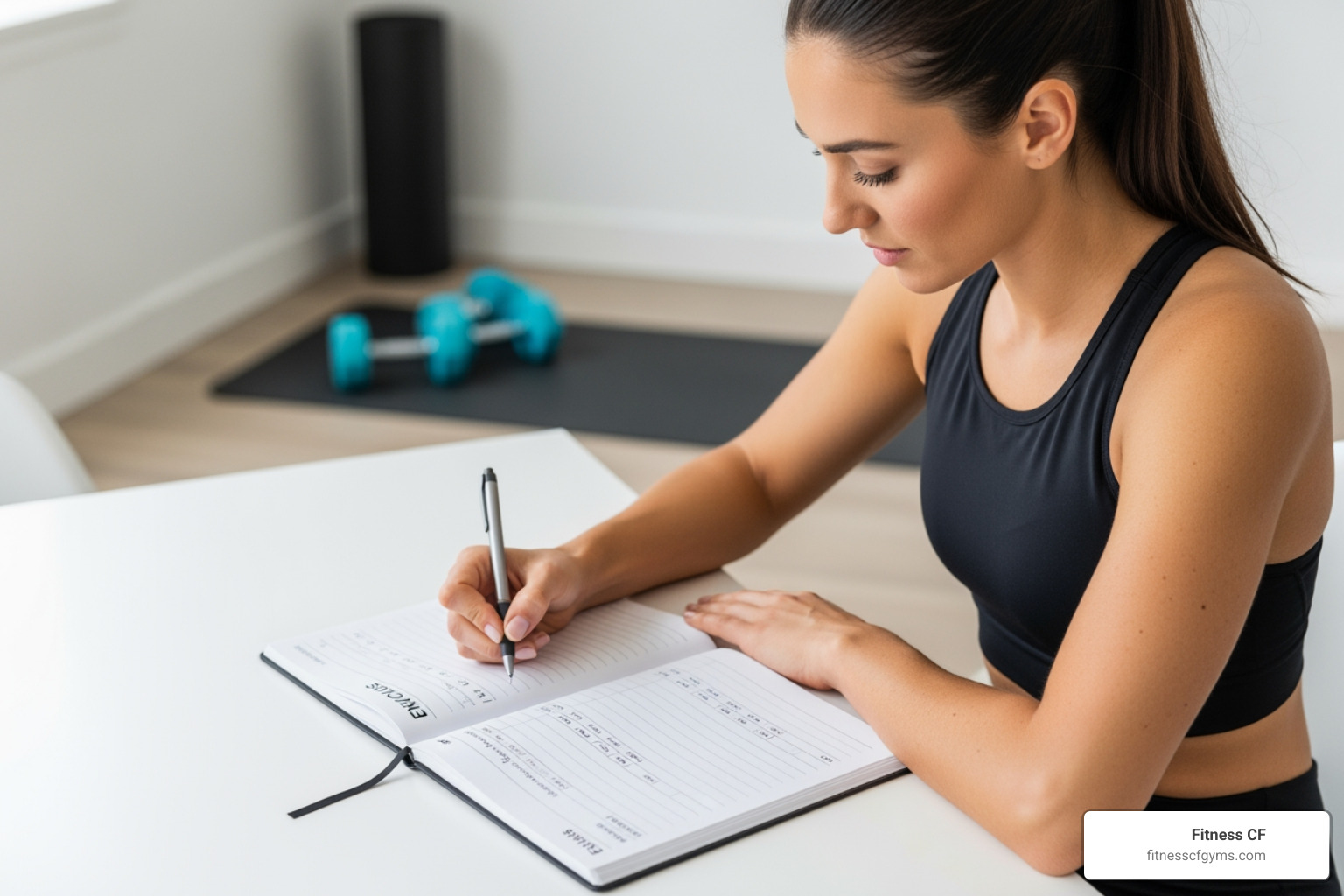
To avoid plateaus, you must use the progressive overload principle: gradually increasing the demands on your muscles. You can’t manage what you don’t measure, so tracking workouts in a journal or app is essential. Research on effects of progressive overload protocols confirms that systematic progression is key. Here’s how to do it:
- Increase the weight you’re lifting.
- Add more reps or sets to your exercises.
- Decrease your rest time between sets to increase intensity.
Common Mistakes and How to Avoid Them
Knowing these common pitfalls can help you stay on track.
- Poor Form: Prioritize correct technique over lifting heavy to prevent injury and ensure effectiveness.
- Overtraining: More isn’t always better. Rest days are when your muscles repair and grow stronger.
- Neglecting Nutrition: You can’t out-train a poor diet. Fuel your body with quality food for recovery and results.
- Skipping Warm-ups: A 5-minute warm-up prepares your joints and muscles, significantly reducing injury risk.
- Ego Lifting: Lift weights that challenge you while allowing for proper form, not weights that stroke your ego.
- Inconsistency: A moderately good plan you follow consistently is better than a perfect plan you follow sporadically.
Beyond the Workout: Fueling Your Body and Aiding Recovery
What happens outside the gym is just as important as what happens inside. To get the best results from your full body workout women routine, you must support your body with proper nutrition and genuine rest. A holistic approach is key to healthy, sustainable living.
Nutrition Essentials for Active Women
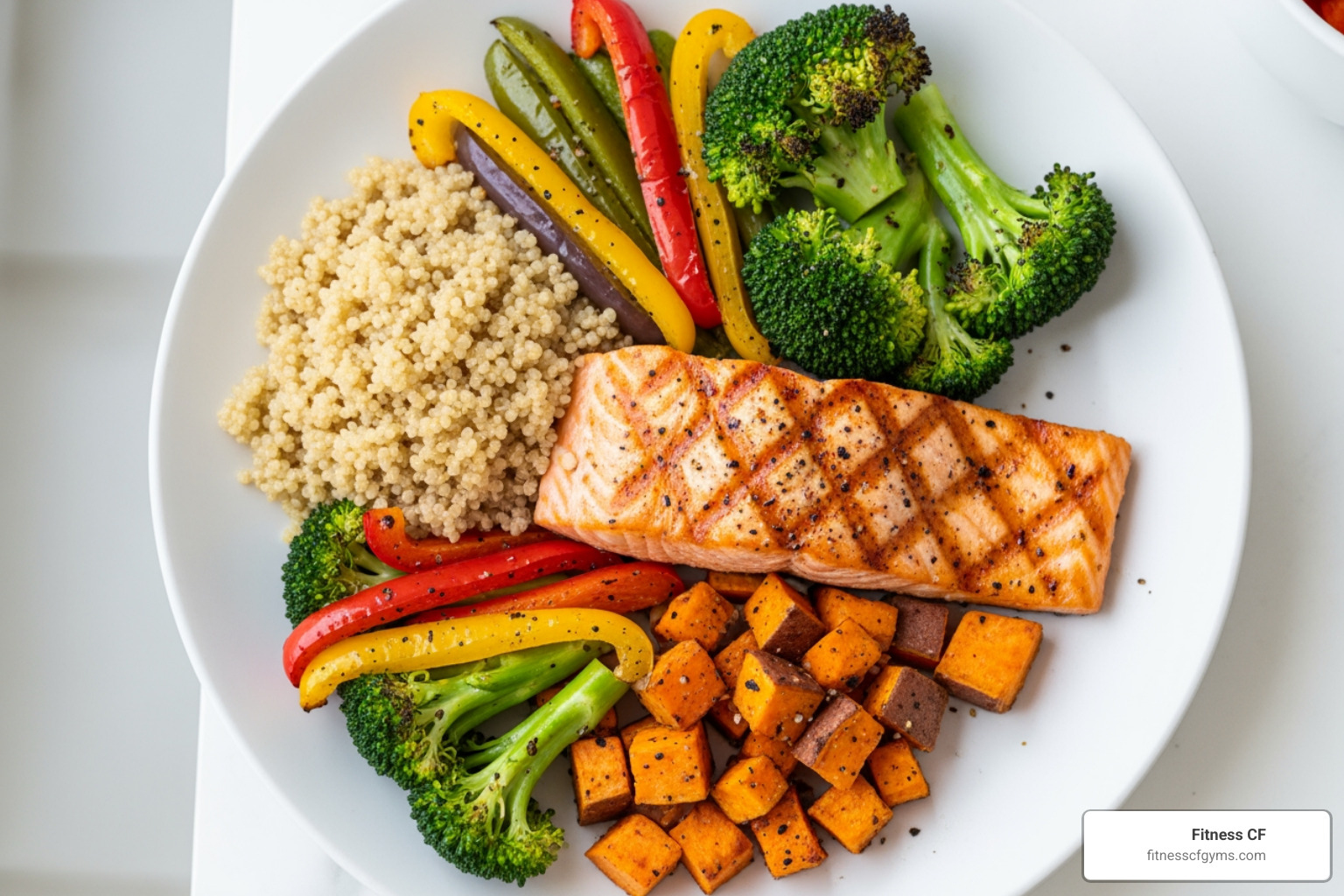
Food is fuel. To repair and rebuild, your body needs the right materials. The importance of protein is paramount, as it’s the building block of muscle. Include a source like chicken, fish, eggs, or legumes with every meal. However, protein doesn’t work alone. You need a macronutrient balance: carbohydrates provide energy for workouts, and healthy fats support hormone production. Prioritize whole foods and stay hydrated throughout the day. A pre-workout snack can provide energy, while a post-workout meal with protein and carbs kickstarts recovery.
The Critical Role of Rest and Recovery
We don’t get stronger during workouts; we get stronger during rest. Muscle repair and growth occur when our bodies have time to recover from the microscopic tears created during training. The importance of sleep is critical, as growth hormone is primarily released during deep sleep. Research confirms how sleep impacts muscle recovery, showing that a lack of it can impair progress. Aim for 7-9 hours of quality sleep per night. Gentle stretching and foam rolling on rest days can also improve flexibility, reduce muscle tension, and aid recovery.
Integrating Cardio with Your Full Body Workout for Women
Cardio supports heart health, improves endurance, and aids in fat loss. The key is finding a balance that complements your strength training.
- HIIT vs. LISS Cardio: High-Intensity Interval Training (HIIT) is time-efficient and metabolic, while Low-Intensity Steady State (LISS) cardio, like a brisk walk, is gentler and great for active recovery.
- Scheduling: You can perform LISS cardio on rest days for active recovery or add a short HIIT session as a cardio finisher after your strength workout.
- Enjoyment is Key: The best cardio is the kind you’ll do consistently. Find activities you enjoy, whether it’s dancing, hiking, swimming, or cycling. When movement is fun, it becomes a sustainable part of your lifestyle.
Frequently Asked Questions about Full Body Workouts
We’re here to clear up common questions about full body workout women routines with straightforward answers.
How often should a woman do a full-body workout?
For beginners, 2-3 times per week is ideal, allowing for adequate recovery. Intermediate to advanced women can increase this to 3-4 times per week. The golden rule is to allow at least 48 hours of rest for your muscles to repair and grow between sessions. Most importantly, listen to your body’s recovery signals. If you’re constantly sore or fatigued, take an extra rest day. Consistency over the long term is what matters most.
Can women build muscle and get “toned” without lifting heavy weights?
Yes, absolutely. You can achieve significant muscle growth with lighter weights and higher reps taken to fatigue. The key is challenging your muscles to their limit, not the specific weight on the dumbbell. Research shows that low-load vs. high-load training can produce similar muscle growth when workouts are performed close to failure. Bodyweight exercises and resistance bands are also highly effective. “Toned” simply means having visible muscle definition combined with lower body fat, which is achieved through consistent strength training and proper nutrition.
How long should a full-body workout for women be?
An effective full-body workout for women typically takes just 45-60 minutes. You don’t need to spend hours in the gym. The secret is focusing on quality over quantity. By prioritizing efficient compound movements like squats, deadlifts, and rows, you work multiple muscle groups at once, accomplishing more in less time. Even a focused 30-minute session can be beneficial on busy days. It’s about working with intention and making every minute count.
Conclusion
This guide to full body workout women routines shows just how transformative this approach can be. We’ve seen the efficiency, metabolic advantages, and functional strength that full-body training provides. From beginner to advanced, there’s an empowering path for every woman.
The beauty of this training lies not just in the physical changes—stronger muscles, improved bone density, and increased calorie burn—but in the confidence it builds. That strength radiates beyond the gym, empowering you in every area of your life.
Consistency is key, not perfection. Show up regularly, listen to your body, fuel it properly, and allow for adequate recovery. Every workout is a step forward on your long-term health journey.
Your fitness story is uniquely yours. The empowerment that comes from building strength is something no one can take away from you.
Ready to take the next step? At Fitness CF, we’re passionate about supporting women on their fitness journeys. We invite you to explore our women’s fitness amenities and start your journey in a welcoming, supportive environment. Your future self will thank you for starting today.