Why Dumbbell Workouts Are the Key to Building Strength Anywhere
Dumbbell workouts are one of the most effective ways to build strength, sculpt muscle, and improve functional fitness—whether you’re at home, traveling, or at the gym. Here’s what you need to know:
Top Dumbbell Exercises by Popularity:
- Dumbbell Bicep Curl – 11.6+ million sets logged
- Hammer Curls – 10.1+ million sets logged
- Dumbbell Row – 9.8+ million sets logged
- Dumbbell Bench Press – 9.7+ million sets logged
- Dumbbell Shoulder Press – 7.7+ million sets logged
Key Benefits:
- Train anywhere with minimal equipment
- Correct strength imbalances
- Build lean muscle and functional strength
- Engage stabilizer muscles for better coordination
- Safer than heavy barbells without a spotter
With just a set of dumbbells, you can build strength and lean muscle while training for real-life movements. Dumbbell training is powerful because it forces each side of your body to work independently, revealing and correcting imbalances often missed during barbell work.
Dumbbells are versatile enough to target every major muscle group—chest, back, shoulders, arms, legs, and core—with a greater range of motion than most machines. From 20-minute full-body circuits to structured 5-day splits, they deliver results for all fitness levels.
I’m Pleasant Lewis. With over 40 years in fitness, I’ve seen how dumbbells transform bodies and build lasting strength. In this guide, I’ll share the best exercises, workout plans, and tips to maximize your results.
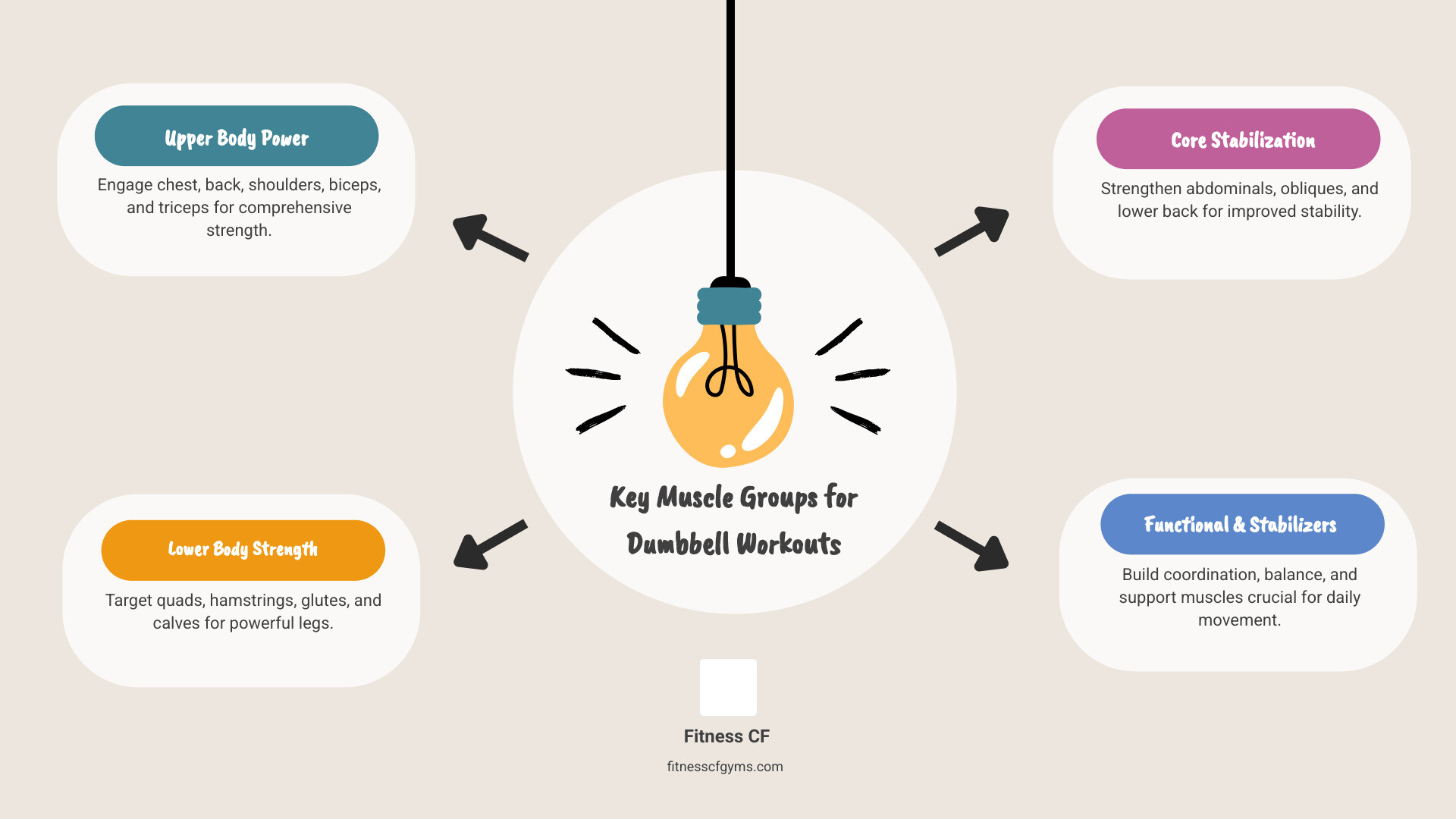
Dumbell workouts terms to remember:
Why Dumbbells are Your Ultimate Fitness Tool
Dumbbells are versatile tools that can revolutionize your fitness journey. Their compact, adaptable nature makes them ideal for any workout environment, from a gym to your living room. The benefits extend beyond convenience, impacting muscle development and overall functional health.
Versatility and Portability
Dumbbells offer a full gym’s potential in a compact, portable package. They allow for a vast array of exercises targeting every muscle group without bulky machines, making dumbbell workouts perfect for home, travel, or outdoor routines. As the “35-Minute Full-Body Strength, Power and Abs Workout” highlights, “No expensive gym memberships or specialized equipment needed, just grab a set of dumbbells and you’re ready to go.”
Muscle Building
Dumbbells are incredibly effective for building lean muscle. Their greater range of motion compared to fixed machines leads to better muscle activation and growth (hypertrophy). You can build significant muscle with a dumbbell-only plan. As the “45-Minute Full-Body Dumbbell Circuit Workout To Build Muscle” article states, “With a simple dumbbell workout, you can simultaneously increase your strength and build lean muscle.”
Strength Imbalances
A unique advantage of dumbbell workouts is correcting strength imbalances. Unlike with barbells where a dominant side can compensate, dumbbells force each limb to work independently. This highlights and addresses imbalances through unilateral (single-limb) exercises, leading to more balanced strength and a reduced risk of injury. As our research notes, “Dumbbell training exposes muscular imbalances that might go unnoticed during barbell work.”
Functional Strength
Functional strength trains your body for real-life movements like bending, lifting, and twisting. Dumbbells excel here by allowing multi-planar movements that mimic everyday activities, improving coordination and balance. The “35-Minute Full-Body Strength, Power and Abs Workout” emphasizes that dumbbell exercises “engage more stabilizing muscles than gym machines, and they allow for training in multiple planes of motion.” For more on the foundational benefits, explore What is Strength Training and What Are Its Benefits?.
Safety
Dumbbell workouts are generally safer than heavy barbell lifts, especially when training alone. If you reach muscle failure, you can simply drop the dumbbells without the risk of being pinned, making them an excellent option for all fitness levels, particularly those without a spotter.
Increased Range of Motion
Dumbbells allow for a more natural and greater range of motion. For instance, a dumbbell chest press allows a deeper stretch and closer press than a barbell, leading to better muscle activation and flexibility over time.
Cardiovascular Health
Dumbbell workouts, especially high-intensity circuits, can also boost cardiovascular endurance. Moving quickly between exercises with minimal rest lifts your heart rate, combining strength and cardio into one efficient session. To dive deeper into integrating cardio, check out The Benefits of HIIT.
Unilateral Training: Correcting Strength Imbalances
Unilateral training, or working one side of the body at a time, is a superpower of dumbbell workouts. It’s crucial for addressing strength imbalances.
- Identifying weaker side: Isolating each limb reveals which side needs more attention. For example, if your left arm fatigues faster during a single-arm row, you’ve found an imbalance.
- Improved coordination: Unilateral movements improve balance and coordination by challenging the central nervous system.
- Core stability: Working one side at a time forces your core to engage for stability, building a stronger, more resilient midsection.
- Injury prevention: Correcting imbalances reduces undue stress on joints and muscles, significantly lowering injury risk. As certified personal trainer Francine Delgado-Lugo notes, “It’s important to do strength-based workouts to help prevent injury and to train the muscle fibers to repeatedly work at higher load.”
- Real-world application: Life is asymmetrical. Unilateral training prepares you for everyday tasks like carrying groceries or climbing stairs. For an example of how crucial arm strength is, read Why Arm Strength Is Important for Overall Fitness.
Building Muscle and Functional Strength
Dumbbells are a fantastic way to fine-tune your body for both aesthetics and performance.
- Progressive overload: The key to muscle growth is continually challenging your muscles. With dumbbells, you can do this by gradually increasing weight, reps, sets, or decreasing rest time.
- Muscle hypertrophy: Consistent dumbbell workouts, plus proper nutrition and rest, stimulate muscle fibers to grow bigger and stronger.
- Stabilizer muscle engagement: Dumbbells engage smaller stabilizing muscles that machines often miss, building a more robust and injury-resistant body.
- Multi-planar movements: Dumbbells allow movement in all three planes (forward/backward, side-to-side, and rotational). This is vital for functional strength, preparing you for dynamic daily movements. The “7-Move Full-Body Dumbbell Workout That Builds Functional Strength” highlights that “Life happens in all three planes…”
- Preparing for daily activities: Functional strength makes tasks like lifting a child or carrying bags easier and safer. Dumbbells help you practice these movements in a controlled way. For more compelling reasons to lift, check out 7 Compelling Reasons to Strength Train.
The Most Effective Dumbbell Exercises for Every Muscle Group
Here are some of the most effective dumbbell exercises for every major muscle group. Proper form is paramount: prioritize control over heavy weight, focus on the mind-muscle connection, and breathe correctly (exhale on exertion, inhale on release).
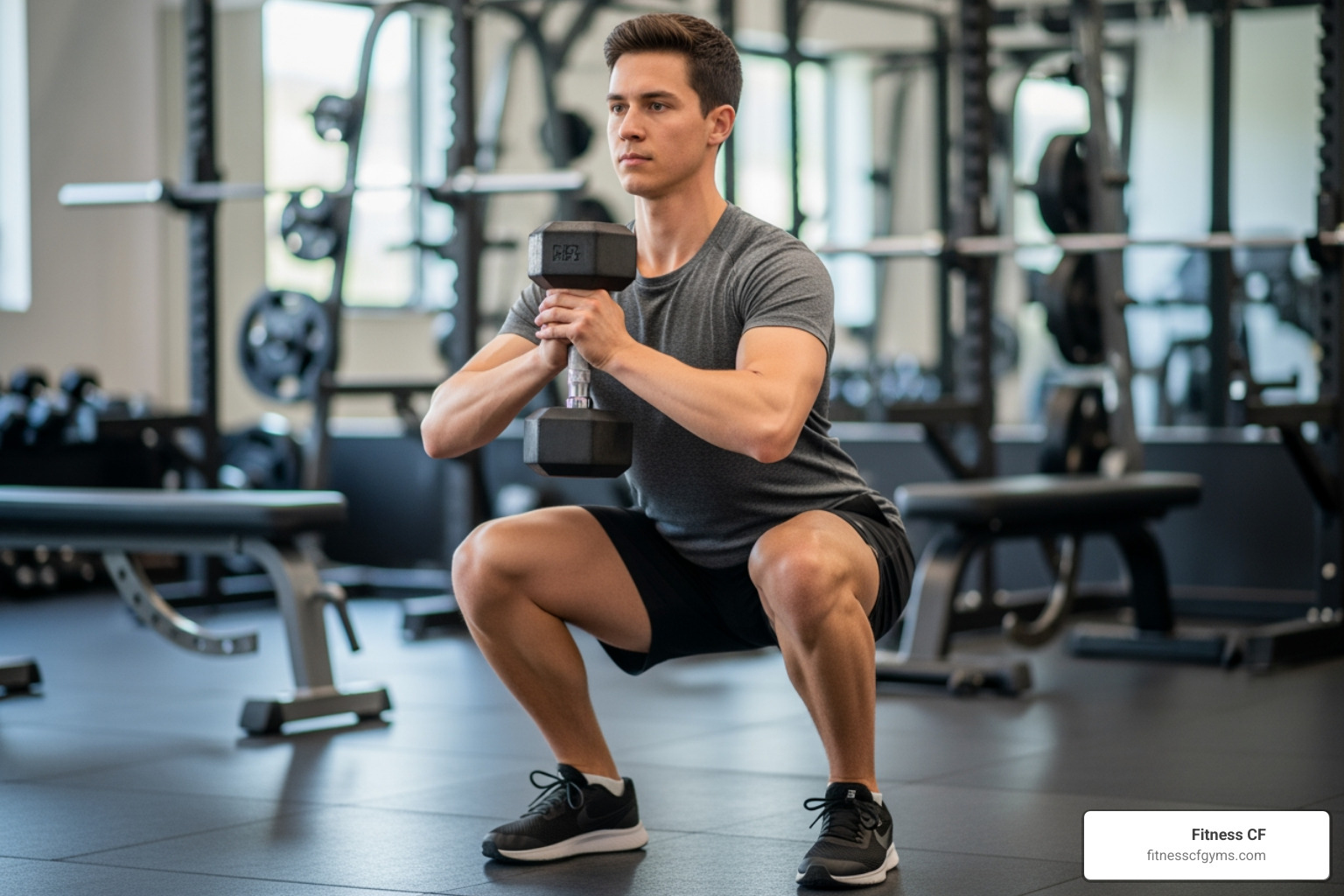
Here’s a list of some of the most popular and effective dumbbell exercises based on millions of logged sets:
- Dumbbell Bicep Curl
- Hammer Curls
- Dumbbell Row
- Dumbbell Bench Press
- Dumbbell Shoulder Press
- Dumbbell Fly
- Dumbbell Skullcrusher
- Dumbbell Front Raise
- Seated Tricep Press
- Dumbbell Incline Bench Press
Let’s break down exercises by muscle group:
Upper Body Dumbbell Exercises
Chest
Dumbbells are fantastic for developing a strong, sculpted chest.
- Dumbbell Bench Press: Lie on a bench or floor. Lower a dumbbell in each hand to your chest, then press them back up to target the entire chest.
- Incline Press: Performed on an incline bench to emphasize the upper chest.
- Dumbbell Fly: With a slight elbow bend, open your arms wide to stretch the chest, then bring them back together to isolate the pecs.
- Squeeze Press: Press two dumbbells together over your chest, squeezing them throughout the movement to target the inner chest. For those looking to tone their arms and chest, our Gym Workout for Flabby Arms article offers great insights.
Back
A strong back is essential for posture and preventing injury.
- Dumbbell Row: Hinge at the hips with a flat back. Pull one or two dumbbells toward your hip, squeezing your shoulder blades. A fundamental back builder.
- Renegade Row: A full-body exercise combining a plank with a row. It works the back, core, and shoulders while forcing the core to resist rotation.
- Pullover: Lie on a bench holding one dumbbell. Lower it behind your head to stretch your lats, then pull it back over your chest.
- Bent-Over Reverse Fly: Hinge at the hips and raise dumbbells out to your sides, squeezing your upper back. Excellent for rear deltoids.
Shoulders
Dumbbells offer excellent versatility for building strong, rounded shoulders.
- Shoulder Press: Press dumbbells overhead from shoulder height. Standing engages more core than seated.
- Arnold Press: A dynamic press rotating from palms-in to palms-out as you press overhead, targeting all three deltoid heads.
- Lateral Raise: Raise dumbbells out to your sides until your arms are parallel to the floor. Builds shoulder width by targeting side deltoids.
- Front Raise: Raise dumbbells in front of you to shoulder height to target the front deltoids.
Arms
Dumbbells are your best friend for building strong, defined arms.
- Bicep Curl: The classic arm builder. Curl the dumbbell toward your shoulder, squeezing the bicep.
- Hammer Curl: A bicep curl with palms facing each other, targeting the biceps and brachialis muscle.
- Tricep Extension: Extend weight overhead (seated/standing) or lying down (skullcrushers) to focus on the triceps.
- Skullcrusher: Lie on a bench and lower dumbbells toward your forehead by bending your elbows, then extend to straighten. A powerful tricep builder. For more arm-specific workouts, check out How to Build Arm Muscle: 10 Workouts You Have to Try.
Lower Body and Core Dumbbell Exercises
Dumbbells can provide an intense lower body and core workout.
Legs
- Goblet Squat: Hold one dumbbell vertically at your chest. Squat down, keeping your chest up. Great for quads, glutes, and beginners.
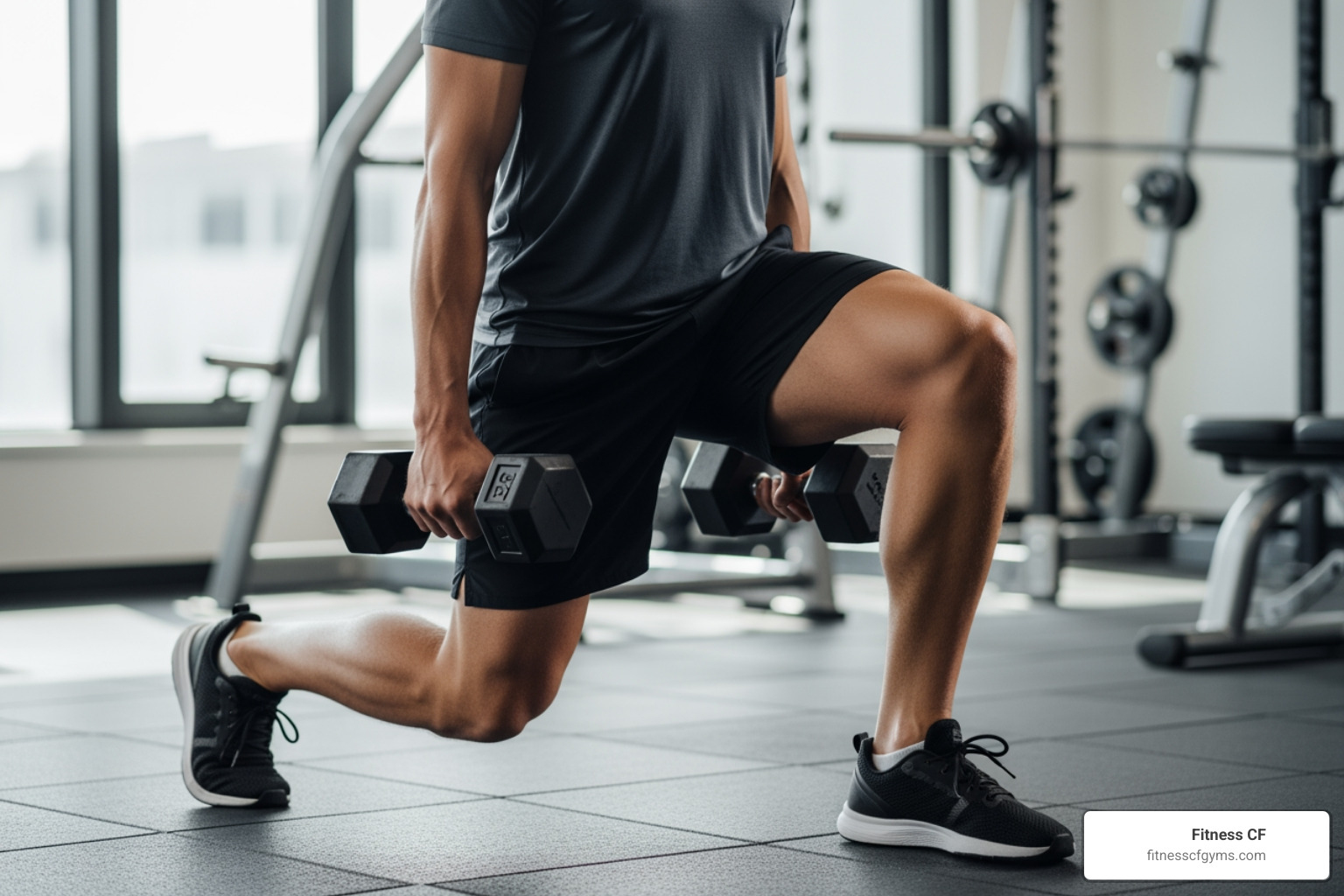
- Dumbbell Lunge: Step forward, lowering your hips until both knees are at 90-degree angles. Builds unilateral leg strength and balance.
- Bulgarian Split Squat: With your back foot liftd, hold dumbbells and lower your body, focusing on the front leg. A highly effective unilateral exercise.
- Romanian Deadlift (RDL): Holding dumbbells, hinge at your hips with a straight back and slightly bent knees. Lower the weights to feel a stretch in your hamstrings and glutes.
- Calf Raise: Holding dumbbells, stand and raise up onto the balls of your feet, squeezing your calves. Strengthen your lower body with insights from Top 8 Big Benefits of Leg Strengthening.
Core
Dumbbells add challenge and resistance to your core training.
- Dumbbell Halo: Circle a dumbbell around your head, keeping your core tight to work obliques and stability.
- Wood Chop: Holding one dumbbell, rotate your torso diagonally from high to low. Targets obliques and core power.
- Plank with Dumbbell Pull-Through: In a plank, reach under your body to pull a dumbbell from one side to the other, resisting rotation.
- V-Sit Cross Jab: In a V-sit, hold a light dumbbell and perform cross jabs to engage your abs and obliques.
Crafting Your Perfect Dumbbell Workout Plan
Creating an effective dumbbell workout plan involves setting goals, understanding progressive overload, and prioritizing recovery.
- Set goals: Your aim—muscle gain, fat loss, or functional strength—will dictate your plan’s structure, intensity, and exercises.
- Use progressive overload: To keep progressing, you must gradually increase the demand on your muscles by lifting heavier, doing more reps/sets, or reducing rest.
- Prioritize rest and recovery: Muscles grow during rest. Schedule rest days and prioritize quality sleep.
- Listen to your body: Pain (not just muscle soreness) is a sign to adjust your workout or take extra rest. For a comprehensive guide on structuring your fitness journey, refer to How to Create a Workout Routine: The Ultimate Guide.
A Sample 5-Day Dumbbell-Only Workout Split
For those ready for a structured routine, a 5-day dumbbell workout split can be highly effective. This split targets specific muscle groups, allowing for sufficient recovery. Rest periods should be around 45 seconds between sets to maintain intensity.
Day 1: Chest, Shoulders, & Triceps
- Dumbbell Bench Press: 4 sets of 8-12 reps
- Incline Dumbbell Press: 3 sets of 10-15 reps
- Dumbbell Shoulder Press: 4 sets of 8-12 reps
- Lateral Raises: 3 sets of 12-15 reps
- Dumbbell Skullcrushers: 3 sets of 10-15 reps
- Overhead Dumbbell Extension: 3 sets of 10-15 reps
Day 2: Legs & Core
- Dumbbell Goblet Squats: 4 sets of 10-15 reps
- Dumbbell Lunges (alternating): 3 sets of 10-12 reps per leg
- Dumbbell Romanian Deadlifts: 3 sets of 10-15 reps
- Dumbbell Calf Raises: 4 sets of 15-20 reps
- Dumbbell Halo: 3 sets of 10 reps (each direction)
- Plank with Dumbbell Pull-Through: 3 sets of 8-10 pulls per side
Day 3: Back & Biceps
- Dumbbell Rows: 4 sets of 8-12 reps per arm
- Bent-Over Reverse Fly: 3 sets of 12-15 reps
- Dumbbell Pullovers: 3 sets of 10-15 reps
- Dumbbell Bicep Curls: 4 sets of 10-15 reps
- Hammer Curls: 3 sets of 10-15 reps
Day 4: Upper Body Power
- Renegade Rows: 3 sets of 8-10 reps per side
- Arnold Press: 3 sets of 10-12 reps
- Dumbbell Push-Ups (hands on dumbbells): 3 sets to failure
- Dumbbell Clean & Press: 3 sets of 8-10 reps
- Dumbbell Fly: 3 sets of 12-15 reps
Day 5: Full Body Circuit
- Perform each exercise for 45-60 seconds, rest 15 seconds between exercises. Complete 2-3 rounds with 1-2 minutes rest between rounds.
- Dumbbell Thrusters
- Dumbbell Sprinter Lunges
- Dumbbell High Pulls
- Goblet Squats
- Dumbbell Wood Chops (alternating sides)
Rest Days: Incorporate 2 rest/active recovery days weekly. This can include light cardio, stretching, or simply resting.
This program is designed for general muscle building but can be adapted for fat loss by adjusting caloric intake. For more on combining these goals, see our Build Muscle Lose Fat Workout Plan.
Adapting Dumbbell Workouts for Your Fitness Level
Dumbbell workouts are highly adaptable for any fitness level.
Beginner
- Focus on form: Prioritize proper technique over heavy weight. Start light or with bodyweight to master movements.
- Use lighter weights: Choose a weight that allows you to complete all reps with good form.
- Do 2-3 full-body workouts per week: This builds a solid foundation and allows for recovery.
- Aim for 10-15 reps with controlled movements. The “ATHLEAN-X” research suggests beginners use around 10 lb dumbbells. For more guidance, check out The Complete Guide to Creating a Workout Plan for Beginners.
Intermediate
- Increase weight/volume: Gradually lift heavier or add more sets.
- Try split routines: Use a 2-day (upper/lower) or 3-day (push/pull/legs) split for more focused training.
- Aim for 8-12 reps for muscle growth (hypertrophy).
- Reduce rest to 60-90 seconds to increase intensity. Our research suggests intermediate lifters might use 25 to 40 lb dumbbells.
Advanced
- Use heavier weights: Continue to challenge yourself with heavier dumbbells while maintaining perfect form.
- Use advanced techniques: Try drop sets, supersets, or slow eccentrics to boost intensity.
- Perform complex movements like a dumbbell clean and press.
- Aim for 6-10 reps for strength building. Advanced lifters might use around 50 lb dumbbells, according to our research. For a glimpse into complex movements, See a dumbbell complex in action.
Frequently Asked Questions about Dumbbell Workouts
Here are answers to common questions about dumbbell workouts.
How do I choose the right dumbbell weight?
Choosing the right weight is critical for safety and effectiveness.
- Start light: When learning a new exercise, begin with a lighter weight to master the form.
- Form over weight: Never sacrifice good form for heavier weight, as this leads to injury and ineffective training.
- Reps in Reserve (RIR): A good rule is to choose a weight where you finish your set feeling like you could only do 1-2 more reps. This ensures you’re challenging your muscles.
- Challenging but manageable: The weight should feel challenging by the last few reps, but you should still be able to maintain control.
- Progressive overload principle: As you get stronger, gradually increase the weight. The “45-Minute Full-Body Dumbbell Circuit Workout To Build Muscle” research provides a helpful guide: Beginners (Heavy 15-20% of bodyweight, Light 10-15%), Intermediate (Heavy 30-35%, Light 15-20%), Advanced (Heavy 40-45%, Light 20-25%).
Can I build significant muscle with only dumbbells?
Yes, you can build substantial muscle using only dumbbell workouts.
- Hypertrophy principles: The principles of muscle growth (progressive overload, proper nutrition, adequate rest) apply regardless of the equipment used.
- Consistent training: Regular, challenging dumbbell workouts will stimulate muscle growth.
- Proper nutrition: Fueling your body with enough protein and calories is essential for muscle repair and growth.
- Adequate rest: Muscles grow when they recover. Dumbbells engage more stabilizing muscles and allow a greater range of motion, which can lead to more comprehensive muscle development. As the “35-Minute Full-Body Strength, Power and Abs Workout” states, “Dumbbell exercises often allow for a greater range of motion and engage more stabilizing muscles than gym machines…” Learn more about structuring your workouts for lean muscle with How to Structure Lean Muscle Workouts.
How often should I do dumbbell workouts?
The ideal frequency depends on your fitness level, intensity, and recovery capacity.
- Beginners: Aim for 2-3 full-body dumbbell workouts per week, with a rest day between sessions.
- Intermediate/Advanced: You can train 3-5 times per week using a full-body, upper/lower, or body-part split routine.
- Muscle recovery (48 hours): A muscle group generally needs about 48 hours to recover after an intense workout. Ensure you have adequate rest days.
- Active recovery days: On non-lifting days, light cardio, stretching, or mobility work can aid recovery. The “45-Minute Full-Body Dumbbell Circuit Workout To Build Muscle” suggests at least 24-36 hours of rest between intense sessions. The “7-Move Full-Body Dumbbell Workout That Builds Functional Strength” recommends 2-3 times a week with 48 hours rest. Always listen to your body.
Conclusion
Dumbbell workouts are incredibly versatile and effective for building strength, sculpting your body, and enhancing functional fitness. They correct imbalances, build lean muscle, and improve athleticism, making them an indispensable tool in any fitness regimen. Their portability and safety make them accessible to everyone, regardless of experience level or workout location.
Consistency is key. Stick to your program, focus on proper form, progressively challenge your muscles, and prioritize rest and nutrition. Dumbbells are foundational tools for a healthier, stronger you. At Fitness CF, we believe in empowering your fitness journey, providing the resources and support you need to achieve your goals.
Explore how to make the most of your fitness journey with us.