Why the Right Fitness Tips for Men Can Change Everything
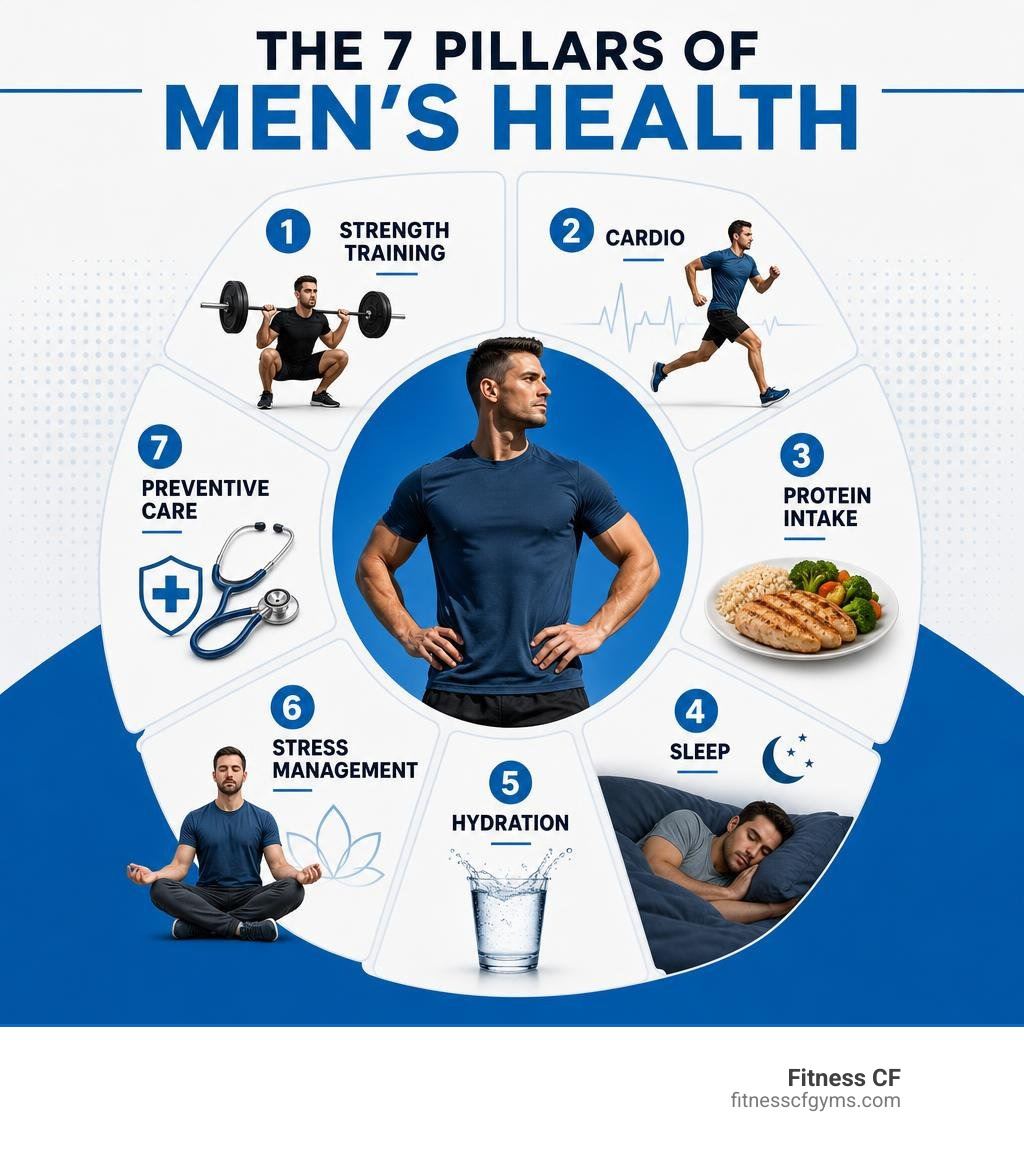
The most effective fitness tips for men come down to a handful of core habits — and most guys are only missing a few of them.
Here’s a quick snapshot of what actually moves the needle:
- Strength train 2-4 times per week using compound movements like squats, deadlifts, and push-ups
- Hit 150 minutes of moderate activity weekly — the standard recommendation backed by major health organizations
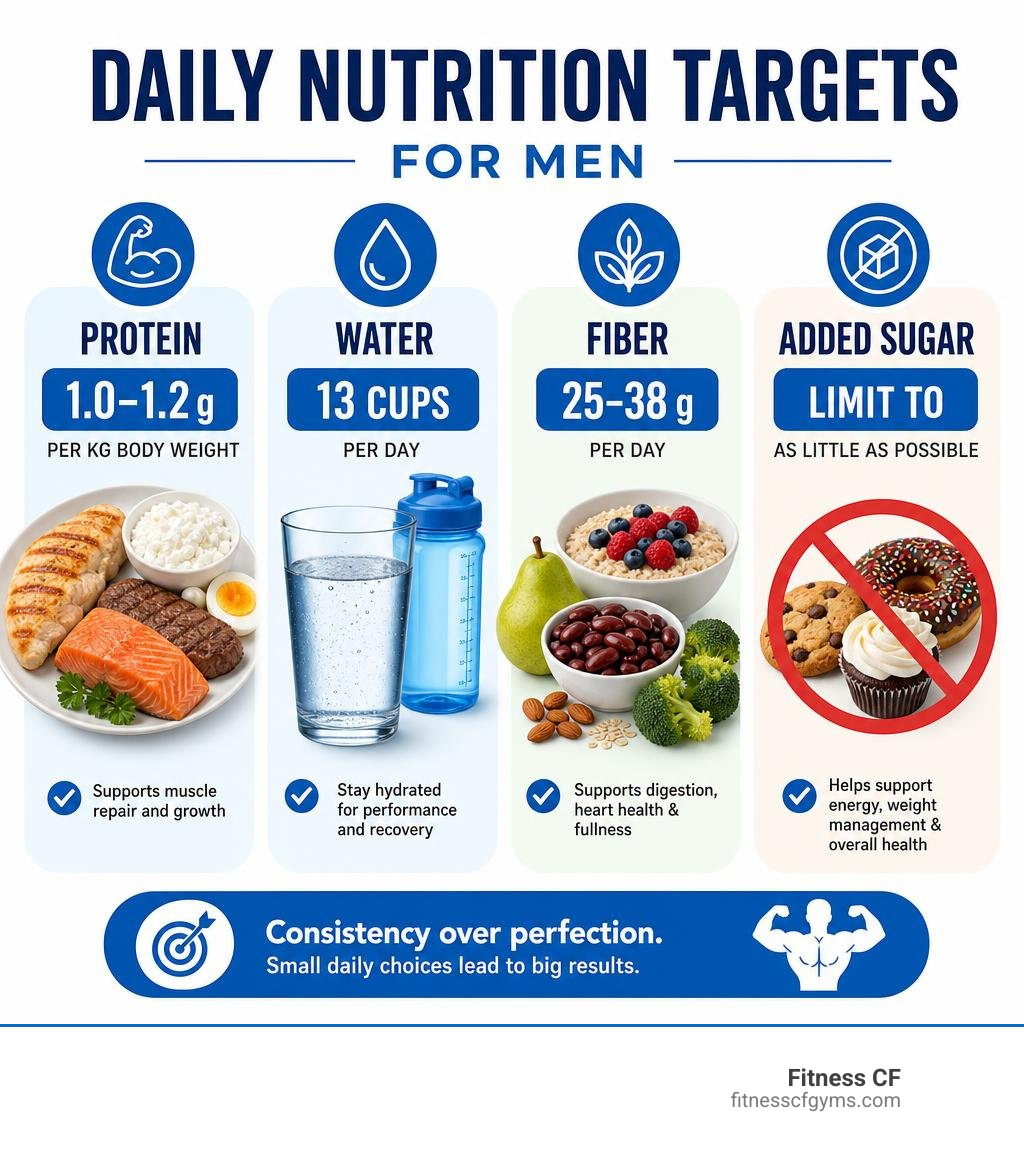
- Eat 0.7-1 gram of protein per pound of bodyweight daily to support muscle and hormone health
- Sleep 7-9 hours per night — research shows even one week of short sleep can drop testosterone by 10-15%
- Manage stress actively — high cortisol directly undermines muscle growth and fat loss
- Stay hydrated — men should aim for at least 13 cups of water per day
- Get annual health screenings — including prostate cancer screening starting at age 50 (or earlier for higher-risk men)
These aren’t complicated. But most men still aren’t doing them consistently.
Men die at higher rates than women from the top 10 causes of death — including heart disease, diabetes, and stroke. Only about 12% of American adults are considered metabolically healthy. And most men don’t take action until something goes wrong.
The good news? Most of these risks are preventable through simple, repeatable lifestyle habits. This guide breaks it all down — from beginner workouts to post-40 recovery strategies — in plain language you can actually use.
I’m Pleasant Lewis, owner and operator of Fitness CF with over 40 years of hands-on experience in the fitness industry, and I’ve built this guide around the same fitness tips for men I’ve seen work for real people over decades of coaching. Let’s get into what actually works — starting with where you are right now.
Essential Fitness Tips for Men Across All Experience Levels
The best fitness plan is not the flashiest one. It is the one you can repeat, recover from, and gradually improve.
For most men, the foundation should include:
- Strength training 2-4 days per week
- Cardio or brisk movement most days of the week
- Mobility work to keep joints moving well
- Progressive overload, meaning you slowly increase reps, sets, weight, or difficulty over time
- Enough recovery to actually adapt
Strength training builds muscle, protects bone density, supports metabolism, and helps with long-term independence. Cardio strengthens the heart, improves aerobic capacity, supports blood pressure, and helps reduce disease risk. The magic is not choosing one or the other. It is combining both.
A simple weekly structure might look like this:
- Monday: Full-body strength
- Tuesday: 30-minute walk or Zone 2 cardio
- Wednesday: Full-body strength
- Thursday: Mobility or yoga
- Friday: Strength plus short cardio
- Saturday: Longer walk, bike ride, or active hobby
- Sunday: Rest or light stretching
If you are new, start smaller. If you are advanced, increase volume carefully. The goal is progress, not proving you can destroy your legs so badly that stairs become a personal enemy.
Beginner Fitness Tips for Men: Building the Foundation
If you are just starting, do not overcomplicate it. Beginners often make fast progress with basic movements because the body is learning new skills.
Start with 3 full-body workouts per week. Keep each session around 30-45 minutes.
A beginner workout can include:
- Bodyweight squats or goblet squats
- Push-ups or incline push-ups
- Dumbbell rows
- Hip hinges or Romanian deadlifts with light weight
- Planks
- Farmer carries
- Light cardio finish, such as 10 minutes on a bike or treadmill
Focus on form before adding heavy weight. Poor form plus heavy weight is not toughness. It is just a creative way to meet your physical therapist.
If you are not sure where to start, our guide to what strength training is and why it matters breaks down the basics in simple terms. You can also review this helpful beginner-focused resource on building strength and confidence: Men’s Fitness Plan for Beginners.
Beginner priorities:
- Train consistently before training intensely
- Learn the movement patterns: squat, hinge, push, pull, carry, rotate
- Leave 1-3 reps “in the tank” on most sets
- Track workouts so you know what to improve next time
- Celebrate non-scale wins like better sleep, more energy, and improved stamina
Intermediate and Advanced Routines: Progressive Overload
Once you have trained consistently for several months, your body needs a stronger signal to keep adapting. That is where progressive overload matters.
You can progress by:
- Adding weight
- Adding reps
- Adding sets
- Improving range of motion
- Slowing tempo
- Reducing rest time slightly
- Improving technique with the same load
Intermediate men often do well with an upper/lower split:
- Day 1: Upper body
- Day 2: Lower body
- Day 3: Rest or cardio
- Day 4: Upper body
- Day 5: Lower body
- Day 6: Cardio, mobility, or active recovery
- Day 7: Rest
Advanced lifters may use push-pull-legs:
- Push: Chest, shoulders, triceps
- Pull: Back, biceps, rear delts
- Legs: Quads, hamstrings, glutes, calves
Advanced does not mean reckless. It means you can train hard while managing recovery, technique, sleep, nutrition, and joint health. If you want structured options, explore our workout plans for ideas you can adapt to your level.
Nutrition and Supplementation Strategies for Peak Performance
Training tells your body to change. Nutrition gives it the materials.
If your goal is building muscle, you need enough calories and protein. If your goal is losing fat, you need a sustainable calorie deficit. If your goal is doing both, you need patience, strength training, adequate protein, and consistency.

Start with the basics:
- Build meals around lean protein
- Eat fruits and vegetables daily
- Choose mostly whole grains and minimally processed carbs
- Include healthy fats from foods like olive oil, avocado, nuts, seeds, eggs, and fatty fish
- Limit added sugar to about 36 grams per day, based on American Heart Association guidance for men
- Reduce ultra-processed foods without becoming obsessive
For body recomposition, see our guide on how to lose fat and gain muscle.
Macronutrients and Testosterone Support
Protein is the big one for muscle. Many men do well with 0.7-1 gram of protein per pound of bodyweight daily, or per pound of target bodyweight if significant fat loss is the goal. Another practical target is 20-40 grams per meal, with many men landing around 25-35 grams.
Good protein sources include:
- Chicken, turkey, lean beef, and fish
- Eggs and Greek yogurt
- Cottage cheese
- Beans, lentils, tofu, and tempeh
- Protein powder when whole food is not convenient
Carbs are not the enemy. They fuel training, support recovery, and help you perform. Choose potatoes, oats, rice, fruit, beans, and whole grains most of the time.
Fats matter too. Extremely low-fat dieting can make it harder to support normal hormone production. Healthy fats, along with enough calories, sleep, and resistance training, help support testosterone levels.
Testosterone naturally tends to decline with age, often starting somewhere between the 30s and 40s. Belly fat, poor sleep, inactivity, excessive alcohol, unmanaged diabetes, and sleep apnea can make the problem worse. The good news is that better habits can help support healthier levels.
For more muscle-building nutrition guidance, read our tips for gaining muscle.
Hydration, Fiber, and Smart Supplementation
Hydration is one of the least glamorous performance tools, which is probably why it works. Men should aim for at least 13 cups of water per day, adjusting for heat, sweat, medications, age, and activity.
Fiber is another big one. Men should aim for 25-38 grams per day, but only about 5% of men get enough fiber daily. Fiber supports digestion, heart health, blood pressure regulation, blood sugar control, and fullness.
Easy fiber wins:
- Add berries to breakfast
- Eat beans or lentils several times per week
- Choose oats or whole grains
- Add vegetables to lunch and dinner
- Snack on fruit, nuts, or seeds
Supplements can help, but they do not replace food, sleep, or training. Helpful options for some men include:
- Protein powder: Convenient when you struggle to hit protein targets
- Creatine monohydrate: Well-studied for strength and power support
- Vitamin D: Useful if levels are low, based on bloodwork
- Omega-3s: Helpful if you rarely eat fatty fish
- Magnesium or zinc: Important minerals, especially if intake is low
Be careful with “testosterone booster” claims. If symptoms of low testosterone are present, talk with a healthcare provider and get proper lab work. For a broader 2026 wellness perspective, see this men’s wellness guide.
How to Adapt Your Fitness Routine After Age 40 and 50
After 40 and 50, fitness is not about doing less. It is about training smarter.
Muscle mass and bone density tend to decline with age, especially with inactivity. Recovery can take longer. Joints may need more warm-up time. But men can still build strength, muscle, endurance, and mobility well into later decades.
| Age range | Main focus | Training approach | Recovery priority |
|---|---|---|---|
| 20s | Build skill, strength, and consistency | Learn compound lifts, build habits | Do not ignore sleep |
| 30s | Maintain muscle while managing work and family stress | Efficient strength plus cardio | Manage stress and nutrition |
| 40s | Preserve muscle, joints, and metabolic health | Strength 3-4 days, mobility, Zone 2 cardio | More warm-up and planned recovery |
| 50s and beyond | Strength, balance, bone density, heart health | Joint-friendly resistance training and daily movement | Sleep, hydration, flexibility, medical check-ins |
The biggest mistake is quitting because you cannot train like you did at 25. You do not need your 25-year-old routine. You need your current best routine.
Joint-Friendly Training and Bone Density
Resistance training helps maintain muscle and bone strength. That matters for everyday life: lifting groceries, climbing stairs, playing with kids or grandkids, and staying independent.
Joint-friendly swaps can include:
- Goblet squats instead of heavy back squats
- Trap bar deadlifts instead of straight bar deadlifts
- Dumbbell presses instead of barbell presses
- Step-ups instead of high-impact jumping
- Cable rows instead of unsupported bent-over rows
- Cycling, incline walking, or swimming-style low-impact cardio instead of constant pounding
Warm up with 5-10 minutes of light cardio, then do mobility for the hips, shoulders, ankles, and thoracic spine. After training, stretch the muscles that tend to get tight, especially hamstrings, hip flexors, chest, and calves.
For practical muscle-building guidance, visit How to Build Muscle Mass Simply. For age-specific health guidance, this article on how men can get fit after 50 offers useful reminders about hydration, strength, stretching, and daily movement.
Metabolic Health and Hormonal Shifts
Metabolic health includes blood sugar, blood pressure, waist size, cholesterol, and other markers. Since only about 12% of American adults are considered metabolically healthy, this deserves attention.
Visceral fat, the fat stored around organs, is linked to inflammation, insulin resistance, and hormone disruption. For men, belly fat can also be associated with lower testosterone.
Helpful habits include:
- Strength train consistently
- Walk after meals when possible
- Eat protein and fiber at each meal
- Limit added sugars and refined carbs
- Keep alcohol moderate
- Sleep 7-9 hours
- Get annual bloodwork and blood pressure checks
For a practical routine-first perspective, read Essential Men’s Fitness Advice.
The Pillars of Recovery: Sleep, Stress Management, and Longevity
Most men understand hard work. Fewer men respect recovery.
But recovery is where the body adapts. Muscle grows between workouts. Hormones regulate during sleep. The nervous system calms down when stress is managed. Ignore recovery long enough and performance drops, cravings increase, joints ache, and motivation disappears.
A good recovery plan includes:
- 7-9 hours of sleep
- At least 1-2 lower-intensity days per week
- Mobility or stretching
- Protein and hydration
- Stress management
- Deload weeks when training volume has been high
Sleep Optimization as a Performance Tool
Sleep is not laziness. It is biological maintenance.
Poor sleep can affect testosterone, appetite control, insulin sensitivity, mood, focus, and workout performance. Research cited in men’s wellness discussions has found that restricting sleep to around 5 hours per night for one week may reduce testosterone by 10-15%.
Better sleep habits:
- Keep a consistent bedtime and wake time
- Get morning light exposure
- Keep the bedroom cool, dark, and quiet
- Avoid heavy meals and alcohol close to bedtime
- Stop scrolling before bed
- Use caffeine earlier in the day
- Talk with a healthcare provider if you snore heavily or wake up tired, since sleep apnea can affect energy, hormones, and heart health
If your workouts are getting worse, cravings are rising, and your patience is thinner than a cheap paper towel, check your sleep before blaming your program.
Stress Reduction and Disease Prevention
Stress is not just “in your head.” Chronic stress can raise cortisol, worsen sleep, increase cravings, reduce training quality, and affect blood pressure.
Simple stress tools:
- 5 minutes of slow breathing
- Daily walks
- Journaling
- Stretching or yoga
- Strength training
- Time outdoors
- Social connection
- Cutting back on late-night doomscrolling
Men also need preventive care. Heart disease remains a major risk for men. Type 2 diabetes is closely tied to inactivity, poor nutrition, excess body fat, and metabolic dysfunction. Prostate cancer is the second most common cancer in men in the United States.
General prostate screening guidance often starts at age 50 for average-risk men, earlier for higher-risk men. Men with higher risk, including African-American men or men with a close family history, should discuss screening around age 45 or even age 40 when family history is strong. Always make screening decisions with your healthcare provider.
Creating a Sustainable Routine and Tracking Long-Term Progress
The best routine is the one that survives real life.
Vacations happen. Work gets busy. Kids get sick. Sleep gets interrupted. A sustainable fitness plan has a “minimum effective dose” version you can still do during chaotic weeks.
Your fallback routine might be:
- 2 strength sessions per week
- 20-30 minutes of walking most days
- Protein at each meal
- 7 hours of sleep whenever possible
- One mobility session or stretching before bed
That is not failure. That is maintenance. Maintenance is a win.
Goal Setting and Tracking Tools
Track enough to stay honest, but not so much that fitness becomes a second full-time job.
Useful things to track:
- Workouts completed
- Exercises, weights, reps, and sets
- Average daily steps
- Waist measurement
- Body weight trend, not daily panic weight
- Sleep duration and quality
- Resting heart rate
- Energy and mood
- Progress photos every 4-6 weeks
Wearables can help with heart rate, steps, sleep, and heart rate variability. HRV can give clues about recovery, but do not let one bad score ruin your day. Use data as feedback, not a judge in a tiny wrist computer.
Set goals like:
- “Strength train 3 times per week for 8 weeks”
- “Walk 8,000 steps per day on average”
- “Add 10 pounds to my deadlift in 12 weeks”
- “Eat 30 grams of protein at breakfast”
- “Reduce waist measurement by 2 inches over 4 months”
Specific beats vague. “Get in shape” is a wish. “Train Monday, Wednesday, and Friday at 6 p.m.” is a plan.
Sustainable Fitness Tips for Men with Busy Lifestyles
Busy men need simple systems.
Try these:
- Schedule workouts like appointments
- Keep gym clothes ready
- Use 30-45 minute sessions
- Meal prep proteins and vegetables
- Walk during phone calls
- Take stairs when available
- Use short workouts instead of skipping entirely
- Train before the day gets chaotic if possible
- Choose exercises you actually like
- Keep one anchor habit during stressful weeks, such as daily steps
For many men, group training, spin, yoga, and personal training can also make consistency easier because structure removes decision fatigue. When you do not have to invent a workout every day, you are more likely to show up.
Frequently Asked Questions about Men’s Fitness
How often should men strength train?
Most men should strength train 2-4 times per week.
Beginners often do best with 3 full-body workouts weekly. Intermediate lifters may prefer 4 days using an upper/lower split. Advanced lifters may train 5-6 days, but only if recovery, sleep, nutrition, and joint health are strong.
Muscles need recovery to grow. More training is not automatically better. Better training is better.
What are the best exercises for preventing heart disease?
The best heart-supportive exercises are the ones that improve cardiovascular fitness and can be repeated consistently.
Good options include:
- Brisk walking
- Cycling
- Swimming-style low-impact cardio
- Rowing
- Hiking
- Jogging, if joints tolerate it
- Spin classes
- Zone 2 cardio
- Intervals, once a base is built
Zone 2 cardio means a moderate pace where you can talk in short sentences but not sing. It helps build aerobic capacity, mitochondrial efficiency, and endurance. Aim for a total of at least 150 minutes of moderate activity per week, combined with strength training.
How much protein do men need daily?
A practical target for active men is 0.7-1 gram of protein per pound of bodyweight per day. If you are overweight and working on fat loss, use target bodyweight instead of current bodyweight.
For many men, that means 25-40 grams of protein per meal.
Examples:
- 3 eggs plus Greek yogurt
- Chicken breast with rice and vegetables
- Salmon with potatoes and salad
- Lean beef bowl with beans and vegetables
- Protein smoothie with fruit and milk
- Tofu stir-fry with rice
Protein supports muscle repair, muscle protein synthesis, satiety, and healthy aging. After age 40 and 50, it becomes even more important because muscle preservation is a major longevity goal.
Conclusion
The best fitness tips for men are not secrets. They are repeatable basics done well:
- Lift weights
- Move daily
- Eat enough protein and fiber
- Drink water
- Sleep like it matters
- Manage stress
- Track progress
- Get preventive checkups
- Adjust your plan as your body and life change
At Fitness CF, we believe fitness should support real life: strength, energy, confidence, heart health, longevity, and the ability to keep doing the things you love.
If you are ready to build a routine that feels sustainable, start small and stay consistent. And if you want support, structure, and a little extra motivation, we would love to help you take the next step.
Join us for a class and experience how much easier consistency feels with a plan: Join a Group Fitness Class