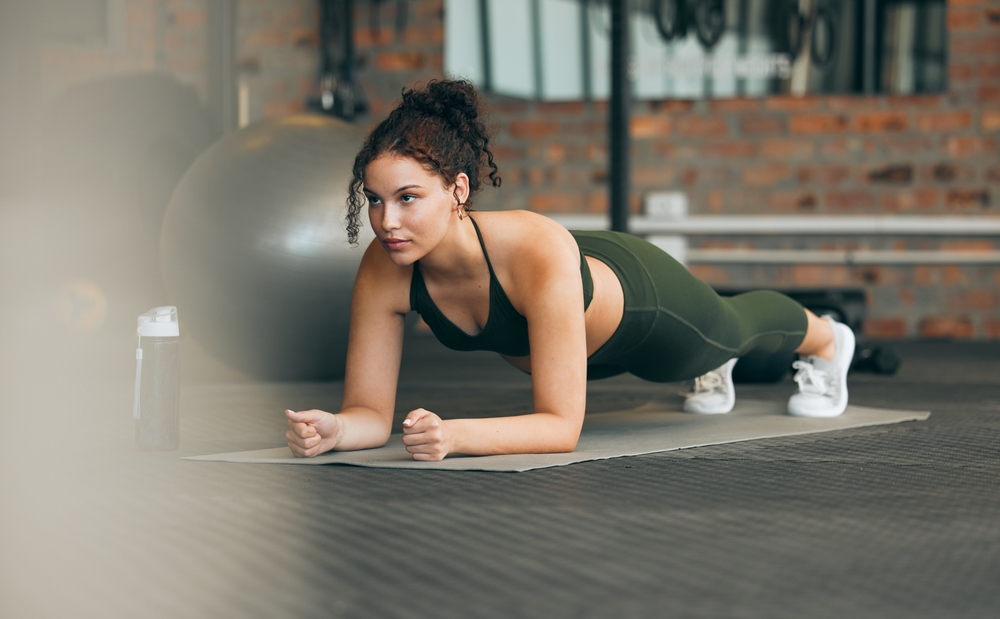
Step-by-Step Execution: How to Do the Plank to Down Dog Transition
Executing the plank to down dog flow correctly requires treating both positions as distinct postures rather than rushing through the transition. The foundation of this exercise, known traditionally in yoga as Adho Mukha Svanasana Phalakasana Vinyasa, begins with your stance. Setting up the exact distance between your hands and feet in your initial high plank establishes the distance required for Downward Dog, meaning you shouldn’t have to shuffle your feet or shift your hands back and forth as you move.
Follow this step-by-step breakdown to perform the movement safely and effectively:
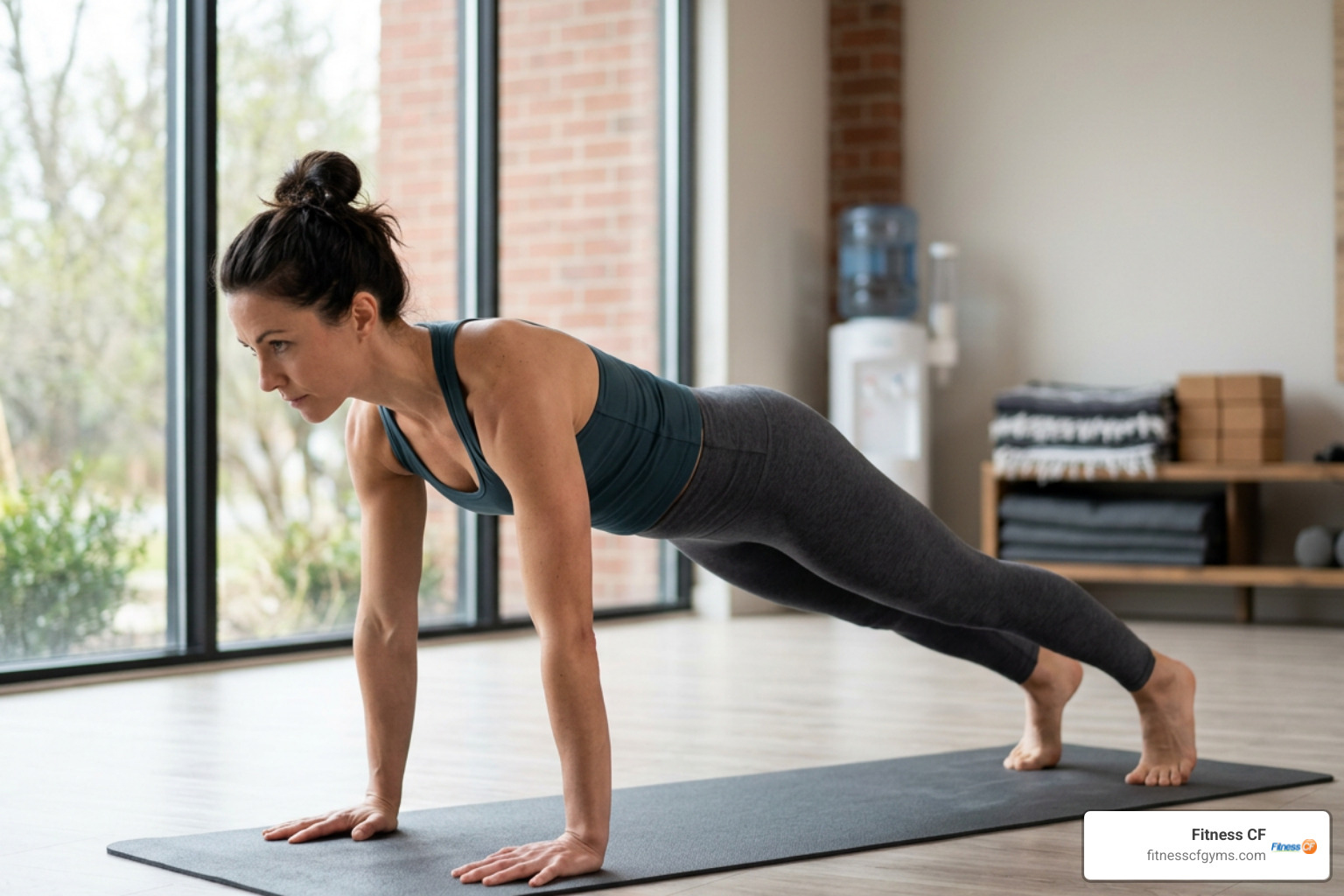
- Establish the High Plank Setup: Start on all fours with your wrists stacked directly underneath your shoulders and your knees under your hips. Tuck your toes, engage your lower abdomen, and step both feet back until your body forms a straight line from your head down to your heels. Spread your fingers wide like stars, pressing firmly through your lower knuckles (the space just below your fingers) and fingertips to distribute your body weight across your hands.
- Align Your Neck and Spine: Keep your chin gently tucked and gaze toward the floor about a foot in front of your hands to maintain a neutral spine. Avoid sagging your hips or letting your upper back round. Protract your shoulder blades by pressing the floor away, keeping space between your shoulders and ears.
- Initiate the Dynamic Transition: Deeply inhale as you hold high plank, bracing your core continuous throughout. As you exhale, pull your navel toward your spine, initiate the movement from your hips, and press the floor away to drive your tailbone up and back into an inverted “V” shape (Downward Dog).
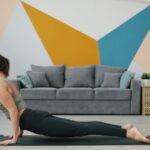
- Find the Downward Dog Position: Keep your arms extended and rotate the inside of your elbows slightly forward to support external shoulder rotation. Lengthen your spine by driving your chest gently back toward your thighs. Focus on keeping your back long and flat—it is entirely normal if your heels do not touch the floor. If your hamstrings feel tight, keep a soft bend in your knees to prevent rounding your lower back.
- Return to Plank with Control: Inhale as you lift your heels, roll your torso forward like a wave, and stack your shoulders directly over your wrists to return to high plank. Stop precisely when your shoulders align over your hands without letting your hips drop below the line of your ankles.
For further details on posture and alignment, review this Plank to Downward Dog Alignment Guide. You can also learn more about fundamental yoga principles by reading our guide on yoga exercise basics.
Targeted Muscles and Key Physical Health Benefits
The plank to down dog flow is a compound, bodyweight movement rated at a beginner difficulty (2 out of 5) on Motra’s exercise scale, yet it delivers high-yield engagement across several major muscle groups.
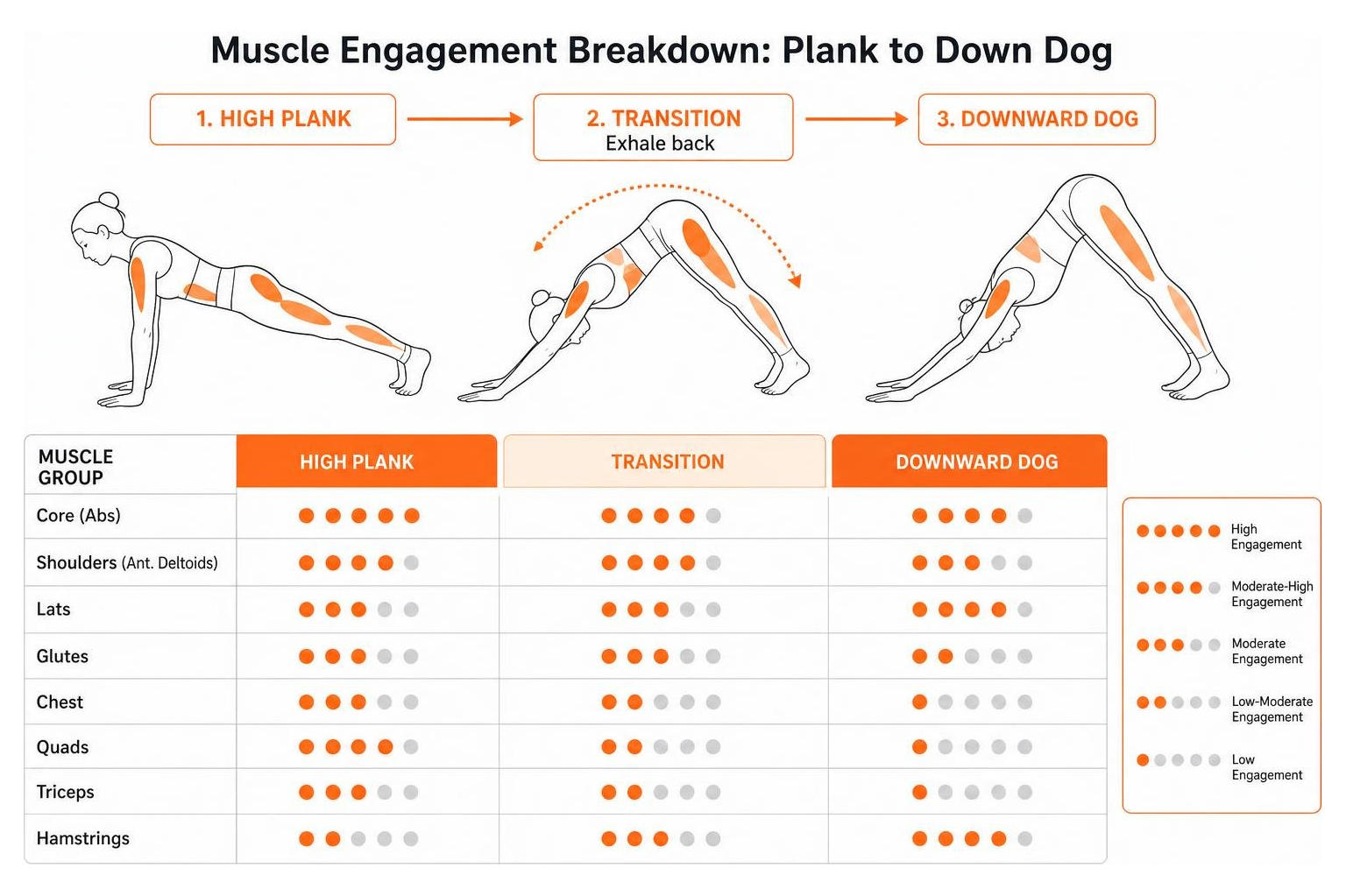
The primary muscle groups recruited during this transition are the core—specifically the rectus abdominis, obliques, and transverse abdominis (rated 9 out of 10 for activation)—and the shoulders, primarily the anterior deltoids (rated 8 out of 10). Secondary activation occurs in the lats (6/10), glutes (5/10), chest (5/10), quads (4/10), triceps (4/10), and hamstrings (3/10).
Practicing this flow yields substantial physical health benefits:
- Reverses Forward Slouching: Modern desk routines often lead to tight chest muscles, weak upper backs, and forward head posture. Moving into Downward Dog encourages thoracic extension and opens up tight shoulders, helping neutralize rounded upper backs. Check out our strategies on how to stretch away desk job shoulder pain for more targeted relief.
- Builds Functional Core Stability: Transitioning against gravity forces your deep core and pelvic floor muscles to stay engaged, stabilizing your hips and protecting your lower spine without the necessity of spinal flexion like traditional crunches.
- Enhances Posterior Chain Flexibility: Pushing your hips up and back provides an active stretch through your calves, hamstrings, and lower back, improving overall ankle dorsiflexion and hip mobility.
- Supports Joint & Nervous System Health: Inverting your heart above your head during Downward Dog increases oxygenated blood flow to the brain, which can help calm the nervous system. Furthermore, pressing firmly through the lower knuckles builds resilience in the wrist joints over time.
To see how bodyweight movements fit into an overall workout split, explore our full body exercise guide.
Common Mistakes, Safety Precautions, and Modifications
Despite its simple structure, performing the plank to down dog without proper alignment can cause discomfort or diminish its training effectiveness. Paying attention to mechanical cues helps ensure you get the most out of every repetition.
Safety Precautions and Contraindications
While this exercise is low-impact, certain pre-existing conditions warrant caution or exercise modification:
- Wrist or Shoulder Injuries: Acute wrist sprains, rotator cuff tears, or severe shoulder impingement can be aggravated by bearing full bodyweight.
- Cardiac Precautions: Because Downward Dog is a mild inversion, individuals with acute high blood pressure, vertigo, or severe migraines should take caution. Additionally, cardiac patients—specifically those with an Implantable Cardioverter Defibrillator (ICD)—are advised to avoid this specific movement unless cleared by a medical provider.
- Postpartum Care: New mothers should generally wait 6 to 8 weeks post-delivery (and obtain medical clearance) before performing deep, core-intensive dynamic plank flows.
For a comprehensive technical breakdown of this exercise profile, visit the Detailed Plank to Downward Dog Exercise Profile. For additional core stability routines that protect the lower back, read our guide on stop the slouch posture exercises.
Beginners Variations for Plank to Down Dog
If you are new to bodyweight workouts, dealing with limited flexibility, or building back upper body strength, try these accessible regressions:
- Knee-Down Plank: Perform the plank portion on your knees with a straight line from your head to your knees. Tuck your toes, lift your knees to press back into Downward Dog, and then softly lower your knees back to the mat as you return to plank.
- Bent-Knee Downward Dog: Focus entirely on a straight back by keeping a prominent bend in your knees during Downward Dog. This removes tension from tight hamstrings while allowing your spine to elongate completely.
- Yoga Block Support: Place two flat yoga blocks underneath your palms. Raising your hands slightly higher than your feet reduces acute wrist extension angles and relieves tightness through the back of your legs.
- Wall Plank Flow: Place your hands shoulder-width apart against a sturdy wall. Step your feet back into an inclined plank, then push your hips back into an elevated wall-supported stretch to practice the movement pattern with minimal weight on your joints.
Integrating the Flow into Workout Routines

The versatility of the plank to down dog flow allows it to fit smoothly into a variety of workout styles across Central Florida living—whether you are squeezing in a quick living room session in Orlando, moving through a dynamic warm-up in Clermont, or winding down after a busy day in St Cloud.
Here are three primary ways to include this movement in your active routine:
- Dynamic Pre-Workout Warm-Up: Use this flow before lifting weights, running, or playing sports to wake up your core, stabilize your shoulders, and dynamically stretch your calves and hamstrings.
- Active Recovery & Mobility Circuits: Combine it with movements like Cat-Cow, Child’s Pose, or Bird-Dogs during low-impact recovery days to maintain joint range of motion and relieve tightness caused by sitting.
- Strength & Conditioning Core Block: Pair it with bodyweight movements like push-ups, side planks, or bodyweight squats as part of an equipment-free high-intensity bodyweight circuit.
If you are looking for a complete routine that combines strength and flexibility, review our guide on 45-minute yoga for strength and flexibility.
Recommended Reps and Tempo for Plank to Down Dog
To get optimal results from your practice, avoid rushing. Emphasize control over momentum by adhering to these programming guidelines:
- Recommended Tempo (2-1-2): Take 2 seconds to press your hips back into Downward Dog, hold the end stretch for 1 second, take 2 seconds to transition forward into high plank, and hold high plank for 1 second before repeating.
- Breathing Cadence: Always synchronize movement with your breath. Inhale as you shift forward into high plank; exhale completely through your mouth or nose as you push your hips back into Downward Dog.
Frequently Asked Questions About Plank to Down Dog
Is plank to down dog suitable for complete beginners?
Yes, plank to down dog is an accessible beginner-level exercise (rated 2 out of 5 in difficulty). Because it requires zero equipment, beginners can easily learn core engagement and shoulder alignment. If full repetitions feel too challenging initially, dropping your knees during the plank phase or bending your knees in Downward Dog makes the movement manageable while you build strength.
Why do my wrists hurt during this transition?
Wrist discomfort usually happens when bodyweight dumps directly into the heel of the palm rather than being distributed across the entire hand. To protect your wrists, spread your fingers wide like a star, press down firmly through your lower knuckles and fingertips, and maintain a soft bend in your elbows. If discomfort persists, consider using yoga blocks under your hands or performing wall-supported variations.
How often should I practice this exercise?
Because it is a bodyweight movement focused on stability and mobility, you can safely practice plank to down dog daily. Performing 2 to 3 sets every morning or as a desk-break stretch helps maintain spinal flexibility, improves posture, and keeps your core active throughout the week.
Conclusion
Mastering the plank to down dog transition is one of the most effective ways to build functional core strength, protect your joints, and undo the physical toll of sitting. By focusing on proper setup, syncing your breath with your movement, and applying simple modifications when needed, you establish a solid foundation for better overall movement patterns.
Fitness is a journey built on small, consistent habits. Whether you’re working out at home, stretching in your office, or building a sustainable routine, practicing simple compound movements every day supports a healthier, more active life.
If you are ready to take your mobility, flexibility, and functional strength further, come practice with us! Explore our vibrant local community and Join Central Florida Yoga Classes Today.