Why Hydration for Muscle Recovery Is More Important Than You Think
Hydration for muscle recovery is one of the most overlooked factors in any fitness routine — yet it directly affects how fast your muscles repair, how strong you feel in your next workout, and how much soreness you carry through the week.
Here is a quick snapshot of what you need to know:
| Key Point | What the Research Shows |
|---|---|
| Why hydration matters | Water powers protein synthesis, nutrient delivery, and waste removal after exercise |
| How much dehydration hurts | Just a 2% body fluid loss can reduce strength, power, and endurance |
| When to hydrate | Before, during, and after every workout — not just when thirsty |
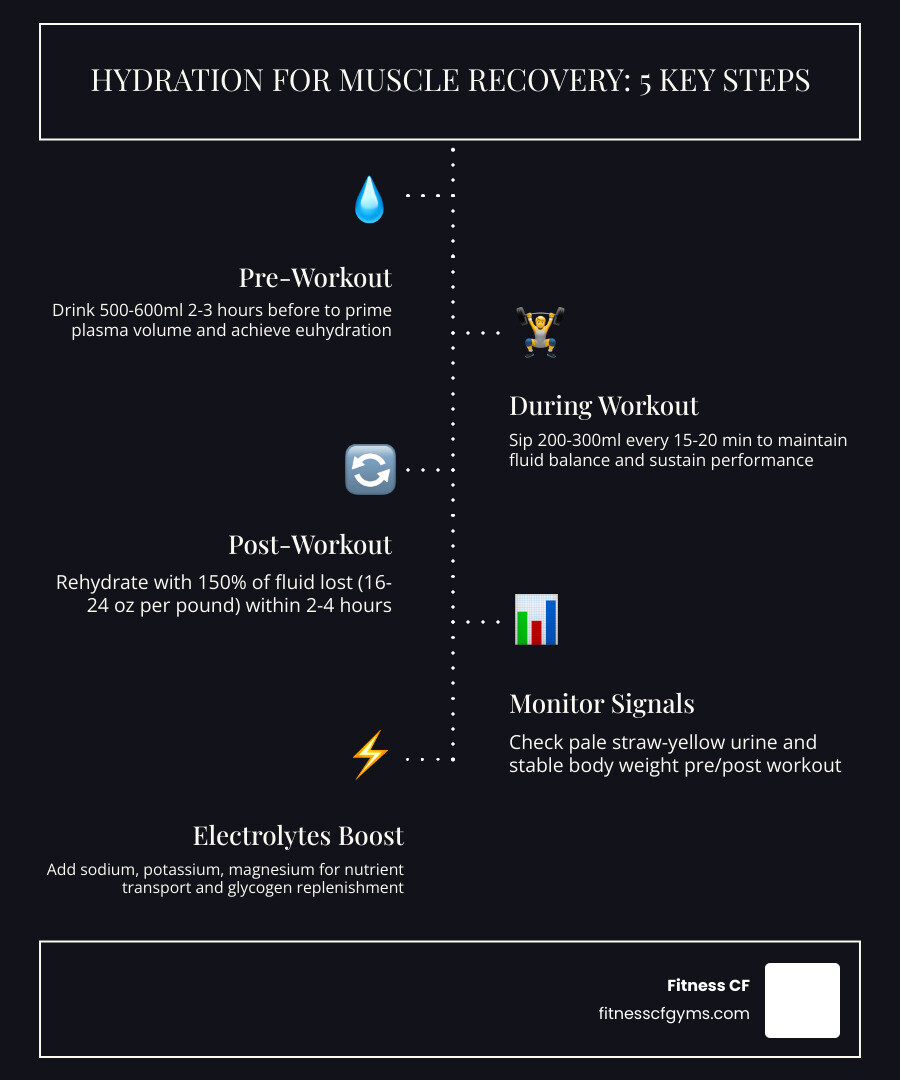
| How much to drink | ~500-600 ml before, 200-300 ml every 15-20 min during, 16-24 oz per pound lost after |
| Best hydration signals | Pale straw-yellow urine and stable body weight pre/post workout |
Your muscles are roughly 75% water. Every time you train, you break down muscle fibers, burn through energy stores, and lose fluid through sweat. Without enough water, your body simply cannot complete the repair process efficiently. The result? More soreness, slower gains, and a higher risk of injury.
And yet, research shows that 66% of NCAA Division I athletes arrive at practice already dehydrated — before they even start sweating.
This guide breaks down the science in plain language and gives you practical steps to make hydration a consistent part of your recovery routine.
I’m Pleasant Lewis, owner and operator of Fitness CF, with over 40 years of experience in the fitness industry. I’ve seen how athletes and everyday gym members underestimate the role of hydration for muscle recovery, and I’m here to help you close that gap. Let’s get into it.
Hydration for muscle recovery vocab explained:
The Biological Role of Hydration for Muscle Recovery
When we talk about hydration for muscle recovery, we aren’t just talking about quenching thirst. We are talking about the fundamental biological environment required for your body to heal. Imagine your body is a construction site; water is the transport system that brings in the bricks and carries away the trash.

Protein Synthesis
Muscle growth and repair happen through a process called muscle protein synthesis. Research highlights that water is essential for the cellular processes that rebuild the microtears caused by a tough workout. If you are dehydrated, this process slows down significantly. Hydrate to Regenerate: Water’s Role in Muscle Recovery explains that without sufficient water, your muscles struggle to “regenerate” at the cellular level.
Nutrient Transport
Your muscles need amino acids and glucose to recover. Water facilitates the transport of these essential nutrients into the muscle cells. When you’re well-hydrated, your blood volume is optimal, allowing for efficient delivery of the “fuel” your muscles need to grow.
Lactic Acid Removal and Glycogen Replenishment
During intense exercise, metabolic waste products like lactic acid build up in your tissues. Proper hydration helps flush these toxins out, reducing that “heavy” feeling in your limbs. Furthermore, water is physically required to store glycogen (your muscle’s primary energy source). For every gram of glycogen stored in your muscles, your body stores about three to four grams of water. This is why staying hydrated is a good thing for muscle recovery.
Cellular Homeostasis and Repair
To maintain a healthy state (homeostasis), your cells need to be “volumized.” When a muscle cell is well-hydrated, it sends an anabolic (building) signal to the body. Conversely, when cells shrink due to dehydration, it triggers a catabolic (breaking down) state. This “cell swelling” is a key driver for sarcoplasmic hypertrophy—the type of muscle growth that makes muscles look full and dense. The Vital Role of Hydration in Muscle Performance and Recovery notes that even mild dehydration can impair coordination and strength, making the repair process much harder on the body.
Metabolic Waste Clearance
Hydration also plays a massive role in heart rate recovery. A study showed that individuals who drank water after a 90-minute treadmill run saw their heart rate return to normal significantly faster than those who didn’t. This is because water maintains blood volume, which reduces the strain on your cardiovascular system. This efficiency is exactly why recovery is just as important as exercise in your fitness journey.
The High Cost of Dehydration on Performance
If you’ve ever had a workout where the weights felt twice as heavy as usual, you might have been dehydrated. The statistics are eye-opening:
- Strength Loss: Hypohydration can cause muscle strength to fall by 5.5%.
- Power Drop: Anaerobic power can drop by 5.8%.
- Endurance Decline: A mere 2% fluid loss can lead to a 10% drop in high-intensity endurance.
When you are dehydrated, your body experiences “cortisol spikes.” Cortisol is a stress hormone that, in high amounts, can inhibit muscle growth and promote fat storage. This is a major reason why rest days are as important as workouts; you need time to rebalance your hormones and fluids.
Neuromuscular Impairment
Dehydration doesn’t just affect the muscles; it affects the nerves that tell them to move. Shrunken, dehydrated cells have overly concentrated ions and enzymes, which slows down nerve signaling and muscle contractions. This leads to a loss of coordination and the dreaded muscle cramps. Staying Hydrated to Build Muscle points out that you pay a much higher “recovery cost” for a session if you start it in a dehydrated state.
Indicators of Proper Hydration for Muscle Recovery
How do you know if you’re hitting the mark?
- Urine Color: Aim for a “pale straw-yellow.” If it looks like apple juice, you’re behind. If it’s clear, you might be overdoing it.
- Body Mass Tracking: Weigh yourself before and after a workout. Any weight lost is almost entirely water.
- Resting Heart Rate: A higher-than-usual morning heart rate can be a sign of lingering dehydration.
Monitoring these signs is a great part of active recovery for athletes.
Timing Your Intake: Pre, During, and Post-Exercise
The “when” is just as important as the “how much.” You can’t just chug a gallon of water after your workout and expect instant recovery. Rehydration takes time—sometimes up to 45 to 60 minutes for even mild cases.
| Phase | Recommended Intake | Goal |
|---|---|---|
| Pre-Workout | 500-600 ml (17-20 oz) | Achieve euhydration (optimal balance) |
| Intra-Workout | 200-300 ml (7-10 oz) every 15-20 min | Maintain blood volume and cooling |
| Post-Workout | 16-24 oz for every pound lost | Replace fluid deficit and start repair |
Pre-Workout Priming
Starting your session “euhydrated” (perfectly balanced) is the goal. We recommend drinking about 500-600 ml of water or a sports drink 2 to 3 hours before you even hit the gym. This gives your body time to absorb the fluid and stabilize plasma volume. This “priming” is one of the best recovery practices after a tough workout because it prevents the damage from being too severe in the first place.
Post-Workout Hydration for Muscle Recovery
After you finish, the goal is to replace 150% of the fluid you lost. Why 150%? Because you will continue to lose fluid through sweat and urine even after you stop exercising. If you lost 1 pound during your session, aim for about 24 ounces of fluid over the next few hours. The science of hydration timing suggests that if your next workout is less than 4 hours away, you need to be even more aggressive with this replacement.
Beyond Water: Electrolytes and Nutrient Delivery
Water is the base, but electrolytes are the spark plugs. Electrolytes like sodium, potassium, and magnesium are minerals that carry an electrical charge. They are essential for nerve signals and muscle contractions.
The Role of Sports Drinks vs. Water
For a standard 45-minute lift, plain water is usually fine. However, if you are training in the Central Florida heat or going for over 60 minutes, a sports drink can be superior.
- Sodium: Helps your body retain the water you drink rather than just peeing it out.
- Carbohydrates: A 6-8% carbohydrate concentration helps replenish muscle glycogen stores faster than water alone.
- The Sodium-Potassium Pump: This biological “pump” moves nutrients into your cells and waste out. It requires magnesium (to activate ATP) and a balance of sodium and potassium to function.
According to sports dietitians, maintaining this balance is the “#1 surprising habit” for maintaining muscle mass.
Natural Electrolyte Sources
You don’t always need a neon-colored drink to get your electrolytes.
- Coconut Water: High in potassium (though lower in sodium).
- Chocolate Milk: A fantastic recovery drink because it provides a 3:1 carb-to-protein ratio along with fluids and electrolytes.
- Bananas: Great for potassium to prevent cramping. Are bananas good for workout recovery? Absolutely—they provide the fruit sugars and minerals your muscles crave.
- Water-Rich Foods: Watermelon, cucumbers, and oranges are roughly 90% water and count toward your daily total.
Healthy Living and Long-Term Fitness Benefits
At Fitness CF, we believe that hydration for muscle recovery is part of a larger healthy lifestyle. Whether you are doing strength training in Orlando or yoga in St. Cloud, your body’s ability to regulate temperature (thermoregulation) depends on your hydration status.
Strength Training and Cardio
Proper hydration allows you to push harder during cardio sessions by keeping your heart rate stable and allows for more “reps in the tank” during strength training. When you’re hydrated, your joints are better lubricated, which reduces the risk of injury. This is a key reason why ice baths are good for muscle recovery; they work alongside hydration to reduce inflammation and soreness.
Consistency in Hydration Habits
Success comes from what you do daily, not occasionally.
- Daily Goals: Aim for half your body weight in ounces as a baseline.
- Smart Bottles: Use bottles with time markers to remind you to sip throughout the day.
- Caffeine: Good news! For habitual coffee drinkers, moderate caffeine doesn’t actually dehydrate you. It can even be a performance booster, as long as you’re still drinking enough water.
Frequently Asked Questions about Hydration
Is thirst the best indicator of dehydration?
Actually, no. Thirst is a “lagging indicator.” By the time you feel thirsty, you may have already lost 1-2% of your body mass in water, which we already know can drop your performance by 10%. You should drink on a schedule, especially during intense training. The Role of Hydration in Performance and Recovery emphasizes that proactive drinking is key to avoiding the mid-workout “slump.”
Can you drink too much water during recovery?
Yes, this is called hyponatremia. It happens when you drink so much plain water that you dilute the sodium in your blood. This is rare in a typical gym setting but can happen in long endurance events. The solution is to always pair high water intake with electrolytes (like a pinch of sea salt or a sports drink).
Why do athletes fail to hydrate properly?
Even when they know it’s important (97% of collegiate throwers knew dehydration hurt performance), many fail to do it. Common barriers include:
- Accessibility: Not having a bottle nearby during training.
- Misconceptions: Relying only on thirst.
- Knowledge-Behavior Gap: Knowing the facts but not having a plan.
Conclusion
Mastering hydration for muscle recovery is one of the simplest and most effective ways to level up your fitness journey. By prioritizing your fluid intake before, during, and after your workouts, you ensure that your body has the tools it needs to repair tissue, flush out waste, and build the strength you’re working so hard for.
Whether you’re crushing a HIIT class or focusing on heavy lifts, your muscles are only as strong as they are hydrated. At Fitness CF, we are committed to helping our Central Florida community live their healthiest lives through expert guidance and a supportive environment.
Ready to take the next step in your fitness journey? Start your fitness journey today with a free trial pass at any of our local locations in Orlando, Clermont, Mount Dora, or St. Cloud. Water you waiting for? Grab your bottle and let’s get to work!