Why a Protein Shake for Muscle Recovery Matters More Than You Think
Quick answer: Does a protein shake help with muscle recovery?
- Yes, but with nuance. Protein shakes support muscle repair by providing amino acids that kickstart muscle protein synthesis after exercise.
- Protein alone may not reduce soreness. Research shows high-protein drinks performed no better than carbohydrate-only drinks for reducing muscle soreness or restoring muscle power after resistance training.
- Timing matters less than total intake. Studies found no significant difference in recovery markers whether whey protein was taken before, after, or both before and after exercise.
- Carbs matter too. Pairing protein with carbohydrates helps replenish glycogen stores, which is especially important after intense or longer training sessions.
- Whole-day nutrition counts most. Spreading quality protein and carbs across all meals on training days may be more effective than relying on one post-workout shake.
Using a protein shake for muscle recovery is one of the most common habits among active people — and for good reason. After a tough workout, your muscles need raw materials to repair and grow stronger. Protein shakes offer a fast, convenient way to deliver those materials. But the science tells a more complicated story than the marketing does.
Many people assume that downing a protein shake right after training is the key to bouncing back faster and feeling less sore. Some research, however, challenges that assumption directly. Studies have found that high-protein drinks — containing around 32 grams of whey or milk-based protein — showed no measurable advantage over carbohydrate-only drinks when it came to muscle soreness or recovery of muscle power after resistance training.
That does not mean protein shakes are useless. It means the full picture is more nuanced — and worth understanding.
Embracing a healthy lifestyle means understanding how nutrition, strength training, and cardiovascular exercise work together. Whether you are lifting weights to build bone density and functional strength, or engaging in cardio to boost heart health and endurance, proper recovery is the foundation of overall fitness. Let’s dig into how you can optimize your recovery to support a healthier, more active life.
The Science Behind a Protein Shake for Muscle Recovery
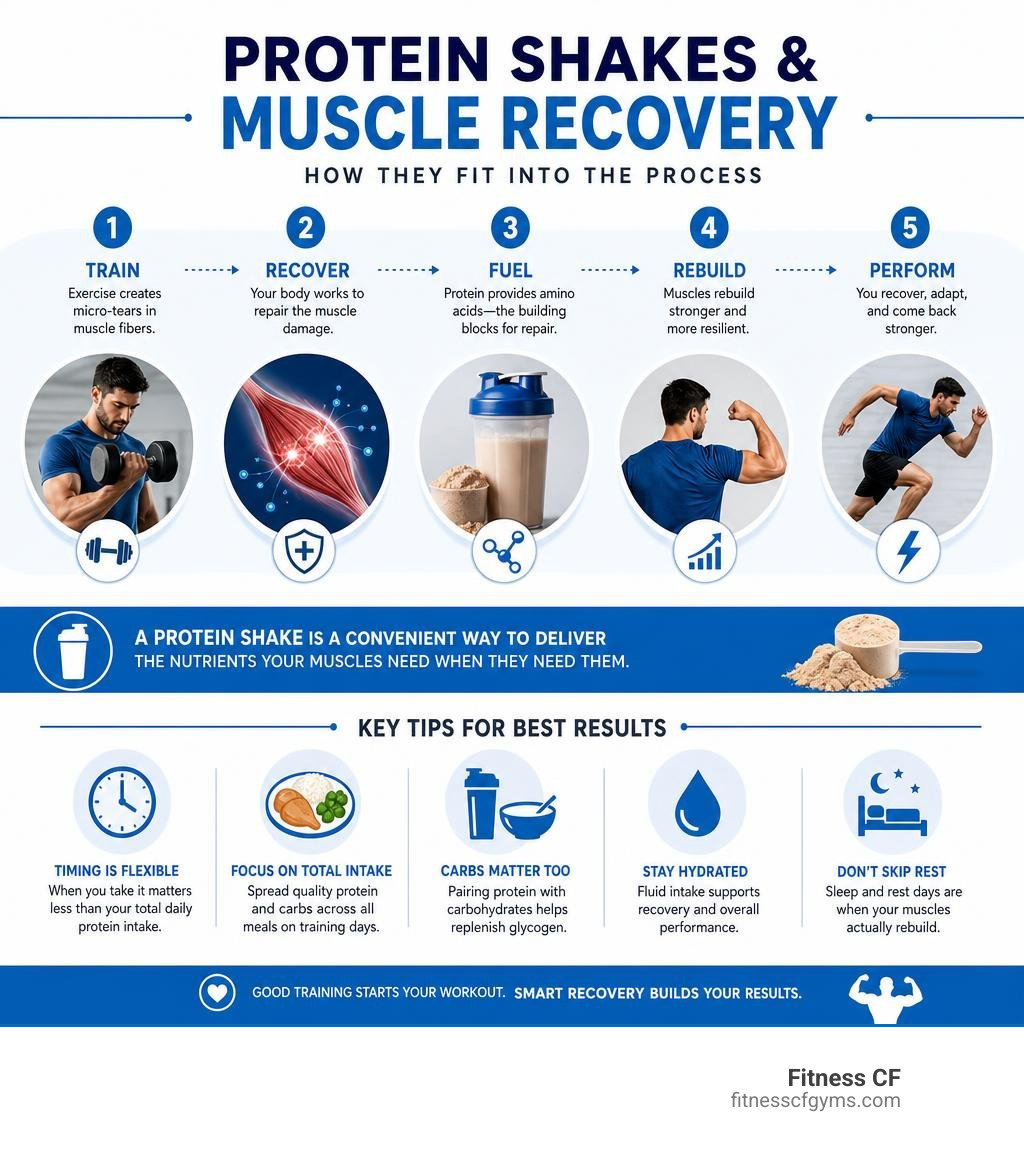
To understand how a protein shake for muscle recovery works, we first have to look at what happens inside your muscles when you train. Whether you are lifting weights to build strength, running miles outdoors for cardiovascular health, or participating in a high-intensity fitness class, exercise causes structural changes at the microscopic level.
When we challenge our bodies with resistance training, we create tiny, microscopic tears in our muscle fibers. This structural damage triggers an inflammatory response. While “inflammation” and “damage” sound like bad things, they are actually the primary signals your body uses to adapt, grow stronger, and build more endurance.
This process of rebuilding is driven by muscle protein synthesis (MPS). MPS is the biological mechanism where your body uses amino acids to repair and rebuild these damaged muscle tissues. On the flip side of this equation is muscle protein breakdown (MPB). During a workout, MPB increases. To recover and adapt, we must ensure that our rate of muscle protein synthesis exceeds the rate of muscle protein breakdown. This is where dietary protein comes in.
However, intense exercise — especially high-force eccentric exercise (like the lowering phase of a bicep curl or downhill running) — causes significant muscle damage. This damage leads to an increase in specific blood markers, such as creatine kinase (an enzyme that leaks out of damaged muscle fibers into the bloodstream) and aspartate transaminase.
While drinking a protein shake provides the essential amino acids needed to stimulate MPS, research suggests that a single post-workout shake might not be a magical cure-all for this deep structural damage. True physiological repair is a multi-day process. For a deeper dive into managing this process, check out our comprehensive workout recovery tips and explore other good things for muscle recovery to keep your body performing at its peak.
Does a Protein Shake for Muscle Recovery Reduce Soreness?
We have all experienced that deep, deep ache 24 to 48 hours after a brutal leg day. This is known as Delayed Onset Muscle Soreness (DOMS). For years, the fitness industry promised that drinking a protein shake for muscle recovery immediately after training would banish DOMS and leave you feeling fresh the next day.
However, modern scientific research paints a different picture.
In controlled studies, researchers evaluated the recovery rates of resistance-trained individuals. One group consumed a high-protein drink (containing 32 grams of whey or milk protein) after training, while another group consumed a carbohydrate-only drink of equal calories. The results were surprising:
- Both groups reported highly similar levels of muscle soreness.
- Both groups showed similar recovery of muscle power and maximal isometric strength.
- There were no significant group-by-time differences in joint range of motion (ROM) or blood markers like creatine kinase (P > 0.05).
A single dose of a protein supplement, on its own, does not appear to dramatically alter the immediate physical sensation of muscle soreness or speed up the return of muscle power when compared to simply consuming carbohydrates.
That said, high-quality post-workout formulas often combine protein with other natural anti-inflammatory ingredients to help manage this discomfort. For example, some specialized post-workout recovery powder options utilize ingredients like pomegranate extract. Pomegranate extract contains active compounds called ellagitannins, which have been shown in clinical settings to help manage exercise-induced muscle soreness and preserve muscle strength in the days following intense training.
While protein shakes are incredibly efficient at providing the raw materials for long-term muscle growth and repair, they are not a quick-fix painkiller for post-workout soreness.
Timing Your Protein Shake for Muscle Recovery: Before, After, or Both?
For decades, gym folklore dictated that you must consume a protein shake within the “anabolic window” — a hypothetical 30-to-60-minute post-workout window where your muscles are supposedly starving for nutrients. If you missed this window, the legend went, your workout was essentially wasted.
Fortunately, modern sports nutrition has debunked this stressful concept.
Research focusing on the timing of whey protein supplementation around muscle-damaging exercise found that the precise timing of a single dose does not significantly impact recovery markers. Whether participants took the supplement before, after, or both before and after exercise, there were no significant differences in:
- Recovery of maximal isometric strength
- Levels of muscle soreness
- Joint range of motion
- Blood markers of muscle damage
What does this mean for your routine? It means that total daily protein intake is far more important than the exact minute you drink your shake.
If you struggle to eat a whole-food meal before training, a pre-workout shake can ensure you have amino acids circulating in your bloodstream during your workout. If you prefer training on an empty stomach, a post-workout shake is highly beneficial to transition your body from a state of muscle breakdown to muscle repair.
If you are looking for practical ways to structure your meals around your training sessions, read our guide on what to eat after a workout and learn more about the role of nutrition in fitness to optimize your daily eating habits.
Optimizing the Recovery Shake Formula: Protein, Carbs, and Co-Factors
If you want to build the ultimate protein shake for muscle recovery, you need to look beyond protein alone. While protein is the building block of muscle tissue, your body requires other nutrients to facilitate the recovery process, especially after intense or long-duration workouts.
The most important addition to your recovery shake is carbohydrates. During exercise, your body relies heavily on stored carbohydrates, known as glycogen, to fuel muscle contractions. Intense training can severely deplete these glycogen stores, leaving you feeling fatigued and flat.

Pairing protein with carbohydrates in your shake serves two critical purposes:
- Glycogen Replenishment: Carbs spark an insulin spike, which acts as a key to unlock muscle cells, allowing them to rapidly absorb glucose and rebuild glycogen stores.
- Enhanced Protein Delivery: The insulin response also helps drive amino acids into the muscle cells, maximizing muscle protein synthesis.
Additionally, sweating during intense workouts, especially in warm climates, causes you to lose vital water and minerals. To prevent dehydration, cramping, and prolonged fatigue, your recovery shake should also address hydration. To learn how to balance these elements, read our ultimate guide to hydration and muscle recovery.
To make your shake even more effective, consider blending in whole foods. For instance, are you wondering are bananas good for workout recovery? Absolutely! Bananas provide fast-digesting carbohydrates to quickly replenish energy, alongside potassium, an essential electrolyte that aids in muscle function and hydration.
Here is a quick breakdown of the ideal protein-to-carbohydrate ratios based on your training style:
| Exercise Type | Ideal Carb-to-Protein Ratio | Primary Goal | Example Shake Formulation |
|---|---|---|---|
| Heavy Resistance Training | 1:1 or 2:1 | Muscle repair & moderate glycogen reload | 20g Protein + 20g to 40g Carbs |
| High-Endurance/Cardio | 3:1 or 4:1 | Rapid glycogen replenishment & muscle preservation | 20g Protein + 60g to 80g Carbs |
| Short-Duration/Low-Intensity | Protein-dominant (Low Carb) | Muscle protein synthesis support | 20g to 30g Protein + minimal carbs |
The Role of Carbohydrates and Electrolytes
When selecting or mixing a recovery shake, the type of carbohydrates and electrolytes you use matters. Fast-acting, simple carbohydrates are ideal immediately after a workout because they digest rapidly without placing heavy demands on your stomach.
Look for recovery formulas or ingredients that utilize:
- Dextrose: A simple sugar that is chemically identical to glucose, allowing for immediate absorption and rapid insulin response.
- Maltodextrin: A complex carbohydrate that is broken down very quickly in the digestive tract, providing a rapid supply of energy without being overly sweet.
Alongside carbohydrates, key electrolytes must be replenished:
- Potassium: Works inside your cells to regulate fluid balance and support proper muscle contractions.
- Magnesium: Supports muscle relaxation, helps prevent cramping, and plays a vital role in cellular energy production.
If you are looking for an all-in-one powder that perfectly balances these elements, utilizing a high-quality Recovery Protein Powder with Carbs is an excellent way to ensure you are getting a precise, science-backed ratio of proteins, fast-digesting carbohydrates, and essential electrolytes in a single serving.
Additional Recovery Boosters: BCAAs, Glutamine, and Enzymes
To elevate your protein shake for muscle recovery to the next level, many advanced formulas include specific amino acids and digestive aids:
- Branched-Chain Amino Acids (BCAAs): These include leucine, isoleucine, and valine. Leucine is the absolute “on-switch” for muscle protein synthesis. Consuming an optimal 2:1:1 ratio of these BCAAs helps jumpstart repair and can reduce the severity of muscle breakdown.
- L-Glutamine: This amino acid is heavily depleted during intense physical stress. Supplementing with L-glutamine supports gastrointestinal health, maintains gut lining integrity, and assists in replenishing glycogen stores in both your muscles and liver.
- ProHydrolase (Protease Enzyme Blend): Even the highest-quality protein is only as good as your body’s ability to absorb it. ProHydrolase is a clinically studied enzyme blend designed to rapidly break down protein into a highly bioavailable form, maximizing amino acid absorption and minimizing post-shake bloating or digestive discomfort.
- Pomegranate Extract: As mentioned earlier, the ellagitannins in pomegranate extract provide powerful antioxidant support to help manage exercise-induced muscle soreness and protect cells from oxidative stress.
Whey vs. Casein vs. Plant-Based Protein Shakes
With so many different protein sources lining the shelves in 2026, choosing the right powder for your protein shake for muscle recovery can feel overwhelming. The main contenders are whey, casein, and various plant-based proteins. Each has a unique absorption rate and amino acid profile.
To help you decide which is best for your specific body and fitness goals, read our guide on the best post-workout shake and explore our nutrition tips for building muscle and losing fat.
Whey and Casein: The Dairy-Based Powerhouses
Dairy-derived proteins remain the gold standard for muscle protein synthesis because they naturally contain a complete amino acid profile rich in leucine.
- Whey Protein Isolate: This is a highly purified form of whey that has had almost all of its fat, carbohydrates, and lactose removed. It is incredibly fast-digesting, making it the perfect option when you want to deliver amino acids to your muscles as quickly as possible.
- Micellar Casein: Unlike whey, casein is a slow-digesting protein. When exposed to stomach acid, it forms a gel-like substance, resulting in a slow, steady release of amino acids over several hours.
Because of these differing digestion rates, combining fast-digesting whey with slow-release casein is a highly effective strategy. This combination provides an immediate spike in muscle protein synthesis followed by a sustained release of amino acids to prevent muscle breakdown over the long term.
This slow-release property makes casein particularly valuable for nighttime recovery. Consuming a nighttime protein for sleep and repair before bed — often formulated with casein, anti-inflammatory flaxseed, and relaxation-promoting tryptophan — ensures your muscles are fed and repaired throughout the night while supporting deep, restful sleep.
Plant-Based Alternatives for Vegan Recovery
If you avoid dairy due to allergies, lactose intolerance, or lifestyle choices, plant-based protein powders are an incredibly effective alternative.
The key to a successful plant-based protein shake for muscle recovery is ensuring you use a blend of protein sources. Unlike dairy, individual plant proteins (like pea, rice, or hemp) are often low in one or more essential amino acids. However, when combined — such as pea protein and rice protein together — they create a complete amino acid profile that rivals whey.
Plant-based proteins are also highly digestible and naturally allergen-free, making them incredibly gentle on the stomach. If you want a delicious, dairy-free recovery option, try blending up a high-protein vegan recovery shake recipe. Using natural ingredients like peanut butter, bananas, and a high-quality vegan protein blend, you can easily hit 45 grams of protein in a creamy, milkshake-like drink that supports recovery without any dairy.
Whole Foods vs. Protein Shakes for Post-Workout Nutrition
While a protein shake for muscle recovery is incredibly convenient, it should never entirely replace whole, nutrient-dense foods in your diet. Both options have distinct pros and cons, and the best nutrition strategy utilizes both.
Here is how they compare:
- Convenience & Absorption Rate: Protein shakes win handily here. After a workout, you might not feel like cooking or eating a heavy meal. Shakes are portable, require zero cooking, and are absorbed rapidly by your digestive system.
- Micronutrients & Satiety: Whole foods are the clear winner. A meal of grilled chicken, sweet potatoes, and roasted vegetables provides a wide array of vitamins, minerals, fiber, and healthy fats that a protein shake simply cannot replicate. Whole foods also keep you feeling full and satisfied for much longer, which is crucial if your goal is fat loss.
For a sustainable, healthy lifestyle, we recommend using protein shakes as a convenient supplement to bridge the gaps in your busy day, while relying on whole foods for your primary meals. For more strategies on balancing your diet, check out our proven nutrition tips for building muscle and learn how to structure your training with active recovery for athletes.
Frequently Asked Questions about Post-Workout Shakes
How much protein should I consume post-workout?
For optimal muscle protein synthesis, aim for 20 to 40 grams of high-quality protein in your post-workout shake. This amount ensures you hit the “leucine threshold” (typically around 2.5 to 3 grams of leucine), which acts as the chemical trigger to turn on muscle repair and growth. Consuming more than 40 grams in a single sitting won’t necessarily hurt you, but your body will likely oxidize the excess amino acids for energy rather than using them for muscle building.
Are protein shakes beneficial for endurance athletes?
Yes, absolutely! While endurance athletes often focus solely on carbohydrates, long-distance running, cycling, or swimming causes significant muscle damage. Consuming a protein shake for muscle recovery that features a 3:1 or 4:1 carb-to-protein ratio is highly effective for endurance training. The protein repairs muscle damage, while the high carbohydrate content accelerates glycogen replenishment, ensuring you have the energy to perform day after day.
Are there any downsides to relying on protein shakes?
Relying too heavily on protein shakes can lead to digestive issues, such as bloating or gas, especially if you are sensitive to dairy or artificial sweeteners. Overusing supplements can also create nutrient gaps in your diet, as shakes lack the dietary fiber, essential fats, and diverse micronutrients found in whole foods. Always aim for a “whole foods first” approach, using shakes to supplement, not replace, a balanced diet.
Conclusion
At the end of the day, a high-quality protein shake for muscle recovery is a fantastic tool in your fitness arsenal. While it may not be a magical cure for immediate muscle soreness, it provides an incredibly convenient, fast-digesting, and effective way to hit your daily protein targets, stimulate muscle protein synthesis, and replenish depleted energy stores.
True recovery, however, is built on a foundation of a healthy lifestyle: consistent strength training to build lean mass, regular cardiovascular exercise to support heart health, proper hydration, quality sleep, and structured nutrition.
By focusing on these core pillars of fitness, you can take the guesswork out of your wellness journey. Whether you are blending a shake at home after a challenging workout or planning your meals for the week, prioritizing high-quality nutrition will help you fuel your body, crush your goals, and build a stronger, healthier you!