Why Understanding Your Biceps Muscle Matters for Everyday Life
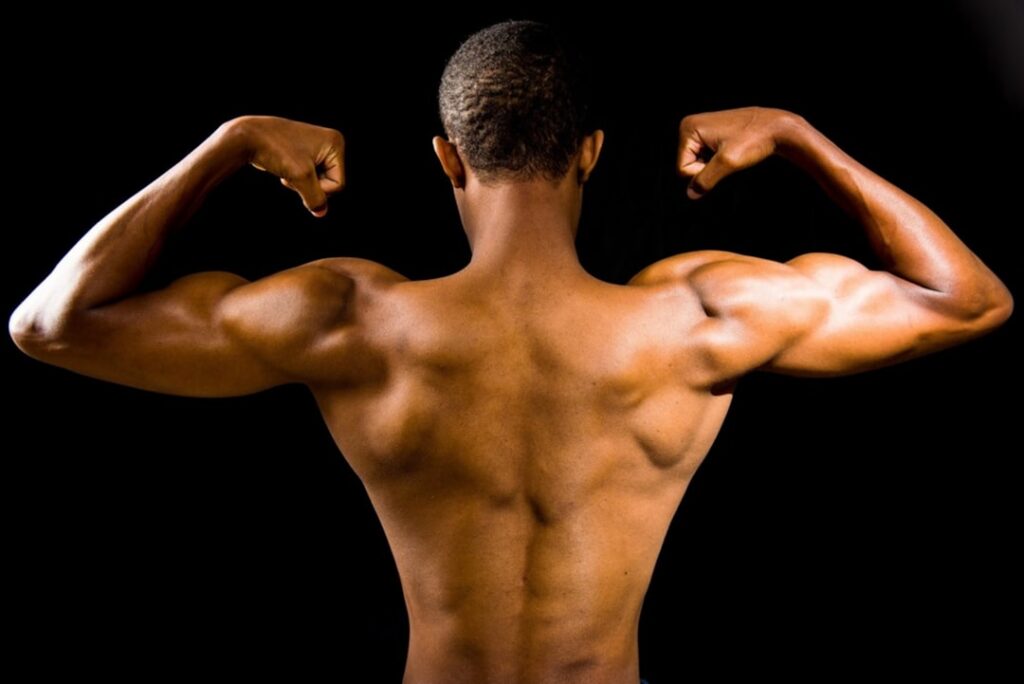
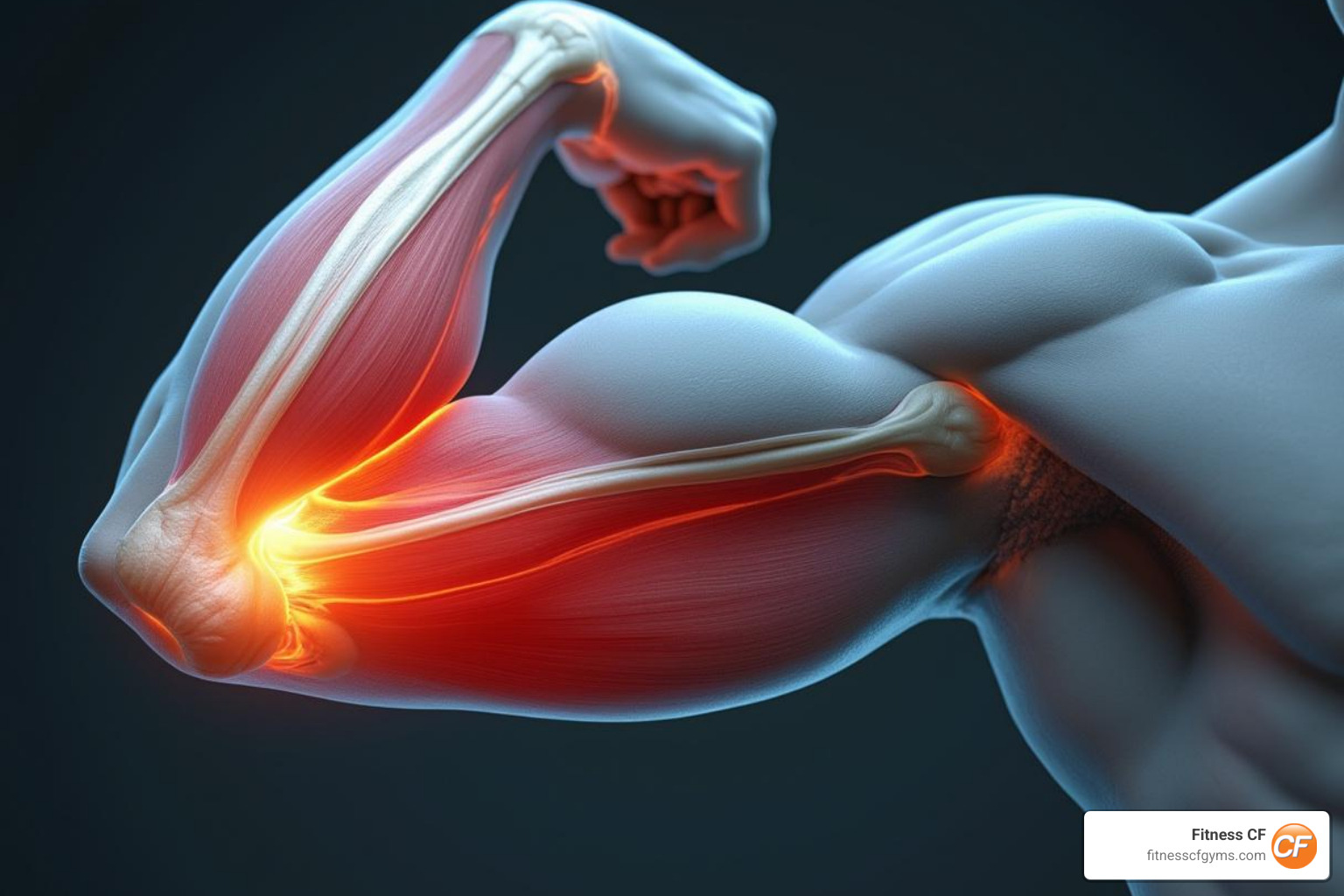
The biceps muscle is far more than just a “show muscle.” This two-headed muscle on the front of your upper arm is crucial for countless daily activities, from carrying groceries to lifting your children. Its primary functions are bending the elbow and rotating the forearm, and it’s unique in that it crosses both the shoulder and elbow joints.
Understanding the biceps’ anatomy and function is key to preventing injury and maintaining long-term strength. It works with other muscles like the brachialis and triceps to create smooth, powerful arm movements that support an active lifestyle. Interestingly, about 30% of adults have some variation in their biceps structure, with 2-5% having three or more muscle heads instead of the typical two.
Whether you’re planning a strength routine or just want to understand your body better, knowing how your biceps works is vital for your health and fitness. I’m Pleasant Lewis, and with 40 years in the fitness industry, I’ve learned that understanding your anatomy is the first step toward building lasting strength and preventing injury.
Anatomy of the Biceps Brachii: A Deep Dive
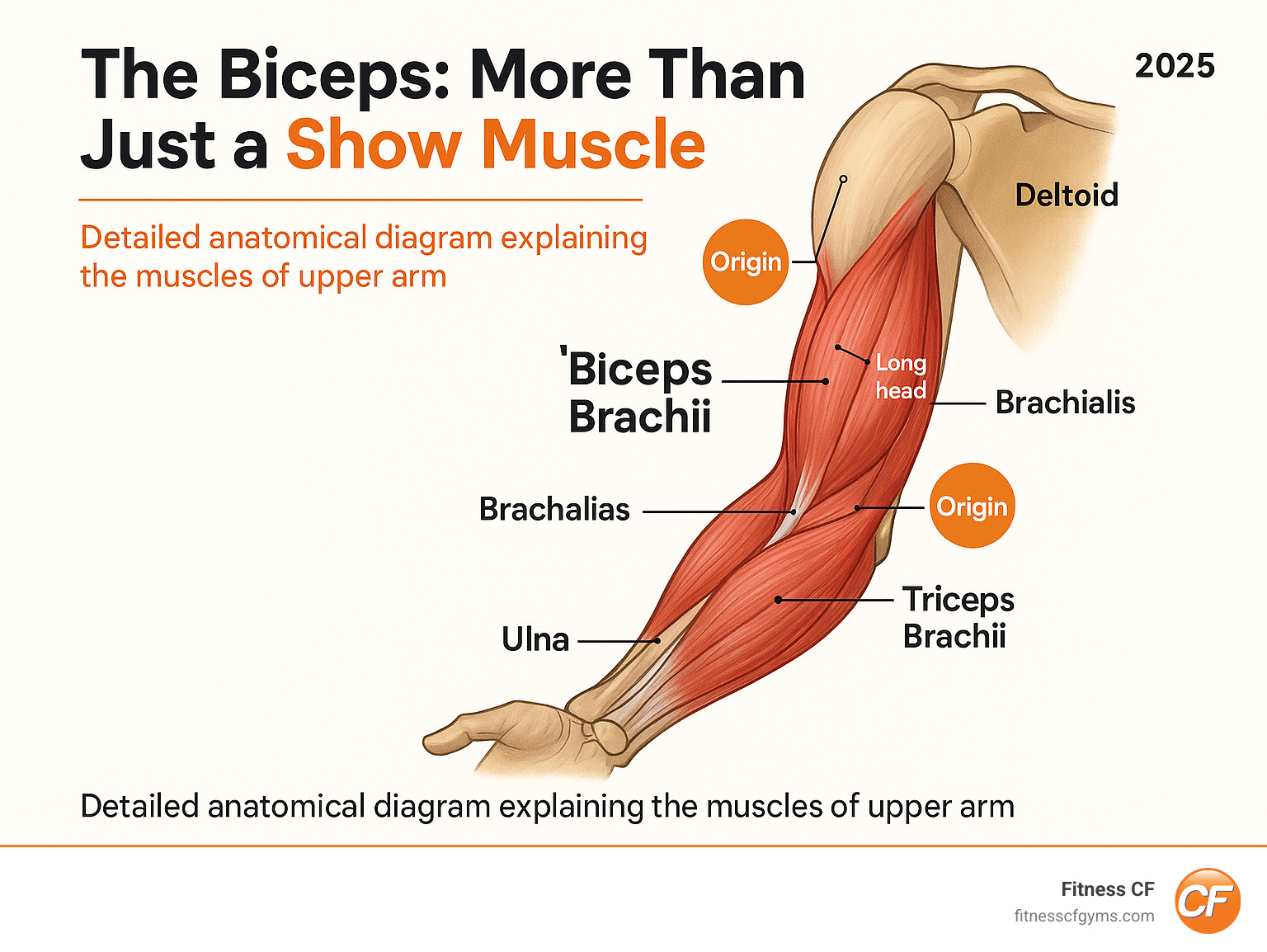
When we talk about the biceps muscle, we’re referring to the biceps brachii, Latin for “two-headed muscle of the arm.” Located on the front of your upper arm between the shoulder and elbow, this muscle is a superstar in many everyday movements. Its special “bi-articular” design allows it to work across both the shoulder and elbow joints, making it incredibly versatile.
The Two Heads of the Biceps Muscle
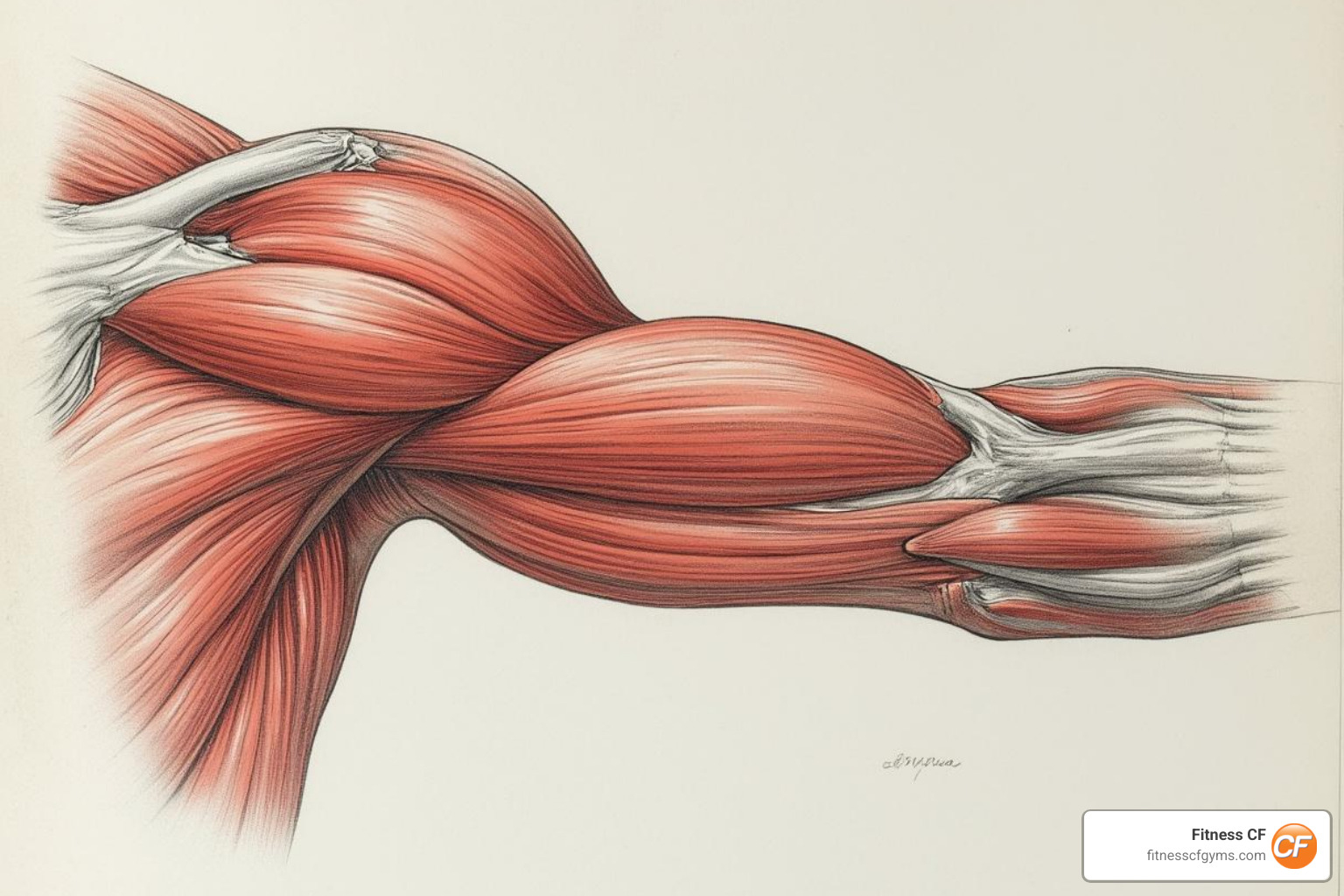
The biceps muscle has two distinct parts, or “heads”: the long head and the short head. They start from different spots on your shoulder blade (scapula) and merge to form the single muscle belly you can feel in your arm. The long head’s tendon begins at the supraglenoid tubercle (a bump above the shoulder socket) and travels through the shoulder joint. The short head starts from the coracoid process, a hook-like part of the scapula. These heads blend into the prominent biceps muscle belly, which then narrows into a strong distal biceps tendon that crosses the elbow.
Anatomical variations are common; about 30% of adults have slight differences in their biceps structure, and a surprising 2-5% may have extra heads—sometimes up to seven! These supernumerary heads rarely cause issues but highlight the diversity of human anatomy.
Origins and Insertions: Where It All Connects
To understand a muscle’s function, you need to know its origin (start) and insertion (end). The biceps muscle originates on the scapula and its main insertion point is the radial tuberosity, a bump on the radius bone in your forearm. When the biceps contracts, it pulls on this spot to bend your arm. Another attachment, the bicipital aponeurosis, is a flat tendon sheet that spreads the force of contraction across the forearm and adds stability to the elbow’s cubital fossa (the triangular area at the front).
A surprising fact: the biceps muscle has no direct attachment to the humerus (upper arm bone). Its connections are only to the scapula and the radius/forearm fascia. The long head’s tendon is held in place by the bicipital groove and the transverse humeral ligament, a setup that allows it to work effectively across both joints. For more detail, see this resource on the Anatomy of the biceps tendon at the shoulder.
Nerve and Blood Supply
A muscle needs nerves for commands and blood for fuel. The biceps muscle is primarily controlled by the musculocutaneous nerve, which originates from the C5, C6, and C7 spinal roots of the brachial plexus (a nerve network in the shoulder). This nerve also serves the brachialis and coracobrachialis muscles.
Blood is supplied by branches of the brachial artery, the main vessel of the upper arm. This rich blood supply is essential for muscle health, recovery, and vitality. A healthy cardiovascular system, supported by strength training, ensures your muscles get the blood flow they need. Learn more about The benefits of strength training for overall health.
The Functional Role of the Biceps in Movement
The biceps muscle is a powerhouse that helps you steer your day, from lifting a coffee cup to carrying heavy bags. It plays a pivotal role in arm movements at the elbow and forearm, while also assisting at the shoulder. This versatile muscle is essential for tasks requiring a blend of strength, precision, and coordination.
Primary Actions: Flexion and Supination
The biceps muscle has two main actions: elbow flexion and forearm supination.
Elbow flexion is the classic motion of bending your arm, bringing your hand toward your shoulder. Whether curling a dumbbell or lifting a child, your biceps is the primary engine for lifting and pulling movements that involve bending the elbow.
Forearm supination is where the biceps muscle truly shines as a power player. This is the outward rotation of your forearm that turns your palm upward, a motion vital for turning a doorknob, using a screwdriver, or opening a jar. The biceps is most active when you combine both flexion and supination. Understanding arm strength is key to your fitness journey, which you can explore further here: Why Arm Strength is Important for Overall Fitness.
The Biceps’ Role in Shoulder Stability
Because the biceps muscle originates at the shoulder blade (scapula), it also helps stabilize the shoulder joint (glenohumeral joint). While it’s a relatively weak flexor of the arm at the shoulder (helping lift the arm forward), its most important role here is providing dynamic stability. The long head of the biceps tendon acts like a guide wire, helping to keep the head of the humerus centered in its socket, especially when you begin to lift your arm. This intricate path is vital for healthy, smooth shoulder movements. For a deeper scientific look, consider this paper on A review of biceps brachii actions at the shoulder.
Biceps vs. Brachialis: Who’s the Stronger Flexor?
Here’s a common misconception: most people assume the biceps is the strongest elbow flexor, but that title belongs to its deeper neighbor, the brachialis muscle. Tucked underneath the biceps, the brachialis’s only job is to flex the elbow. Since it doesn’t cross the shoulder or rotate the forearm, it’s a pure, powerful elbow flexor in any forearm position.
So where does that leave the biceps muscle? It’s a powerful supinator (palm-up rotator) and assists with flexion, but the brachialis is the true workhorse of elbow bending. When your palm faces down, the biceps is at a mechanical disadvantage, and the brachialis does most of the work. These two muscles have a synergistic relationship, with the biceps adding power and versatility while the brachialis provides consistent strength. Understanding this helps in structuring effective workouts. Learn more about How to structure effective workouts for lean muscle.
Common Biceps Injuries and Conditions
Even a strong muscle like the biceps muscle is not immune to injury. Its involvement in both shoulder and elbow movements makes it vulnerable to conditions from overuse, repetitive motion, or acute trauma.
Understanding the ‘Popeye Sign’
One of the most striking signs of a biceps muscle injury is the ‘Popeye Sign.’ This bulge appears when the long head of the biceps tendon ruptures completely, usually near the shoulder. No longer anchored at the top, the muscle belly recoils toward the elbow, creating a bulbous deformity resembling Popeye’s cartoon biceps. This can be caused by chronic wear and tear or an acute injury from lifting a heavy object.
Despite its dramatic appearance, patients often experience little weakness in elbow flexion. This is because the brachialis muscle and the short head of the biceps remain intact and compensate. However, supination (palm-up rotation) strength can be more noticeably affected. The ‘Popeye Sign’ indicates a complete rupture and requires medical evaluation.
The Link Between Biceps and Rotator Cuff Issues
The long head of the biceps muscle tendon is intimately connected with rotator cuff health due to its path through the shoulder joint. Biceps tendinopathy (tendon irritation) often occurs alongside other shoulder problems rather than in isolation.
Research shows a strong correlation: 90% of rotator cuff tears also involve long head of biceps tendinopathy, and 45% of those cases include biceps instability. This means if you have anterior shoulder pain or a suspected rotator cuff issue, your biceps muscle tendon is likely involved. Conditions like shoulder impingement can also irritate the biceps tendon, highlighting why a comprehensive evaluation is crucial for shoulder and arm pain. For more on soft-tissue injuries, see Sprains, strains and other soft-tissue injuries.
Diagnosis, Treatment, and Recovery
Understanding how a biceps muscle injury is diagnosed and treated is key to a successful recovery. A clear path from diagnosis to rehabilitation ensures the best possible outcome for your active lifestyle.
How Biceps Injuries Are Diagnosed
Diagnosing a biceps muscle injury begins with a discussion about your symptoms and how the injury occurred. This is followed by a physical exam where a doctor will palpate (feel) the area for tenderness, assess your range of motion, and perform strength tests to evaluate the biceps and surrounding muscles. They will also look for visible signs like the ‘Popeye Sign.’
For a closer look, imaging tests may be used. While X-rays check for bone fractures, they don’t show soft tissues. An Ultrasound uses sound waves to create live images of muscles and tendons in motion. For the most detailed view, an MRI (Magnetic Resonance Imaging) provides a clear picture of tendons and muscles, helping to pinpoint the location and severity of a tear or inflammation. For more on this, see the Diagnostic accuracy of MRI for biceps tendon tears.
Conservative vs. Surgical Treatment Options
Treatment for a biceps muscle injury is custom to the injury’s severity, your age, and your activity level.
Conservative treatment is often the first step for minor to moderate injuries like tendinopathy or partial tears. This typically involves:
- RICE protocol: Rest, Ice, Compression, and Elevation for the first 48-72 hours.
- NSAIDs: Nonsteroidal anti-inflammatory drugs like ibuprofen to reduce pain and swelling.
- Physical Therapy (PT): A vital component for managing pain, restoring motion, and gently strengthening the biceps and surrounding muscles.
- Cortisone injections: May be used for persistent inflammation, but are often a temporary solution.
Surgical treatment may be considered for severe injuries like a complete rupture or when conservative methods fail. The main options are:
- Biceps Tenodesis: The ruptured tendon is reattached to a new spot on the upper arm bone, restoring function and preventing the ‘Popeye Sign.’ This is often preferred for active individuals.
- Biceps Tenotomy: The problematic tendon is simply cut and not reattached. This provides excellent pain relief but may result in a ‘Popeye Sign’ and slightly reduced supination strength. It’s often considered for older, less active individuals.
The Road to Recovery: What to Expect
Recovering from a biceps muscle injury is a journey that requires patience. With conservative treatment, recovery for tendinopathy or partial tears often takes 4-6 weeks with physical therapy.
After surgery, the timeline is more structured. You’ll likely wear an arm sling for 1-2 weeks. Early rehabilitation with gentle range-of-motion exercises begins around week 2 and continues through week 6. The strengthening phase starts around week 6-8, gradually adding resistance.
Return to activities varies: desk work may be possible in 1-2 weeks, while more strenuous sports like tennis may take 8 weeks or more. Full recovery and return to normal strength can take three to four months or longer. A dedicated PT program is crucial, as is good nutrition to support muscle repair. Learn more about What to Eat After a Workout for recovery and get Effective Tips for Building Lean Muscle Mass safely.
Building a Strong and Healthy Biceps Muscle
Now that we understand the anatomy and function of the biceps muscle, let’s focus on building its strength and health. This is about functional strength for daily life and preventing future injuries.
Principles of Effective Biceps Training
To effectively train your biceps muscle, apply these key strength training principles:
- Proper Form: This is paramount. Using momentum or swinging means your biceps isn’t doing the work. Controlled movements target the muscle effectively and reduce injury risk.
- Progressive Overload: To get stronger, you must gradually challenge your muscles more over time. This can mean increasing weight, reps, or sets, or decreasing rest time.
- Exercise Selection: Variety is key. Beyond classic dumbbell curls, incorporate barbell curls, preacher curls for isolation, and hammer curls to work supporting muscles. Chin-ups are a fantastic compound exercise that works the biceps and back simultaneously.
- Volume, Frequency, and Rest: Train your biceps 2-3 times per week, allowing adequate recovery time between sessions, as muscles grow during rest. Focus on a strong mind-muscle connection by feeling the biceps contract and stretch during each rep.
For more workout ideas, check out How to Build Arm Muscle: 10 Workouts You Have to Try!.
The Importance of a Balanced Upper Body Routine
Focusing only on the biceps muscle can lead to muscle imbalances and potential injury. A balanced approach is crucial for a truly strong and healthy upper body.
Train the triceps brachii, the antagonist muscle on the back of your arm, to ensure stability around the elbow joint. Also, strengthen your shoulder and back muscles, as they provide a stable foundation for all arm movements.
Incorporate both pushing exercises (like push-ups and bench presses) and pulling exercises (like rows and pull-ups). This comprehensive approach develops all major upper body muscle groups, improves joint stability, and reduces injury risk. Find more exercises here: 8 Arm Exercises for Strength and Definition.
Nutrition for Muscle Growth and Repair
What you eat is just as important as what you lift. Nutrition provides the fuel and building blocks for muscle growth and repair.
Ensure you get adequate macronutrients. Protein is essential for muscle repair, carbohydrates provide energy for workouts, and healthy fats support hormone production. Hydration is also critical; water transports nutrients and is vital for overall muscle function. A well-balanced diet supports not just your biceps muscle but your entire body. For a complete guide, see the Lean Muscle Diet: Your Complete Guide to Foods That Deliver.
Conclusion: Integrating Biceps Health into Your Overall Fitness
We’ve explored the biceps muscle in depth, from its complex anatomy and vital role in daily movements to common injuries and recovery paths. It’s clear the biceps is more than a symbol of strength; it’s a crucial player in your upper body’s function.
To keep your biceps healthy, accept a holistic approach to fitness. This means focusing on balanced training by working the opposing triceps and strengthening your entire upper body to prevent muscle imbalances. Commit to proper form and progressive overload in your workouts to build muscle safely and effectively.
Most importantly, listen to your body. Don’t push through pain; seek professional advice when needed. Fuel your muscles with proper nutrition and hydration, as these are the building blocks for repair and growth.
By understanding and respecting your biceps muscle, you can train smarter, recover more effectively, and enjoy a lifetime of strong, functional movement. A holistic approach to fitness is the key to safely achieving all your health and fitness goals. We’d love for you to Explore your fitness potential with us today!