The Truth About Working Out With Aching Muscles
Can you work out with sore muscles is one of the most common questions fitness enthusiasts face, especially after a challenging workout leaves them feeling stiff and achy the next day. The short answer is yes – but with important conditions.
Quick Decision Guide:
- Mild to moderate soreness (1-4 on pain scale): Safe to exercise with modifications
- Severe pain (5+ on pain scale): Rest and recovery needed
- Sharp, stabbing, or radiating pain: Stop exercising immediately
- Best options when sore: Light cardio, different muscle groups, active recovery
That familiar post-workout ache known as Delayed Onset Muscle Soreness (DOMS) typically kicks in about 12 hours after a workout and peaks around 48 hours later. While the old “no pain, no gain” mentality has been widely debunked by fitness professionals, understanding when to push through discomfort versus when to rest is crucial for your long-term health and fitness success.
The benefits of regular exercise – from strength training that builds lean muscle and supports bone health to cardio that improves heart health and endurance – are too important to let soreness completely derail your routine. The key lies in making smart decisions about how to exercise when your muscles are talking back to you.
I’m Pleasant Lewis, and in my 40+ years in the fitness industry, I’ve helped thousands of members steer the question of can you work out with sore muscles while maintaining safe, effective routines. My experience has shown that the right approach to exercising with soreness can actually speed recovery and build stronger, more resilient muscles over time.
Understanding Muscle Soreness: What Is DOMS?
If you’ve ever wondered can you work out with sore muscles, the first step is understanding what’s actually happening in your body when those familiar aches set in. That post-workout soreness has a name: Delayed Onset Muscle Soreness, or DOMS for short.
DOMS is like your muscles’ way of saying “Hey, we’re working hard in here!” It typically shows up 12 to 24 hours after your workout and reaches its peak around 24 to 72 hours later. Unlike the burning sensation you might feel during an intense set (that’s acute soreness), DOMS arrives fashionably late to the party.
Here’s what’s really happening: when you challenge your muscles, you create microscopic tears in the muscle fibers. Before you panic, this is actually a good thing! Think of it as controlled damage that triggers your body’s amazing repair system. These tiny tears kick off an inflammation response that brings healing nutrients to the area.
During the muscle repair process, your body doesn’t just patch things up – it builds back stronger. New muscle proteins are created, and your muscles adapt to handle similar challenges better in the future. This is how strength training delivers its incredible benefits for building lean muscle and supporting bone health.
The key difference between acute soreness and DOMS is timing and sensation. Acute soreness hits during or right after exercise – that’s the burn from waste products building up in working muscles. DOMS is the deeper, duller ache that settles in later as your body begins its repair work.
For a deeper dive into the science, check out the American College of Sports Medicine’s guide on Delayed Onset Muscle Soreness.pdf?sfvrsn=8f430e18_2). And for broader injury prevention strategies, our guide on how to prevent and recover from common workout injuries has you covered.
| Condition | Symptoms | Onset | Duration |
|---|---|---|---|
| Acute Soreness | Burning sensation, fatigue | During or immediately after exercise | Minutes to a few hours |
| DOMS | Dull ache, stiffness, tenderness, muscle weakness | 12-24 hours post-exercise, peaking 24-72 hours | 2-5 days, up to a week |
| Injury | Sharp, stabbing pain, localized tenderness, swelling, bruising, limited range of motion, numbness/tingling | Immediately or within hours of incident | Days to weeks or longer |
What Causes That Next-Day Ache?
The main troublemaker behind DOMS is something called eccentric exercise – movements where your muscles lengthen while under load. Picture the lowering phase of a squat, the downward motion of a push-up, or walking downhill. These muscle lengthening under load movements create more microscopic damage than other types of exercise.
New exercise programs are notorious DOMS triggers. Your muscles are creatures of habit, and when you introduce unfamiliar movements or suddenly ramp up your routine, they respond with that telltale soreness. The same goes for increased workout intensity – your body needs time to adapt to new challenges.
This muscle adaptation process is actually a cornerstone of healthy living. Every time you experience DOMS, you’re witnessing your body’s incredible ability to grow stronger and more resilient. It’s like a biological upgrade happening in real time.
How to Tell Soreness Apart from an Injury
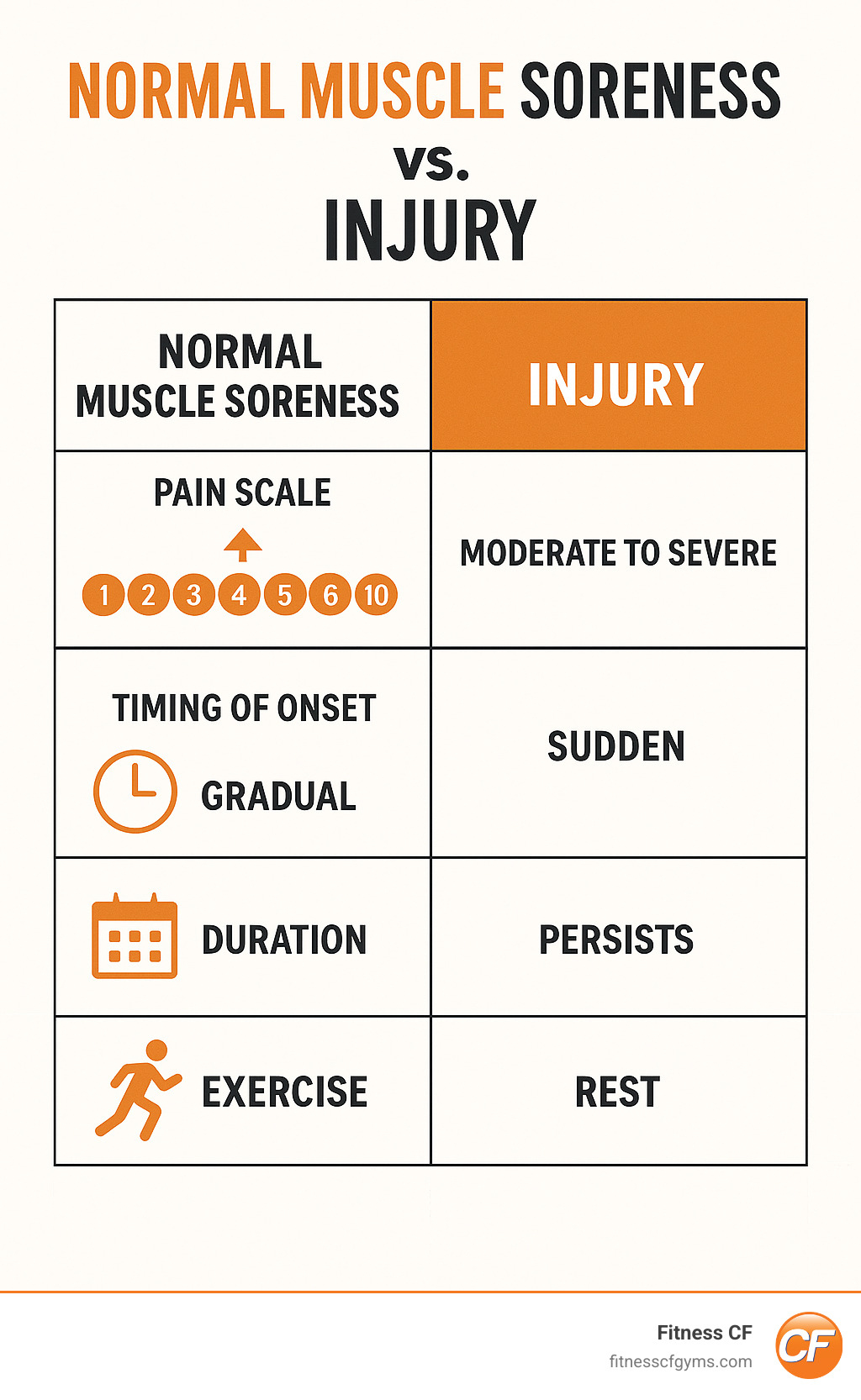
This is where things get serious, and knowing the difference could save you weeks of recovery time. Normal DOMS feels like a dull and achy feeling spread across the muscle groups you worked. You might notice stiffness when you first get up in the morning or tenderness to touch when you press on the affected muscles.
On a pain scale of 1 to 10, healthy muscle soreness should stay well below a 5. It’s uncomfortable but manageable – the kind of sensation that makes you think “I had a good workout” rather than “Something’s wrong.”
Injury pain tells a different story entirely. Watch for sharp or stabbing pain that feels localized to a specific spot. Swelling, bruising, or limited range of motion are red flags that signal you’ve crossed from soreness into injury territory.
Here’s a crucial distinction: DOMS typically affects both sides of your body equally. If one side hurts significantly more than the other, or if you’re experiencing numbness or tingling, it’s time to take a step back and possibly consult a healthcare professional.
The question of can you work out with sore muscles depends entirely on which category your discomfort falls into. Normal DOMS? You have options. Signs of injury? Time to prioritize rest and recovery.
So, Can You Work Out With Sore Muscles? The Verdict
Here’s the moment of truth: can you work out with sore muscles? The answer isn’t a simple yes or no – it depends on what your body is telling you and how you approach it.

For mild to moderate soreness, exercising can actually help you feel better. This approach is called active recovery, and it’s one of the best-kept secrets in fitness. When you move your sore muscles gently, you’re increasing blood flow to those areas. Think of it like giving your muscles a gentle massage from the inside out.
This increased circulation helps flush out waste products that build up during tough workouts while delivering fresh oxygen and nutrients to help repair those microscopic muscle tears we talked about earlier. The result? Reduced stiffness and potentially faster recovery than if you just sat on the couch all day.
But here’s where things get tricky. There’s a fine line between helpful movement and harmful overtraining. Push too hard when your body needs rest, and you risk making that soreness worse or even injuring yourself. Overtraining can leave you feeling constantly tired, getting sick more often, and actually losing strength instead of gaining it.
The magic number to remember is the pain scale from 1 to 10. If your soreness sits comfortably between 1 and 4, you’re likely in the safe zone for light activity. But if you’re hitting 5 or higher, or if you can’t maintain proper form during exercises because of the discomfort, it’s time to pump the brakes.
The key is listening to your body and choosing activities that support recovery rather than hinder it. For more insights on how gentle movement can improve your fitness journey, check out our guide on active recovery for athletes.
When It’s Safe to Work Out with Sore Muscles
When you’re dealing with mild to moderate soreness – that manageable ache that doesn’t make you wince with every step – you’re actually in a great position to use movement as medicine.
The sweet spot for exercising with sore muscles is low-impact cardio. Activities like walking, swimming, or easy cycling get your blood pumping without beating up your already tender muscles. These gentle movements are like giving your muscles a warm hug while encouraging healing.
Gentle yoga deserves special mention here. The slow, controlled movements and stretches can work wonders for tight, sore muscles. You’re not just moving – you’re actively helping your body release tension and improve flexibility at the same time.
Here’s a smart strategy: if your legs are screaming from yesterday’s workout, focus on your upper body instead. Working different muscle groups allows the sore areas to recover while keeping you active and maintaining your fitness momentum. This approach supports the benefits of strength training by ensuring you can continue building muscle in different areas while others recover.
The beauty of this approach is that it keeps you consistent with your healthy living goals without forcing your body into recovery mode. You’re still reaping the cardiovascular benefits of cardio while respecting your body’s need for gentle movement. Learn more about why this consistency matters in our article on why consistency is key: how to build habits for long-term fitness success.
When You Should Prioritize Rest
Sometimes the strongest thing you can do is absolutely nothing – well, almost nothing. There are clear signals when your body is asking for complete rest, and ignoring these signals can set you back weeks or even months.
Severe pain that ranks 5 or higher on that pain scale is your body’s way of waving a red flag. This isn’t the “good hurt” of muscle growth – it’s your body telling you something needs attention. If you’re limping around or struggling with basic daily activities, exercise should be off the table until you feel better.
Sharp or radiating pain is another clear stop sign. Unlike the dull, general ache of DOMS, sharp pain often indicates something more serious is going on. This could be a muscle strain, ligament issue, or nerve involvement that needs proper rest to heal.
Pay attention to your form during everyday movements. If your soreness is so intense that you can’t maintain proper posture or movement patterns, exercising will likely do more harm than good. Compromised exercise form is a recipe for injury, and no workout is worth that risk.
Watch out for symptoms of overtraining too. These go beyond just sore muscles and can include constant fatigue, trouble sleeping, getting sick frequently, or feeling unusually moody. When your body is sending multiple distress signals, it’s time for some serious recovery time.
Rest days aren’t lazy days – they’re growth days. Your muscles actually get stronger during rest, not during the workout itself. The benefits of strength training only happen when you give your body time to rebuild those muscle fibers stronger than before. For a deeper dive into why recovery matters so much, read our article on the role of recovery: why rest days are just as important as workouts.
Smart Strategies for Recovery and Soreness Prevention
Nobody enjoys being sidelined by muscle soreness, especially when you’re building momentum with your fitness routine. While DOMS is a natural part of your body’s adaptation process, the good news is there are plenty of proven strategies to manage its intensity and even prevent it from becoming overwhelming. Think of these approaches as your toolkit for supporting your body’s amazing natural healing abilities.
Nutrition for recovery forms the foundation of your body’s repair system. When you fuel your body with the right balance of protein, carbohydrates, and healthy fats before and after workouts, you’re providing the essential building blocks for muscle repair and energy replenishment. Protein deserves special attention here – it’s absolutely vital for rebuilding those microscopic muscle tears that cause soreness in the first place.
Hydration works hand-in-hand with proper nutrition. When you’re dehydrated, soreness tends to feel more intense and lasts longer. This happens because fluids play a crucial role in flushing out damaged muscle cells and delivering fresh nutrients where they’re needed most. A good rule of thumb is about 8 ounces of water for every 15-30 minutes of exercise, plus rehydrating based on any weight you’ve lost during your workout.
Here’s something many people overlook: sleep quality might be your most powerful recovery tool. Your body does its most significant repair work while you’re sleeping, so aiming for seven to eight hours of quality sleep each night can dramatically improve muscle recovery and minimize pain. During sleep, muscle repair processes kick into high gear, benefiting both your muscles and nervous system.
Before you even break a sweat, warm-ups and cool-downs set the stage for better recovery. A 5-10 minute warm-up with dynamic stretching prepares your muscles for action, increases blood flow, and can genuinely reduce post-workout soreness. Similarly, a 10-15 minute cool-down helps your body transition back to a resting state and prevents fluid from pooling in your muscles. While research on cool-downs directly preventing DOMS shows mixed results, many people find them psychologically beneficial and worth the time investment. You can learn more in our comprehensive guide to warm-up and cool-down exercises.
Perhaps most importantly, gradual progression is your best defense against debilitating soreness. If you’re starting fresh or ramping up intensity, take it slow over several weeks. This gives your muscles time to adapt progressively, minimizing the shock that leads to severe DOMS. There’s no medal for pushing yourself to extreme soreness every single workout.
How to Relieve Sore Muscles After a Workout
Once soreness has already settled in, don’t worry – you’ve got options! Several proven methods can help alleviate discomfort and get you back to feeling your best faster.
Recovery nutrition goes beyond just eating well. Certain foods are particularly powerful for muscle repair and reducing inflammation. Consider adding these top recovery foods to your diet:
- Tart Cherries: Packed with antioxidants that help reduce inflammation and muscle damage.
- Salmon: Delivers complete protein plus omega-3 fatty acids, which are nature’s anti-inflammatories.
- Eggs: Provide all essential amino acids your muscles need for repair.
- Sweet Potatoes: Offer complex carbohydrates to replenish your energy stores.
- Leafy Greens: Foods like spinach and kale bring vitamins, minerals, and antioxidants to support your overall healing process.
Other helpful foods include watermelon juice, beet juice, pomegranate, ginger, and ginseng – all rich in compounds that support recovery.
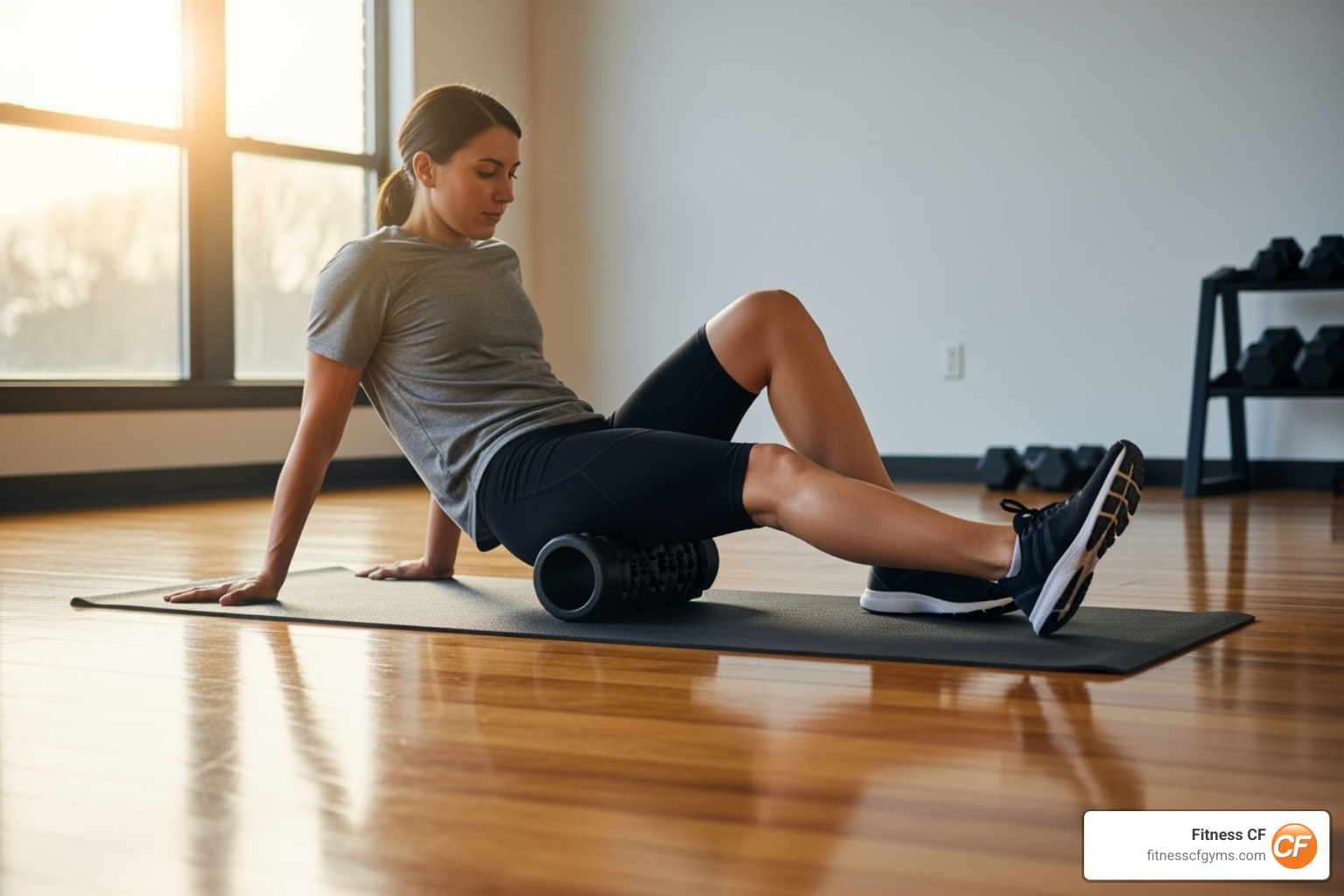
Foam rolling has become a game-changer for many fitness enthusiasts, and for good reason. This self-massage technique can be done before or after exercise to release muscle tension and improve blood flow. By applying pressure to those tender spots, you’re essentially giving yourself a deep tissue massage. The science backs this up too – research shows foam rolling decreases DOMS.
Massage works wonders, whether it’s from a professional or using a massage gun at home. The kneading and pressure help ease muscle tension, increase blood flow, and work out those stubborn tight spots. Studies suggest that post-workout massage can genuinely help reduce DOMS symptoms.
Heat therapy and cold therapy offer different but complementary benefits. Applying heat through a heating pad or warm bath increases blood flow to sore areas and loosens stiff muscles – perfect before a workout or just for comfort. Cold therapy, like ice packs, cold showers, or ice baths around 50°F, helps reduce inflammation and numb pain. While an ice bath might not sound appealing, many swear by its effectiveness.
The key is finding what combination works best for your body and lifestyle. When you’re wondering can you work out with sore muscles, these recovery strategies can make the difference between pushing through productively versus needing complete rest.
For more comprehensive recovery strategies, check out our guide on good things for muscle recovery.
Frequently Asked Questions About Muscle Soreness
When it comes to muscle soreness, I hear the same questions over and over again from members. Let me address the most common concerns that pop up when people are wondering can you work out with sore muscles and how to handle that familiar post-workout ache.
How long does DOMS usually last?
The good news about muscle soreness is that it’s temporary – though I know it doesn’t always feel that way when you’re struggling to walk down stairs!
DOMS follows a pretty predictable timeline. You’ll typically start feeling that familiar ache 12 to 24 hours after your workout. The soreness usually reaches its peak somewhere between 24 to 72 hours post-exercise – that’s when you’re really feeling it. From there, it gradually improves and should be gone within 2 to 5 days for most people.
Now, several factors can influence how long your soreness sticks around. If you tried something completely new or pushed yourself particularly hard, that soreness might hang on for up to a week. Your age plays a role too – younger people tend to experience more noticeable soreness after workouts compared to older adults. This doesn’t mean older folks aren’t working hard enough; their bodies just respond differently to exercise stress.
The intensity and novelty of your workout are the biggest factors. That first spin class or your return to strength training after a break? Yeah, expect to feel that for a few extra days.
Does stretching help with muscle soreness?
This is where I need to bust some myths that have been floating around fitness circles for years.
Stretching won’t magically make your DOMS disappear, but it still has its place in your fitness routine. The idea that you can stretch away muscle soreness is one of those persistent fitness myths that just won’t die.
Here’s what actually works: Dynamic stretching during your warm-up is fantastic. Those leg swings, arm circles, and gentle movements that take your body through its range of motion help prepare your muscles for activity and increase blood flow. This can potentially reduce how severe your DOMS becomes.
Gentle static stretching during your cool-down – where you hold stretches for 15-30 seconds – can help with overall flexibility and might make you feel more relaxed after your workout. While it probably won’t prevent DOMS, it contributes to better flexibility and joint health over time.
The key word here is gentle. Aggressive stretching on already inflamed muscles can actually make things worse. Your sore muscles don’t need to be forced into uncomfortable positions – they need time to heal.
Regular stretching as part of a balanced fitness routine absolutely supports healthy living by improving your range of motion and reducing injury risk. Just don’t expect it to be your DOMS cure-all.
When should I see a doctor for muscle pain?
Most muscle soreness is completely normal and will resolve on its own. However, there are definitely times when that ache crosses the line into something that needs professional attention.
Pain that lasts more than a week without any improvement is your first red flag. Normal DOMS should start getting better by day three or four, even if it doesn’t completely disappear.
Severe, unbearable pain that keeps you awake at night or prevents you from doing basic daily activities isn’t normal muscle soreness. If you can’t sleep, can’t work, or find yourself in agony, something else is going on.
Watch out for signs of infection like redness, warmth, swelling, or fever accompanying your muscle pain. These symptoms need immediate medical attention.
Sharp, stabbing, or radiating pain feels completely different from the dull ache of DOMS. If you’re experiencing pain that shoots down your leg, feels like a knife, or started immediately after a specific movement, that’s not normal soreness.
Numbness, tingling, or inability to move a limb are serious warning signs that could indicate nerve involvement or a significant injury.
You know your body better than anyone. If something feels off or you’re genuinely worried about your pain, trust that instinct. It’s always better to have a doctor tell you everything’s fine than to ignore something that could become a bigger problem. Your long-term health and ability to maintain an active lifestyle are worth that peace of mind.
Conclusion: Listen to Your Body for Long-Term Fitness Success

So, can you work out with sore muscles? As we’ve found throughout this journey, the answer isn’t a simple yes or no – it’s a conversation between you and your body. That dull ache you feel after a challenging workout is often your muscles telling you they’re adapting and growing stronger. But sharp, severe pain? That’s your body asking for a timeout.
The beautiful thing about understanding muscle soreness is that it transforms how we approach fitness. Instead of fearing that next-day stiffness, we can accept it as part of our body’s incredible ability to rebuild itself. When we know the difference between normal DOMS and potential injury, we become smarter athletes and healthier people.
Listening to your body isn’t just feel-good advice – it’s the foundation of sustainable fitness. Your muscles communicate through sensations, your energy levels fluctuate with recovery needs, and your form speaks volumes about whether you should push forward or pull back. This internal wisdom develops over time, becoming one of your most valuable fitness tools.
The sweet spot lies in balancing exercise and recovery. Active recovery days with gentle movement can actually speed healing while keeping you consistent. But knowing when to completely rest? That’s equally important. Your muscles don’t grow during the workout – they grow during recovery, when your body rebuilds those microscopic tears into stronger fibers.
All the strategies we’ve covered – from proper nutrition and hydration to quality sleep and gradual progression – work together to support your body’s natural healing processes. The benefits of strength training and cardio are too valuable to sacrifice to unnecessary soreness, which is why smart recovery practices matter so much.
Sustainable fitness habits aren’t built on pushing through pain every day. They’re built on consistency, wisdom, and respect for your body’s signals. Some days you’ll crush a workout, other days you’ll take a gentle walk or focus on mobility. Both contribute to your long-term success and healthy living journey.
At Fitness CF, we understand that true fitness isn’t about perfection – it’s about progress and balance. We support your journey with resources like the best recovery practices after a tough workout and innovative recovery tools like HydroMassage to help you bounce back stronger.
Your fitness journey is uniquely yours. Trust your instincts, honor your body’s needs, and celebrate both your active days and your rest days. They’re all part of building a stronger, healthier you.