Why Your Feet Deserve Better After Long Work Days
How to help sore feet from work starts with understanding that your daily discomfort isn’t something you have to accept. Here are some effective strategies:
Quick Relief Methods:
- Soak feet in warm Epsom salt water for 20 minutes
- Massage with a tennis ball or frozen water bottle
- Lift feet above heart level to reduce swelling
- Apply ice for 15-20 minutes to reduce inflammation
- Stretch calf muscles and Achilles tendon
Prevention Strategies:
- Wear supportive shoes with proper arch support
- Use compression socks to improve circulation
- Take regular breaks to change positions
- Maintain a healthy weight through exercise
Millions of workers who spend hours standing know that aching, tired feeling all too well. Research shows that 60 to 70 percent of people encounter foot problems at some point, with prolonged standing being a major contributor.
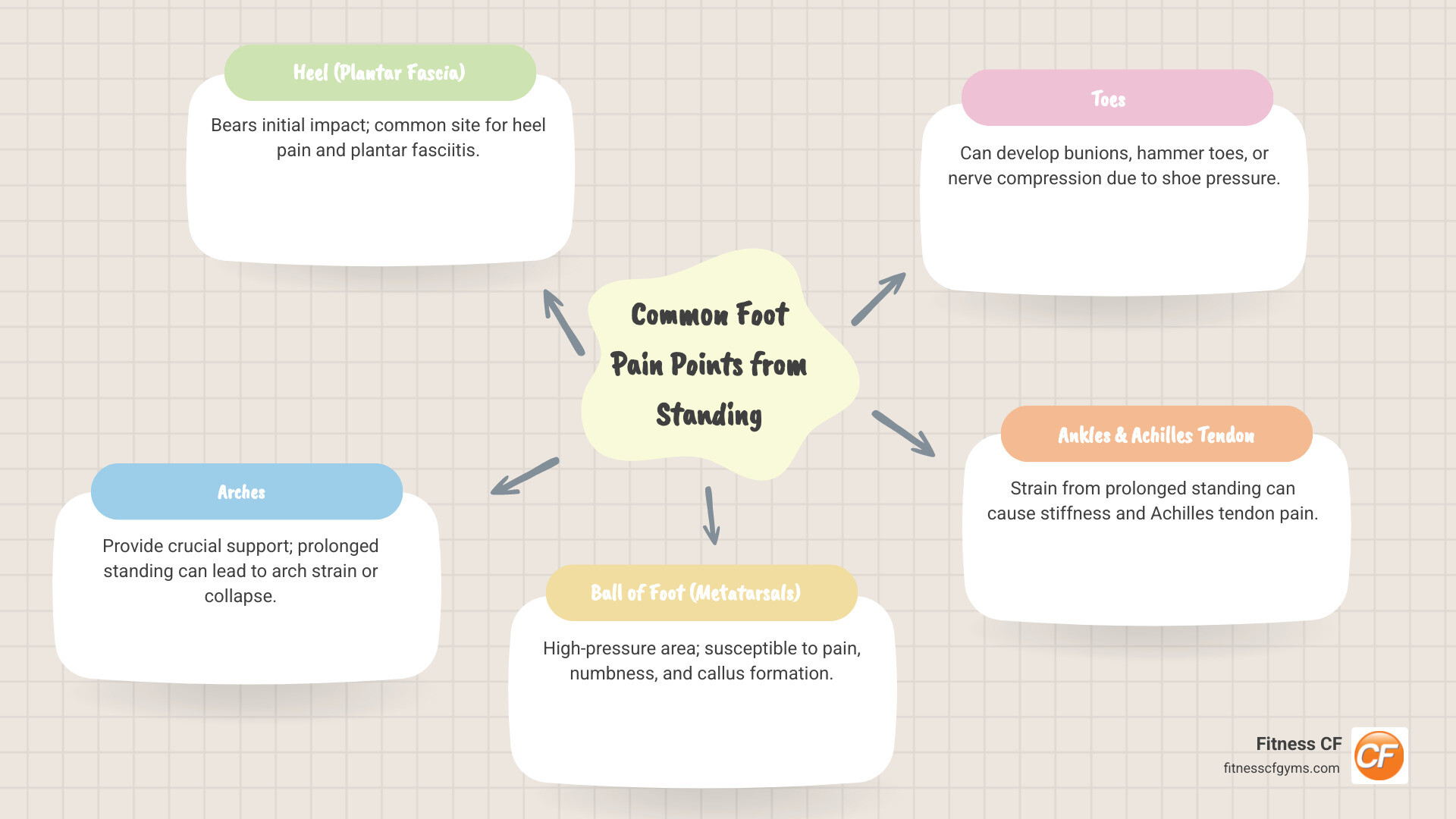
Standing all day puts tremendous stress on your feet’s 26 bones and over 100 muscles, tendons, and ligaments, leading to poor circulation, swelling, and fatigue.
With over 40 years in the fitness industry, I’ve seen how proper body mechanics and healthy lifestyle choices can alleviate foot pain from work. The connection between overall fitness and foot health is stronger than most people realize.
Immediate Relief Strategies for Aching Feet
When you get home after a long day of standing, your feet are begging for relief. These simple at-home remedies provide quick relief for sore feet from work by reducing inflammation and soothing overworked muscles.

Give Your Feet a Soothing Soak
A warm foot soak is a simple, effective way to soothe aching feet. Fill a basin with warm water, add about one cup of Epsom salt, and stir. The magnesium in Epsom salt helps reduce muscle tension and inflammation. For added relaxation, add a few drops of essential oils like lavender or peppermint. Soak for 20 minutes, using the time to relax and let the warm water work its magic.
Use Massage and Self-Myofascial Release
Massage therapy improves circulation and releases tension in the overworked muscles of your feet, especially the arches. A simple tennis ball is perfect for this. Roll the arch of your foot over it, applying gentle pressure. This self-myofascial release technique helps ease tension and pain.
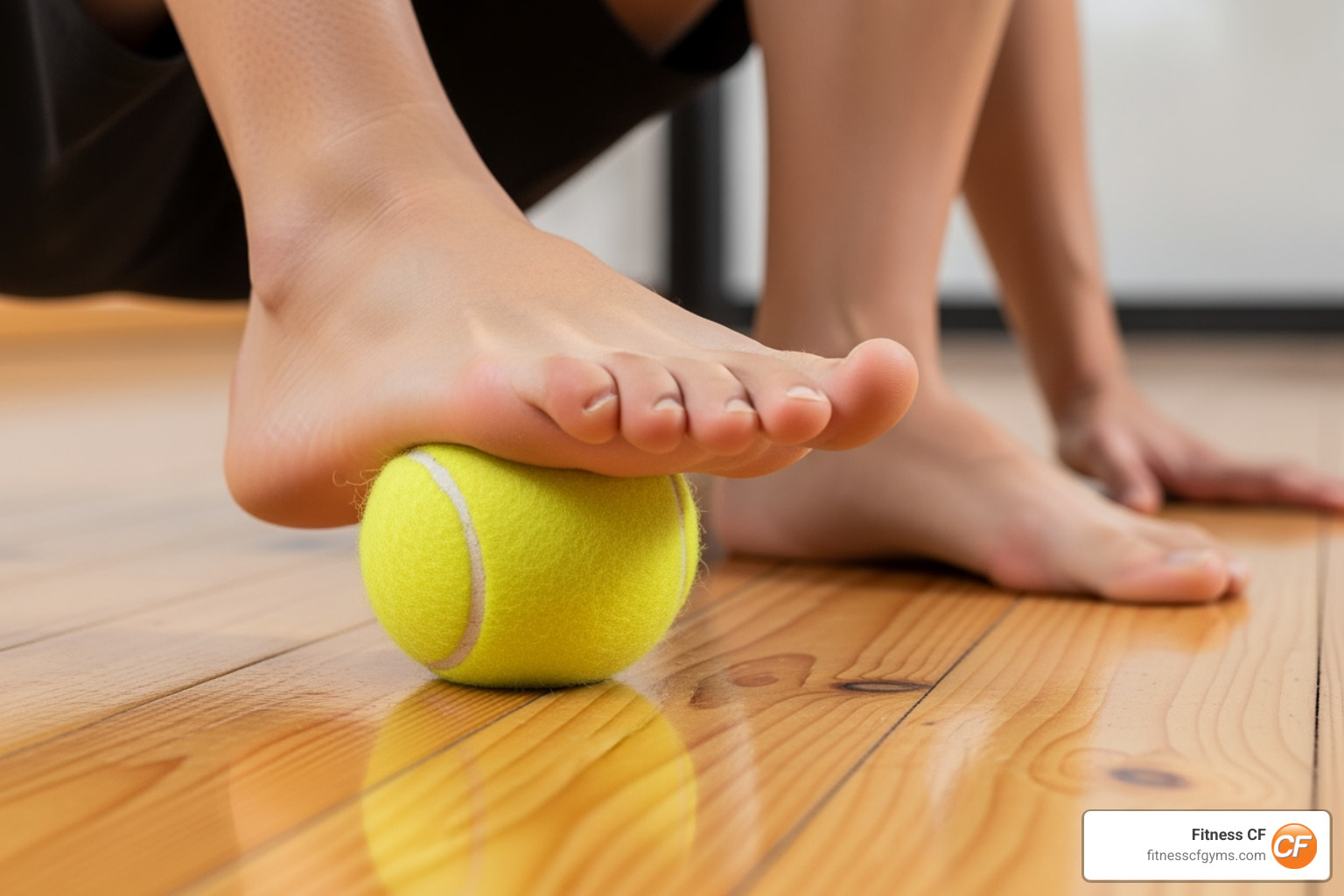
For combined cold therapy and massage, use a frozen water bottle. The cold reduces inflammation while rolling improves circulation. Roll each foot for about 10 minutes daily.
Lift and Ice Your Feet
Elevation and ice therapy work together to reduce swelling and improve blood flow. Elevating your feet above heart level uses gravity to help drain fluid that has pooled in your feet and ankles. Lie down and prop your feet on pillows for about 15 minutes several times a day.
Ice therapy tackles inflammation. Apply an ice pack wrapped in a thin towel for 15-20 minute intervals. This combination is part of the proven RICE method (Rest, Ice, Compression, Elevation) that athletes have used for decades.
Making these simple treatments part of your daily routine can make a real difference in how to help sore feet from work.
Proactive Prevention: How to Help Sore Feet from Work
While immediate relief is great, the real secret to how to help sore feet from work is preventing pain before it starts. Smart choices about what you wear, how you move, and healthy workday habits can keep your feet happy and pain-free.
Choose the Right Shoes and Support
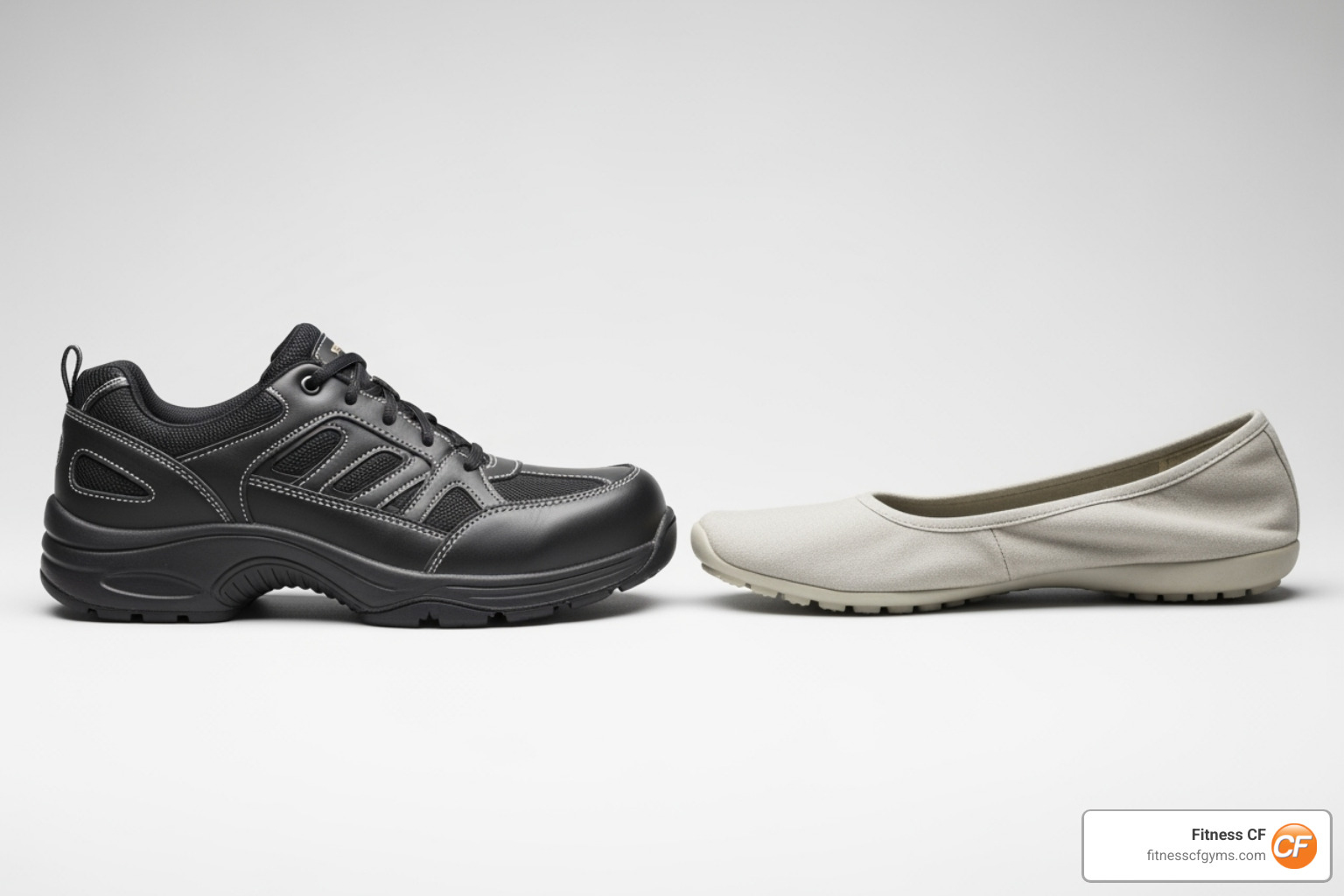
Your shoes are your foundation. For long work days, you need footwear with proper arch support, adequate cushioning, and a wide toe box so your toes can spread naturally. The heel height should be between ¼-inch and 2 inches, according to Occupational Health Clinics for Ontario Workers Inc.. Always try on shoes at the end of the day when your feet are slightly swollen to get the right fit. If you need more support, orthotics and shoe inserts can make a world of difference.
Wear Compression Socks
Compression socks aren’t just for medical issues; they’re for anyone who spends long hours standing. They improve circulation by helping push blood back up to your heart, preventing the pooling that causes that heavy, achy feeling. This means reduced swelling and less fatigue. The gentle pressure also provides comforting muscle support. Knee-high compression socks are a great choice as they cover the areas most affected by fluid buildup. Compression socks can improve circulation and provide all-day support.
Change Positions and Take Breaks
Standing still is harder on your body than moving, as it causes muscles to overwork and blood to pool in your legs. The solution is to avoid static posture by changing positions every 30 minutes. Even small movements like shifting your weight, taking a few steps, or doing gentle stretches make a big difference. Regular movement and walking breaks act like a reset button for your circulation. Even one minute of walking per hour helps your calf muscles pump blood back toward your heart. If you can take sitting breaks, do so—your feet will thank you.
Build a Strong Foundation: How Fitness Prevents Foot Pain
How to help sore feet from work isn’t just about what you do after your feet hurt; it’s about building a body that can handle the daily demands. Your feet are your foundation, supported by everything above them. When you carry extra weight, have poor posture, or lack strength, your feet pay the price. The good news is you can build a stronger foundation through smart fitness choices.
The Importance of Maintaining a Healthy Weight
Your feet carry you all day long. Every extra pound you carry adds stress to your feet with every step. Maintaining a healthy weight reduces stress on your feet directly. Excess weight also increases risks for conditions like diabetes, which can affect feet through poor circulation and nerve damage. A balanced diet and regular exercise are investments in your foot health, reducing the burden on your feet and improving your body’s ability to recover.
How Strength Training Improves Posture and Support
When you have strong core muscles, you naturally stand taller and more aligned, distributing your weight evenly. Squats and lunges build leg strength and teach your body to absorb the impact of standing all day, taking stress off your feet. Since tight calf muscles and Achilles tendons are often linked to plantar fasciitis, one of the most common foot problems, strength training that includes proper stretching can address these tight areas before they become painful problems.
The Role of Cardio in Foot Health
Cardiovascular exercise is a secret weapon for improved circulation and reduced swelling. When you stand all day, blood tends to pool in your lower legs. Regular cardio exercise trains your circulatory system to work more efficiently, pumping blood back to your heart. Low-impact cardio options like swimming or cycling are smart if you already have foot discomfort. Even brisk walking in supportive shoes strengthens feet while improving circulation. Better circulation means less swelling and faster recovery for your entire body.
When Pain Persists: Knowing When to See a Doctor
Sometimes, despite your best efforts with how to help sore feet from work, the pain won’t go away. That’s when it’s time to seek professional help. Your feet are too important to ignore.
Recognizing Serious Symptoms
While everyday soreness is normal, certain symptoms should never be ignored. Numbness or tingling that doesn’t go away is a red flag, especially if you have diabetes, as it could mean nerve damage. Sharp, shooting pain that doesn’t ease with rest also needs attention.
Any discoloration (blue, purple, or unusually pale feet) signals a circulation problem. Also, be concerned about wounds that won’t heal. Any cut or blister that doesn’t improve or looks infected (red, warm, swollen, or has pus) needs to be checked immediately. If you can’t put weight on your foot or have signs of infection like fever, see a doctor.
The Risks of Ignoring Persistent Foot Pain
It’s tempting to power through foot pain, but ignoring it is like ignoring a smoke alarm. Simple soreness can snowball into serious chronic conditions like plantar fasciitis, Achilles tendonitis, or stress fractures. Research shows that prolonged standing has been linked to serious health problems, including chronic pain.
Foot pain also creates a domino effect. When you change how you walk to avoid pain, it can lead to knee, hip, and back problems. This can severely impact your quality of life, limiting daily activities and your ability to exercise.
How to Help Sore Feet from Work with Professional Care
When home remedies aren’t enough, it’s time for an expert. A podiatrist can get to the root of your pain. Professional diagnosis is crucial because different conditions need different treatments. They can use physical exams, imaging, and gait analysis to pinpoint the problem.
Treatments may include custom orthotics molded specifically for your feet, or physical therapy to teach you strengthening exercises. For some conditions, anti-inflammatory medications or other advanced treatments might be recommended.
Don’t let foot pain control your life. The sooner you address persistent problems, the better. If you’re ready, consider scheduling an appointment with a foot specialist.
Frequently Asked Questions about Sore Feet from Work
These are some of the most common questions we hear about how to help sore feet from work, with practical answers.
What are the best stretches for sore feet?
Stretching is an effective way to release tension and improve flexibility, providing both immediate and long-term relief.
- Calf stretches: Tight calf muscles often make foot pain worse. Face a wall, step one foot back, and keep the back heel planted. Lean forward until you feel a stretch in your calf. Hold for 30 seconds and switch sides.
- Towel stretch: Sit with your legs straight. Loop a towel around the ball of one foot and gently pull it toward you, keeping your leg straight. Hold for 30 seconds on each side.
- Toe curls: Sit and try to pick up marbles with your toes, or simply curl your toes to grip the floor. This strengthens the small muscles that support your arches.
- Achilles tendon stretch: Stand with the balls of your feet on a step. Slowly lower your heels below the step until you feel a gentle stretch. This is especially helpful if you wear heels.
- Foot rolling: Rolling your foot over a tennis ball or frozen water bottle provides both stretching and massage benefits.
The best time for these stretches is after a warm foot soak when your muscles are more relaxed.
Can the surface I stand on make my foot pain worse?
Yes. The surface under your feet acts as a shock absorber, and some are better than others.
Concrete and hard tile surfaces are the worst offenders because they offer no shock absorption, sending impact through your feet, ankles, and up to your lower back.
Anti-fatigue mats are game-changers. They provide cushioning and encourage tiny muscle movements that improve circulation.
Wood floors and carpeted surfaces are better than hard flooring because they have more give. If you can’t change your work surface, focus on wearing supportive, well-cushioned shoes.
How often should I replace my work shoes?
Most people wear work shoes long after their support and cushioning have broken down. The general rule is to replace them every 300-500 miles of walking, which for someone on their feet all day could be every 3-6 months.
Look for these signs it’s time for a new pair:
- The cushioning feels flat: Press on the midsole. If it feels compressed and hard, the shock absorption is gone.
- Visible wear and tear: Check for uneven wear on the outsole or deep creases in the midsole.
- Loss of support: If you notice new aches and pains in your feet, knees, or hips, your shoes may no longer be providing adequate support.
Think of quality work shoes as an investment in your health. The cost is minimal compared to the potential impact of chronic foot pain.
Conclusion
After reading this guide on how to help sore feet from work, you have a complete toolkit to transform end-of-day aches into lasting comfort.
The journey starts with immediate relief like Epsom salt soaks, targeted massage, and the simple combination of elevation and ice. These are your first line of defense against daily discomfort.
But the real magic is in prevention. Choosing supportive footwear, using compression socks, and taking movement breaks are small changes that create big results.
Your foot health is deeply connected to your overall fitness. Maintaining a healthy weight, building strength through strength training, and improving blood flow with cardiovascular exercise create a foundation for pain-free days.
Most importantly, listen to your body. While these strategies help many, persistent pain deserves professional attention. Seeking help is the smartest step you can take for long-term foot health.
Taking care of your feet is about maintaining the active, vibrant lifestyle you deserve. Healthy feet are your foundation for everything.
If you’re looking for additional ways to support your recovery and overall wellness journey, consider exploring more info about hydromassage services. These therapeutic treatments offer another layer of muscle relaxation and recovery support, perfectly complementing your foot care routine.