You Can Lose Weight at Home in 12 Weeks — Here’s How
A 12 week workout plan to lose weight at home gives you a structured, progressive path to real fat loss — no gym commute, no monthly membership, and no complicated equipment required.
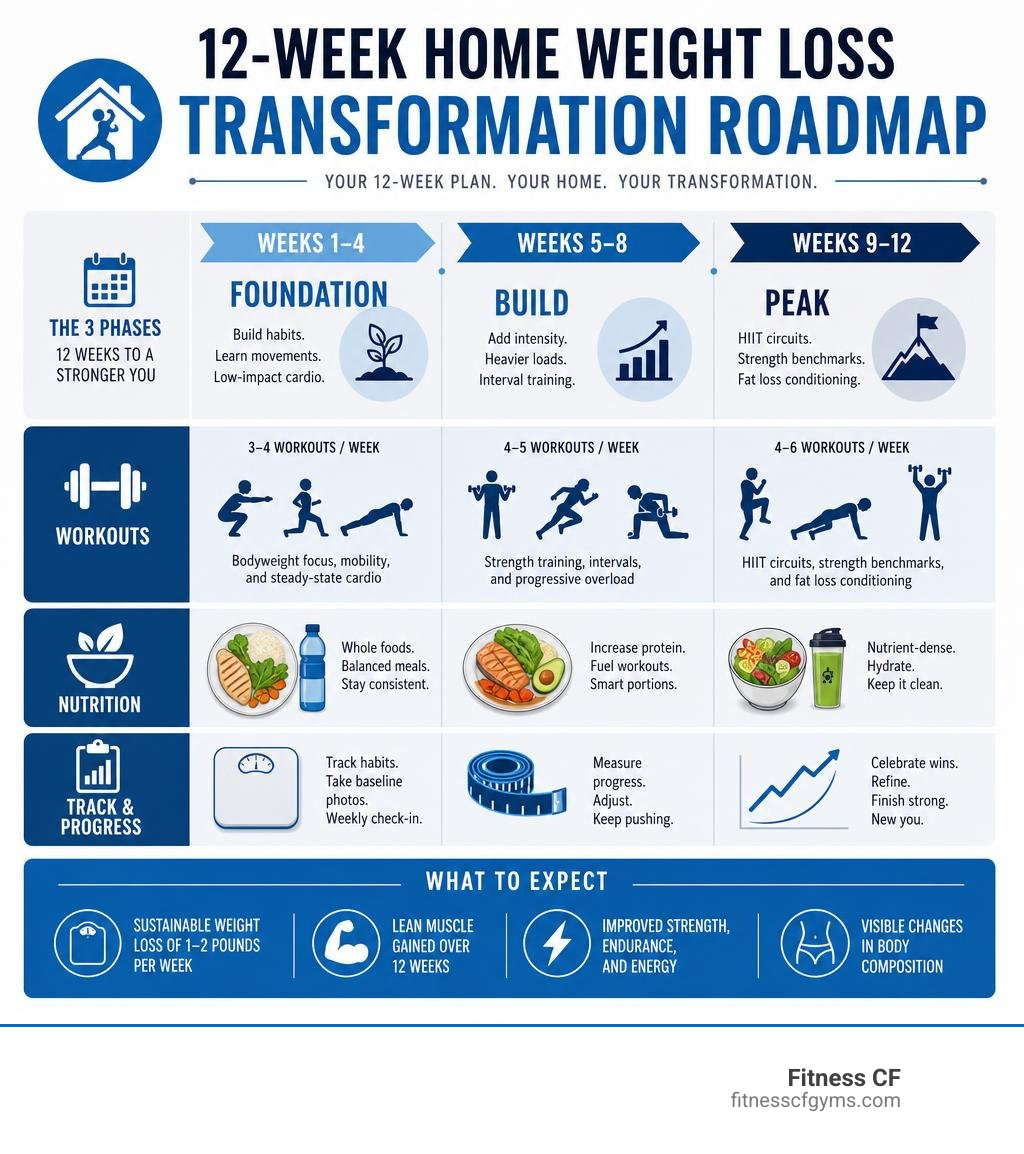
Here’s what a solid 12-week home weight loss plan includes:
| Week Range | Phase | Focus |
|---|---|---|
| Weeks 1-4 | Foundation | Build habits, learn movements, low-impact cardio |
| Weeks 5-8 | Build | Add intensity, heavier loads, interval training |
| Weeks 9-12 | Peak | HIIT circuits, strength benchmarks, fat loss conditioning |
What to expect:
- Sustainable weight loss of 1-2 pounds per week
- Up to 1.25 kg of lean muscle gained over 12 weeks
- Noticeable improvements in strength, endurance, and energy
- Visible changes in body composition — even when the scale moves slowly
Most people assume losing weight at home means doing random YouTube videos until they burn out. The truth is different. Structure is what separates results from frustration. Ninety days is enough time to go from “I’ll start Monday” to genuinely changing how your body looks, feels, and moves — if you follow the right plan.
They say it takes 21 days to form a habit and 90 days to build a lifestyle. A 12-week plan gives you exactly that window — long enough to see real change, short enough to stay motivated from start to finish.
I’m Pleasant Lewis, owner and operator of Fitness CF, and with over 40 years in the fitness industry I’ve seen what works — and what wastes people’s time — when it comes to building a 12 week workout plan to lose weight at home that actually sticks. In the sections below, I’ll walk you through everything you need to get started, stay consistent, and finish strong.
What Is a 12 week workout plan to lose weight at home—and Why 12 Weeks Works
At its core, a 12 week workout plan to lose weight at home is a structured roadmap designed to burn fat, build lean muscle, and improve your overall cardiovascular health without requiring you to step foot in a public facility. Instead of relying on heavy weight machines, this style of training utilizes bodyweight movements, resistance bands, and dumbbells to stimulate muscle growth and elevate your heart rate.
The reason we focus heavily on a 12-week timeline is simple: it aligns perfectly with human physiology. In the first few weeks of any new routine, your body undergoes neurological adaptations—essentially, your brain is learning how to coordinate your muscles more efficiently. It is only after about four weeks that true physiological changes, such as muscle hypertrophy (growth) and metabolic shifts, begin to take hold.
By committing to a full 90-day cycle, you allow your body to move past the initial adjustment phase and enter a period of sustained fat loss and body recomposition (losing fat while simultaneously building muscle).
To show you how these different elements work in harmony, here is how we structure the daily pillars of a successful home transformation:
| Pillar | Role in the 12-Week Plan | Why It Matters |
|---|---|---|
| Strength Training | Preserves and builds lean muscle tissue | Raises your resting metabolic rate so you burn more calories around the clock. |
| Cardiovascular Work | Creates an immediate caloric burn and builds endurance | Supports heart health and increases your overall daily energy expenditure. |
| Nutrition | Establishes a moderate, sustainable calorie deficit | Ensures your body burns stored fat for fuel while getting enough protein to repair muscle. |
| Sleep & Recovery | Balances hunger hormones (leptin and ghrelin) | Prevents overtraining, lowers stress, and allows muscle tissue to rebuild stronger. |
| Consistency | The glue that holds the entire 12-week plan together | Small, daily actions repeated consistently yield massive physical changes over 90 days. |
Why 12 Weeks Is Long Enough to See Real Results
We often get asked if three months is truly enough time to transform your body. The answer is a resounding yes. While you won’t completely reinvent your genetics in 90 days, 12 weeks is the sweet spot for noticeable, head-turning physical and mental changes.
In fact, research consistently shows that a structured 12-week training block can yield between 1.11 to 1.25 kg of lean muscle gains when paired with adequate protein intake. Furthermore, systematic strength progression can increase your overall strength (measured by your one-rep max) by 26% to 30% in as little as 10 weeks.
Beyond what you see in the mirror, this timeframe is long enough to significantly improve your VO2 max (cardiovascular endurance), lower your resting heart rate, and dramatically boost your mood. Physical movement is a powerful tool for mental wellness; regular exercise has been shown to reduce the risk of depression by up to 26%.
Why Home Workouts Can Support Weight Loss
Working out at home offers a level of convenience that commercial spaces simply cannot match. There is no packing a gym bag, no fighting for parking, and absolutely no worrying about who is watching you exercise. For our busy neighbors balancing life in Orlando, Clermont, or St. Cloud, eliminating the daily commute means you reclaim valuable time to focus on your health.
Furthermore, home training forces you to master the fundamentals. Without complex machines to guide your path, you learn how to control your own body weight, engage your core, and move mindfully. This builds incredible functional strength that carries over directly into your daily life—whether you are carrying groceries, playing with your kids, or working in the garden.
Realistic Results After 12 Weeks
Setting realistic expectations is the secret to staying motivated. If you follow a structured home program combined with a sensible diet, you can safely expect to lose 1 to 2 pounds of fat per week. Over 12 weeks, that translates to a healthy, sustainable 12 to 24 pounds of weight loss.
However, we always remind our community to look beyond the bathroom scale. Because you will be building dense, active muscle tissue while losing fluffy body fat, your weight might not drop as quickly as you expect, but your clothes will fit entirely differently. You will notice inches melting off your waist, improved definition in your arms and shoulders, and a dramatic spike in your daily stamina.
Your 12-Week Training Blueprint: Phases, Weekly Schedule, and Rest Days
To get the most out of your home workouts, you cannot perform the same routine day after day. Your body is incredibly smart; it adapts quickly to repetitive stress, which can lead to weight loss plateaus. To prevent this, we divide our 12-week program into three distinct, progressive phases.
If you want to see how this fits into a broader timeline, you can also check out our 30-day weight loss workout plan for a shorter-term kickstart.

Weeks 1-4: Foundation and Form
The goal of the first four weeks is to build consistency and master proper movement patterns. We focus heavily on mobility, core stability, and basic compound movements.
- Frequency: 3 to 4 days per week of active training, with 3 rest or active recovery days.
- Intensity: Moderate. We use body weight and light dumbbells, aiming for 3 sets of 8 to 12 repetitions per exercise.
- Rest Periods: 60 to 90 seconds between sets to allow your breathing to normalize.
- Cardio Focus: Low-impact steady-state (LISS) cardio, such as 15 to 20 minutes of brisk walking or light cycling, 2 to 3 times per week.
Weeks 5-8: Build Strength and Burn More Calories
Now that your joints are stable and your movement habits are locked in, we introduce progressive overload. This means we gradually increase the demands on your body by adding slightly heavier weights, increasing our training volume, or shortening rest times.
We also introduce supersets—performing two exercises back-to-back with minimal rest—to keep your heart rate elevated and maximize your caloric burn. To learn how to select and use your weights effectively during this phase, read through the ultimate guide to dumbbell workouts for sculpting your body anywhere.
- Frequency: 4 to 5 days per week.
- Split: Upper body and lower body training days to allow specific muscle groups to recover while you train others.
- Intensity: Challenging. The last 2 to 3 reps of every set should feel difficult to complete with perfect form.
Weeks 9-12: Peak Fat Loss and Conditioning
The final phase is designed to torch remaining body fat while solidifying your strength gains. We combine heavy, compound dumbbell movements with high-intensity interval training (HIIT) finishers to boost your metabolic rate long after your workout is over.
- Frequency: 5 days per week.
- Format: Metabolic conditioning circuits and core-focused tracks.
- Testing: At the end of Week 12, we re-test our strength and endurance benchmarks to celebrate how far we have come.
Beginner 12 week workout plan to lose weight at home: Low-Impact Track
If you are new to exercise or returning after a long hiatus, this track is designed specifically for you. We protect your joints by avoiding jumping movements while still keeping your heart rate in the fat-burning zone.
For a deeper dive into starting your fitness path safely, check out our guide from couch to confident: a beginner’s journey to fitness.
- Monday: Full-Body Strength (Chair Squats, Incline Push-ups against a wall or counter, Glute Bridges) – 20 minutes
- Tuesday: Low-Impact Cardio (Brisk outdoor walking or marching in place with high knees) – 20 minutes
- Wednesday: Active Recovery (Gentle stretching or yoga)
- Thursday: Lower-Body & Core Focus (Step-back Lunges, Dead Bugs, Modified Bird-Dogs) – 20 minutes
- Friday: Upper-Body & Core Focus (Dumbbell Rows, Dumbbell Floor Press, Modified Plank) – 20 minutes
- Saturday/Sunday: Full Rest and Relaxation
Intermediate 12 week workout plan to lose weight at home: Progressive Track
For those who have some experience with resistance training and want a structured, high-energy routine to sculpt their physique, this 5-day track delivers incredible results.
To see how to structure this style of training across a full week, take a look at your 5-day workout routine to get toned and terrific.
- Monday: Upper-Body Pull (Dumbbell Rows, Bicep Curls, Reverse Flys) + 10 mins HIIT
- Tuesday: Lower-Body Push (Goblet Squats, Dumbbell Reverse Lunges, Calf Raises)
- Wednesday: Cardio Conditioning & Core (Planks, Mountain Climbers, Russian Twists, Jumping Jacks)
- Thursday: Upper-Body Push (Dumbbell Chest Press, Overhead Shoulder Press, Tricep Kickbacks)
- Friday: Lower-Body Pull (Dumbbell Romanian Deadlifts, Glute Bridges, Single-Leg Deadlifts)
- Saturday: Active Recovery (Light walking, hiking, or dynamic stretching)
- Sunday: Full Rest
Equipment, Exercises, and Modifications for Every Fitness Level
One of the greatest myths in fitness is that you need a room full of expensive machines to get in shape. In reality, your body cannot tell the difference between a hundred-dollar machine and a heavy dumbbell; it only recognizes tension and resistance.
What Equipment Do You Actually Need?
To complete this 12-week home plan successfully, you only need a few budget-friendly basics:
- A Set of Adjustable Dumbbells: These are a fantastic, space-saving investment that allows you to change the weight as you get stronger.
- Resistance Bands: Excellent for warming up, activating your glutes, and adding low-impact tension to your upper-body movements.
- A Supportive Exercise Mat: Protects your spine during floor work and provides grip during standing movements.
- A Sturdy Chair or Bench: Used for step-ups, tricep dips, or seated modifications.
Are Zero-Equipment 12-Week Plans Effective?
Absolutely. If you do not have dumbbells yet, do not let that stop you from starting today. Bodyweight training (calisthenics) is incredibly effective for fat loss. By utilizing movements like push-ups, squats, lunges, and planks, you can build a strong, lean, and athletic body.
To make bodyweight exercises harder without adding weight, you can simply adjust your “tempo” (slowing down the lowering phase of a squat, for example) or pause at the bottom of a movement to increase the time your muscles spend under tension.
How to Choose the Right Dumbbell Weight
When selecting a weight for your exercises, you want to find a load that makes the final 2 to 3 repetitions of your set highly challenging, while still allowing you to maintain perfect, safe form. If your form starts to break down, or if you have to swing your body to lift the weight, it is too heavy.
For quick, high-yield routines that maximize your time with dumbbells, check out stop wasting time: the 5 best dumbbell exercises for a quick workout.
Best Home Workouts for Fat Loss
The absolute best home exercises for fat loss are compound movements. These are exercises that recruit multiple joints and large muscle groups at the same time—such as squats, deadlifts, push-ups, and rows. Because you are using so much muscle tissue simultaneously, these movements burn significantly more calories per minute than isolation movements like bicep curls or calf raises.
If you are a beginner looking to specifically sculpt your upper body at home, read our guide on home arm workouts for beginners: sculpt strong arms with weights wisdom.
Nutrition, Recovery, and Progress Tracking That Make the Plan Work
You can perform the perfect workout every single day, but if your nutrition, recovery, and sleep are neglected, your progress will stall. Think of training as the architect that designs your new body, while nutrition and recovery are the builders that actually lay the bricks.
To set a solid foundation for your overall health, read through unlock your potential: proven nutrition tips for building muscle.
Nutrition Guidelines for Fat Loss at Home
To lose body fat, you must consume fewer calories than your body burns—this is known as a calorie deficit. For most people, a modest and sustainable deficit of 300 to 500 calories below your daily maintenance level is ideal. This allows you to lose fat steadily without feeling constantly hungry or exhausted.
- Prioritize Protein: Aim for roughly 0.7 to 1 gram of protein per pound of target body weight daily (or about 2 grams per kilogram). Protein has a high thermic effect, meaning your body burns more calories digesting it than fats or carbs, and it keeps you full and satisfied.
- Fill Your Plate with Produce: Ensure at least half of your plate at lunch and dinner consists of colorful, fibrous vegetables and fresh fruits. This provides essential micronutrients and fiber to support gut health.
- Stay Hydrated: Drink plenty of water throughout the day. Often, our brains mistake mild dehydration for hunger.
For a comprehensive, professional approach to fuel your body, take a look at our a dietitian guide to weight loss that actually works.
Pre- and Post-Workout Meals
What you eat around your workouts determines how much energy you have to train and how quickly your muscles repair themselves afterward.
- 1 to 2 Hours Before Training: Enjoy a light meal containing complex carbohydrates and a source of lean protein (such as oatmeal with a scoop of protein powder, or a turkey wrap). This ensures your muscles have plenty of glycogen to fuel your workout.
- Within 1 to 2 Hours After Training: Consume a balanced meal rich in protein and carbohydrates to kickstart recovery. If you are looking for delicious, simple options to prepare ahead of time, try some of our easy healthy dinner recipes.
Recovery, Stretching, and Active Rest
You do not actually get stronger or lose fat while you are working out; you get stronger during the hours between your workouts when your body is resting and repairing.
- Prioritize Sleep: Aim for 7 to 9 hours of high-quality sleep each night. Deep sleep is when your body releases natural growth hormone to rebuild muscle and regulate stress hormones like cortisol.
- Manage Soreness: Mild muscle soreness (known as DOMS) is normal when starting a new routine. However, sharp, stabbing joint pain is a signal to stop and rest.
To help ease tight muscles and get back to your workouts quickly, explore these 8 ways to ease post-workout muscle soreness and support recovery.
How to Track Progress Beyond the Scale
Relying solely on the bathroom scale is one of the fastest ways to lose motivation. Your body weight can fluctuate by several pounds daily due to water retention, salt intake, stress, and hormonal cycles. Instead, track your progress using multiple touchpoints:
- Body Measurements: Use a flexible measuring tape to track inches lost around your waist, hips, chest, arms, and thighs once every four weeks.
- Progress Photos: Take clear photos from the front, side, and back in the same lighting every four weeks. You will be amazed at the visual changes that the scale fails to show.
- Strength Benchmarks: Keep a simple workout journal. If you can perform 12 squats today with a weight that used to tire you out at 8 reps, you are getting stronger and building lean muscle.
Common Mistakes, Busy-Schedule Fixes, and What to Do After Week 12
As you embark on this 12-week journey, staying consistent is your primary goal. However, life is unpredictable, and knowing how to navigate obstacles will keep you from throwing in the towel.
To help you keep your eyes on the ultimate prize, read through the ultimate guide to achieving a fit toned body.
Common Mistakes to Avoid
- Doing Too Much, Too Soon: Many people start with 60-minute, high-intensity daily workouts and burn out by week two. Start small, master the movements, and build up gradually.
- Neglecting Strength Training: Cardio is wonderful for heart health, but resistance training is what shapes your body and keeps your metabolism running fast. Do not skip your strength days!
- The “All-or-Nothing” Mindset: If you miss a workout or enjoy an unplanned treat, do not write off the whole week. Simply make your next choice a healthy one and keep moving forward.
How to Adapt the Plan for Busy Schedules or Returning After a Break
If you have a hectic week, a 15-minute workout is infinitely better than a 0-minute workout. If you are short on time, focus on performing just two or three compound movements (like squats and push-ups) with high focus and minimal rest.
If you are returning after an illness or a busy travel period, do not try to jump back in at peak intensity. Drop your weights by 20% to 30%, focus on your breathing, and give your body a week or two to rebuild its momentum safely.
How to Transition After 12 Weeks
Congratulations, you have completed the 12 weeks! What comes next?
- Maintenance Phase: If you have reached your goal weight, you can transition into a maintenance phase where you eat at your daily caloric balance and work out 3 days per week to preserve your results.
- Set New Goals: If you want to continue your progress, you can repeat the 12-week cycle using heavier weights, trying more advanced exercise variations, or focusing on a new fitness benchmark (like mastering your first full push-up).
Frequently Asked Questions About a 12-Week Home Weight Loss Plan
Can I lose weight with home workouts only?
Yes, absolutely. Weight loss is primarily driven by a consistent, healthy calorie deficit. When you combine a nutritious, portion-controlled diet with structured home workouts and daily movement (like hitting a target step count), you can achieve incredible fat loss results without ever needing a gym membership.
How many days per week should I work out for weight loss?
For most people, the sweet spot is 3 to 4 days of structured strength and conditioning per week, paired with 1 or 2 active recovery days (like light walking or stretching). This frequency provides enough stimulus to burn fat and build muscle while giving your body plenty of time to rest and rebuild.
What if I miss a workout during the 12 weeks?
Do not panic, and do not try to “double up” on your workouts the next day to make up for it. Simply pick up right where you left off on your next scheduled day. Consistency over the course of 12 weeks is what matters, not a single missed session.
Conclusion
Embarking on a 12 week workout plan to lose weight at home is one of the most empowering choices you can make for your physical and mental health. By committing to this structured, progressive path, you are not just signing up for a temporary physical shift—you are building the sustainable habits, strength, and confidence needed to support a healthy lifestyle for years to come.
At Fitness CF, we are deeply passionate about helping our Central Florida neighbors discover the joy of movement, the life-changing benefits of strength training, and the power of consistent, healthy living. Whether you are training in your living room in Mount Dora, St. Cloud, Clermont, or Orlando, every single step forward counts. Keep showing up for yourself, honor your body’s need for recovery, and celebrate every victory along the way.
Ready to take your fitness journey to the next level? Explore workout plans with us today and let’s build your healthiest, strongest self together!