Understanding Hip Flexor Pain and Treatment Options
How to treat sore hip flexor pain starts with understanding the problem and taking swift action. A common issue for both athletes and desk workers, it can significantly limit daily activities. Your hip flexors are the muscles at the front of your hip that allow you to walk, climb, and lift your knees. They can become strained from sudden movements, overuse, or prolonged sitting.
Quick Treatment Summary:
- Rest – Stop activities that cause pain.
- Ice – Apply for 15-20 minutes every 2-3 hours for the first 72 hours.
- Compression – Use an elastic bandage or compression shorts.
- Elevation – Keep the leg lifted when possible.
- Gentle stretching – After the initial rest period, begin light stretches.
- Over-the-counter pain relief – Use ibuprofen or acetaminophen as needed.
- Heat therapy – After 72 hours, you can introduce heat.
Most mild strains heal within 1-2 weeks with proper care. Combining immediate treatment with targeted exercises offers the fastest path to recovery and helps prevent future injuries.

Easy how to treat sore hip flexor word list:
Understanding Hip Flexor Pain: Causes and Symptoms
Your hip flexors are a group of muscles where your thigh meets your pelvis, including the iliopsoas and rectus femoris. Their main job is hip flexion—lifting your knee toward your chest—making them vital for walking, climbing stairs, and standing up. A hip flexor strain is a pulled muscle, where these muscle fibers tear from being overstretched.
Common causes of hip flexor strain include:
- Overuse: Repetitive movements from activities like running or cycling can fatigue the muscles.
- Sudden movements: Explosive sprints or kicks can catch the muscles unprepared, leading to a strain.
- Prolonged sitting: Sitting for hours keeps hip flexors in a shortened, tight, and weak state, making them prone to injury when you finally move.
- Weak core and glutes: When supporting muscles are weak, hip flexors overcompensate and become overloaded.

Athletes in sports like soccer, running, and martial arts are particularly susceptible, but this injury can happen to anyone.
Common Symptoms of a Hip Flexor Strain
Recognizing the signs is the first step in knowing how to treat sore hip flexor pain. Look for:
- Pain in the front of your hip or groin, often feeling deep.
- A sharp pain or a “pop” at the moment of injury.
- Swelling and bruising, which may appear a day or two later.
- Muscle spasms or cramping in the hip or thigh.
- Weakness when trying to lift your knee or walk.
- Lower back pain, as the psoas muscle attaches to the lower spine and can pull on it when tight. Addressing this is part of learning to alleviate sore muscles after workout.
Conditions That Can Mimic Hip Flexor Pain
It’s important to know that other conditions can feel similar. These include hip impingement, a herniated disk in the lower back, a groin strain, osteoarthritis, or pinched nerves. While understanding where is hip flexor pain felt? is helpful, a professional diagnosis is best if you’re unsure or the pain is severe.
Immediate At-Home Hip Flexor Treatment
When hip flexor pain strikes, knowing how to treat sore hip flexor pain at home can make a huge difference. The gold standard for initial care is the RICE method: Rest, Ice, Compression, and Elevation. You can learn more in our guide on The RICE Method for Muscle Recovery.
-
Rest: Stop any activity that causes pain. This is crucial for allowing the muscle to begin healing.
-
Ice: For the first 48-72 hours, apply an ice pack (wrapped in a towel) for 15-20 minutes every 2-3 hours to reduce swelling and pain. Never apply ice directly to the skin.
-
Compression: A compression wrap or shorts can help control swelling and support the injured area. It should be snug, not tight.
-
Elevation: When resting, prop your leg on pillows so your hip is above your heart to help drain fluid.
Over-the-counter pain relievers like ibuprofen (which reduces inflammation) or acetaminophen (for pain) can help manage discomfort. Follow package directions. After 72 hours, you can introduce heat therapy with a heating pad or warm bath to relax the muscle and improve blood flow. For more aftercare guidance, see resources like Hip flexor strain – aftercare.
How to Treat Sore Hip Flexor with Stretches and Strengthening
Once initial pain subsides, active recovery through gentle stretching and strengthening is crucial. This approach prevents stiffness, restores function, and builds resilience against future injury. For more on this, see our Stretching Routines to Improve Flexibility and Prevent Injuries.
Physical therapists agree that a combination of flexibility and strength is key. Strong glutes and core muscles support the hip flexors, reducing their workload. You can find more expert advice in resources like Hip Flexor Pain: Exercises and Tips From Physical Therapists.
Effective Stretches for how to treat sore hip flexor
Perform these stretches gently, holding each for 30 seconds and repeating 2-3 times per side daily. Never push into sharp pain.
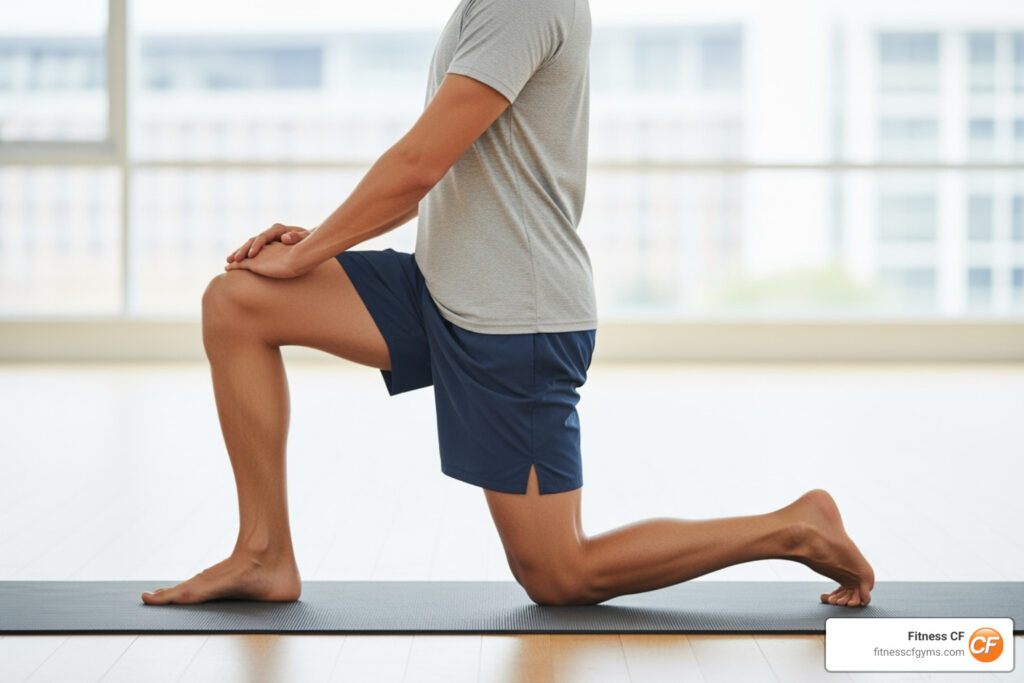
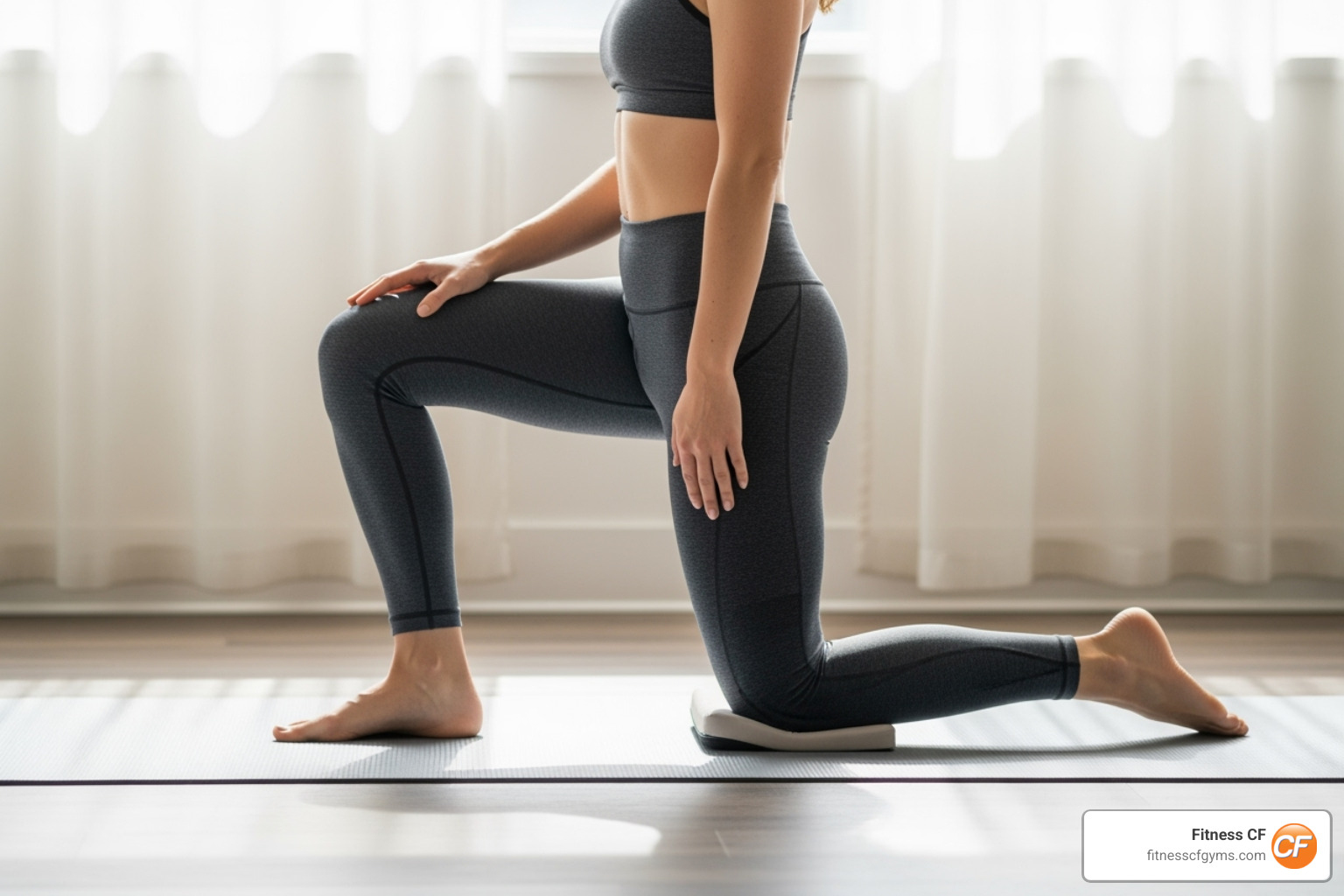
- Half-Kneeling Hip Flexor Stretch: Kneel on one knee with the other foot in front. Gently push your hips forward, keeping your torso upright. Squeeze the glute of the back leg to increase the stretch.
-
90/90 Stretch: Sit with your front leg bent 90 degrees in front and your back leg bent 90 degrees to the side. Keeping your back straight, lean forward over your front leg.
-
Supine Hip Flexor Stretch: Lie on your back on a bench, letting one leg hang off. Pull the other knee to your chest and let gravity stretch the hanging leg.
-
Side-Lying Stretch: Lie on your side, bend your top knee, and pull your heel toward your glute. Keep your pelvis tucked to isolate the stretch.
Essential Strengthening Exercises
Aim for 2-3 sets of 10-15 reps, 2-3 times per week, as pain allows.
- Glute Bridges: Lie on your back, knees bent. Squeeze your glutes and lift your hips to form a straight line from shoulders to knees. Lower slowly.

-
Planks: Hold a position on your forearms, keeping your body straight from head to heels. Engage your core and glutes for 30-60 seconds.
-
Standing Marches: Stand tall and slowly lift one knee toward your chest, using your core for stability. Alternate legs with control.
-
Clamshells: Lie on your side with knees bent. Keeping feet together, lift your top knee without rolling your hips back.
For more recovery tips, check out What Are the Best Ways to Relieve Sore Muscles?.
Recovery, Prevention, and When to See a Doctor
Knowing the recovery process and when to seek professional help is a key part of learning how to treat sore hip flexor pain. For persistent or severe issues, physical therapy is highly beneficial. A physical therapist can identify underlying muscle imbalances and create a custom rehabilitation program to restore strength and range of motion, ensuring a safe return to activity.
Hip flexor strains are graded by severity, which dictates the recovery timeline. A study on hip flexor strains in college athletes confirms that most can return to sport within these timeframes with proper care.
| Grade of Strain | Description | Symptoms | Recovery Time |
|---|---|---|---|
| Grade 1 (Mild) | Minor muscle fiber damage | Mild pain, minimal loss of strength | 1-2 weeks |
| Grade 2 (Moderate) | Partial muscle tear | Moderate pain, swelling, weakness | 3-6 weeks |
| Grade 3 (Severe) | Complete muscle rupture | Severe pain, significant swelling, inability to use muscle | 6-12 weeks |
How to Prevent Hip Flexor Strains
Prevention is always the best strategy. Incorporate these habits to protect your hip flexors:
- Warm-Up and Cool-Down: Always start with 5-10 minutes of light cardio and dynamic stretching (like leg swings) and end with static stretching. Learn more in The Importance of Warm-Up and Cool-Down Exercises.
- Strength Training: A balanced fitness routine that includes strong glutes and core muscles provides support and prevents your hip flexors from becoming overworked.
- Avoid Prolonged Sitting: If you have a desk job, stand and walk around every 30-60 minutes to prevent your hip flexors from becoming tight and weak.
When to Seek Medical Attention for how to treat sore hip flexor
While most strains heal with home care, see a doctor if you experience:
- Severe pain that doesn’t improve with rest.
- Inability to walk or bear weight on the affected leg.
- A popping sound at the time of injury.
- No improvement after two weeks of consistent home treatment.
- Signs of infection, such as fever, increasing redness, or warmth.
For more guidance, consult resources like When to see a doctor for hip pain. Seeking professional help ensures a correct diagnosis and prevents a minor issue from becoming a chronic problem.
Understanding Hip Flexor Pain: Causes and Symptoms
Our hip flexor muscles, located where the thigh meets the pelvis, are crucial for movements like walking, running, and bending. This group includes the iliopsoas and rectus femoris, which work together to lift the knee toward the chest (hip flexion).
A hip flexor strain, or “pulled muscle,” happens when these muscle fibers are overstretched and tear. The causes are often straightforward:
- Overuse: Repetitive leg lifting in activities like running or cycling.
- Sudden Movements: Explosive actions like sprinting or kicking in sports such as soccer and hockey.
- Prolonged Sitting: This keeps hip flexors in a shortened, weak state, making them prone to injury.
- Weak Core and Glutes: Supporting muscles that aren’t strong enough force the hip flexors to overcompensate and strain.
Common Symptoms of a Hip Flexor Strain
Recognizing symptoms is the first step in learning how to treat sore hip flexor pain. Key signs include:
- Pain in the front of the hip or groin, often felt deep in the joint.
- A sharp pain or “popping” sensation during the injury.
- Swelling and bruising in the affected area.
- Muscle spasms or cramping.
- Weakness in the leg, making it hard to lift the knee or walk.
- Lower back pain, as a tight psoas muscle can pull on the lumbar spine. This is why it’s important to alleviate sore muscles after workout holistically.
Conditions That Can Mimic Hip Flexor Pain
Other conditions can cause similar pain, including hip impingement, a herniated disk, groin strain, osteoarthritis, or pinched nerves. Understanding where is hip flexor pain felt? can help, but a professional diagnosis is recommended if symptoms are severe or persistent.
Immediate At-Home Hip Flexor Treatment
For most hip flexor strains, immediate at-home care is highly effective. How to treat sore hip flexor pain starts with the RICE method: Rest, Ice, Compression, and Elevation. For a full breakdown, see our guide on The RICE Method for Muscle Recovery.
- Rest: Stop any activity that causes pain to allow the muscle to heal.
- Ice: For the first 48-72 hours, apply a wrapped ice pack for 15-20 minutes every 2-3 hours to reduce swelling.
- Compression: Use an elastic bandage or compression shorts for support and to minimize swelling.
- Elevation: When lying down, prop your leg on pillows so it’s higher than your heart.
Over-the-counter pain relievers like ibuprofen or naproxen can reduce pain and inflammation, while acetaminophen helps with pain only. Follow package directions. After three days, heat therapy (like a warm bath or heating pad) can help relax the muscle. For more medical insights, refer to resources like Hip flexor strain – aftercare.
How to Treat Sore Hip Flexor with Stretches and Strengthening
Once initial pain subsides, active recovery is the next step in learning how to treat sore hip flexor pain. Gentle movement through stretching and strengthening prevents stiffness and promotes healing. For more routines, explore our guide on Stretching Routines to Improve Flexibility and Prevent Injuries.
Building strength in surrounding muscles, like the glutes and core, is also vital for support and resilience. Physical therapists often recommend this combined approach, as seen in resources like Hip Flexor Pain: Exercises and Tips From Physical Therapists.
Effective Striches for how to treat sore hip flexor
Move slowly, hold each stretch for 30 seconds, and repeat 2-3 times per side daily. Avoid any sharp pain.
-
Half-Kneeling Hip Flexor Stretch: Kneel on one knee and place the other foot flat on the floor in front. Gently push your hips forward, keeping your torso upright, to feel a stretch in the front of the hip.
-
90/90 Stretch: Sit on the floor with one leg bent 90 degrees in front and the other bent 90 degrees to your side. Lean forward over your front leg with a straight back.
-
Supine Hip Flexor Stretch: Lie on your back on a bench with one leg hanging off. Pull the other knee to your chest and let the hanging leg relax toward the floor.
-
Side-Lying Stretch: Lie on your side, bend your top knee, and gently pull your heel toward your glute. Keep your pelvis tucked to isolate the stretch.
Essential Strengthening Exercises
Perform 2-3 sets of 10-15 reps, 2-3 times per week, as pain allows.
-
Glute Bridges: Lie on your back with knees bent. Squeeze your glutes and lift your hips until your body is in a straight line from shoulders to knees. Lower slowly.
-
Planks: On your forearms, hold your body in a straight line from head to heels. Engage your core and glutes for 30-60 seconds.
-
Standing Marches: Stand tall and slowly lift one knee toward your chest, keeping the movement controlled. Alternate sides.
-
Clamshells: Lie on your side with knees bent and stacked. Keeping feet together, lift your top knee toward the ceiling without rolling your hips.
For more tips on muscle care, see What Are the Best Ways to Relieve Sore Muscles?.
Recovery, Prevention, and When to See a Doctor
Understanding the full recovery process and prevention strategies is key to effectively learning how to treat sore hip flexor pain. For severe or recurring issues, physical therapy is invaluable. A physical therapist can identify root causes and design a personalized recovery plan to safely restore strength and mobility.
Recovery time depends on the severity of the strain:
- Grade 1 (Mild): Minor tears that typically heal in 1-2 weeks.
- Grade 2 (Moderate): Partial tears that cause pain and weakness, usually taking 3-6 weeks to heal.
- Grade 3 (Severe): Complete tears that can take 6-12 weeks or longer and often require professional medical care.
Research shows that with a structured recovery plan, most people can return to their activities without rushing and risking re-injury.
How to Prevent Hip Flexor Strains
Prevention is always the best approach. Adopt these smart habits:
- Warm-Up and Cool-Down: Always warm up with dynamic movements and cool down with static stretches. This prepares muscles for activity and aids recovery. Our guide on The Importance of Warm-Up and Cool-Down Exercises has great routines.
- Balanced Fitness: Strengthen your glutes and core to support your hip flexors and prevent them from being overworked.
- Take Movement Breaks: If you sit for long periods, get up and walk around every hour to prevent hip flexors from becoming tight.
When to Seek Medical Attention for how to treat sore hip flexor
While home treatment is often sufficient, see a doctor for these red flags:
- Severe pain that doesn’t improve with rest.
- Inability to walk or bear weight on your leg.
- A popping sound at the time of injury.
- No improvement after 2 weeks of home care.
- Signs of infection like fever, redness, or warmth.
Trust your instincts. Seeking professional help is a smart investment in your long-term health and ensures you get the right diagnosis and treatment plan.