Why Low-Impact HIIT for Seniors Is a Game-Changer
Low impact hiit for seniors is a safe, effective workout method that combines short bursts of intense effort with recovery periods—all while keeping at least one foot on the ground to protect your joints. Here’s how to get started:
Quick Guide to Low-Impact HIIT for Seniors:
- Start with a 5-minute warm-up (marching in place, arm circles)
- Perform 30 seconds of intense effort (modified squats, step-jacks, wall push-ups)
- Rest for 30 seconds (walking in place or gentle movement)
- Repeat the circuit 2-3 times, for a 15-20 minute total workout
- Cool down for 5 minutes with stretching and deep breathing
- Workout 2-3 times per week with rest days in between
If you’re wondering whether high-intensity exercise is right for you, the good news is it doesn’t have to mean high impact. Traditional HIIT workouts often involve jarring movements that can stress aging joints. Low-impact HIIT removes those risky elements while keeping the heart-pumping, strength-building benefits that make interval training so effective.
Research shows that HIIT can improve cardiovascular health, increase muscle strength, boost balance, and even improve mental clarity—all crucial for maintaining independence as we age. The beauty of low-impact modifications is that they make these benefits accessible to everyone, regardless of current fitness level or joint concerns.
Many seniors worry that slowing down is inevitable. The truth is that staying active with the right type of exercise can help you feel more energized, stronger, and more confident in your daily activities.
I’m Pleasant Lewis, and in my 40+ years in the fitness industry, I’ve seen how low impact hiit for seniors transforms lives by building strength and boosting energy without unnecessary joint stress. My mission is to help you find that fitness has no age limit—it simply needs to be adapted to meet you where you are.
What is Low-Impact HIIT and Why Is It Perfect for Seniors?
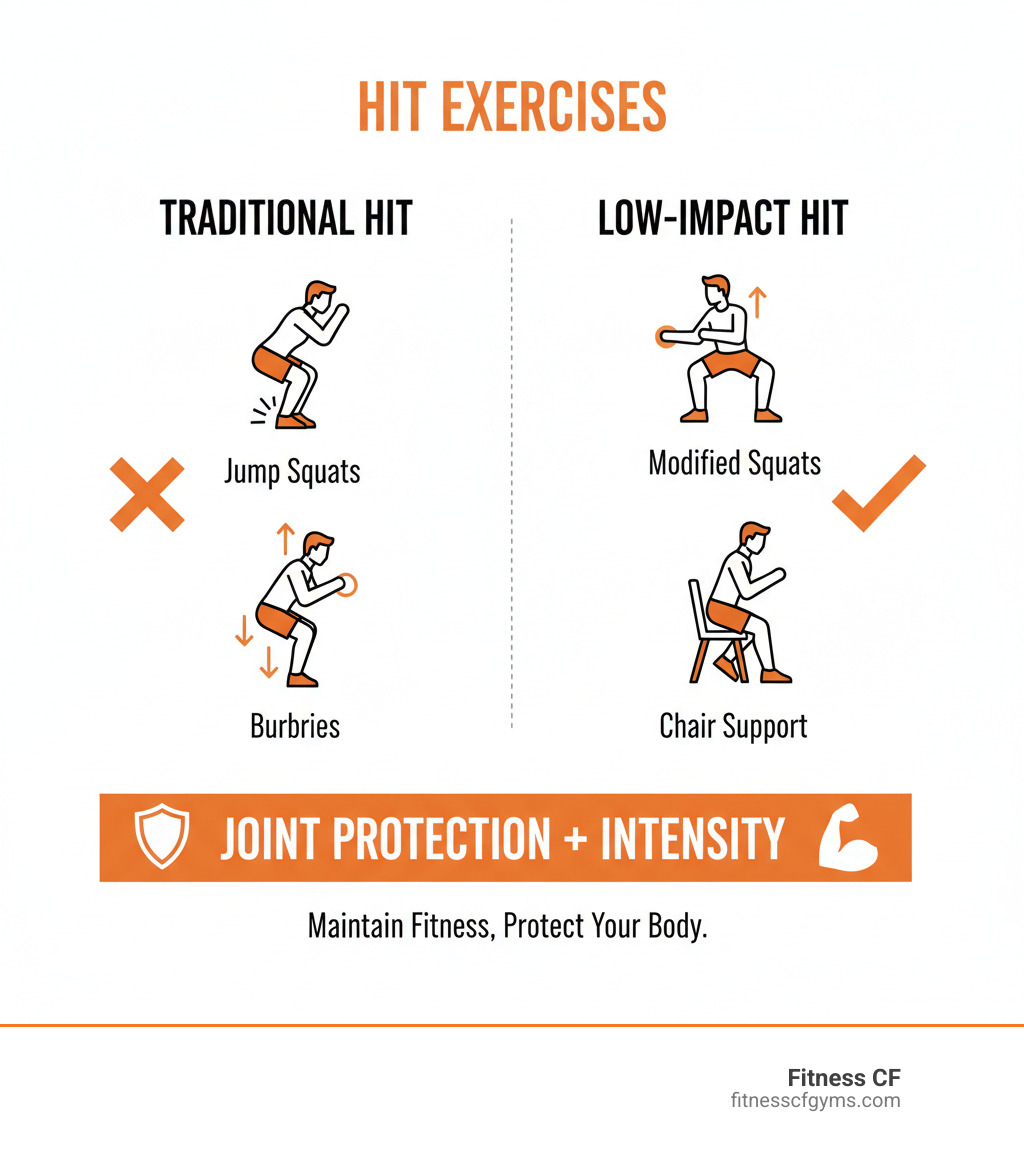
High-Intensity Interval Training (HIIT) involves short bursts of intense exercise followed by brief recovery periods. This method challenges your heart and muscles effectively. However, traditional HIIT often includes high-impact moves like burpees and jump squats, where both feet leave the ground. This can be jarring on the joints, especially for those with arthritis, osteoporosis, or general wear and tear.
That’s exactly why low impact hiit for seniors is such a perfect fit for older adults.
Low-impact HIIT (HILIT) keeps the powerful interval structure but ditches the jumping. By keeping at least one foot on the ground at all times, you protect your joints while still challenging your fitness. You get to push your body, boost cardiovascular health, and build strength without unnecessary stress on your knees, hips, or back. This makes low impact hiit for seniors accessible to everyone, regardless of fitness level. For more joint-friendly strategies, check out our guide on Low Impact Workouts Perfect for Beginners and Those with Joint Concerns.
Here’s how traditional high-impact moves compare to their low-impact alternatives:
| Traditional High-Impact HIIT | Low-Impact HIIT (for Seniors) |
|---|---|
| Jump Squats | Chair Squats / Bodyweight Squats |
| Burpees (full jump) | Modified Burpees (step-back, no jump) |
| Jumping Jacks | Modified Seal Jacks / Step-Jacks |
| Running/Sprinting | Fast Walking / Power Walking / Marching in Place |
| Box Jumps | Step-Ups on a low platform or stair |
| Mountain Climbers (fast run) | Modified Mountain Climbers (step-in) |
Notice how each low-impact version keeps the movement pattern but removes the impact? That’s the magic of this approach.
The “Intensity” in Low-Impact HIIT
You might be wondering: if I’m not jumping, how can it be “high-intensity”? The answer is simple: intensity is relative to you. It’s about pushing your personal limits safely.
- The Talk Test: During your high-intensity bursts, you should only be able to speak a few words at a time. If you can hold a conversation, you need to increase the effort. During recovery, you should be able to talk more comfortably.
- Rate of Perceived Exertion (RPE): On a scale of 0 (rest) to 10 (max effort), aim for a 7 or 8 during your work intervals. You should be working hard and breathing heavily, but not in pain. Drop to a 3 or 4 during recovery.
You can reach these high-intensity levels without jumping. A fast march with powerful arm pumps or quick chair squats can absolutely lift your heart rate to that 7-8 zone. It’s all about the effort you bring.
How It Differs from Traditional Cardio
While steady-state cardio like walking is great, low-impact HIIT offers unique advantages for seniors.
First, it’s time-efficient. HIIT workouts can improve heart health in a shorter time than traditional cardio. A 15-20 minute HIIT session can offer greater benefits than the same time spent at a moderate pace.
Second, HIIT creates a powerful metabolic boost, or “afterburn effect,” where your body continues burning calories at an liftd rate for hours post-workout. This helps you avoid workout plateaus.
Finally, and most importantly, low-impact HIIT is designed to protect your joints. As HILIT focuses on total-body moves without the stress, it’s a sustainable long-term fitness solution. You get cardiovascular benefits and joint health in one smart, effective workout.
The Powerful Health Benefits of Low-Impact HIIT for Seniors
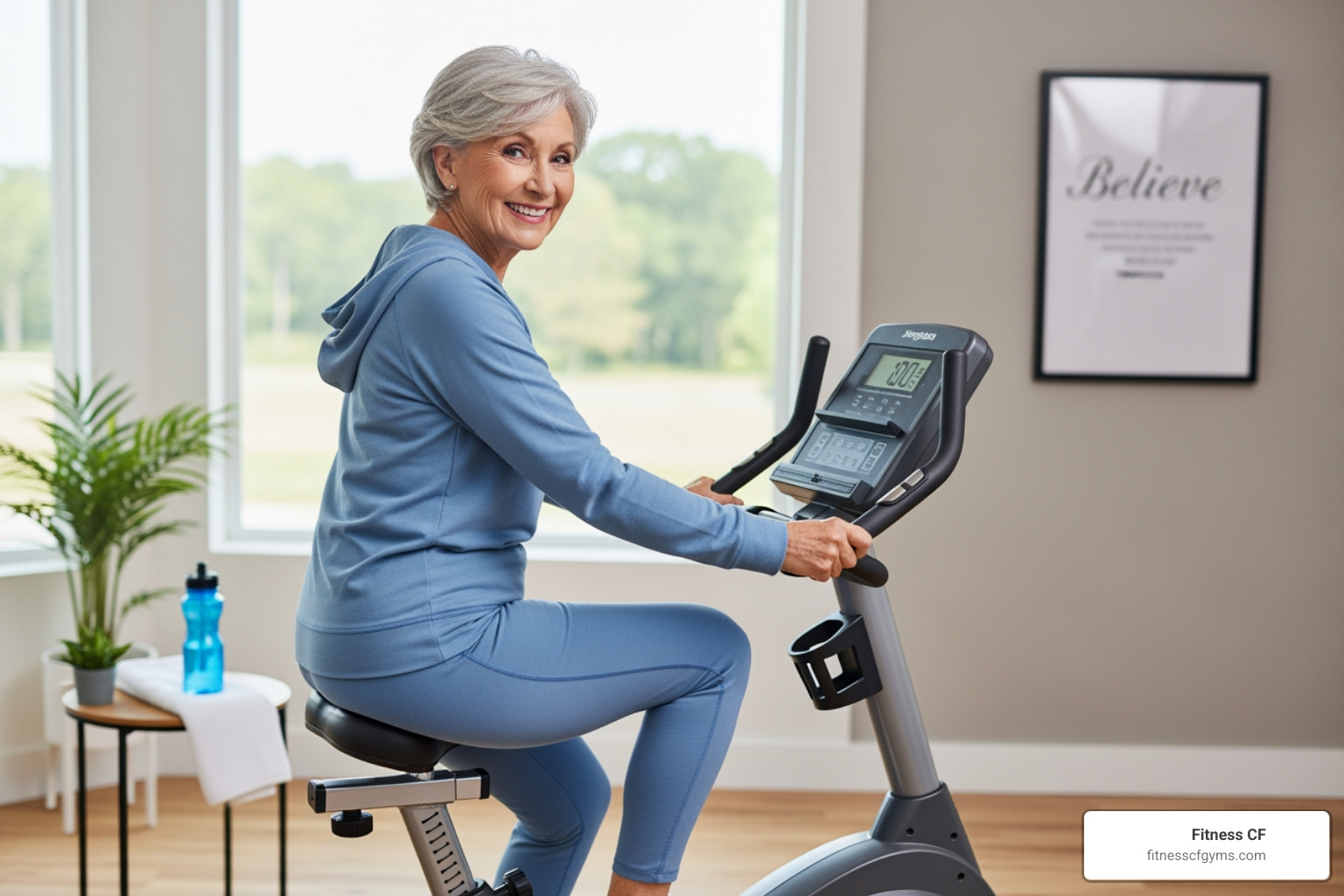
Committing to low impact hiit for seniors is an investment in a healthier, more vibrant future. The benefits extend beyond the workout, improving everything from physical strength to mental sharpness. This training supports the ability to play with grandchildren, steer stairs with confidence, and live independently. It’s a comprehensive approach to healthy aging, simultaneously building endurance, strength, balance, and metabolic health. Our guide on Fitness After 50: The Benefits of Staying Active in Your Golden Years explores more ways that staying active can transform your later years.
Boost Your Heart Health and Endurance
Your heart is a muscle that gets stronger with appropriate challenges. The great news is that HIIT workouts can improve heart health in a shorter time compared to steady-state cardio. This means a 20-minute session can yield significant cardiovascular benefits.
HIIT is proven to improve VO2 max, which is how efficiently your body uses oxygen during exercise. A higher VO2 max means your heart and lungs work better, translating to more stamina for daily activities like climbing stairs or walking long distances.
Regular low-impact HIIT can also lead to lower blood pressure and improved cholesterol levels, reducing your risk of stroke and heart disease. You’re building a cardiovascular system that supports an active, engaged lifestyle for years to come.
Build Strength and Combat Age-Related Muscle Loss
Starting around age 30, we naturally lose muscle mass in a process called sarcopenia. This accelerates in our 60s and 70s if we don’t actively work against it. Muscle loss means a loss of strength, impacting your ability to perform everyday tasks.
This is where low impact hiit for seniors is so powerful. Studies show HIIT can increase fat-free mass (muscle) by 1-3% in older adults. This translates directly into functional strength—the kind that matters in daily life. Functional strength means carrying groceries, lifting a suitcase, or getting up from a chair with ease. It’s about maintaining your independence.
More muscle also means a higher metabolic rate, so your body burns more calories at rest. This helps with weight management and keeps your energy levels stable. You’re building a body that works more efficiently, even when you’re not exercising.
Improve Balance and Reduce Fall Risk
Balance is a skill you can actively improve, and it’s crucial for preventing injuries. Falls are a leading cause of injuries in older adults, but you can take steps to reduce your risk.
Low-impact HIIT naturally improves balance. The dynamic exercises engage your core muscles, which are the foundation of stability. Shifting your weight and performing controlled motions trains your body’s proprioception—its ability to sense where it is in space. This heightened body awareness helps you react quickly to an uneven sidewalk or a slippery floor.
Low impact hiit for seniors also strengthens the stabilizer muscles around your ankles, knees, and hips. These smaller muscles are crucial for maintaining balance but are often neglected. The combination of stronger muscles, better coordination, and improved core stability creates a powerful defense against falls, helping you steer your world with confidence and safety.
Your Safety-First Guide to Starting Low-Impact HIIT
Starting a new fitness journey is exciting, but with low impact hiit for seniors, safety is the top priority. With the right approach, you can enjoy all the benefits while minimizing risks.
Essential Safety Tips for Low-Impact HIIT for Seniors
- Consult Your Doctor: Before you begin, talk to your doctor. This is crucial if you have chronic conditions like heart disease, diabetes, high blood pressure, or arthritis. They can offer personalized guidance and clear you for high-intensity exercise.
- Listen to Your Body: Understand the difference between a healthy challenge and harmful strain. You should feel breathless and your muscles should be working, but you should never feel sharp pain, dizziness, or chest discomfort. If you experience any warning signs, stop immediately and rest.
- Prioritize Proper Form: Correct form is more important than speed. Good alignment protects your joints and ensures your muscles work as intended. If you’re unsure about a movement, practice it slowly in front of a mirror.
- Warm-Up and Cool-Down: Never skip your warm-up and cool-down. A 5-minute warm-up (marching, arm circles) prepares your body for exercise. A 5-minute cool-down with stretching helps your heart rate return to normal and reduces muscle soreness.
- Start Slow: Begin with shorter work intervals (15-20 seconds) and longer recovery periods. You can gradually increase the intensity and duration as your fitness improves.
- Create a Safe Space: Work out in a clear, well-lit area with a non-slip surface. Keep a sturdy chair or counter nearby for balance support. Using support is a smart way to maintain form and prevent falls.
- Stay Hydrated: Drink water before, during, and after your workout. Our sense of thirst can diminish with age, so make a conscious effort to hydrate.
What Equipment Do You Need?
One of the best things about low impact hiit for seniors is its simplicity. You don’t need a gym membership or expensive equipment. Your bodyweight provides plenty of resistance for an effective workout.
- A Sturdy Chair: Use it for seated exercises, for support during chair squats, or for balance during standing movements.
- Optional Items: Light dumbbells or resistance bands can add variety, but household items like water bottles or canned goods work just as well.
- Proper Footwear: Comfortable, supportive athletic shoes with good grip are a worthwhile investment. They prevent slips and provide cushioning to protect your joints.
Building Your Weekly Routine with Low-Impact HIIT for Seniors
Consistency is key to seeing results. Aim for two to three low-impact HIIT sessions per week, with at least one rest day in between. Rest days are when your muscles repair and get stronger.
For comprehensive health, your HIIT sessions should be part of a broader fitness plan. The goal for seniors is at least 150 minutes of moderate exercise per week. You can round out your routine with dedicated flexibility work (gentle yoga, stretching) and other forms of low-impact cardio like walking, swimming, or cycling. This varied approach addresses all components of fitness: cardiovascular health, muscular strength, flexibility, and balance.
A 15-Minute Sample Low-Impact HIIT Workout
Ready to try low impact hiit for seniors? This 15-minute, joint-friendly routine can be done almost anywhere. The structure is simple: 30 seconds of work followed by 30 seconds of active recovery (like gentle marching). You’ll complete the circuit twice. Remember to modify exercises to match your fitness level and always listen to your body.
The Warm-Up (5 Minutes)
A proper warm-up increases blood flow, loosens joints, and reduces injury risk. Spend about five minutes preparing your body for movement.
- Marching in Place (2 minutes): Start gently, then gradually lift your knees higher and swing your arms.
- Arm Circles (1 minute): Make small circles forward, then backward, gradually increasing the size.
- Torso Twists (1 minute): Gently rotate your upper body from side to side, keeping your hips stable.
- Leg Swings (1 minute): Hold a chair or wall for balance. Swing one leg forward and back, then side to side. Switch legs halfway through.
Follow along with one of our warmup routines.
The Workout Circuit (Repeat 2 times)
Perform each exercise for 30 seconds, followed by 30 seconds of active recovery (gentle marching). Repeat the entire circuit for a total of two rounds.
- Alternating Toe Taps (30 sec work, 30 sec rest): Stand tall and lightly tap one toe forward, then return to center. Alternate feet, increasing speed as you feel comfortable. Use a wall for balance if needed.
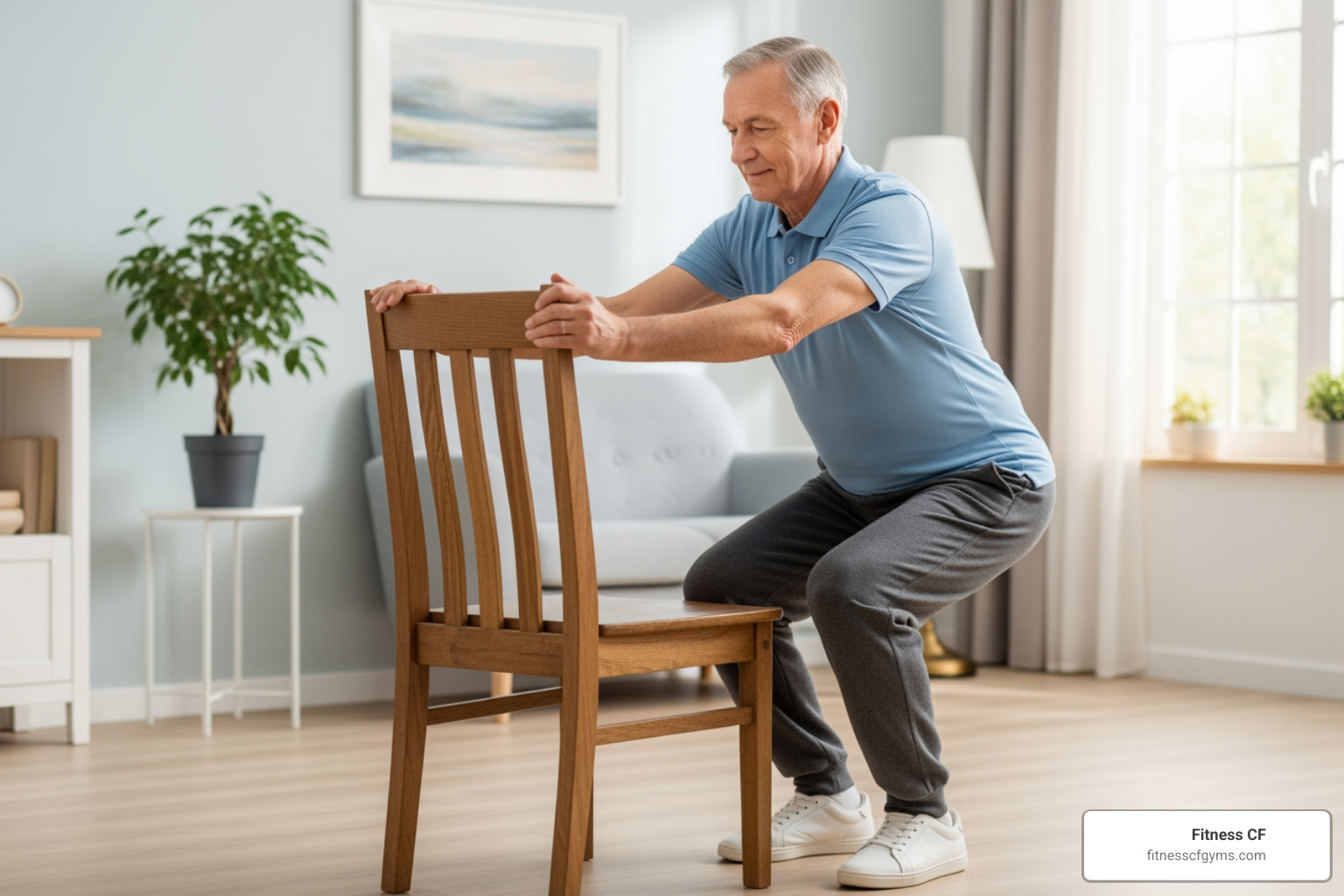
- Chair Squats (30 sec work, 30 sec rest): Stand in front of a chair, feet shoulder-width apart. Lower your hips back and down as if to sit, keeping your chest lifted. For a modification, sit down completely before standing back up.
- Wall Push-ups (30 sec work, 30 sec rest): Stand facing a wall at arm’s length. Place your palms on the wall at shoulder height. Bend your elbows to bring your chest toward the wall, then push back. To make it harder, step your feet farther from the wall.
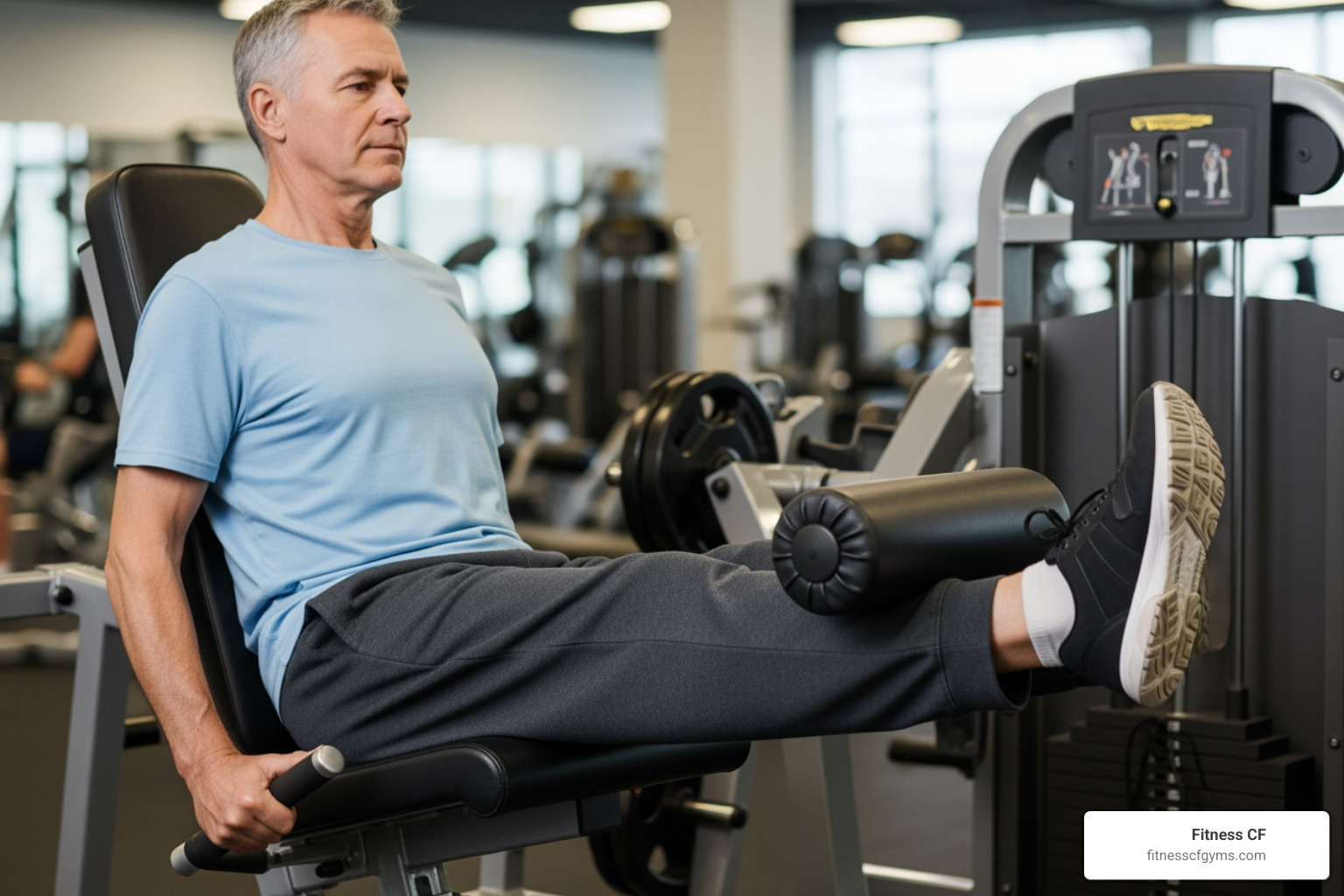
- Seated Knee Lifts (30 sec work, 30 sec rest): Sit on the edge of a sturdy chair, back straight. Lift one knee toward your chest, then lower it. Alternate knees quickly. For less intensity, slow the pace.
- Step-Jacks (30 sec work, 30 sec rest): Instead of jumping, step one foot out to the side while raising your arms. Step back to center as you lower your arms. Alternate sides quickly.
- Modified Burpees (30 sec work, 30 sec rest): Stand behind a sturdy chair, holding the back. Step one foot back, then the other, into a plank position. Step your feet back in one at a time and stand tall. No jumping required.
The Cool-Down (5 Minutes)
Gradually bring your heart rate down and stretch your muscles. Hold each stretch for 20-30 seconds, breathing deeply and never pushing into pain.
- Quad Stretch: Holding a chair for balance, grab your ankle and gently pull your heel toward your glutes. Hold and repeat on the other side.
- Hamstring Stretch: Sit on the edge of a chair with one leg extended, heel on the floor. Hinge forward from your hips until you feel a stretch. Hold and switch legs.
- Chest Stretch: Interlace your fingers behind your back (or hold a towel) and gently lift your arms, opening your chest and shoulders.
- Deep Breathing: Sit or stand comfortably. Inhale slowly through your nose, then exhale slowly through your mouth. Repeat for one minute to calm your nervous system.
Conclusion
You’ve just finded how low impact hiit for seniors can be a true game-changer. You don’t need to jump or put stress on your joints to experience the benefits of high-intensity training. Through safe, joint-friendly movements, you can boost your energy, build strength, and feel more confident in your everyday life.
These workouts are about reclaiming your vitality and proving that age is not a limitation. Every moment you challenge yourself is an investment in your independence and health. The improvements in cardiovascular health, muscle strength, and balance all work together to help you live life on your own terms.
The secret to success is consistency. Showing up just two to three times a week for these short, effective sessions can create profound changes in how you feel and move.
At Fitness CF, we believe fitness should be accessible and effective for everyone. If you’re looking for more resources, our guide An Active Senior’s Guide to the SilverSneakers Program offers valuable information on programs designed for seniors.
Now it’s your turn. You have the knowledge and a sample workout to make a positive change today. The most important step is simply beginning. We invite you to explore our Senior Fitness classes to find a supportive community and expert guidance as you start this exciting chapter.
Your body is capable of amazing things. Let’s move forward together—one interval at a time. Here’s to feeling stronger and more energized than you have in years.