What Is a Weight Loss Workout Plan (And Does It Actually Work)?
A solid weight loss workout plan combines strength training, cardio, recovery, and nutrition into a weekly routine that creates a calorie deficit while preserving lean muscle.
Here’s a quick answer if you’re short on time:
The core components of an effective weight loss workout plan:
- Strength training – 2-3 sessions per week to preserve muscle and boost resting metabolism
- Cardio – 150+ minutes per week of moderate activity, or 75 minutes of vigorous activity
- Calorie deficit – 300-500 calories below your daily maintenance level
- Protein intake – 0.7-1g per pound of body weight daily to protect lean mass
- Recovery – 7-9 hours of sleep and scheduled rest days each week
- Progressive overload – gradually increasing weight or reps to keep results coming
The honest truth? Most people starting a weight loss plan don’t fail because of the wrong exercises. They fail because the plan doesn’t fit their real life.
Between family commitments, long work days, and the mental drain of just getting started, it’s easy to pick up a plan on Monday and drop it by Day 10. Research suggests most people quit fitness programs around the 18-day mark — not because they lack willpower, but because the plan was too aggressive, too confusing, or both.
The good news is that sustainable fat loss doesn’t require perfection. It requires consistency — showing up regularly with a plan that balances effort and recovery.
I’m Pleasant Lewis, owner and operator of Fitness CF with over 40 years in the fitness industry, and I’ve helped thousands of members build weight loss workout plans that actually stick long-term. In this guide, I’ll walk you through everything you need — from the science of fat loss to weekly schedules, nutrition basics, and the mistakes most people make.
The Science of Fat Loss: Strength Training vs. Cardio
To build a weight loss workout plan that actually delivers, we first have to bust a massive myth: the idea that you must spend hours pounding the pavement on a treadmill to burn fat.
When you only do cardio while eating in a calorie deficit, your body doesn’t just burn fat. It also breaks down muscle tissue for energy. This muscle loss is the main reason why people end up looking “soft” even after losing weight on the scale. More importantly, losing muscle slows down your basal metabolic rate (BMR), making it incredibly easy to regain the weight as soon as you stop exercising.
To understand how to choose between the two, read our in-depth breakdown of strength training vs cardio which is better for weight loss. For the absolute best results, a successful routine combines both.

Why Strength Training is Essential for Muscle Preservation
Strength training is the ultimate insurance policy for your muscles. When you lift weights, you send a powerful “use it or lose it” signal to your body. This signal forces your body to keep its lean mass and burn stored fat instead.
Here is the scientific reality: research shows that combining a caloric deficit with weight training helps you retain up to 90% of your lean muscle mass. On the flip side, relying on calorie restriction and cardio alone can result in up to 25% of your weight loss coming directly from calorie-burning muscle tissue.
Additionally, building lean muscle boosts your resting metabolism. Every kilogram of muscle you build burns roughly 13 calories per day at rest, whereas a kilogram of fat burns only about 4. By focusing on progressive overload (gradually increasing the weight, reps, or sets) and compound movements (exercises that use multiple joints at once, like squats, deadlifts, and overhead presses), you build a metabolic engine that works for you 24/7.
For a complete, step-by-step roadmap on how to set up your strength training split, check out this Fat loss workout plan 2026: guide + weekly example.
The Role of Cardio and the Afterburn Effect
While strength training preserves your muscle, cardio is your primary tool for expanding your daily calorie burn. Cardio comes in two main flavors:
- Steady-State Cardio (LISS): Lower-intensity activities like walking, cycling, or using the elliptical. These workouts are gentle on the joints and easy to recover from, making them perfect for beginners.
- High-Intensity Interval Training (HIIT): Alternating short bursts of maximum effort with brief recovery periods. HIIT is incredibly time-efficient and triggers a physiological phenomenon known as EPOC (Excess Post-Exercise Oxygen Consumption), or the “afterburn effect.”
EPOC is the extra oxygen your body needs to recover and return to its resting state after intense exercise. This recovery process can elevate your resting metabolic rate by 6% to 15% for up to 24 to 48 hours after your workout ends.
To maximize health and weight management, we recommend aiming for at least 150 minutes of moderate-intensity aerobic activity or 75 minutes of vigorous-intensity aerobic activity per week.
Designing Your Weekly Weight Loss Workout Plan
Building a workout schedule is like putting together a puzzle. If you try to force the wrong pieces together, the whole thing falls apart. A sustainable weight loss workout plan must balance high-intensity work with active recovery and complete rest.

If you want a detailed, day-by-day progression to follow for your first month, start with our 30-day weight loss workout plan.
How Many Days a Week Should a Beginner Train?
If you are a beginner, consistency is far more important than intensity. Trying to go from zero physical activity to working out six days a week is a direct path to burnout and injury.
We recommend that beginners start with 3 to 4 training sessions per week. This frequency provides enough of a stimulus to kickstart fat loss and muscle retention, while leaving 3 to 4 days for recovery and habit formation.
For intermediate exercisers looking to step up their game, a hybrid structure like the HIIT & Strength Fat Loss Plan combines heavy lifting with metabolic conditioning in the same session for incredible efficiency.
A Sample Weekly Weight Loss Workout Plan Schedule
To help you visualize how to structure your week, here is a side-by-side comparison of a beginner-friendly 3-day full-body split and a more advanced 5-day upper-lower split.
| Day | 3-Day Full-Body Split (Beginner) | 5-Day Upper-Lower Split (Advanced) |
|---|---|---|
| Monday | Full-Body Strength (Squats, presses, rows) | Upper Body Strength (Push/Pull focus) |
| Tuesday | Active Recovery (Light walking/mobility) | Lower Body Strength (Quad focus) |
| Wednesday | Full-Body Strength (Lunges, deadlifts, push-ups) | Active Recovery (LISS Cardio & Yoga) |
| Thursday | Active Recovery (Walking or yoga) | Upper Body Hypertrophy (Higher reps) |
| Friday | Full-Body Strength (Planks, carries, step-ups) | Lower Body Hypertrophy (Posterior chain) |
| Saturday | Steady-State Cardio (30-45 mins LISS) | HIIT & Conditioning Circuit (20-30 mins) |
| Sunday | Complete Rest Day | Complete Rest Day |
Nutrition and Caloric Management for Active Individuals
You cannot out-train a bad diet. A 45-minute gym session might burn 300 to 400 calories, but a single fast-food meal can easily pack over 1,200 calories. To get the absolute best results from your physical efforts, you must pair your workouts with coordinated nutrition.
For a deeper dive into how these two elements work together, read our guide on effective weight loss strategies combining exercise and nutrition.
Calculating Your Calorie Deficit and Macronutrients
To lose weight, you must consume fewer calories than your body burns. This is known as a calorie deficit.
- The Math: A daily calorie deficit of 500 calories leads to approximately 1 pound of fat loss per week, which is a safe and sustainable target.
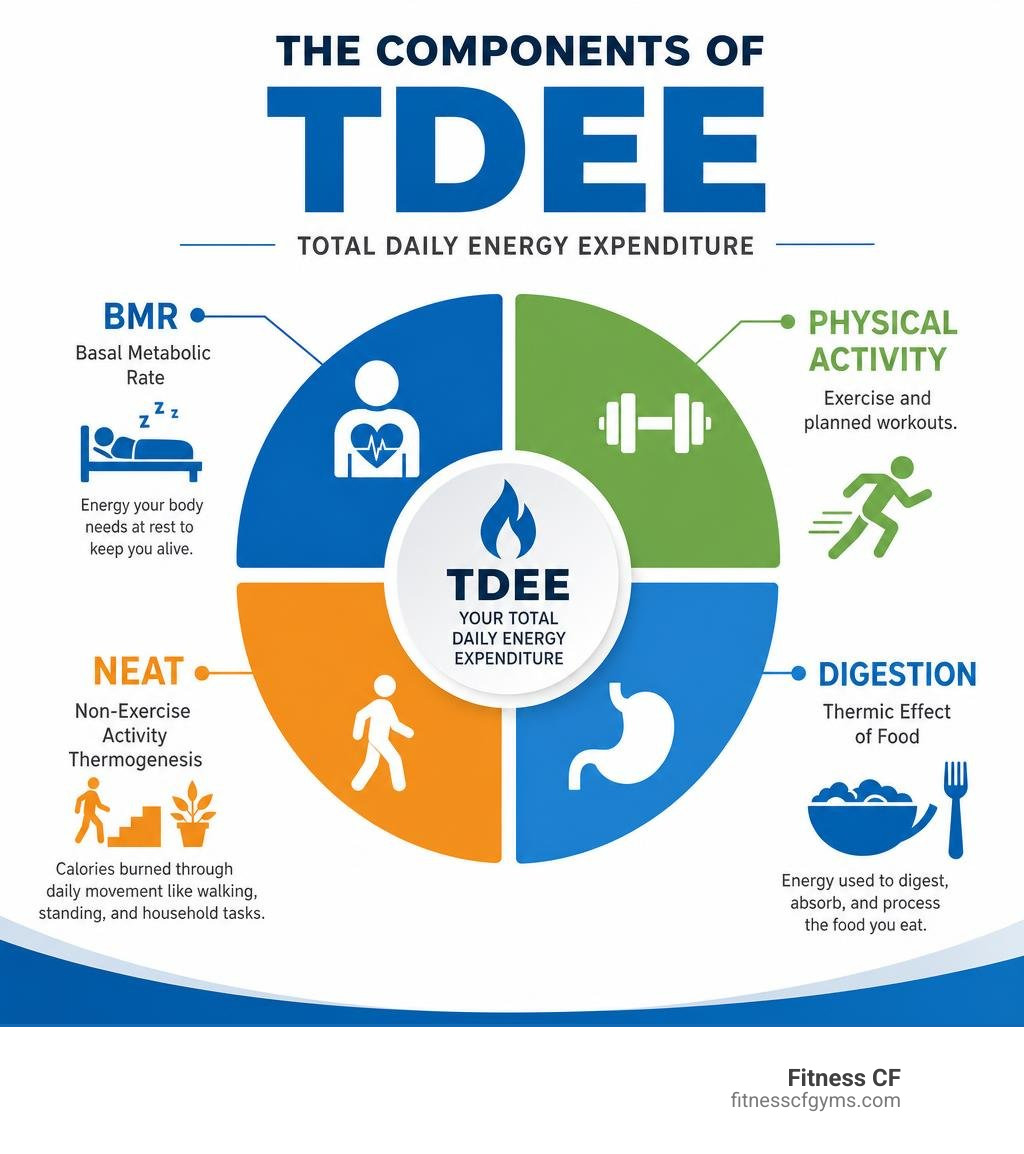
- The Formula: Start by calculating your Total Daily Energy Expenditure (TDEE) based on your Basal Metabolic Rate (BMR) and daily activity level. Then, subtract 15% to 20% (typically 300 to 500 calories) from that number to find your daily target.
Once you have your calorie target, break it down into macronutrients:
- Protein: The most critical macro for weight loss. High protein preserves muscle and keeps you full. Aim for 0.7 to 1.0 grams of protein per pound of body weight (or 1.6 to 2.2 grams per kilogram).
- Carbohydrates: Your body’s primary energy source. Focus on complex carbs like sweet potatoes, oats, and brown rice to fuel your workouts.
- Fats: Essential for hormone regulation. Incorporate healthy fats like avocados, olive oil, and nuts in moderation.
Fueling Your Weight Loss Workout Plan Safely
Starving yourself before a workout is a recipe for a terrible session. To perform your best, aim to eat a light meal containing both carbohydrates and protein 60 to 90 minutes before training.
Hydration is equally important. Water is essential for lipolysis (the metabolic process of breaking down fat) and replacing sweat lost during exercise. Aim to drink at least 2 to 3 liters of water daily.
Within two hours after your workout, eat a protein-rich meal to kickstart muscle repair and recovery.
The Crucial Role of Recovery, Sleep, and Active Rest
Many people believe that fat loss happens while they are sweating in the gym. In reality, your workouts only tear down muscle fibers and stress your system; the actual fat loss and muscle rebuilding happen while you rest and sleep.
Why Sleep is Your Ultimate Fat-Burning Tool
If you are sleeping fewer than 7 hours a night, you are severely sabotaging your weight loss. Sleep deprivation wreaks havoc on your hunger hormones:
- Ghrelin (the hormone that tells you you’re hungry) spikes, leading to intense cravings for sugary, high-calorie foods.
- Leptin (the hormone that tells you you’re full) drops, meaning you feel less satisfied after eating.
Furthermore, a lack of sleep elevates your cortisol (stress hormone) levels, which promotes fat storage around the midsection. Studies show that when people sleep only 6 hours per night, up to 60% of their weight loss comes from lean muscle mass. When they sleep 8 hours, up to 80% of their weight loss comes directly from fat.
Active Recovery and Stress Management
Rest days do not mean you have to sit on the couch all day. In fact, performing light, low-impact movement on your off days — known as active recovery — boosts circulation, reduces muscle soreness, and helps calm your nervous system.
Excellent active recovery options include:
- A 20-to-30-minute outdoor walk
- Gentle mobility work or stretching
- A restorative yoga session
Tracking Progress and Avoiding Common Pitfalls
The scale is a useful tool, but it is also a notorious liar. When you start a new weight loss workout plan, your body composition shifts. You may be losing fat while simultaneously building muscle and retaining temporary water weight from muscle inflammation.
To avoid getting discouraged by normal scale fluctuations, check out our guide on the 7 common mistakes with losing weight and how to avoid them.
Beyond the Scale: Measuring Real Body Composition Changes
To get an accurate picture of your progress, track these metrics instead of just your weight:
- Circumference Measurements: Use a flexible tape measure to track changes around your waist, hips, chest, arms, and thighs once every two weeks.
- Progress Photos: Take front, side, and back photos in the same lighting and clothing every two weeks.
- Clothing Fit: Notice how your favorite pair of jeans or a fitted shirt feels. If your clothes are looser but the scale hasn’t budged, you are successfully losing fat and building muscle.
To set realistic expectations for your journey, read our detailed article on the weight loss timeline how long does it take.
Debunking Common Weight Loss Myths
- Myth 1: “You can spot-reduce fat.” You cannot choose where you lose fat. Doing endless crunches will not burn belly fat; your body burns fat systemically based on genetics.
- Myth 2: “You must train in the low-intensity fat-burning zone.” While low-intensity exercise burns a higher percentage of calories from fat, high-intensity workouts burn far more total calories, leading to greater overall fat loss.
- Myth 3: “Cardio is the only way to lose weight.” As we’ve established, strength training is the ultimate key to maintaining your metabolism and preserving muscle.
Frequently Asked Questions About Weight Loss Workouts
Can I lose weight with just a workout plan and no diet changes?
While it is technically possible if your daily activity is incredibly high, it is highly impractical. Exercise alone rarely creates a large enough calorie deficit to overcome a high-calorie diet. True, sustainable success always comes from combining both.
How long does it take to see visible results from a new routine?
Most people begin to notice improvements in their energy, sleep quality, and strength within 2 to 3 weeks. Visible changes in the mirror and body measurements typically become apparent after 4 to 6 weeks of consistent training and nutrition.
Should I do cardio before or after my strength training sessions?
Always do your strength training first. Lifting weights requires high levels of energy, focus, and muscular strength. If you perform intense cardio first, you will deplete your muscle glycogen stores, compromise your lifting form, and increase your risk of injury.
Conclusion
Starting a weight loss workout plan is one of the most powerful steps you can take for your long-term health, confidence, and vitality. There is no single “perfect” routine — the best plan is simply the one you can stick to week after week, month after month.
At Fitness CF, we are dedicated to helping our Central Florida community build healthy, active lifestyles. Whether you are looking for dynamic fitness classes, personal training, or a supportive environment to kickstart your journey, we have everything you need to succeed.
Ready to take the first step toward a healthier, stronger you? Explore our customizable Fitness CF Workout Plans today!