Why the Best Recovery Shake Recipe Can Make or Break Your Results
Finding the best recovery shake recipe after a tough workout isn’t just about taste — it’s about giving your muscles exactly what they need to repair and come back stronger.
Here are the top recovery shake recipes covered in this article:
| Recipe | Best For | Protein | Carbs | Calories |
|---|---|---|---|---|
| Chocolate Peanut Butter Recovery Shake | Muscle building, dessert cravings | ~23g | ~45g | ~488 |
| Tropical Recovery Boost | Endurance, inflammation | ~27g | ~57g | ~380 |
| Berry-Packed DIY Recovery Shake | General recovery, antioxidants | ~25g | ~50g | ~300 |
| High-Protein Cottage Cheese Emulsion Shake | Maximum protein, meal replacement | ~66g | ~55g | ~520 |
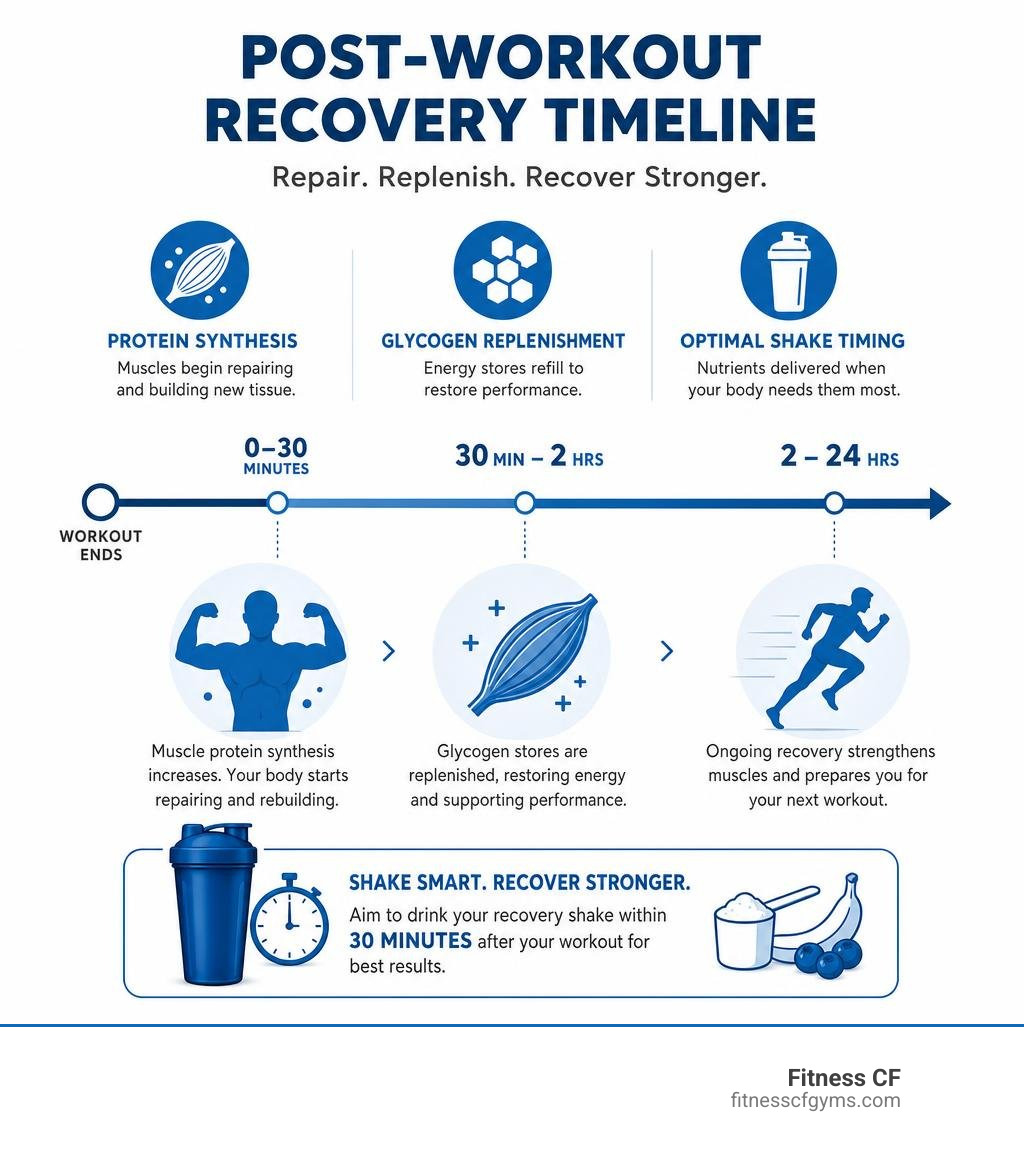
After hard exercise — whether that’s strength training, cardio, or a high-intensity class — your muscles are depleted and slightly damaged. They need two things fast: protein to start rebuilding muscle fibers and carbohydrates to refill your energy stores (glycogen). Research shows that consuming protein within 30 minutes after exercise can increase muscle protein synthesis by up to 50% compared to waiting.
The good news? A well-made recovery shake checks both boxes in about five minutes.
I’m Pleasant Lewis, owner and operator of Fitness CF and Results Fitness, with over 40 years in the fitness industry helping people reach their health goals. In that time, I’ve seen how the best recovery shake recipe can be a game-changer for members juggling busy schedules, family life, and consistent training.
The Science of Post-Workout Recovery

Post-workout recovery is not just “rest until you stop feeling sore.” It is a biological rebuilding process. When you train hard, especially with strength training, sprint intervals, spin, or challenging cardio, your body goes through a few predictable changes:
- Muscle fibers experience tiny amounts of damage.
- Glycogen, your stored carbohydrate fuel, gets depleted.
- You lose fluid and electrolytes through sweat.
- Exercise-induced oxidative stress increases.
- Inflammation rises temporarily as part of the repair process.
That sounds dramatic, but it is normal. It is also how fitness improves. Strength training helps build lean muscle, supports bone health, improves metabolism, and makes everyday tasks easier. Cardio improves heart health, endurance, mood, and energy. The magic happens when you train hard, recover well, and repeat consistently.
A recovery shake helps because it delivers the nutrients your body needs in a form that is fast, convenient, and easy to digest. For a deeper look at the full recovery process, we recommend our guide to workout recovery and our tips on active recovery for athletes.
The four big recovery nutrients are:
| Nutrient | Why It Matters | Best Shake Sources |
|---|---|---|
| Protein | Repairs and rebuilds muscle tissue | Whey, Greek yogurt, cottage cheese, vegan protein, collagen plus complete protein |
| Carbohydrates | Replenish glycogen stores | Banana, berries, pineapple, oats, dates, honey |
| Electrolytes | Support hydration and muscle function | Coconut water, dairy milk, potassium-rich fruit, magnesium |
| Antioxidants | Help manage exercise-related oxidative stress | Blueberries, cocoa, spinach, pineapple, ginger |
The Golden Window and the Ideal Carb-to-Protein Ratio
The “golden window” is the post-workout period when your muscles are especially ready to absorb nutrients. It is often described as the first 30 to 60 minutes after training.
Is it magic? No. Your muscles will not slam the door shut at minute 61. But timing does matter more when:
- You trained fasted.
- You did a long endurance workout.
- You have another workout later the same day.
- You struggle to eat enough protein.
- You are trying to build or preserve muscle.
For most people, drinking a recovery shake within 30 to 60 minutes after a hard workout is a smart habit. Research cited in sports nutrition discussions shows that protein soon after training can increase muscle protein synthesis compared with delayed intake. Athletes using a post-workout shake with 20 to 30 grams of protein plus carbohydrates may also recover faster than those who skip recovery nutrition.
The classic recovery shake ratio is 3:1 or 4:1 carbs to protein, especially after endurance training. That means about 40 to 60 grams of carbs with 15 to 25 grams of protein. This ratio helps refill glycogen while still providing enough amino acids for muscle repair.
For strength training, muscle building, or fat loss, you may prefer a slightly higher protein ratio, such as:
- 2:1 carbs to protein for strength training
- 1:1 or 2:1 for weight loss
- 3:1 or 4:1 for endurance workouts
- Higher protein meal-replacement shakes when you need more total daily protein
If you want more meal ideas beyond shakes, read what to eat after a workout.
Science-Backed Add-Ins for Muscle Repair
A basic recovery shake can work beautifully with just protein, carbs, and fluid. But certain add-ins may offer extra benefits when used appropriately.
Creatine
Creatine is one of the most researched sports supplements. It supports short bursts of power, strength performance, muscle mass, and recovery between intense efforts. A common serving is 3 to 5 grams per day. It mixes well into chocolate, vanilla, berry, or coffee-style shakes.
Maca powder
Maca is a Peruvian root often used for energy and perceived stamina. Some research and traditional use suggest it may help with energy levels and perceived exertion. It has a malty flavor that works well in chocolate, peanut butter, banana, and mocha shakes.
Urolithin A
Urolithin A is a newer supplement studied for mitochondrial health and muscle endurance, especially in older adults. It is not required for a good shake, but it may be useful for people focused on healthy aging and cellular energy.
Cocoa flavanols
Unsweetened cocoa powder does more than make your shake taste like dessert. Cocoa contains flavanols, plant compounds connected with circulation and antioxidant support. It pairs especially well with peanut butter, banana, Greek yogurt, and whey protein.
Omega-3 fatty acids
Ground flaxseed, chia seeds, and flax oil provide plant-based omega-3 fats. These can support a balanced inflammation response and help make shakes more filling. Use ground flaxseed instead of whole flaxseed because whole seeds may pass through digestion without giving you the full benefit.
For a more supplement-heavy approach, My Post-Workout Shake discusses ingredients like whey, creatine, collagen, magnesium, cocoa, berries, and urolithin A. That more ingredients are not always better. Start with the basics, then customize.
Key Ingredients for the Best Recovery Shake Recipe

The best recovery shake recipe is not one-size-fits-all. The right shake depends on your workout, body size, goals, appetite, and dietary preferences.
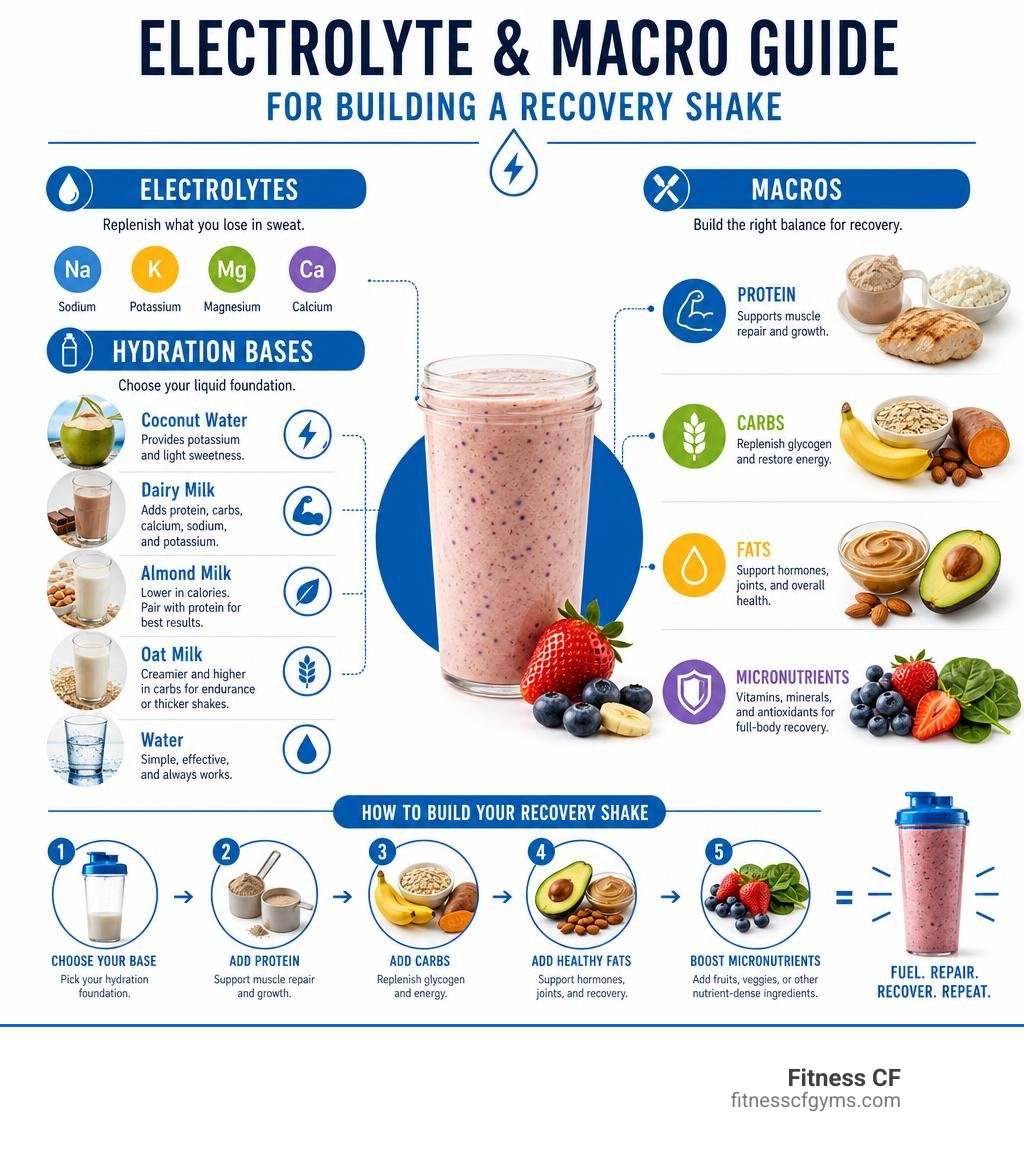
Still, most effective recovery shakes include this formula:
- A protein source
- A carbohydrate source
- A hydration base
- An antioxidant or anti-inflammatory ingredient
- Optional healthy fats or performance add-ins
Here is a simple build-your-own template:
| Component | Good Options | What It Does |
|---|---|---|
| Protein | Whey, Greek yogurt, cottage cheese, soy protein, pea/rice blend | Muscle repair |
| Carbs | Banana, berries, pineapple, mango, oats, dates | Glycogen replenishment |
| Liquid | Coconut water, milk, almond milk, oat milk | Hydration and texture |
| Antioxidants | Blueberries, cocoa, spinach, ginger | Supports recovery from exercise stress |
| Fats | Peanut butter, flaxseed, chia, avocado | Satiety and flavor |
For broader nutrition guidance, see our nutrition tips complete guide and our list of good things for muscle recovery.
Choosing Your Protein Base
Protein is the star of any recovery shake. Aim for about 20 to 30 grams of protein after a moderate to hard workout. Larger athletes, muscle-building phases, or meal-replacement shakes may require more.
Here is how common protein sources compare:
| Protein Source | Pros | Watch-Outs | Best For |
|---|---|---|---|
| Whey protein | Fast-digesting, complete protein, high in leucine | Contains dairy | Muscle repair and strength training |
| Vegan protein | Dairy-free, works for plant-based diets | Some blends are lower in leucine unless fortified | Vegan recovery |
| Greek yogurt | Creamy, high protein, adds calcium | Dairy-based | Balanced recovery shakes |
| Cottage cheese | Very high protein, thick texture | Needs strong blending | High-protein meal replacement |
| Collagen peptides | Easy to mix, supports connective tissue | Not a complete muscle-building protein | Add-on, not main protein |
Whey protein is often considered the gold standard because it contains all essential amino acids and is naturally rich in leucine, an amino acid that helps trigger muscle protein synthesis.
Vegan protein can still work very well. Look for a complete plant-based blend, such as pea plus rice protein, or soy protein. If the protein is lower in leucine, you may need a slightly larger serving.
Greek yogurt gives you protein, creaminess, and a mild tang that works well with berries or chocolate.
Cottage cheese sounds odd in a shake until you blend it properly. Then it becomes thick, creamy, and surprisingly neutral. Think milkshake texture without needing ice cream.
Collagen can support tendons, ligaments, and joints, but it is not a complete protein for muscle repair. If you use collagen, pair it with whey, Greek yogurt, soy, or another complete protein.
For more post-workout shake basics, read our guide to the best post-workout shake.
Hydration Bases and Electrolyte Replenishment
After sweating, recovery is not just about macros. It is also about fluid and electrolytes.
Common sweat-related electrolytes include:
- Sodium
- Potassium
- Magnesium
- Calcium
Coconut water is popular because it provides potassium and light natural sweetness. Research notes in the source material estimate coconut water at around 600 mg potassium per liter. It is a good fit after sweaty cardio, outdoor workouts, spin, or hot-weather training.
Dairy milk provides protein, carbs, calcium, sodium, and potassium. Chocolate milk has long been used as a simple recovery drink because it naturally combines carbs and protein.
Almond milk is lower in calories and has a mild flavor. It is not usually high in protein unless fortified, so pair it with protein powder or Greek yogurt.
Oat milk is creamier and higher in carbs than almond milk, making it useful for endurance recovery or a thicker shake.
Water works too, especially if your shake already includes protein powder, fruit, and electrolytes. It is not fancy, but neither are dumbbells, and those work just fine.
For more on fluid replacement, read our guide to hydration and muscle recovery.
4 Delicious Recovery Shake Recipes to Try
Below are four recovery shake options that cover the most common goals: muscle building, endurance, antioxidants, and high-protein meal replacement.
Macros are estimates. Exact numbers depend on your brands, scoop size, fruit size, and whether your peanut butter scoop is honest or “emotionally generous.”
| Recipe | Best For | Estimated Protein | Estimated Carbs | Estimated Calories | Why It Works |
|---|---|---|---|---|---|
| Chocolate Peanut Butter Recovery Shake | Muscle building, dessert flavor | 23g | 45g | 488 | Protein plus carbs with cocoa and flax |
| Tropical Recovery Boost | Endurance, inflammation support | 27g | 57g | 380 | Pineapple, ginger, dates, and plant protein |
| Berry-Packed DIY Recovery Shake | General recovery | 25g | 50g | 300 | Berries, yogurt, potassium, and antioxidants |
| High-Protein Cottage Cheese Emulsion Shake | Meal replacement, maximum protein | 66g | 55g | 520 | Cottage cheese plus protein shake base |
The Ultimate Chocolate Peanut Butter Recovery Shake Recipe
Inspired by dessert-style recovery smoothies like The Post-Workout Cocoa Smoothie, this shake tastes like a chocolate peanut butter milkshake but still supports recovery.
Best for: strength training, muscle building, dessert cravings
Flavor: chocolate peanut butter banana
Estimated macros: 23g protein, 45g carbs, 488 calories
Ingredients
- 1 frozen banana
- 3/4 cup unsweetened almond milk or dairy milk
- 1/2 cup plain Greek yogurt
- 1 tablespoon natural peanut butter
- 1 tablespoon unsweetened cocoa powder
- 1 tablespoon ground flaxseed
- 1/2 scoop chocolate or vanilla protein powder, optional
- Ice, as needed
- Pinch of salt, optional after sweaty workouts
How to make it
- Add liquid first.
- Add Greek yogurt, peanut butter, cocoa, flaxseed, and protein powder.
- Add frozen banana and ice last.
- Blend for 45 to 60 seconds until smooth.
Why it works
Greek yogurt provides complete protein. Banana supplies quick carbs for glycogen replenishment. Cocoa and ground flaxseed bring antioxidant and omega-3 support. Peanut butter adds flavor and satiety.
Make it more macro-friendly
- Use powdered peanut butter instead of regular peanut butter.
- Use half a banana and add ice for fewer carbs.
- Add a full scoop of protein powder for higher protein.
- Use unsweetened almond milk to keep calories lower.
The Anti-Inflammatory Tropical Recovery Boost
This shake pulls from tropical recovery ideas seen in recipes like The Best Recovery Shake, with pineapple, protein, and inflammation-supporting ingredients.
Best for: endurance workouts, sweaty cardio, soreness
Flavor: pineapple ginger creamsicle
Estimated macros: 27g protein, 57g carbs, 380 calories
Ingredients
- 1 cup oat milk or coconut water
- 1 scoop vanilla plant-based protein or whey protein
- 1/2 cup frozen pineapple
- 1/2 frozen banana or 1 medjool date
- 1/2 cup frozen mango, optional
- 1 teaspoon grated fresh ginger or 1/4 teaspoon ground ginger
- 1 handful spinach
- 1 tablespoon chia seeds, optional
- Lime juice, to taste
How to make it
- Add oat milk or coconut water to the blender.
- Add protein powder, fruit, ginger, spinach, and chia.
- Blend until creamy.
- Add more liquid if needed.
Why it works
Pineapple provides carbohydrates and contains bromelain, an enzyme often discussed for inflammation support. Ginger adds a bright flavor and may help support a healthy inflammatory response. Oat milk and dates add carbs for endurance recovery, while protein powder supports muscle repair.
Best customization
Use coconut water if hydration is the main goal. Use oat milk if you want more creaminess and carbs.
The Berry-Packed DIY Recovery Shake Recipe
This option is based on simple recovery shake principles found in DIY Recovery Shake: high-quality carbs, protein, and antioxidant-rich fruit.
Best for: everyday post-workout recovery
Flavor: berry vanilla
Estimated macros: 25g protein, 50g carbs, 300 calories
Ingredients
- 1 cup milk, soy milk, or almond milk
- 3/4 cup plain Greek yogurt
- 1 cup mixed berries or blueberries
- 1/2 banana
- 1 tablespoon ground flaxseed or chia seeds
- 1 teaspoon honey, optional
- Ice, as needed
How to make it
- Add milk and Greek yogurt first.
- Add berries, banana, flaxseed, and ice.
- Blend until smooth.
- Taste and add honey only if needed.
Why it works
Blueberries and mixed berries are loaded with antioxidants. The research notes blueberries at 9,621 ORAC units per 100g, and antioxidant-rich berries may help reduce exercise-induced oxidative stress. Greek yogurt provides protein and calcium, while banana adds potassium and fast-digesting carbs.
Best customization
For a lower-calorie version, skip honey and use unsweetened almond milk. For more protein, add half a scoop of vanilla protein powder.
The High-Protein Cottage Cheese Emulsion Shake
This one is for people who want a shake that actually eats like a meal. It borrows the high-protein, creamy blending strategy from recipes like Ultimate High Protein Chocolate Peanut Butter Shake.
Best for: maximum protein, meal replacement, muscle building
Flavor: chocolate peanut butter milkshake
Estimated macros: 66g protein, 55g carbs, 520 calories
Ingredients
- 1 ready-to-drink chocolate protein shake or 1 cup milk plus protein powder
- 1/2 cup low-fat or fat-free cottage cheese
- 1 frozen banana
- 1 to 2 tablespoons powdered peanut butter
- 1 tablespoon cocoa powder
- Ice
- Cinnamon or vanilla extract, optional
How to make it
- Add the liquid protein shake first.
- Add cottage cheese, powdered peanut butter, cocoa, and banana.
- Add ice.
- Blend for a full 60 seconds. Do not stop early unless you enjoy surprise cottage cheese curds. We do not.
Why it works
Cottage cheese becomes a thick, creamy base when fully blended. It is rich in protein and pairs well with chocolate and peanut butter flavors. Frozen banana helps create a milkshake texture while supplying carbs for glycogen replenishment.
Best customization
Use powdered peanut butter for peanut flavor with less fat. Add oats if you need more carbs after a long workout.
How to Customize Your Best Recovery Shake Recipe for Specific Goals
The best recovery shake recipe is the one that matches your training goal.
For muscle building
Use:
- 25 to 40g protein
- Moderate carbs
- Creatine
- Dairy milk, Greek yogurt, whey, or cottage cheese
- Banana, oats, or dates for calories
Best recipe: Chocolate Peanut Butter or High-Protein Cottage Cheese
For weight loss
Use:
- 25 to 35g protein
- Lower-calorie liquid, such as unsweetened almond milk
- Berries instead of large amounts of banana or dates
- Powdered peanut butter instead of regular peanut butter
- Ice for volume
Best recipe: Berry-Packed DIY Shake
The goal is not to make the smallest shake possible. The goal is to make a shake that helps you stay full, preserve muscle, and maintain a calorie deficit.
For endurance training
Use:
- 3:1 or 4:1 carb-to-protein ratio
- Coconut water or oat milk
- Banana, pineapple, mango, dates, or oats
- Sodium or a pinch of salt if you sweat heavily
Best recipe: Tropical Recovery Boost
For vegan diets
Use:
- Pea/rice protein blend or soy protein
- Oat milk, almond milk, soy milk, or coconut water
- Chia, flaxseed, hemp seeds, or nut butter
- Berries, pineapple, banana, or mango
Tip: Choose a plant protein with at least 20 to 30g protein per serving. Soy protein is complete, while pea/rice blends can complement each other.
For sore muscles
Use:
- Protein for repair
- Carbs for glycogen
- Berries or cocoa for antioxidants
- Ginger, pineapple, or omega-3 sources
- Enough fluid and electrolytes
Best recipe: Berry-Packed DIY or Tropical Recovery Boost
For banana lovers
Bananas can be great after workouts because they provide carbs, potassium, and creamy texture. If you want a deeper dive, read are bananas good for workout recovery.
Frequently Asked Questions About Workout Recovery Shakes
Can I drink a recovery shake if my goal is weight loss?
Yes. A recovery shake can support weight loss if it fits your total daily calories and protein goals.
The key is portion control. A shake with protein powder, banana, peanut butter, oats, honey, and full-fat milk can become a 700-calorie “snack” very quickly. That may be useful for muscle gain, but not ideal for a calorie deficit.
For weight loss, build your shake like this:
- Use unsweetened almond milk or water.
- Choose berries instead of multiple high-calorie fruits.
- Add 25 to 35g protein.
- Use powdered peanut butter instead of regular peanut butter.
- Keep fats moderate.
- Avoid turning every shake into a dessert buffet with toppings.
A high-protein recovery shake can also help with satiety, which makes it easier to avoid random post-workout snacking. We love snacks, but “accidentally eating half the pantry after leg day” is not a recovery strategy.
Is whey protein better than plant-based protein for recovery?
Whey protein has some advantages. It is a complete protein, digests quickly, and is high in leucine, which helps activate muscle protein synthesis. For many people, whey is the most efficient post-workout protein.
That said, plant-based protein can absolutely work. The best vegan options are:
- Soy protein
- Pea and rice protein blends
- Plant proteins fortified with leucine or essential amino acids
If you use plant-based protein, you may need a slightly larger serving to reach the same leucine and essential amino acid target as whey. Aim for 25 to 35g plant protein after a hard workout.
Use whey if you tolerate dairy and want maximum efficiency. Use plant protein if you are vegan, dairy-sensitive, or simply prefer it. Consistency matters more than protein powder politics.
Why should I avoid putting bananas in certain recovery shakes?
Bananas are not bad. In fact, they are one of the easiest post-workout carb sources. They are portable, affordable, potassium-rich, and make shakes creamy.
However, there is one interesting wrinkle: bananas contain an enzyme called polyphenol oxidase. Some research discussions suggest this enzyme may reduce the availability of polyphenols from ingredients like berries, cocoa, and green tea. This is sometimes called “polyphenol steal.”
So should you avoid bananas completely? No.
Use bananas when:
- You need carbs fast.
- You want a creamy texture.
- You are making a chocolate peanut butter shake.
- Your main goal is glycogen replenishment.
Consider skipping bananas when:
- Your shake is built around berries, cocoa flavanols, matcha, or other polyphenol-rich ingredients.
- You want to maximize antioxidant intake.
- You are using lower-carb fruit for weight loss.
Easy swaps include frozen cauliflower rice, avocado, Greek yogurt, ice, mango, or extra berries.
Conclusion
The best recovery shake recipe is not just the one with the prettiest color or the most dramatic protein label. It is the one that helps your body do four things well:
- Repair muscle with enough protein
- Refill glycogen with smart carbohydrates
- Rehydrate with fluid and electrolytes
- Support recovery with antioxidants and anti-inflammatory ingredients
For most people, a great post-workout shake includes 20 to 30 grams of protein, a quality carb source, and a hydrating base. Endurance workouts usually need more carbs. Strength workouts often benefit from more protein. Weight loss goals call for leaner ingredients and tighter portions.
Healthy living is built on repeatable habits: strength training, cardio, mobility, hydration, nutritious meals, and enough recovery to come back stronger. A recovery shake is not magic, but it is one of the easiest habits to get right.
If you want a convenient post-workout option, check out the Fitness CF Clermont South Shake Bar and keep fueling your fitness goals one smart shake at a time.