Your Journey to a Stronger, Healthier You
Muscle building tips are the foundation for changing your body and improving your overall health. Whether you want to gain strength, boost your metabolism, or feel more confident, understanding the core strategies for muscle growth is key to lasting results. This guide will walk you through the essentials:
- Progressive Overload: Gradually increase weight, reps, or sets.
- Compound Exercises: Focus on squats, deadlifts, and bench presses.
- Caloric Surplus: Eat 300-500 extra calories daily.
- Protein Intake: Aim for 1.4-2.0 grams per kg of body weight.
- Adequate Rest: Allow 48 hours between training the same muscles and sleep 7-9 hours nightly.
- Consistency: Building muscle takes months and years, not days.
Building muscle creates a stronger foundation for your life. Muscle tissue is metabolically active, burning more calories than fat even at rest. It also provides better joint support, improves bone density, and increases functional strength for daily activities.
The journey requires patience, but the rewards are immense. I’m Pleasant Lewis, and with over 40 years in the fitness industry, I’ve seen how these principles transform not just bodies, but lifestyles and confidence.
Understanding the Science of Muscle Growth

Understanding how muscles grow can transform your approach to fitness. When you know the science behind muscle building tips, you can train smarter and set realistic expectations. Let’s explore the process that turns hard work into real results.
What is Muscle Hypertrophy and How Does It Occur?
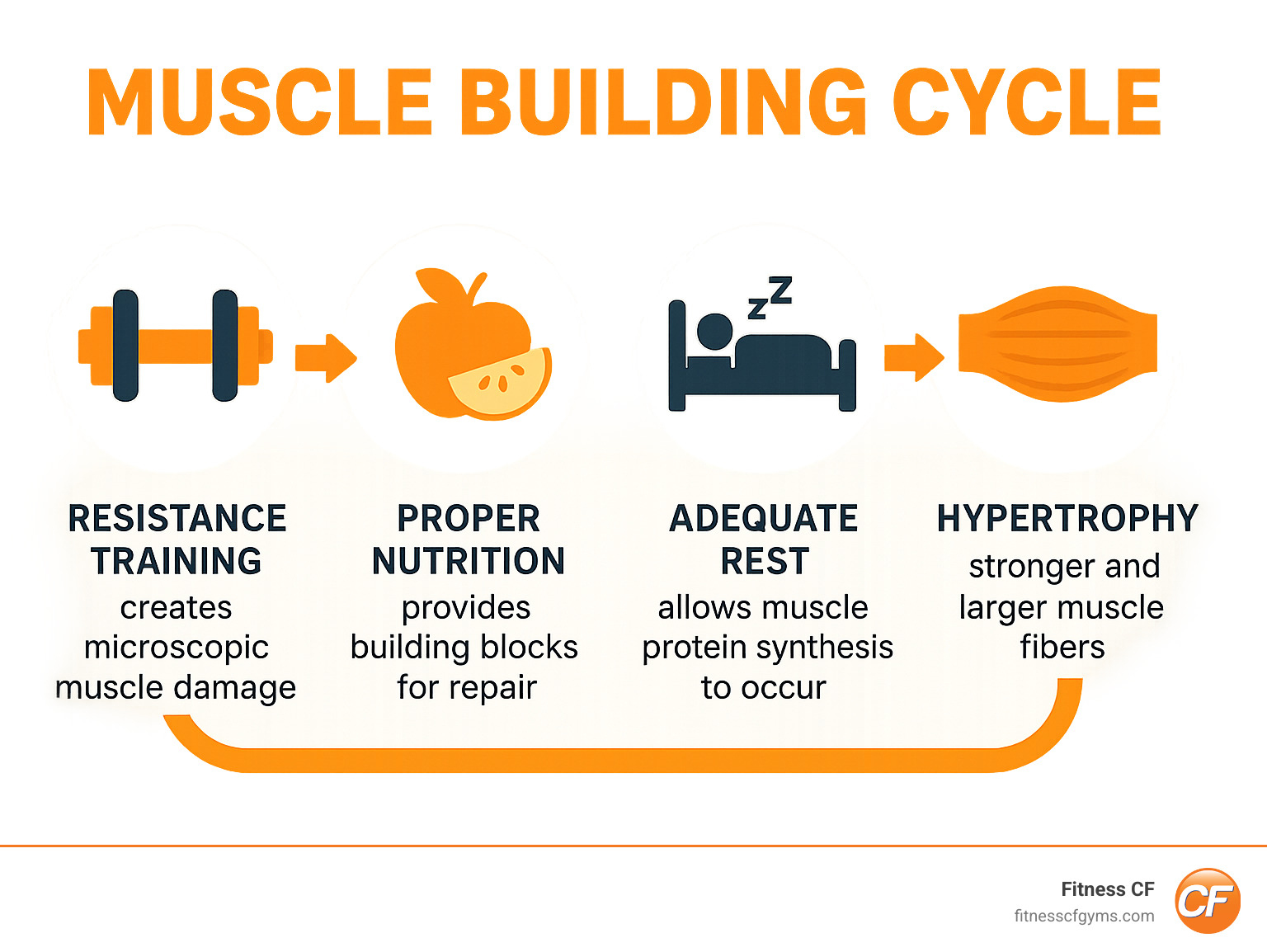
Muscle hypertrophy is the scientific term for your muscles getting bigger and stronger. It’s your body’s adaptation to the challenge of resistance training. When you lift weights, you create tiny micro-tears in your muscle fibers. This is the signal for your body’s repair and growth process to begin.
In response, specialized satellite cells fuse with the damaged muscle fibers, helping to create new protein strands that make your muscles thicker and stronger. This adaptation is driven by muscle tension from lifting, the repair of micro-tears, and the metabolic stress from intense exercise. Your body also releases anabolic hormones like growth hormone and testosterone, which fuel this entire process.
How Long Does It Take to Build Muscle?
Building muscle takes time and consistency. Anyone promising overnight results is not being realistic. Real growth happens over months and years.
- Beginner gains: Newcomers can often gain 1-2 pounds of muscle per month during the first several months of consistent training.
- Intermediate lifters: Those with some experience will see slower but steady progress, typically around 0.5 to 1 pound of muscle per month.
- Advanced lifters: Lifters approaching their genetic potential might gain 1-2 pounds of muscle per year. This is a sign of an impressive foundation.
Consistency is key. With just a few years of consistent training, you can gain 20–40 pounds (9–18 kg) of muscle, completely changing your body composition and strength.
The Benefits of Building Muscle Beyond Aesthetics
While looking good is a great bonus, the real benefits of muscle building improve your quality of life in profound ways.
- Increased metabolism: Muscle tissue burns more calories than fat, helping you manage weight more effectively.
- Joint support: Strong muscles act as natural shock absorbers, protecting your joints from injury.
- Improved bone density: Strength training stimulates bone growth, helping to prevent osteoporosis.
- Better blood sugar regulation: Muscles use glucose for energy, which helps stabilize blood sugar levels and reduce the risk of type 2 diabetes.
- Functional strength: Everyday activities like carrying groceries or playing with kids become easier.
- Improved mental health: Strength training is proven to reduce stress and anxiety, boosting confidence and overall well-being.
For a deeper look at these benefits, explore What Is Strength Training and What Are Its Benefits?. Understanding these advantages will keep you motivated for the long haul.
The Foundation: Effective Training Principles and Muscle Building Tips

Now that you understand the science, let’s cover the practical foundation of effective training. These muscle building tips are your roadmap to real results, built on the principles of progressive overload, smart exercise selection, and proper workout structure.
The Principle of Progressive Overload
Your muscles adapt to challenges, so you must continually increase the demands placed on them. This is progressive overload, the single most important concept for growth. Without it, your muscles have no reason to get bigger or stronger. You can achieve this by:
- Increasing weight: Lifting slightly heavier over time.
- Increasing reps: Performing more repetitions with the same weight.
- Increasing sets: Adding another set to your exercises.
- Improving form: Using stricter, more controlled movements.
- Decreasing rest time: Reducing the time between sets to increase intensity.
- Increasing time under tension: Slowing down the lifting and lowering phases of an exercise.
Small, consistent improvements are the key to avoiding plateaus and ensuring long-term progress.
Exercise Selection: Compound vs. Isolation Movements
To build muscle efficiently, prioritize exercises that provide the most bang for your buck.
- Compound movements are your primary tool. These multi-joint exercises, like squats, deadlifts, bench press, and pull-ups, work multiple muscle groups at once. They allow you to lift heavier, stimulate more growth, and build functional strength.
- Isolation movements are secondary. These single-joint exercises, like bicep curls or tricep extensions, are great for targeting specific muscles, addressing weak points, and adding definition.
A smart workout builds a foundation with compound lifts and uses isolation exercises as finishers. For more ideas, see the Best Strength Training Exercises to Add to Your Routine.
How to Structure a Workout for Optimal Muscle Building
An effective workout plan doesn’t need to be complicated. Follow these guidelines for a solid structure:
- Workout Frequency: Train each muscle group 2-4 times per week. This can be achieved with full-body workouts or an upper/lower split routine.
- Repetition Range: The ideal range for muscle growth (hypertrophy) is 8-12 reps per set. Choose a weight that makes the last couple of reps very challenging.
- Sets Per Exercise: Aim for 3-4 sets for each movement.
- Total Volume: Keep your total workout to 12-16 total sets to stimulate growth without causing overtraining.
- Rest Between Sets: Rest for one to two minutes to recover enough to maintain intensity and good form.
Consistency with a simple, well-structured routine will always outperform a complex program you can’t stick to. For more details, explore How to Structure Lean Muscle Workouts.
Fueling Your Gains: Nutrition for Muscle Growth

Training stimulates growth, but nutrition provides the raw materials. Without proper fuel, your muscles simply can’t grow. These nutritional muscle building tips will help you fuel your gains effectively.
Caloric Surplus: Eating to Grow
To build muscle, you must eat more calories than you burn. This is called a caloric surplus. Your body needs this extra energy to build new muscle tissue.
First, estimate your Total Daily Energy Expenditure (TDEE) using an online calculator. Then, aim for a modest 300-500 calorie surplus above that number. This promotes sustainable muscle gain while minimizing fat gain. Focus on nutrient-dense foods like lean proteins, complex carbs, and healthy fats, not empty calories.
The Power of Protein: How Much and What Kind?
Protein provides the amino acids—the building blocks—for muscle repair and growth. Without enough protein, your training efforts will be wasted.
Aim for 1.4-2.0 grams of protein per kilogram of body weight daily (roughly 1 gram per pound). Spread your intake throughout the day, consuming 20-35 grams at each meal. After a workout, a serving of 20-40 grams can help kickstart recovery.
Focus on high-protein foods like lean meats, fish, eggs, dairy (Greek yogurt, cottage cheese), legumes, and tofu. For a complete list, see our Lean Muscle Diet: Your Complete Guide to Foods That Deliver.
The Role of Carbs, Fats, and Hydration
While protein is the star, carbs and fats are crucial supporting actors.
- Complex carbohydrates are your body’s main energy source, fueling intense workouts and replenishing muscle glycogen stores for recovery.
- Healthy fats are vital for hormone production, including testosterone, which is key for muscle growth. Good sources include avocados, nuts, seeds, and olive oil.
- Hydration is essential for nearly every bodily function, including nutrient transport and performance. Drink water consistently throughout the day, especially on training days. Your urine should be a light yellow color.
Essential Muscle Building Tips for Success and Longevity
Building muscle is a journey that goes beyond lifting and eating. To ensure long-term success, you must prioritize rest, understand supplements, and avoid common pitfalls. These final muscle building tips are critical for longevity.
The Critical Role of Rest and Recovery
Muscles aren’t built in the gym; they’re built during rest. Workouts create the stimulus, but recovery is when the growth happens.
- Rest Between Sessions: Allow at least 48 hours of recovery before training the same muscle group again.
- Sleep Quality: Aim for 7-9 hours of quality sleep per night. Deep sleep is when your body releases growth hormone, which is crucial for muscle repair.
- Deload Weeks: Every 4-6 weeks, consider a deload week with reduced training intensity or volume to allow for full recovery and prevent overtraining.
- Active Recovery: Light activities like walking or stretching on rest days can improve blood flow and aid recovery.
Are Supplements Necessary or Beneficial?
A food-first approach is always best. Whole foods should be the foundation of your diet. However, a few supplements can be beneficial when your nutrition is already on point.
- Protein Powder: A convenient way to meet your daily protein goals, especially post-workout. Whey, casein, and plant-based options are all effective.
- Creatine Monohydrate: Creatine is considered the #1 supplement for muscle growth. It’s one of the most researched supplements and helps your muscles produce energy during high-intensity exercise, allowing you to perform more work over time.
Supplements are meant to supplement a solid plan, not replace it. They are not a magic pill.
Common Mistakes to Avoid on Your Journey
Being aware of common pitfalls can help you stay on track and avoid setbacks.
- Overtraining: More is not better. Training too much without enough rest leads to fatigue and plateaus. Stick to 12-16 total work sets per workout.
- Poor Form & Ego Lifting: Using sloppy technique to lift heavier weight increases injury risk and reduces effectiveness. Prioritize form over weight.
- Neglecting Nutrition: You can’t build muscle without enough calories and protein.
- Inadequate Rest: Skimping on sleep and rest days will sabotage your progress.
- Impatience: Muscle building is a slow process. Expecting rapid changes leads to frustration. Focus on the long game.
- Inconsistency: Sporadic workouts and dieting yield sporadic results. Consistency is the key to success.
For more details on what to avoid, read 11 Common Muscle Building Mistakes and How to Avoid Them.
Frequently Asked Questions about Building Muscle
Starting a muscle-building journey can bring up a lot of questions. Here are answers to some of the most common concerns about muscle building tips and strength training.
How much cardio should I do when trying to build muscle?
Cardio and muscle building can absolutely work together. Aim for 2-3 sessions of low-to-moderate intensity cardio per week, such as brisk walking, cycling, or using an elliptical. This amount is enough to support heart health and improve workout stamina without interfering with muscle recovery and growth. Your heart is a muscle too!
Can I build muscle with just bodyweight exercises?
Yes, especially as a beginner. The principle of progressive overload still applies to bodyweight training. You can make exercises harder by increasing reps, slowing down the tempo, or moving to more advanced variations (e.g., progressing from knee push-ups to standard push-ups). Bodyweight exercises are highly effective for building foundational strength and can be done anywhere, making them a great option for everyone.
How do I stay motivated when progress feels slow?
Muscle building is a marathon, not a sprint. To stay motivated, focus on more than just the scale or the mirror. Track your strength gains (lifting more weight or doing more reps), take body measurements, and notice how your clothes fit. Celebrate small victories, like adding five pounds to your squat or completing an extra push-up. Remind yourself of your “why”—the health benefits like more energy, better mood, and improved functional strength. Consistency is easier when you focus on the journey and the overall positive impact on your life.
Conclusion: Building a Stronger Future, One Rep at a Time
This guide has equipped you with the essential muscle building tips to transform your body and health. These are proven strategies that deliver results when applied with dedication. Let’s recap the key principles:
- Consistency: Showing up regularly is more important than being perfect.
- Progressive Overload: Continuously challenge your muscles to grow stronger.
- Optimal Nutrition: Fuel your body with enough calories and protein.
- Rest and Recovery: Growth happens when you rest, so prioritize sleep and recovery days.
Building muscle is an investment in your future. You’re creating a faster metabolism, stronger bones, better joint support, and improved mental health. These benefits compound over time, building a more resilient version of yourself.
The path requires patience. Progress is measured in months and years, so celebrate the small victories along the way. Every extra rep and every good meal is a step toward your larger goals.
At Fitness CF, we believe in empowering you with the knowledge to succeed. We’re here to support you with the resources and guidance you need on your unique fitness journey. Start your fitness journey with us today and find the incredible change that comes from building a life centered on strength and health.
Your stronger future begins now. Take what you’ve learned, apply it consistently, and trust the process. One rep at a time, you’re building a healthier, more confident you.