Why Daily Exercises to Lose Weight Are Worth Starting Today
If you’ve been searching for daily exercises to lose weight, here’s a quick answer to get you started:
Best daily exercises for weight loss:
- Brisk walking — burns ~150 extra calories per 30 minutes; beginner-friendly
- Bodyweight circuits (squats, push-ups, lunges) — builds muscle, boosts metabolism
- HIIT workouts — burns fat for up to 24 hours after exercise
- Swimming or cycling — low-impact cardio, 400–750 calories per hour
- Strength training — preserves muscle and raises resting calorie burn
- Yoga or tai chi — reduces stress hormones that can cause weight gain
Most adults need at least 150 minutes of moderate aerobic activity per week — that’s just 21 minutes a day.
Losing weight doesn’t require extreme measures. But it does require showing up consistently.
The truth is, most people already know they should move more. The hard part is knowing where to start and how to build a routine that sticks — especially when life is busy, energy is low, and results feel slow.
Exercise does more than burn calories. It preserves muscle, improves your mood, helps you sleep better, and makes long-term weight maintenance far more likely. But the type, frequency, and structure of your workouts matter more than most people realize.
This guide breaks it all down in plain language — no complicated programs, no gym jargon.
I’m Pleasant Lewis, a fitness expert with over 40 years of experience in the fitness industry helping people build sustainable habits with daily exercises to lose weight that actually fit their lives. In the sections ahead, you’ll find everything you need to start moving smarter, not just harder.
Fat Loss Vs. Weight Loss: Why the Scale Lies

When we step on the scale, we often treat that single number as the ultimate judge of our fitness success. If the number goes down, we celebrate; if it stays the same or goes up, we feel defeated. However, the scale doesn’t tell the whole story. To build a successful, long-term routine, we must understand the critical difference between fat loss and overall weight loss.
Weight loss refers to a reduction in your total body weight. This number includes fat, muscle tissue, water, and even bone density. When you follow a crash diet or engage in excessive, unstructured cardio, you will undoubtedly see the scale drop. However, much of that initial loss is simply water weight and glycogen depletion.
Glycogen is the stored form of carbohydrates in your muscles and liver, and it is chemically bound to water. When you cut calories or start exercising, your body quickly burns through its glycogen stores, releasing that bound water. This is why you might lose several pounds in your very first week, only to see the weight loss slow down dramatically in week two.
In contrast, fat loss focuses specifically on reducing adipose tissue (body fat) while preserving lean muscle mass. Preserving muscle is the real secret to a high-functioning metabolism. Muscle tissue is highly active metabolic tissue; it burns calories even when you are resting. If you lose weight by sacrificing muscle, your resting metabolic rate drops, making it incredibly easy to regain the weight later.
To learn more about how your body adapts to these changes over time, explore our guide on the Weight Loss Timeline: How Long Does It Take?. By shifting your focus from “losing weight” to “improving body composition,” you can build a body that is lean, strong, and highly efficient at burning calories. For a deeper dive into preserving your muscle while trimming down, check out these 10 Effective Methods to Help You Lose Stubborn Weight.
The Myth of Spot Reduction
We have all seen the advertisements promising to “melt away belly fat” or “tone flabby arms” using targeted gadgets or specific exercises. Let’s set the record straight: physiologically, spot reduction is a complete myth.
You cannot choose where your body loses fat. When you perform exercises like crunches or sit-ups, you are strengthening and building the abdominal muscles underneath your fat tissue. However, the fat sitting on top of those muscles is not burned directly by the working muscle.
When your body needs energy during exercise, it breaks down triglycerides stored in fat cells throughout your entire body. These triglycerides are converted into free fatty acids and glycerol, which enter the bloodstream to be used as fuel by whatever muscles are working. Your genetics, hormones, and biological makeup determine where your body stores fat and where it chooses to release it first.
To lose fat around your middle, you must focus on systemic, full-body fat loss. This is achieved through a combination of a consistent calorie deficit and full-body workouts that recruit large muscle groups. If you want a comprehensive strategy to target overall fat loss, take a look at our Ultimate Weight Loss Workout Guide.
The Science of Slimming: Calorie Deficit and Nutrition
At its core, weight management is governed by the laws of thermodynamics, specifically energy balance. To lose body fat, you must establish a calorie deficit. This means your energy expenditure (the calories you burn) must be greater than your calorie intake (the calories you consume).
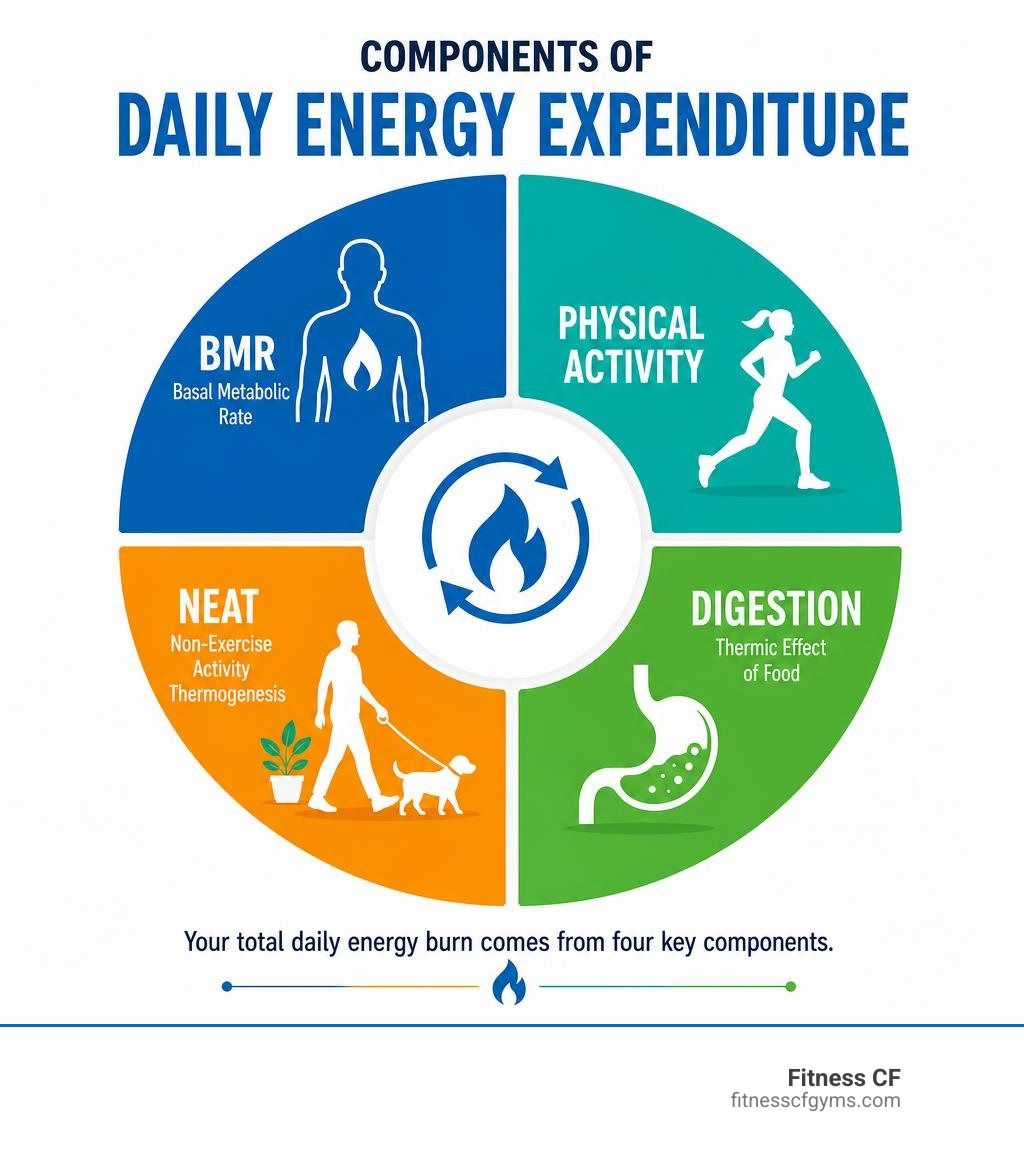
Your daily energy expenditure is made up of several components:
- Basal Metabolic Rate (BMR): The energy your body requires to perform basic life-sustaining functions (like breathing, pumping blood, and cellular repair) while at rest.
- Non-Exercise Activity Thermogenesis (NEAT): The energy expended for everything we do that is not sleeping, eating, or sports-like exercise (such as walking to your car, typing, fidgeting, and cleaning).
- Thermic Effect of Food (TEF): The energy used to digest, absorb, and distribute nutrients.
- Thermic Effect of Activity (TEA): The calories burned during structured exercise.
To lose about 1.5 pounds (0.7 kilograms) per week, most adults need to create a daily deficit of 500 to 750 calories. While exercise helps increase your daily expenditure, nutrition is the most powerful tool for creating this initial deficit. It is far easier to avoid consuming 500 calories than it is to burn 500 calories through exercise alone.
For expert advice on setting up a sustainable dietary plan, consult A Dietitian Guide to Weight Loss That Actually Works. Additionally, understanding common pitfalls can save you months of frustration; read about the 7 Common Mistakes with Losing Weight and How to Avoid Them to keep your progress on track.
Nutrition Vs. Exercise: Which Matters More?
If you had to choose between focusing solely on diet or solely on exercise for weight loss, diet wins every single time. A 45-minute workout might burn 300 to 400 calories, but a single fast-food meal or a sugary coffee beverage can easily add 1,200 calories back into your system. You simply cannot out-exercise a poor diet.
However, relying entirely on dietary restriction without physical activity is also a recipe for failure. When you lose weight through dieting alone, a significant portion of that weight comes from bone density and muscle mass. This downregulates your metabolism, making long-term weight maintenance incredibly difficult.
Physical activity is the ultimate tool for keeping the weight off once you lose it. Exercise signals to your body that it needs to keep its muscle tissue, ensuring that the weight you lose comes almost entirely from fat. For a balanced approach that combines these two powerhouses, read our article on Effective Weight Loss Strategies: Combining Exercise and Nutrition.
Designing Your Routine: Daily Exercises to Lose Weight

A successful weight loss routine does not require you to spend hours in a gym or perform exhausting workouts every day. Instead, it should be built on a balanced mix of aerobic exercise, strength training, and active recovery.
To help you get started, we have compiled a variety of structured programs and resources. If you are looking for a highly structured, progressive approach, you can explore the 30-Day Weight Loss Exercise Plan: Your Complete Guide to Getting Fit or check out our own 30-Day Weight Loss Workout Plan. For those who prefer shorter, daily challenges, the Chloe Ting 2024 Daily 20 Challenge offers an excellent 20-minute daily format that fits easily into a busy schedule. If you want a comprehensive overview of how to build your workout foundation, our Ultimate Weight Loss Workout Guide is the perfect starting point.
Beginner-Friendly Daily Exercises to Lose Weight
If you are new to fitness, the best exercise is the one you can perform consistently. You do not need heavy weights or complicated equipment to start seeing results. Here are three highly effective, beginner-friendly movements that you can incorporate into your daily life:
- Brisk Walking: Do not underestimate the power of walking. Adding just 30 minutes of brisk walking to your daily routine can burn approximately 150 extra calories per day. It is low-impact, highly accessible, and excellent for cardiovascular health.
- Bodyweight Squats: Squats target the largest muscle groups in your lower body, including your quadriceps, hamstrings, and glutes. Because these muscles are so large, working them burns a high number of calories and stimulates muscle growth.
- Modified Push-Ups: Upper-body strength is crucial for functional fitness. If standard push-ups are too challenging, perform them with your knees on the floor or with your hands elevated on a sturdy wall or countertop.
For a complete beginner schedule, you can follow the 7-Day Belly Fat Loss Workout Plan for Beginners: A Simple Week to Kickstart Your Weight Loss Journey – fitfuelkg.com or commit to a full month of progress with the 30 Day Weight Loss Challenge for Beginners at Home | Complete Workout Plan.
How to Structure Daily Exercises to Lose Weight Safely
To prevent injury and ensure long-term success, you must structure your workouts with care. Every exercise session should follow a clear path:
- The Warm-Up (5–10 Minutes): Never jump straight into intense exercise. Spend a few minutes performing light cardio (like marching in place) and dynamic stretches to increase blood flow to your muscles and lubricate your joints.
- The Workout (20–45 Minutes): Focus on proper form and controlled movements rather than speed or heavy weights.
- The Cool-Down (5 Minutes): Finish your session with static stretching to help lower your heart rate and promote muscle recovery.
To keep your body adapting and burning fat, you should gradually apply the principle of progressive overload. This means slowly increasing the difficulty of your workouts over time—either by adding a few more repetitions, reducing your rest times, or slightly increasing your resistance. For more practical tips on setting up your exercise routine safely, check out Weight Loss Exercise: 7 Tips for Your Workout Routine.
Cardio Vs. Strength Training: The Ultimate Fat-Burning Duo
Many people believe that cardio is the only way to lose weight, while others argue that lifting weights is the superior method. The truth is, both play unique and vital roles in a fat-burning routine. Combining them creates a powerful, synergistic effect that maximizes your results.
Cardiovascular exercise is fantastic for burning a high number of calories in a short amount of time and building cardiorespiratory endurance. Strength training, on the other hand, preserves and builds the muscle tissue that keeps your resting metabolism high.
If you are looking for a complete weekly schedule that perfectly balances these two training styles, check out the 7 Day Workout Plan For Weight Loss | Results Fast. To learn how to structure these workouts into your monthly routine, take a look at our 30-Day Weight Loss Workout Plan.
Aerobic Exercise Guidelines for Weight Management
To support weight management and overall cardiovascular health, health organizations recommend specific weekly activity targets. According to the CDC: Physical Activity for a Healthy Weight, adults should aim for:
- At least 150 minutes of moderate-intensity aerobic activity per week (such as brisk walking, water aerobics, or casual cycling).
- Or at least 75 minutes of vigorous-intensity aerobic activity per week (such as running, swimming laps, or high-intensity interval training).
For even greater health benefits and more significant weight loss, aiming for 300 minutes of moderate activity per week is highly recommended. You can easily break this down into manageable daily chunks, such as a 30-to-45-minute walk or a quick daily home workout.
How Strength Training Boosts Your Resting Metabolism
When you are in a calorie deficit, your body is looking for energy sources. Without resistance training, it will happily break down your muscle tissue for fuel. By performing strength training at least two to three times per week, you send a powerful signal to your body that your muscles are essential.
Strength training also triggers a phenomenon known as Excess Post-Exercise Oxygen Consumption (EPOC), or the “afterburn effect.” After a challenging resistance session or a high-intensity interval training (HIIT) workout, your body must expend extra energy to repair muscle tissue, replenish oxygen stores, and clear metabolic waste. This elevated calorie burn can last for up to 24 hours after your workout ends.
To maximize your metabolic boost, focus on compound movements that recruit multiple joints and large muscle groups simultaneously, such as squats, lunges, push-ups, and rows. For more strategies on using resistance training to break through plateaus, read our guide on 10 Effective Methods to Help You Lose Stubborn Weight.
The Role of Yoga and Stress-Reducing Workouts
Weight loss is not just about physical exertion; it is also heavily influenced by your internal state. Chronic stress releases a hormone called cortisol. High cortisol levels encourage your body to hold onto visceral fat (the dangerous fat stored around your internal organs) and can trigger intense cravings for sugary, calorie-dense comfort foods.
This is where stress-reducing exercises like yoga, tai chi, and Pilates become invaluable. These practices calm the central nervous system, lower cortisol levels, and improve your overall relationship with your body. Over time, regular practitioners of mind-body exercises tend to develop greater mindfulness, which naturally translates into more intuitive, mindful eating habits.
To explore how mental well-being directly impacts your physical health, you can read the resource on Harvard Health: Yoga for Anxiety and Depression. If you are looking for a structured, low-impact core routine, consider incorporating a mat Pilates session as a peaceful yet challenging addition to your active recovery days.
Calorie Burn Comparison: Common Exercises
To help you plan your physical activity, it is useful to understand how many calories different types of exercise typically burn. That calorie expenditure depends on several factors, including your body weight, muscle mass, gender, and exercise intensity.
The table below compares the estimated hourly calorie burn for a 160-pound (73 kg) person performing common physical activities:
| Exercise Type | Intensity Level | Estimated Calories Burned Per Hour |
|---|---|---|
| Brisk Walking (3.5 mph) | Moderate | ~314 |
| Low-Impact Aerobics | Moderate | ~365 |
| Hiking | Moderate to High | ~438 |
| Cycling (<10 mph) | Moderate | ~290 |
| Stationary Cycling | Moderate to Vigorous | ~400 – 750 |
| Swimming Laps | Moderate | ~400 – 500 |
| Running (5 mph) | Vigorous | ~606 |
| HIIT / Interval Training | Very Vigorous | ~500 – 800+ (plus post-workout EPOC) |
Even small changes can add up to impressive results over time. For example, climbing just two flights of stairs every day can lead to 6 pounds of weight loss in a single year without any other changes to your routine! If you want to see a detailed, step-by-step breakdown of a highly structured routine, check out The 25-Day Workout Plan to Lose 20 Pounds and Burn Fat Fast – Calorie Hive.
For those seeking professional, medical-grade guidance on managing their weight and tracking their energy expenditure safely, you can learn more about Weight Loss Management – Orlando Health. If you want to explore a wider variety of movement patterns, focus on incorporating diverse exercises that keep you engaged and motivated.
Frequently Asked Questions About Daily Weight Loss Exercises
Can I lose belly fat in just one week of daily exercise?
No, it is physiologically impossible to lose significant belly fat in just seven days. While you may notice a slight drop on the scale during your first week of daily exercise, this is primarily due to water loss and glycogen depletion. Real, sustainable fat loss takes time and consistency. Expect to lose a healthy 1 to 2 pounds per week by maintaining a modest calorie deficit and staying active. To learn more about the fundamentals of healthy weight management, refer to the Mayo Clinic: Weight Loss Basics.
How many calories do I need to cut daily to lose weight?
To lose weight at a safe, sustainable pace of 1 to 2 pounds per week, most people need to create a daily deficit of 500 to 750 calories. You can achieve this by reducing your food intake, increasing your daily physical activity, or ideally, combining both. To get a personalized estimate of your daily calorie needs and plan your meals accordingly, you can use the USDA MyPlate Plan.
What are the best habits to support my daily workout routine?
Exercise is only one piece of the puzzle. To maximize your results, you must support your workouts with healthy daily habits:
- Prioritize Hydration: Drink plenty of water throughout the day. Staying hydrated supports your metabolism, improves muscle function, and helps prevent false hunger cues.
- Focus on Sleep Quality: Aim for 7 to 9 hours of quality sleep per night. Poor sleep increases stress hormones and disrupts hunger-regulating hormones, making cravings much harder to resist.
- Eat Enough Protein: Consuming adequate protein helps preserve lean muscle mass during a calorie deficit and keeps you feeling full and satisfied after meals.
For more simple lifestyle adjustments that yield big results, explore our articles on 5 Easy Habits to Help You Lose Weight and 9 Weight Loss Tips That Make a Big Difference.
Conclusion
Embarking on a journey to lose weight can feel overwhelming, but the secret to success lies in simplicity and consistency. By choosing daily exercises to lose weight that you genuinely enjoy, structuring your workouts safely, and supporting your body with proper nutrition and recovery, you can make healthy living a natural, effortless part of your lifestyle.
At Fitness CF, we are dedicated to helping you build sustainable habits that last a lifetime. Whether you are looking to incorporate energetic workouts, relaxing yoga, or the guidance of professional coaching, focusing on your overall fitness is the best investment you can make for your long-term health.
Ready to take the next step in your fitness journey? We invite you to explore our customized Fitness CF Weight Loss Programs and start building a healthier, more active lifestyle today. Let’s work together to make your health and wellness goals a reality!