Why a Smart Weight Loss Workout Changes Everything
A well-designed weight loss workout does more than burn calories — it reshapes your body, boosts your metabolism, and builds habits that actually stick.
Here’s a quick snapshot of what works:
| Goal | Best Approach |
|---|---|
| Burn fat fast | HIIT sessions (20–25 min) |
| Preserve muscle | Strength training 2–4x/week |
| Boost metabolism long-term | Compound lifts + protein intake |
| Sustainable results | Calorie deficit + consistent exercise |
| Beginners | Walking, bodyweight moves, light resistance |
The basics aren’t complicated. You need to move your body consistently, eat slightly less than you burn, sleep well, and recover between sessions. That’s it. Most people struggle not because the plan is wrong — but because life gets in the way.
If you’re a busy person juggling work, family, and everything else, you already know how hard it is to stay consistent. The good news: you don’t need two-hour gym sessions or a perfect diet to see real results. You need a smart plan that fits your life.
I’m Pleasant Lewis, owner and operator of Fitness CF with over 40 years in the fitness industry — and I’ve watched hundreds of members transform their bodies not through extreme measures, but through structured, sustainable weight loss workout programs built around real life. In this guide, I’ll walk you through exactly what works.
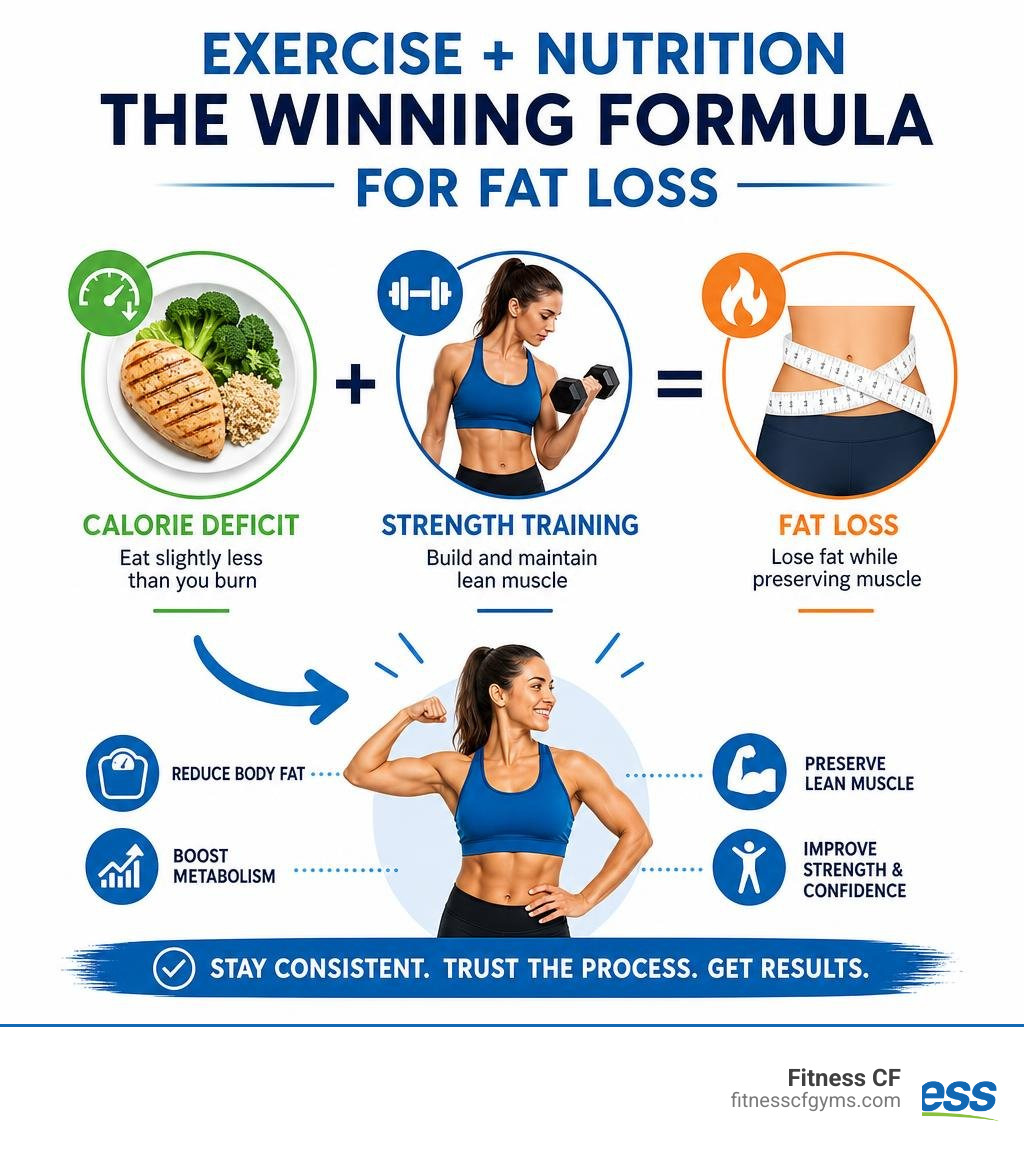
How Exercise Drives Sustainable Fat Loss

Many people believe that weight loss is a simple math equation: eat less, move more, and watch the scale drop. While a caloric deficit is the absolute driver of weight loss, the type of weight you lose depends heavily on your physical activity.
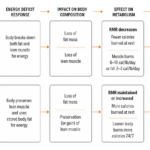
If you rely solely on calorie restriction without exercising, up to 25% of the weight you lose can come directly from lean muscle mass. This is a metabolic disaster. Muscle tissue is highly active; it burns calories even when you are sitting at your desk or sleeping. When you lose muscle, your resting metabolic rate slows down, making long-term weight maintenance incredibly difficult.
This is where a structured weight loss workout program steps in. Exercise acts as a “use it or lose it” signal to your body. By placing physical demands on your muscles, you force your body to preserve lean tissue and pull from stored fat reserves for energy instead.
Beyond muscle preservation, regular exercise drastically improves insulin sensitivity. When your muscles contract during a workout, they absorb glucose from your bloodstream without relying heavily on insulin. This helps regulate blood sugar levels, reduces fat storage, and keeps energy crashes at bay.
Furthermore, intense workouts trigger Excess Post-Exercise Oxygen Consumption (EPOC), also known as the “afterburn effect.” After a challenging session, your body must expend extra energy to restore oxygen levels, clear metabolic byproducts, and repair muscle tissue. This elevated state means you continue burning calories for up to 24 hours after you have finished sweating. To understand how to align these metabolic benefits with your daily habits, check out our guide on Effective Weight Loss Strategies: Combining Exercise and Nutrition and explore these 9 Weight Loss Tips That Make a Big Difference to accelerate your progress.
Cardio vs. Strength Training for Body Recomposition
If your goal is body recomposition — which means losing body fat while simultaneously building or preserving toned muscle — you cannot rely on cardio alone.
While steady-state aerobic exercise (like jogging or cycling) is fantastic for cardiovascular health and burns a significant number of calories during the session, it does very little to build muscle. In fact, excessive cardio paired with a steep calorie deficit can actually accelerate muscle loss.
Resistance training, on the other hand, is the ultimate tool for sculpting your physique. Lifting weights or performing challenging bodyweight exercises stimulates muscle protein synthesis, ensuring you build a firm, defined shape.
According to fitness industry data, adults who combine strength training with aerobic exercise lose 1.5–2× more fat and preserve 2–3× more muscle than those who perform cardio alone. To see how these two modalities stack up, review the comparison table below:
| Feature | Cardio (LISS / HIIT) | Strength Training |
|---|---|---|
| Primary Calorie Burn | High during the session | Moderate during, high post-workout |
| Muscle Preservation | Low (potential loss if excessive) | Extremely high |
| Afterburn Effect (EPOC) | Low for LISS, high for HIIT | High to very high |
| Metabolic Impact | Temporary caloric expenditure | Long-term increase in resting metabolism |
| Recommended Frequency | 2–3 times per week | 3–4 times per week |
To achieve the best of both worlds, the most effective routines utilize a hybrid approach. For a deeper look into designing a routine that balances both, read about the Scientific research on combining strength and cardio.
The Role of Nutrition and Recovery in Weight Management
You have likely heard the phrase, “You can’t out-train a bad diet.” It is a cliché because it is entirely true. A single high-calorie fast-food meal can easily contain 1,200 calories, whereas a highly intense, 45-minute gym session typically burns between 300 and 500 calories. It is infinitely easier to avoid consuming those calories than it is to burn them off on a treadmill.
To lose fat sustainably, you should aim for a modest daily caloric deficit of 300 to 500 calories below your Total Daily Energy Expenditure (TDEE). This allows for a safe, steady weight loss rate of 1 to 2 pounds per week without triggering extreme hunger or fatigue.
Within this deficit, prioritizing protein intake is crucial. Aim for 0.7 to 1 gram of protein per pound of body weight (or roughly 1.6 to 2.2 grams per kilogram). Protein has a high thermic effect of food (TEF), meaning your body burns more calories digesting it than it does digesting fats or carbohydrates. It also keeps you feeling full and provides the essential building blocks needed to repair muscle tissue after a tough weight loss workout.
Equally important to your diet is your recovery. When you sleep poorly, your body produces higher levels of cortisol (the stress hormone) and disrupts ghrelin and leptin — the hormones that regulate hunger and satiety. High cortisol levels encourage your body to hold onto visceral fat, particularly around the midsection, and increase cravings for high-calorie, sugary foods. Aim for 7 to 9 hours of quality sleep each night to keep your hormones balanced and your recovery on track. For expert dietary structures, consult A Dietitian Guide to Weight Loss That Actually Works and keep your progress steady year-round by reading our advice on Preventing Seasonal Weight Gain – Fall Edition.
Designing Your Ideal Weight Loss Workout Routine

Creating a workout routine that delivers consistent results requires a focus on progressive overload, compound movements, and structured recovery.
Progressive overload simply means gradually increasing the demands placed on your body over time. This could mean lifting slightly heavier weights, performing more repetitions, shortening rest periods, or increasing your workout intensity. Without progressive overload, your body adapts to the physical stress of your workouts, your progress plateaus, and your calorie burn drops.
To maximize your efficiency, your program should center around compound movements. These are exercises that recruit multiple joint systems and large muscle groups simultaneously — such as squats, deadlifts, rows, and overhead presses. Because they use so much muscle mass, they burn significantly more calories per minute than isolation exercises (like bicep curls or calf raises) and trigger a much stronger hormonal response for fat burning.
Your muscles do not grow or repair during the workout itself; they recover and rebuild during your rest periods. Overtraining by skipping rest days raises systemic inflammation and cortisol, which stalls fat loss. To build a solid foundation, read through our Ultimate Weight Loss Workout Guide.
The Best Weight Loss Workout for Beginners
If you are new to fitness, jumping directly into advanced, high-intensity workouts is a recipe for extreme soreness, injury, and eventual burnout. The secret to long-term success is building consistency with low-impact, accessible movements.
A fantastic starting point is a 4-day beginner plan focused on fundamental bodyweight movements and low-impact cardiovascular exercise. Research shows that beginners following a structured 4-day plan can lose 4 to 6 pounds of fat in just 8 weeks while spending 45 minutes or less per session.
A basic beginner session might look like this:
- Warm-up: 5 minutes of light walking and dynamic stretching (arm circles, leg swings).
- Bodyweight Squats: 3 sets of 10–12 repetitions (focus on keeping your chest up and sitting back into your heels).
- Incline Push-Ups: 3 sets of 8–10 repetitions (using a sturdy bench or wall to reduce intensity).
- Glute Bridges: 3 sets of 12 repetitions (squeezing your glutes at the top of the movement).
- Plank Hold: 3 sets of 20–30 seconds.
- Cardio Finisher: 15 minutes of brisk walking intervals (alternate 1 minute of fast walking with 1 minute of recovery walking).
Starting with simple routines helps establish the neural pathways and joint stability required for heavier lifting later on. To build habits that stick, check out these 5 Easy Habits to Help You Lose Weight.
How to Structure a Weekly Weight Loss Workout Plan
For intermediate lifters or those ready to commit to a structured routine, balancing strength training, high-intensity interval training (HIIT), and low-intensity steady-state (LISS) cardio is essential.
A highly effective weekly split alternates between muscle-building strength sessions and fat-burning conditioning days, ensuring that you never train the same muscle groups on consecutive days. This allows for optimal recovery while keeping your weekly energy expenditure high.
Here is an expert-recommended 7-day schedule:
- Monday (Day 1) – Upper Body Strength: Focus on compound push and pull movements (dumbbell chest presses, lat pulldowns, shoulder presses).
- Tuesday (Day 2) – Lower Body Strength: Focus on large lower-body muscles (goblet squats, Romanian deadlifts, lunges).
- Wednesday (Day 3) – Active Recovery / LISS: 30 to 45 minutes of low-intensity steady-state cardio, such as a brisk outdoor walk, steady cycling, or a gentle yoga session.
- Thursday (Day 4) – Full Body Conditioning & HIIT: A circuit combining bodyweight exercises and light weights (kettlebell swings, mountain climbers, thrusters) with a 40:20 work-to-rest ratio.
- Friday (Day 5) – Full Body Strength: A comprehensive session targeting all major muscle groups to stimulate full-body muscle preservation.
- Saturday (Day 6) – Optional LISS Cardio or Fun Activity: A hike, a bike ride, or a swim to keep your body moving without adding joint stress.
- Sunday (Day 7) – Full Rest Day: Complete rest to allow your nervous system and muscles to fully recover.
For a highly detailed, step-by-step breakdown of intermediate programming, take a look at this Expert-designed 4-day fat loss split. If you are looking for a clear, day-by-day roadmap to follow over the next month, dive into our comprehensive 30-Day Weight Loss Workout Plan.
Why Women Should Prioritize Strength Training for Fat Loss
A common misconception among women is that lifting weights will make them look “bulky.” This myth keeps many stuck on the cardio machines, missing out on the most powerful fat-burning tool available.
Physiologically, women do not produce nearly enough testosterone to build massive, bulky muscle tissue naturally. Instead, lifting weights builds dense, lean muscle fibers that create a firm, toned, and athletic appearance. In fact, building your upper back, shoulders, and glutes can actually create the visual illusion of a smaller, more tapered waistline — helping you achieve a classic hourglass shape.
Beyond aesthetics, strength training is essential for maintaining hormonal balance and long-term health. As we age, our bone mineral density naturally declines, increasing the risk of osteoporosis. Heavy resistance training puts a healthy stress on your bones, signaling your body to lay down new bone mineral density.
Furthermore, because muscle is more metabolically active than fat, increasing your muscle mass raises your basal metabolic rate. Someone with more muscle mass will burn more calories sitting at a desk or watching television than someone of the exact same weight who has a higher body fat percentage. To break through plateaus and target stubborn areas, check out these 10 Effective Methods to Help You Lose Stubborn Weight.
Key Compound Exercises for Women
To get the absolute most out of your time in the gym, your strength sessions should focus on the “big lifts” that recruit the largest muscle groups in your body.
Here are four essential compound exercises every woman should include in her routine:
- Back Squat: The king of lower-body movements. It heavily recruits your quadriceps, hamstrings, core, and glutes (the largest muscle group in your body).
- Romanian Deadlift (RDL): An incredible posterior-chain movement that targets your hamstrings and glutes while building core and lower-back stability.
- Barbell Row: A fundamental pulling movement that strengthens your upper back, lats, and biceps. Building a strong back improves your posture and creates a balanced physique.
- Hip Thrust: Widely regarded as the single best exercise for isolating and building the glute muscles, which helps protect your lower back and knees from injury.
For a highly effective program that seamlessly blends these lifts with metabolic conditioning, follow the HIIT & Strength Fat Loss Plan.
Understanding the Weight Loss Timeline
It is incredibly easy to get discouraged when the scale does not move after a week of hard work. However, understanding how your body adapts to a new routine can help you maintain realistic expectations.
During the first 1 to 2 weeks of a new weight loss workout program, you may experience a rapid drop in weight. This is primarily water weight. When you reduce your calories and increase your activity, your body burns through stored glycogen (the stored carbohydrates in your muscles). Because glycogen holds about three times its weight in water, burning it off releases a significant amount of fluid.
Conversely, you might sometimes notice the scale jump up slightly after a particularly intense lifting session. Do not panic — this is not fat. Lifting weights causes microscopic tears in your muscle fibers (which is a normal, healthy part of muscle growth). Your body responds to this micro-trauma with localized inflammation and water retention to help repair the fibers.
This is why tracking your progress through body measurements (like waist, hip, and thigh circumference), how your clothes fit, and weekly progress photos is far more accurate than relying on the scale alone. Most women begin to notice visible muscle tone and changes in how their clothes fit within 4 to 6 weeks of consistent training and nutrition, with dramatic, life-changing transformations appearing around the 4-to-6-month mark. For a complete breakdown of what to expect, read our articles on How Long Does It Take to Lose Weight on Average? and the Weight Loss Timeline: How Long Does It Take?.
Frequently Asked Questions About Fat Loss
Is it harder for women to burn fat than men?
Physiologically, women do face unique challenges when it comes to fat loss, but it is entirely possible with the right approach. Women require a higher level of essential body fat (roughly 12% minimum) to maintain healthy hormonal and reproductive function, whereas men can safely go as low as 4%.
Additionally, men generally possess a higher percentage of skeletal muscle mass and a larger frame, which naturally gives them a higher basal metabolic rate. Hormonal fluctuations throughout the menstrual cycle can also temporarily affect water retention, energy levels, and cravings. However, by focusing on muscle preservation through strength training, these metabolic differences can be easily managed.
Can you spot-reduce fat from specific areas like the belly?
No. Spot reduction is a myth. You cannot choose where your body burns fat first. Fat loss occurs systemically across your entire body as a result of a consistent caloric deficit.
When you perform core exercises like crunches, you are strengthening and toning the abdominal muscles underneath, but you are not burning the subcutaneous fat directly on top of them. Your body’s fat distribution is largely determined by genetics, hormones, and age. The only way to reveal a toned midsection is to remain consistent with your nutrition and overall training program until your body fat percentage drops low enough to show your hard work.
Should I do cardio before or after lifting weights?
You should almost always perform your strength training before your cardio. Lifting weights requires a high level of physical energy, mental focus, and explosive power. If you spend 30 minutes on a treadmill before hitting the weight room, you will deplete your muscle glycogen stores and fatigue your central nervous system.
This compromises your lifting form, increases your risk of injury, and reduces the amount of weight you can safely lift. By lifting weights first while you are fresh, you maximize your strength gains. Performing your cardio afterward allows you to burn off remaining energy reserves without compromising your muscle-building efforts.
Conclusion
At Fitness CF, we believe that fitness is not a short-term punishment for what you ate; it is a long-term celebration of what your body can achieve. Achieving sustainable weight loss is about finding a healthy balance that integrates seamlessly into your daily life.
Whether you are looking to build strength, increase your energy, or find a supportive community of like-minded individuals, our team is here to guide you every step of the way across Central Florida, including our locations in Orlando, Clermont, Mount Dora, and St Cloud. Consistency always beats perfection, and your journey starts with a single, positive step.
Are you ready to stop guessing and start seeing real, lasting results? Start your fitness journey with our professional Weight Loss Programs today!