What Is Personal Training — and Is It Right for You?
Personal training is a one-on-one (or small-group) fitness service where a certified professional designs and guides your workouts based on your specific goals, fitness level, and health needs.
Here’s a quick overview of what you need to know:
- What it is: Structured exercise coaching with customized workout plans, fitness assessments, and ongoing accountability
- Who it’s for: Anyone — from beginners to experienced athletes — looking to reach health and fitness goals more effectively
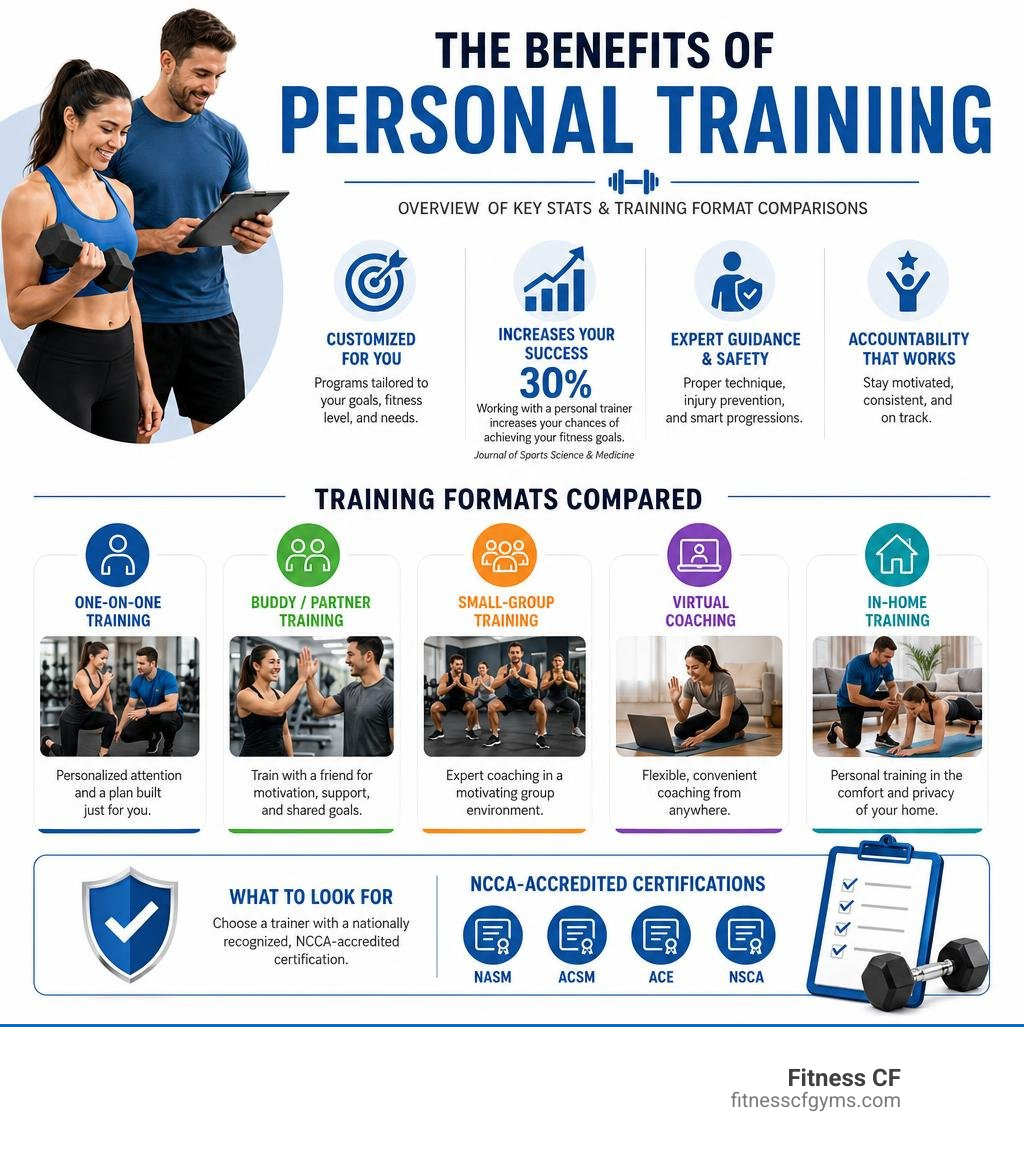
- Key benefit: Working with a personal trainer increases your chances of achieving your fitness goals by 30%, according to research published in the Journal of Sports Science & Medicine
- Training formats: One-on-one sessions, buddy/partner training, small-group training, virtual coaching, or in-home sessions
- What to look for: A trainer with a nationally recognized, NCCA-accredited certification (such as NASM, ACSM, ACE, or NSCA)
Whether you’ve hit a fitness plateau, you’re just getting started, or you’re juggling family life and struggling to stay consistent — personal training gives you a clear plan, expert guidance, and the accountability to actually follow through.
Most people don’t fail at fitness because they lack effort. They fail because they lack direction.
A certified personal trainer removes the guesswork. They assess where you are, figure out where you want to go, and build a structured path to get you there — safely and efficiently.
I’m Pleasant Lewis, owner and operator of Fitness CF, with over 40 years in the fitness industry helping members find the right personal training solutions to reach their goals. In this guide, I’ll walk you through everything you need to know to find a trainer who’s the right fit for your life.
What is Personal Training and What Does a Trainer Do?
At its core, personal training is not just about someone standing over you with a clipboard, shouting counts while you do push-ups. A true certified personal trainer acts as a coach, an educator, a strategist, and an accountability partner all rolled into one.
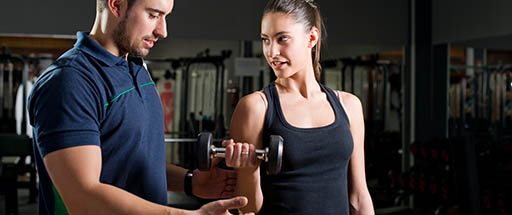
When you work with a professional, their first and most important job is to ensure you are using the correct exercise technique. Proper form is the foundation of physical progress; it is what prevents injuries and ensures that the target muscles are actually doing the work. A trainer provides real-time feedback and movement corrections so you can build trust in your body and move with confidence.
Beyond watching your form, a trainer is responsible for creating customized workout plans tailored specifically to your body. No two people have the same joint mechanics, fitness backgrounds, or lifestyle demands. Your program should reflect your unique starting point, whether you are improving basic mobility, building strength, training for better endurance, or creating a more consistent healthy routine.
To build this custom plan, a trainer conducts comprehensive fitness assessments. These assessments look at how you move, where you might have muscular imbalances, and what your current cardiovascular and strength baselines are. From there, they help you with realistic goal setting. Instead of aiming for vague outcomes like “getting in shape,” they help you define measurable, time-bound targets and break them down into manageable weekly milestones.
Finally, they provide the essential element of accountability. Knowing that someone has prepared a plan designed just for you completely changes your relationship with exercise. If you have ever wondered, Is Fitness Personal Training Right for You?, the answer usually lies in whether you want to stop guessing and start seeing predictable results.
The Core Benefits of Strength Training and Cardio
To build a healthy lifestyle, your routine must balance two vital pillars of physical health: strength training and cardiovascular fitness. A certified personal trainer knows how to blend these elements to optimize your metabolic health, increase your lean muscle mass, and improve your overall well-being.
This balanced approach also aligns with general adult activity guidance from the Centers for Disease Control and Prevention, which emphasizes regular aerobic activity along with muscle-strengthening exercise.
Let’s look at what these two powerhouses do for your body:
- Strength Training: Lifting weights or performing resistance exercises does far more than build muscle. It increases bone density, protects your joints from injury, and boosts your resting metabolic rate. As we age, we naturally lose muscle mass (a process called sarcopenia). Resistance training acts as the ultimate defense, keeping your body functional, strong, and resilient for the long haul.
- Cardiovascular Fitness: Cardio workouts, whether it is a brisk walk, a cycling session, or a swim, strengthen your heart and lungs. Regular cardio supports healthy blood pressure, improves cholesterol profiles, and enhances your body’s ability to transport oxygen.
When you combine both under the watchful eye of a trainer, the benefits extend far beyond your physical health. Exercise is a proven catalyst for mental health. It reduces stress hormones, stimulates the production of endorphins, and dramatically improves sleep quality.
Working with a trainer ensures that you do not overemphasize one at the expense of the other. They design balanced routines that support healthy living, ensuring you build a heart that is as strong as your muscles. For a deeper dive into how this tailored approach transforms your life, check out our guide on the 13 Incredible Benefits of a Personal Trainer.
How Personal Training Accelerates Your Fitness Goals
If you are currently exercising on your own, you might be wondering if hiring a coach is truly worth the investment. The data speaks for itself. Research shows that working with a personal trainer increases your success rate of achieving your fitness goals by 30%.
Why is this the case? It comes down to intensity and progression. Studies demonstrate that personal training consistently results in higher strength gains, higher workout intensities, and a higher rate of perceived exertion during exercise. Left to our own devices, most of us naturally stay within our comfort zones. We pick weights that are a little too light or take breaks that are a little too long. A trainer knows exactly how to push your boundaries safely, applying the principle of progressive overload so your body is constantly adapting and improving.
Furthermore, professional progress tracking ensures you never hit a plateau without a strategy to break through it. Your trainer monitors your strength metrics, endurance levels, and body composition over time, making micro-adjustments to your program before you get discouraged.
To see how solo training compares to having an expert in your corner, take a look at this comparison:
| Feature | Solo Workouts | Guided Personal Training |
|---|---|---|
| Goal Success Rate | Baseline | 30% Higher Success Rate |
| Workout Intensity | Self-regulated (often lower) | Optimized & scientifically progressed |
| Form & Safety | Self-monitored (higher injury risk) | Real-time professional corrections |
| Accountability | Easy to skip when tired | Scheduled appointments & active support |
| Program Design | Often repetitive or copied online | 100% customized to your joint mechanics |
By taking the guesswork out of your routine, you can focus all your energy on execution. If you want to explore how structured guidance turns effort into achievement, read more about Achieving Fitness Goals with Personal Training.
Understanding Qualifications, Certifications, and Scope of Practice
The fitness industry can feel like a wild frontier. It is flooded with self-proclaimed “experts” and social media influencers who have great aesthetics but very little scientific knowledge. To protect your joints and your wallet, you need to understand what qualifications actually matter.
First, let’s look at some eye-opening statistics regarding personal trainer education:
- 70% of surveyed personal trainers did not hold a degree in any field related to exercise science.
- Trainers without a bachelor’s degree scored 31% lower on standardized fitness knowledge assessments.
- Years of experience was not found to be predictive of knowledge. A trainer who has been doing things incorrectly for fifteen years is not better than a newly certified trainer who understands modern exercise science.
So, how do you separate the professionals from the amateurs? You look for NCCA accreditation (National Commission for Certifying Agencies). This is the gold standard of credentialing.
The most respected certifications in the industry include:
- NASM (National Academy of Sports Medicine)
- ACSM (American College of Sports Medicine)
- NSCA (National Strength and Conditioning Association)
- ACE (American Council on Exercise)
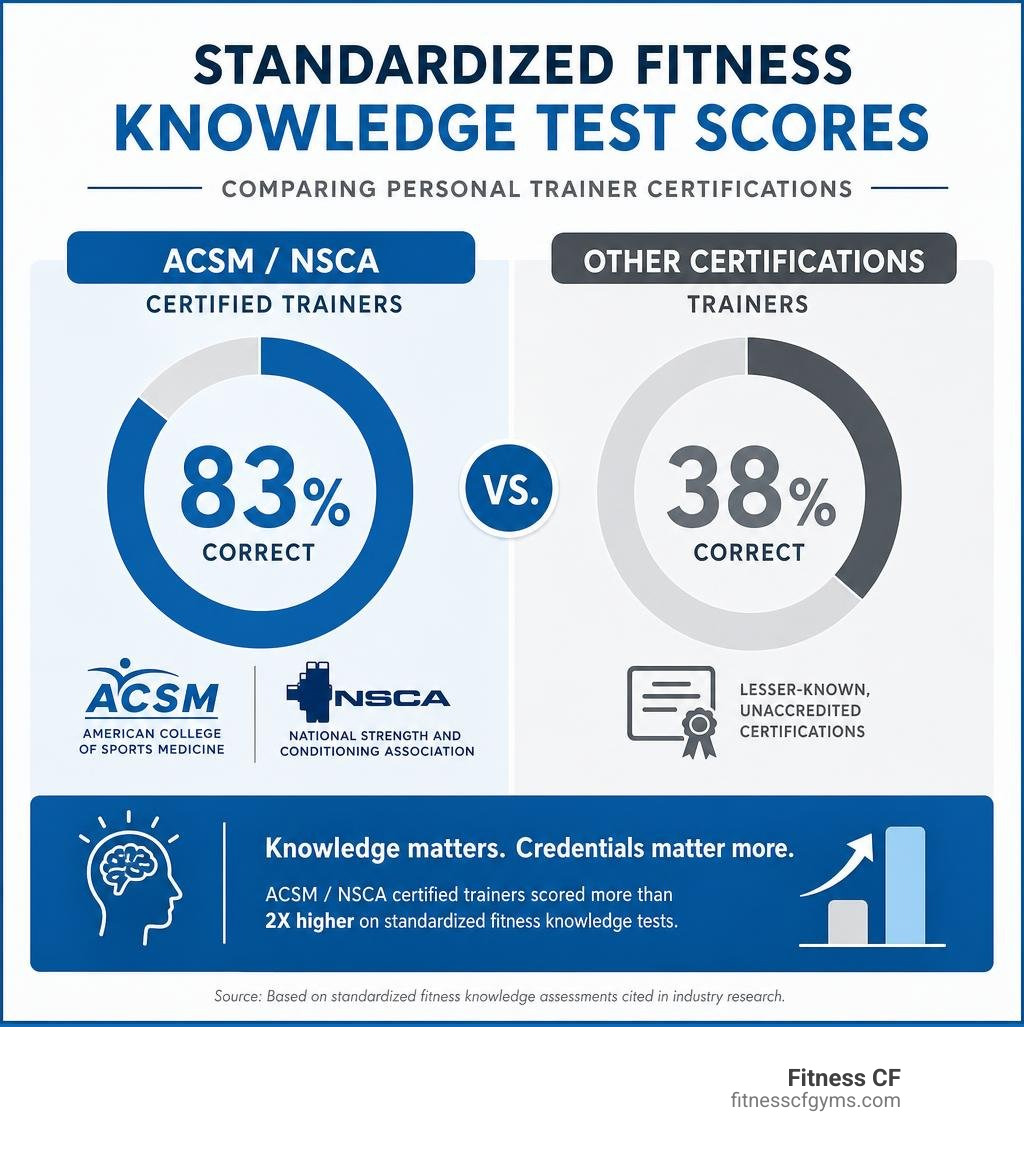
The difference in knowledge between these top-tier organizations and budget, weekend-certification websites is massive. In testing, fitness professionals holding an ACSM or NSCA certification scored 83% correct on exercise science and prescription questions, compared to a meager 38% correct for those holding lesser-known, unaccredited certifications.
Understanding the Scope of Practice
A qualified trainer knows exactly what they can do, and more importantly, what they cannot do. This is known as their scope of practice.
- What they can do: They can design exercise programs for healthy individuals, teach proper movement patterns, offer general lifestyle advice, and provide basic nutrition guidance (such as explaining macronutrients, discussing hydration, and helping you understand caloric balance). They must also maintain up-to-date CPR and AED certifications to ensure your safety in the training environment.
- What they cannot do: Unless they hold specific medical credentials, a personal trainer cannot diagnose injuries, prescribe physical therapy protocols, or write specific meal plans to treat medical conditions.
If you have chronic pain or a past injury, a great trainer will work alongside your physical therapist or physician, requiring medical clearance before progressing your routine. They respect your body’s limits while safely building your strength. To help you navigate this hiring process, we have compiled the 5 Key Qualities to Look For When Hiring a Personal Trainer.
Comparing In-Person, Partner, and Group Training Options
Everyone’s lifestyle, budget, and social preferences are different, which is why modern fitness coaching is not a one-size-fits-all service. There are several ways to experience the benefits of personal training, from focused private coaching to more social workout formats.
One-on-One Training
This is the classic personal training experience. You have the trainer’s undivided attention for the entire session. Every exercise, rest period, and coaching cue is tailored directly to your performance in that exact moment. It is the ideal choice for individuals with complex medical histories, highly specific athletic goals, or those who simply prefer a private, focused coaching experience.
Buddy and Partner Training
Want the benefits of professional coaching but prefer to share the experience and the cost? Buddy training allows you to train alongside a spouse, family member, or friend. It provides a fantastic blend of professional guidance and friendly competition. You keep each other accountable, celebrate milestones together, and save money on per-session rates. This format is an excellent way to stay motivated while sharing your fitness journey with someone close to you.
Small-Group Training
Typically consisting of three to six participants, small-group training offers a highly cost-effective way to get professional coaching. While the trainer is managing multiple people, the group size is still small enough that you receive individual form corrections and personalized weight selections. The energy of a small group builds a wonderful, supportive community of like-minded individuals who lift each other up.
Each format has its unique strengths. Deciding which one is right for you depends on your personal budget, your schedule, and how you prefer to be motivated. For a deeper look at finding your perfect format, read The Benefits of Personal Training: Tailoring Your Fitness Journey.
Choosing the Right Personal Training Program for Your Needs
Finding the right trainer is a lot like dating: chemistry, communication, and shared expectations matter. When you are ready to begin, you should consider three main factors: your budget, your scheduling availability, and trainer matching.
A great fitness program should pair you with a coach who specializes in your specific demographic and goals:
- Women’s Fitness: If you are looking for specialized coaching tailored to female physiology, prenatal/postnatal training, or pelvic floor health, working with a specialist can be incredibly empowering. Learn more about your options with our guide to finding a women’s personal trainer or check out top female coaches.
- Senior Fitness: Older adults have unique orthopedic considerations. Training should focus on balance, joint mobility, fall prevention, and maintaining bone density. For expert advice on this, read our senior fitness training tips.
- Specific Goals: Whether you are looking to gain healthy weight, build athletic power, or recover your mobility, your trainer’s background should match your needs. For targeted muscle-building strategies, check out this personal trainer weight gain guide.
To make sure you ask the right questions during your search, read our comprehensive guide on How to Pick a Personal Trainer: Everything You Need to Know.
What to Expect During Your Initial Consultation and Assessment
If you are nervous about your first day with a personal trainer, don’t be! A professional trainer will never throw you straight into a grueling workout without assessing your body first. Your journey begins with an initial consultation and a thorough fitness assessment.

Here is exactly what you can expect during this first meeting:
- Preparticipation Screening: You will fill out a basic health history questionnaire (often called a PAR-Q) to identify any pre-existing medical conditions, past surgeries, or joint issues that your trainer needs to know about.
- Goal Setting Discussion: You will sit down to talk about your lifestyle, your stress levels, your sleep habits, and what you are hoping to achieve. Be honest! If you hate running, tell your trainer so they don’t put it in your plan.
- Body Composition Analysis: If your goals involve fat loss or muscle gain, your trainer may take baseline measurements. This could include body weight, circumferences, or skinfold measurements.
- Movement and Posture Analysis: Your trainer will ask you to perform simple movements—like a bodyweight squat or a shoulder mobility test—to observe your movement patterns and check for tightness or muscular imbalances.
- Cardiovascular and Strength Baselines: You might perform a very light cardio or endurance test to see where your heart rate sits under mild exertion.
This initial session is entirely diagnostic. It is designed to keep you safe and give your trainer the exact data they need to build your custom program. To feel completely prepared for your first day, read What to Expect: A Guide to Understanding Exactly How Personal Training Works.
Frequently Asked Questions About Fitness Coaching
How much does fitness coaching typically cost?
Pricing packages and session rates vary depending on the trainer’s credentials, the session length, and the format you choose. Generally, private one-on-one sessions range from $50 to $100+ per hour. Many coaching programs offer member rates, student discounts, or discounted pricing packages if you purchase multiple sessions upfront. Most professional trainers enforce a strict 24-hour cancellation policy to protect the trainer’s schedule. If you need to reschedule, make sure to give plenty of notice so you do not forfeit the session fee. For a list of great questions to ask about costs and policies, read 9 Questions to Ask Before Hiring a Personal Trainer.
Can a trainer help me recover from an injury?
Yes, but with an important caveat: a personal trainer is not a physical therapist. However, many trainers specialize in post-rehab training and injury rehabilitation. They can design safe progressions to rebuild your strength and mobility after you have been discharged by a medical professional. If you are recovering from an injury, your trainer should communicate with your physical therapist and require formal medical clearance before introducing heavy loads or complex movements.
How often should I meet with my trainer?
For most beginners, meeting with a trainer two to three times per week is the sweet spot. This frequency allows you to learn proper exercise techniques quickly and build consistent workout habits. Over time, as your confidence and long-term adherence improve, you might drop down to once a week for program adjustments and accountability check-ins, while completing your other weekly workouts independently.
Conclusion

Investing in personal training is one of the most powerful decisions you can make for your health. Whether you are looking to build strength, improve your cardiovascular fitness, or simply find the motivation to stay consistent, a certified professional provides the structure, safety, and support you need to succeed.
Healthy living is not a short-term sprint. It is a lifelong journey. By working with a qualified coach who understands exercise science, you protect your joints, save time, and build a sustainable routine that fits your lifestyle.
Fitness CF supports long-term wellness through personalized coaching built around your goals, your current fitness level, and your health needs. The right plan can help you move better, feel stronger, build confidence, and create exercise habits that last.
To explore your options and find the perfect training program for your unique goals, check out our complete personal trainers guide.