Why Dumbbell Workout Exercises Belong in Every Fitness Routine
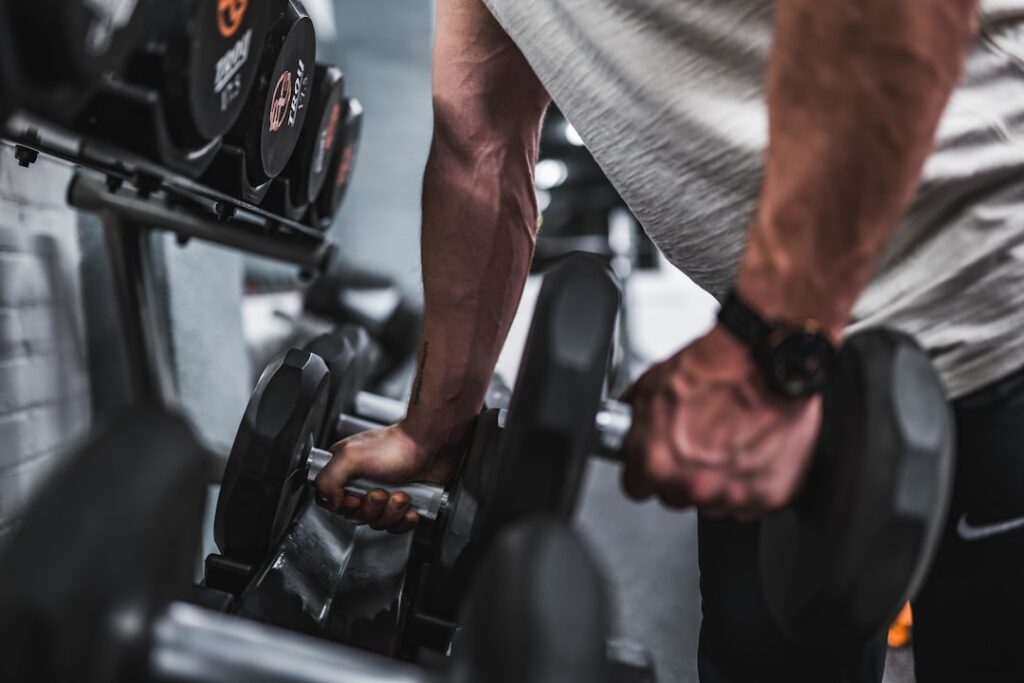
Dumbbell workout exercises are one of the most effective and accessible ways to build full-body strength — whether you train at home or in a gym.
Here is a quick overview of the best dumbbell exercises for a full-body workout:
| Category | Key Exercises |
|---|---|
| Legs | Goblet squat, Romanian deadlift, reverse lunge |
| Chest | Bench press, floor press, incline press |
| Back | One-arm row, bent-over row, dumbbell pullover |
| Shoulders | Overhead press, lateral raise, rear delt fly |
| Arms | Biceps curl, hammer curl, triceps extension |
| Core | Farmer’s carry, plank row, Russian twist |
You do not need a full rack of equipment or a complicated program. A pair of dumbbells and a solid plan are enough to build lean muscle, improve posture, strengthen your bones, and boost your overall health.
Dumbbells work because they:
- Allow a natural range of motion that protects your joints
- Engage stabilizer muscles that machines skip
- Let you train one side at a time to fix strength imbalances
- Scale easily from beginner to advanced
Whether you have 30 minutes or an hour, three days a week or five, dumbbells fit your schedule and your goals.
I’m Pleasant Lewis, owner and operator of Fitness CF, with over 40 years of experience in the fitness industry helping members at every level discover the power of dumbbell workout exercises to transform their health. In this guide, I’ll walk you through everything you need — from exercise selection to workout splits to progression — so you can train with confidence and real results.
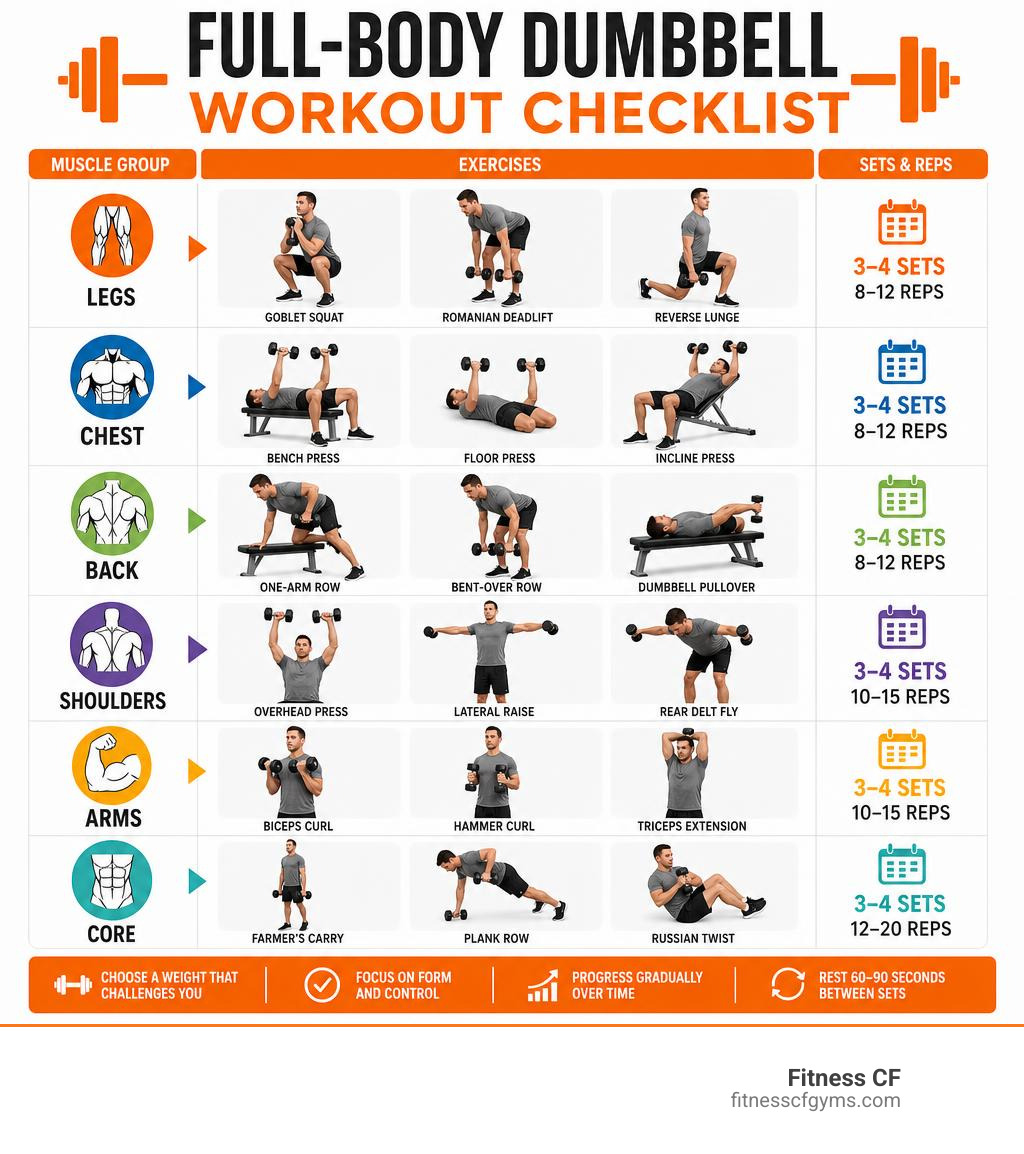
Dumbbell Workout Exercises Checklist for Full-Body Strength
A great dumbbell program trains the whole body, not just the muscles we see in the mirror. We like to think of dumbbell training in four simple buckets:
- Pushing muscles: chest, shoulders, triceps
- Pulling muscles: back, rear shoulders, biceps
- Legs and glutes: quads, hamstrings, glutes, calves
- Accessories: arms, core, shoulders, calves, grip
This full-body approach helps build strength that carries over into daily life – lifting groceries, climbing stairs, picking up kids, improving posture, and moving with more confidence.
Dumbbells are especially useful because they challenge stabilizer muscles and allow unilateral training, which means training one side at a time. That helps correct strength imbalances between your left and right sides.
For more ideas, see our guide to dumbbell workouts for sculpting your body anywhere.
Essential dumbbell movement patterns include:
- Squat: goblet squat, dumbbell front squat
- Hinge: Romanian deadlift, dumbbell deadlift
- Push: bench press, floor press, overhead press
- Pull: one-arm row, bent-over row, pullover
- Lunge: reverse lunge, walking lunge, Bulgarian split squat
- Carry: farmer’s carry, suitcase carry
- Core: Russian twist, plank row, dead bug press
- Isolation: curls, raises, triceps extensions, flyes
Best Compound Dumbbell Workout Exercises to Prioritize
Compound exercises train multiple joints and muscle groups at once. If you are short on time, prioritize these first.
Best compound dumbbell exercises:
- Goblet squat: Builds quads, glutes, core, and hip mobility.
- Dumbbell deadlift: Trains glutes, hamstrings, back, and grip.
- Romanian deadlift: Targets hamstrings and glutes with less knee bend.
- Dumbbell bench press: Builds chest, shoulders, and triceps.
- Dumbbell floor press: Beginner-friendly chest press that limits shoulder strain.
- One-arm row: Trains lats, rhomboids, biceps, and anti-rotation core.
- Bent-over row: Strengthens the back and posture muscles.
- Overhead press: Builds shoulders, triceps, and core stability.
- Reverse lunge: Trains legs while improving balance.
- Bulgarian split squat: A humbling leg builder. The dumbbells are not heavy – your soul is.
- Farmer’s carry: Builds grip, traps, core, and total-body tension.
- Renegade row: Combines back training with core stability.
Compound lifts are also efficient for calorie burn because they use more muscle mass and elevate heart rate.
Best Isolation Dumbbell Workout Exercises for Targeted Muscle Growth
Isolation exercises focus on one main muscle group. They are excellent for muscle definition, weak points, joint control, and finishing a workout.
Best isolation dumbbell exercises:
- Biceps curl: Classic arm builder.
- Hammer curl: Works biceps, brachialis, and forearms.
- Lateral raise: Targets side delts for wider-looking shoulders.
- Rear delt fly: Supports posture and shoulder balance.
- Overhead triceps extension: Trains the long head of the triceps.
- Skull crusher: Strong triceps isolation movement.
- Chest fly: Stretches and contracts the chest through a wide arc.
- Calf raise: Simple, effective lower-leg work.
- Concentration curl: Helps reduce swinging and improve biceps focus.
Use lighter weights and stricter form for isolation exercises. If your lateral raise turns into a full-body dance move, the dumbbells are probably too heavy.
Dumbbells vs. Barbells vs. Machines
Each tool has value. Dumbbells are not “better” for every goal, but they are one of the most versatile choices for most people.
| Equipment | Best For | Benefits | Limitations |
|---|---|---|---|
| Dumbbells | Full-body training, home workouts, unilateral work | Natural range of motion, stabilizer activation, joint-friendly angles, easy to scale | Very heavy lower-body training may require larger weights |
| Barbells | Max strength, heavy squats, deadlifts, presses | Allows heavier loading and simple progression | Less forgiving on joints and harder for beginners without coaching |
| Machines | Guided movement, isolation, rehab-style control | Easier setup, stable path, good for beginners learning muscle feel | Less stabilizer demand and less natural movement freedom |
For healthy living, we like a mix. Dumbbells build functional strength, machines can add safe volume, and barbells can support heavy strength goals when appropriate.
How to Structure 3-Day, 4-Day, and 5-Day Dumbbell-Only Workout Splits

Your best workout split depends on your schedule, recovery, and experience level. Most dumbbell workouts take 30 to 60 minutes. Beginners often do best with 3 days weekly, while intermediate lifters may prefer 4 or 5 days.
A smart plan usually runs for 8 to 12 weeks before making major changes. That gives your body time to adapt and gives you enough data to see progress.
For more planning help, read our guide on how to structure lean muscle workouts. You can also review this helpful 3-day full-body dumbbell workout plan.
3-Day Dumbbell Workout Split for Beginners
Best schedule: Monday, Wednesday, Friday
Each session trains the full body.
| Exercise Type | Example | Sets x Reps |
|---|---|---|
| Squat pattern | Goblet squat | 2-3 x 8-12 |
| Hinge pattern | Romanian deadlift | 2-3 x 8-12 |
| Push | Floor press or bench press | 2-3 x 8-12 |
| Pull | One-arm row | 2-3 x 8-12 |
| Shoulders | Overhead press | 2-3 x 8-12 |
| Arms | Curl or triceps extension | 2 x 10-15 |
| Core | Farmer’s carry or dead bug press | 2-3 rounds |
Rest 60 to 90 seconds between sets. On non-lifting days, add walking, light cycling, yoga, or mobility work.
4-Day Dumbbell Workout Split for Muscle Growth
Best structure: upper-lower split
- Day 1: Upper body
- Day 2: Lower body
- Day 3: Rest or light cardio
- Day 4: Upper body
- Day 5: Lower body
- Days 6-7: Recovery, walking, stretching, or easy cardio
Use 3 to 4 sets for main exercises and 2 to 3 sets for accessories.
Upper body should include a press, row, shoulder movement, biceps exercise, and triceps exercise. Lower body should include a squat, hinge, lunge, glute movement, and calf or core exercise.
This split gives each muscle enough weekly volume while still allowing recovery.
5-Day Dumbbell Workout Split for Intermediate Lifters
A 5-day dumbbell-only plan can be used for up to 12 weeks when recovery, nutrition, and sleep are solid.
Example 5-day split:
- Chest
- Back
- Shoulders
- Legs
- Arms and core
- Active recovery
- Rest
Keep workouts around 45 to 60 minutes. Shorter rest periods, such as about 45 seconds, can increase density, but use longer rest when form or strength drops.
Add cardio in moderate zones on recovery days: brisk walking, cycling, swimming, or incline treadmill work. If joints feel beat up or performance drops for a full week, take a deload by reducing sets, weight, or intensity.
Best Dumbbell Exercises by Muscle Group: Chest, Back, Shoulders, Arms, Legs, and Core

Use this section as your dumbbell exercise library. For a simpler starter list, check out 10 simple dumbbell exercises for a full body workout. If you like time-based sessions, this 30-minute full-body dumbbell workout offers another useful structure.
Chest Dumbbell Exercises
Best options:
- Dumbbell bench press
- Dumbbell floor press
- Incline dumbbell press
- Chest fly
- Squeeze press
- Push-up with dumbbell hand position
Form checklist:
- Keep elbows about 45 degrees from your torso.
- Lower the weights slowly.
- Keep shoulder blades gently pulled back.
- Avoid bouncing or over-stretching at the bottom.
- Use the floor press if your shoulders feel uncomfortable on a bench.
Incline pressing emphasizes the upper chest, while floor pressing is great for beginners because it limits range of motion.
Back Dumbbell Exercises
Best options:
- One-arm dumbbell row
- Bent-over dumbbell row
- Dumbbell pullover
- Renegade row
- Rear delt row
- Dumbbell shrug
Form checklist:
- Drive your elbow back rather than curling with your hand.
- Keep a neutral spine.
- Brace your core.
- Pause briefly at the top.
- Avoid twisting during one-arm rows.
Rows train the lats, rhomboids, traps, rear shoulders, biceps, and posture muscles. If you sit often, do not skip back work.
Shoulder Dumbbell Exercises
Best options:
- Overhead press
- Arnold press
- Lateral raise
- Rear delt fly
- Front raise
- Push press
Form checklist:
- Use lighter weights for raises.
- Keep ribs down and core tight.
- Do not shrug excessively.
- Control the lowering phase.
- Avoid using momentum unless you are intentionally doing a push press.
The shoulders have three main areas: front delts, side delts, and rear delts. A balanced plan trains all three.
Arm Dumbbell Exercises
Best options:
- Biceps curl
- Hammer curl
- Incline curl
- Overhead triceps extension
- Skull crusher
- Kickback
For stronger, more defined arms, pair biceps and triceps in supersets:
- Hammer curl x 10-12
- Overhead triceps extension x 10-12
- Rest 60 seconds
- Repeat 2-3 rounds
Keep elbows stable. If your elbow wanders all over the place, your biceps are getting help from every muscle except the one you meant to train.
For more arm training ideas, read our Arm Exercises Ultimate Guide and 8 arm exercises for strength and definition.
Leg and Glute Dumbbell Exercises
Best options:
- Goblet squat
- Dumbbell front squat
- Reverse lunge
- Walking lunge
- Bulgarian split squat
- Romanian deadlift
- Stiff-legged deadlift
- Hip thrust
- Glute bridge
- Calf raise
Form checklist:
- Keep knees tracking in line with toes.
- Brace your core before each rep.
- Keep your chest tall during squats.
- Hinge at the hips during Romanian deadlifts.
- Stop the set if your back rounds.
Goblet squats are excellent for quads and technique. Romanian deadlifts target hamstrings and glutes. Hip thrusts and glute bridges are great for building glute strength with less stress on the lower back.
Core and Conditioning Dumbbell Exercises
Best options:
- Russian twist
- Dumbbell march
- Farmer’s carry
- Suitcase carry
- Plank row
- Dead bug press
- Dumbbell thruster
- Clean and press
These exercises train core bracing, grip, balance, and conditioning. Carries are especially underrated. Pick up dumbbells, walk tall, breathe, and try not to look like you are carrying all the groceries in one trip – even though that is exactly the skill we are building.
Dumbbell conditioning can also support heart health, fat loss, and metabolic fitness when paired with regular cardio and balanced nutrition.
How to Choose Weight, Progress, and Avoid Injury
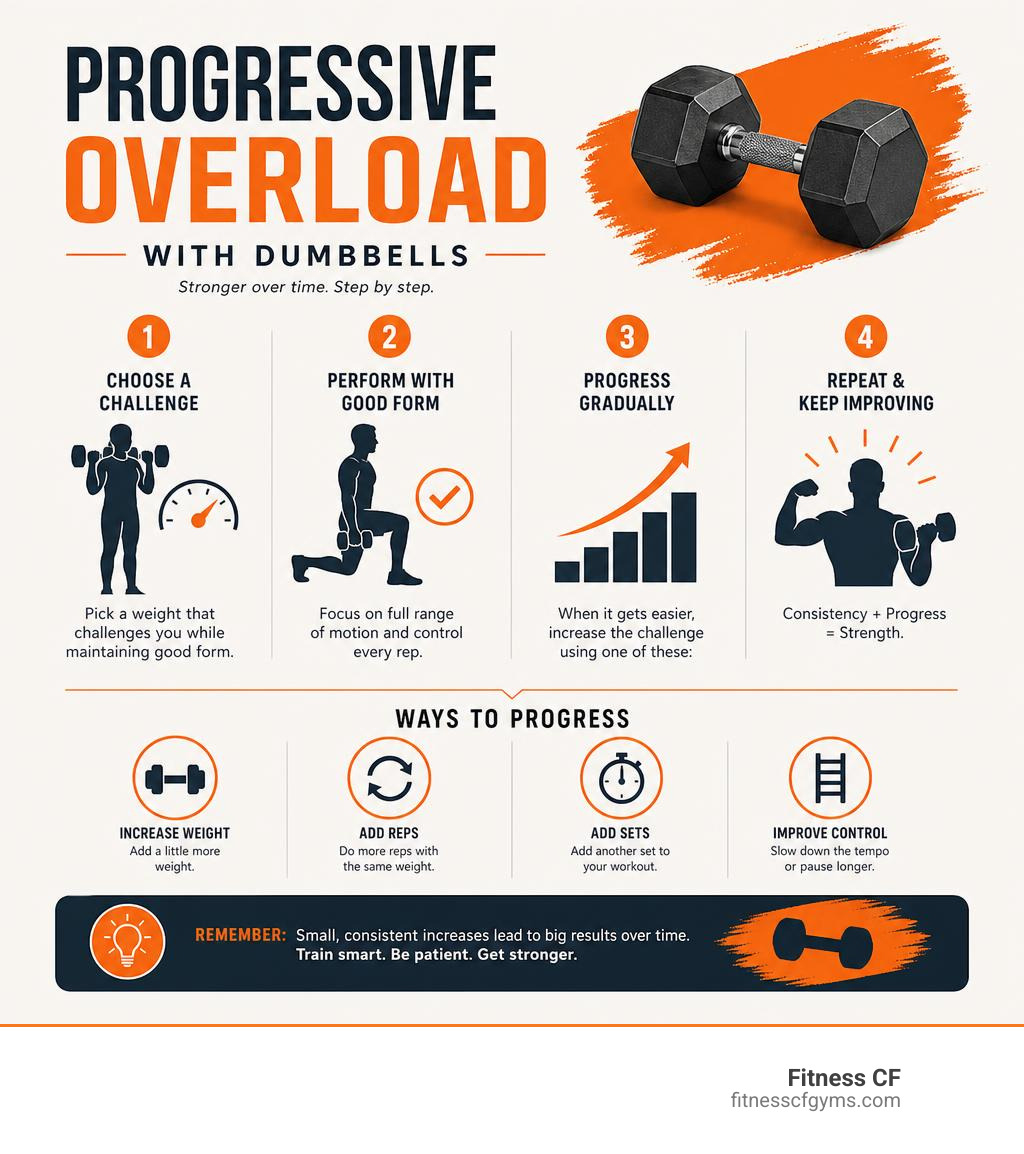
Great results come from smart progression, not random suffering. We want the weight to challenge you while allowing clean technique.
For more strength training basics, see our guide to the best strength training exercises to add to your routine.
Choosing the Right Dumbbell Weight
Choose a weight where the last 2 to 3 reps feel challenging, but your form stays clean.
General beginner starting points:
| Exercise Type | Common Starting Range |
|---|---|
| Upper body isolation | 5-12 lb |
| Upper body presses/rows | 10-25 lb |
| Lower body exercises | 15-35 lb or more |
| Core exercises | 5-20 lb |
These are only starting ranges. A lateral raise may need 5 to 10 pounds, while a goblet squat may require much more. Adjustable dumbbells are convenient at home, while fixed dumbbells make quick changes easy.
Sets, Reps, and Rest for Muscle Growth
For muscle growth, a reliable starting point is:
- 2 to 3 sets
- 8 to 12 reps
- 60 to 90 seconds rest
- Stop with about 1 to 2 reps in reserve
For heavier strength work:
- 3 to 4 sets
- 6 to 10 reps
- 90 to 120 seconds rest
For isolation work:
- 2 to 4 sets
- 12 to 20 reps
- 45 to 75 seconds rest
Muscle growth depends on mechanical tension, effort, and progression. You do not need to train to total failure every set. Train close, keep form strong, and live to lift another day.
Progressive Overload Without Heavier Dumbbells
If you do not have heavier dumbbells, you can still progress.
Try these methods:
- Add 1 to 2 reps per set.
- Add one extra set.
- Slow the lowering phase to 3 seconds.
- Pause at the hardest point.
- Use one-and-a-half reps.
- Switch to unilateral variations.
- Shorten rest slightly.
- Improve range of motion.
- Make every rep cleaner.
- Track everything in a workout journal.
A common progression method is to start at the low end of a rep range, build to the top, then increase weight by about 5% when available.
Example:
| Week | Goblet Squat |
|---|---|
| Week 1 | 3 x 8 |
| Week 2 | 3 x 10 |
| Week 3 | 3 x 12 |
| Week 4 | Increase weight and return to 3 x 8 |
Proper Form and Injury Prevention
Use this safety checklist:
- Keep a neutral spine.
- Brace your core before lifting.
- Keep shoulder blades controlled during presses and rows.
- Track knees over toes.
- Lower weights with control.
- Breathe – do not turn purple for no reason.
- Avoid ego lifting.
- Do not round your back on hinges.
- Do not let knees cave inward.
- Do not lock elbows aggressively.
- Warm up before lifting.
- Cool down after training.
- Stop if pain feels sharp, sudden, or worsening.
A good warm-up can be 5 minutes of light movement plus 1 to 2 lighter warm-up sets of your first exercise. After training, use gentle stretching, walking, or mobility work.
Recovery matters too. Hydrate, sleep well, and eat enough protein to support muscle repair.
Accessories That Pair Well With Dumbbell Workouts
Helpful accessories include:
- Flat bench
- Adjustable bench
- Exercise mat
- Resistance bands
- Pull-up bar
- Lifting straps
- Workout journal
- Timer
- Water bottle
- Foam roller
- Mobility tools
Resistance bands pair well with dumbbells because they add variety and joint-friendly tension. Learn more in our guide on how to use exercise bands for arms.
Frequently Asked Questions About Dumbbell Workout Exercises
Can beginners build muscle with dumbbell workout exercises?
Yes. Beginners can build muscle very effectively with dumbbells because their bodies respond well to consistent resistance training.
Start with full-body training 2 to 3 days per week. Focus on simple compound exercises like goblet squats, floor presses, rows, Romanian deadlifts, and overhead presses. Use light to moderate weights first and master form before adding load.
For best results, commit to 8 to 12 weeks, eat enough protein, sleep well, and gradually increase reps, sets, or weight.
How many sets and reps should I do for dumbbell workout exercises?
For most people focused on muscle growth, start with:
- 2 to 3 sets per exercise
- 8 to 12 reps per set
- 60 to 90 seconds rest
- 1 to 2 reps left in reserve
Use heavier weights and lower reps for compound lifts if your form is strong. Use lighter weights and higher reps for isolation moves like lateral raises, curls, and triceps extensions.
As you improve, increase weekly volume gradually instead of doubling your workouts overnight. Muscles like a challenge. They do not like surprise ambushes.
Should I combine dumbbell workouts with cardio?
Yes. Strength training and cardio work beautifully together.
Dumbbells help build muscle, strength, bone density, posture, and metabolism. Cardio supports heart health, endurance, recovery, and fat loss. A balanced routine might include:
- 2 to 4 dumbbell workouts per week
- 2 to 3 cardio sessions per week
- Daily walking when possible
- 1 to 2 mobility or stretching sessions
Good cardio options include walking, cycling, swimming, steady incline treadmill work, or short interval sessions. Keep intense cardio away from your hardest leg days if recovery becomes an issue.
Conclusion
Dumbbells are simple, but they are not basic. With the right plan, dumbbell workout exercises can build muscle, improve posture, support bone health, boost confidence, and help you create a healthier lifestyle in 2026 and beyond.
Use this checklist:
- Train the full body.
- Prioritize compound lifts.
- Add isolation exercises for detail.
- Choose weights that challenge you safely.
- Progress slowly and consistently.
- Pair strength with cardio.
- Recover with sleep, hydration, mobility, and protein.
- Keep showing up.
At Fitness CF, we believe strength training should feel approachable for every fitness level. Whether you are starting fresh, rebuilding consistency, or ready to level up, dumbbells are one of the best tools to help you get there.
Ready for your next step? Start with our 10 simple dumbbell exercises for a full body workout and build from there.