Your Path to a Healthier Lifestyle
Does Medicaid cover gym membership in Florida? The short answer is: traditional Florida Medicaid does not directly cover gym memberships, but many Medicaid Managed Care Plans offer Expanded Benefits that may include fitness-related support. Here’s what you need to know:
Quick Answer:
- Standard Florida Medicaid does not cover gym memberships as a basic benefit.
- Managed Care Plans (like Sunshine Health, Humana Healthy Horizons) may offer gym access through Expanded Benefits.
- Eligibility varies by plan and may require enrollment in specific programs or completion of annual wellness exams.
- Available programs may include access to fitness centers, fitness vouchers, or wellness rewards programs.
- Coverage amounts can range from $50-$150 per year for eligible members.
Who May Qualify:
- Members enrolled in specific Medicaid Managed Care Plans
- Individuals participating in Care Management programs
- Members with Intellectual and Developmental Disabilities (IDD)
- Those who have completed their annual wellness exam
The path to fitness support through Florida Medicaid isn’t always direct, but understanding your options can open doors to a healthier lifestyle. Regular exercise brings tremendous benefits—from stronger muscles and bones to better heart health and stress relief. These activities improve your physical and mental well-being, boost your energy, and reduce your risk of chronic diseases.
As Pleasant Lewis, owner and operator of Fitness CF with over 40 years in the fitness industry, I’ve helped countless Florida residents steer questions about does Medicaid cover gym membership in Florida and find pathways to affordable fitness options. My goal is to help you understand what your plan offers and how to take advantage of wellness benefits that support your health journey.
Does Medicaid Support Fitness and Wellness Programs in Florida?
Does standard Florida Medicaid cover gym memberships? The straightforward answer is no. The core program focuses on medically necessary services like doctor visits, hospital care, and prescription medications.
However, many Florida Medicaid Managed Care Plans offer something extra. These plans, run by private insurance companies under contract with the state, often include Expanded Benefits that can provide fitness support. While standard Medicaid provides the essentials, Managed Care Plans can go beyond the basics to offer additional services that help keep members healthy, such as wellness programs or fitness vouchers for eligible members.
The Florida Agency for Health Care Administration (AHCA) oversees the state’s Medicaid program. While AHCA defines the core services every plan must provide, it also gives Managed Care Plans the flexibility to offer these value-added benefits. This system is designed to encourage preventative health and support members in building healthier lifestyles. After all, regular exercise is key to reducing chronic disease risk and improving mental and physical health. You can learn more about standard coverage through Florida Medicaid’s Covered Services and HCBS Waivers.
Understanding Standard vs. Managed Care Coverage
To understand if your plan covers fitness, it’s important to know the difference between standard Medicaid and Managed Care Plans.
Standard Florida Medicaid covers essential, medically necessary services like doctor appointments, emergency care, hospital stays, and prescriptions. Wellness activities like gym memberships typically don’t fall into this category and are not included in basic coverage.
Statewide Medicaid Managed Care (SMMC) plans are different. In Florida, most Medicaid recipients enroll in a Managed Care Plan to coordinate their care. These plans must cover all standard Medicaid services, but they can also offer extra benefits to help you stay healthy. These additional benefits are where you might find fitness support, though specific offerings vary by plan. Your choice of health plan is key to accessing these fitness-related perks.
The Role of the Agency for Health Care Administration (AHCA)
The Florida Agency for Health Care Administration (AHCA) is the backbone of the state’s Medicaid program, managing the SMMC program and ensuring plans follow state and federal guidelines.
AHCA defines the covered services that all Medicaid plans must provide. Crucially, they also review and approve the Expanded Benefits that Managed Care Plans wish to offer. When a plan proposes to include gym access or wellness programs, AHCA reviews the proposal to ensure it is properly structured and aimed at improving member health.
So, while AHCA doesn’t mandate that plans cover gym memberships, it creates the framework that allows them to. This explains why fitness benefits are not universal but are plan-specific additions. For information on healthcare facilities and quality standards, AHCA provides a helpful resource on their Find a Facility page.
Opening up Wellness Through Your Medicaid Managed Care Plan

While standard Medicaid doesn’t cover gym memberships, your specific Medicaid Managed Care Plan might offer wellness support. These plans recognize that staying active is about preventing illness, not just treating it.
Your Managed Care Plan may offer Expanded Benefits or value-added services that go beyond basic medical coverage. These extras are designed to support your wellness journey, but the benefits vary significantly from one plan to another. This is why reviewing your member handbook or calling your plan directly is so important—you may have access to support you didn’t know about.
What are ‘Expanded Benefits’ and How Can They Support Your Fitness Goals?
Expanded Benefits are bonus features your Managed Care Plan offers beyond the basic requirements of Florida Medicaid. Some of these benefits can directly help with fitness access.
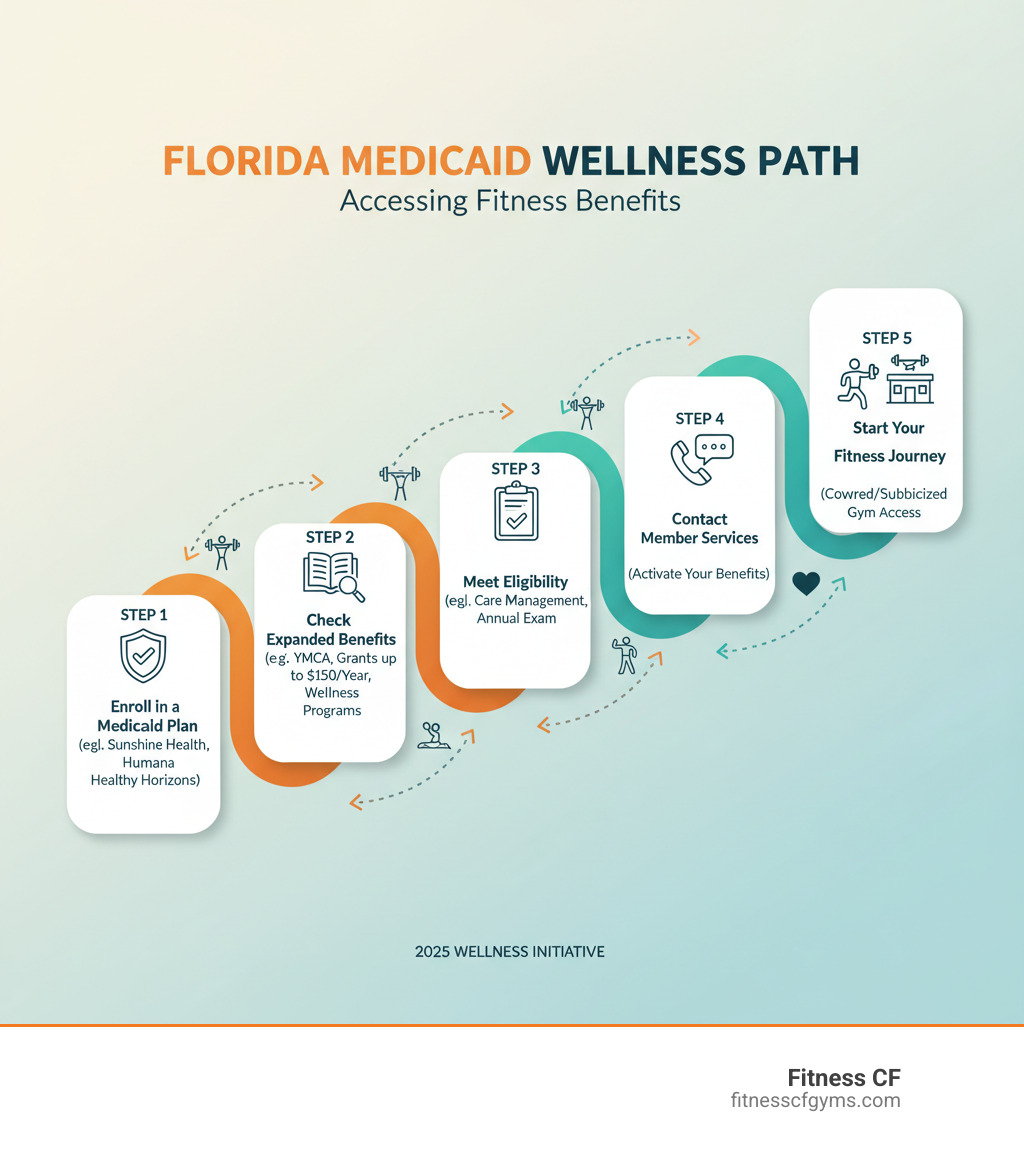
For example, Sunshine Health’s Care Grant provides up to $150 per year for individuals up to age 18, which can be used for gym memberships. To qualify, members must be enrolled in Care Management and complete an annual wellness exam.
Some plans also offer memberships to participating fitness centers as an expanded benefit for individuals or families. This can provide access to a wide range of fitness options, including equipment, swimming, and group classes.
For individuals with Intellectual and Developmental Disabilities (IDD), a specific expanded benefit may cover gym memberships up to $50 per month for an annual health club membership, with prior authorization. This is a meaningful contribution that can make fitness more accessible.
These are real programs helping Florida residents stay active. However, eligibility requirements vary, so checking your specific plan is essential. You can explore more details on plan websites, such as the Your Plan Benefits: Managed Medical Assistance Services page for Sunshine Health.
How Can Preventative Health Programs Help You Stay Active?
Even without direct gym coverage, many Managed Care Plans offer preventative health programs that reward healthy behaviors. These programs take a broader approach to wellness, recognizing that staying active is about more than where you work out.
Some plans feature wellness rewards programs that give you incentives for completing health assessments or participating in healthy activities. Earning rewards can be a powerful motivator to stay consistent with your fitness routine.
Transportation benefits can also help. By providing reliable transportation to medical appointments, plans remove a barrier to managing your overall health. When you feel better, you have more energy for an active lifestyle. Many plans also provide health coaching and educational resources to help you build lasting healthy habits.
Healthy Living: Building a Strong Foundation

Your journey to better health starts the moment you decide to move your body. Whether your Medicaid plan covers a gym membership or not, taking that first step is what matters most.
Daily movement is the foundation of wellness. You don’t need fancy equipment to get started. Your living room can be your fitness sanctuary with bodyweight exercises like push-ups, squats, and lunges. Free online workout videos can guide you through everything from yoga to high-intensity training. The key is to set realistic fitness goals that match where you are right now.
Start with what feels manageable, like a 10-minute walk three times a week. These small habits build momentum. As you get stronger, you’ll naturally want to do more. The secret to making exercise stick is finding activities you enjoy. If you hate running, don’t run! Dance, garden, or play with your kids. When movement feels like a celebration, it becomes a habit.
The Powerful Health Benefits of Regular Exercise

When you make movement a regular part of your life, your entire body begins to work better. The benefits go far beyond what you see in the mirror.
- Heart Health: Your heart becomes stronger, pumping blood more efficiently. This leads to lower blood pressure and a reduced risk of heart disease and stroke.
- Weight Management: Exercise burns calories and builds muscle, which boosts your metabolism even at rest, making it easier to maintain a healthy weight.
- Mental Well-being: Physical activity releases endorphins, natural mood-lifters that ease stress and can reduce symptoms of anxiety and depression. It also sharpens your thinking and improves sleep.
- Chronic Disease Prevention: Staying active significantly lowers your risk of developing type 2 diabetes, certain cancers, and osteoporosis.
- Improved Mobility and Balance: Exercise helps maintain the flexibility and strength needed for daily activities, reducing the risk of falls and injuries as you age.
- Better Sleep: People who exercise regularly tend to fall asleep faster and enjoy deeper, more restorative rest.
Why Strength Training is Crucial for Long-Term Health
Strength training is for everyone and is vital for long-term health and independence. As we age, we naturally lose muscle mass, a process called sarcopenia. Strength training is the best way to combat this.
Building and maintaining muscle boosts your metabolism, as muscle tissue burns more calories than fat, even at rest. This makes weight management easier and increases your energy. It also improves bone density by stimulating your bones to become stronger, which is your best defense against osteoporosis and fractures.
Furthermore, strength training reduces your injury risk. Stronger muscles support your joints, improving stability and protecting you from strains during routine activities. This functional strength helps you carry groceries, lift a suitcase, or get up from a chair with confidence. You can start with resistance bands, light dumbbells, or even your own body weight.
The Unbeatable Advantages of Cardiovascular Workouts
Cardiovascular exercise—any activity that gets your heart pumping—is the other essential pillar of fitness.
The heart health benefits are immense. A stronger heart pumps more blood with each beat, leading to a lower resting heart rate and reduced blood pressure. Cardio is also highly effective for weight management, burning significant calories and improving your body’s ability to use fat for fuel.
Regular cardio increases lung capacity, so you can climb stairs or play with grandkids without getting winded. The stress reduction is almost immediate, as the rhythmic nature of activities like walking or cycling calms the mind and releases mood-boosting endorphins. Finally, it leads to improved sleep quality, helping you fall asleep faster and enjoy more restorative rest.
How to Check Your Plan for Wellness and Fitness Support
Now comes the important part: finding out exactly what your specific Florida Medicaid plan offers. Taking a proactive approach is the key to getting the answers you need.
It’s worth noting that while Original Medicare doesn’t cover gym memberships, some Medicare Advantage and Medicare Supplement plans do offer fitness programs. If you have a “Medicare/Medicaid combination” plan, you might have access to these types of benefits, so it’s worth investigating.
Additionally, some plans may offer access to comprehensive wellness platforms that include gym access, online workouts, and tools for brain health. The only way to know for sure what’s available to you is to contact your plan directly.
What are the steps to find out if my Florida Medicaid plan supports wellness or fitness activities?
- Locate Your Member ID Card and Handbook. Your ID card has your plan’s name and a customer service phone number. Your member handbook, often available on your plan’s website, details your benefits.
- Contact Member Services. This is the most direct approach. Call the number on your ID card and be prepared to ask specific questions.
- Use the Right Language. When you call, ask specifically about “Expanded Benefits” or “Value-Added Services.” These are the terms plans use for extra perks beyond standard medical coverage.
- Speak with Your Care Manager. If you are enrolled in a Care Management program, your care manager is an excellent resource for personalized information about the benefits you qualify for and how to access them.
- Check Your Plan’s Website. Most Managed Care Plans have a dedicated section for “Expanded Benefits” or “Wellness Programs.” You might find benefit summaries or guides that explain what’s available.
- Review AHCA Information. The Florida Agency for Health Care Administration (AHCA) sometimes publishes high-level “Expanded Benefits” grids for Health Plans on its website, which can give you a general idea of what types of benefits are offered. You can search for these under the Statewide Medicaid Managed Care (SMMC) section at Expanded Benefits.
What questions should I ask my insurance provider?
When you contact your plan, being prepared with specific questions will help you get clear information. Here are some key questions to ask:
- “Do you offer any wellness or fitness support, such as gym memberships or fitness program reimbursements?”
- “What are the specific eligibility requirements to qualify for these fitness benefits?” (e.g., age limits, enrollment in care management, completion of a wellness exam).
- “Is there a list of participating fitness centers or approved wellness programs?”
- “Are there any reward programs for healthy activities, and how do they work?”
- “Are there transportation benefits that could help me get to a fitness facility?”
- “For members with Intellectual and Developmental Disabilities (IDD), are there specific benefits for health club memberships and what is the authorization process?”
- “How do I apply for or activate these benefits?”
Take notes during your call and don’t be afraid to ask for clarification. Understanding your benefits is the first step toward using them.
Conclusion: Take the Next Step on Your Fitness Journey
We’ve explored the question of does Medicaid cover gym membership in Florida, and the key takeaway is this: while standard Florida Medicaid does not, many Medicaid Managed Care Plans offer real opportunities through their Expanded Benefits programs.
We’ve seen examples of this support, such as care grants for younger members, access to fitness centers for individuals and families, dedicated support for individuals with Intellectual and Developmental Disabilities, and rewards programs that encourage healthy behaviors. These are real pathways to fitness available to eligible members right now.
The most important action you can take is to check your specific Medicaid Managed Care Plan. Every plan is different, and your eligibility depends on your plan and circumstances. A call to member services or a review of your handbook could open up fitness support you didn’t know you had.
Your health journey doesn’t begin or end with insurance coverage. Regular exercise is one of the most powerful gifts you can give yourself, regardless of where you do it. Whether you’re building strength, getting your heart pumping with cardio, or taking daily walks, you are investing in a healthier future.
The benefits—stronger muscles, improved heart health, better mental well-being, and reduced risk of chronic disease—are available to everyone who commits to moving their body regularly. You don’t need special equipment to start. You just need to begin.
Your fitness journey is uniquely yours. Take what you’ve learned, contact your Managed Care Plan to understand your benefits, and then take that next step toward a healthier, stronger you. Every movement counts, and your well-being is worth the effort.