Master the Upward Dog Yoga Pose for Better Posture
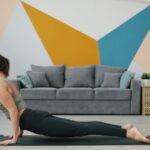
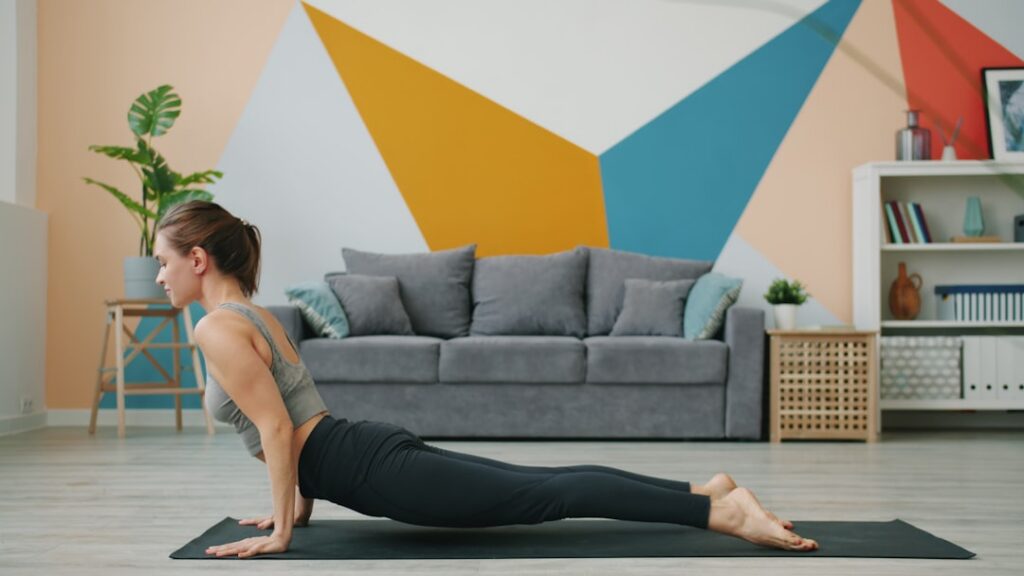
The upward dog yoga pose is a beginner-friendly backbend that lifts your chest, hips, and thighs from the floor while your hands and the tops of your feet support your weight. Also called Urdhva Mukha Svanasana, it can help open the chest, strengthen the arms, shoulders, and back, and counter the rounded posture that often comes from long hours of sitting.
Quick answer: To practice Upward-Facing Dog, lie face down with your palms beside your lower ribs. Press firmly through your hands and the tops of your feet, straighten your arms, lift your thighs off the mat, and draw your chest forward and up. Keep your shoulders away from your ears and avoid forcing the bend into your lower back.
It is a key part of many Sun Salutations, but it deserves more attention than a fast transition. Good form turns it into a useful strength and mobility exercise; rushed form can leave the wrists, shoulders, or low back doing too much work.
I am Pleasant Lewis, and I have spent more than 40 years helping people build sustainable fitness habits through clear coaching and practical movement guidance. In this guide, I will break down the upward dog yoga pose so you can use it to support stronger posture and healthier daily movement.
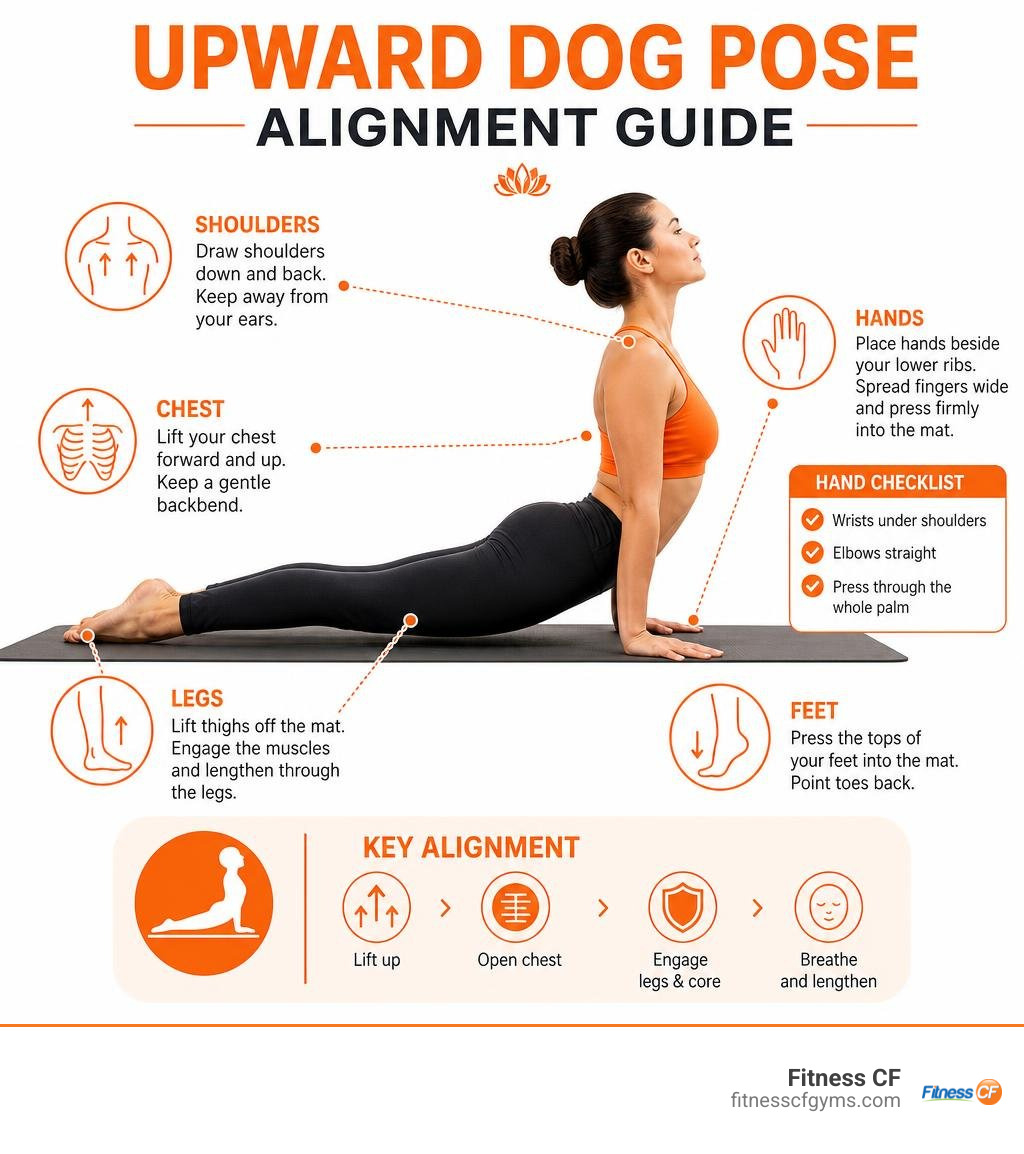
Upward dog yoga pose terms simplified:
Health Benefits of the Upward Dog Yoga Pose
Modern life keeps many of us glued to chairs, hunched over keyboards, and staring down at smartphones. Over time, this rounded position can contribute to postural kyphosis—a distinct forward rounding of the upper back—along with tight hip flexors and persistent stiffness. The upward dog yoga pose (Sanskrit: Urdhva Mukha Svanasana, pronounced OORD-vah MOO-kah shvah-NAHS-ah-nah) acts as an effective physical remedy for this daily slouch.
When we practice Upward-Facing Dog, we lift the entire front body off the floor, reversing the mechanics of sitting. By opening the chest, expanding the ribcage, and extending the spine, this powerful posture rejuvenates the vertebrae and encourages a naturally upright stance. Legend of modern yoga B.K.S. Iyengar noted that practicing Upward-Facing Dog regularly reinvigorates the spine, expands lung capacity, and enhances blood circulation throughout the pelvic region.
Beyond structural posture alignment, this prone backbend yields a distinct energy boost. Opening the thoracic cavity creates physical space for fuller diaphragmatic breathing, delivering oxygen through the bloodstream to combat feelings of sluggishness, depression, and mental fatigue.
The pose also serves as an outstanding foundational exercise for instant back relief. When we activate the lower body and extend the upper spine properly, we reduce compressive strain on the lumbar disc spaces. Furthermore, developing strong abdominal support and trunk stability through the pose enhances overall core stability for better posture, protecting our backs during daily lifting, bending, and carrying tasks.
To ensure you reap all of these physical benefits without unnecessary joint strain, following an accurate Upward-Facing Dog Pose alignment guide is essential.
Anatomy and Muscle Engagement in Upward Dog Yoga Pose
Upward-Facing Dog is far more than a simple upper-body stretch; it is a full-body active isometric hold that requires coordinated muscle engagement from head to toe. Understanding the underlying orthopedic anatomy allows us to execute the posture safely and intentionally.

- Upper Body & Arms: To elevate the torso, the triceps brachii contract powerfully to extend the elbows fully. Simultaneously, the infraspinatus and teres minor externally rotate the upper arm bones (humeri). Pressing down through the base of the index fingers creates a stabilizing helical line of force through the elbow joints. This distributes weight evenly, shielding the wrists and preventing us from dumping weight passively into the joint capsules.
- Back & Shoulder Girdle: The middle and lower fibers of the trapezius, alongside the rhomboids, pull the shoulder blades down away from the ears and back toward the tailbone. The erector spinae muscles along the spine work smoothly to facilitate thoracic spine extension (opening the mid and upper back) while keeping the neck long.
- Core & Abdominals: The transverse abdominis and internal obliques pull the belly button inward and upward toward the heart. This action stabilizes the lumbar spine, protecting the lower back from over-arching or pinching.
- Hips & Legs: The gluteus maximus contracts to extend the hip joints. However, because strong glute contraction can cause the thighs to flare outward, we consciously engage the adductor magnus (inner thighs) by squeezing the inner thighs toward each other and rotating them up toward the ceiling. The psoas and hip flexors undergo an active lengthen-and-stabilize action, while the quadriceps contract tightly to keep the knees straight and lift the thighs off the mat.
How to Perform Upward-Facing Dog with Proper Alignment
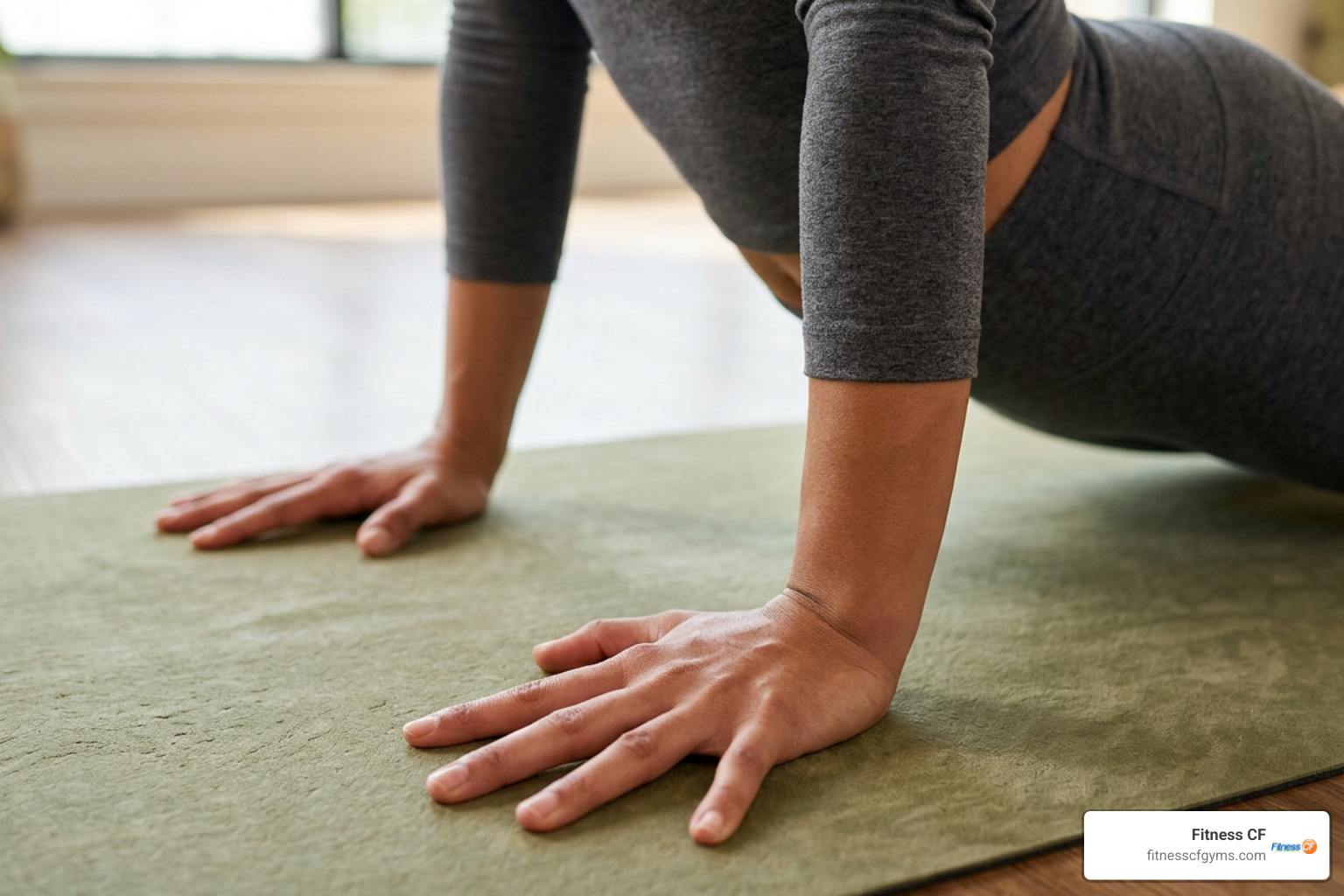
Setting up proper alignment in Upward-Facing Dog begins from the floor up. Rushing into the pose from a weak foundation is the primary reason people experience wrist or lower back discomfort.
Follow these step-by-step alignment cues to build a solid, comfortable posture:
- Prone Setup Position: Lie face down (prone) on your yoga mat with your legs extended straight back, hip-distance apart. Ensure the tops of your feet rest flat against the floor with all ten toenails pressing evenly down.
- Hand and Wrist Placement: Place your palms flat on the mat directly alongside your lower ribs—not up near your shoulders or head. Your wrists should line up perpendicular to the floor. Spread your fingers wide and press firmly through all four corners of each palm, paying special attention to the root of the index finger and thumb.
- Engage the Lower Body: Press the tops of your feet into the mat until your knee caps lift. Firm your outer ankles into your midline, contract your quadriceps, and subtly rotate your inner thighs up toward the ceiling.
- The Lifting Entry: On an inhalation, press firmly through your palms and the tops of your feet. Straighten your arms completely to lift your chest, ribcage, abdomen, hips, and thighs entirely off the mat. The only parts of your body touching the floor should be your hands and the tops of your feet.
- Broaden the Chest: Draw your chest forward and up between your upper arms, like a ship’s prow moving through water. Pull your shoulder heads back and draw your shoulder blades down your back toward your heels.
- Neck & Head Positioning: Keep the back of your neck long. Continue the smooth curve of your mid-back into your cervical spine. Look straight ahead or slightly upward without tilting your head back so far that you compress the back of your neck.
- Hold and Breathe: Maintain this active lift for 3 to 5 smooth, even breaths (approximately 15 to 30 seconds). Keep your legs fully active and continue pushing the floor away with your hands.
To release, exhale as you slowly bend your elbows and lower your body smoothly back to the mat, or transition directly into a counterpose such as Downward-Facing Dog.
Common Alignment Mistakes in the Upward Dog Yoga Pose
Even experienced practitioners can fall into sneaky movement traps during yoga flows. By spotting these subtle errors early, we can protect our joints and maximize performance.
- Neck Turtling (Shoulder Shrugging): Slouching into the upper body allows the shoulders to hike up near the ears, burying the neck like a turtle retracting into its shell. To fix this, actively press down through your hands, draw your shoulder blades down your back, and extend through the crown of your head.
- Lower Back Compression: Sagging into the lower spine while ignoring leg engagement jams the lumbar facet joints together. Always activate your legs, squeeze your inner thighs, and lift your lower belly toward your spine to keep your low back long.
- Elbow Hyperextension and Flaring: Locking out or hyperextending the elbow joints can stress the surrounding ligaments. Keep a microscopic, active soft bend in your arms, turning the eye of each elbow slightly forward to keep the triceps engaged.
- Sagging Pelvis and Resting Thighs: Letting your hips or thighs drag along the floor turns Upward Dog into a hybrid position, losing leg strength benefits. Drive back through your heels and press through the tops of your feet to keep your thighs levitating off the floor.
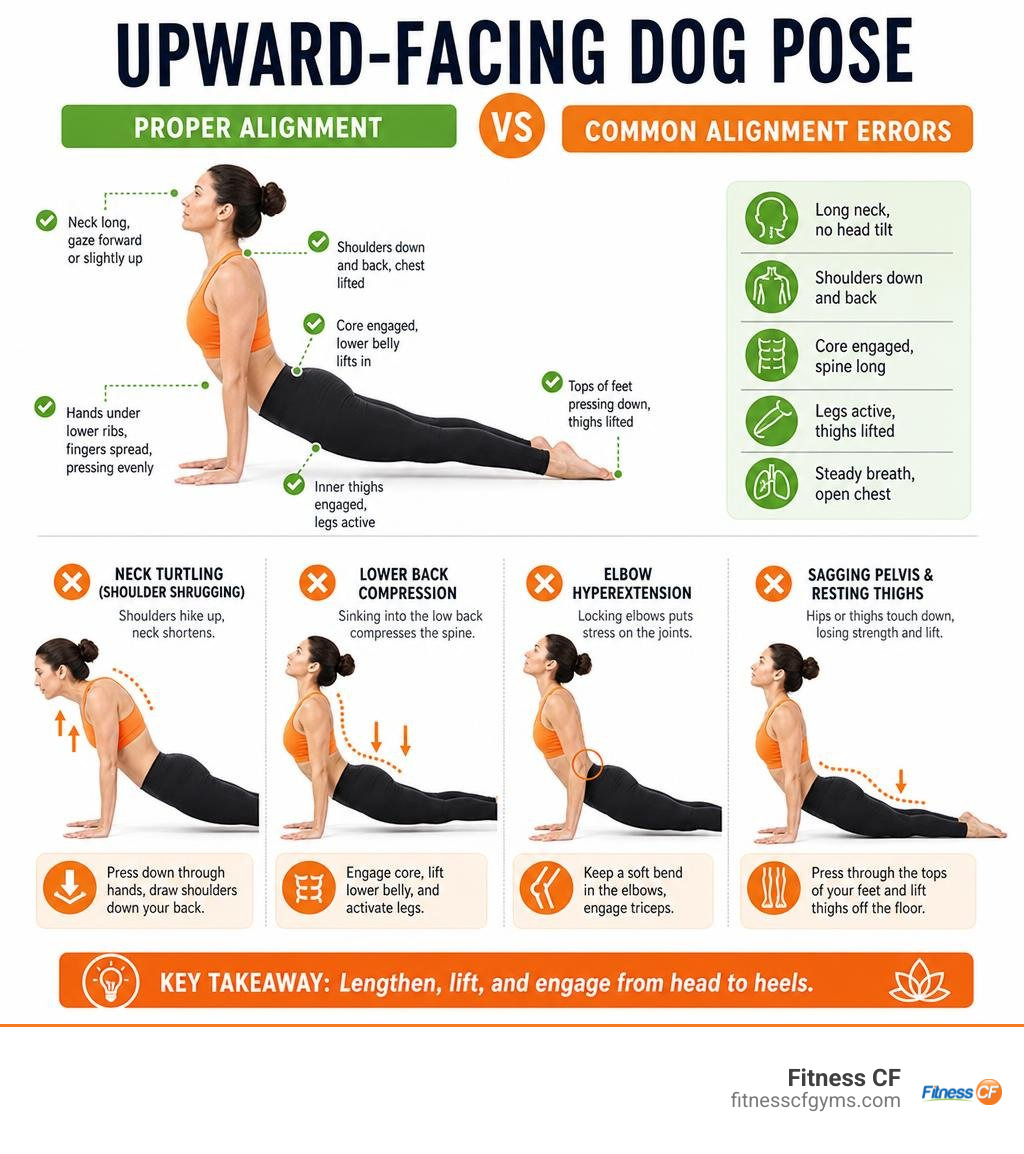
Taking time to correct these small errors is the single best strategy for preventing stretching injuries while building long-term upper body and spinal strength.
Upward-Facing Dog vs. Cobra Pose
Because both postures are prone backbends performed from the floor, Cobra Pose (Bhujangasana) and Upward-Facing Dog Pose (Urdhva Mukha Svanasana) are frequently confused. However, they feature distinct mechanics, body contacts, and muscle demands.
| Alignment Feature | Cobra Pose (Bhujangasana) | Upward-Facing Dog (Urdhva Mukha Svanasana) |
|---|---|---|
| Primary Contact Points | Palms, pelvis, thighs, tops of feet rest on floor | Only palms and tops of feet touch the floor |
| Arm Position | Arms remain bent at elbows (soft or moderate angle) | Arms are fully straightened directly beneath shoulders |
| Thighs & Pelvis Elevation | Pelvis, hips, and legs stay grounded on the mat | Hips, pelvis, and thighs are completely elevated off mat |
| Spinal Extension Load | Gentle to moderate thoracic extension; lower load | Full thoracic and lumbar extension; higher load |
| Target Strength Areas | Back extensors, gentle core opening | Triceps, anterior shoulders, chest, quads, full core |
| Difficulty Level | Beginner | Intermediate (requires strength & mobility) |
From a movement science perspective, neither pose is superior to the other; they simply apply different biomechanical loads to the body. Cobra Pose is ideal for building back muscle endurance with minimal wrist load, whereas Upward Dog offers a broader chest opening and builds active shoulder and leg strength.
Modifications, Variations, and Preparatory Poses

Yoga is not a one-size-fits-all discipline. Whether you are working around tight shoulders, wrist sensitivity, or building initial core strength, using smart modifications allows you to experience the posture safely. If you are new to the mat, reviewing overall yoga exercise basics will give you a great head start.
Here are accessible variations to tailor the pose to your needs:
- Knees-Down Upward Dog: Perform the pose with your arms straight and chest open, but allow your knees and lower thighs to rest lightly on the floor. This drastically reduces the load on your lower back and core while maintaining chest-opening benefits.
- Blanket Support under Thighs: Place a tightly rolled yoga blanket beneath your upper thighs. Resting your thighs gently on the blanket gives your lower body reliable support without sacrificing your arm and upper back posture.
- Blocks Under Palms: Place two yoga blocks flat on your mat shoulder-width apart and position your hands on them. Raising your hands higher than your feet reduces wrist extension angles and creates additional physical space to lift your chest.
- Chair-Assisted Upward Dog: Place a sturdy chair against a wall so it cannot slide. Place your hands on the seat of the chair, step your feet back into an inclined plank position, and roll through your shoulders to lift your sternum. This removes weight-bearing stress from your lower back entirely.
- Wall Backbend Support: Stand facing a wall about arm’s length away. Place your palms against the wall at chest height, press through your hands, and draw your shoulder blades back while gently lifting your chest.
When adjusting your practice, consulting a reliable modifications and safety cautions guide will help you navigate wrist sensitivity or lower back discomfort safely.
Preparatory Poses
Before dropping straight into deep backbends, warm up your spine and shoulder girdle with gentle preparatory poses:
- Cat-Cow Pose (Marjaryasana-Bitilasana): Mobilizes the entire spine through alternating flexion and extension.
- Baby Cobra (Bhujangasana): Strengthens the spinal erectors without placing heavy demands on the wrists or shoulders.
- Bridge Pose (Setu Bandha Sarvangasana): Wakes up the glutes, hamstrings, and lower back while stretching the chest and hip flexors.
Counter Poses
After extending the spine backward, it is critical to balance your body with stabilizing counter poses:
- Downward-Facing Dog (Adho Mukha Svanasana): Provides symmetrical lengthening through the spine, hamstrings, and shoulders.
- Child’s Pose (Balasana): Delivers gentle lumbar flexion and relaxation for the back muscles.
Integrating Upward Dog into Sun Salutations and Transitions
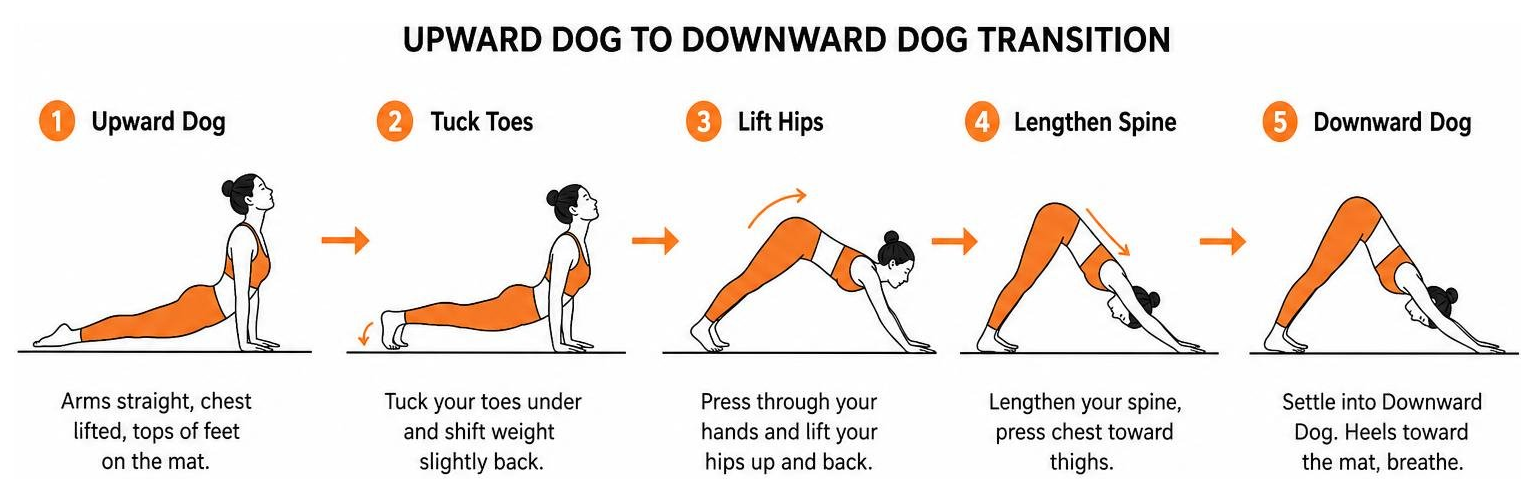
In classical Vinyasa yoga and Surya Namaskar (Sun Salutations), Upward-Facing Dog acts as the dynamic bridge between Four-Limbed Staff Pose (Chaturanga Dandasana) and Downward-Facing Dog (Adho Mukha Svanasana).
Here is how to execute this seamless, fluid transition:
- The Entry from Chaturanga: Lower down into Chaturanga Dandasana with your elbows bent at 90 degrees. As you inhale, press through your palms to straighten your arms. Simultaneously roll forward over your toes—one foot at a time or both together—flipping your feet so their tops rest flat on the mat. Lift your chest into Upward-Facing Dog.
- The Hold: Pause at the top of your inhalation, broadening across your collarbones and pulling your chest forward.
- The Exit to Downward Dog: As you exhale, avoid simply dropping your hips or flipping your feet instantly. Instead, engage your psoas and deep core muscles to lift your hips back and upward toward the ceiling first. Once your hips are pulled high into the air, roll smoothly back over the tops of your toes until your heels ground toward the floor in Downward-Facing Dog.
Mastering these transitions refines overall movement efficiency. Check out our detailed guide on plank to down dog movement patterns to refine your flow mechanics.
Frequently Asked Questions About Upward-Facing Dog
What is the main difference between Upward Dog and Cobra Pose?
The main structural difference is body elevation and arm positioning. In Upward-Facing Dog, your arms are fully straightened, and your hips, pelvis, and thighs are lifted completely off the floor—meaning only your hands and the tops of your feet make contact with the mat. In Cobra Pose, your hips and thighs remain grounded on the floor, and your elbows stay bent at a soft or moderate angle.
How can I prevent lower back pain during Upward Dog?
To keep your lower back comfortable, focus on pulling your chest forward and creating length through your upper (thoracic) spine rather than bending strictly from your lower back. Crucially, keep your legs fully active: press the tops of your feet firm into the floor, engage your quadriceps, and pull your belly button inward toward your spine to support your lumbar vertebrae.
How do I transition safely from Upward Dog to Downward Dog?
Instead of flipping your feet immediately or pushing backward solely with your feet, initiate the transition by engaging your abdominal muscles and psoas to lift your hips high into the air first. Once your hips lead the movement upward and backward, smoothly roll over your toes into Downward-Facing Dog.
Conclusion
The upward dog yoga pose is far more than a quick transition in a fast-moving yoga class—it is an energetic heart-opener and postural reset. By strengthening the upper back, opening the chest, and activating the lower body, regular practice helps reverse forward slouching, expand breathing capacity, and support long-term spinal mobility.
Focusing on proper hand grounding, active leg engagement, and thoracic elevation ensures you move with ease while protecting your joints. Incorporating gentle backbends and balanced movement patterns into your weekly regimen is a fantastic step toward building resilience and feeling great every day. For more inspiration on building balanced routines, explore the benefits of adding yoga to your fitness routine.