Stop Wasting Time: Master the Fundamentals of Hypertrophy
Muscle building tips and tricks can mean the difference between months of frustrating plateaus and steady, visible gains. Here’s a quick overview of what actually works:
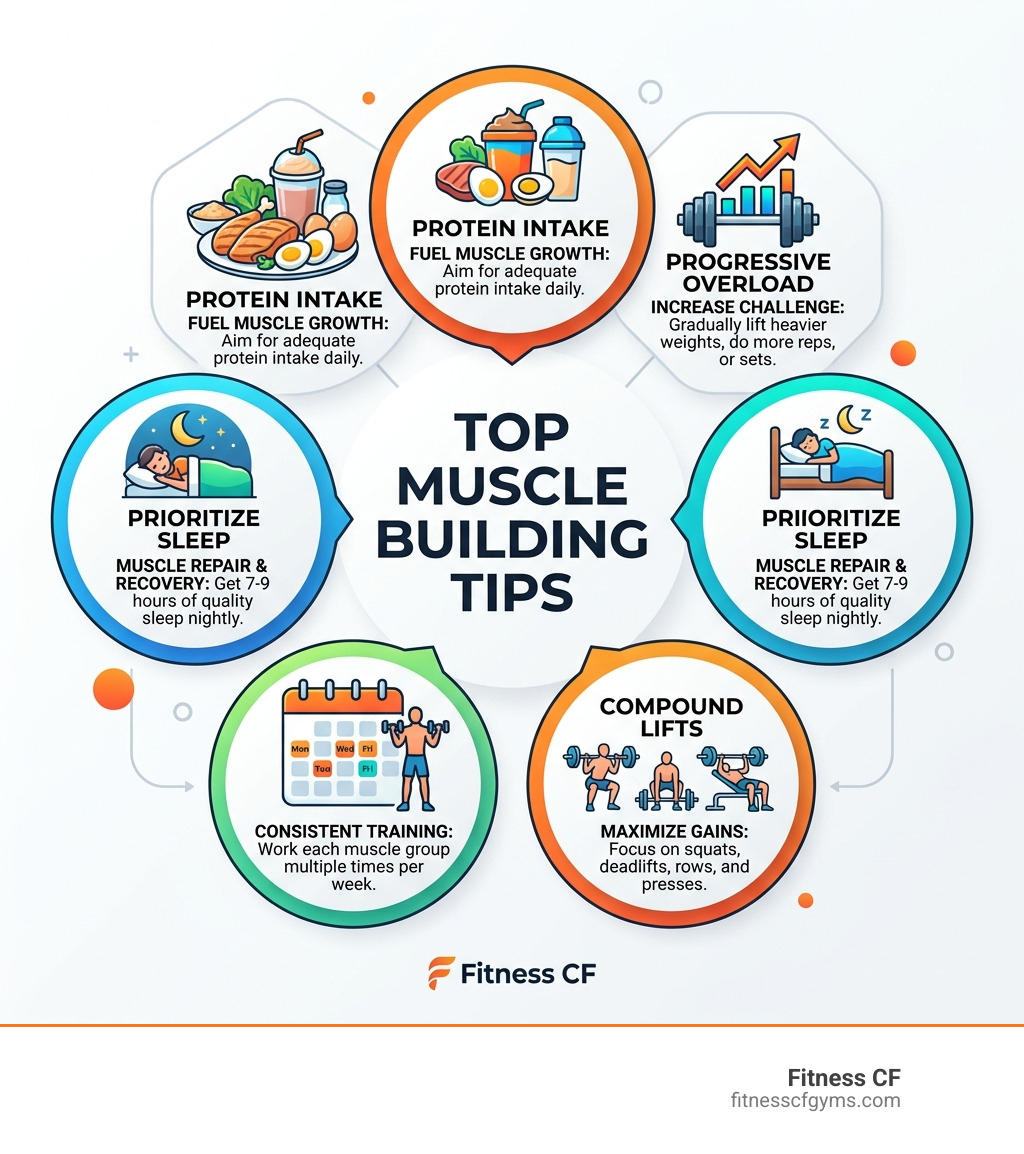
- Lift with progressive overload – gradually increase weight, reps, or sets over time
- Eat enough protein – aim for around 1.2g per kilogram of body weight daily
- Train 2-3 times per week – with at least 48 hours of rest between sessions
- Prioritize compound movements – squats, deadlifts, rows, and presses
- Sleep 7-9 hours per night – this is when your muscles actually grow
- Use a controlled tempo – a 7-second lift (3 up, 1 pause, 3 down) maximizes muscle stress
- Fuel your workouts – eat protein and carbs before and after training
Here’s something most people don’t think about. Men lose 3% to 5% of their muscle mass every decade after age 30. That process – called sarcopenia – quietly chips away at your strength, metabolism, and energy. The good news? Resistance training is one of the most powerful tools you have to slow it down and even reverse it.
A pound of muscle burns about 13 calories per day at rest, compared to just 4 for a pound of fat. Building muscle isn’t just about looking good – it supports your joints, regulates blood sugar, and makes everyday life easier.
I’m Pleasant Lewis, owner and operator of Fitness CF, with over 40 years of experience in the fitness industry helping people apply muscle building tips and tricks that get real, lasting results. Let’s cut through the noise and focus on what the science actually says.
Quick muscle building tips and tricks definitions:
Building muscle—scientifically known as hypertrophy—isn’t just about moving heavy objects from point A to point B. It is a complex biological process where your body repairs microscopic tears in muscle fibers, making them thicker and stronger than before. This process requires a delicate balance of stimulus (training), fuel (nutrition), and environment (recovery).
As we age, our natural levels of muscle-building hormones, like testosterone, begin to decline gradually after age 40. This makes the “use it or lose it” rule incredibly relevant. Without intentional resistance training, your body naturally shifts toward a higher body fat percentage and lower bone density. However, research shows that even a single set of 12–15 repetitions taken to the point of fatigue can effectively signal your body to maintain and grow lean mass, regardless of your age.

Muscle Building Tips and Tricks for Beginners
If you are just starting out, the most important of all muscle building tips and tricks is to master progressive overload. Your muscles are incredibly adaptive; if you lift the same 20-pound dumbbell for the same ten reps every week, your body has no reason to grow. You must consistently challenge your tissues by increasing the weight, adding more repetitions, or shortening your rest periods.
Another “pro” secret is the 7-second lifting tempo. Many beginners rush through their reps, using momentum rather than muscle. By spending 3 seconds on the “up” phase (concentric), pausing for 1 second at the peak, and taking 3 seconds on the “down” phase (eccentric), you maximize “time under tension.” Scientific studies suggest that the eccentric phase—the lowering of the weight—is actually where the most muscle damage and subsequent growth occur.
However, none of this matters if your technique is sloppy. We always emphasize form over ego. Lifting a weight that is too heavy with poor form doesn’t just limit your gains; it invites injury. Check out our guide on 11 common muscle building mistakes and how to avoid them to ensure you aren’t sabotaging your own progress before you even get warmed up.
Essential Muscle Building Tips and Tricks for Maximum Growth
To see maximum growth, you need to prioritize multi-joint movements, also known as compound exercises. These are lifts that require more than one joint to move and involve multiple muscle groups simultaneously. Think of the “Big Four”: squats, deadlifts, bench presses, and overhead presses.
These movements are superior for hypertrophy because they allow you to lift the heaviest loads, which triggers a larger hormonal response. While isolation moves like bicep curls have their place for “polishing” a physique, compound movements are the foundation of any full body workout plan that actually works.
When structuring your sessions, consider the debate between free weights and machines. Both have their place in a well-rounded program:
| Feature | Free Weights (Dumbbells/Barbells) | Weight Machines |
|---|---|---|
| Muscle Activation | Higher (requires stabilizer muscles) | Lower (fixed path) |
| Safety | Requires more balance/coordination | Higher (great for beginners or rehab) |
| Functional Strength | Mimics real-world movements | Targets specific muscles in isolation |
| Progression | Smaller increments possible | Limited by machine stack |
A recent study by FAU suggests that to build muscle and gain strength, you should train smarter, not longer. You don’t need to spend two hours in the gym. High-intensity sessions lasting 30 to 45 minutes, performed 2–3 times a week, are often more effective for natural lifters than marathon sessions that lead to overtraining.
Fueling the Engine: Nutrition and Supplementation
You cannot build a house without bricks, and you cannot build muscle without a calorie surplus. While “body recomposition” (losing fat and gaining muscle at the same time) is possible for beginners, most people will see faster results by eating slightly more calories than they burn. Aim for a modest surplus of 250 to 500 calories above your maintenance level. This provides the energy necessary for the energy-expensive process of protein synthesis.
Healthy living and muscle growth go hand-in-hand. Your diet should consist of nutrient-dense whole foods rather than “dirty bulking” on processed sugars. High-quality proteins, complex carbohydrates for workout energy, and healthy fats for hormone production are the pillars of success. For a deep dive into specific meal planning, explore how to unlock your potential with proven nutrition tips for building muscle.
Muscle Building Tips and Tricks for Nutrition Timing
While total daily intake is the most important factor, timing can give you an extra edge. The “anabolic window”—the idea that you must eat protein within 30 minutes of a workout—is a bit of a myth, but having a protein-rich meal within two hours of training is still highly beneficial for recovery.
- Protein Goal: Aim for 1.2g to 1.7g of protein per kilogram of body weight. For a 175-pound man, that’s roughly 95 to 135 grams of protein a day.
- Meal Distribution: Your body can only process so much protein at once. Try to spread your intake across 3–5 meals, aiming for 20–40g per sitting.
- Casein Before Bed: Casein is a slow-digesting protein found in dairy (like cottage cheese or Greek yogurt). Consuming it before sleep provides a steady stream of amino acids to your muscles throughout the night.
- Pre-Workout Carbs: Eating carbs before you lift ensures your muscles have glycogen (fuel) ready to go, preventing the body from breaking down muscle tissue for energy.
Experts often suggest that workout and diet tips should focus on consistency over perfection. If you hit your protein targets 90% of the time, you will see results.
The Science of Recovery and Hormonal Balance
We often say that you don’t grow in the gym; you grow while you sleep. Resistance training creates the “damage,” but recovery creates the “growth.” If you are chronically stressed or sleep-deprived, your body produces cortisol, a catabolic hormone that actually breaks down muscle tissue and encourages fat storage.
Sleep quality is non-negotiable. Research shows that sleeping only five hours a night (instead of eight) for just one week can drop your testosterone levels by 10% to 15%. Aim for 7–9 hours in a cool, dark room to maximize growth hormone release.
Furthermore, don’t ignore overall fitness like cardiovascular health. While some bodybuilders fear “cardio will kill your gains,” light aerobic activity improves blood flow, which helps deliver nutrients to recovering muscles. The key is finding the right balance between muscle building and cardio.
Frequently Asked Questions about Muscle Building
Navigating fitness can be confusing with so many conflicting muscle building tips and tricks online. Here are the answers to the most common questions we hear at Fitness CF.
How long does it take to see noticeable muscle gains?
This is the “patience” part of the journey. Untrained individuals can often see “newbie gains” of one to two pounds of muscle mass per month during the first few months. However, as you become more advanced, that rate slows down.
Typically, you will feel stronger within 2–4 weeks as your nervous system learns to recruit muscle fibers more efficiently. You will likely see visible changes in the mirror after 8–12 weeks of consistent training and nutrition. For more details on the biological timeline, read how long does it take for muscles to grow.
Are supplements like HMB and Creatine necessary?
Supplements are exactly what the name implies: a supplement to a solid diet, not a replacement for it. However, some are backed by significant research:
- Creatine Monohydrate: This is the most researched supplement in history. It helps with ATP regeneration, allowing you to squeeze out an extra 1 or 2 reps per set. Studies show it can help you lift up to 14% more weight over time.
- HMB: This is a metabolite of the amino acid leucine. It has anti-catabolic effects, meaning it helps prevent muscle breakdown, making it especially useful for older adults or those in a calorie deficit.
- Whole Foods First: Always prioritize eggs, lean meats, beans, and dairy before reaching for powders. You can find more training and nutrition tips that emphasize a food-first approach.
How many days per week should I do strength training?
The Department of Health and Human Services recommends strength training all major muscle groups at least two times a week. For most people looking to maximize hypertrophy, 3 to 4 sessions per week is the “sweet spot.”
It is vital to leave at least 48 hours of rest between training the same muscle group. For example, if you do a heavy leg workout on Monday, wait until at least Wednesday or Thursday before hitting them again. This ensures the repair process is complete. Our Muscle Building Guide 2025 provides several split routines based on how many days you can commit to the gym.
Conclusion
Building muscle is a marathon, not a sprint. By focusing on the fundamentals—progressive overload, high-quality protein intake, and disciplined recovery—you can transform your physique and improve your long-term health. Whether you are looking to combat the natural decline of aging or you’re a beginner wanting to feel more confident, these muscle building tips and tricks are your blueprint for success.
At Fitness CF, we are dedicated to helping our Central Florida community reach their peak potential. With locations in Orlando, Clermont, Mount Dora, and St. Cloud, we provide the tools, the environment, and the expert personal training you need to stop wasting time and start seeing results.
Ready to take the first step? Visit us at https://fitnesscfgyms.com/ to claim your free trial pass and join a community committed to a healthier, stronger lifestyle. Let’s get to work!