Why the Best Group Exercise Classes Are Worth Your Time
If you want to get fit, stay consistent, and actually enjoy working out, the best group exercise classes give you a powerful edge over going it alone.
Here’s a quick look at the top types of group exercise classes and what they’re best for:
| Class Type | Best For | Intensity |
|---|---|---|
| HIIT / Cardio | Fat burn, heart health | High |
| Strength / Barbell | Muscle tone, bone density | Medium-High |
| Cycling / Spin | Endurance, lower body | High |
| Yoga / Pilates | Flexibility, core, stress relief | Low-Medium |
| Barre | Sculpting, balance, posture | Medium |
| Dance / Zumba | Cardio, mood, fun | Medium |
| Kickboxing / Combat | Full-body cardio, core | High |
| Water / Aqua Fit | Low-impact cardio, joint health | Low-Medium |
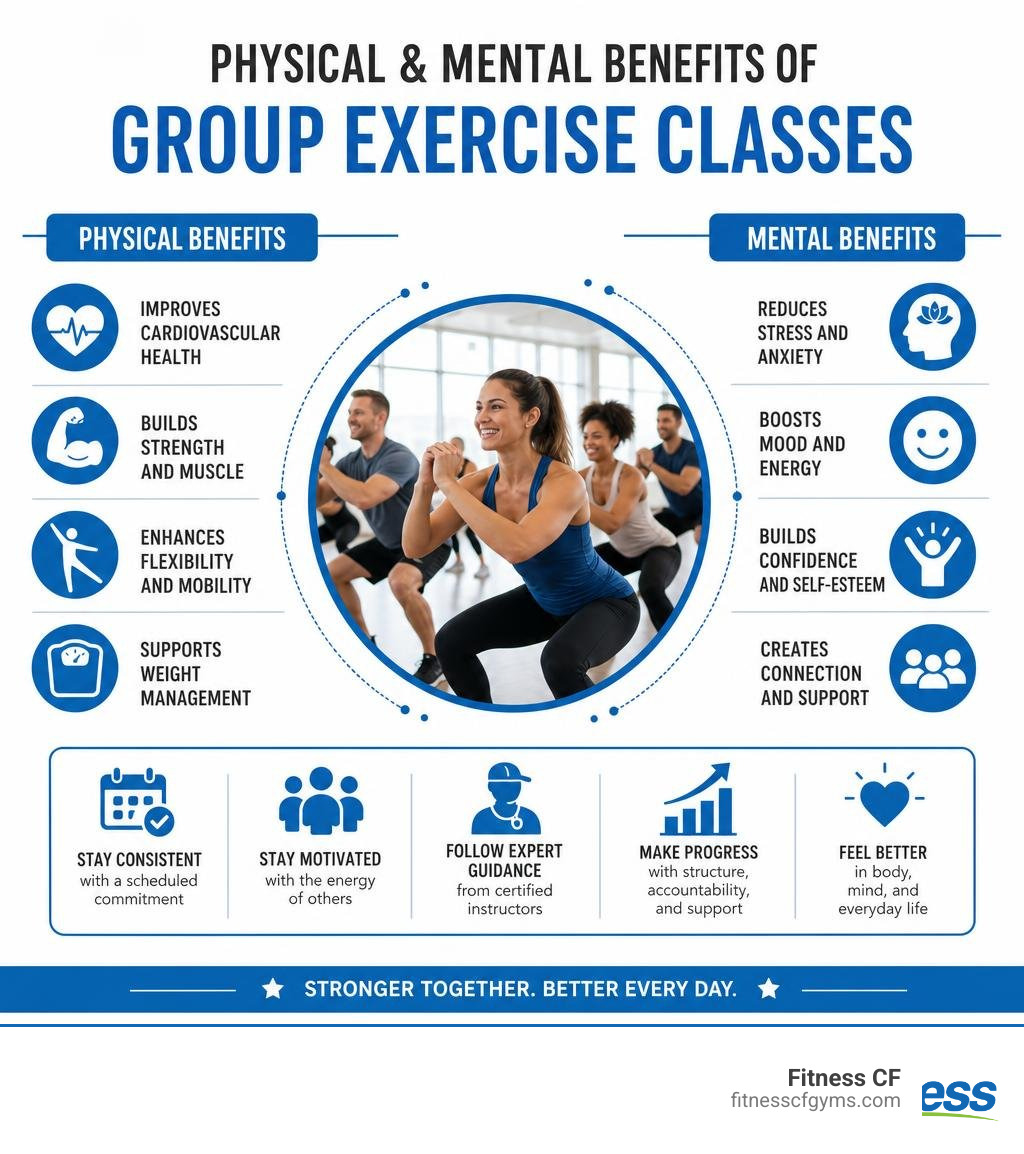
Group fitness works because it combines structured programming, expert instruction, and the natural energy that comes from moving alongside other people. Whether you’re coming off a plateau, starting fresh, or just tired of solo workouts that feel like a chore, group classes offer something solo training rarely can: community, accountability, and momentum.
Busy schedules, family demands, and fluctuating motivation are real barriers for many people. Group classes give you a scheduled commitment, a room full of people rooting for you, and an instructor keeping you on track.
I’m Pleasant Lewis, a fitness industry professional with over 40 years of experience helping people find the best group exercise classes to match their goals and lifestyles. In the sections below, I’ll walk you through exactly what’s available, how formats compare, and what to look for before you commit.
Simple best group exercise classes glossary:
Why the Best Group Exercise Classes Boost Your Health and Motivation
Adopting a healthy lifestyle is a journey that requires more than just physical effort; it demands mental resilience and social support. While working out alone in a home workout space or on a quiet treadmill has its place, it often lacks the spark needed for long-term commitment. This is where group fitness steps in to bridge the gap.
When you join a group class, you are not just signing up for a workout; you are entering a community designed to elevate your mental and physical health. The built-in social support of a group setting acts as a powerful buffer against stress, transforming exercise from a daily chore into a social highlight. This positive reinforcement is why group workouts are uniquely suited to cultivating a sustainable, healthy lifestyle.
Accountability is another critical factor. Knowing that a certified coach and your fellow classmates are expecting you to show up makes you far less likely to hit the snooze button. If you have ever wondered Why Group Fitness Classes Are So Effective, the answer lies in this powerful combination of professional guidance, peer support, and a structured environment that takes the guesswork out of healthy living.
The Power of Group Energy and Accountability
There is a unique psychological phenomenon that occurs when people move in unison. Known as “group cohesion” or “collective energy,” this dynamic naturally pushes you to work harder than you would on your own. When the music is pumping, the instructor is calling out motivational cues, and the person next to you is digging deep, your brain releases a flood of endorphins that dulls fatigue and boosts your mood.
This shared energy is a key driver of workout consistency. Instead of watching the clock drag during a solo session, you find yourself swept up in the momentum of the room. Over time, this consistency translates into lasting physical conditioning and a stronger cardiovascular system. If you are ready to see how a structured, high-energy environment can revitalize your routine, you can read about how Group Fitness Classes Transform Workout experiences from mundane to extraordinary.
How to Choose the Best Group Exercise Classes for Your Goals
Before stepping into a class, it is essential to align your class selection with your personal fitness goals. Are you looking to build lean muscle density, improve your cardiovascular endurance, shed body fat, or enhance your flexibility and balance?
- For Weight Loss and Cardio Health: High-energy options like indoor cycling, Zumba, and high-intensity interval training (HIIT) keep your heart rate elevated and maximize calorie burn.
- For Muscle Building and Bone Density: Strength-focused sessions utilizing barbells, dumbbells, or resistance bands are ideal for targeting major muscle groups.
- For Flexibility and Core Strength: Mind-body formats such as Yoga and Pilates focus on alignment, deep core engagement, and joint protection.
Understanding your primary objectives is the first step toward building a balanced routine. For a deeper dive into selecting the perfect match for your body, check out our guide on the Top 8 Factors to Consider When Choosing Fitness Classes.
Top Types of Group Workouts and Their Benefits
Group workouts are incredibly diverse, catering to every age, fitness level, and interest. By incorporating a mix of strength training, cardiovascular work, and flexibility training, you can build a well-rounded physical foundation that supports overall longevity and healthy living.

Strength and Resistance Training Classes
Strength training is a cornerstone of healthy living, particularly as we age. Lifting weights or performing resistance exercises helps combat age-related muscle loss, improves bone density, and boosts your resting metabolic rate. In a group setting, strength classes make weightlifting accessible, structured, and incredibly engaging.
One of the most popular and enduring formats in this category is the barbell-based workout. Programs like BODYPUMP utilize light to moderate weights with high repetitions to sculpt and tone the entire body. During a standard 55-minute session, participants can complete over 1,000 repetitions—far more than you would ever achieve during a typical solo workout. This high-rep formula, known as the “Rep Effect,” builds lean muscle mass and burns calories without putting excessive strain on your joints.
For those looking to maximize their time, hybrid strength formats are an excellent choice. Our guide on The Best Group Fitness Classes and How to Get the Most From Each One highlights how combining resistance training with functional movements can accelerate your progress. Additionally, multi-training formats like LES MILLS TONE | Workouts | Les Mills seamlessly blend cardio, strength, and core work into a single, highly efficient 30 to 45-minute session.
High-Intensity Interval Training (HIIT) and Cardio
If your goal is to boost cardiovascular health, improve athletic conditioning, and burn calories efficiently, cardio and HIIT classes are unmatched. These workouts utilize intervals of intense work followed by brief recovery periods, pushing your cardiovascular endurance to new heights.
HIIT workouts are designed to challenge your anaerobic system, which triggers the “afterburn effect” (excess post-exercise oxygen consumption, or EPOC). This means your body continues to burn calories at an elevated rate for hours after the workout is over. Globally, high-intensity training has taken the fitness world by storm, with millions of fitness enthusiasts worldwide who swear by the conditioning power of interval training.
Structured cardio intervals and heart-rate awareness can help optimize athletic performance, support heart health, improve stamina, and keep workouts engaging and effective.
Mind-Body and Low-Impact Classes
A holistic approach to fitness must include recovery, core strength, and joint protection. Mind-body classes like yoga, mat Pilates, and barre provide the perfect balance to high-intensity training, focusing on alignment, breathing, and deep stabilizer muscles.
Pilates and yoga are highly effective for developing core strength, which supports the lower back and improves daily posture. These low-impact sessions are gentle on the joints while delivering a deep, muscle-sculpting challenge. For example, lighter spring resistance on a Pilates reformer actually increases the difficulty because your core must work much harder to stabilize your body.
Barre classes combine elements of ballet, Pilates, and yoga to target small, overlooked muscle groups that support balance and alignment. Some modern variations even integrate low-impact cardio, such as pairing trampoline cardio with barre to activate over 400 muscles per session, delivering incredible low-impact, joint-friendly sculpting that provides full-body benefits.
Comparing Class Formats: Intensity, Calorie Burn, and Results
To get the most out of your physical conditioning, it helps to understand how different classes compare in terms of intensity and metabolic output.


Understanding Calorie Burn and Intensity Levels
Calorie burn is directly tied to the intensity of the workout and your individual effort. Generally, group exercise intensities can be categorized into three distinct ranges:
- Low-to-Moderate Intensity (e.g., Hatha Yoga, Aqua Fit, Senior Fit): Burns approximately 4 calories per minute. These classes are excellent for active recovery, joint mobility, and steady-state cardiovascular conditioning.
- Moderate-to-Vigorous Intensity (e.g., Zumba, Step Sculpt, Mat Pilates): Burns approximately 5 to 8 calories per minute. These workouts balance muscle toning with steady cardio output.
- Highly Vigorous Intensity (e.g., HIIT, Cycle Zone, Kickboxing): Burns approximately 8 to 10+ calories per minute. These sessions push you into your peak heart rate zones for maximum metabolic conditioning.
For example, a high-energy, martial-arts-inspired class like BODYCOMBAT delivers a massive cardiovascular challenge alongside core work. A single session can provide core strengthening equivalent to doing over 1,700 crunches, making it incredibly efficient for full-body toning.
What to Pack for the Best Group Exercise Classes
Showing up prepared is the best way to ensure a seamless and confident workout experience. While most class formats include shared equipment like barbells, steps, and weight plates, you should bring the following personal essentials:
- Athletic Wear: Wear moisture-wicking, breathable clothing. For yoga and Pilates, opt for form-fitting attire so instructors can easily check your body alignment.
- Supportive Shoes: Wear athletic shoes designed for the specific activity. For cycling, stiff-soled shoes or SPD-compatible clip-on shoes maximize power transfer. For trampoline or step classes, supportive sneakers protect your feet and ankles.
- Water Bottle: Hydration is key to maintaining performance and preventing cramping.
- Sweat Towel: A small personal towel keeps you dry and comfortable.
- Yoga Mat: Bringing your own personal mat is highly recommended for hygiene and comfort during floor work.
Key Factors to Consider Before Your First Class
If you are new to group fitness, taking the first step can feel intimidating. However, keep in mind that every advanced participant in the room was once a beginner. To help you feel prepared, we have put together a comprehensive Group Fitness Classes Guide 2025 that outlines everything you need to know to get started safely.
Evaluating Instructors and Class Environments
The quality of your instructor can make or break your group fitness experience. A great instructor does more than just lead the workout; they create a welcoming, non-judgmental environment. Look for certified coaches who:
- Provide clear safety cues and physical modifications for different fitness levels.
- Actively move around the room to offer gentle form corrections.
- Design structured warm-ups and cool-downs to prevent injury.
- Foster a supportive community spirit where everyone feels included.
Finding Trial Classes and Introductory Offers
Taking advantage of trial classes is a smart way to explore different formats and find the perfect workout style for your routine. When comparing options, consider class variety, coaching quality, schedule consistency, and whether the environment supports your long-term healthy lifestyle goals. For more help evaluating your options, review this guide to choosing the Best Gym for Group Classes.
Frequently Asked Questions About Group Fitness
How many times a week should I attend group fitness classes?
For optimal results and healthy muscle repair, we recommend attending group fitness classes 2 to 3 times per week. It is crucial to build in rest days or low-impact active recovery days to allow your major muscle groups to recover. Combining 2-3 strength-focused classes with 2-3 cardio-focused classes weekly creates a highly balanced, effective routine.
Can I participate in group exercise classes if I am pregnant?
Yes, but you must obtain medical clearance from your doctor or midwife first. Once cleared, always inform your instructor before the class starts. During pregnancy, hormones like relaxin can make your joints less stable, meaning high-impact kicks or deep twists may need to be modified. Instructors can easily provide low-impact alternatives to keep you and your baby safe.
Do I need prior experience to join a group workout?
Absolutely not! The best group exercise classes are designed to be scalable for all fitness levels. Instructors are trained to demonstrate modifications for every exercise, allowing you to self-pace and build your conditioning gradually. The environment is entirely non-judgmental, focused on personal progress rather than competition.
Conclusion
Embarking on a healthy living journey is one of the most rewarding decisions you can make for your physical and mental well-being. By stepping into a group fitness class, you gain access to a supportive community, expert coaching, and the collective energy needed to turn exercise into a lifelong habit.
A balanced routine that includes strength training, cardio, flexibility work, and recovery can help improve heart health, build lean muscle, support bone density, reduce stress, and boost everyday energy. The key is finding workouts you enjoy enough to repeat consistently.
Are you ready to experience the power of community-driven fitness? Start your fitness journey today with our group fitness classes!