Why a 12-Week Male Fat Loss Plan Actually Works
A 12 week weight loss workout plan for male fitness goals is one of the most effective ways to build real, lasting results — without burning out or spinning your wheels.
Here’s a quick snapshot of what an effective 12-week male fat loss plan looks like:
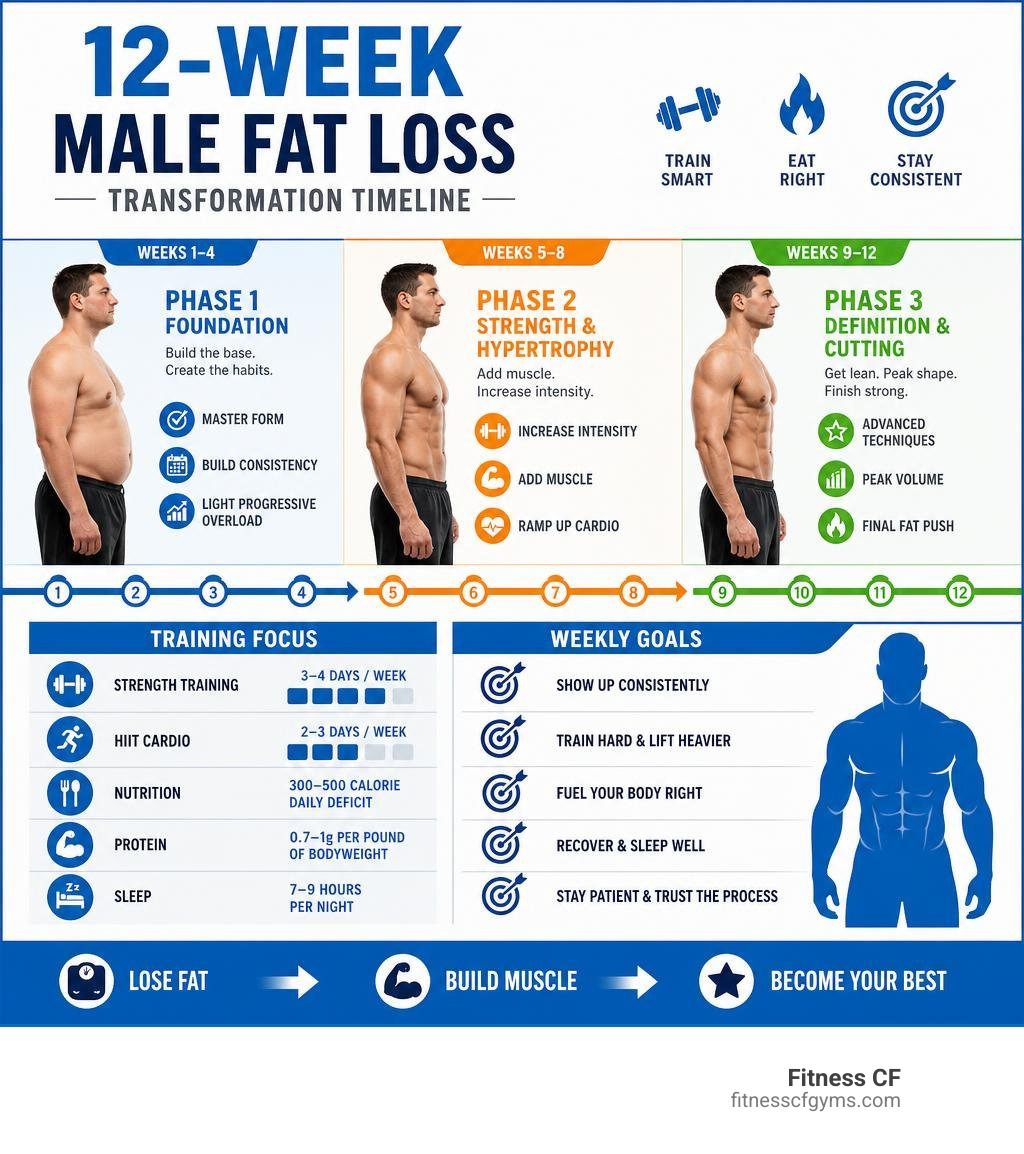
| Week Range | Phase | Focus |
|---|---|---|
| Weeks 1-4 | Foundation | Master form, build consistency, light progressive overload |
| Weeks 5-8 | Strength & Hypertrophy | Increase intensity, add muscle, ramp up cardio |
| Weeks 9-12 | Definition & Cutting | Advanced techniques, peak volume, final fat push |
Key ingredients for success:
- Strength training 3-4 days per week
- HIIT cardio 2-3 days per week
- A 300-500 calorie daily deficit
- 0.7-1g of protein per pound of bodyweight
- 7-9 hours of sleep per night
Most men who combine strength training with cardio lose 2-3 times more fat than those doing cardio alone over 12 weeks. A structured program can deliver 10+ pounds of fat loss while actually preserving — or even building — lean muscle. That means you don’t just get lighter. You get stronger, leaner, and more defined.
The reason 12 weeks works so well is simple. It’s long enough to produce real physiological changes, and short enough to stay motivated from start to finish. You get a clear beginning, middle, and end — which makes it far easier to stay on track than an open-ended “get fit” goal.
I’m Pleasant Lewis, a fitness professional with over 40 years of experience in the fitness industry helping everyday people follow effective 12 week weight loss workout plans tailored for men at every fitness level. In the sections below, I’ll walk you through everything you need — the exact phases, the training splits, the nutrition framework, and the recovery strategies — to make the next 12 weeks count.
12 week weight loss workout plan male vocab explained:
Fat Loss vs. Weight Loss: The Science of Male Body Recomposition
When most men say they want to “lose weight,” what they actually mean is they want to lose fat. There is a massive physiological difference between the two.
Simple weight loss is a numerical reduction on the scale. When you step on the scale and see a lower number, that weight could be coming from fat, water, or worse, precious muscle tissue. If you starve yourself or do nothing but hours of mindless cardio, your body will catabolize its own muscle for energy. You will end up lighter, but you may also end up with a softer, less defined physique—often referred to as being “skinny-fat.”
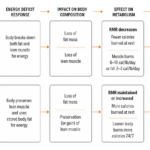
Fat loss, on the other hand, is the targeted reduction of adipose tissue while preserving or even building lean muscle mass. This process is known as body recomposition. Keeping your muscle tissue is critical because muscle is highly active metabolic tissue. Every pound of muscle you hold onto burns calories even when you are sitting on the couch. By keeping your muscle mass high, you keep your resting metabolic rate (RMR) elevated, making it significantly easier to keep the fat off long-term.
For men, maintaining muscle mass during a calorie deficit is also closely tied to healthy testosterone levels. Crash dieting without resistance training can cause testosterone levels to dip, which saps your energy, slows your recovery, and makes fat storage easier. By lifting weights at least three times per week, you signal to your body that its muscle is essential, prompting it to burn fat for fuel instead.
To dive deeper into the biology of simultaneous fat loss and muscle gain, check out our guide on How to lose fat and gain muscle and explore our dedicated Build muscle lose fat workout plan.
The Ultimate 12 Week Weight Loss Workout Plan Male Blueprint
To achieve real body recomposition, you need a structured, phased approach. We do not want to jump straight into the deep end with extreme intensity. That is a fast track to injury and burnout. Instead, this 12 week weight loss workout plan male blueprint is broken down into three distinct 4-week blocks designed to build on one another.

Our weekly schedule centers around compound movements. Exercises like squats, deadlifts, bench presses, overhead presses, and rows recruit multiple joints and large muscle groups simultaneously. This triggers a massive metabolic demand, burns more calories per minute than isolation movements, and stimulates the natural release of growth hormone and testosterone.
Whether you are training at home or in a local gym, having a clear roadmap is crucial. For a broader look at designing your routine, check out our library of Workout plans and read about From 4 weeks to 12 how to design your ideal fitness plan.
Let’s break down the three phases of your 12-week transformation.
Phase 1: Building the Foundation of Your 12 Week Weight Loss Workout Plan Male
The first four weeks (Weeks 1-4) are all about preparation, habit formation, and neuromuscular adaptation. If you are returning to the gym after a break, your brain and muscles need to rebuild their communication pathways. During this phase, you will notice rapid strength gains. This isn’t necessarily because your muscles have grown overnight, but because your nervous system is learning to recruit muscle fibers more efficiently.
We focus heavily on form mastery and foundational strength training. We keep the weights moderate—leaving about 2 to 3 reps in the tank on every set—to prevent injury and allow your joints, tendons, and ligaments to adapt to the new workload.
Active recovery is also introduced here. On your non-lifting days, we encourage light walking, mobility work, and gentle stretching. This keeps blood flowing to damaged muscle tissues to speed up healing without adding systemic fatigue.
Phase 2: Strength, Hypertrophy, and Progressive Overload
In Weeks 5-8, we turn up the heat. Now that your foundation is laid and your form is locked in, the goal shifts to building and preserving muscle mass through progressive overload and muscle hypertrophy.
Progressive overload is the golden rule of fitness. To keep making progress, you must continuously challenge your muscles by increasing the weight, adding reps, increasing the number of sets, or decreasing your rest periods. If you benched 150 pounds for 8 reps last week, you should aim for 150 pounds for 9 reps, or 155 pounds for 8 reps this week.
To help you understand how to organize these sessions for maximum muscle retention, read our article on How to structure lean muscle workouts.
Here is a quick breakdown of how your training variables evolve across the three phases:
| Variable | Phase 1: Foundation (W1-4) | Phase 2: Hypertrophy (W5-8) | Phase 3: Cutting (W9-12) |
|---|---|---|---|
| Primary Split | Full Body or Upper/Lower | 4-Day Upper/Lower Split | Push/Pull/Legs (PPL) Split |
| Sets per Exercise | 2-3 sets | 3-4 sets | 4 sets |
| Rep Range | 10-12 reps | 6-10 reps | 12-15+ reps (with drop sets) |
| Rest Periods | 90-120 seconds | 60-90 seconds | 30-60 seconds |
| HIIT Cardio | None (LISS only) | 1-2 sessions / week | 2-3 sessions / week |
| LISS Cardio | 2 sessions / week | 2 sessions / week | 3 sessions / week |
Phase 3: Definition, Cutting, and the Final Push
Weeks 9-12 represent the final peak of the program. Your body is now stronger, more conditioned, and highly efficient at burning fat. In this phase, we transition to an asynchronous Push/Pull/Legs (PPL) split to accumulate optimal training volume while keeping your workouts engaging.
We introduce advanced training techniques like drop sets (performing a set to failure, immediately dropping the weight by 20-30%, and continuing to lift) and AMRAP (As Many Reps As Possible) finishers. These techniques push your muscles to absolute fatigue, deplete glycogen stores, and keep your heart rate elevated.
This high-density training spikes your metabolic rate and maximizes fat burning during and long after your workout is over.
Balancing Strength Training and Cardio for Maximum Fat Burning
A common trap many men fall into is relying entirely on cardio for fat loss. While running on a treadmill burns calories in the moment, it does very little to build muscle or elevate your metabolism after you step off the machine. To get the best results, you must balance both.

We utilize two primary types of cardiovascular training:
- LISS (Low-Intensity Steady-State Cardio): This involves activities like brisk walking, cycling, or using an elliptical at a moderate, conversational pace for 30-45 minutes. LISS is excellent for recovery, burns fat directly as a fuel source, and places very little stress on your joints and nervous system.
- HIIT (High-Intensity Interval Training): This involves short, explosive bursts of maximum effort (e.g., 30 seconds of sprinting or hard rowing) followed by brief periods of active recovery (e.g., 60 seconds of slow walking), repeated for 15-20 minutes.
HIIT is incredibly effective because of a phenomenon known as EPOC (Excess Post-Exercise Oxygen Consumption)—often called the “afterburn effect.” Because HIIT is so intense, your body has to work overtime for hours after your workout to restore oxygen levels, balance hormones, and repair muscle tissue. This means you continue to burn calories at an elevated rate while you recover.
To prevent cardio from interfering with your strength gains, always perform your resistance training first when your energy levels are highest, or separate your cardio sessions by at least a few hours. For more tips on balancing these elements, read our Ultimate weight loss workout guide and apply our Weight loss exercise 7 tips for your workout routine.
Fueling the Transformation: Nutrition and Calorie Deficit Strategies
You cannot out-train a bad diet. Exercise is the stimulus that tells your body to hold onto muscle, but nutrition is the driving force that dictates whether you lose weight.
To lose fat, you must create a calorie deficit—meaning you consume fewer calories than your body burns. To find your starting point, calculate your Total Daily Energy Expenditure (TDEE). Once you have your TDEE, subtract 300 to 500 calories to create a sustainable, moderate deficit. This allows you to lose roughly 1 to 2 pounds of fat per week without tanking your energy or sacrificing your hard-earned muscle.
When it comes to your macronutrients, protein is the single most important variable. Aim for 0.7 to 1 gram of protein per pound of body weight (or roughly 2.0 to 2.4 grams per kilogram of body weight). Protein has a high thermic effect of food (TEF), meaning your body burns more calories digesting protein than it does digesting fats or carbohydrates. It also keeps you feeling full and satisfied throughout the day.
Fill the rest of your daily calories with healthy fats (like avocados, nuts, and olive oil) and complex carbohydrates (like sweet potatoes, oats, and brown rice) to fuel your training sessions. You can also utilize carb cycling—consuming more carbohydrates on heavy training days (like leg day) and fewer carbohydrates on rest days—to optimize insulin sensitivity and fat burning.
Learn more about pairing your kitchen habits with your gym routine in our detailed guide on Effective weight loss strategies combining exercise and nutrition.
Recovery, Sleep, and Avoiding Common Pitfalls
The hard work happens in the gym, but the actual transformation happens while you rest. When you lift weights, you create microscopic tears in your muscle fibers. Your body repairs these fibers—making them stronger and denser—only when you are resting and sleeping.
Aim for 7 to 9 hours of high-quality sleep per night. Sleep deprivation spikes cortisol (the primary stress hormone), which encourages fat storage, especially around the midsection. It also suppresses testosterone production and disrupts ghrelin and leptin—the hormones that control hunger and satiety. If you sleep fewer than 6 hours a night, you are much more likely to experience intense cravings and lose muscle mass instead of fat.
To maximize your 12-week results, avoid these common pitfalls:
- Overtraining: More is not always better. Working out 7 days a week without rest will eventually lead to systemic fatigue, joint pain, and injury. Ensure you have at least 1 to 2 complete rest days built into your week.
- Relying Solely on the Scale: Your weight will fluctuate daily based on water retention, sodium intake, and glycogen storage. Instead of obsessing over the daily scale number, track your progress using waist measurements, how your clothes fit, and bi-weekly progress photos.
- Inconsistency: A perfect week followed by a week of skipped workouts will yield zero results. Consistency beats perfection every single time.
For a realistic look at what to expect on your journey, check out our resource on How long does it take to lose weight on average.
How Beginners and Intermediates Can Adjust the 12 Week Weight Loss Workout Plan Male
This plan can be scaled to fit any fitness level. If you are a beginner, do not worry about lifting heavy weights right away. Start with bodyweight movements or light dumbbells to master your form.
Use the Rate of Perceived Exertion (RPE) scale to guide your intensity. On a scale of 1 to 10 (with 10 being absolute maximum effort):
- Beginners should aim for an RPE of 6 to 7 (feeling challenged, but keeping 3 to 4 reps in reserve).
- Intermediates can push to an RPE of 8 to 9 on their working sets (leaving 1 to 2 reps in reserve).
Always warm up with 5-10 minutes of dynamic stretching before your workouts, and cool down with static stretching to keep your joints healthy and prevent injuries.
Frequently Asked Questions About Male Weight Loss Plans
How much fat can a man realistically lose in 12 weeks?
Most men can safely and realistically lose 10 to 20 pounds of fat over a 12-week period. This equates to a sustainable rate of 1 to 2 pounds per week. Men with a higher starting body fat percentage may experience faster initial weight loss, while leaner men will lose fat at a slightly slower, more gradual rate.
Can I build muscle and lose fat at the same time?
Yes. This is known as body recomposition. It is highly achievable for men who are new to resistance training, individuals returning to the gym after a long break, or those carrying significant excess body fat. By maintaining a moderate calorie deficit, eating high-protein meals, and lifting weights consistently, you provide your body with the stimulus to build muscle while using stored fat for energy.
What should I do after completing the 12-week program?
Once you complete the 12 weeks, avoid jumping straight back into your old eating habits. Instead, go through a “reverse dieting” phase. Gradually increase your daily calories by 100-200 per week until you reach your new maintenance level. This helps restore your metabolic rate without triggering rapid fat regain. From there, you can choose to transition into a dedicated muscle-building phase or maintain your new, lean physique.
Conclusion
Transforming your body over 12 weeks is entirely possible when you pair a structured, progressive workout routine with a sustainable nutrition plan. The key to moving from “flab to fab” is consistency, patience, and a commitment to healthy living.
By focusing on progressive strength training, balanced cardiovascular work, and proper recovery, you can achieve lasting results and elevate your overall well-being.
Ready to take the guesswork out of your transformation? Unlock your potential with our custom workout plans and start your 12-week journey today!