A Ballet Fitness Class Blends Strength, Cardio, and Grace
A ballet fitness class is a low-impact workout that borrows ballet-inspired movements to build strength, balance, flexibility, posture, and core control. It is designed for fitness, not ballet performance, so most formats welcome beginners with no dance background.
- What it includes: Barre-style exercises, bodyweight strength work, balance drills, light cardio, and stretching.
- Who it suits: Adults of varied ages, experience levels, and body types.
- Why people try it: It offers a full-body workout that can feel more focused and expressive than a typical routine.
- What to expect: Controlled movements, small muscle-burning holds, clear form cues, and options to adjust intensity.
For busy adults balancing work and family, ballet-based fitness can add fresh structure and group energy to a workout routine that has started to feel stale. It emphasizes controlled strength and mobility rather than heavy impact, which can make it a useful addition to a healthy, well-rounded fitness plan.
I am Pleasant Lewis, a fitness industry expert with more than 40 years of experience. My work has centered on helping people find sustainable workouts, including the right ballet fitness class, that support strength, confidence, and long-term health.
Ballet fitness class glossary:
What Is a Ballet Fitness Class and How Does It Work?
A ballet fitness class takes the foundational techniques of classical ballet—such as pliés, tendus, and turned-out alignment—and pairs them with modern athletic conditioning. Instead of rehearsing stage choreography or practicing intricate leaps across a dance floor, we focus on functional bodyweight resistance, core stabilization, and muscular endurance.
Because the primary objective is fitness rather than stage performance, classes are structured to welcome participants of all ages, skill levels, and body types. You do not need a background in dance, perfect flexibility, or specialized footwear to participate. The workouts leverage gentle repetition, light resistance, and precise alignment to target deep stabilizer muscles that traditional weight training often misses.
How the Ballet Fitness Class Differs from Classical Ballet
While classical ballet training requires years of technical dedication, strict choreography, and complex center floor combinations, a ballet fitness class strips away the pressure of performance.
- Focus on Isometric Holds: Rather than high-impact jumps or complex turns, ballet fitness uses isometric holds (holding a muscle in contraction) and micro-movements to fatigue muscles safely.
- Accessible Formats: Movements are designed for open-level fitness environments. Participants can hold onto a stationary barre or the back of a sturdy chair for balance, eliminating the fear of losing fall control.
- Continuous Athletic Conditioning: Traditional dance classes often involve stopping and starting while an instructor breaks down steps. Ballet fitness keeps your heart rate elevated through continuous low-impact sequences, blending dance cardio with body sculpting.
If you are curious about learning how dancer-inspired training transforms body conditioning, check out our guide on How to Get the Ballerina Body.
Anatomy of a Typical Ballet Fitness Routine
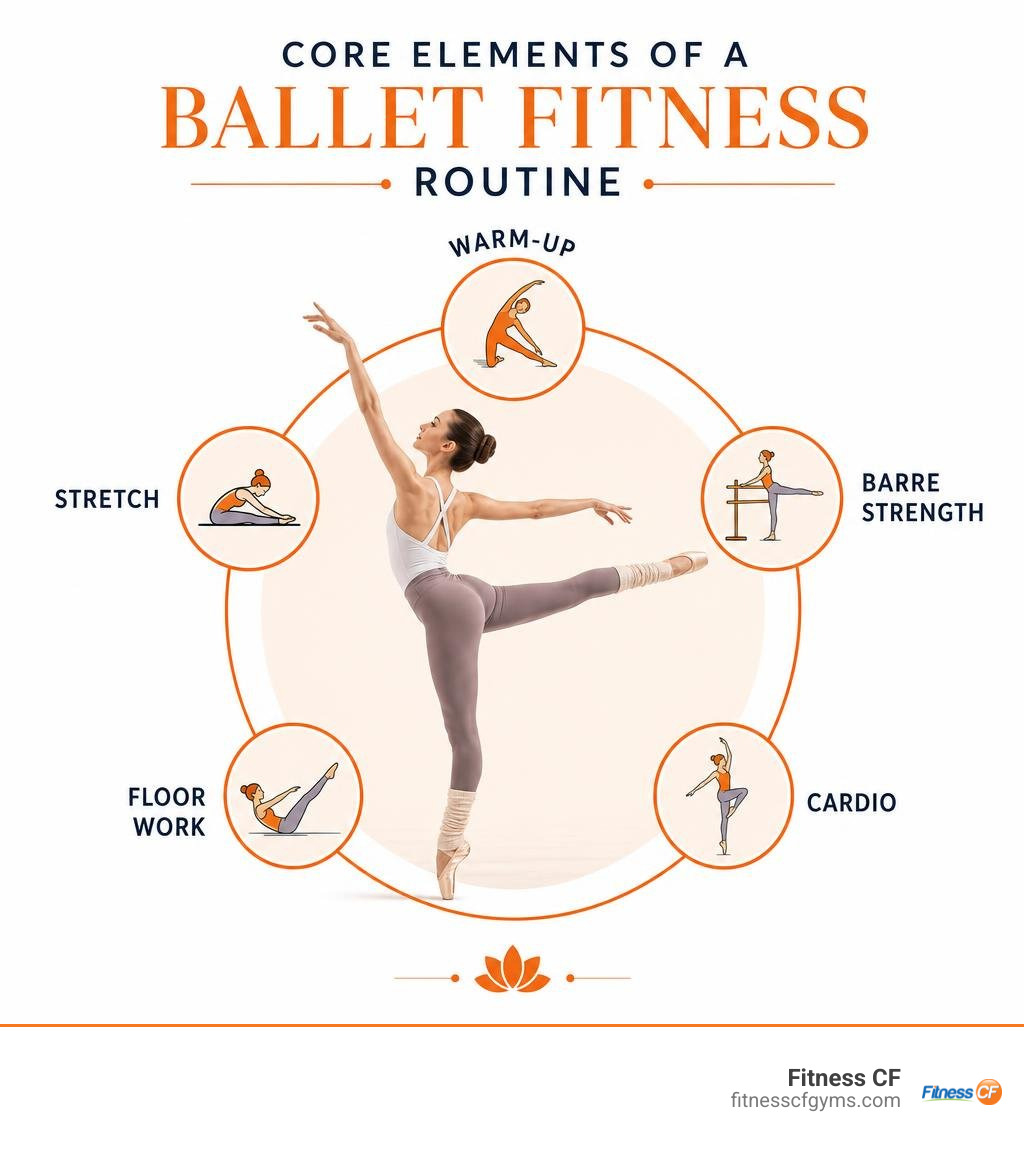
A standard 50- to 60-minute session moves through a logical, full-body progression designed to warm up joint structures, build muscular burn, and cool down safely.
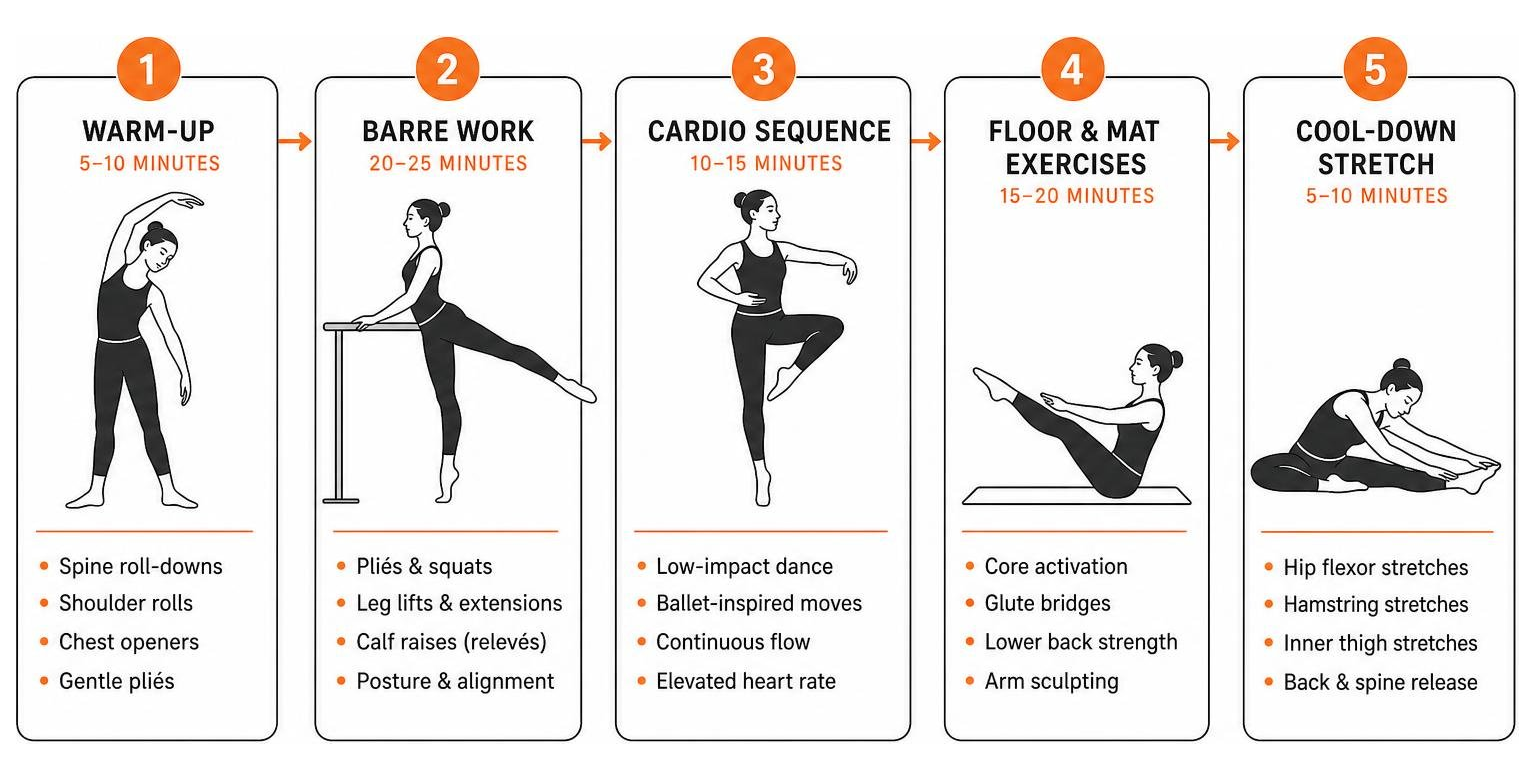
- Dynamic Warm-Up (5–10 Minutes): Gentle spine roll-downs, light shoulder rolls, chest openers, and gentle pliés wake up the central nervous system and elevate core temperature.
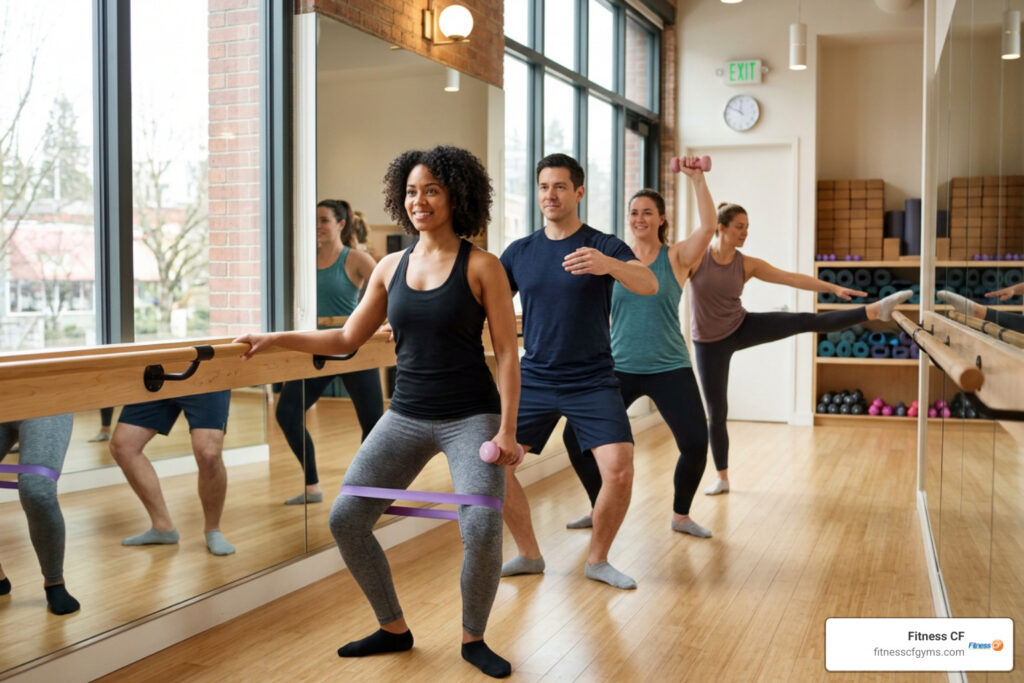
- Barre Work (20–25 Minutes): Standing at the barre (or chair), we target the quadriceps, hamstrings, glutes, and calves through pulsed squats, leg lifts, calf raises (relevés), and posture alignment drills.
- Floor & Mat Exercises (15–20 Minutes): Moving down to a yoga or Pilates mat, exercises transition toward deep core activation, lower back strengthening, glute bridges, and arm sculpting using light hand weights or weight-free isometric holds.
- Cool-Down Stretch (5–10 Minutes): Deep, static stretches release tension in the hip flexors, hamstrings, inner thighs, and back to increase flexibility and support joint recovery.
Physical and Mental Benefits of Ballet-Inspired Workouts
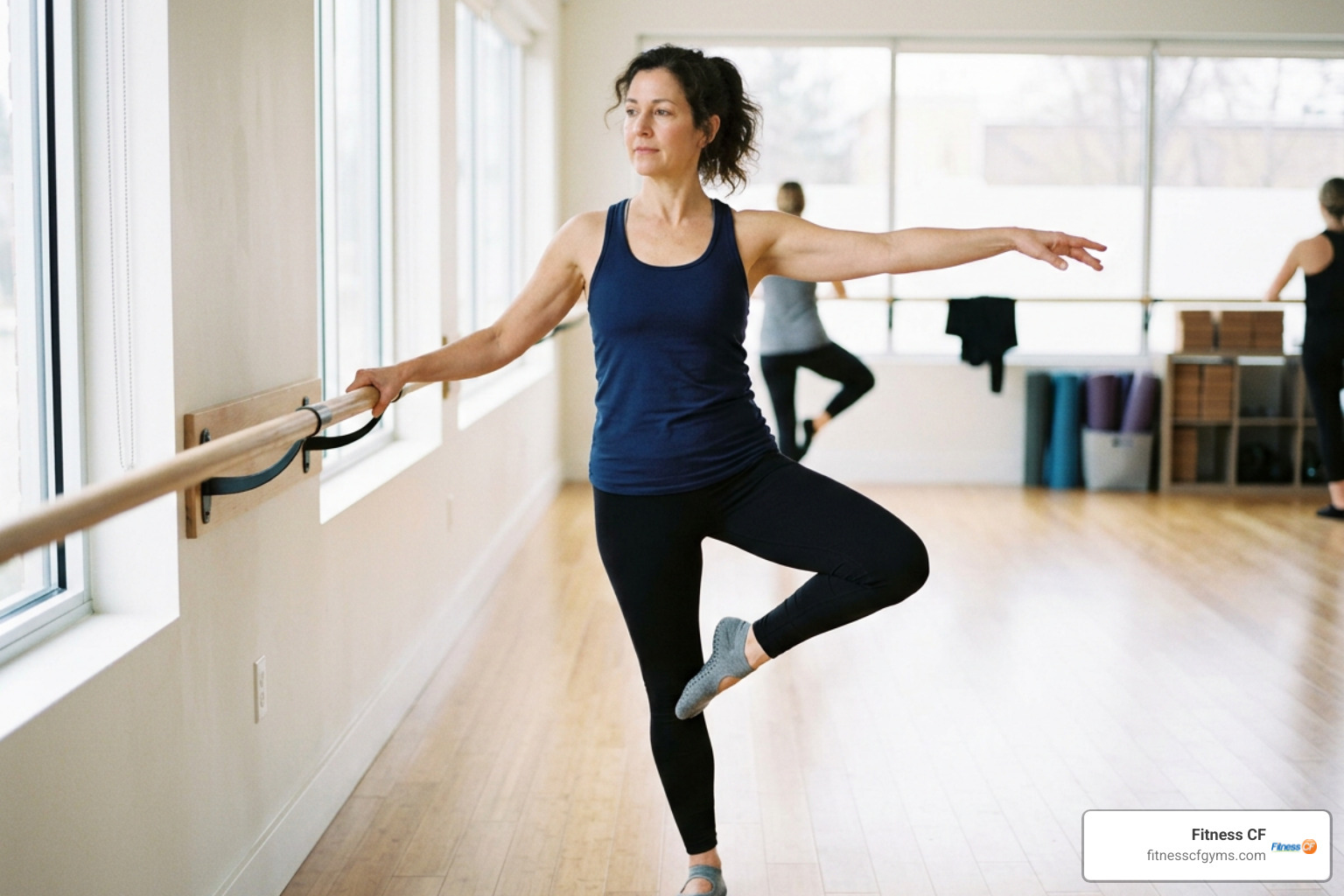
Integrating ballet-inspired training into your weekly workout routine delivers structural physical advantages alongside remarkable mental clarity.
Key Physical Toning and Flexibility Advantages
- Deep Core Stabilization: Ballet conditioning emphasizes maintaining an upright, lifted torso. This constant core engagement strengthens the transverse abdominis and back extensors, offering vital lower back support for desk workers.
- Muscle Toning Without Heavy Impact: By using high-repetition bodyweight resistance and light hand weights, muscle groups are worked to fatigue without excessive stress on your knees, ankles, or hips.
- Improved Joint Mobility: Range-of-motion drills increase fluid circulation within joint capsules, improving hip and ankle mobility. Explore more injury-prevention stretch methods in our guide to Stretching Routines to Improve Flexibility and Prevent Injuries.
- Postural Correction: Focusing on chest opening, shoulder blade depression, and spine lengthening helps counteract the forward-slouch posture caused by long hours sitting or looking at screens.
Mental Wellbeing and Mind-Body Connection
Beyond the physical burn, a ballet fitness class offers a meditative mental escape. Concentrating on subtle alignment details—like tucking the pelvis, engaging the core, and maintaining pointed toes—requires total presence. This intense cognitive focus helps quiet everyday stressors and builds body confidence. Moving rhythmically to energetic music release endorphins, helping you leave class feeling refreshed, poised, and empowered.
Exploring Different Types of Ballet Fitness Formats
The world of ballet-based fitness includes a variety of formats designed to match your personal workout goals:
- Classic Barre Conditioning: Focuses heavily on small, isometric pulsing movements at the barre, combining principles from ballet, Pilates, and yoga to shape legs, glutes, and core.
- Ballet Bootcamp: Integrates dynamic dance cardio, light plyometrics, and interval training with classical positions for a higher calorie burn and cardiorespiratory challenge.
- Ballet Yoga Fusion: Blends the mindful breathing and sustained holds of yoga with the posture and leg articulation of ballet, making it ideal for balance and stress relief.
- Equipment-Free Cardio Formats: Musicality-driven programs like Balletone – Fit Pro Programming use 32-count musical phrasing and fluid bodyweight sequences without requiring a physical barre.
Finding the Right Ballet Fitness Class for Your Goals
If you are complete beginner or returning to exercise after an extended break, a low-impact classic barre or ballet-yoga fusion class provides a gentle, supportive introduction. Look for open-level schedules where instructors offer options to modify movements. For those seeking athletic, high-energy cardio, fusion formats like Ballet Fit® – Vancouver, BC | DanceUs.org or specialized total-body sessions such as Ballet Body | Breaking Ballet combine classical technique with modern conditioning.
To explore additional gentle starting options, see our curated resource on the Best Fitness Classes for Beginners.
At-Home vs. In-Studio Ballet Workouts
| Feature | Studio Class Experience | At-Home Virtual Class |
|---|---|---|
| Equipment | Wall-mounted barres, full mats, light weights | Kitchen counter or sturdy chair, mat |
| Feedback | Hands-on instructor alignment corrections | Self-paced, self-guided execution |
| Motivation | Group accountability & live instructor energy | Flexible scheduling, zero commute |
| Access | Local community connection | Stream anywhere via phone, tablet, or TV |
Virtual options make home practice easy. Virtual platforms offer hundreds of workouts ranging from 10 to 60 minutes, while hybrid programs like BalletFit – English National Ballet offer access to both in-person sessions and streaming video libraries. Online offerings such as Ballet Move Fitness | Online class | ClassBento demonstrate how easy it is to replace a studio barre with a household chair for home workouts.
Preparing for Your First Class: Attire, Gear, and Pricing
Heading to your first ballet fitness class is simple once you know what gear you need and how pricing typically works.
What to Wear and Bring to Studio
- Attire: Wear comfortable, form-fitting athletic wear such as high-waisted leggings and a breathable top. Form-fitting clothing lets instructors observe your alignment and offer helpful form cues.
- Footwear: Most classes are taken barefoot or in grip socks with rubberized bottom soles to prevent slipping. Traditional soft ballet slippers are also welcome, though plain socks are usually discouraged for safety reasons on slick studio floors.
- Gear: Bring a yoga mat, a hand towel, and a refillable water bottle to stay hydrated throughout class.
Class Pricing Models and Costs
Pricing structure varies depending on whether you choose single visits or long-term packages:
- Drop-In Single Credits: Typically range from $15 to $25 per individual class, making them ideal for testing out a new workout format.
- Class Packs: Purchasing 5-pack or 10-pack bundles brings down the cost per session (e.g., $70–$140 per pack), though packs usually come with 60- to 90-day expiration windows.
- Term or Monthly Subscriptions: Multi-week terms (such as 6- to 9-week seasonal sessions) or monthly studio memberships provide the best value for ongoing consistency.
Frequently Asked Questions About Ballet Fitness
Do I need prior dance experience to join a ballet fitness class?
No prior dance experience is necessary. Ballet fitness classes are designed for participants of all backgrounds, fitness levels, and body types. Instructors teach foundational positions step by step, using clear verbal cues and accessible terminology so everyone can follow along comfortably.
What should I wear if I don’t own traditional dance gear?
Standard gym wear works perfectly. Leggings, yoga pants, athletic shorts, and tank tops or fitted t-shirts are ideal. You do not need leotards, tights, or professional pointe shoes—just wear flexible clothing that allows a full range of motion.
How do ballet fitness workouts accommodate injuries or joint sensitivity?
Ballet fitness is naturally low-impact, meaning there is zero jumping or jarring pounding on your joints. Exercises are easy to modify—such as limiting your depth during pliés, keeping heels flat on the floor instead of elevating onto relevé, or performing exercises seated on a mat. Always inform your instructor before class so they can suggest safe options tailored to your needs.
Conclusion
A ballet fitness class offers an enjoyable, low-impact way to strengthen your core, improve posture, build flexibility, and lift your mood. By blending classical grace with modern functional exercise, it delivers a total-body workout that supports your fitness journey at any age.
Exercising in a supportive group environment helps you stay accountable, builds confidence, and keeps your routine engaging over time. Read more about the social and physical benefits of group movement in our article on the 8 Benefits of Joining Group Fitness Classes for Your Health.
Ready to feel stronger, longer, and more energized? Explore Group Fitness Classes today and find a fun, welcoming workout format that fits your active lifestyle!