What Is a 1 Month Shredding Program — and Does It Actually Work?
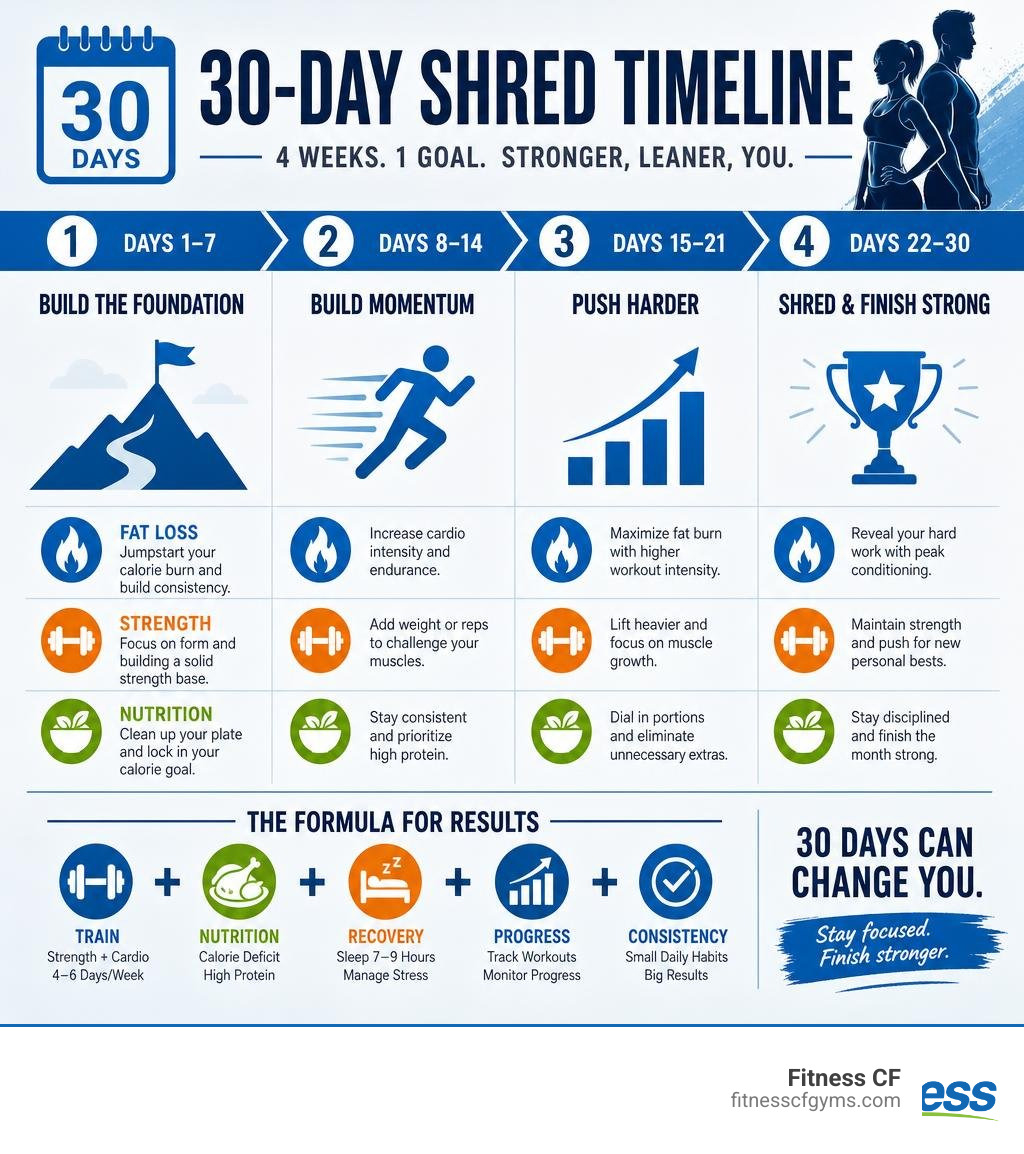
A 1 month shredding program is a structured fitness plan that combines strength training, cardio, and nutrition to burn fat and reveal lean muscle in 30 days.
Here’s a quick answer for anyone ready to get started:
What a 1-month shredding program typically involves:
- Daily or near-daily workouts — usually 20–60 minutes combining strength and cardio
- A calorie deficit — eating 300–500 fewer calories than you burn each day
- High protein intake — roughly 1.6–2.2 g per kilogram of body weight to protect muscle
- Progressive overload — gradually increasing workout intensity week over week
- Recovery built in — rest days and sleep (7–9 hours) to let your body adapt
Realistic results in 30 days: Most people can expect to lose 0.5–2 pounds of fat per week, improve cardiovascular fitness, and build noticeable strength — not the 20-pound claims you may have seen advertised.
Thirty days is enough time to build real momentum. It is not a magic cure-all. But with the right structure, the results can be significant — especially if you are starting from a place of low activity or carrying extra body fat. The challenge is knowing which program fits your life, your schedule, and your actual fitness level. A smart shred should support healthy living, not punish your body. That means building strength, improving heart health, eating nutrient-dense foods, managing stress, and creating habits you can keep after the month is over.
Let’s break it all down so you can move forward with confidence.
1 month shredding program terms to learn:
- 12 week weight loss workout plan male
- 12 week workout plan to lose weight at home
- weight loss workout plan
Understanding the 30-Day Shred: Science, Calories, and Realistic Expectations
To successfully navigate a 1 month shredding program, we must first look at the underlying science of fat loss. Your body fat is stored energy. To tap into that storage, we have to create a state of negative energy balance, commonly known as a calorie deficit.
When your daily calorie intake is lower than your total daily energy expenditure (TDEE), your body starts breaking down adipose tissue (fat) to fuel your daily functions and workouts. However, the speed of this process is limited by human biology. If you want to understand how different exercises affect this process, check out The Complete Guide to Weight Loss Workouts.
The 3-2-1 Interval System and Progressive Levels
One of the most popular frameworks for rapid fat loss is the classic 30 Day Shred. This style of training relies on a highly efficient 3-2-1 interval system. In a typical 20-minute session, you perform:
- 3 minutes of strength training (using compound movements like squats and shoulder presses to stimulate muscle tissue)
- 2 minutes of high-intensity cardio (to spike your heart rate and maximize immediate calorie burn)
- 1 minute of core work (to build abdominal strength and allow your heart rate to settle slightly before the next round)
This circuit is repeated three times without rest, creating a powerful metabolic stimulus in a very short window.
To prevent plateaus and keep your body adapting, a proper 30-day program is divided into three progressive levels. Each level lasts exactly 10 days:
- Level 1: Designed for beginners or those returning from a break. It establishes baseline movement patterns and cardiovascular endurance.
- Level 2: Increases the complexity of the movements, introduces more dynamic transitions, and reduces rest.
- Level 3: The most intense phase, incorporating explosive plyometric movements and advanced strength combinations designed to maximize metabolic stress.
To see how this structure compares to a broader fitness journey, read more about Jillian Michaels’ 30 Day Shred: Does It Help You Lose Weight?.
Calorie Burn and the 20-Pound Weight Loss Myth
Many commercial programs make bold claims, promising that participants can lose up to 20 pounds in a single month. As experienced coaches, we must look at this realistically.
For an individual weighing approximately 150 pounds (68 kg) with average fitness, a single 20-minute high-intensity workout burns roughly 200 to 300 calories. If you perform this workout every single day for 30 days, you will burn around 6,000 to 9,000 calories from exercise alone. Since one pound of fat contains roughly 3,500 calories of stored energy, the exercise portion of the program accounts for about 2.5 pounds (1.1 kg) of actual fat loss over the month.

So, why do some people step on the scale after two weeks and see a 10-pound drop? When you suddenly reduce your carbohydrate intake and increase your daily activity, your body rapidly depletes its stored glycogen (the storage form of carbohydrates in your muscles). Because glycogen binds to water at a ratio of roughly 1:3, depleting your glycogen stores causes your body to flush out a significant amount of water.
While this initial weight drop is highly motivating, it is vital to recognize that it is primarily fluid loss, not fat loss. True body recomposition takes consistent effort over time. For beginners looking for a sustainable approach to starting this journey, the Beginner 30 Day Shredding Workout And Diet Plan – BetterMe offers excellent foundational guidance.
Benefits and Downsides of Short-Term Shreds
Before committing to a high-intensity month, it is helpful to weigh the pros and cons:
The Benefits:
- Cardiovascular Health: The rapid transitions and elevated heart rate improve your heart’s stroke volume and lower resting blood pressure.
- Blood Sugar Regulation: High-intensity interval training (HIIT) and resistance work increase insulin sensitivity, helping your body clear glucose from your bloodstream more efficiently.
- Muscle Retention: Unlike traditional crash diets that cause muscle wasting, the strength components of a shred program signal your body to preserve lean muscle tissue.
- Healthy Aging: Resistance exercises stimulate bone density and preserve joint mobility, protecting your body from age-related muscle loss.
The Downsides:
- Short-Term Focus: These programs are often viewed as a “quick fix” rather than the beginning of a lifelong habit.
- Lack of Nutrition Guidance: Many popular workout videos do not include a comprehensive eating plan, leaving participants to guess their calorie targets. For a deeper look at how some structured diets attempt to address this, you can read about how Dawn Napoli explains the pros and cons of SHRED, a diet designed to help you forgo the plateau.
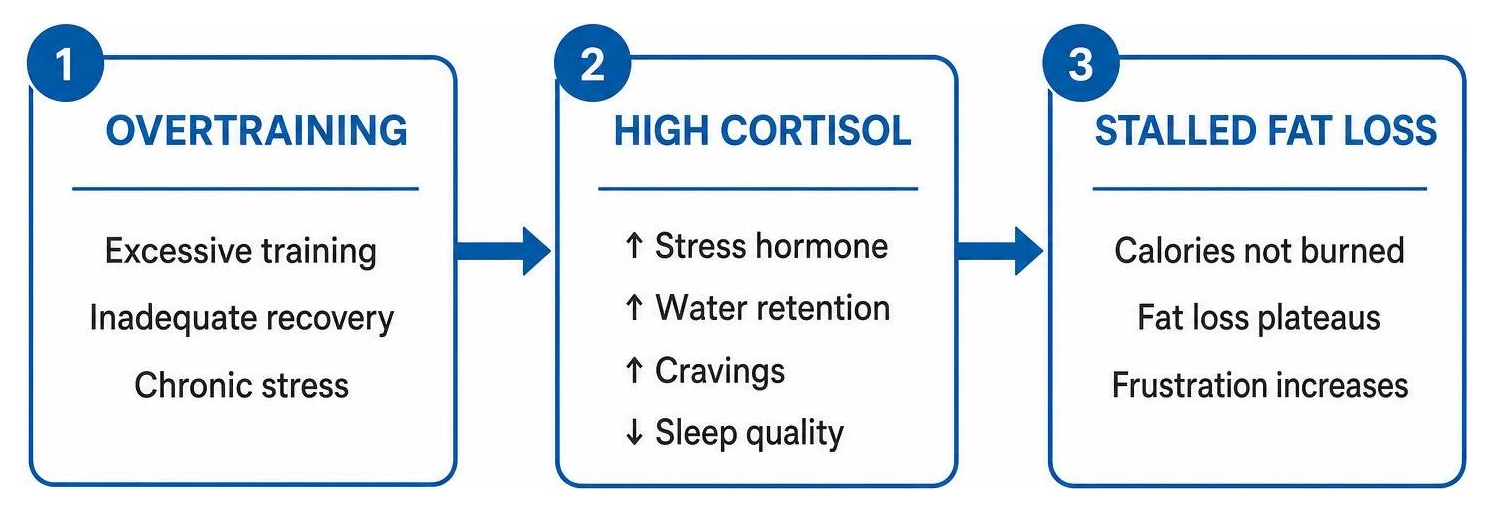
- Risk of Burnout: Working out at maximum intensity every single day without adequate recovery can spike cortisol (the primary stress hormone), leading to fatigue, poor sleep, and eventual injury.
Designing Your 1 Month Shredding Program: Workouts and Structure
A successful 1 month shredding program must balance high-intensity work with structured recovery. If you simply run yourself into the ground every day, your performance will suffer, and your body will hold onto fat due to chronic inflammation.
To set yourself up for success, we recommend a structured approach like our 30-Day Weight Loss Workout Plan. Let’s compare the structures of three prominent short-term shredding methodologies:
| Program Type | Weekly Workout Frequency | Primary Training Style | Core Nutrition Strategy |
|---|---|---|---|
| Classic 30-Day Shred | 7 days per week (20 mins/day) | 3-2-1 Interval Circuit (Strength/Cardio/Core) | General calorie deficit (often self-guided) |
| 21-Day Summer Shred | 10 workouts per week (Double sessions) | Heavy barbell circuits + 60 mins daily LISS cardio | Low-carb (<100g), high-protein (>150g), 5 small meals |
| 4-Week Summer Body | 5 days per week (45–60 mins/day) | Heavy compound strength + metabolic supersets | Moderate deficit, high protein, strict recovery focus |
The 30-Day Shred Challenge: A Structured 1 Month Shredding Program
For those who want a balanced, strength-focused approach, a five-day workout split is highly effective. This allows you to target specific muscle groups with high intensity while giving other muscle groups time to recover.
A typical five-day split for a 30-day challenge looks like this:
- Day 1: Legs & Glutes (Squats, lunges, leg presses to stimulate the largest muscle groups and burn maximum calories)
- Day 2: Chest & Front Shoulders (Push-ups, dumbbell presses, overhead presses)
- Day 3: Active Recovery or Low-Intensity Cardio (Walking, light stretching, mobility work)
- Day 4: Back & Rear Shoulders (Pull-ups, rows, lat pulldowns)
- Day 5: Arms & Lateral Shoulders (Bicep curls, tricep dips, lateral raises)
- Day 6: High-Intensity Interval Training (HIIT) (Sprints, kettlebell swings, or rowing intervals)
- Day 7: Full Rest
By focusing on compound movements—exercises that recruit multiple joints and muscle groups simultaneously—you maximize your energy expenditure both during and after the workout (a phenomenon known as excess post-exercise oxygen consumption, or EPOC). Strength training also supports healthier bones, better posture, improved insulin sensitivity, and greater day-to-day functional ability. Cardio training complements this by improving heart and lung health, increasing endurance, supporting mood, and helping you maintain a consistent calorie deficit. If you want to explore how to scale this up to a longer timeframe, you can check out The Ultimate 12 Week Shredded Workout Plan (with PDF) – Marie On Diet.
High-Volume and Rest-Pause Alternatives
If you are an intermediate or advanced trainee, a standard circuit might not provide enough stimulus to preserve your muscle mass in a deficit. In this case, you can utilize high-volume or rest-pause training.
One highly effective alternative is the rest-pause method. In this style of training, you perform a set to near-failure, rest for a brief 15 to 30 seconds, and then immediately perform another set with the same weight. This keeps the heart rate elevated and maximizes muscle fiber recruitment while keeping the overall workout time short.
Another option is to incorporate daily metabolic finishers. For example, ending a strength session with a 15-minute high-intensity cardio block ensures your aerobic system is fully stimulated.
Programs like the SHRED (Own it!) – The Daily BJ (TDBJ) utilize these types of metabolic conditioning templates to keep workouts engaging and highly effective. For those who want to see how these shorter cycles fit into a broader annual plan, look at Get Shredded in 12 Weeks: The Ultimate Program to Stay Jacked Through 2025.
Other excellent resources for designing intense strength and conditioning protocols include:
- 5 Day Super Shredding Routine – Muscle & Strength
- Spring cLEANing: 12 Weeks to Shredded!
- The Ultimate 12 Week Shredded Workout Plan (with PDF) – This Is Why I’m Fit
Fueling the Burn: Nutrition Rules for a 30-Day Shred
You cannot out-train a poor diet. This is the absolute golden rule of any 1 month shredding program. To lose fat while keeping your hard-earned muscle, your nutrition must be precise. For a deep dive into how these two elements interact, read our guides on Nutrition Tips for Building Muscle and Losing Fat and How to Lose Fat and Gain Muscle.
Macronutrient Calculations and Caloric Deficits
To set up your shredding diet, you must first calculate your daily calorie target. A simple and effective way to do this is to determine your goal body weight and use the following formulas to establish your daily macronutrient targets:
- Protein: Multiply your goal weight in pounds by 0.85 to 1.0 (or 1.8 to 2.2 grams per kilogram of body weight). Protein has the highest thermic effect of food (TEF), meaning your body burns more energy digesting it than fats or carbs. It is also essential for muscle repair.
- Fats: Multiply your goal weight in pounds by 0.3 (or roughly 0.6 to 0.8 grams per kilogram). Fats are critical for hormone production and joint health.
- Carbohydrates: The remaining calories in your daily budget should come from complex carbohydrates. Multiply your goal weight in pounds by 0.75 (or roughly 1.5 to 2.0 grams per kilogram) and adjust based on your daily energy needs.
Once you have these numbers, track your food intake diligently using a scale and a tracking app to ensure you stay within your targets.
Five Essential Nutrition Rules for Fat Loss
To make your 30-day program as effective as possible, we recommend following these five simple nutrition rules:
- Prioritize Single-Ingredient Foods: Base your meals on whole foods like chicken breast, fish, eggs, sweet potatoes, oats, and green vegetables. These foods are highly nutrient-dense and naturally lower in calories than processed options.
- Keep Protein High: Ensure you hit your protein target every single day. This keeps you full and protects your muscle tissue from being broken down for fuel.
- Time Your Carbs: Consume the majority of your daily carbohydrates in the 2-hour windows before and after your workouts. This ensures your muscles have glycogen for performance and recovery.
- Avoid Liquid Calories: Eliminate sodas, juices, sweetened coffees, and alcohol. Drink water, plain black coffee, or unsweetened green tea instead.
- Establish an Eating Window: Avoid eating within three hours of going to bed. This improves your sleep quality and supports your body’s natural nighttime fat-burning processes.
Maximizing Results and Avoiding Common Pitfalls
When embarking on a rapid transformation journey, many people fall into the trap of “more is always better.” However, to make lasting progress, you must train smarter, not just harder. For a broader look at selecting the right path, read our analysis on Summer Shred vs Summer Strength: Which Path is Right for You?.
Choosing the Right 1 Month Shredding Program for Your Goals
The best program is the one you can consistently follow. When choosing your plan, honestly assess your current fitness level, your weekly schedule, and your access to equipment.
If you are a beginner, starting with a high-volume, 10-workout-per-week program will likely lead to extreme muscle soreness and potential injury. Start with a structured 3-day or 4-day strength program combined with light cardio. If you are an experienced lifter, you can handle more advanced training protocols and shorter rest periods.
Avoiding Overtraining, Sleep Deprivation, and Injury
When you put your body in a calorie deficit and increase your physical activity, your recovery capacity decreases. If you do not prioritize sleep and rest, your body will respond by producing excess cortisol. High cortisol levels promote water retention, increase cravings for sugary foods, and disrupt your sleep cycle.
To keep your cortisol levels in check and maximize your results, follow these recovery guidelines:
- Sleep: Aim for 7 to 9 hours of high-quality sleep every night. This is when your body releases growth hormone to repair muscle tissue.
- Active Rest: On your designated rest days, avoid intense exercise. Instead, go for a light walk, practice mobility drills, or do some gentle stretching.
- Listen to Your Body: If you experience persistent joint pain, extreme fatigue, or a sudden drop in strength, reduce your workout intensity. Pushing through pain during a short-term program often leads to long-term setbacks.
Frequently Asked Questions About 30-Day Shredding
Can you actually get shredded in 30 days?
While you can make highly visible changes to your body composition in 30 days, achieving a truly “shredded” physique (very low body fat with high muscle definition) depends entirely on your starting point. If you are already relatively lean, 30 days of disciplined training and nutrition can reveal your abdominal muscles and muscle definition. If you are starting with more significant body fat, 30 days will establish a fantastic foundation, but a longer program—such as a 12-week cycle—will be required to reach your ultimate body composition goals.
How do you balance strength training and cardio during a shred?
The most effective way to balance the two is through concurrent training with a clear priority on strength. Always perform your resistance training first when your energy levels are highest. This ensures you can lift heavy enough weights to signal muscle preservation to your brain. Follow your strength session with a brief, high-intensity cardio finisher or perform your cardio sessions at a completely different time of day (such as a morning walk and an evening lift).
What should I do after completing a 1-month shred?
Once you complete your 30-day program, do not immediately return to your old eating habits. Doing so will cause your body to rapidly store fat as your metabolism adapts to the higher calorie intake. Instead, practice reverse dieting. Slowly increase your daily calorie intake by 100 to 150 calories per week until you reach your new maintenance level. This allows your metabolism to gradually speed up while preserving your hard-earned results.
Conclusion
A 1 month shredding program is an effective tool to kickstart healthier habits, break through a weight loss plateau, or prepare for an upcoming event. By combining structured resistance training, smart cardio intervals, and disciplined nutrition, you can make meaningful progress in just 30 days.
The best results come from treating a short-term challenge as the beginning of a healthier lifestyle. Strength training helps protect muscle, support bone health, improve metabolism, and build confidence in everyday movement. Cardio improves endurance, heart health, energy levels, and overall conditioning. Paired with quality sleep, hydration, stress management, and nutrient-rich meals, these habits can improve not just how you look, but how you feel and function.
Ready to design your perfect roadmap? Explore these workout plans and turn your 30-day dedication into a sustainable, lifelong approach to health and fitness.