Understanding the Upward Dog Stretch: Foundations and Anatomy
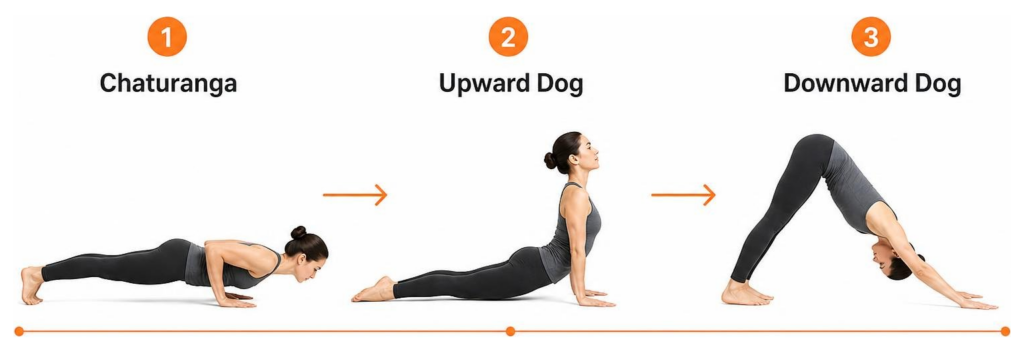
Known in Sanskrit as Urdhva Mukha Svanasana (urdhva = upward, mukha = face, svana = dog, asana = pose), the upward dog stretch is a foundational backbend popularized in the 20th century through classical Hatha, Ashtanga, and modern Vinyasa styles. As an integral component of the Surya Namaskar (Sun Salutation) series, it traditionally bridges the downward push of Chaturanga Dandasana with the hips-elevated extension of Downward-Facing Dog.
Anatomically, this posture demands a harmonious interplay between anterior body flexibility and posterior body strength:
- Spinal Extensors & Posterior Chain: The erector spinae, hamstrings, and gluteal muscles engage to support full spinal extension without over-compressing the lumbar spine.
- Chest & Shoulder Girdle: The pectoralis major, anterior deltoids, and serratus anterior stretch dynamically while the rhomboids adduct the shoulder blades, pulling them down away from the ears.
- Hip Flexors & Quadriceps: The psoas major, iliacus, and rectus femoris undergo a deep lengthen, relieving anterior hip tightness.
- Subtle & Fascial Impact: Beyond major muscle groups, pressing into the tops of the feet stretches the retinaculum around the ankles. In subtle energy traditions, the posture is celebrated for opening the Anahata (heart) and Vishuddha (throat) chakras while balancing the five Prana Vayus.
Why the Upward Dog Stretch Belongs in Your Routine
In modern daily life, prolonged sitting, typing, and driving keep the body locked in forward flexion. Incorporating the upward dog stretch into your regular movement practice acts as a direct physical counter-measure. By extending the thoracic spine and opening the chest, this pose helps undo the tight, hunched patterns caused by constant screen use.
Beyond structural alignment, opening the chest expands the chest cavity, allowing the lungs and diaphragm to expand fully. To discover more about how intentional movement enriches your daily wellness journey, explore our article on exploring the benefits of yoga.
Step-by-Step Execution of the Upward Dog Stretch
Executing the posture correctly relies on building a stable foundation from the floor up rather than forcing a high backbend.
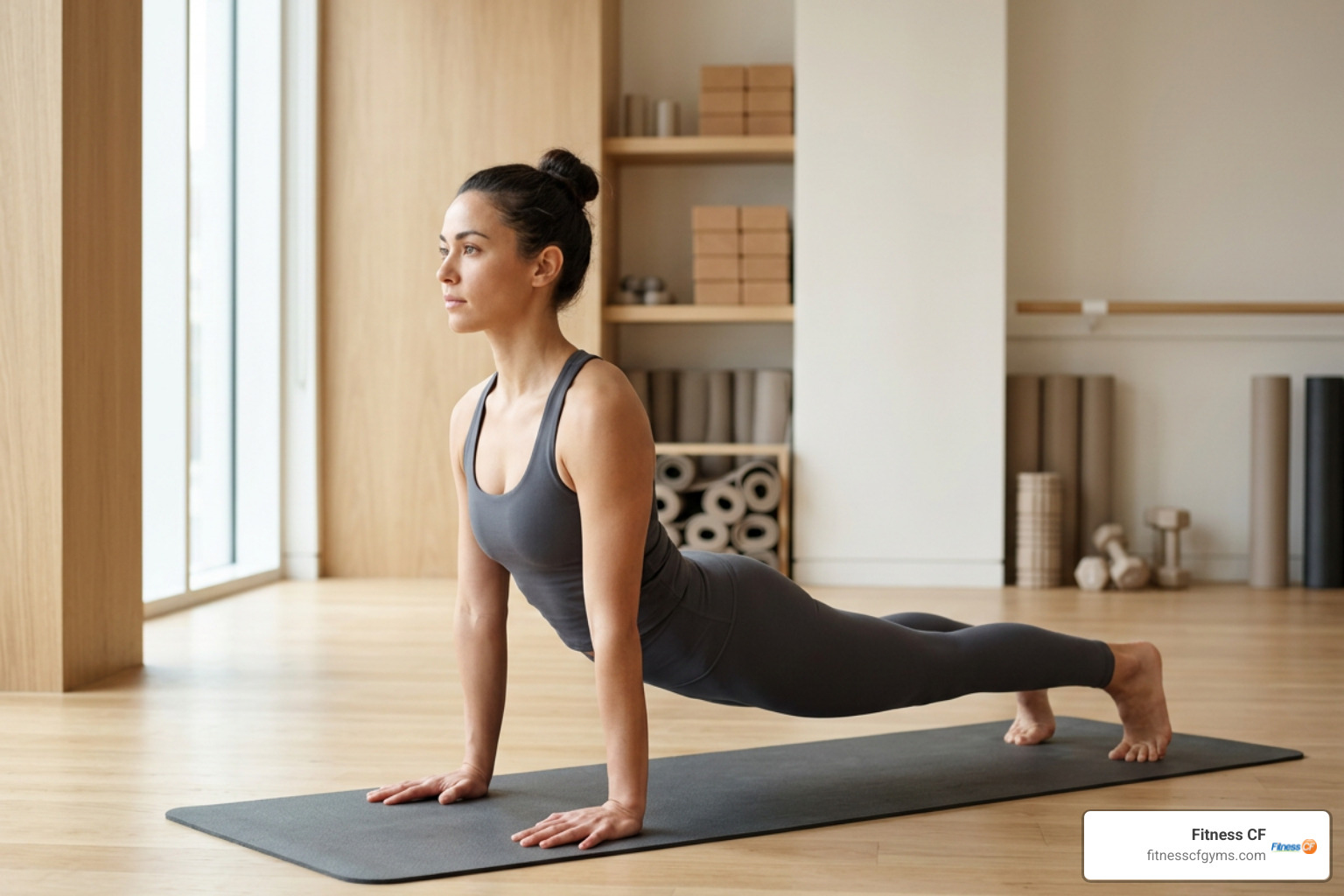
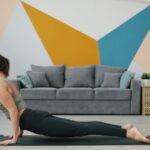
- Prone Setup: Lie face down on your mat with your legs extended straight back, hip-width apart. Rest the tops of your feet flat on the floor, toes pointing directly behind you.
- Palm Placement: Place your palms flat on the mat directly beside your lower ribs—not up near your shoulders. Spread your fingers wide and press evenly through all four corners of your hands.
- Arm Extension & Chest Lift: Inhale deeply as you press firmly into your hands. Straighten your arms completely to lift your chest, abdomen, and pelvis off the mat.
- Thigh Elevation: Ground down firmly through the tops of your feet and contract your quadriceps. Lift your thighs, knees, and hips entirely off the floor. In full expression, the only body parts touching the mat are your palms and the tops of your feet.
- Neck & Gaze: Keep the back of your neck long. Gaze gently forward or slightly upward without throwing your head backward or crunching your neck.
Master Form with the Proper Upward Dog Stretch Technique
- Joint Stacking: Ensure your wrists are stacked directly under your shoulders. Micro-bend your elbows slightly if you tend to hyperextend your joints.
- Shoulder Engagement: Actively draw your shoulder blades back and down away from your ears. Think of lifting your sternum forward through your upper arms rather than pushing yourself backward.
- Core & Lumbar Support: Draw your navel gently toward your spine. Engaging your lower abdominal wall creates an internal girdle that protects the lumbar vertebrae from pinching.
- Breathing Pattern: Pair the movement with Ujjayi (ocean) breathing. Inhale deeply as you open the chest cavity, holding the posture for 3 to 5 controlled breath cycles before lowering or transitioning. To review fundamental prep routines, see our guide on stretching routines for flexibility.
Key Benefits: Posture Correction, Back Pain, and Muscle Activation
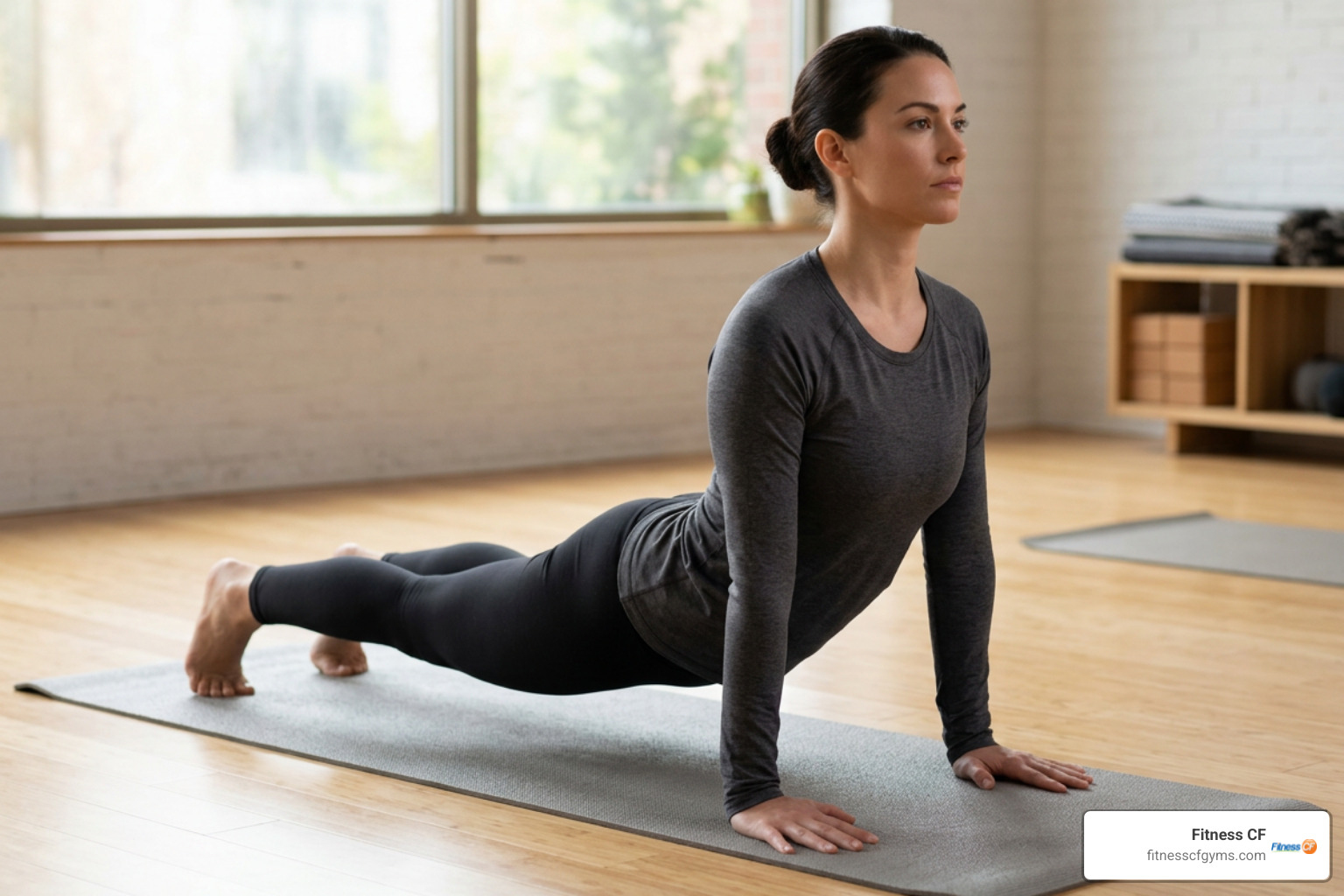
The physical benefits of practicing the upward dog stretch extend through the entire body:
- Posture Correction: Sitting creates a forward-slouching pattern characterized by tight hip flexors and rounded upper backs. Upward Dog reverses this by stretching the front hip structures (psoas) while strengthening the posterior muscles responsible for keeping you upright.
- Lower Back Health: Tight psoas muscles tilt the pelvis forward, placing continuous strain on the lower back. By opening the front hips and stretching the abdomen, Upward Dog releases this pelvic tension. For additional lumbar management strategies, consult our article on exercises for lower back pain relief.
- Upper Body Pain Prevention: Strengthening the muscles between the shoulder blades relieves chronic upper back tension. Learn more about alleviating upper-body stress in our guide to stretches for neck and shoulder pain.
- Expanded Respiratory Capacity: Expanding the chest cavity allows the intercostal muscles to stretch, increasing oxygen exchange and supporting cardiovascular efficiency during exercise.
Upward Dog vs. Cobra Pose vs. Sphinx Pose
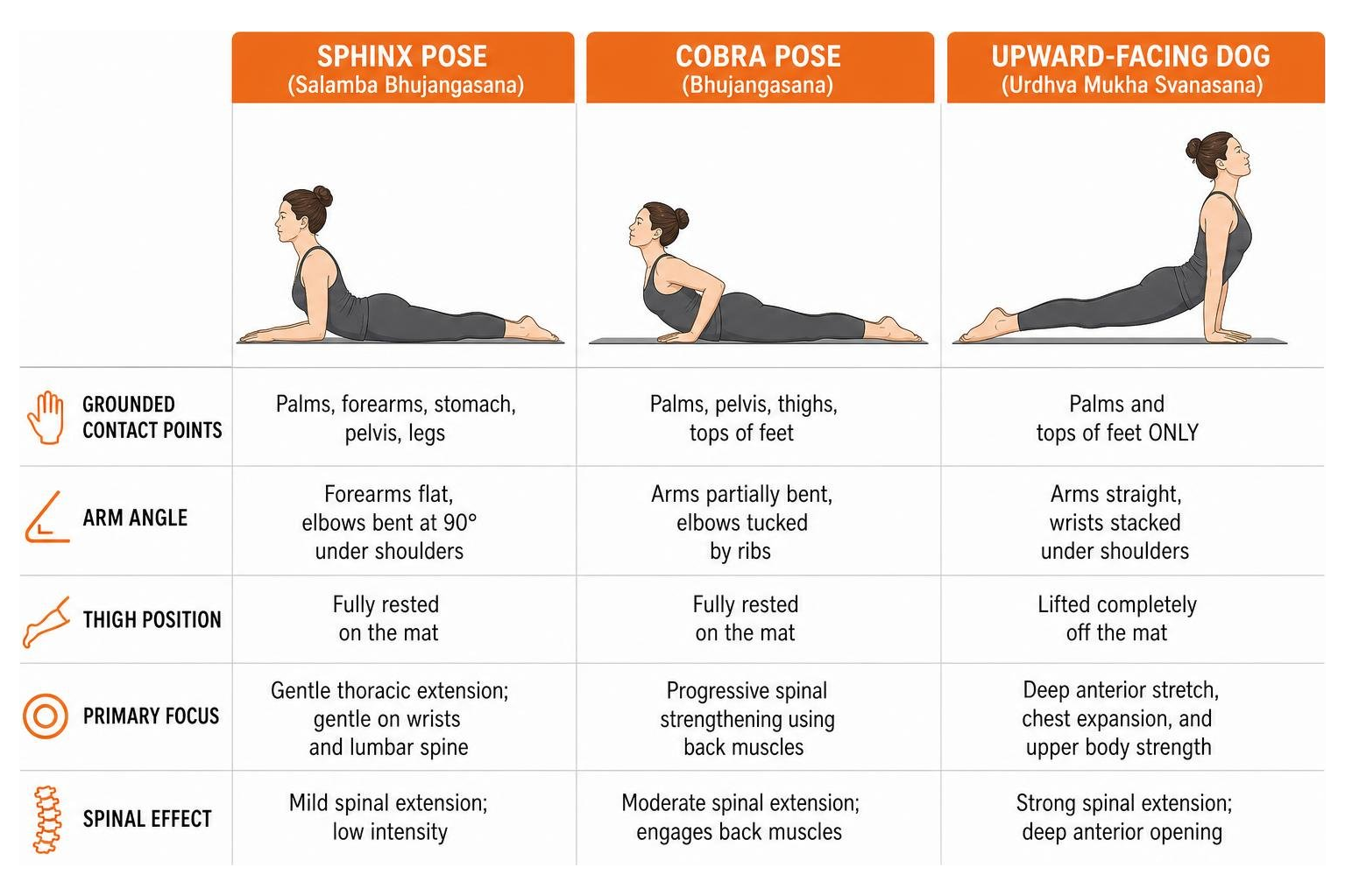
While these three prone backbends look similar at a glance, key structural distinctions dictate how they affect the spine and joints.
| Pose | Grounded Contact Points | Arm Angle | Thigh Position | Primary Focus |
|---|---|---|---|---|
| Sphinx Pose (Salamba Bhujangasana) | Palms, forearms, stomach, pelvis, legs | Forearms flat, elbows bent at 90° under shoulders | Fully rested on the mat | Gentle thoracic extension; gentle on wrists and lumbar spine |
| Cobra Pose (Bhujangasana) | Palms, pelvis, thighs, tops of feet | Arms partially bent, elbows tucked by ribs | Fully rested on the mat | Progressive spinal strengthening using back muscles rather than arm force |
| Upward Dog (Urdhva Mukha Svanasana) | Palms and tops of feet ONLY | Arms straight, wrists stacked under shoulders | Lifted completely off the mat | Deep anterior stretch, chest expansion, and upper body strength |
Understanding these differences helps you choose the correct backbend for your mobility level. To build full-body movement transitions, read our full plank to down dog movement patterns guide.
Common Mistakes, Modifications, and Safety Cautions
To practice safely, avoid these common form errors:
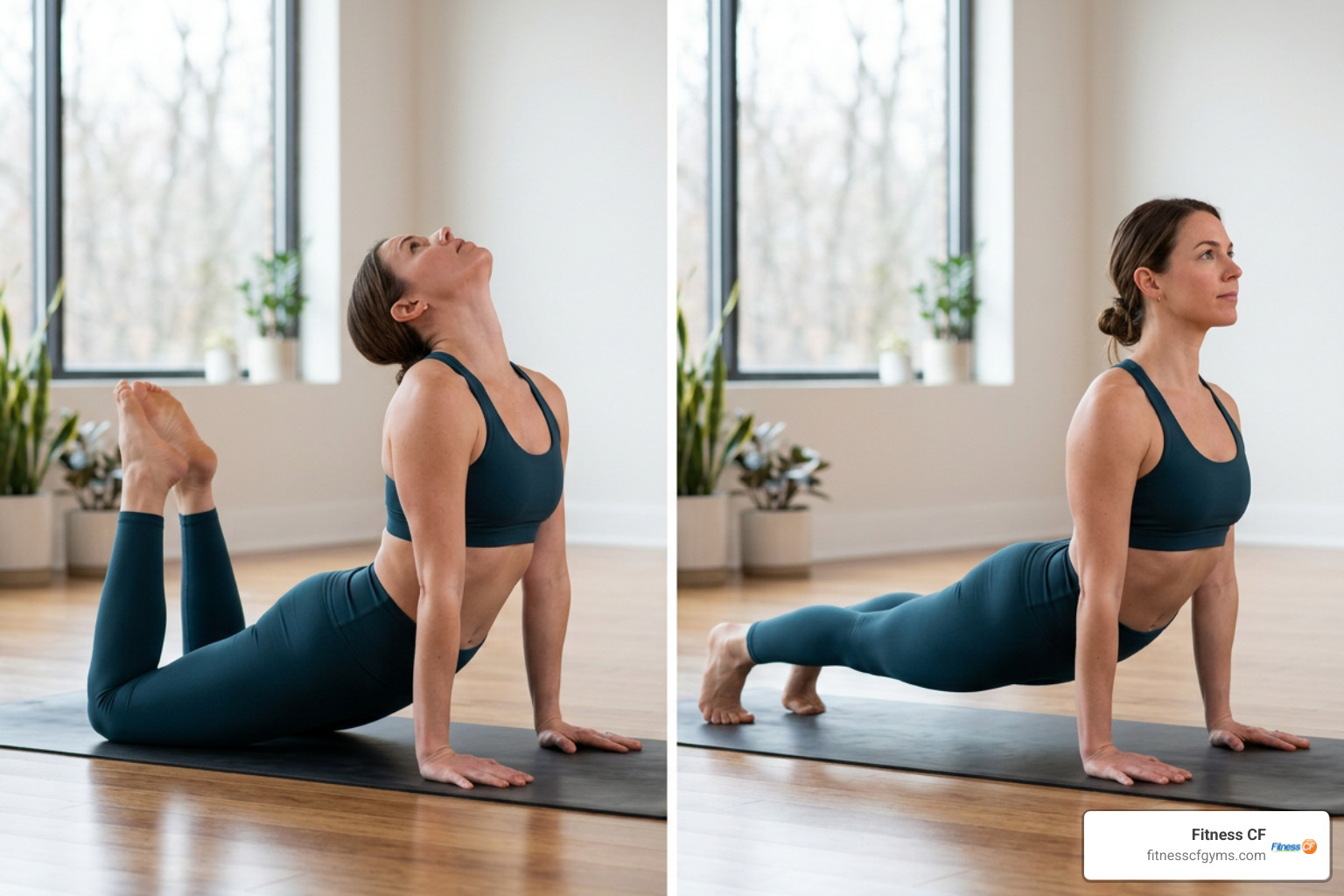
- Collapsing into the Shoulders: Letting your head sink into your shoulders creates neck compression. Fix this by actively pressing down through your palms and drawing your shoulder blades down your back.
- Resting Thighs on the Mat: Leaving your legs on the floor turns the pose into Cobra Pose and reduces lower body engagement. Contract your quads to elevate your knees and hips.
- Dumping into the Lumbar Spine: Arching solely from the lower back causes pinching. Distribute the bend evenly across your entire spine by engaging your core and lifting your sternum.
- Overextending the Neck: Craning your chin up toward the ceiling compresses the cervical spine. Keep your gaze forward or slightly elevated, keeping the back of your neck long.
Accessible Modifications & Variations
- Using Yoga Blocks: Place two blocks under your palms flat on the mat. Elevating your hands reduces wrist bend angle and creates extra room for your chest to open.
- Wall Upward Dog: Stand facing a wall, place your hands at waist height, step your feet back, and gently press your chest toward the wall while engaging your legs. This provides chest opening without loading your wrists or back.
- Asymmetrical Psoas Stretch Variation: Lie prone, bring one leg out to the side bent at a 90-degree angle, and press up onto straight arms or forearms. This targets the deep psoas on the extended leg side.
Cautions & Contraindications
Avoid or alter this pose if you experience:
- Active Wrist Conditions: Those with Carpal Tunnel Syndrome or acute wrist inflammation should opt for Sphinx Pose or wall variations.
- Severe Lumbar Spine Issues: Avoid full Upward Dog during acute flare-ups of herniated discs or spondylolisthesis.
- Pregnancy: From the second trimester onward, prone belly-down postures should be avoided; substitute standing chest openers instead.
Frequently Asked Questions About the Upward Dog Stretch
Why do my wrists hurt during Upward Dog?
Wrist discomfort usually happens when body weight dumps passively into the heel of the palm. To fix this, press firmly through your fingertips and the knuckles at the base of your fingers (the Hasta Bandha action). Ensure your wrists are stacked directly under your shoulders, keep a micro-bend in your elbows, and actively fire your core and leg muscles to carry your weight rather than resting it all in your hands.
Can beginners practice Upward-Facing Dog safely?
Yes, but beginners should build foundational strength first. Starting with Sphinx or Cobra Pose allows you to build back strength without overtaxing your wrists or lower back. Using yoga blocks under your hands is another safe way for beginners to learn the correct shoulder lift.
Is Upward Dog suitable for lower back pain?
When performed with active core engagement and lifted legs, it helps relieve lower back tightness by opening the hip flexors and strengthening the spinal extensors. However, if you feel a sharp, pinching sensation in your lower back, lower down immediately and adjust with Cobra Pose or Sphinx Pose.
Conclusion
The upward dog stretch is an effective way to improve posture, strengthen the spine, and open the chest and hips. By focusing on intentional form—engaging the legs, lifting the thighs, supporting the lower back with the core, and pressing through the palms—you can convert a standard transition movement into a therapeutic stretch for daily back relief.
Whether you are looking to balance long hours at a desk or enhance your functional flexibility, practicing Upward-Facing Dog with care will support a strong, healthy spine. Keep your movement steady, listen to your body, and enjoy the physical benefits of a consistent stretching habit!