What You Need to Know About Yoga and Exercise
Yoga and exercise together form one of the most effective combinations for improving your overall health — whether your goal is to reduce stress, build strength, or simply move more consistently.
Here’s a quick overview:
| Topic | Key Takeaway |
|---|---|
| What is yoga? | A mind-body practice combining postures, breathing, and meditation |
| How it differs from exercise | Yoga activates the parasympathetic nervous system; most exercise activates the sympathetic |
| Main benefits | Flexibility, stress relief, lower blood pressure, better blood sugar control |
| Best styles for beginners | Hatha and Iyengar (slower pace, use of props) |
| Safety note | 1 in 5 practitioners report an adverse effect; proper instruction matters |
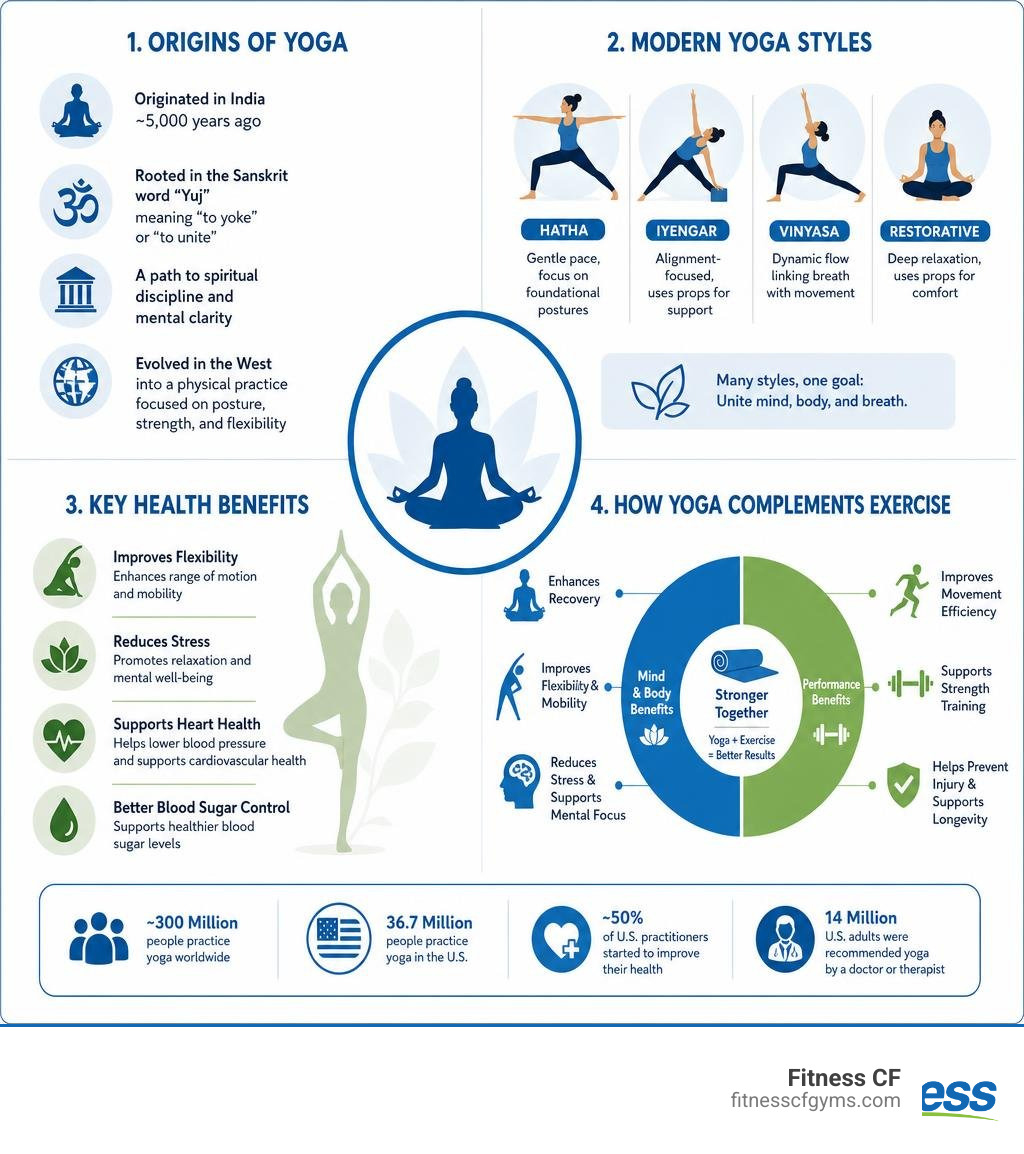
| Who practices it | ~300 million people worldwide; 36.7 million in the U.S. alone |
Yoga began not as a fitness routine, but as a path to spiritual discipline and mental clarity. It originated in India roughly 5,000 years ago, built around the Sanskrit word “Yuj” — meaning “to yoke” or “to unite” mind, body, and spirit. Over time, especially in the West, yoga evolved into something more familiar to gym-goers: a structured, physical practice focused on posture, strength, and flexibility.
Today, roughly half of American yoga practitioners say they started practicing to improve their health. Another 14 million adults were actually recommended yoga by a doctor or therapist. That shift — from spiritual tradition to evidence-backed health tool — is exactly why understanding yoga’s role alongside conventional exercise matters more than ever.
I’m Pleasant Lewis, owner and operator of Fitness CF, with over 40 years of experience in the fitness industry helping people integrate practices like yoga and exercise into sustainable, results-driven routines. Throughout this guide, I’ll walk you through everything you need to know — from the science to the practical steps — so you can make yoga work for your life.
The Synergy of Yoga and Exercise: How Mind-Body Practice Fits Into Your Fitness Routine
At first glance, yoga and traditional exercise might seem like entirely different worlds. One involves quiet breathing and holding steady postures on a sticky mat, while the other often conjures images of sweaty treadmill runs, heavy deadlifts, or high-energy group fitness classes. However, when we look under the hood, these two modalities are not competitors; they are the ultimate teammates.
The Sanskrit meaning of yoga, rooted in “Yuj” (to unite), tells us everything we need to know. Traditional exercise focuses primarily on physical output — training our heart, lungs, and muscles to handle external loads. Yoga, on the other hand, unites this physical capability with mental discipline and internal awareness.
Integrating both into a single weekly routine bridges the gap between raw physical power and mindful recovery. If you are curious about how to begin blending these two disciplines, check out our guide on Exploring the Power of Yoga: Why You Should Add It to Your Fitness Routine.
How Yoga and Exercise Differ in Their Physiological Impact
To understand why they complement each other so well, we have to look at how they affect our autonomic nervous system and genetic expression.
Most traditional workouts (like running, heavy weightlifting, or high-intensity interval training) place a healthy, temporary stress on the body. This triggers our sympathetic nervous system — the “fight or flight” response. Your heart rate climbs, blood pressure rises, and cortisol (the stress hormone) spikes to help you power through the challenge. This is a crucial process for building athletic performance, but staying in this state too long can lead to chronic fatigue and burnout.
Yoga does the opposite. By pairing slow, deliberate physical postures with deep, controlled breathing (pranayama), yoga activates the parasympathetic nervous system — our “rest and digest” mode. This triggers immediate cortisol reduction, lowers our resting heart rate, and promotes deep cellular recovery.
In fact, modern science has mapped these differences right down to our DNA. A landmark study published in Multi-omics integration and interactomics reveals molecular networks and regulators of the beneficial effect of yoga and exercise – PMC demonstrated that while both practices trigger powerful health benefits, they work through entirely different molecular pathways.
The study revealed that yoga predominantly modulates genes responsible for immune function, specifically regulating Th1 and NK cells, while improving our circadian rhythm (such as regulating the BHLHE40 gene). Traditional physical exercise, meanwhile, directly influences cytokines, macrophage activation, oxidative stress, cellular adhesion, and blood vessel growth (angiogenesis).
In simple terms: traditional exercise remodels your physical structure, while yoga cleanses, regulates, and restores your internal biological systems.
Creating a Balanced Routine with Yoga and Exercise
Because they work through different biological pathways, combining them creates a powerful, synergistic health effect. Relying solely on high-intensity workouts can leave your joints stiff and your nervous system overstimulated. Conversely, relying solely on gentle yoga might limit your cardiovascular endurance and bone density improvements.
A truly balanced routine includes:
- Aerobic Exercise: 150 to 300 minutes of moderate-intensity cardio (like brisk walking or cycling) per week to keep your heart and blood vessels healthy.
- Resistance Training: At least two sessions per week of strength training to preserve muscle mass and keep your bones strong.
- Yoga: 1 to 3 sessions per week to restore flexibility, improve joint stability, and calm your mind.
This comprehensive approach is backed by clinical evidence. A comprehensive review published in A systematic review of the combined use of yoga and exercise therapy: Consequences for comprehensive health and well-being found that combining yoga with conventional exercise therapy produces far superior outcomes for chronic back pain, mental health, and metabolic diseases than using either method alone.
To help you map out your weekly schedule without getting overwhelmed, we have put together the Ultimate Checklist for Exercise and Yoga to keep your training on track.
Popular Styles of Yoga Practiced Today

Walk into any modern fitness center or studio, and you will quickly realize that “yoga” is not just one single thing. There are dozens of different styles, ranging from deeply meditative and slow to and physically exhausting.
To help you navigate your options, we have created an in-depth breakdown of What Are the Different Types of Yoga?. Below is a quick comparison of three of the most widely practiced styles in the United States:
| Yoga Style | Pace & Intensity | Primary Focus | Best For |
|---|---|---|---|
| Hatha | Slow & Gentle | Basic postures, alignment, and deep breathing | Beginners, seniors, and recovery days |
| Vinyasa | Fast & Dynamic | Flowing transitions matching breath to movement | Cardiovascular health, calorie burn, and agility |
| Iyengar | Slow & Precise | Strict structural alignment using blocks, straps, and bolsters | Injury rehabilitation, posture correction, and joint stability |
Gentle and Restorative Styles
If you are recovering from an injury, managing a chronic health condition, or just looking to wind down after a stressful workday, gentle and restorative styles are your best bet.
- Hatha Yoga: This is the foundation of most modern Western yoga. It is practiced at a slower pace, giving you plenty of time to learn the basic postures, focus on your breathing, and build a solid foundation of strength and balance. If you are looking to start your journey in Central Florida, check out our dedicated classes in Hatha Yoga Orlando.
- Iyengar Yoga: Founded by B.K.S. Iyengar, this style is famous for its obsessive focus on detail and structural alignment. Iyengar classes rely heavily on props like blocks, straps, and bolsters. These tools allow people of all shapes, sizes, and flexibility levels to safely experience the benefits of a pose without straining their joints.
Dynamic and High-Intensity Styles
For those who want their yoga sessions to double as a vigorous physical workout, dynamic styles will get your heart pumping.
- Vinyasa Flow: Often described as “meditation in motion,” Vinyasa classes link your movements directly to your breath. You will flow continuously from one pose to the next with minimal pauses, building muscular endurance, balance, and focus.
- Power Yoga & HIIT Yoga: These modern hybrids turn up the heat. Power yoga adapts traditional Ashtanga practices into a faster, fitness-focused routine. HIIT yoga takes it a step further by weaving high-intensity interval training (like mountain climbers or jump squats) directly into traditional yoga flows.
If you want to experience a session that challenges your muscles while keeping your joints safe, try our guided 45-Minute Yoga for Strength and Flexibility.
The Physical and Mental Health Benefits of Yoga

Whether you are holding a gentle stretch or flowing through a sweaty Vinyasa class, the positive effects of yoga extend far beyond just getting a good stretch. Let’s look at what the scientific research says about the mental and physical transformations that happen when you unroll your mat. For a broad overview of these advantages, you can read our summary of What Are the Health Benefits of Yoga?.
Cardiometabolic Health and Diabetes Management
Cardiovascular disease and type 2 diabetes are two of the most common chronic health challenges in America. Fortunately, yoga has proven to be an incredibly potent tool for managing both.
According to a major systematic review and meta-analysis published in PLOS Global Public Health, practicing yoga regularly leads to highly significant improvements in cardiometabolic health, especially for adults who are overweight or obese. The clinical data showed that yoga practice:
- Reduced systolic blood pressure by an average of 4.35 mmHg.
- Reduced diastolic blood pressure by 2.06 mmHg.
- Measurably improved HDL (good) cholesterol and lowered LDL (bad) cholesterol.
Furthermore, yoga has a profound impact on blood sugar regulation. A clinical study published in the Indian Journal of Physiology and Pharmacology compared the effects of aerobic exercise, resistance training, and yoga on patients with type 2 diabetes over a 16-week period.
The results were remarkable: the yoga group saw their fasting blood glucose drop from an average of 97.17 mg/dL to 91.80 mg/dL. Just as exciting, all three exercise groups — including yoga — showed a significant reduction in the expression of β-Galactosidase, a key genetic marker of cellular aging and senescence. This means that yoga doesn’t just help control diabetes; it actually helps fight aging at a cellular level!
Managing Chronic Pain, Depression, and Anxiety
If you have ever dealt with chronic lower back pain, you know how exhausting it can be. Multiple randomized controlled trials have shown that yoga is one of the most effective non-invasive treatments for chronic back pain, helping to reduce pain intensity and restore functional mobility.
On the mental health side, yoga acts as a natural reset button for your brain. By lowering chronic cortisol levels, regular practice helps ease the symptoms of moderate depression and clinical anxiety. Psychologists also note that yoga can significantly reduce emotional overeating. By teaching mindfulness and body awareness, it helps individuals recognize the difference between physical hunger and stress-induced cravings.
Additionally, the deep, rhythmic breathing patterns taught in yoga have direct structural benefits for your respiratory system. To see how this works, read The Ultimate Guide to Using Yoga for Asthma Relief.
Longevity and Overall Fitness Integration
Can changing up your workouts actually help you live longer? The short answer is yes.
A massive, 30-year Harvard study tracking over 100,000 adults, published in BMJ Medicine, delivered a fascinating insight: variety in your physical activity is a major driver of longevity. The researchers found that people who engaged in three or more distinct types of physical activity — such as combining walking, light strength training, and yoga — had a significantly lower risk of all-cause mortality than those who did the same volume of just one single activity. You can read more about these findings in this analysis of the Harvard Longevity Study.
To see how this works in real life, consider a 90-day personal experiment comparing high-intensity training, yoga, and walking. The experiment, detailed in HIIT vs Yoga vs Walking: I Tried All 3 for Energy, The Winner Shocked Me, tracked daily energy, heart rate variability (HRV), and stress markers.
While HIIT workouts provided quick fitness boosts, they caused cortisol spikes and crashed HRV when performed more than twice a week. Yoga, meanwhile, excelled at lowering cortisol, improving sleep quality, and restoring HRV. The takeaway? To maintain high energy levels and stay healthy for the long haul, you need to balance your high-intensity workouts with mindful, restorative movement.
Safety, Injury Prevention, and Getting Started Safely
While yoga is generally a low-impact, highly safe activity, it is not entirely risk-free. A cross-sectional survey of 1,702 regular practitioners found that 1 in 5 reported experiencing at least one adverse effect during their practice. The vast majority of these injuries were linked to advanced inverted postures, specifically headstands and shoulder stands.
To protect your joints and keep your practice pain-free, it is vital to learn proper alignment from the start. We recommend reviewing our guide on Stretching Routines to Improve Flexibility and Prevent Injuries to prepare your body for the physical demands of yoga.
How Beginners Should Approach Yoga
If you are brand new to yoga and exercise, the golden rule is to leave your ego at the door. It can be tempting to try and copy the advanced poses you see online, but pushing your body too far too fast is a recipe for pulled muscles or joint strain.
- Start with Beginner-Focused Classes: Look for classes labeled “Hatha,” “Gentle,” or “Yoga Basics.” These classes move at a slower pace and focus on teaching you correct form. If you are in the Orlando area, you can find local, welcoming sessions through Yoga for Beginners Orlando.
- Warm Up and Cool Down: Just like any other workout, your body needs to transition into and out of physical exertion. Learn how to prepare your muscles by reading The Importance of Warm-Up and Cool-Down Exercises: A Comprehensive Guide.
- Use Props: Never hesitate to grab blocks, straps, or blankets. These are not signs of weakness; they are smart tools used by beginners and advanced practitioners alike to maintain perfect alignment and prevent injuries.
Instructor Qualifications and Studio Safety
Because there is no federal law requiring yoga teachers to hold a specific license, the quality of instruction can vary wildly. When choosing a class, always look for instructors who hold recognized credentials, such as being a Registered Yoga Teacher (RYT) with the Yoga Alliance.
An RYT-200 designation means the teacher has completed at least 200 hours of certified training, while an RYT-500 indicates 500 hours of advanced education in anatomy, sequencing, and safety modifications. To find a safe, professional, and welcoming space to practice, check out our Yoga Studio Orlando page.
Overcoming Accessibility and Cost Barriers
Historically, private yoga studios have sometimes carried a reputation for being expensive or exclusive. Fortunately, the fitness landscape in 2026 has made yoga more accessible than ever before.
If boutique studio fees do not fit your budget, you have plenty of great options:
- Gym Memberships: Many full-service fitness centers include unlimited group yoga classes in their standard membership, giving you access to high-quality instructors at a fraction of the cost of private studios.
- Community Classes: Many local parks, libraries, and community centers offer free or donation-based classes.
- Online Videos: High-quality, free instructional videos allow you to practice right in the comfort of your living room.
If you are ready to find a local, budget-friendly class that fits your schedule, take a look at our directory of Yoga Classes Near Me.
Frequently Asked Questions about Yoga and Exercise
Is yoga considered a form of aerobic exercise?
Generally, no. A typical yoga session provides an average physical demand of 3.3 METs (Metabolic Equivalents), which classifies it as a light to moderate workout rather than high-intensity cardio.
However, it depends entirely on the style. While a gentle restorative class won’t get your heart rate up, dynamic sequences like Surya Namaskar (Sun Salutations) can range from 2.9 to 7.4 METs, crossing over into a vigorous cardiovascular workout.
Can yoga help with weight loss and obesity?
Yes, but not just because of the calories you burn on the mat. While dynamic styles do burn calories, yoga’s biggest weight-loss benefit lies in its ability to lower stress and cortisol levels. High cortisol is directly linked to abdominal fat storage and emotional overeating. By calming your nervous system, yoga helps reduce stress-induced cravings, making it much easier to maintain a healthy, balanced diet.
What are the most common injuries in yoga and how can I avoid them?
The most common yoga injuries involve hamstring pulls (from aggressive forward folds), wrist strain (from improper alignment in planks and Downward Dog), and lower back issues.
You can avoid these by never forcing a stretch, keeping a slight bend in your knees during forward folds, and spreading your fingers wide to distribute your weight evenly. To build the joint mobility needed to stay safe, explore these Better Flexibility: 8 Fantastic Exercises to Increase Range of Motion.
Conclusion
At Fitness CF, we believe that true, lasting fitness is about more than just lifting heavier weights or running faster. It is about building a body that feels good, moves without pain, and stands resilient against the stresses of daily life. By combining the physical conditioning of traditional exercise with the mindful, restorative power of yoga, you create a complete, holistic approach to healthy living.
Whether you are looking to take your very first class or want to integrate advanced flows into your current training routine, we are here to support you every step of the way. If you live in the St. Cloud area, we invite you to Find Your Flow: Best Yoga Classes in St. Cloud.
For those located across the wider region, explore our complete roadmap in Unroll Your Mat: A Comprehensive Guide to Yoga Classes Across Central Florida.
Ready to experience the benefits for yourself? Grab a towel, bring some water, and join our community today by checking out our Fitness CF Yoga Classes. We can’t wait to see you on the mat!