What Is Circuit Training and How Does It Work?
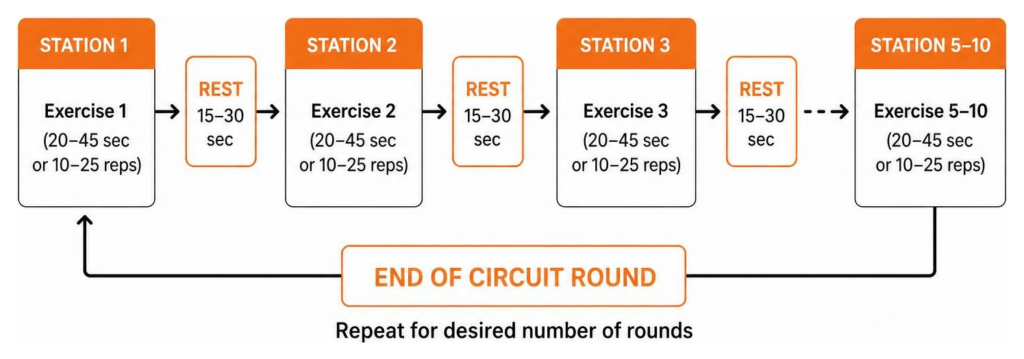
At its core, circuit training for weight loss is an exercise strategy where you complete a series of targeted stations back-to-back with short rest intervals in between. Instead of performing a set of an exercise, resting for two minutes, and repeating that same movement, circuit training keeps you moving through a sequence of 5 to 10 distinct exercises. Once you complete every station in the cycle, you have finished one full circuit round.
This training methodology relies heavily on alternating work-to-rest ratios to maximize performance and energy expenditure. Work intervals usually last anywhere from 20 to 45 seconds per exercise—or 10 to 25 repetitions—followed by a quick 15 to 30 seconds of rest. Because you rapidly transition between non-competing exercise stations, your body gets the benefit of resistance training and aerobic conditioning simultaneously.
Structuring a circuit around fundamental movement patterns—pushing, pulling, squatting, lunging, hinging, and carrying—ensures full-body targeting. For anyone trying to determine whether to focus on lifting heavy or doing standard cardio, exploring Strength Training vs Cardio: Which Is Better for Weight Loss? highlights why combining both modalities into a time-efficient workout is so effective.
Key Differences From Traditional Strength and Cardio
Traditional strength routines typically focus on maximal force production, using long rest periods (2 to 3 minutes) so muscles can fully recover between heavy sets. Traditional cardio, on the other hand, usually involves continuous steady-state effort—like jogging or cycling—at a constant intensity.
Circuit training bridges this gap by creating continuous movement through active recovery. While one muscle group works, another rests. For example, following a heavy set of chest push-ups immediately with lower-body lunges allows your upper body to recover without forcing your heart rate to drop.
This structure delivers unique physical adaptations:
- Heart Rate Elevation: Keeping your heart rate elevated near aerobic and anaerobic thresholds maximizes calorie burn throughout the entire session.
- Enhanced Muscle Endurance: Shorter recovery times train your muscle fibers to clear metabolic byproducts quickly.
- Superior Workout Density: You accomplish significantly more physical work per minute compared to standard weightlifting or treadmill walking.
Science-Backed Efficacy of Circuit Training for Weight Loss
The scientific literature strongly supports circuit training as a powerful tool for body re-composition. Extensive clinical research reveals that circuit training triggers profound metabolic alterations that extend far beyond the gym.
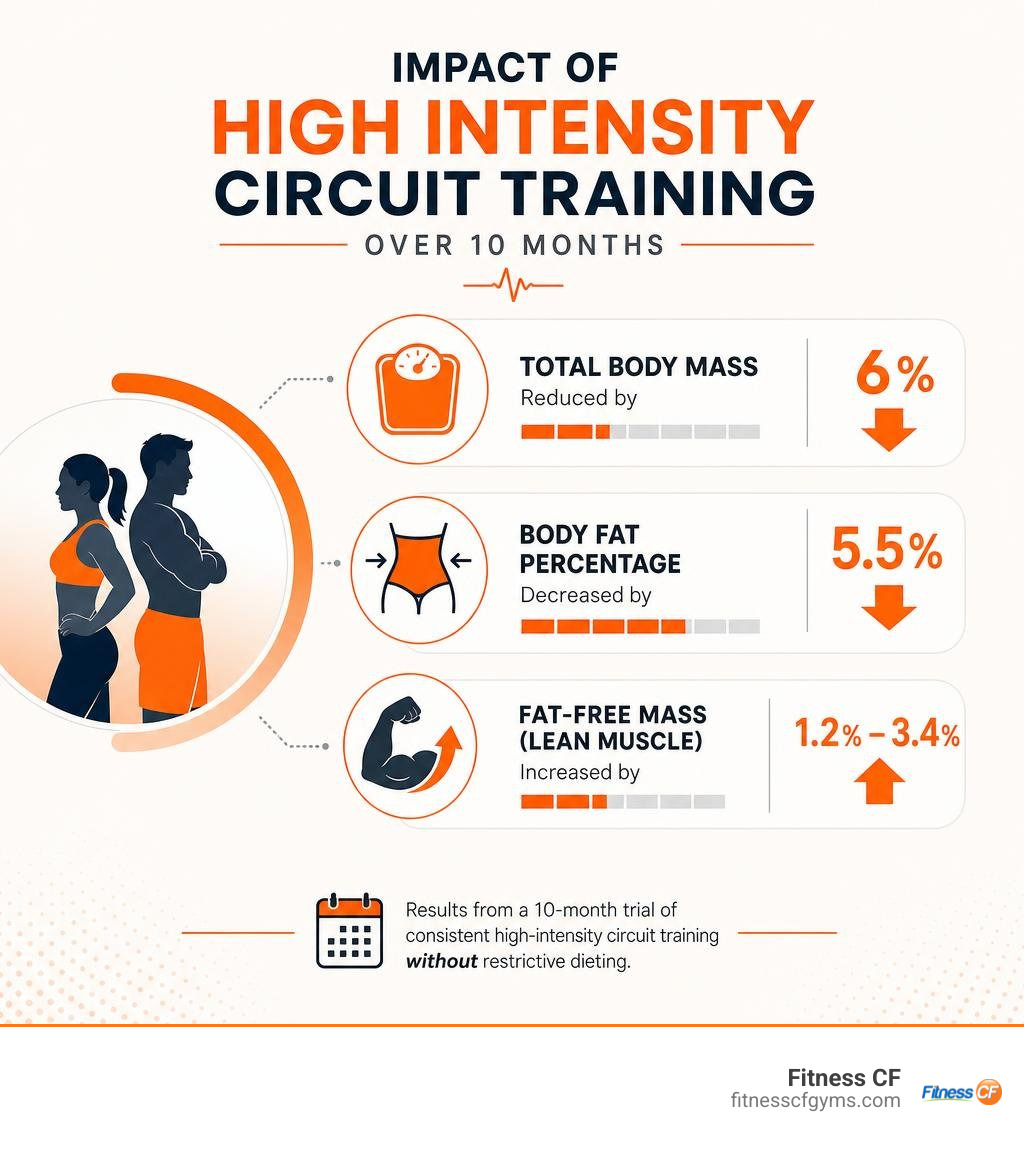
A landmark study evaluating a 10-month trial on circuit training outcomes demonstrated the deep physiological adaptations achievable through structured routines. Over 10 months of consistent high-intensity circuit training without restrictive dieting, participants experienced remarkable improvements:
- Total Body Mass: Reduced by 6%.
- Body Fat Percentage: Decreased by approximately 5.5%.
- Fat-Free Mass (Lean Muscle): Increased by 1.2% to 3.4%.
- Resting Metabolic Rate (RMR): Elevated by 6% to 10%.
- Leg Press Maximal Strength: Increased by 27.2%.
- Cardiorespiratory Endurance (VO2 max): Increased by 26.8%.
These adaptations occur because the human body expends approximately 5 calories of energy for every 1 liter of oxygen it consumes. By engaging massive muscle groups in quick succession, circuits dramatically increase total oxygen uptake both during and after the workout. Research shared in Circuit Training for Weight Loss Insights confirms that high-density exercise stimulates Type II fast-twitch muscle fibers, which build muscle mass and elevate daily energy expenditure.
| Measurement Parameter | Pre-Training Baseline | Post-Circuit Program Outcomes | Physiological Mechanism |
|---|---|---|---|
| Total Body Weight | Baseline | -3.81 kg to -5.15 kg (-6%) | Increased workout energy output and elevated metabolic rate |
| Body Fat Percentage | Baseline | -5.5% Total Fat Mass | Continuous lipid oxidation driven by energy deficit |
| Lean Muscle Mass | Baseline | +1.2% to +3.4% Fat-Free Mass | Type II muscle fiber activation from resistance moves |
| Resting Metabolic Rate | Baseline | +6% to +10% Higher daily burn | Muscle tissue preservation and post-exercise recovery cost |
| Aerobic Capacity (VO2 Max) | Baseline | +26.8% Endurance boost | Elevated oxygen uptake under continuous cardiorespiratory demand |
The mechanism driving post-workout calorie expenditure is Excess Post-Exercise Oxygen Consumption (EPOC), commonly known as the afterburn effect. Following an intense circuit session, your body requires extra energy and oxygen to restore ATP stores, clear lactate, lower body temperature, and repair muscle tissue. This elevated state keeps your body burning additional calories for hours after you finish your last rep.
Why Rest Intervals Drive Circuit Training for Weight Loss
Managing work-to-rest ratios is essential for maintaining target intensity during circuit training for weight loss. Adjusting rest periods changes the primary energy systems your body uses during exercise.
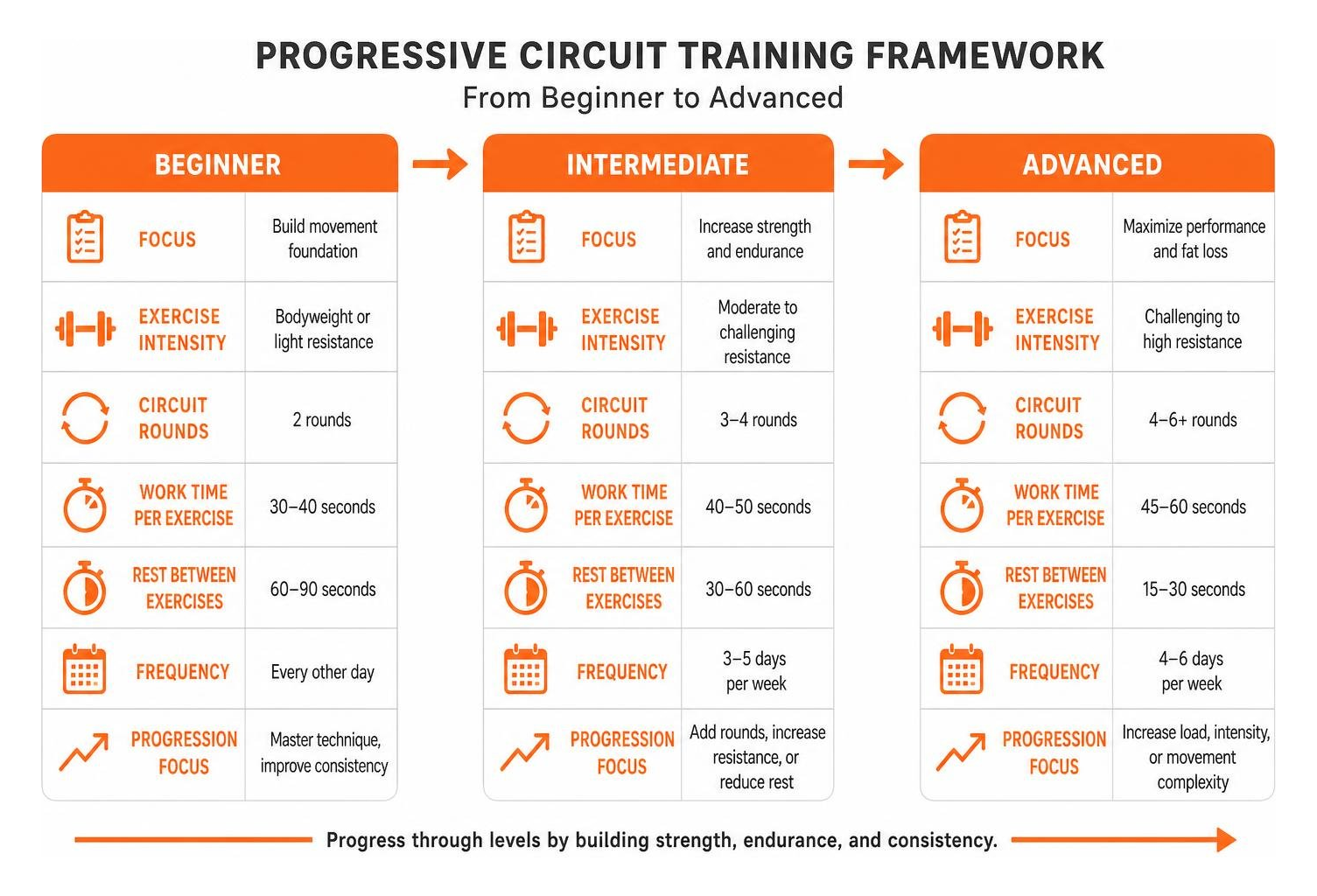
A smart training program often begins with a 1:2 work-to-rest ratio (e.g., 20 seconds of work followed by 40 seconds of rest). This allows beginners to learn movement form while controlling fatigue. As conditioning improves, you progress to a 1:1 ratio (30 seconds work / 30 seconds rest), eventually advancing to a challenging 2:1 ratio (40 seconds work / 20 seconds rest).
Keeping rest periods short maintains exercise intensity at or above 65% of your heart rate reserve (roughly 72% to 87% of maximum heart rate). This sustained oxygen demand optimizes fat oxidation while protecting lean tissue.
Managing Detraining Effects and Long-Term Retention
What happens if life interrupts your routine? Clinical data offers reassuring news regarding physical retention. In long-term training-detraining research, participants who stopped structured circuit workouts for a 5-month detraining period experienced some decline in performance, but they retained a significant portion of their original gains.
While resting metabolic rate and maximum endurance gradually decrease during extended breaks, preserved muscle mass helps prevent rapid weight regain. Consistency remains king, but knowing your body retains metabolic adaptations through temporary breaks makes long-term progress far more manageable.
How to Structure Your Weight Loss Circuit Workout
Building an effective circuit routine requires balance. A standard session should last between 20 and 45 minutes of total exercise time. Capping the high-intensity strength portion at under 60 minutes prevents excessive cortisol secretion, which can break down lean muscle tissue.
Select multi-joint compound exercises that recruit multiple large muscle groups at once. Movements like squats, push-ups, rows, lunges, and kettlebell swings burn significantly more calories than single-joint isolation moves like bicep curls or calf raises.

To build a full workout, check out The Complete Guide to Weight Loss Workouts and combine these top functional exercises:
- Dumbbell Thrusters or Squat-to-Press: Targets quadriceps, glutes, core, and shoulders.
- Push-Ups or Chest Press: Targets chest, anterior deltoids, and triceps.
- Kettlebell Swings: Trains posterior chain, glutes, hamstrings, and lower back.
- Seated Cable or Resistance Band Rows: Targets upper back, rhomboids, and biceps.
- Reverse Lunges with Overhead Reach: Targets legs, hips, and core stability.
- Plank to Shoulder Taps: Strengthens deep abdominal wall and shoulder stabilizers.
- Jump Rope or High Knees Finisher: Elevates cardiorespiratory burn.
Structuring a Beginner Circuit Training for Weight Loss Routine
If you are new to exercise or returning after a break, ease into circuits with low-impact options to protect your joints and build endurance.
- Select Bodyweight Basics: Swap jump squats for standard bodyweight box squats, and sub mountain climbers for incline wall push-ups or standing knee raises.
- Incorporate Warm-ups: Spend 7 to 10 minutes performing dynamic mobility drills and joint gymnastics—gentle circles for ankles, knees, hips, shoulders, and wrist joints—to prepare ligaments for movement.
- Apply Progressive Overload: Begin with 2 full circuit rounds every other day. Maintain this baseline for two weeks before adding a 3rd round or gradually increasing movement resistance.
Complementary Nutrition, Hydration, and Recovery Strategies
Exercise provides the stimulus for weight loss, but supporting your body with adequate nutrition, hydration, and rest ensures actual fat loss. To get the best results, align your workout routine with smart daily habits, as detailed in Best Training for Weight Loss: Your Weekly Workout Blueprint.
- Maintain a Moderate Calorie Deficit: Combine exercise energy expenditure with a nutrient-dense diet focused on whole foods, lean proteins, and complex carbohydrates.
- Prioritize Protein Intake: Aim for roughly 0.7 to 1.0 grams of protein per pound of target body weight daily to repair muscle fibers and support fat-free mass retention.
- Optimize Hydration: Drink at least 16 to 24 ounces of water two hours before working out, and continue sipping water during station transitions to optimize cellular performance.
- Schedule Recovery: Take 48 hours of recovery between high-intensity circuit sessions for specific muscle groups. Sleep 7 to 9 hours per night to regulate hunger hormones like ghrelin and leptin.
Circuit Training vs Traditional Workouts: Cardio and HIIT
When designing a fitness routine, it helps to understand how circuit training compares to traditional steady-state cardio and High-Intensity Interval Training (HIIT).

- Steady-State Cardio: Long workouts on a treadmill, elliptical, or stationary bike burn calories while you move, but they provide minimal EPOC once you stop. Excessive steady-state cardio (over 60 minutes) without resistance work can also lead to muscle loss over time.
- High-Intensity Interval Training (HIIT): HIIT pushes heart rates to extreme levels (over 85-90% max heart rate) in short bursts. While HIIT offers fantastic cardiovascular benefits, the extreme intensity can strain joints and trigger high cortisol spikes if overdone.
- Circuit Training: Circuit training combines the best of both worlds. By blending functional strength resistance with cardiovascular work, it maximizes total metabolic expenditure, protects lean muscle, and keeps workouts engaging.
Clinical trials show that group-based, interval-style circuits achieve high adherence rates (up to 94% attendance with drop-out rates under 8%). Keeping workouts dynamic and varied builds a sustainable habit you can stick with for life.
Frequently Asked Questions
How many days a week should I do circuit training for weight loss?
For optimal fat loss and recovery, perform circuit workouts 3 times per week on non-consecutive days (e.g., Monday, Wednesday, Friday). This schedule gives your neuromuscular system 48 hours to repair and rebuild between intense sessions, preventing overtraining while maintaining a higher weekly metabolic rate.
How long does it take to see weight loss results from circuit training?
Most people notice improvements in energy, stamina, and strength within the first 2 to 3 weeks. Visibly noticeable fat loss and changes in body composition typically appear within 4 to 8 weeks of consistent training, provided your workouts are paired with a healthy diet that maintains a calorie deficit.
Do I need equipment to start circuit training for weight loss?
Not at all! You can build an effective circuit using bodyweight exercises like squats, push-ups, lunges, inchworms, and planks. As you build strength, you can introduce simple equipment like resistance bands, dumbbells, or kettlebells to keep challenging your muscles.
Conclusion

Circuit training for weight loss is one of the most effective, versatile, and enjoyable ways to transform your fitness. By combining resistance training with cardiovascular endurance into sessions, you burn calories, preserve metabolism-boosting lean muscle, and trigger the post-workout afterburn effect—all in under an hour.
Real, lasting weight loss isn’t about extreme restrictions or hours of boring cardio. It comes down to building a consistent, enjoyable routine that challenges your body and fits your daily life.
To take your results further, focus on sustainable lifestyle habits that complement your training:
- Fuel your body with wholesome, nutrient-dense foods that support recovery.
- Stay consistently hydrated throughout the day.
- Prioritize quality sleep to let your muscles repair and rebuild.
- Celebrate physical milestones like extra reps, improved endurance, and growing strength.
Embrace the variety of circuit training, progress at your own pace, and enjoy the physical and mental rewards of living a healthier, active life!